

Justice begins to speak of Lesbicide: they order an investigation of the accused for the triple hate crime
The judge was ordered to expand the investigation of the accused in the triple lesbian murder in Barracas and to consider it a hate crime, as requested by the plaintiffs and the prosecution. The court's decision was announced on what would have been Andrea's birthday, the partner of Sofía, the sole survivor.


Share

BUENOS AIRES (Argentina) . Although the courts had previously refused to classify the attack by Fernando Justo Barrientos, which resulted in the deaths of Pamela Fabiana Cobas, Mercedes Roxana Figueroa, and Andrea Amarante, and injured Sofía Castro Riglos, as lesbicide , a decision by another judicial body is beginning to call things by their proper names and could change the course of the investigation, as requested by the various parties involved. Yesterday, the National Criminal and Correctional Appeals Court, through its 7th Chamber, ordered Judge Edmundo Rabbione to expand the investigation of Fernando Barrientos (detained in the Ezeiza prison) to include charges of lesbicide.
The court's decision came in response to a petition from two of the victims: Sofía, the sole survivor of the multiple lesbian murders, and the Legal Assistance and Representation Program for Victims of Crime of the National Public Defender's Office. The Public Prosecutor's Office had also filed this petition.
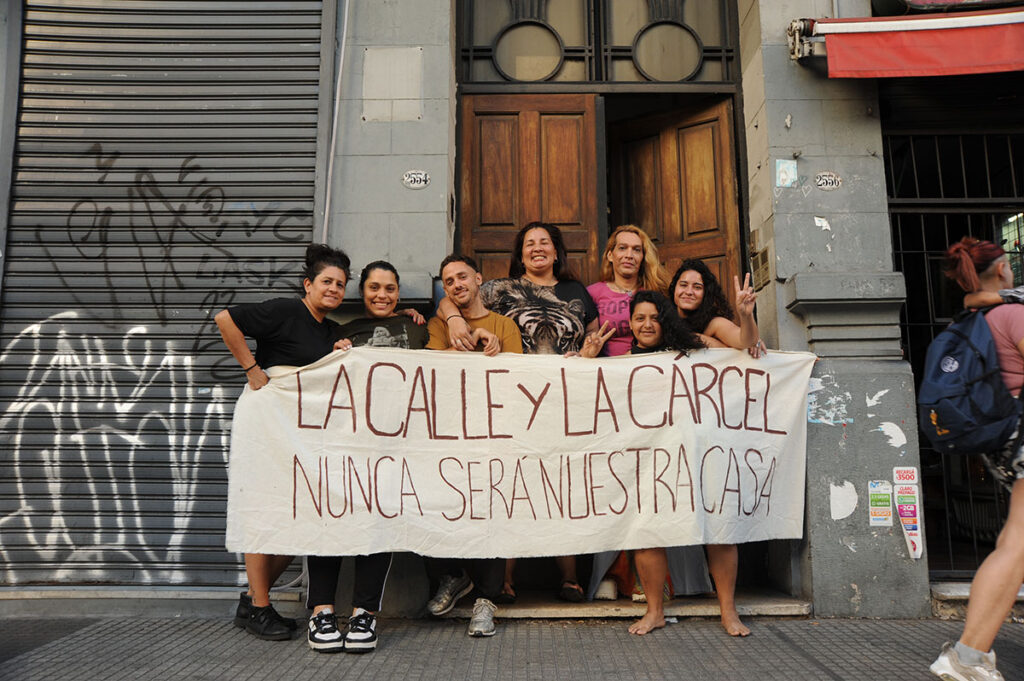
The decision was announced on Thursday, May 15, the day Andrea, Sofía's partner, would have celebrated her birthday. “Upon hearing the court's decision in her favor, Sofía Castro Riglos remembered her partner, Andrea Amarante, who would have celebrated her birthday today. During their time together, Andrea and Sofía fought against the violence they experienced for being a lesbian couple. They denounced the discrimination whenever they could: every sexual assault, every attempt to expel them from a shelter, every attempt at forced hospitalization, every time they were ordered to separate because the other didn't have the required subsidy to stay in the hotel. Those scraps of paper, those words of Andrea filled with fury, take on a macabre meaning that the Judiciary seems only now beginning to acknowledge,” stated the press release from the organization “Yo no fui” (It Wasn't Me) and Sofía's legal team.
Until now, the judicial investigation was close to being brought to trial as "aggravated homicide with cruelty, treachery, and aggravated by common danger and serious injuries." Despite multiple indications that it was an act fueled by discrimination and hatred based on sexual orientation, the court was not producing the evidence necessary to prove or disprove this hypothesis. Nor had it called witnesses who had told some media outlets, including Presentes, that the victims had been harassed by the aggressor. In December, Sofía's legal team, led by lawyer Luciana Sánchez, recused Judge Rabbione for revictimization, lack of a gender and diversity perspective, refusing to consider that the victims were lesbians, and other irregularities.
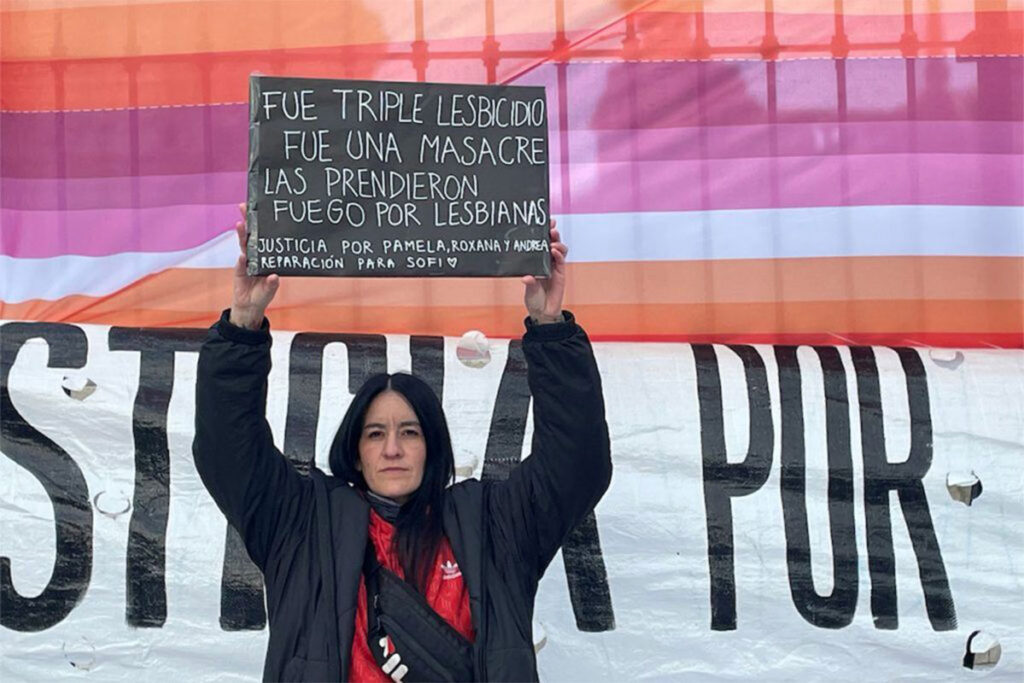
Why the case could take a turn
The court requests that Barrientos expand upon his statement . Court members Juan Esteban Cicciaro and Rodolfo Pociello Argerich ask Judge Rabbione to reformulate "the factual basis communicated to Barrientos."
Among the arguments they say is needed an “adequate description of the objective and subjective aspects of the attributed homicide, in particular as they relate to the alleged hatred of gender or sexual orientation, gender identity or its expression contemplated in subsection 4 of article 80 of the Penal Code, in accordance with what the appellants argued and what the Public Prosecutor's Office also claimed in due course, as it understood that the “excessive hatred” exhibited by the brutal manner of the attack “can only be explained by the condition of lesbians of the victims ” (see the opinion presented on August 27, 2024).
Lesbicide: the plea to Justice
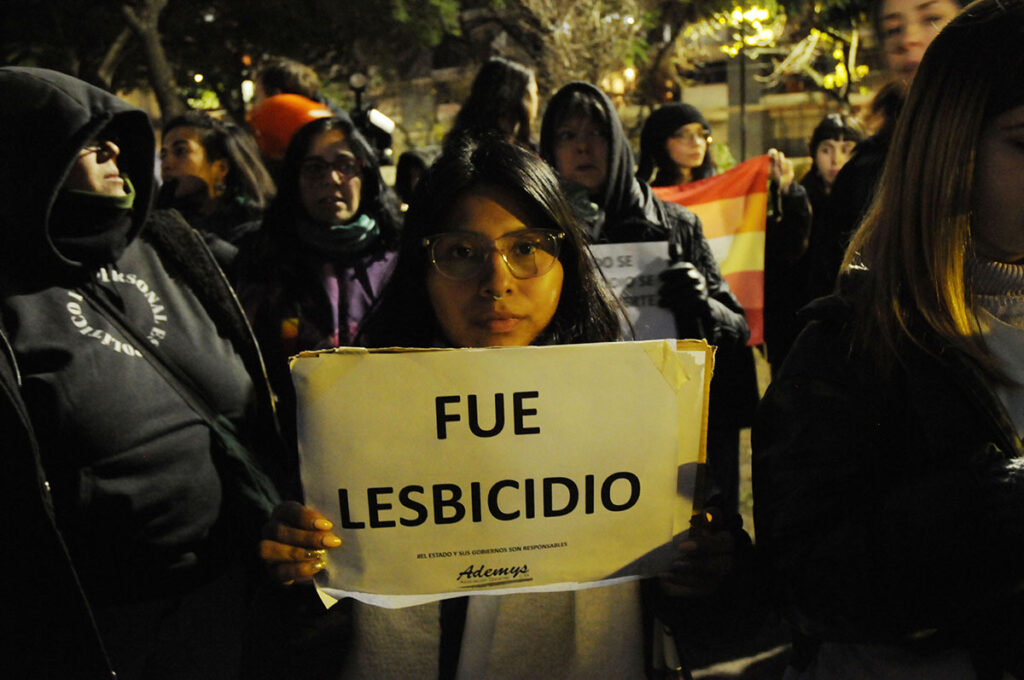
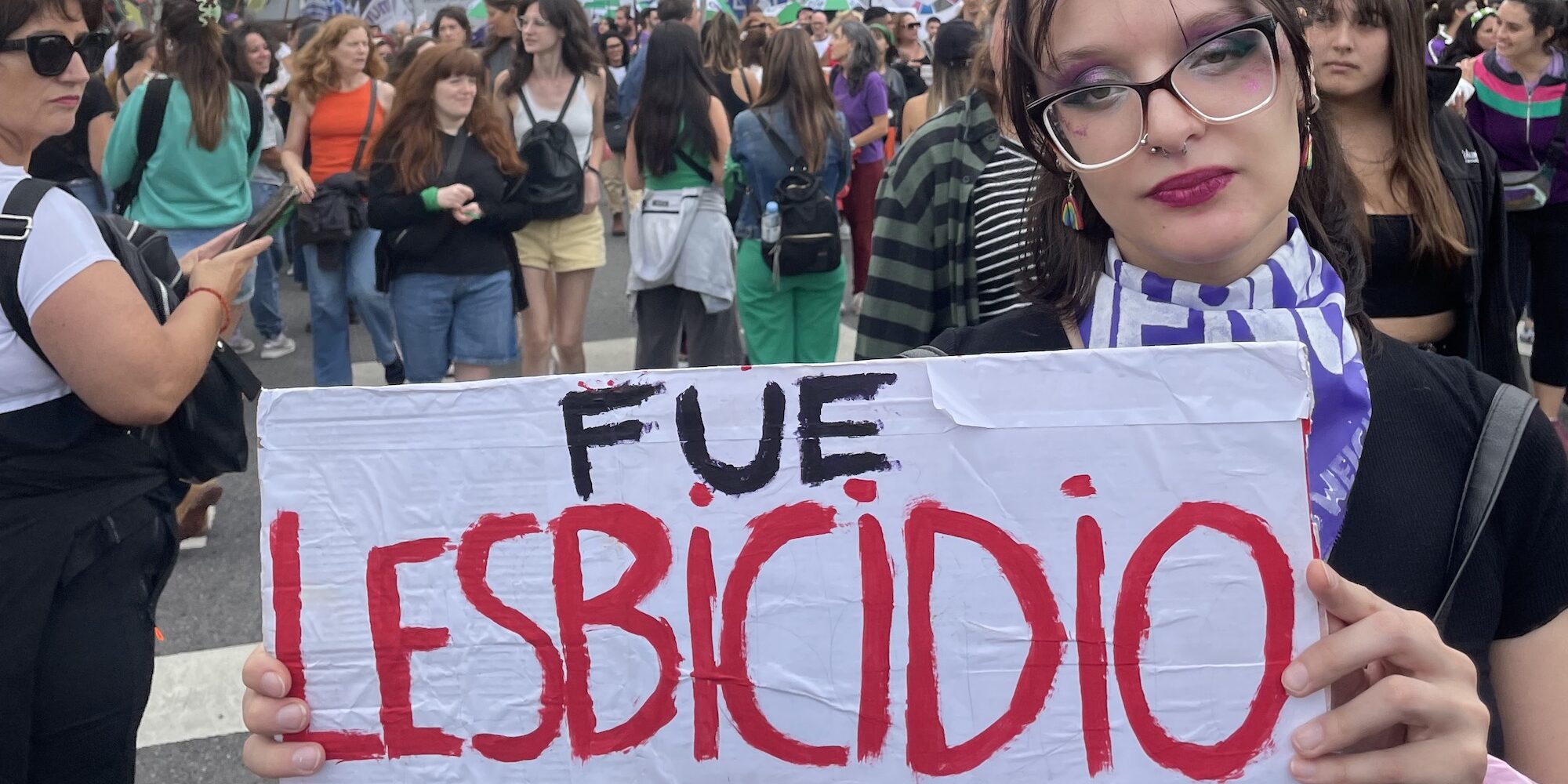
All the plaintiffs are requesting that the crime be classified as a hate crime and recognized as a lesbicide . In total, there are four lawsuits: one representing the sole survivor, Sofía, and her partner Andrea; one representing Marisa (Roxana's ex-partner) and Tiziano, their son, now a teenager, represented by Raquel Hermida Leyenda; and one representing a relative of Pamela, handled by the Victim Assistance Office.
Why is it important to classify this as a lesbicide? Because it is a hate crime against lesbian sexual orientation. Both international human rights bodies and the Argentine Penal Code have specific criminal offenses to define these crimes, which not only endanger the lives of the victims but also send a cautionary message to vulnerable populations. It is about dismantling social complicity, a crucial element for these crimes to occur. The legal burden is the same as in a homicide, but the focus is not on punitive measures but on a justice system that aims at understanding the case, generating prevention policies, and transforming the lives of all people so they can live in conditions of equality.
In the Argentine Penal Code in 2012, article 80 was reformed and articles were introduced that specifically refer to femicide (art. 11) and hate crimes based on sexual orientation or gender identity, an aggravating circumstance contemplated in article 4, which refers to homicide committed "for pleasure, greed, racial, religious, gender hatred or to sexual orientation, gender identity or its expression.".
Just as the word "femicide" is used to talk about crimes committed for reasons of gender, "travesticide" or "transfemicide" to talk about crimes committed against transvestite and trans people, "lesbicide" is used to talk about hate crimes against lesbians.
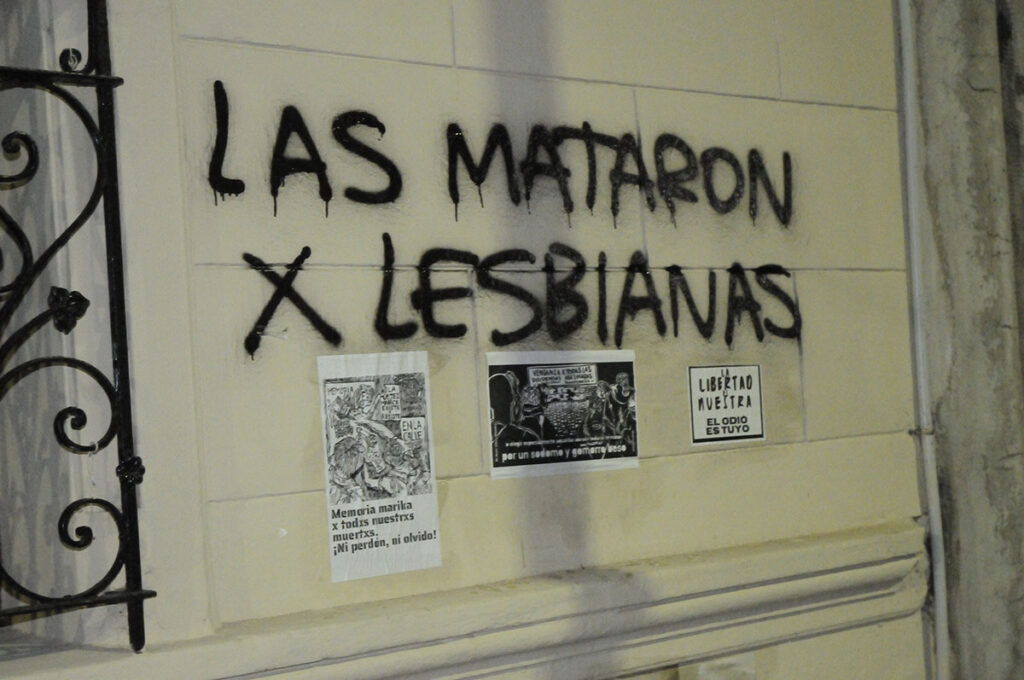
The attack on four lesbian women
At midnight between Sunday, May 5, 2024, and Monday, May 6, Justo Fernando Barrientos, who lived in a room next to the one shared by the four victims at the Canarias family hotel in Barracas (Buenos Aires), opened the door and threw an explosive device towards the beds where they were sleeping and set them on fire.
Pamela died a few hours after the attack. Roxana died a day later, and Andrea a week later. All from burns.

Life after for the only survivor of the lesbicide
Sofía spent several weeks hospitalized and supported by a network of activists, including the organization Yo no Fui (I Wasn't There), the Bonaparte Hospital, and other institutions. Sofía lost her friends, her partner, and the space she shared. Today, she lives at Casa Andrea, a community shelter for women and LGBTQ+ individuals, an initiative of various organizations, and is supported by a network of lesbian activists. In December, a ruling by the City Court determined that the Buenos Aires City Government must guarantee her housing. More than a year after the multiple murders of lesbians, organizations continue to demand reparations for her.
We are present
We are committed to journalism that delves into the territories and conducts thorough investigations, combined with new technologies and narrative formats. We want the protagonists, their stories, and their struggles to be present.
SUPPORT US

FOLLOW US
Related notes


We are present
This and other stories are not usually on the media agenda. Together we can bring them to light.