

One year after the triple lesbian murder in Barracas: the Justice system is not investigating it as a hate crime
One year after the attack that resulted in a triple lesbian murder in a house in Barracas, Buenos Aires, they denounce that the Justice system did not investigate with a gender perspective.


Share

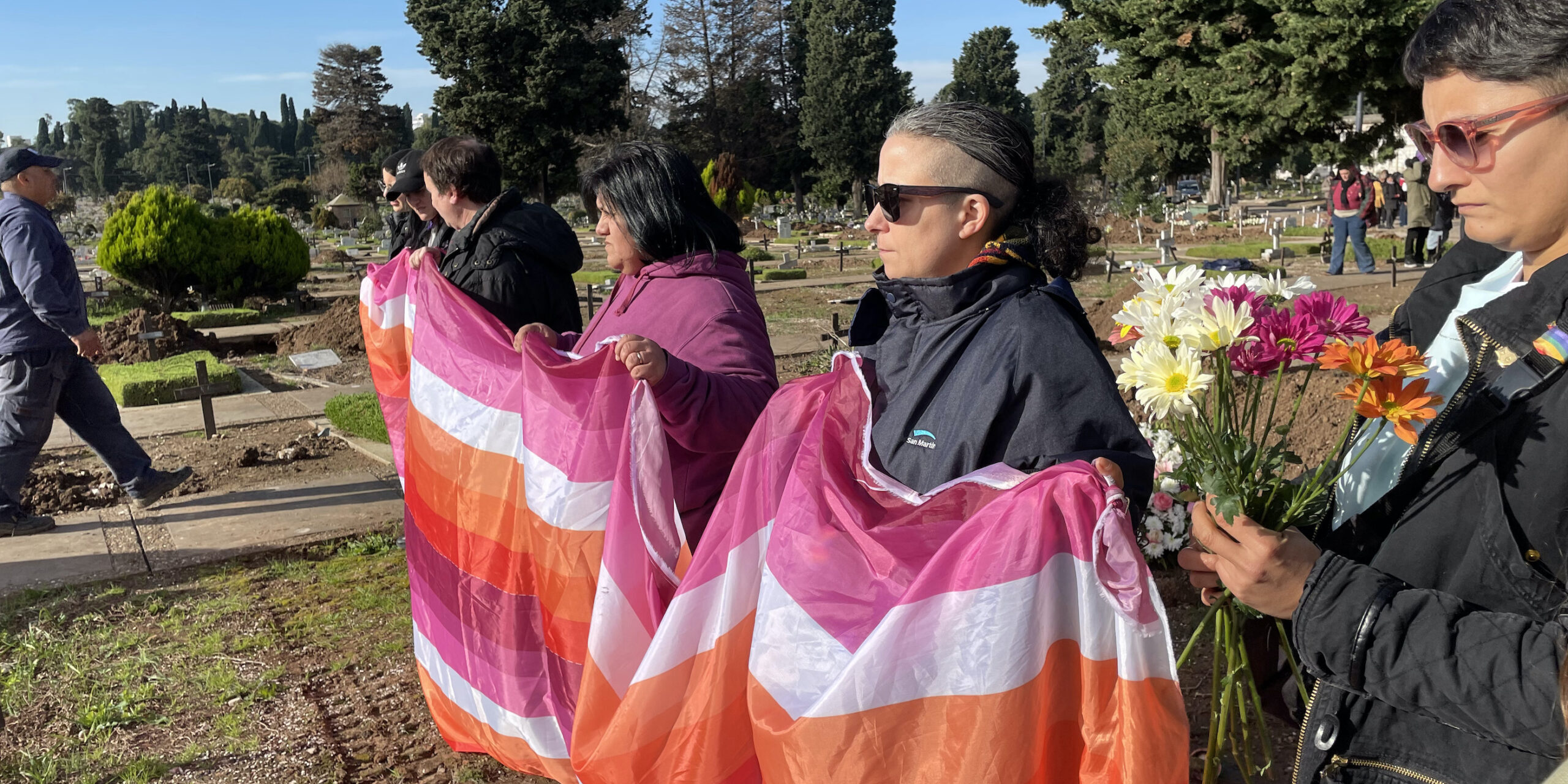
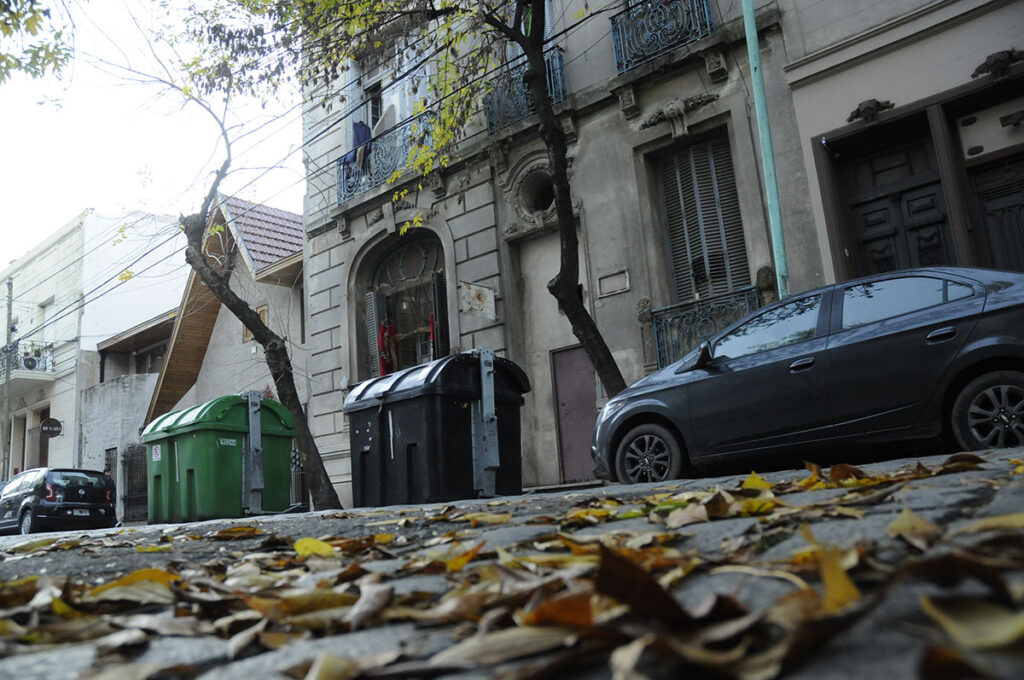
“In this building on May 6, 2024, Pamela Fabiana Cobbas, Mercedes Roxana Figueroa, and Andrea Amarante were murdered for being lesbians, in an attack fueled by hatred and discrimination, an act that moves us further away from an inclusive, equitable, and egalitarian society. It was lesbicide. Justice means that it never happens again,” reads the plaque on the door of the Canarias family-owned hotel in the Barracas neighborhood of Buenos Aires. The brutal attack against four lesbians that ended in the triple murder of Pamela, Roxana, and Andrea, with only Sofía surviving, was one of the most shocking hate crimes in recent years in Argentina and the world.
The case is in the hands of the National Criminal and Correctional Court No. 14, presided over by Judge Edmundo Rabbione, and is nearing trial. This was reported to this publication by sources closely following the case. The charges are currently based on the aggravating circumstances of homicide due to "common danger" and "treachery." Meanwhile, all the plaintiffs are requesting that evidence be presented to classify it as a hate crime.
There are four lawsuits filed by the victims: one representing the sole survivor, Sofía, and her partner Andrea, handled by lawyer Luciana Sánchez; another representing Marisa (Roxana's ex-partner) and their son Tiziano, now a teenager, represented by Raquel Hermida Leyenda; a third representing a relative of Pamela, who runs the Victim Assistance Office; and a fourth representing the FALGBT (Argentine Federation of Lesbians, Gays, Bisexuals, and Transgender People), which includes several organizations and is supported by volunteer lawyers. It wasn't easy to get this last lawsuit accepted; it had to go all the way to the Court of Cassation after the lower court rejected it.
All of them are requesting that more evidence be presented before the case goes to trial. There are witnesses who were not called—such as those mentioned in the Presentes article and other media outlets—and evidentiary measures that the judge did not order. There have been two witness hearings, but the plaintiffs believe that other crucial witnesses are missing. Meanwhile, Barrientos is in custody, charged with homicide and aggravated assault, and is being held in pretrial detention.
What happened between May 5th and 6th, 2024
Between the night of Sunday, May 5, 2024, and the early hours of Monday, May 6, Justo Fernando Barrientos, a neighbor who lived in an adjacent room to the one the four women shared in the same family-run hotel in Barracas (Buenos Aires), opened the door, threw an explosive device at them, and set them on fire. The fire caused fatal burns to three of the women. Hours after the attack, on May 6, Pamela Cobbas died. Two days later, Roxana Figueroa died, and the following Sunday, May 12, Andrea Amarante died. Andrea's partner, Sofía Castro Riglos, was hospitalized for several weeks due to her injuries.
Several testimonies indicated that the victims' sexual orientation was linked to the attack, as they had been harassed for being lesbians. This was stated by neighbors on television and also to journalist Agustina Ramos, who visited the hotel a few days later. These accounts can be read in this article from Presentes, published on May 10, which addresses the complex relationship between prejudice-motivated violence, hate speech, and the housing crisis and socioeconomic hardship that affected the lives of the four women.
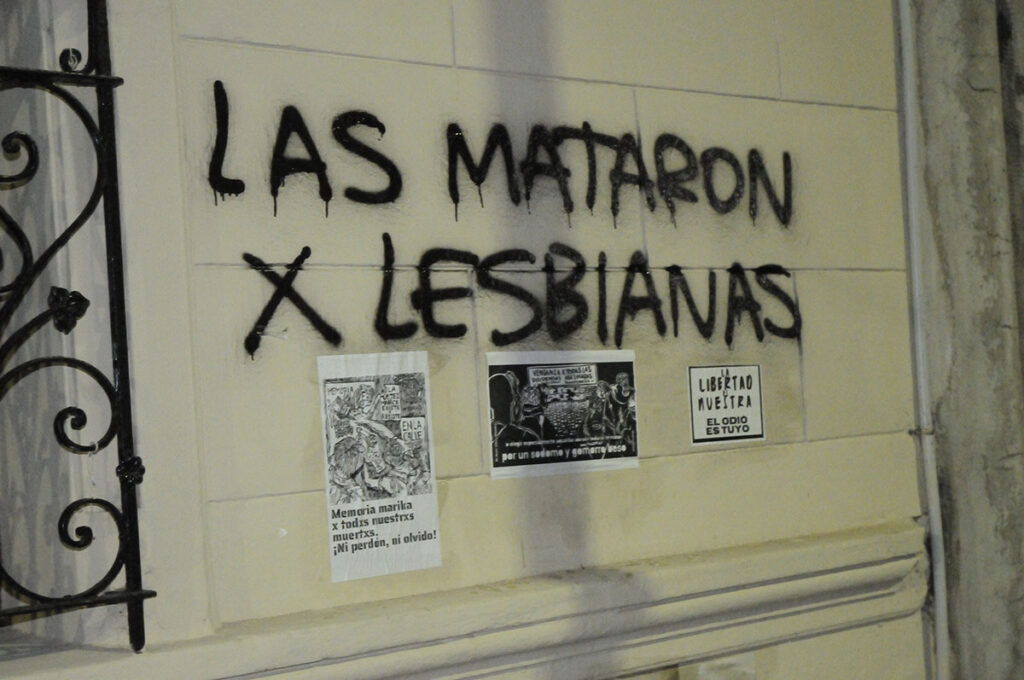
The brutality of the case resonated in national and international media outlets of all sizes, which in the first few days reported on the violence faced by LGBT people simply for existing, while discourses that dehumanize dissident identities—or outright deny them—continue to advance. “They were killed for being lesbians,” activists have repeated since that day.
Lack of gender and diversity perspective
“Until now, the lack of a gender and diversity perspective in the justice system has made it very difficult for organizations to participate in monitoring the case. We had to go all the way to the Court of Cassation; in the first instance, the organizations were told no, in order to be considered as plaintiffs,” explained María Rachid, a member of FALGBT and the Institute Against Discrimination of the Ombudsman's Office of the City of Buenos Aires.
Rachid pointed out that whether or not one agrees with the hate crime line of investigation, “the Justice system should pursue it, even if they want to dismiss it. But they cannot obstruct that line of investigation as they are doing, preventing the participation of organizations until recently. It is proving very difficult to obtain evidence aimed at establishing hate, that is, lesbicide. All the plaintiffs are requesting that this evidence be produced before the case goes to trial.”.
A landmark case
The multiple lesbicide drew attention not only in Argentina. The brutality with which the perpetrator acted—after throwing the explosive, he closed the bedroom door and when the victims tried to escape, he pushed them back into the flames—so typical of hate crimes, made headlines and reports around the world, highlighting the ongoing violence suffered by lesbians and LGBT people.
For many, this case marked a turning point. In its report on Violence against LGBT people, the Inter-American Commission on Human Rights warned that hate crimes are perpetrated in contexts of high levels of dehumanization and discrimination. The multiple lesbicide occurred in a context where anti-rights influencers were being interviewed during prime time. The previous week, Nicolás Márquez, a friend and advisor to President Javier Milei, had been presented on Radio con vos as a “writer” to deliver an apology for homophobia and justify, with fabricated data, the lack of public policies to protect people of diverse sexual orientations and gender identities. Along the same lines, national government officials were promoting—and continued to promote—aggressive rhetoric against diversity, and the closure of agencies such as INADI (National Institute Against Discrimination, Xenophobia and Racism) and the Ministry of Women, Gender and Diversity.
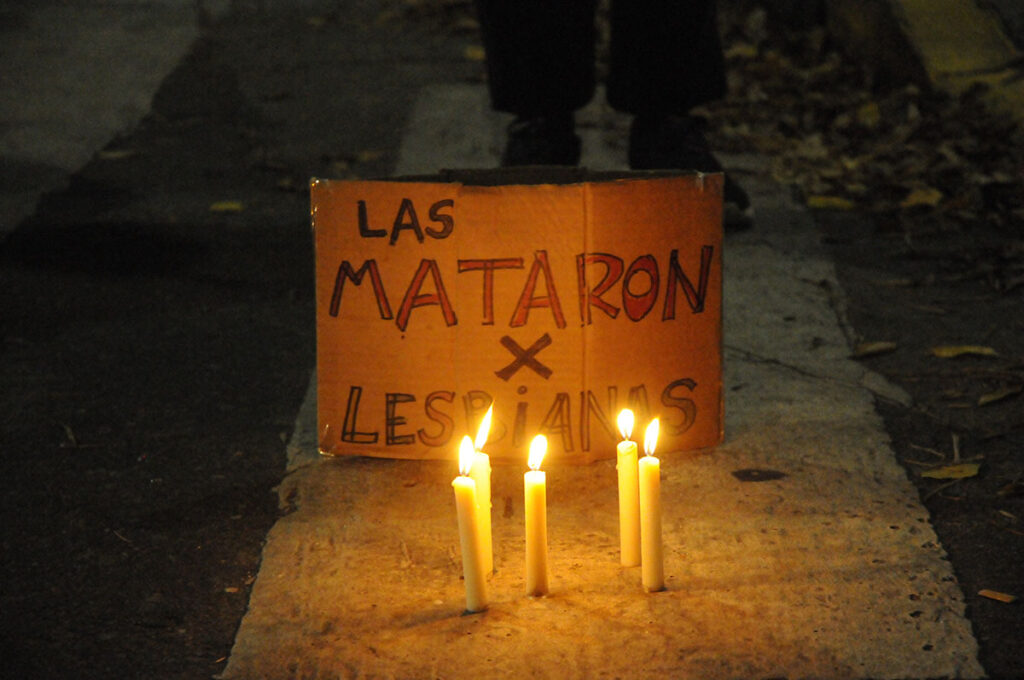
“It is an emblematic case that in another context would have generated concrete public policies. That is why the National State tried to downplay it and the Justice system tried to avoid monitoring the organizations,” Rachid analyzed.
The magnitude of the cruelty and the “criminal” speeches
“For me, it’s a paradigmatic event because of the magnitude of its cruelty. At first, it was dismissed as a ‘neighborly squabble,’ and the word ‘lesbian’ couldn’t even be uttered. However, it falls within a broader context of hate speech against LGBTQ+ people and their existence. It was the embodiment of that distance that suddenly disappears amidst neo-fascist rhetoric that renders some people disposable,” said Marta Dillon, a journalist and member of the Mostri column.
When asked about this case, presidential spokesperson Adorni didn't even dare to use the word "lesbian," further denying that it was a hate crime. Even the Minister of Justice has publicly denied the diversity of sexual identities .
“They also deny gender-based violence. There is enormous denialism that has only intensified. This case has begun to raise awareness of how these neo-fascist discourses operate, enabling the elimination of others because some bodies are valued more than others. After the Davos speech that led to the Anti-Racist and Anti-Fascist Pride march on February 1st, there were also attacks against lesbians or against people whose gender is easily interpreted through this idea that there are only two genders, as Trump said and Milei echoed. What we are denouncing in light of this event is a way of spreading violence through social fascism, encouraging lone perpetrators or groups to carry out these attacks, which are protected by impunity and symbolically sanctioned by the Executive Branch itself.”
The journalist says we can call them hate speech, “but they are criminal speech. They seek to dehumanize to the point that these attacks become possible. And that is what sparked this discussion.”.
Speeches that hate and kill
Activist Jesi Hernandez also recalls that the triple lesbicide “marked a turning point in my life. Not only because they were lesbians and we shared an identity. It mobilized the lesbian community to unite.” The following day, a mobilization was organized through social media “ to see what we could do about this case and how we could bring it to light ,” she told Tiempo Argentino.
“No media outlet wanted to cover the story simply because it contained the word 'lesbian,' and they didn't want to mention it .” The Self-Organized Lesbian Assembly of Barracas set themselves a goal: to break the media blackout “so that society understands that what is said and repeated has consequences, nothing less than in our lives. The feeling was one of tremendous helplessness. It was realizing that for who you are, your life is in danger. And to be attacked in a completely defenseless state, like them, in their own beds. That feeling that you can't even be safe when you go to sleep.”
Jesi emphasized that after so many exchanges on social media, a lesbian community began to form with strategic participation in the case. “I value this capacity we have as lesbian women to go out and play with our resilience to say: ‘This is who we are.’ They don’t really know what they sparked. They sparked unity, resistance, and activism.”.
LGBT activists and activists not only broke through the media blackout and organized marches and events to declare, "It was lesbicide," "They were killed for being lesbians," but they also worked tirelessly to care for Sofía's physical and mental health after she left the Burn Unit and had nowhere to go. The organizations "Yo no fui" and "No tan distintxs" (Not So Different) in October managed to open the doors of Casa Andrea , a collective housing project for women, LGBTQ+ people, and children. It's a safe space where Sofía, the sole survivor of this multiple lesbicide that the justice system refuses to acknowledge, moved and continues to live.
"The triple lesbian murder in Barracas cannot be part of a recurring story. It must be a cry that awakens us, a mark that mobilizes us, an active memory.
— @presenteslatam.bsky.social (@PresentesLatam) May 5, 2025
Thank you for being here, for not remaining silent (...) Memory is our tool, and with it we will continue fighting." pic.twitter.com/Nu8yt3ekmQ
Activities
This week, activities continue that call for keeping the demand for justice alive.
The demand focuses on two urgent points: that the judicial investigation address the deaths as hate crimes and that care be guaranteed through reparations for Sofía Castro Riglos.
Yesterday, the group Lesbianes Autoconvocades por Barracas held an open discussion on hate crimes and hate speech at the Buenos Aires City Legislature.
A collective mural was painted yesterday in Azara and Lamadrid so that memory can also speak from the walls of the neighborhood.
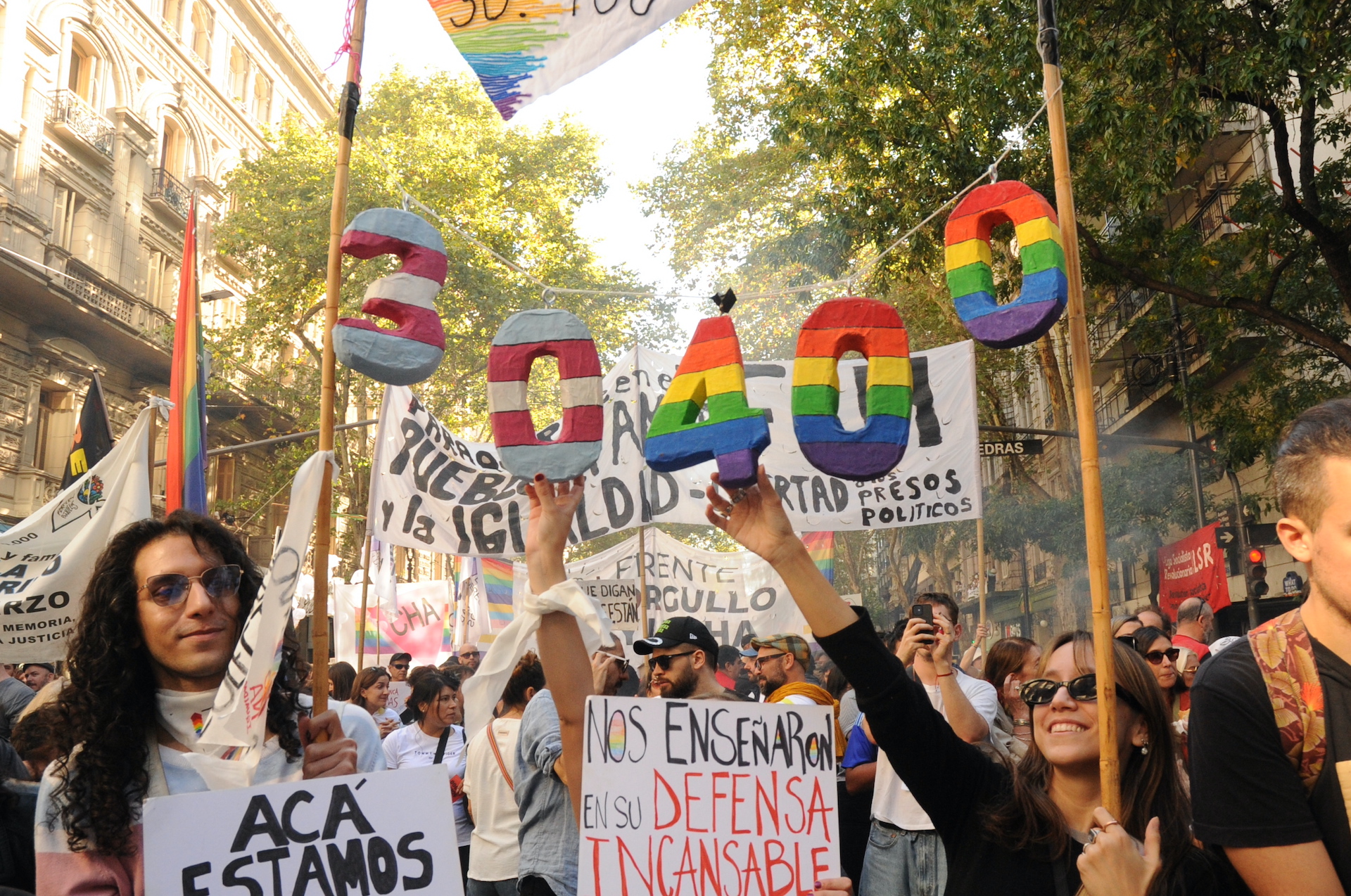
This afternoon, on the first anniversary, gatherings are planned starting at 4 PM to "remember, embrace, and demand justice" for Pamela, Roxana, Andrea, and Sofía in Plaza Colombia in Barracas (Avenida Montes de Oca and Pinzón). The Antifascist and Antiracist Assembly is calling for a march from there to the Hotel Canarias and back to the plaza.
We are present
We are committed to journalism that delves into the territories and conducts thorough investigations, combined with new technologies and narrative formats. We want the protagonists, their stories, and their struggles to be present.
SUPPORT US

FOLLOW US
Related notes


We are present
This and other stories are not usually on the media agenda. Together we can bring them to light.