

Interview with Victoria Núñez Fernández: "They seek to protect life in its diversity"
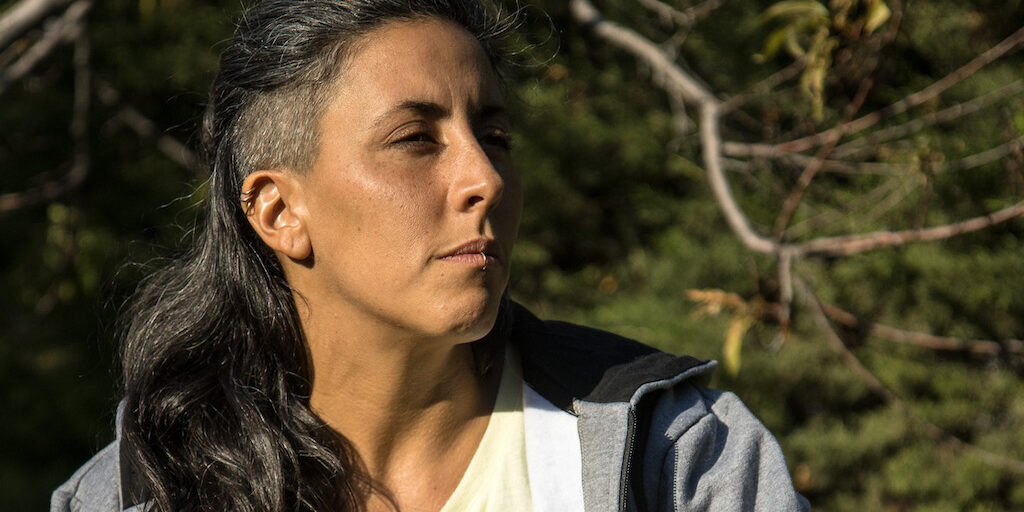
Victoria Fernández Núñez, the environmental activist whom Security Minister Patricia Bullrich accused of terrorism and blamed for the Patagonia fires, speaks out for the first time. Feminist and socio-environmental activists are calling for her acquittal.


Share

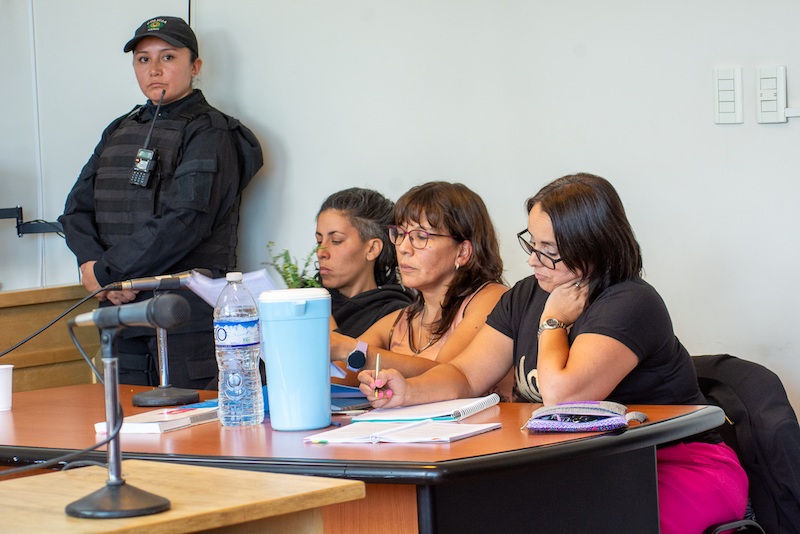
ESQUEL, Chubut Province . Victoria Núñez Fernández was granted conditional release after 55 days in detention , but the charges against her remain. In a hearing at the Esquel courthouse, closed to the public and press, Judge Jorge Criado ruled on Monday, April 7, that there was no flight risk, but Núñez Fernández cannot leave the city without special permission. She remains charged with co-authorship of an arson attack and illicit association, with potential sentences exceeding 15 years in prison. The Chubut justice system prosecuted her for setting fire to machinery on a ranch , while the provincial government and even Security Minister Patricia Bullrich have publicly accused her of being a terrorist and responsible for the fires in Patagonia .
Victoria was the only person arrested during the twelve simultaneous raids on February 11 in northwestern Chubut. The operations targeted Mapuche communities, a Mapuche community radio station, and private residences . She was arrested in Lof Pillán Mawiza, the Mapuche community where she had settled five years earlier, on the banks of the Carrenleufú River (Corcovado, 90 km from Esquel).
A day after her arrest, Governor Ignacio Torres held a press conference surrounded by security forces, in which he blamed the communities for the wildfires that consumed thousands of hectares of native forest and hundreds of homes in the area. However, no other charges have been filed so far. Victoria's case is not related to the wildfires but to machinery set on fire at the Amancay Ranch in Trevelin (Chubut).
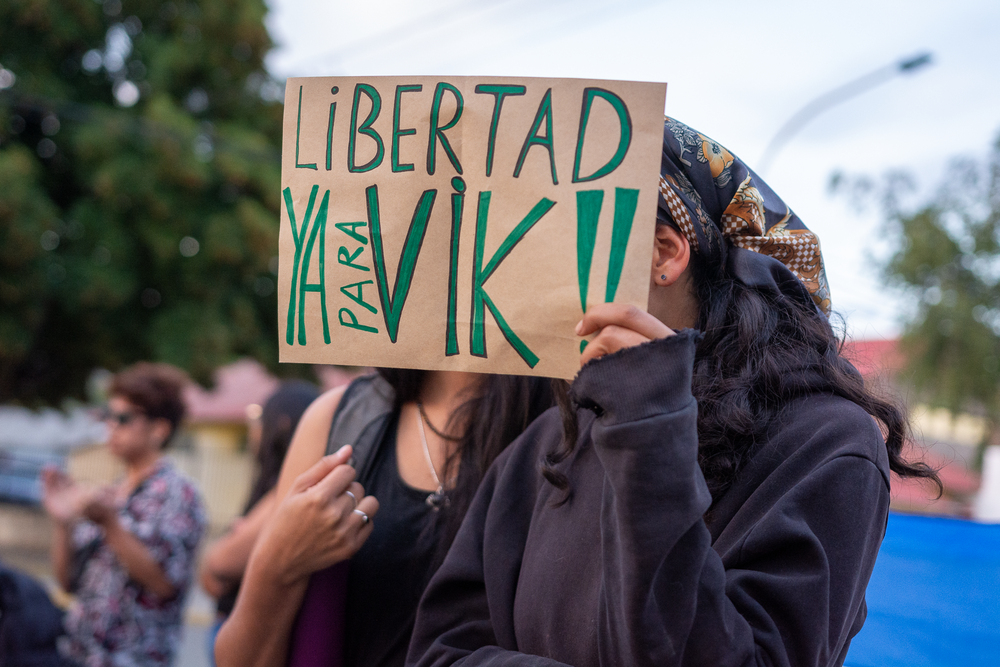
A campaign is demanding Vic's acquittal. It has the support of feminist groups, human rights organizations, and socio-environmental activists who participated in a press conference on April 1st at the Ni Una Menos headquarters in Buenos Aires.
The evidence that places Vic far from the accusation
The charges stemmed from security camera footage showing a white utility van near the scene of the crime. Witnesses also described a blurry image that lacked a license plate or even a vehicle model. Victoria drives a white Kangoo, which was also seized. A GPS tracker was found on the vehicle, indicating that it was approximately 90 km from Trevelin, in the Pillán Mawiza territory, during the attack. Despite this evidence, Judge Criado ordered her to be placed under house arrest for two months.
In front of the media, both the governor and the prosecutor's office have labeled her an arsonist and terrorist . María Bottini, the prosecutor in the case, stated in a television interview, "Those who claim responsibility for the attack are connected to a community and justify these types of actions." She later added, "It was striking how many times (Victoria) crossed into Chile, and often even into Temuco, which is a very conflictive area in Chile regarding these types of attacks."
In a context where driving a white van or having traveled to Temuco are grounds for prosecuting someone and depriving them of their freedom, we believe it is crucial to share Victoria's story. Presentes spoke with her a few days ago at the location where she was under house arrest.
Q: On the day of the attack at the Amancay ranch, what were you doing? Where were you? What had you been doing in those days? Who were you with?
V: On the evening of January 17th, we were wrapping up a community gathering at Lof Pillan Mawiza. It was a gathering for the transmission of traditional knowledge. It took place from the 14th to the 17th, and quite a few people attended. We spent many months preparing the space to receive them. We also held a ceremony, which required elements that we had been gathering. And the 17th was the day we relaxed a little, after spending many months focused on it. We had literally gathered in one of the houses to share a meal. Two of the lamngen (sisters) are musicians; they shared their songs, and we sang and played guitar. The next day we woke up and it was time to continue cleaning up, because after such a large gathering, we had to get organized. That's what I did; I was in the community, basically.
“The evidence is conclusive.”
-Regarding the irregularities in your case, the evidence that has been presented, tell us a little about how it came about and how the experts worked together.
–At the initial hearing, this measure [preventive detention] was proposed to allow for an investigation period. The vehicle I drive has a GPS device, but I wasn't aware of it because it had been installed before I took possession of the vehicle.
Her lawyers presented a report from the company that installed and monitored the device. The tracker showed that on the day of the attack on the ranch, the vehicle was about 90 km away, precisely in the territory of Pillán Mawiza.
-Through that, we managed to get house arrest. The evidence was compelling, objective, and categorical enough for the sentence to be even more lenient, enough to allow me to go through the process while free. But both Judge Criado and the judges in Comodoro refused during the review.
During this time, they proceeded to carry out the corresponding investigations. Vic recounts that they completed the entire physical inspection of the vehicle. They took fingerprints, swabbed everything, even the mate gourd.
"During the raid, they even took my notebooks; they're like my diaries, with entries from years ago. I write down my feelings, dreams, my innermost thoughts in them. They took them as possible evidence. They don't have any serious indication that I was at the scene of the crime ."
Witnesses describe an empty van they saw the night of the incident, which they specifically identify as a Fiat Fiorino. There was never any indication of my presence. They are trying to bolster their claim that my van was there by citing a police report based on camera footage of a vehicle coming from the Aldea Escolar area. At the last hearing, a scopometric report was presented comparing the morphology of my van to that seen in the video, detailing each of the differences. The report is negative, reaffirming that it was not my van seen in the surrounding areas or around the time of the incident. And there's another peculiarity. Everything obtained from the twelve simultaneous raids is contained in a single file.
-And in the hearings they link him to you…
Yes, even though we are all individuals, each responsible for our own actions and devices. No one has access to what they're doing with their belongings. They've mentioned finding pamphlets and linking them to me, even though I have no connection to the location. And even if those pamphlets exist, they're not illegal or evidence of anything, but they claim it's typical of a possible criminal organization. In that procedure, they took DNA samples from 46 people who were in those locations. And now it turns out that the genetic sample they took from the site of the fire can't be compared. It's defective. They have DNA samples from more than 46 people, taken by force. And they can't even really justify why they did it.
–During the vehicle inspection, what happened to the GPS tracker?
– According to the prosecution, the GPS device could have been physically tampered with. However, it was determined that it had not been. The next step was to download the information stored on the device. For this, my lawyers from the Public Prosecutor's Office had also brought a technician from the company with the equipment and software. Despite having the ideal technical conditions to carry out the expert analysis that would clarify this accusation, the prosecution refused to download the information from the device on-site . They offered no explanation and left the matter pending to this day.
“I’m concerned about what society sees and interprets.”
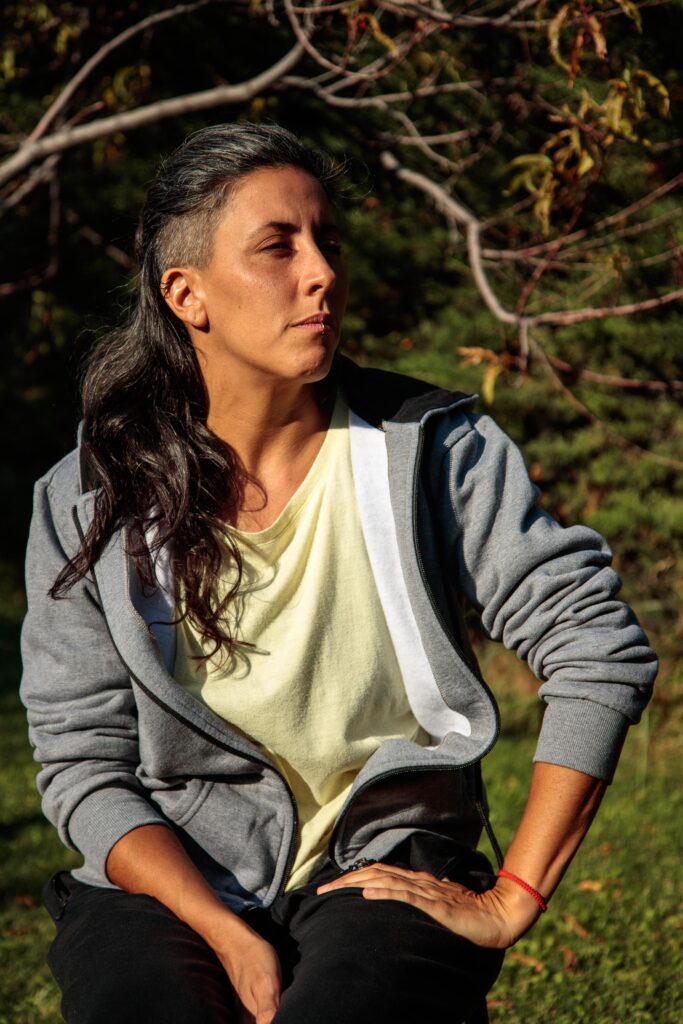
-What is your opinion of the alleged evidence they have presented to accuse you?
– For a long time, I felt compelled to say they're ridiculous. Because ultimately, if I step back from anger and indignation, what can one possibly say about such a setup? I'm worried about what civil society, the people who live in these territories, see and interpret. That's what worries me. Because no one is surprised that they're staging this charade.
I'm not the first person to have a case fabricated against me. Historically, this has been the method. And today you have Nicolás, the firefighter who was arrested and accused of starting fires, when what he was actually doing was risking his life to put them out . You have Mauricio and Federico in Mendoza, who are part of the Uspallata environmental assembly, also accused of terrorism for defending the water . Two cases at the same time with the same underlying problem: land rights. There must be many more throughout the rest of the country if you keep investigating.
-Regarding your legal situation, do you feel that you are on equal footing with everyone else?
– To begin with, no. Justice runs on money. If you don't have financial backing to strengthen your defense, even if it's just paying a lawyer, paying for expert witnesses, renting a house for house arrest because they wouldn't let me stay in the community… There's no structure in place to fully exercise the right to a defense. And if I were Mapuche, the conditions would be much more complicated. If someone from the countryside, without resources, Indigenous, goes to file a complaint, they won't take it. That's how arbitrary the racist approach and treatment are, and how much economic inequality there is. How often does the prosecutor's office pursue charges against people who represent economic power?
“The persecution is for supporting the Mapuche people.”
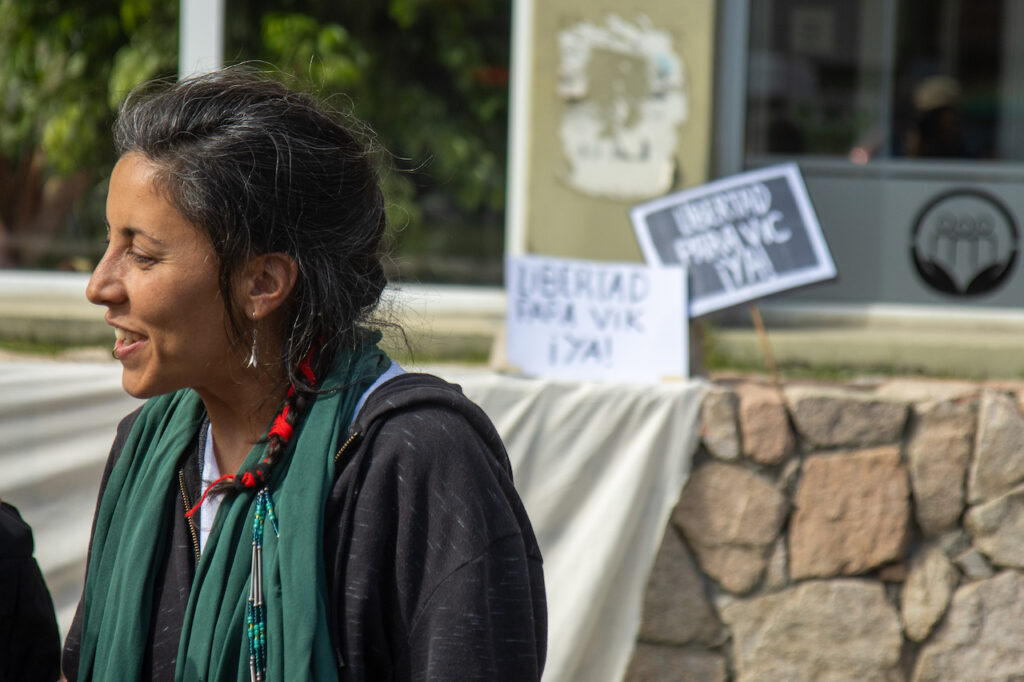
-What if you weren't related to a Mapuche community?
– This persecution stems from our support of the Mapuche people. The entire case is framed within a historical context of persecution, driven by their interests in the territories. And with this, they want to extend that persecution to those of us who support them. What they are really after is the protection of life in all its diversity, not just human life, but all living things. And this awareness that the Mapuche people bring bothers them.
-How did you come to the Pillán Mawiza community?
I grew up in Ituzaingó. And in Buenos Aires, as in many places, there's a lot of denial of the pre-existence of Indigenous peoples, especially the Mapuche people. Five years ago, I came across the Movement of Indigenous Women and Diversities for Good Living. In February 2020, a Climate Camp was held in the Lof Pillán Mahuiza community. They called for help preparing the space, and that's how I arrived, motivated to participate in the gathering. The idea was to come together to talk and reflect on what was happening globally, especially in our territories: the advance of extractive industries, the neglect, from the most everyday aspects to the most widespread. My plan was to go, stay a few weeks helping with the preparations, and then continue my travels. March came, and the pandemic was announced. So I couldn't go anymore.
The community gave me the option of spending the fall and winter there. I began to immerse myself in the land, learning about their work: construction, firewood gathering, seasonal harvests. Little by little, I started working with wood. Spring arrived, and the idea of preparing the land and cultivating it came up. When I left the city, all of that was either denied to me or dormant. And upon arriving in the countryside, this interaction with everything began to awaken.
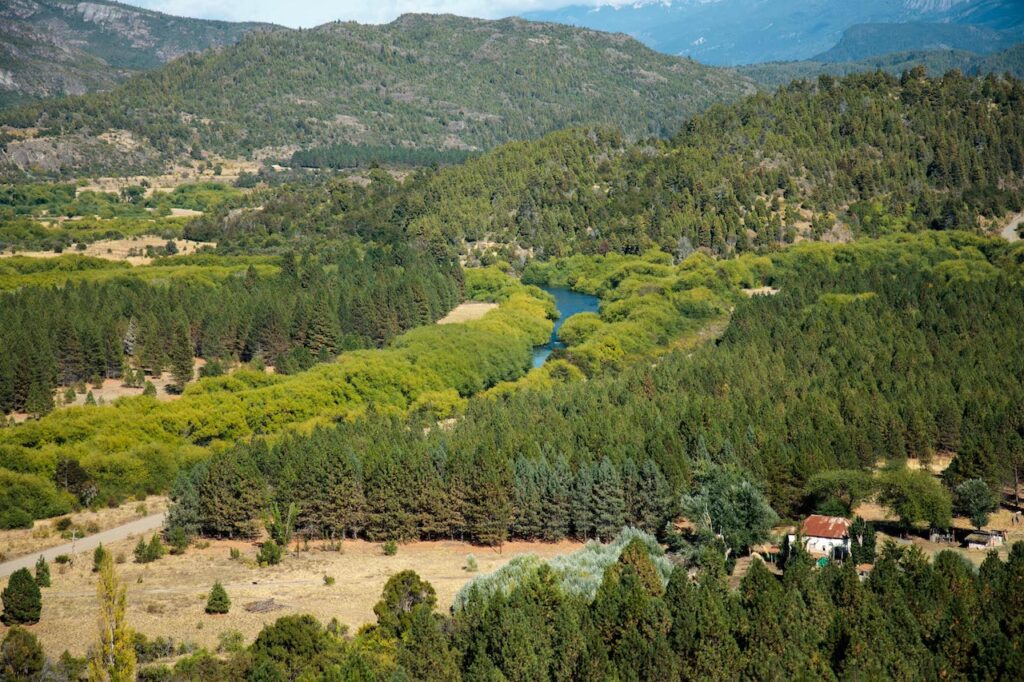
We began to reach out to other communities that are experiencing harassment, resisting for years, protecting and caring for these places. With great conviction and dignity, and very alone as well. Even here, there is little awareness of the work they are doing. There is a madness in the world that fails to understand that we also need healthy territories.
-Before arriving in this community and this area: what was your perception of the Mapuche people? And how did it change?
–Unfortunately, I was ignorant about the Mapuche people. With Santiago Maldonado, I started to hear a little more, but from a distance, I couldn't understand anything. I never had a negative preconception, just a profound lack of knowledge.
“There is no identified person behind his theories”
-After integrating into the community and seeing how it carries out a process of territorial and cultural recovery, did you ever imagine that this could happen?
–No, not like that. Yes, there was always exposure. We felt it from the first moment we arrived at the Lof. There were always mysterious checkpoints on a local road, asking for documents or information about what we were doing there. We always felt that suspicious gaze, that way they were watching us. But our path is legitimate; we have always acted with support and care. And I think that's also why I never imagined it could turn out like this. Because they might want to fabricate something, but to have forced it so much…
They come out of nowhere, with a suspicion against me that has no basis. Because you listen to the testimonies and there's no correlation between the witnesses' statements and me. I didn't expect it because I trust in my actions and my conduct. And suddenly they come with these lies and rumors, because you read the narrative they use and it's literally just gossip. There's no person, no name, no ID number, I mean, there's no identified person behind all these theories.
This is part of what they are trying to propose as a model, as a method of persecuting those of us who cannot be indifferent to the suffering of the territories, of one another. Persecution of what they call solidarity, which is essentially a gesture of tenderness.
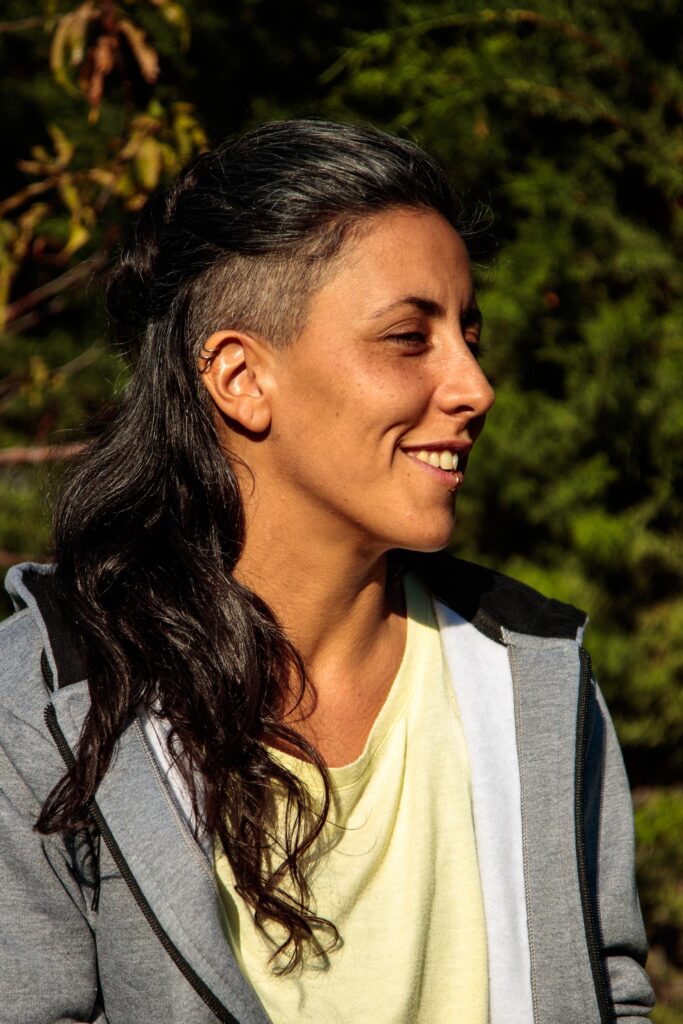
They continue with their formula of persecuting all forms of existence that deviate from their models of subjugation and destruction. They want to enable and continue the persecution of the Mapuche people, who primarily demand the right to exist. It is so profound and so absurd that even today someone has to cry out for their right to exist to be respected. How can their demands not be legitimate? And instead of sitting down for the necessary dialogue, they overwhelm these communities with these fabricated accusations.
-You said you felt safe doing what you do, you said you were open about it, without hiding anything or acting clandestinely. And when you mentioned there was a certain suspicion, were you referring to the security forces? What was the relationship between the community and the town like?
–Yes, I never hid. That's also a choice. Some people don't connect and hide their connection; there will be others who do. But in these cases, who legitimizes a people? A community? What makes it legitimate in the eyes of the rest of civil society? When we begin to get to know each other, to listen to each other, to understand who we are among all those who live together, prejudices begin to crumble. I see it as a collective task that comes with coming to live in these territories.
The suspicion is that the armed forces are insecure. And with the people, over the years, as happens in any community anywhere you arrive, the bond develops. It strengthens and deepens. There's a good dialogue with the people in general. It's a diverse group, with all kinds of perspectives. And that's fine too. We've never had problems with anyone. And not just these past five years. The community, from the very beginning, has never had any issues with the people.
“They want to eradicate collective care”
-When all this is over and you regain your freedom, what do you plan to do? How would you like this experience to have an impact on you?
– I don't know if I can answer, the truth is I'm more focused on the present. For me, it's a wake-up call, even for those of us close to it, it's for everyone. Because they're demonstrating how they intend to operate, how they want to lower the bar. In the investigation, they say: “Victoria has been seen associated with communities dedicated to defending rights and protecting the environment, so we can deduce that they share the same ideological line with a possible radical agenda.” That's how they try to create these ideas of phantom criminal organizations. So, in this, they're saying, if you want to protect a right, if you want to protect life in all its forms, human or non-human, then you're on the same level as a potential criminal. It's extremely serious.
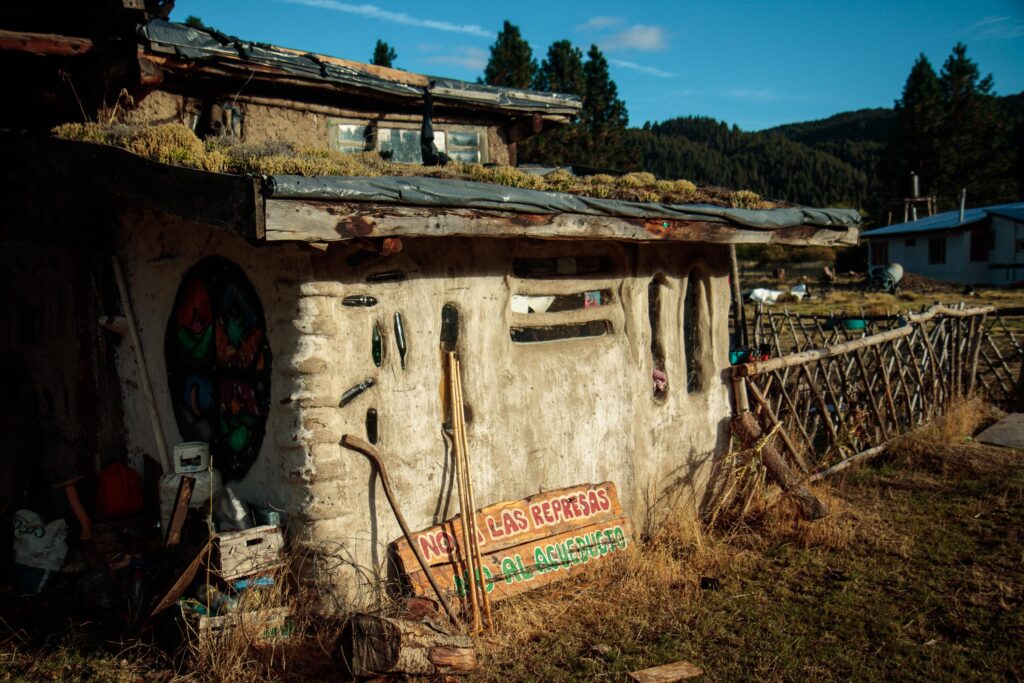
-That they use as supposed evidence against you your participation in organizations and communities that have a social agenda or defend certain principles, that's already something against you. Or, for example, when they said, "He travels to Chile frequently," "He was taking patients to the machi's," as if those were crimes. How does all of that make you feel, that it's being used as part of the accusation?
– What's wrong with them? That's what it makes me think. What's going on inside them? They propose a world where, by disguising lies as truth, they seek to persecute collective care. They want to eradicate it. That's the idea and the deep conviction of caring for the territories that they pursue.
I think that, like many human conflicts, the underlying arguments are structurally very silly. They stem from the inability or the decision not to acknowledge the existence of the other. It's not a question of whether you have rights or not; the concrete fact is that we're all here, and what are we going to do? That's the question. With all these different forms we take, what agreements are we going to reach about how we're going to inhabit this space? Let's sit down and talk.
“The struggles against oppression are the same struggle”
-Why would it be important for people elsewhere, who are not directly involved here, to find out about this situation?
– For several years now, distances have shrunk. We can no longer think that what happens in the north doesn't affect the south, and vice versa. And so on with every territory. We have to understand that all struggles against oppression are part of the same cause, the same fight.
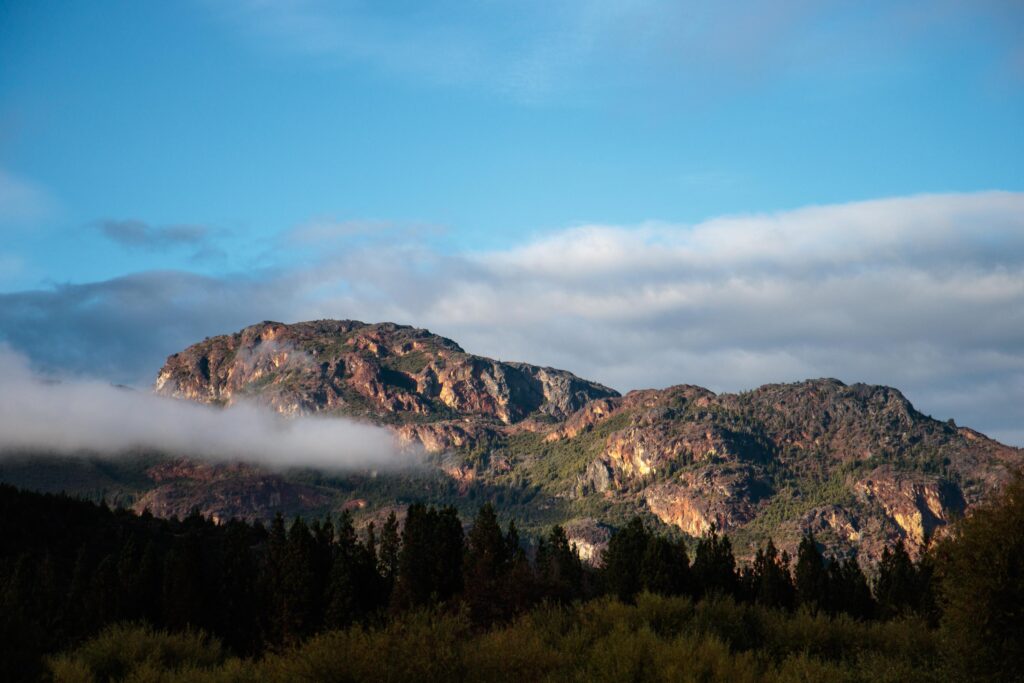
All efforts to protect territories are for the same cause. Whether you live in or aren't in a territory, it's even more important that it remains healthy. Cities thrive through these territories; there's no other way they can exist.
I think we're reaching the point where feigning ignorance is no longer sustainable. It's no longer a position we can accept. The evidence that the world can't sustain this model is becoming increasingly concrete, and the harsh reality is hitting harder every day. What kind of life are they aiming for? So, this is part of the wake-up call. That's why it's not just for those of us on the ground, for the communities that were raided, for those who had their DNA samples taken. It's for everyone. When things escalate, we need to pay attention because it enables other forms of violence. It emboldens people to unleash this instilled violence. It's not just about this territory that it's important for people to know. It's important for the territories these people inhabit so they can go out and protect and defend them as well.
We are present
We are committed to journalism that delves into the territories and conducts thorough investigations, combined with new technologies and narrative formats. We want the protagonists, their stories, and their struggles to be present.
SUPPORT US

FOLLOW US
Related notes
We are present
This and other stories are not usually on the media agenda. Together we can bring them to light.