

Another community: when dissident bodies and temporalities dance
Another Community is a work by performer, choreographer, and director Iván Haidar. It links dance with dissidence to challenge ideas of time and language through non-binary bodily expressions.


Share

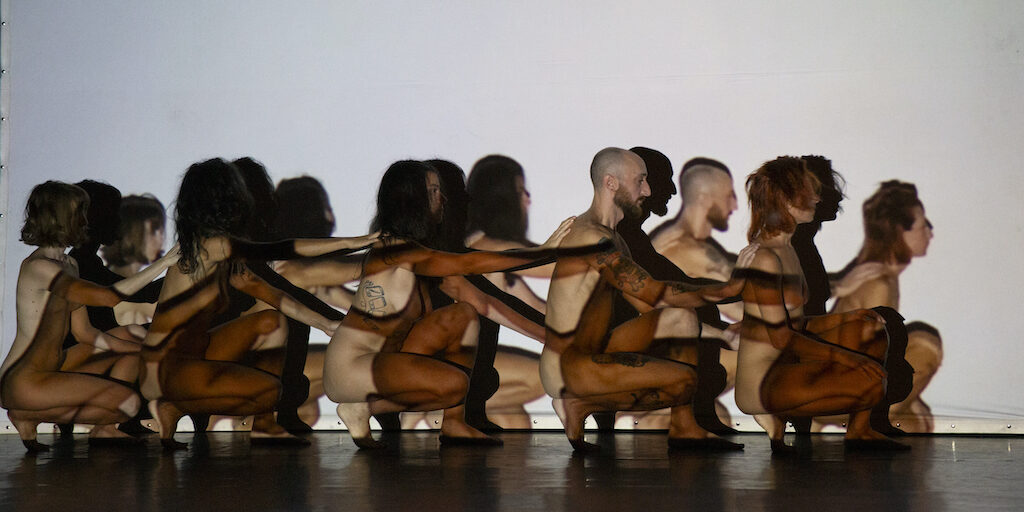
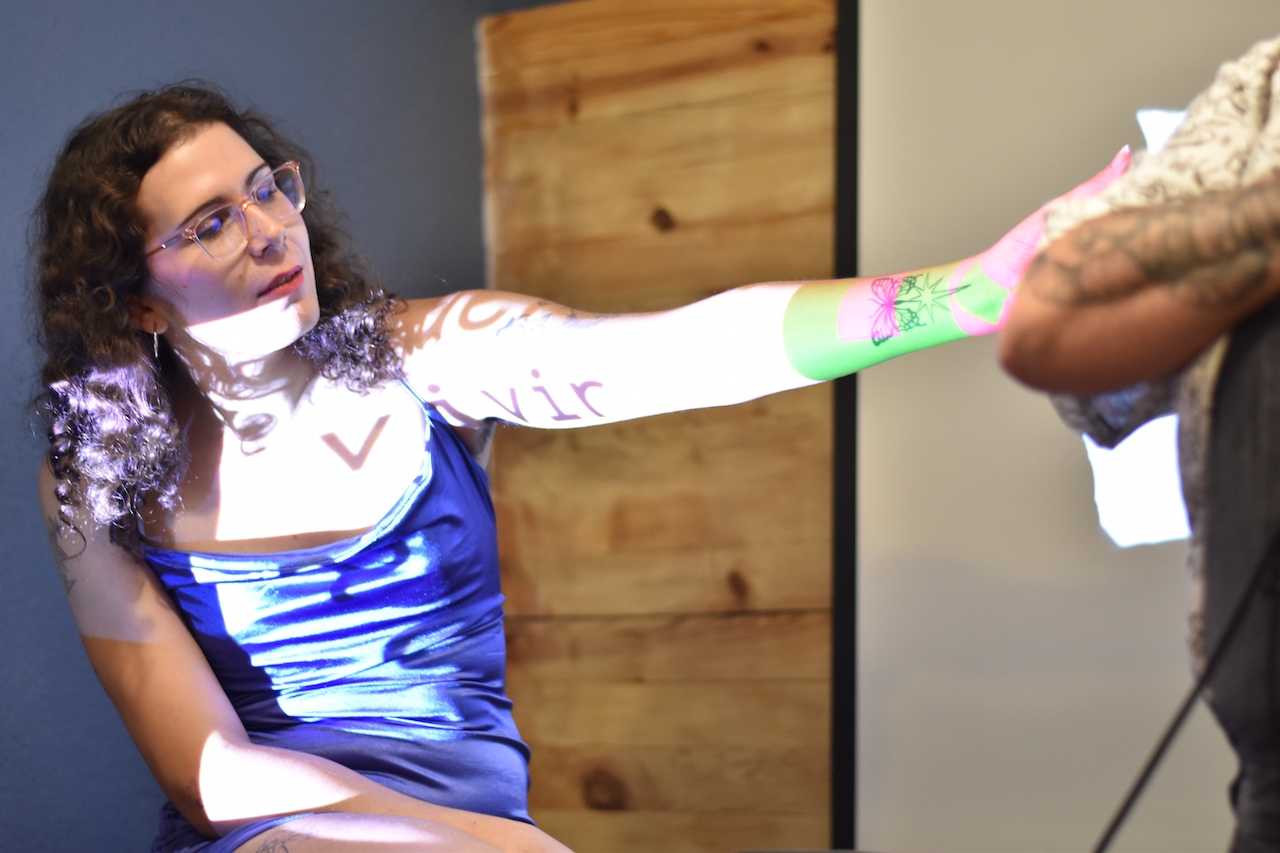
The bodies enter the stage naked, marching slowly and in choreography. They proceed in front of a white screen that projects the same procession. Another Community is a work by performer, choreographer, and director Iván Haidar . The performers construct a narrative without words or music, telling everything with their bodies and movements. They tell it twice on the screen, creating spectral images of great beauty, but also inviting the audience to complete the work with their own perspective.
How to say it without explaining
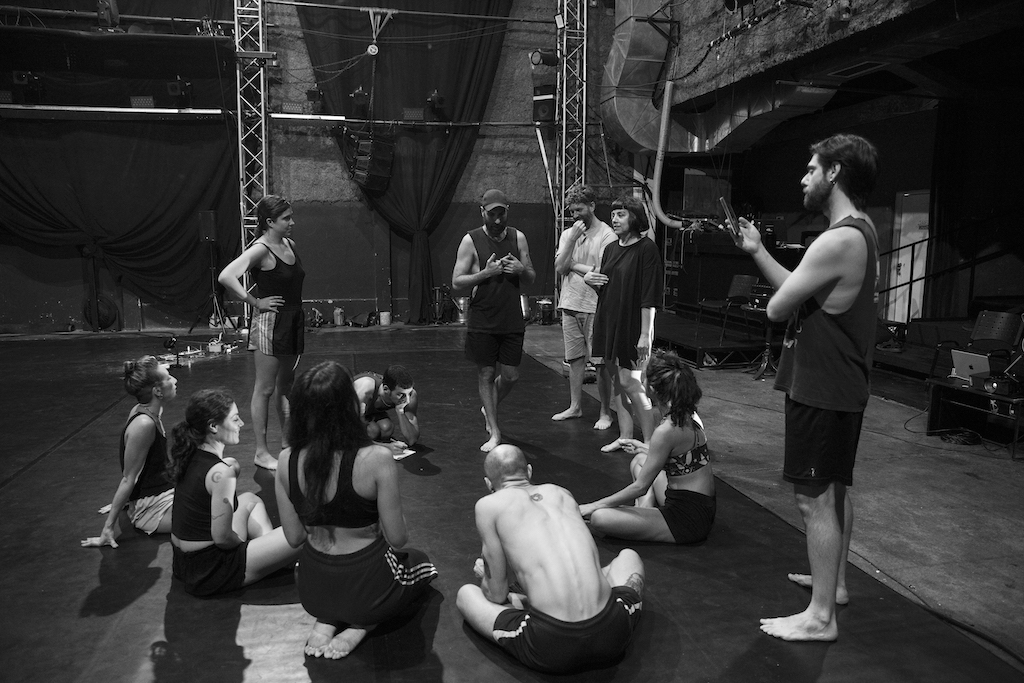
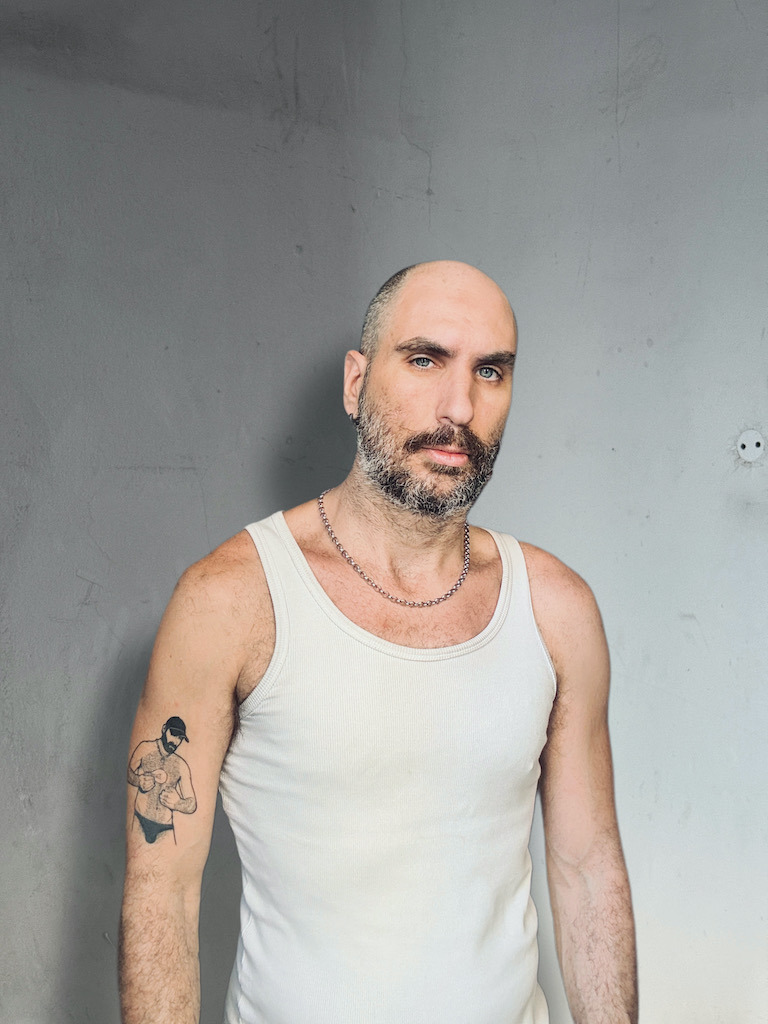
“In today’s context, it’s not just about the technical aspects of the device and the beauty of a live audiovisual performance. It’s also about what happens with those bodies , what happens with time , what happens with those images that suggest things,” Iván explains to Presentes. Those who have never seen dance or performance art are not excluded from appreciating what happens here, because, as its director says, the piece invites everyone to ask questions based on what the images evoke.
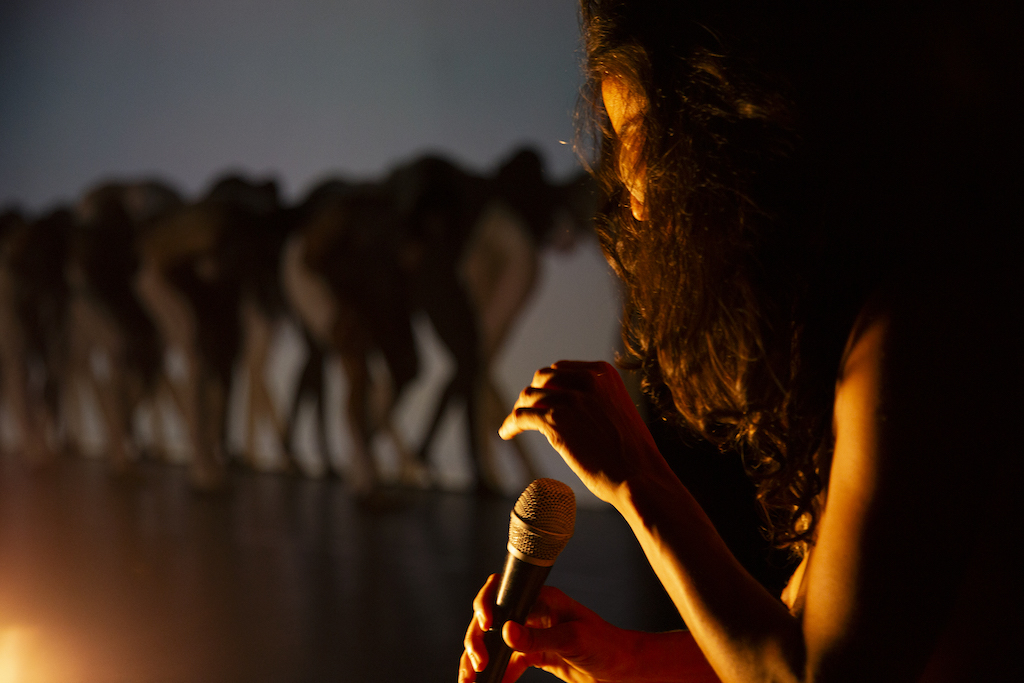
A wordless performance doesn't mean it's silent. Just as bodies are mediated by visual technology to inhabit the space, voices had to find their place in this way. "The sound device, respecting this logic, is also a body. The performers' voices also appear mediated by technology to create this looped multiplicity of sounds." And the director attributes the absence of music or text to this search for "the ability to speak without explaining, therefore to suggest one meaning among others." They are sounds, guttural noises, filtered through the soundboard, which allows them to be mixed to tell us this, that, many stories.
Invitation to other temporalities
“ It’s an invitation to another kind of time, one that I feel we’re not giving ourselves, or are giving ourselves less and less of, a time that’s disappearing: the time of contemplation ,” she explains. In a time of bombardment by stimuli—cell phones, television, the internet, social media, the street, lack of money, violence, wars, abuse, presidents— the work opens a window to another perspective, “to wasting time, which is to gain time .” In a time of accelerationism, there’s a disobedient proposal to embrace non-productivity, “which is the most necessary thing in the world.” This challenge is taken up by performers and audience alike, for a time of contemplation and reflection that generates many questions, interpretations, and personal insights.
There are other bodies that can dance
How are dance and physical expression linked to sexual dissidence? “To talk about sexual dissidence in relation to dance or physical expression, we have to bring the debate closer to home, to when the possibility of other bodies began to be seen in contemporary dance,” she replies. Until then, everything had been binary and biological: men (with penises) and women (with vulvas) with exceptional physical abilities. Only at the beginning of the last century did a period, “obviously led by women,” begin to propose that there are other bodies that can dance. Suddenly, the unchosen, the non-virtuosos, were on stage. And it became possible to begin understanding virtuosity from other perspectives, for example, from emotion.
“I think dance is very activist in that sense,” says Iván. “Because it has been proposing, in all circumstances and different moments of history, things that are made invisible. Perhaps dance is one of the most relegated disciplines of all,” he explains. The director and performer brings up this important fact. He adds: “The largest percentage of members of the dance community are women; there you have one of the first minorities. The men who enter dance are generally gay. There you have another minority.” Listening to Haidar, one can better understand this relegation of voices that seek new questions, other nuances, different narratives in the face of institutionalized hegemonies.
Another Community summons ten bodies on stage that multiply across the screen. Are they men or women? Haidar's proposal, along with the group of performers, transcends this binary. Even with exposed genitalia, the performance doesn't assign an identity to the performer. This small/immense queer revolution is a welcome to those who can break free from this prejudice and immerse themselves in the much broader range of interpretations and appreciations offered to them.
“Dance is something ancestral, popular, and primal. It’s an exercise the body uses to connect with others, to be in community, as it has always been. Today we come together to dance to be together, and we do so through movement,” she says. She cites as an example dances that momentarily dispel differences, like carnival, which for a while transcends social and political distinctions. Dance in the political exercise of dissent within the ballroom scene. Moving to reclaim, to demand, to make visible, dancing “as something social. It’s a great artistic and activist discipline .”
Another scene, another community
The proposal offers no certainties or prescriptive guidelines, but rather an invitation to experience what happens in one's own body by observing others. The bodies on stage and their avatars on screen become the unspoken words, and each person in the audience decodes this language using their own resources. Haidar has been exploring this device of dance, performance, and duplicated image since 2017, beginning in parts with her solo piece Otra Línea and then in 2019 with the first version of Otra Comunidad.
After various presentations, following a pandemic and a year of isolation, and after a period of hiatus, the play returns to the stage. The premise of 'another' community—not better or worse, neither new nor old, but constructed between stage and audience—allows for a sensory and reflective journey filled with talent, precision, and above all, a love for collective action, always necessary in times of individualism and chaos.
Another Community can be seen on Thursdays at El Galpón de Guevara at 9 pm. Tickets are available at Alternativa Teatral
We are present
We are committed to journalism that delves into the territories and conducts thorough investigations, combined with new technologies and narrative formats. We want the protagonists, their stories, and their struggles to be present.
SUPPORT US

FOLLOW US
Related notes

We are present
This and other stories are not usually on the media agenda. Together we can bring them to light.