

Why is it Trans Visibility Day and what does it mean to be visible in Latin America?
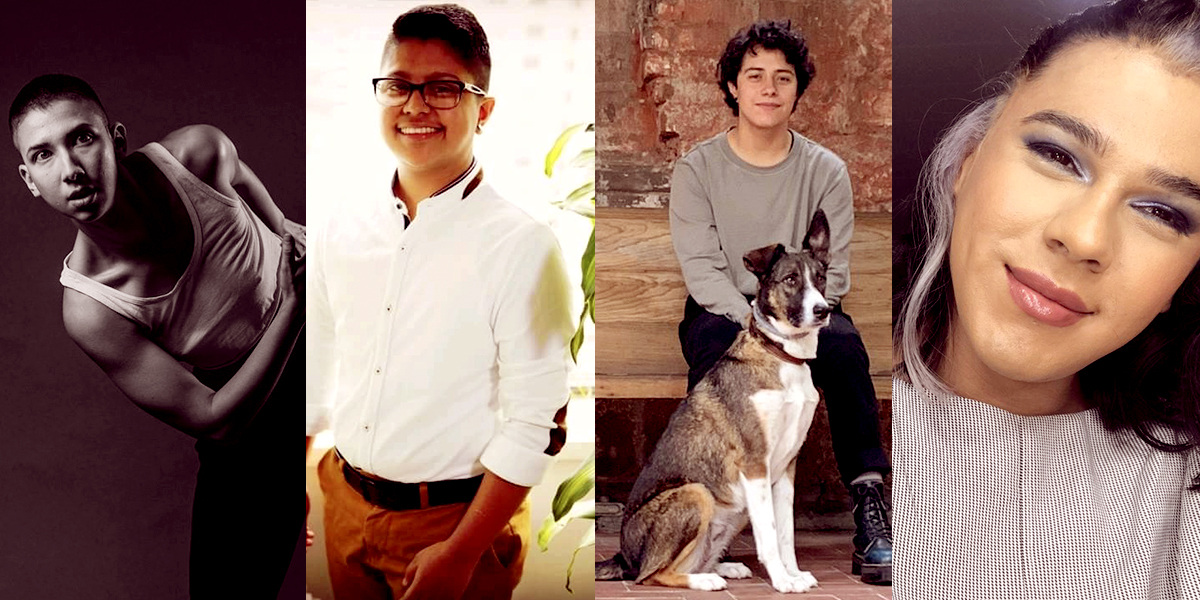
March 31st is the International Day of Visibility for Trans, Non-Binary, and Gender Non-Conforming People. Four of them tell us about their experiences of being visible in Latin America today.


Share

March 31st is the International Day of Visibility for Trans, Non-Binary, and Gender Non-Conforming People. This day is dedicated to celebrating their lives and asserting their existence, bodies, narratives, and rights.
Why did this date come about?
In 2009, American trans activist Rachel Crandall spearheaded the idea of celebrating the lives and resilience of trans people after realizing that—at the time—only one date on the calendar (November 20) was dedicated to the memory of those who were victims of transphobic hate crimes and other forms of violence. In response, Rachel promoted the need to celebrate the lives, resilience, achievements, and hope of trans people worldwide. Thus, on March 31 of that year, the first International Transgender Day of Visibility was celebrated.
Visibility is not always a goal
In Latin America, the lives of trans people can take on diverse dimensions and impacts that make visibility not always a goal. Understanding this requires situating oneself in a region where the life expectancy of trans people is 35 years, according to the Inter-American Commission on Human Rights (2015 Report). Brazil, Mexico, El Salvador, Honduras, and Guatemala are among the countries with the highest levels of transphobic/trans-hating violence worldwide.
The rise of anti-rights and transphobic groups in the legislative bodies of many countries hinders the advancement of rights for these populations. According to 2019 report , only eight states recognize the right to self-perceived gender identity through an administrative procedure. In some cases, this is still subject to terms and conditions, such as guaranteeing this right only to transgender adults. In most legislations, children and adolescents are not included, nor are non-binary people.
In addition to not recognizing their basic right to identity, the systematic violence perpetrated against trans people means that, at times, they are forced to deny their own gender identity in order to avoid being ostracized in their family, school or health centers, or to access employment and housing.
Despite the current situation, visibility can also have a positive impact, especially when it's built from within. When trans people support others with empathy, sharing, joy, and affection, they can live without fear or shame and know that the journey isn't always lonely.
To better understand, Presentes asked four trans people from the region what it means to be visible and what it implies in their contexts.
“Visibility doesn’t only imply what is monstrous”
Daniela Núñez is a transfeminist, Central American, sex worker, migrant, and an avid reader.

"I think being visible is important. In a way, it's a kind of representation and a powerful act, especially for someone who lives on the margins. But focusing solely on being visible is just tickling the systems of oppression. Because, let's face it, being visible or having some degree of representation within certain spaces is the symbolic price.".
At my most intimate level, in my own context and in the spaces I frequent—which are particularly feminist—there is a high price to pay. It takes a toll on mental health, peace of mind, leisure time, and a host of other things that are also difficult to compensate for. On the one hand, we have this transphobic feminism where there is scorn for acknowledging a trans person's connection to feminist epistemologies, feminist practices, and feminist dialogues. On the other hand, there is the scorn of recognizing within oneself the possibility of a transition based on feminist epistemologies, even with the support of feminist comrades.
Transphobia, beyond social movements, is palpable. It's about recognizing the gaze of the other, the rejection of what is unknown, of what doesn't seem normal. And beyond what is unknown, it involves considering what isn't considered normal and what is imagined or assumed to be me. In this sense, the implications translate, in the worst cases, into transfemicides. Exclusion is reproduced in a series of difficulties in accessing things. And when I say things, I mean the most basic things.
The other implication of being visible is vitally beautiful. When one looks in the mirror after a journey of questioning, of recognition, of attending to the organic nature of one's practices, of seeing oneself in the construction of one's ethical-political, transfeminist, kind project, going for the first bra with friends, for the first lipstick (...) there is a kind of complicity that I think is a challenge for academic and street activism to begin to articulate.
Visibility doesn't just mean how monstrous and terrible it is to go out on the street, but also the embrace of some comrades, of comrades from other social movements, and in that sense it is important to emphasize the beauty that exists within the trans experience.
“It is an act of self-love and collective love”
Ali Salguero is a dancer and a teacher in training as a dance therapist in the Mexican state of Sonora . She is also part of the O/trans Fanzine .
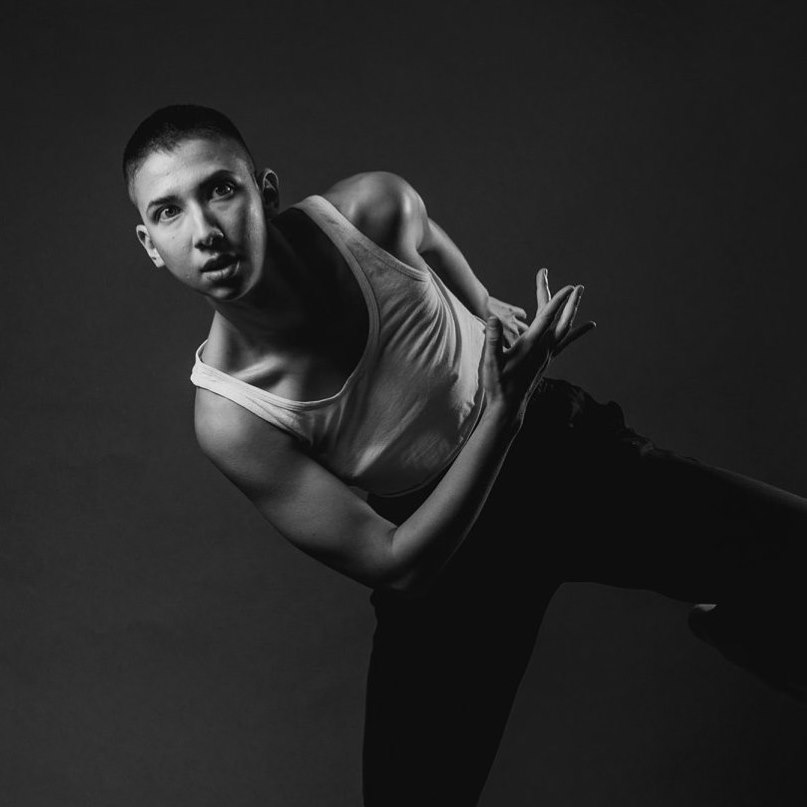
“ Being a visible trans person means embracing my experience and speaking from it so that other people—trans or not—know that other ways of existing are possible . It is practicing my profession and my activism as a declaration that I am alive. It is an act of self-love and collective love.”
It means taking the risk of losing credibility, of some people thinking I'm faking it or that I invented my identity overnight. It means being extremely sensitive to everything Other, everything deformed and rejected, everything that falls outside the regime of normality.
“The visibility of trans people in Honduras is an untold story”
Nahil Zerón is a trans person who lives in Honduras, one of the most violent countries in Latin America for LGBT people.

"For me, the visibility of being trans is about naming myself every day, but also about discovering myself from other ways of existing. My visibility stems from, and makes a lot of sense of, a history of identities and bodies that have not been able to live in Honduras , that have experienced the structural violence of the different systems of oppression that are perpetrated on our bodies."
To speak of the visibility of trans people in Honduras is to speak of an untold story and its implications. It's not just about the different processes of violence and discrimination we have endured, but also about collective recognition among others, and understanding how we are not only collectively shaping our thoughts but also organizing ourselves and responding to these systems of oppression. Being a trans person is not just an identity; it's inhabiting the world through a different body and different connections.
“It opens up the possibility for a child to grow up without fear.”
Luis Tirado Morales is 17 years old, an activist, and together with his friends manages Estrellas Trans, an artistic and social project aimed at trans children in Mexico .

"The way to be visible is by being completely honest with yourself and how you present yourself to the world. I don't necessarily think you have to literally say 'I am a trans person'; existing outside of cisheterosexual norms and normativity and moving freely from there seems to me to be a form of visibility ."
One of the things I wished for when I was younger was to see myself reflected in someone—a scientist, a superhero, something that could tell me my identity was valid and that there were many possibilities within that identity . I think never seeing yourself reflected cuts off that possibility of dreaming and thinking of yourself in positive ways. Knowing that there are many kinds of existence helps you forge that path, where you can be trans and also be happy.
In my context, it meant making my family visible. Having that support is wonderful, but I think it's something that's growing in terms of awareness so that others can empathize and see that trans people exist and are valuable.
Being visible opens up the possibility for a child to grow up without fear of expressing themselves, because if they've ever seen someone else do it and it seems natural to them, I think you take away a lot of suffering. I think it's these small things that show you that being visible is important.
We are present
We are committed to journalism that delves into the territories and conducts thorough investigations, combined with new technologies and narrative formats. We want the protagonists, their stories, and their struggles to be present.
SUPPORT US

FOLLOW US
Related notes

We are present
This and other stories are not usually on the media agenda. Together we can bring them to light.