

Casa Andrea: a community home for women and diverse people in Buenos Aires
From homelessness and abandonment to community life. Casa Andrea opened at the end of 2024 and is home to 8 cis and trans people.


Share

BUENOS AIRES, Argentina.
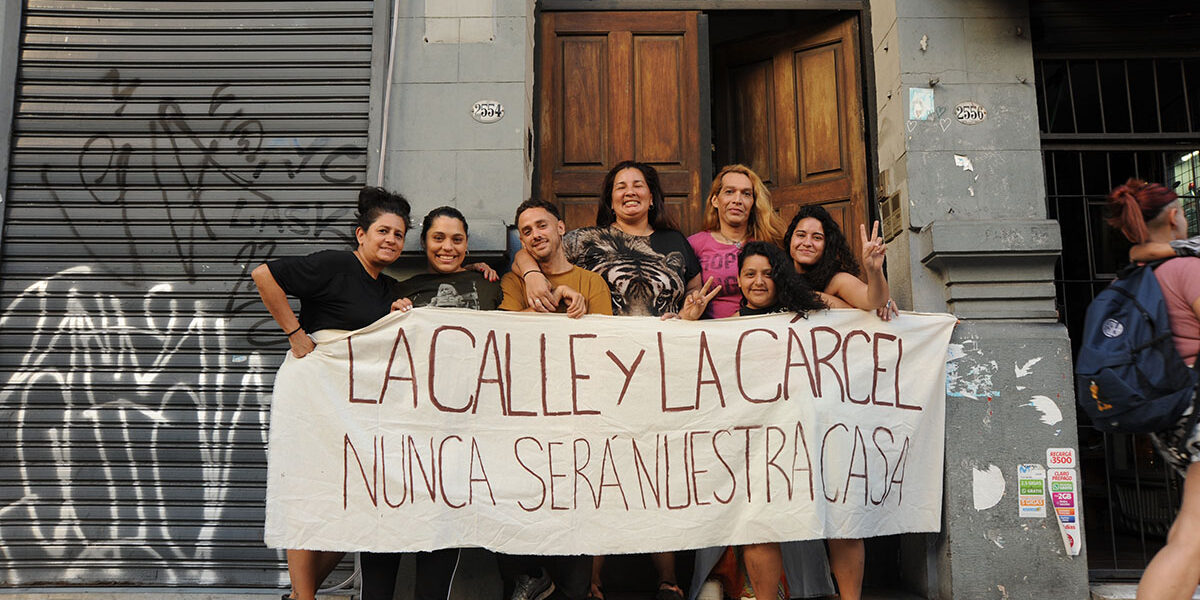
A dream, an urgent need, a desire. Casa Andrea is a transfeminist housing project, managed by the organizations No Tan Distintes and Yo No Fui. It opened in 2024, one of the most difficult years for the LGBTI+ population in Argentina. Currently, it houses eight cis and trans women, three children, five cats, and a dog.
“We don’t have a recipe for how to build a collective house. We are two collectives that have their own logics, their own ways of working, their own organizational concepts—very similar, very sisterly, but at the same time different,” says Alejandra Rodríguez, a member of Yo No Fui, a transfeminist and anti-prison organization. “We are all learning, getting to know each other in depth,” she adds.
The house has two floors and rooms for each of the women. In addition, there are two emergency rooms and a meeting room. When the house opened, Sofía Castro Riglos, the sole survivor of the triple lesbian murder in Barracas, moved in. Both organizations were vital in supporting her in the months following the massacre at the Hotel California.
A dream home
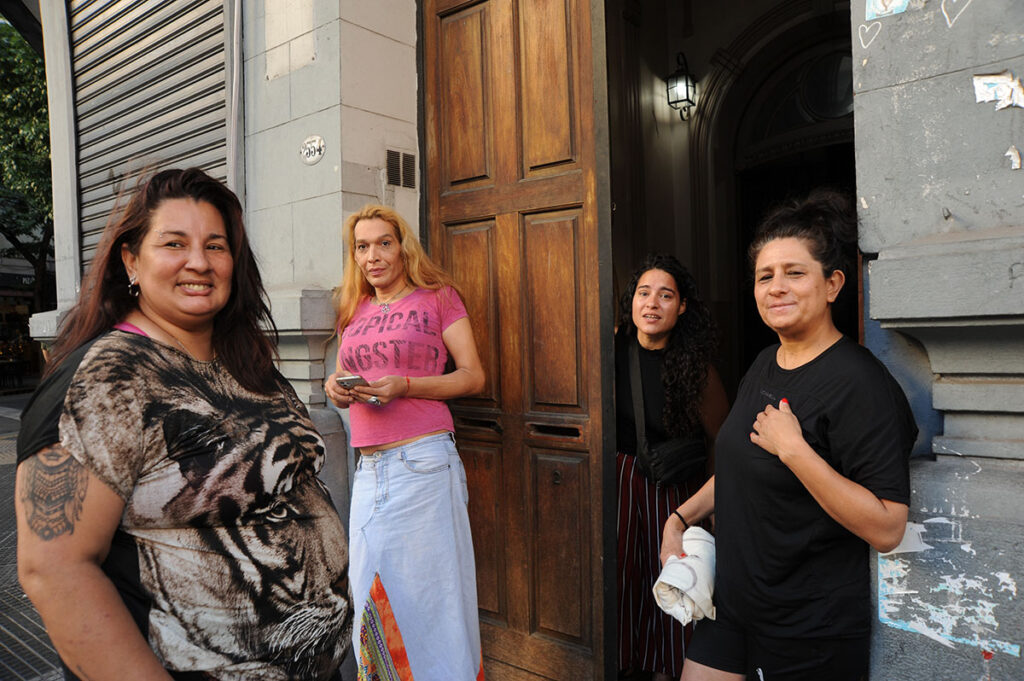
Every Monday, in one of the rooms of the enormous house, located on the border of the Balvanera and Recoleta neighborhoods, a meeting is held between the two organizations and the residents to manage a friendly coexistence.
The house was built a little over a century ago. Mabel lived there with her mother and father. For a while, she rented it out to students or people who came to study in Buenos Aires. Eventually, Mabel found herself alone and wasn't sure what to do with the space. She had been offered the option of converting it into a hostel, but the idea didn't appeal to her. In such a complicated situation, she decided to make the space available and, after researching the work of Yo No Fui and No Tan Distintes (NTD), she offered it to others.
Strategies
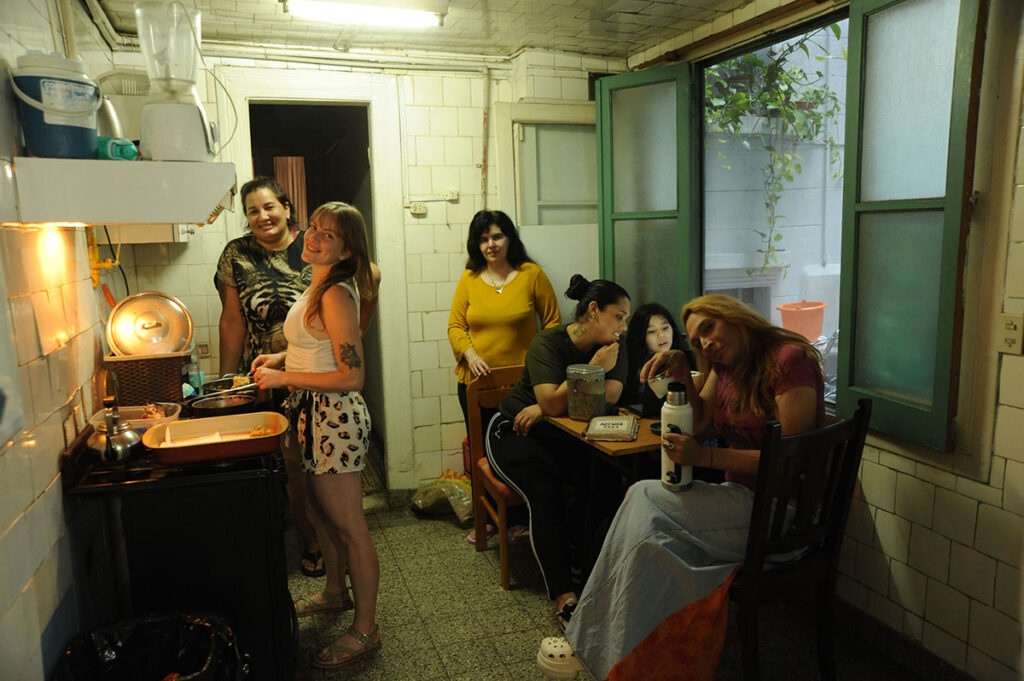
Sitting in the living room, the girls joke around. They talk about things around the house and play with one of the five kittens who live there. An organizational chart is posted next to the stairs, near the entrance. They come from different backgrounds, but they are united by their desire to build a life together.
“Pipi (Gaby) and I have known each other for over 20 years. We met on the street, we were together, in juvenile detention, in jail. We met the collective and we were together in a poetry workshop inside the jail in 2008. We got out and after millions of conflicts and things that happened to us, we are living together in a collective community space that has nothing to do with what led us to live together 20 years ago,” says Eva.
“Intensity is something we don’t lack here,” say the women who live at Casa Andrea. Marlene is a trans woman from Salta who was released from prison in 2024 after serving 17 years. There, she met the Yo no fui collective because she was attending a literature workshop. After her release, she continued working with the organization and is now part of Casa Andrea. “If I didn’t have this opportunity, I would have ended up on the street,” she tells Presentes. Paula, Belén, Eva, and Gabriela also live there. “It’s a complete learning experience. Living collectively is a 360-degree change in how we live, think, and feel everything together,” they agree.
Marlene established a traffic light system. Depending on how she feels, she sets it to red, yellow, or green. Her housemates already know how to approach her. She says it works very well for now, ensuring there are no conflicts. Living in a community requires strategies.
Paula came to No Tan Distintes after her time at Frida, a community integration center. “I was addicted for a long time, almost 15 years on the streets. At 41, I decided to leave the streets, get my act together, and have a different life. And I came to No Tan Distintes, which has always been a huge support for me.”.
Paula highlights the work of organizations that don't have a stigmatizing perspective. “Even our families tell us we won't be able to change or get out of our situation. They don't believe us. And in reality, it's a bit more complicated for us because we're from prison, because we've been incarcerated, because we used drugs. Thanks to Yo no fui (I Wasn't There) and No tan distintes (Not So Different), we have this opportunity to live with dignity, to have our own bathroom, our own bed, our own room. The women who have children have a room for their kids, and that's incredibly important.”.
The worst year
The first year of Javier Milei's government was not easy for LGBTQ+ people or for women in extremely vulnerable situations. Stigmatization, hate speech, constant attacks from within the national government itself, plus a brutal economic adjustment, directly affected them.
“For me, it was one of the worst times since I got out of prison 12 years ago. I lost my job after finally getting a government position, which was a big deal for me. I lost it overnight and even worked for two months for free hoping to get it back,” says Eva, who worked in a children's rights program at the Secretariat of Childhood. She is a single mother and is raising her son alone.
Both Yo No Fui and No Tan Distintes actively participate in the Antifascist Assembly that organized the massive march held nationwide on February 1st. They have also formed an alliance with the Association of Sex Workers of Argentina (AMMAR) and are part of Mostri, a group they founded last March.
“For us, Lo Mostri had that quality of thinking beyond the surface: it could be your time in prison, it could be substance abuse, being disabled, being trans, being brown. All of that confluence also brought us together,” says Ari from Yo No Fui. “Activism by supporting people experiencing homelessness and wanting to be an anti-punitive activist already places you in a Mostri position,” adds Alejandra.
A crime against all
The horrific triple lesbian murder in Barracas, perpetrated by Juan Fernando Barrientos, left a deep mark on them. Through their organizations, the women actively participated in supporting Sofía and demanding justice.
“Personally, it hurt me a lot because they were colleagues who were in inns with me,” says Belén.
“In that case, there was a whole precariousness of life and an absent state,” Eva adds. “It’s what we experience in our daily lives. Recently, a friend died in Ezeiza prison from smoke inhalation, from a fire in a punishment cell. How many people have been set on fire while living on the streets? All of that terrible stuff, so visible in the Barracas lesbian murder, is part of our everyday reality. And that’s why Sofi is here and why we’re part of her life, her network, and her support.”.
In December 2024, a ruling by the Court of First Instance in Contentious, Administrative and Tax Matters No. 23 ordered the Government of the City of Buenos Aires (GCBA) to guarantee Sofía Castro Riglos, the only survivor of the triple lesbicide in Barracas , access to housing in dignified conditions and with urgency.
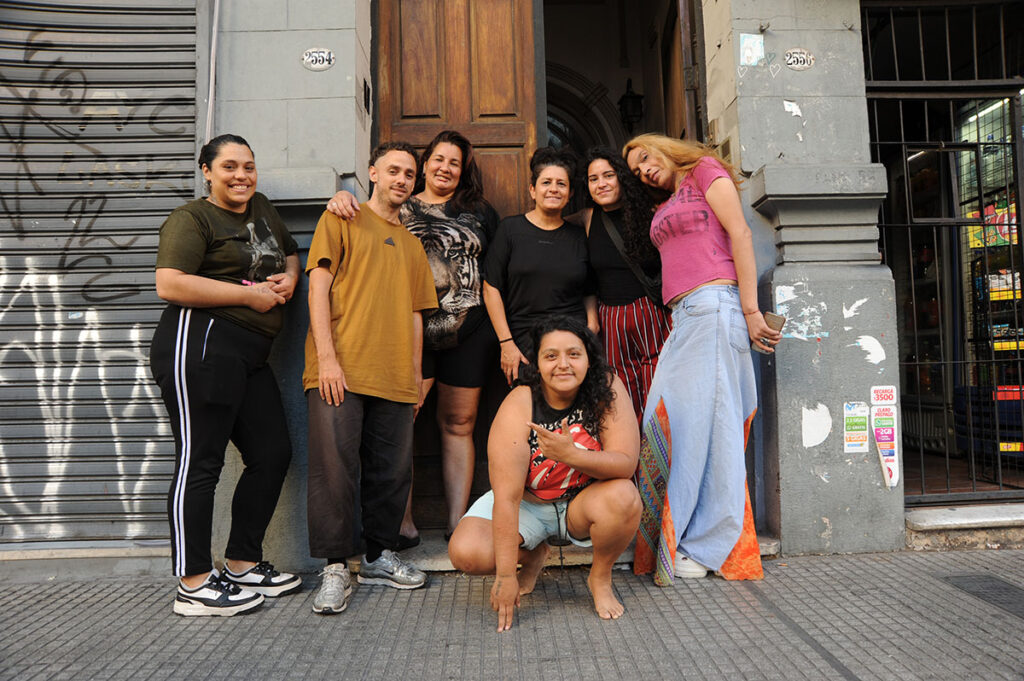
“This house is an answer to the question of where feminists are, in a micropolitical sense,” says Alejandra. “We’re not on television programs saying ‘I’m a feminist’ or ‘I wear the green scarf’ or anything like that. We’re working at the level of everyday life, at micropolitics, and generating subjective and structural transformations in our lives. We’re here, just as we’re at feminist marches or defending public universities. We’re trying to create more livable lives.”.
The dreams that are missing
-What dreams do you have for the life to come?
Marlene: – My dream is to graduate with a degree. I've been putting it off for many reasons. But I think I started doing things I enjoy after I got out of prison. I really like learning something new every day. The "I Wasn't There" organization teaches me new things every day, even the way I speak. My dream is to be able to help other people in need someday, just like I'm being helped right now.
Gaby: – This is for growth and for new collective housing projects to continue operating, so we have the resources to support this project. And so we have the tools to keep funding these projects and supporting young women. The dream is always for these young women to live with dignity.
Paula: I'm learning everything, everything for myself. It's difficult, but we're learning.
Eva: -In addition to what my friends are saying, we're kind of in the process of experiencing all of this. We're making a dream a reality, a dream that's already become a reality. Two years ago, they were going to evict us and leave us on the street with everything. And today, in this house, a lot of wishes are coming true. For me, this is a dream come true, and we'll see over time how that dream grows, how we transform, and how it multiplies. Belén: -My dream is that there will be a hundred houses, thousands of houses. To multiply the houses.
We are present
We are committed to journalism that delves into the territories and conducts thorough investigations, combined with new technologies and narrative formats. We want the protagonists, their stories, and their struggles to be present.
SUPPORT US

FOLLOW US
Related notes


We are present
This and other stories are not usually on the media agenda. Together we can bring them to light.