

Mental health: how LGBT activism in Mexico documents what the State ignores
LGBT organizations work to document and systematize the suicide deaths of LGBT people.


Share

MEXICO CITY, Mexico. In Mexico, suicide among LGBTI+ people is not an isolated phenomenon; it is the result of systematic violence perpetrated against them. Of the suicide cases registered by the National Observatory of Hate Crimes , the majority were young people between 18 and 25 years old, especially trans people, non-binary people, and gay men with female gender expression.
The lack of official data makes it impossible to gauge the magnitude of the problem. Above all, it hinders the design of appropriate public policies for its prevention and the guarantee of the right to mental health with sensitivity and a focus on sexual diversity.
Faced with this void left by the State, the organized activism groups in different states of the country that are part of the National Observatory of Hate Crimes are taking charge of documenting, systematizing and in some cases accompanying cases , highlighting patterns of discrimination, exclusion and hostility that contribute to suicides of LGBTI+ people.
A silent and systematic violence
The Mexican state does not register or systematically track violence against the LGBT population. Nor does it disaggregate information by sexual orientation, gender identity, and gender expression. In response to this lack of data, the National Observatory of Hate Crimes, comprised of more than 60 organizations across the country, documents cases of murders, disappearances, attacks, and suicides.
The need to document suicides intensified following the Covid-19 pandemic lockdowns. In many homes, violence perpetrated by family members against LGBT+ individuals escalated. Spaces that should have been a refuge became hostile and violent for many.
In the first year of the pandemic, the Hate Crimes Observatory recorded 11 suicides of LGBT+ people. Data from subsequent years has not been made public. However, some states are gradually releasing their reports. Over the past ten years, at least 23 suicides were recorded in Michoacán, two in Coahuila, and one each in San Luis Potosí and Jalisco.
The urgency for a protocol
The factors that lead to suicide are not limited to the realm of domestic violence. Prejudice, acts of discrimination, and systematic violence in schools and workplaces are also factors that drive LGBTI+ people to suicide.
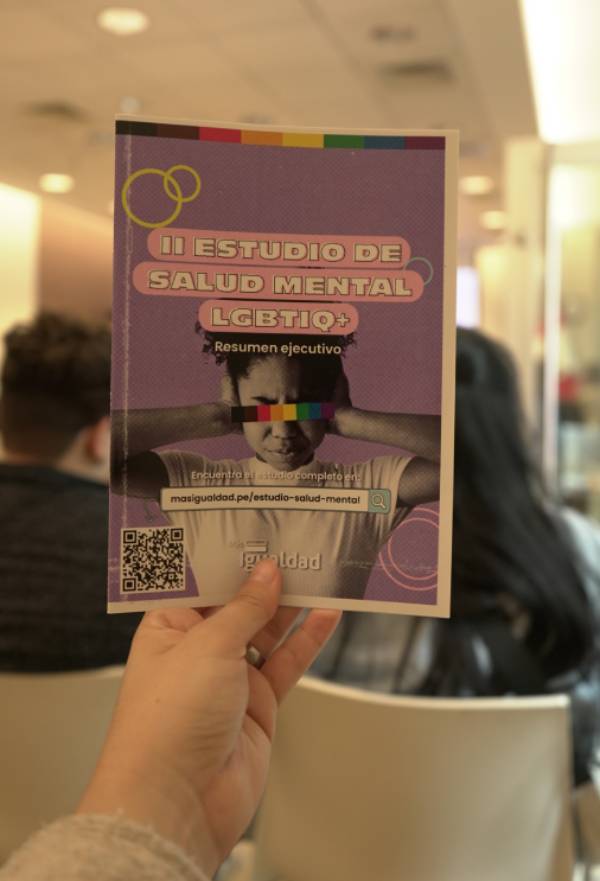
According to the first survey on mental health among Mexican LGBT youth, conducted in 2024 by The Trevor Project , of the LGBTI+ youth who attempted suicide, 77% said their family situation was the motivation, and 60% cited a hostile school environment.
“ Bullying and discrimination in the workplace are factors that contribute to hopelessness and the deterioration of mental health. There is no culture of bullying prevention, no protocols in the workplace. Action is taken only after the damage has been done. But there are no strategies to prevent it from the beginning,” emphasizes Kelly Pacheco, coordinator of the National Observatory of Hate Crimes.
“There is a taboo surrounding suicide and mental health”
Not all the organizations that make up the Observatory record suicide cases, but that doesn't mean they don't happen. The main limitations to recording suicides are access to information and verification; and the fact that activist organizations lack mental health professionals to provide support and follow-up on cases.
“Recording suicide in LGBT+ populations is extremely complex because there is a taboo surrounding suicide and mental health; as a Mexican society, we don't talk about it, nor do we have access to mental health services. And there are also no mental health professionals who are sensitive to serving our populations,” Pacheco comments.
“Validating information about suicide cases among LGBT people is very limited. In the vast majority of cases, there is a withholding of information from close circles, primarily family. They even limit this information to friends because, precisely in many cases, it involves systematic family violence that does not respect sexual orientation, gender identity, and gender expression. There is a lot of silence in this regard because the last thing they want is for it to be identified that, in fact, the suicide is related to violence perpetrated in that environment,” she adds.
Suicide is the second leading cause of death in Mexico after diabetes, according to official figures from the National Institute of Statistics and Geography (INEGI). These data are not broken down by gender identity or sexual orientation, but it is known that cisgender men die by suicide more often than cisgender women. It also primarily affects young people between the ages of 15 and 25. And the main factors that lead people to suicide are heartbreak, family problems, and financial difficulties.
The value of context
Organizations that document suicides in the LGBT+ community agree that these cases cannot be addressed solely from a quantitative perspective . It is essential to understand the conditions, the systemic violence, and the context that led them to that point.
“Suicides are often discussed as if they were individual decisions, but there are structures of violence that push people to this outcome. It's not just about statistics, but about lives, about contexts that must be analyzed to prevent more deaths. Investigating and documenting the suicidal act of our population merely as a matter of choice obscures the contexts of structural violence that the person may have experienced and places all the responsibility on the LGBT+ person and their practices in life, rather than on the structural violence and prejudices they experienced before driving them to suicide as their only way out,” explains Daniel Marín, president of Responde Diversidad , an organization that belongs to the Michoacán es Diversidad .
The problem is social.
Besides family secrecy, another major problem in documenting these cases is the attitude of the justice authorities responsible for investigating them. According to testimonies gathered by activists, in many cases prosecutors and forensic services deny the victims' gender identity, registering them with the sex assigned at birth. This prevents them from investigating the conditions of structural violence that may have led them to die by suicide.
“If a trans person commits suicide, the authorities register them with their biological sex and not with their gender identity. Furthermore, instead of investigating whether they suffered harassment, violence, or rejection, the first thing they look for is whether they used substances or had a history of mental health problems, to justify the act as something individual and not as a social phenomenon,” Marín adds.
“Official invisibility often means that organizations have to make double efforts. The lack of differentiated research contributes to impunity and silence surrounding the violence faced by LGBTI+ people,” says Kenlly Pacheco.
The absence of the State and the need for public policies
One of the main demands of the organizations that make up the National Observatory of Hate Crimes is that it be recognized that suicide in LGBT+ people is not an isolated phenomenon, but the result of systematic violence exerted on them.
“We need to generate data and statistics to be able to promote public policies that address suicide prevention in our population. The first step is to recognize that there is a mental health crisis and that this crisis has its roots in the discrimination and violence we experience,” emphasizes Kenlly Pacheco.
In addition to raising awareness of these cases, LGBTQ+ groups in Michoacán are pushing to criminalize incitement to suicide in the local penal code. This is because they have identified that many LGBTQ+ people, especially young people and teenagers, are victims of hate speech and threats that push them to consider suicide as their only way out.
In this regard, both activists point out that Ecosig's practices, falsely labeled "conversion therapies ," can also contribute to suicide. "The level of revictimization, feelings of guilt, self-rejection, etc., that healthcare professionals and family members inflict on LGBT+ individuals can be factors that lead to suicide," Pacheco adds.
Currently in Mexico there are no legal consequences for those who incite suicide.
“Our sexual orientation, our gender identity and expression are not the reasons for suicide.”
“In times when policies are being implemented that threaten our existence, it seems we have to be more outspoken in saying that our sexual orientation, our gender identity and expression are not the reasons for suicide. Simply because we are not sick and we are not criminals,” Kelly Pacheco concludes.
Despite these statistical efforts by activists and organizations, the path to suicide prevention among LGBT+ people appears long and complex. Currently, mental health issues within these populations are not addressed in any Mexican public policy.
For these organizations, it is essential that all public policies adopted adopt a human rights approach. This includes respecting the dignity and identity of LGBTI+ people, while simultaneously creating safe and accessible spaces for emotional and psychological support, and ensuring access to mental health care free from prejudice and attempts at 'correction'.
“The lack of data on suicide among LGBTI+ people allows society to continue blaming the victim: 'They did it because they didn't accept themselves,' they say. But the reality is that institutions and society didn't care for or accept that person. We cannot allow these cases to remain invisible; documenting them is the first step to changing reality,” insists Daniel Marín.
We are present
We are committed to journalism that delves into the territories and conducts thorough investigations, combined with new technologies and narrative formats. We want the protagonists, their stories, and their struggles to be present.
SUPPORT US

FOLLOW US
Related notes


We are present
This and other stories are not usually on the media agenda. Together we can bring them to light.