

LGBT Memories of the Dictatorship: Recommended Documentaries, Podcasts, and Books
During Argentina's Memorial Month, a series of recommendations that explore the meaning of this date from the perspective of sexual diversity. Documentaries, books, and podcasts.


Share

March 24th is commemorated as the National Day of Remembrance for Truth and Justice in Argentina. Presentes offers a series of recommendations that explore the meaning of this date from the perspective of sexual diversity. These resources form part of a fundamental archive for the history of the country.
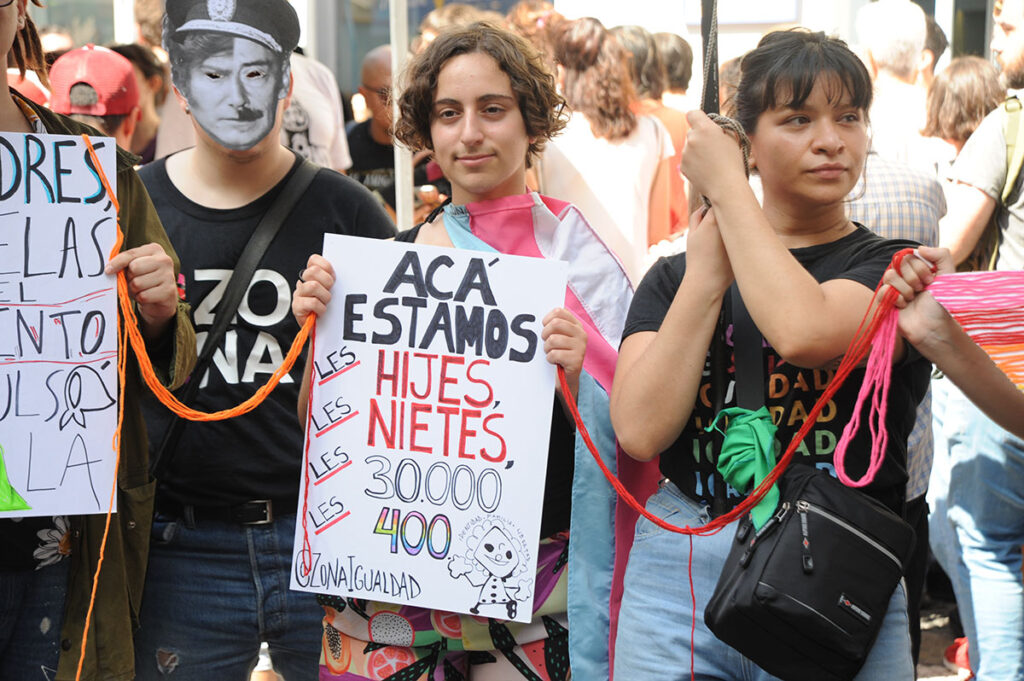
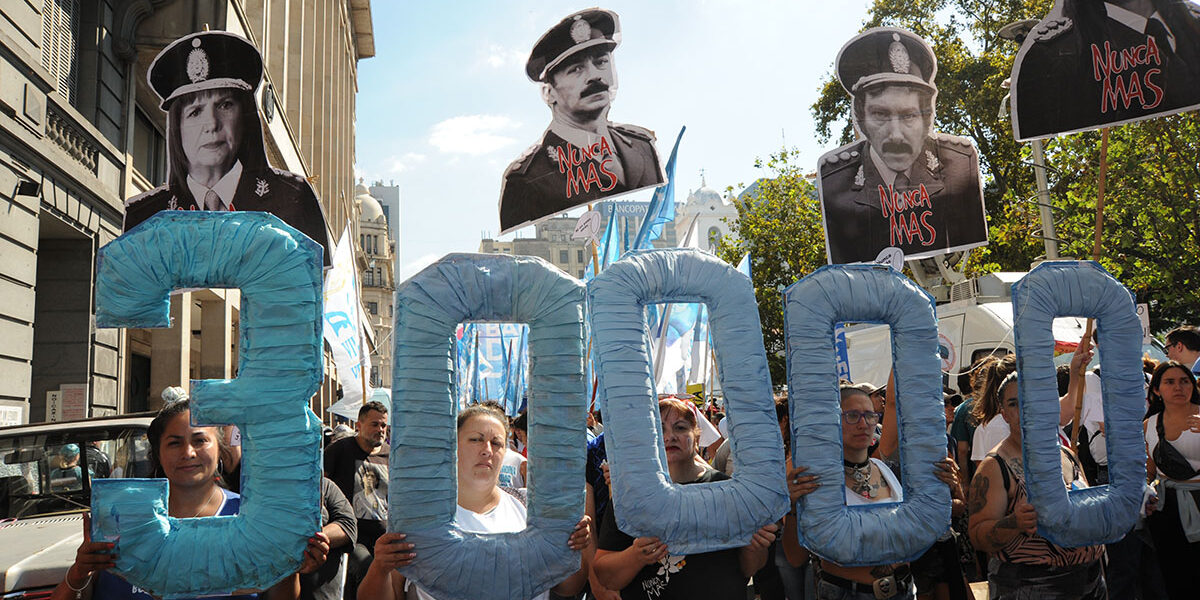
Forty-nine years after the genocidal coup that established the country's most brutal civic-military dictatorship, a massive demonstration is expected this Monday. Human rights organizations will march together, for the first time in 19 years, to Plaza de Mayo, where the rally will take place at 4:30 p.m. “They are 30,000. It was genocide” is one of the strongest slogans, in response to the denialist attempts of Javier Milei's government.
In the last year, the Ministry of Defense dismantled the Armed Forces Archive Survey and Analysis Teams. Furthermore, the national government dismissed dozens of workers from the National Secretariat for Human Rights, and sites are being emptied. The Virrey Cevallos Memorial Site is one of the most affected, along with the Haroldo Conti Cultural Center and the National Archive of Memory.
The movement for Memory, Truth, and Justice in Argentina is an example to the world and has succeeded in convicting more than a thousand people for crimes against humanity. Efforts to keep the memory of these crimes alive among the Argentine people are numerous. At Presentes, we share some of these efforts.
DOCUMENTARIES
Where memory dwells
The documentary Where Memory Dwells condenses part of the lives of Julieta and Fabiana Gutiérrez, two trans survivors of the last civic-military dictatorship, illegally detained in the former Clandestine Center of Detention, Torture and Extermination (CCDTyE) “Pozo de Banfield” between 1976 and 1977. The audiovisual production is a thesis for the Bachelor of Science in Communication at the University of Buenos Aires , directed by María Clara Olmos and Carolina Musso.
“So many of my comrades are gone now, those who were detained in this Well. It was the Well of Terror for us,” Fabiana says in a fragment of the short film. Around 440 people were held captive in the Banfield Well, of whom 170 were murdered or disappeared. In March of last year, for the first time in Argentine history, military personnel were convicted of unlawful deprivation of liberty, torture, sexual abuse, and forced labor against members of the trans and travesti communities. Julieta and Fabiana are among the survivors recognized by the State.
The faggots
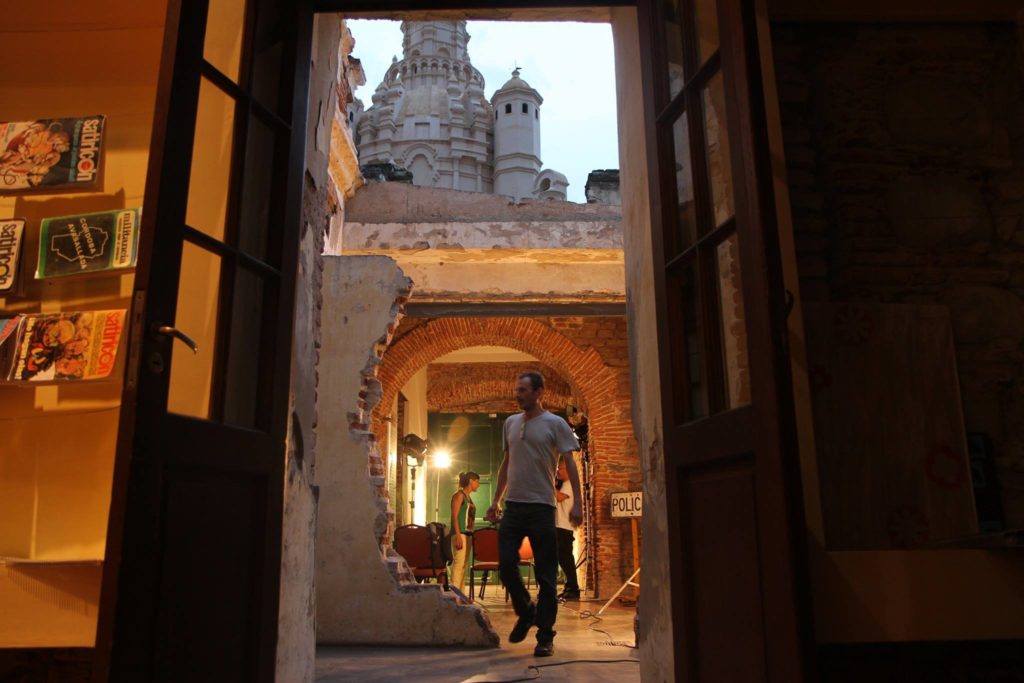
The audiovisual production Los maricones was directed by Daniel Tortosa and premiered in 2016. It shows the testimonies of survivors of detentions in the Department of Information (D2) of Córdoba during the dictatorship and in democracy, starting with the story of its director, but also those of Nadiha, Eugenio, Vanessa, Agostina, Marcia and Romina.
"As soon as we entered, they made us lie down and sit on a bench and blindfolded us. That really shocked me because the bandage had been used. It was damp, it had sweat on it, it was awful," Tortosa describes at the beginning of the documentary.
BOOKS
Trans Memory Archive
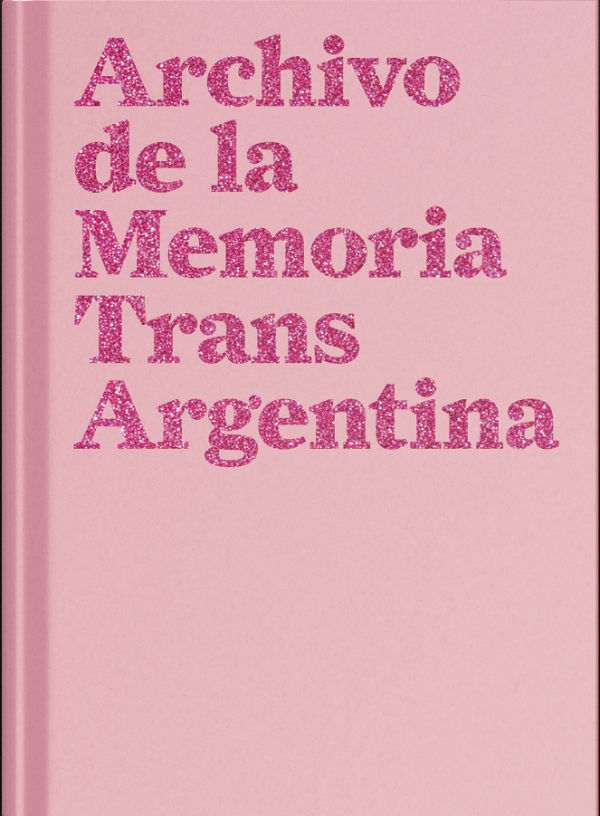
There are three publications available from Editorial Archivo Trans. The first book—now reissued—was Archivo de la Memoria Trans (Archive of Trans Memory ). It was named after the institution that was being presented to society, and the books are like clouds of memories, organized around thematic axes.
The second book is If Your Mother Saw You , which highlights the vision of Claudia Pía Baudracco and the protagonists who documented their era, with brilliance and struggle.
The third, Our Codes , contains photos, stories and the construction of a unique language, edited by Liliana Viola.
Baths, parties and exiles

Bathrooms, Parties, and Exiles is a pioneering book in the investigation of how state terrorism affected sexual diversity. For the first time, it revealed the everyday experiences of gay men in Buenos Aires during the last civic-military dictatorship. Authored by Alejandro Modarelli and Flavio Rapisardi, it was published by Sudamericana in 2001. It was out of print for 20 years and was reissued in 2019 by the SOY Library.
“Those of us who went to the teahouses all had a common code of conduct. Gestures, short phrases, the distribution of space, and people who acted as lookouts, usually voyeurs. It was all silent, based on unspoken understandings. No one participated in that game unless they wanted to. And as soon as someone outside the ritual entered, we stopped. The danger codes worked automatically. When the door opened, everyone stopped what they were doing,” says one of the testimonies in the book.
The Never Again of the Madwomen
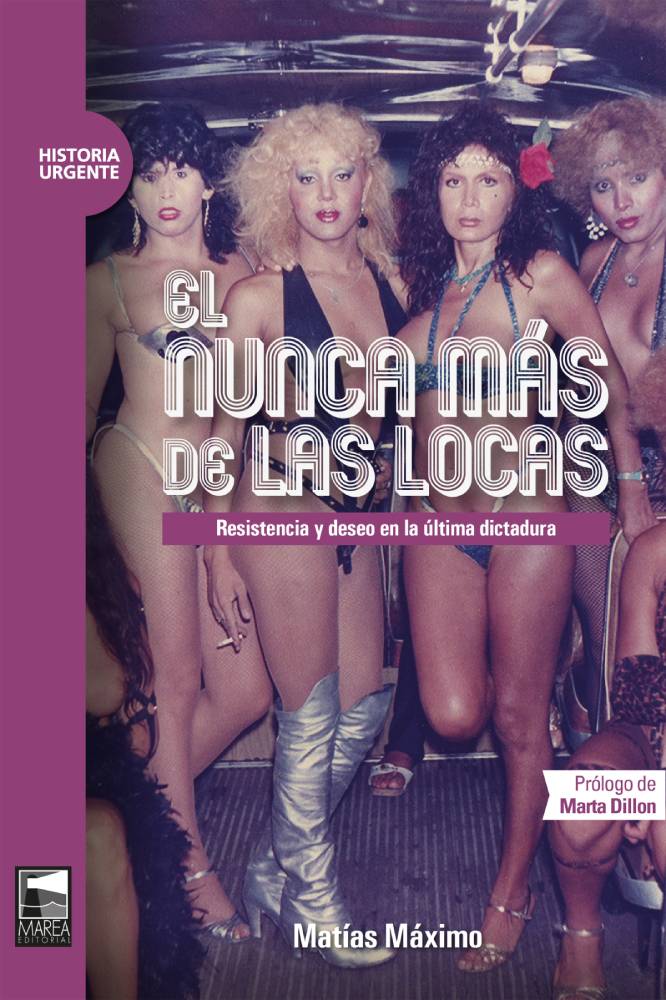
The book, "Never Again of the Madwomen: Resistance and Desire in the Last Dictatorship," was published by Marea Editorial in 2023 as part of the Urgent History collection, marking four decades of democracy in Argentina. It recounts the stories of kidnappings and disappearances suffered by the LGBT community during that period , and their methods of building memory and resistance.
“The 40 years of democracy, with some rights achieved, give us the possibility of starting to include our stories in the construction of history to gain other subjectivities that allow us to live freer lives,” journalist Matías Máximo , author of the book shared with Presentes .
Filed: Chronicles of clandestine love affairs
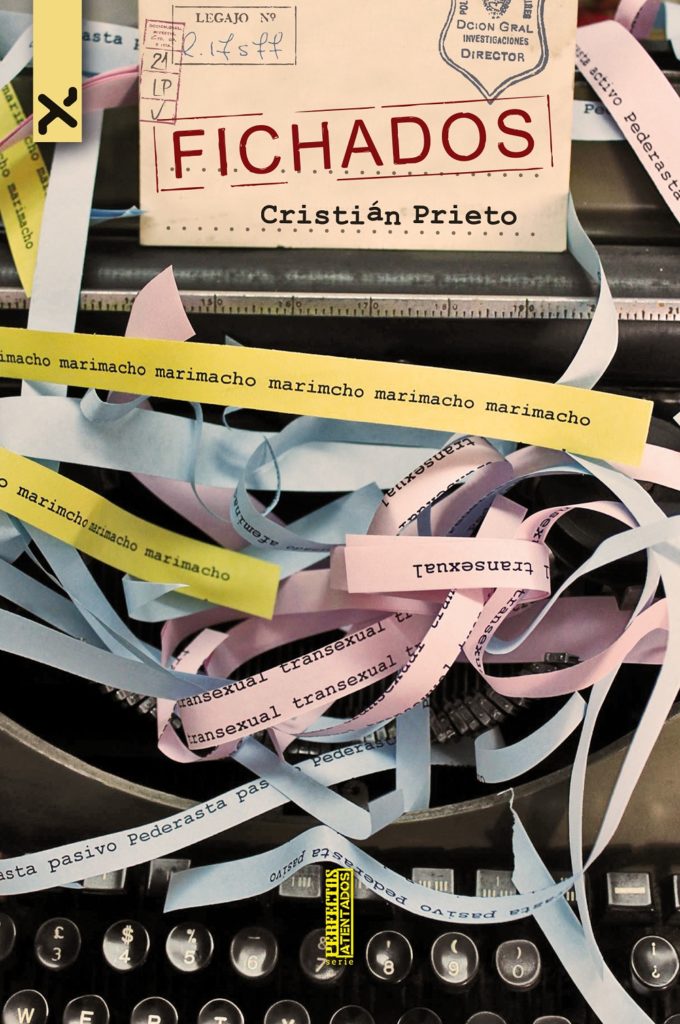
"Fichados" recovers silenced stories and reveals the cruelty and persecution of the Buenos Aires police intelligence services against the LGBTQ+ community. Its author, journalist Cristian Prieto, was assigned to safeguard the files of the Buenos Aires Provincial Police Intelligence Division (DIPBA), which operated between 1957 and 1998, during his work at the Provincial Commission for Memory . This book is based on his undergraduate thesis in Social Communication from the National University of La Plata (UNLP), published by Editorial Pixel.
“We are called sexually immoral, pedophiles, homosexuals, effeminate, haughty, transsexuals, and mannish women. Persecution, espionage, and surveillance were also verbs used to look at us queer people throughout the entire period of intelligence service existence (1957/1998). Clearly, we were not the primary target of the last military dictatorship to exterminate us, but we were spied on from the beginning to the end of the intelligence service's activity,” Prieto writes in the prologue.
Everything that power hates

Everything Power Hates , written by Alexis Oliva, is a journalistic investigation that reconstructs the life of Viviana Avendaño, . She was also the youngest political prisoner in the province of Córdoba, shortly before the State Terrorism. She died on June 10, 2000, at the age of 41, along with her partner Laura Lucero, in a suspicious car crash during a social conflict. She spent five years and six months in prison and was released on April 6, 1981. She also had a sister, Juana del Carmen Avendaño, who disappeared during the State Terrorism.
Oliva gathered judicial and police documents, archival journalistic material, interviews with officials and people related to the protagonist, and various personal sources to reconstruct the life and death of the piquetera leader who was also a Guevarist militant in the seventies.
PODCAST
Tortilleras: a lesbian memoir

The first podcast from Agencia Presentes Tortilleras: a lesbian memoir , features five lesbian activists. Produced by Luciana Leiras and Tati Español, it aims to tell the story of the movement from 1980 onwards in the City of Buenos Aires.
Through a chorus of voices and archival television footage and popular memory, hosted by Tati Español, Tortilleras explores a genealogy of the lesbian struggle, the ways of naming themselves, the spaces of lesbian encounter and resistance, memories of police raids, the final years of the dictatorship and the return of democracy, the tensions and alliances with feminist movements, and chosen families. It also engages with current events, describing the networks being built today and imagining the future.
If you'd like to recommend other productions to add that aren't in this article, leave your suggestion in the comments.
We are present
We are committed to journalism that delves into the territories and conducts thorough investigations, combined with new technologies and narrative formats. We want the protagonists, their stories, and their struggles to be present.
SUPPORT US

FOLLOW US
Related notes
We are present
This and other stories are not usually on the media agenda. Together we can bring them to light.