

“Adolescence”: Who are the incels? What interests do they defend?
The British Netflix series "Adolescence" addresses a widespread yet little-known problem: incel culture among young men.


Share

The miniseries Adolescence, recently released on Netflix, addresses a problem that most adults are unaware of but is very much alive among young people and on the internet.
The term "incel originated in the 1990s as an innocent acronym: "involuntary celibate ." It was coined by a Canadian woman, Alana, to create a support network for people of all genders and identities who were unable to establish or find sexual partners. Today, unfortunately, the term "incel" has a much more violent connotation and evokes a misogynistic and hateful culture that thrives online and generates widespread violence.
Incels are not mere misfits: they are an organized digital community with their own coded language of contempt. They talk about "taking the pill"—red, blue, black, pink, etc.—a reference to The Matrix (the movie), but these represent toxic ideologies.
Their slang includes:
- The redpill is the one that "enlightens" them with sexist theories: feminism ruined their right to dominate.
- The blackpill plunges them into fatalism : they will never be desired.
Furthermore, they invented terms such as:
- Chads : successful men,
- Stacys attractive women
- Femoids : women reduced to objects, among others.
There are other terms that are used to monitor masculinity, such as:
- Cuck : Cuckold
- White knight: Men who defend women (traitors, in their eyes)
Languages and hierarchies
According to the research "Chads, Normies, and Incels ," this slang not only imposes a rigid sexual hierarchy (Chads vs. incels) but also blames women for their exclusion. Far from being neutral, the language operates as a mechanism to rationalize resentment and justify symbolic violence.
Although the profile is not homogeneous, most are young, cisgender, heterosexual, and white men who fail to meet the mandates of hegemonic masculinity: sexual success, physical attractiveness, and social dominance . They primarily meet in the virtual space to share their frustrations and theories about their inability to establish romantic and sexual relationships. Many incels identify as far-right, and there is a strong inclination toward hateful ideologies within their communities . They mostly congregate in forums like incels.is , where they share a sense of victimhood, blaming women and feminism for their isolation.
The manosphere and its connection to the far right
It's no coincidence that in this global political context, incels and their narratives are resurfacing. There's a term in the virtual world called the manosphere , a digital ecosystem that includes incels, MRAs, PUS, masculinists, and supremacists, among others. It's described as a "refuge" for men who are "victims" of a society that "excludes" them, and who embrace misogyny, xenophobia, and racism. But behind the rhetoric of self-pity lies a political ideology. The manosphere doesn't operate in a vacuum; it's a cultural arm of a global far right that has found very effective allies in public figures. Donald Trump ridiculed #MeToo , and Javier Milei tried to eliminate the legal classification of femicide in Argentina, insisting that "murder is murder," thus erasing the gender-based hate component. Both discourses fit perfectly into the incel narrative: the blame doesn't lie with the system, but with women who "exaggerate" or "lie." Since Elon Musk bought Twitter (now X) , the network has become a dumping ground for incel rhetoric. Musk not only reinstated the accounts of redpill figures like Andrew Tate, accused of human trafficking, but X's algorithms also prioritize misogynistic and conspiracy-theory content. Under its motto of "free speech," the platform allows hashtags like #KillAllWomen while censoring feminist activists.
Although their existence is almost exclusively virtual, they have had bloody impacts in “real life.” According to research such as that cited in the text “Chads, Normies, and Incels , incels have been linked to at least 50 murders in the last decade, from the Isla Vista massacre (2014) by Elliot Rodger—an incel icon—to attacks in Canada, the US, and Europe in 2024.
Seventy percent of incels are under 30, live in English-speaking countries (USA, Canada, UK), and congregate in forums like Incels.is. There, they share conspiracy theories and spread hateful content. Not all are violent, but their collective narrative normalizes misogyny: they blame women for "privileging" Chads (successful men) and demand a forced "sexual redistribution."
Adolescence
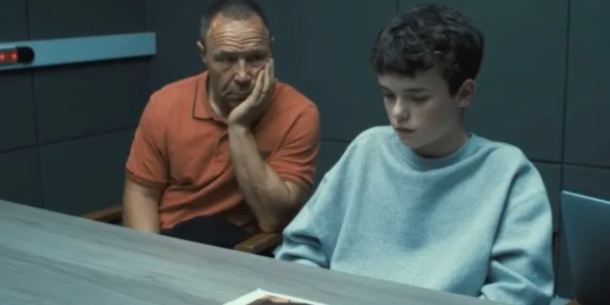
The Netflix miniseries "Adolescence" portrays the story of Jamie, a 13-year-old boy who stabs a classmate after being humiliated online. Although he doesn't identify as an incel, he consumes its propaganda: he hates Katie for rejecting him and sees himself as a victim of a system that marginalizes him. In a key dialogue with his therapist, he justifies the crime: "She did this to me ," reflecting the blackpill mentality ( "nothing will change my fate" ). Jamie embodies incel traits: misogyny, isolation, and consumption of toxic content. But the series shows that one doesn't have to self-identify as an incel to be part of its hateful machinery.
The series doesn't redeem Jamie, but it exposes the forces that manipulated him: his parents believing he was safe locked in his room, bullying at school, and an internet that taught him masculinity is measured by sexual conquests. Following Elon Musk's algorithm, platforms like X (formerly Twitter) are breeding grounds for young men like Jamie to go from searching for "dating tips" to theories like the "80/20 rule" (which claims that the top 20% of men monopolize women). " Adolescence " not only portrays an individual tragedy but also shows how digital and social dynamics fuel spirals of hatred.
The book "Leia, Rihanna, and Trump" by Project UNA points out that, in incel philosophy, personal relationships are reduced to a commodity, reflecting the isolation and atomization of neoliberal society. Incels, marginalized and stigmatized, embrace their role as the misunderstood, frustrated by their inability to achieve their desires or social expectations, and find catharsis in violence and the cult of death.
If the most powerful political leaders continue to romanticize the all-powerful macho, it will be difficult for teenagers and young adults not to see themselves as victims or to take responsibility for the fact that there is something they can do themselves to change their perception of how society views them.
Incels didn't emerge from nowhere. They are a symptom of a society that continues to measure male worth by a man's ability to "conquer" anything, but especially women.
We are present
We are committed to journalism that delves into the territories and conducts thorough investigations, combined with new technologies and narrative formats. We want the protagonists, their stories, and their struggles to be present.
SUPPORT US

FOLLOW US
Related notes


We are present
This and other stories are not usually on the media agenda. Together we can bring them to light.