

Who are the Searching Mothers of Mexico?
In Mexico, more than 116,000 people have disappeared. Who are the mothers searching for their missing children, and what kind of violence do they face?.
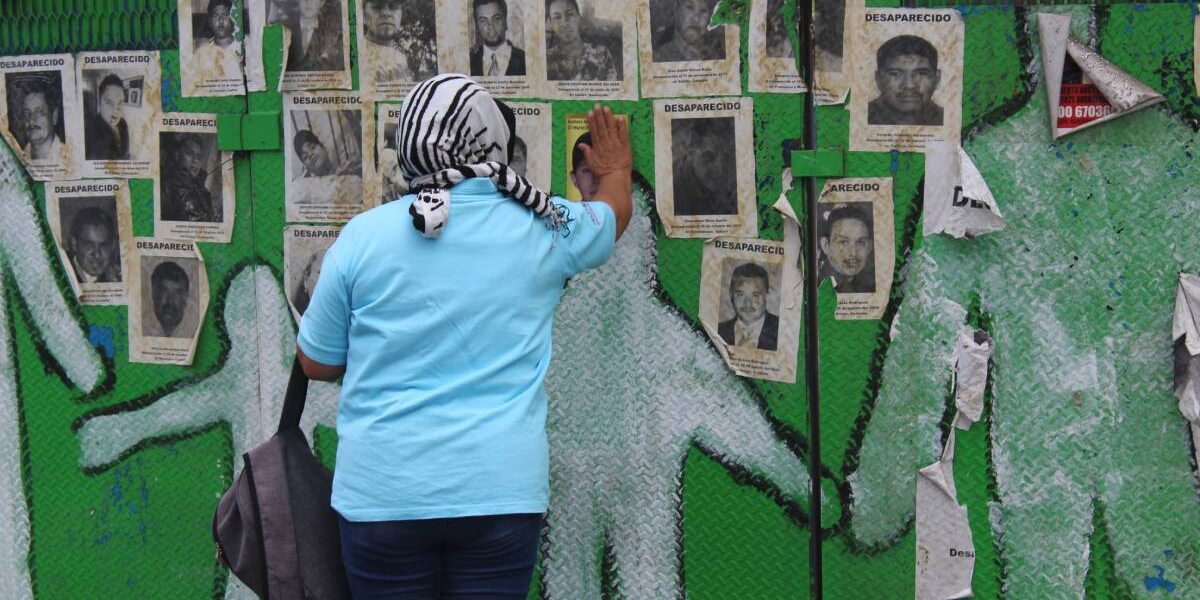


Share

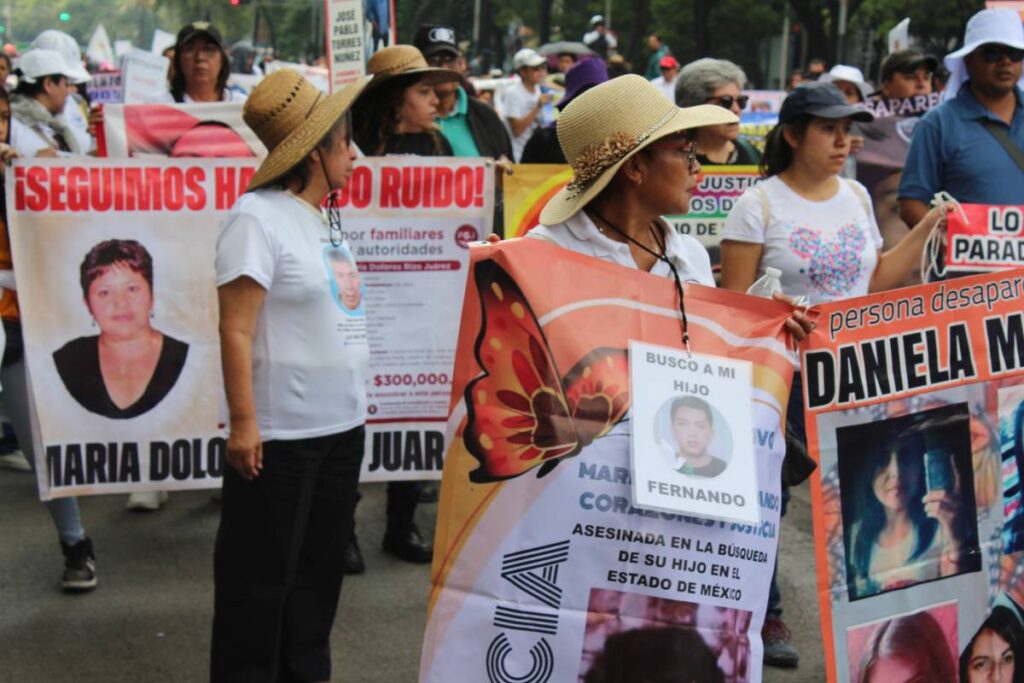
MEXICO CITY, Mexico . Since 2011, on May 10th, Mother's Day, Mexico has held the National March for Dignity: Mothers Searching for Their Daughters, Sons, Truth, and Justice. These women, who are mothers, scour the land, traversing towns, mountains, rivers, and cities in search of their children and loved ones who were victims of enforced disappearance. They are known as the Searching Mothers, the Trackers. Their love for their children and the State's failure to search for and find their loved ones led them to organize themselves into networks and collectives for the right to truth and justice.
One of the main slogans in their marches is “we have nothing to celebrate.” They march to remind the authorities that they have an outstanding obligation to guarantee truth and justice for their disappeared children.
The human rights crisis in Mexico has been going on for decades, but it began to become more visible in 2007. That was when former President Felipe Calderón declared the “war on drugs” under a failed security strategy in which the armed forces left their barracks to patrol the streets.
Little by little, a word began to gain popularity that would help describe the horror of disappearance: “levantón” (abduction). It could happen to anyone, leaving your house, going to a party, or on the highway. Meanwhile, the authorities and the media revictimized everyone it happened to. “They were probably up to something,” they said.

Search history
The mothers and relatives of the disappeared gradually came together, first in groups and then online. Today they are spread throughout the country. Together they learned how to fill out a missing person form, how to file a report, how to go out and search in the mountains. Without protocols and without resources.
The collective meetings and workshops for learning and sharing knowledge were the prelude to significant achievements in guaranteeing truth and justice. Under the slogan "no without the families," they stood firm in the face of the authorities' indifference. They succeeded in having this violence named and classified in the Federal Penal Code, and in the creation of the General Law on Disappearances and the National Search System.
May 10th holds different meanings for each mother searching for her missing loved ones. On a social level, it serves as a reminder that many people are still missing, and that there are still outstanding issues to be addressed, such as the implementation of the law, protocols, funding, and the necessary personnel to ensure the effective search and investigation of missing persons. It also serves as a reminder to guarantee the safety and protection of the families searching for their loved ones.
“We scratch the earth looking for our loves”
Mireya Montiel Hernández disappeared on September 13, 2014, when she was 18 years old. Her mother, Tranquilina Hernández, is a searcher and reports that her daughter appears as 'located' in the National Registry. But Mireya remains missing.
In this investigation by the specialized journalistic project Where Do the Disappeared Go, reporter Efraín Tzuc explains how people who have not been found are listed as 'located' in the RNPDNO.
“The authorities forced us to be here, to search, because if we don’t search for them, no one else will. We scratch the ground looking for our loved ones. The authorities obstruct us, they don’t guarantee our safety, much less provide us with the necessary resources. They continue to fail to do their job, and for them, our missing loved ones are just statistics,” Tranquilina Hernández told Presentes .
The hope of finding
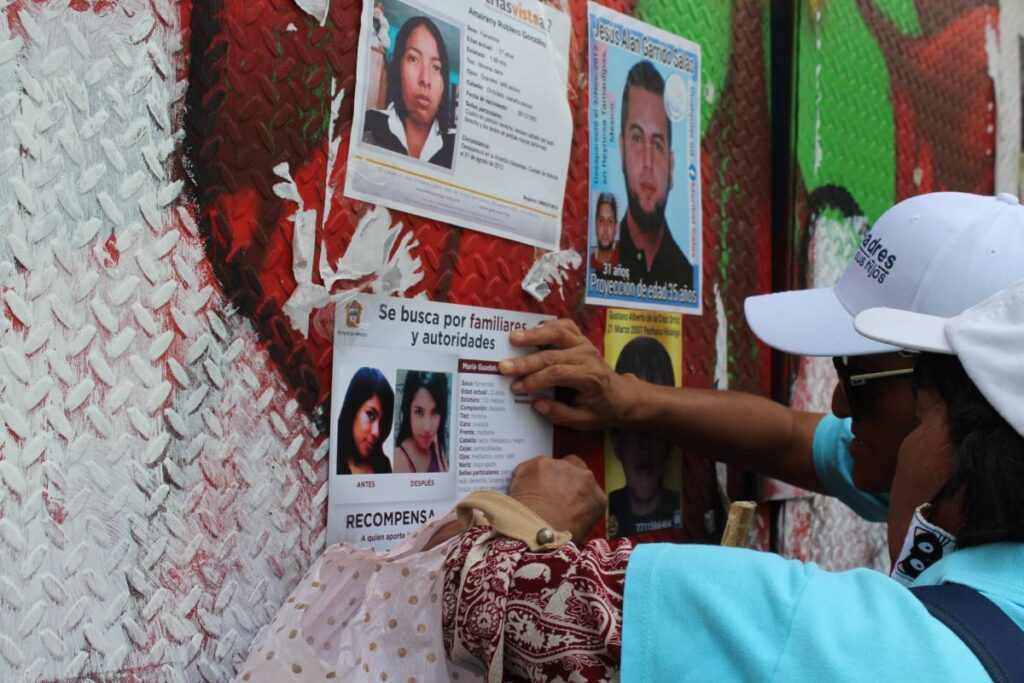
The mothers search in vacant lots, in clandestine graves they themselves locate, in forests, deserts, and rivers. But they also search among the living, going to hospitals and prisons, and investigating in cities with homeless people , sex work hotspots, and places like bars where the crime of human trafficking might be taking place .
Since 2016, the Network of Links has organized national search brigades where relatives of missing persons share their knowledge and learn how to search. Little by little, they become experts and even create tools, such as the 'T' rod, which is used to dig in graves without damaging small bones that may belong to their children or someone else.
Tranquilina Hernández took one of those workshops almost ten years ago and immediately wanted to put that knowledge into practice to search for her daughter, Mireya. Recently, Tranquilina went to Baja California with another searcher; it's the fifth time she's traveled through that state. "I came back this time because last time I found clues about Mireya in the red-light district and among the homeless," she says.
During their searches, they found a homeless man whose family had filed a missing person report in 2015. That particular experience, and what it meant to find a person alive and being searched for by their family, renewed Tranquilina's hope of finding her daughter Mireya.
We need more than 116,000 people
In Mexico, 116,294 people are missing from their homes, and their families miss them.
That's the number of people who have disappeared in Mexico since 1964, according to the National Registry of Missing and Unlocated Persons ( RNPDNO ), managed by the National Search Commission (CNB). But it must be said, 97% of these disappearances occurred after 2006, and this figure doesn't represent the true magnitude of the tragedy.
Today, the Mexican state, under the administration of President Andrés Manuel López Obrador, insists that the number of missing persons is decreasing under his government because, he argues, they have located people “house by house.” However, the families of victims of enforced disappearance denounce that this government is making their relatives disappear a second time, that is, from the National Registry itself.
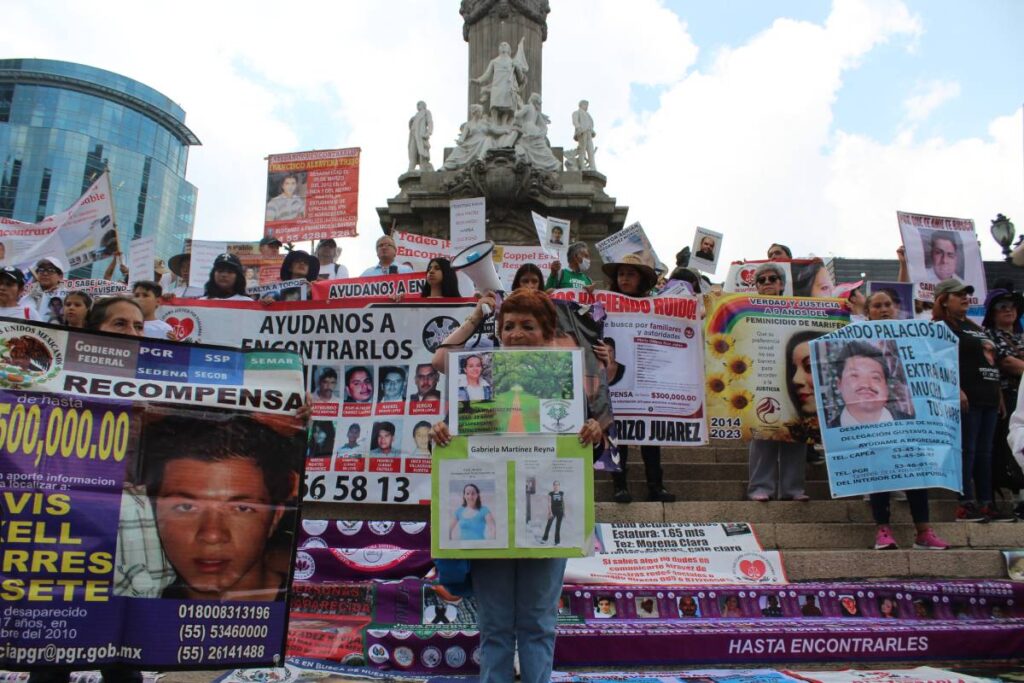
The violence faced by mothers searching for their missing children
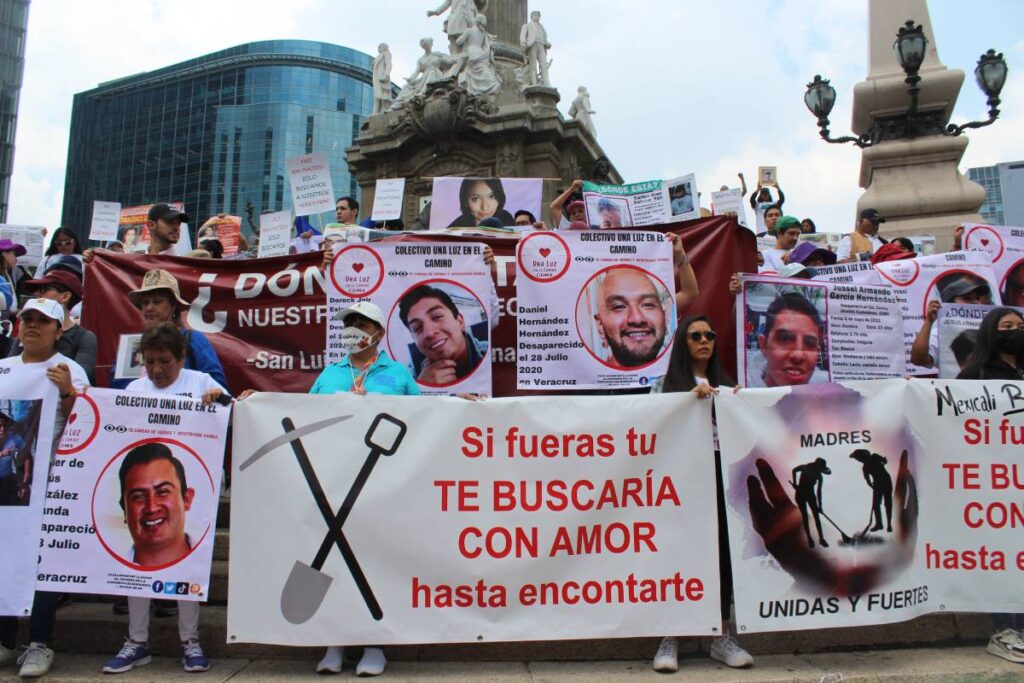
Groups of mothers searching for their missing children have repeatedly denounced the threats and violence they receive for continuing to search for their children and relatives.
From negligence, omissions, and the State's failure to search for their disappeared loved ones, to the denial of their active participation in decision-making as established by the General Law on Enforced Disappearance of Persons . This includes direct threats, attacks, disappearances, and murders.
At the hearing "Mexico: Protection of Women Searchers" before the Inter-American Commission on Human Rights (IACHR) in February 2024, the Mexican State failed to provide answers regarding the 22 murders of people searching for their missing loved ones. Fifteen of these murders occurred during the administration of Andrés Manuel López Obrador. Eight of the victims were women searching for their missing loved ones. From June 2023 until the end of his term, the then-president refused to meet with various collectives and groups of families and mothers searching for their missing loved ones in Mexico.
The Mexican state and its denialism
In April 2025, the UN Committee against Enforced Disappearances (CED) initiated a process regarding the disappearance crisis in Mexico , considering that enforced disappearances "occur in a widespread or systematic manner." The UN indicated that there is information with "well-founded indications" that warrant a review of the situation at the General Assembly level.
responded " there is no forced disappearance by the State," and attributed the problem mainly to organized crime.
The application of Article 34 may represent an opportunity to recognize and confront the crisis of disappearances, which, according to official data , totals 133,040 missing persons.
Under Claudia Sheinbaum's administration, groups of relatives of missing persons, including the mothers of the missing, continue to demand that the president's proposals already exist in the current law regarding the National Bank of Forensic Data and the 72-hour protocol, but they are still not being implemented.
They have also denounced a strategy of "silence" on the part of this government following the announcements of its policies on the disappearances crisis, aimed at minimizing the demands of the families searching for their missing loved ones. This stance is similar to that held by former President Andrés Manuel López Obrador.
We are present
We are committed to journalism that delves into the territories and conducts thorough investigations, combined with new technologies and narrative formats. We want the protagonists, their stories, and their struggles to be present.
SUPPORT US

FOLLOW US
Related notes



We are present
This and other stories are not usually on the media agenda. Together we can bring them to light.
1 comment