

“There is a huge lack of stories about trans people and tenderness in film.”
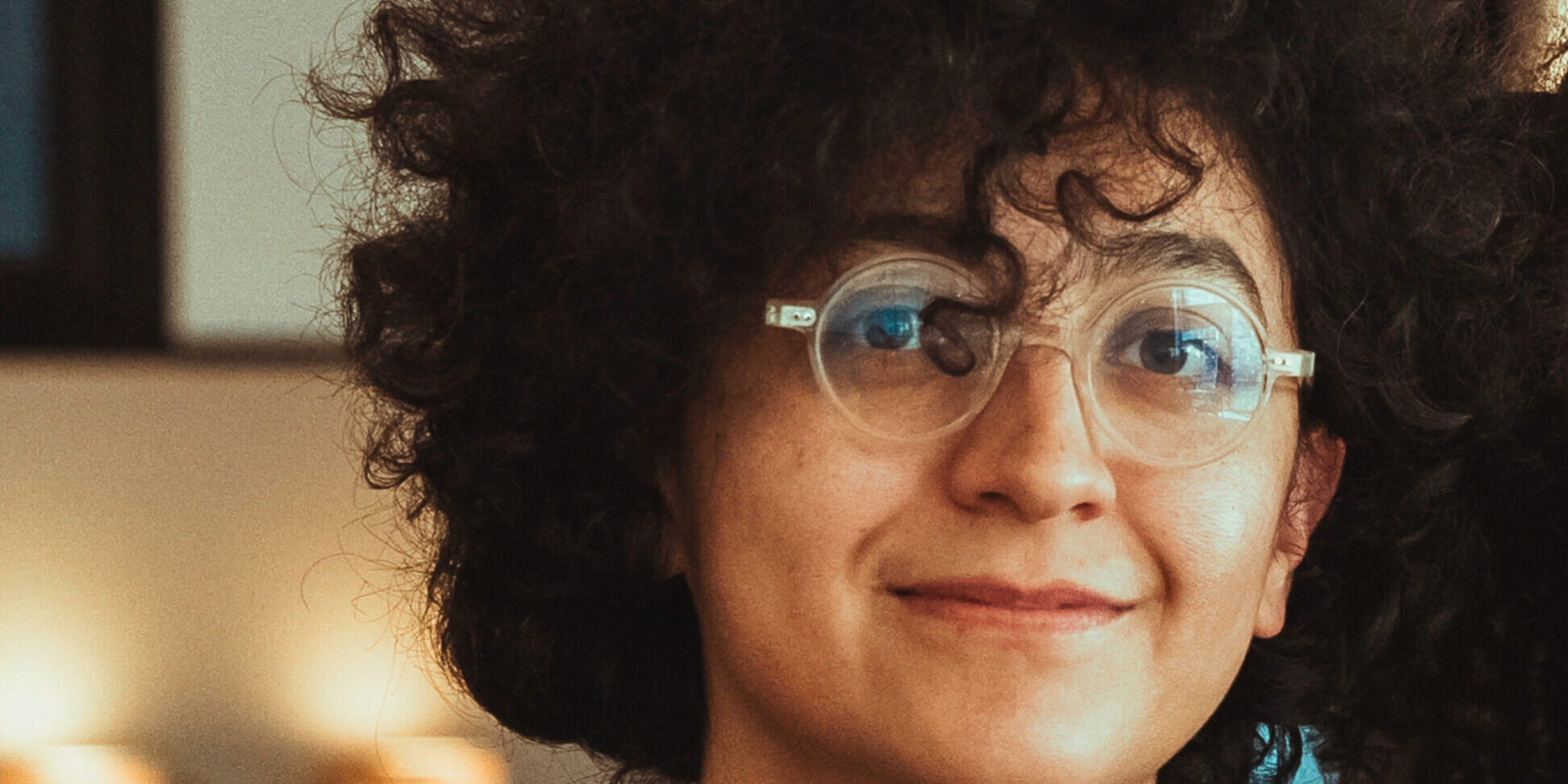
Ana Gutiérrez is a Mexican documentary filmmaker. In this interview, she talks about her career path and the representation of queer people in film.


Share

Ana Gutiérrez, better known as Ana Chinos , is a Mexican documentary filmmaker, screenwriter, and editor. She also plays table tennis and the harmonica. But if we're talking about her work as a documentary filmmaker, Ana has spent over a decade directing and producing several short documentaries that have been presented at festivals such as DocsMx, MicGénero, Festival Mix, and Doc Buenos Aires.
Ana never imagined that her path in film would begin with a fascination for radio. Her initial intention was to dedicate herself to sound media, inspired by a children's radio project she carried out in high school. However, during her university studies at the Faculty of Political Science at UNAM, watching Mexican documentaries, she discovered that reality itself was a source "for generating new representations."
“Cinema has the power to transform us as a society, to generate debate, to spark reflection. But to achieve this, I also believe it's important to approach it with care, and for that, empathy is fundamental. The cinematic gaze must be an act of empathy. Only then can we build a more just and diverse society,” she reflects.
Driven by this desire, she traveled to Buenos Aires to study creative documentary filmmaking, convinced that documentary could transcend framed interviews and become a carefully crafted and transformative artistic endeavor. Later, these reflections led her to explore her first fiction film, Lolo (2024) , which tells the story of a young transmasculine person who begins to explore their identity in a peripheral area of Mexico City.
We talked to Ana about Lolo, representation, queer cinema, the value of friendship and visibility, and cinema as a mirror.
The importance of representation in queer cinema
The issue of representation in film is something Ana has reflected on a great deal. “I had never been in a movie theater where a gay kiss was met with applause. But at a festival in Vancouver, when two boys kissed on screen, the entire audience cheered and applauded. I realized that I had never had that experience, not in a movie theater. And I thought that's exactly what we deserve in terms of representation.”
This lack of role models, even today in Ana's adult life, reinforces her conviction that representation is necessary. "The first film in which I saw a same-sex kiss was Brokeback Mountain , with cisgender heterosexual actors. I celebrated it as something personal but not collective, and that's precisely why representation matters, because it allows us to see ourselves, to identify with each other."
-When we think of queer cinema, it's very common for the first references to be gay films or films about trans women. In that sense, Lolo is about a young person, in a marginalized context, and also with a transmasculine identity. When you imagined and wrote this story, did you envision it that way from the beginning?
– For me, queer cinema is the cinema that is truly seeking to question dominant structures, heteronormative models, and so, in that sense, queer cinema has a critical, political capacity, an openness, a sense of possibility. And I think that also has a lot to do with the representation of identities, of people, and of bodies, of territories.
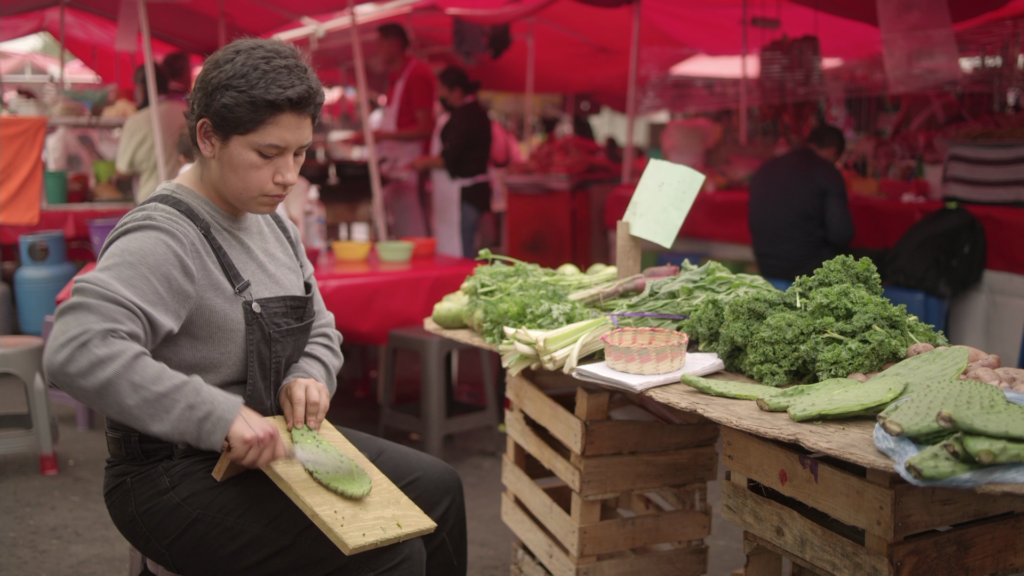
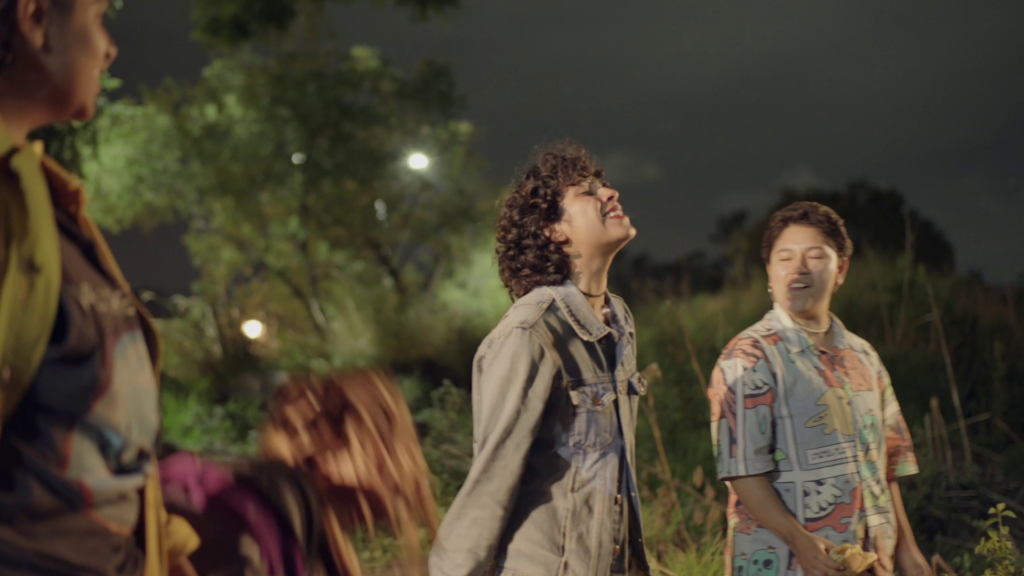
Lolo is undoubtedly an example of this. This short film tells the story of a young trans man who works on his grandfather's chinampa (floating garden) and, in this peripheral daily life within Mexico City, finds space to discover and live his gender identity alongside his friends.
In Mexico, chinampas are a pre-Hispanic farming system that is still preserved, worked, and resisted in the lake area of the town of Xochimilco, located south of Mexico City.
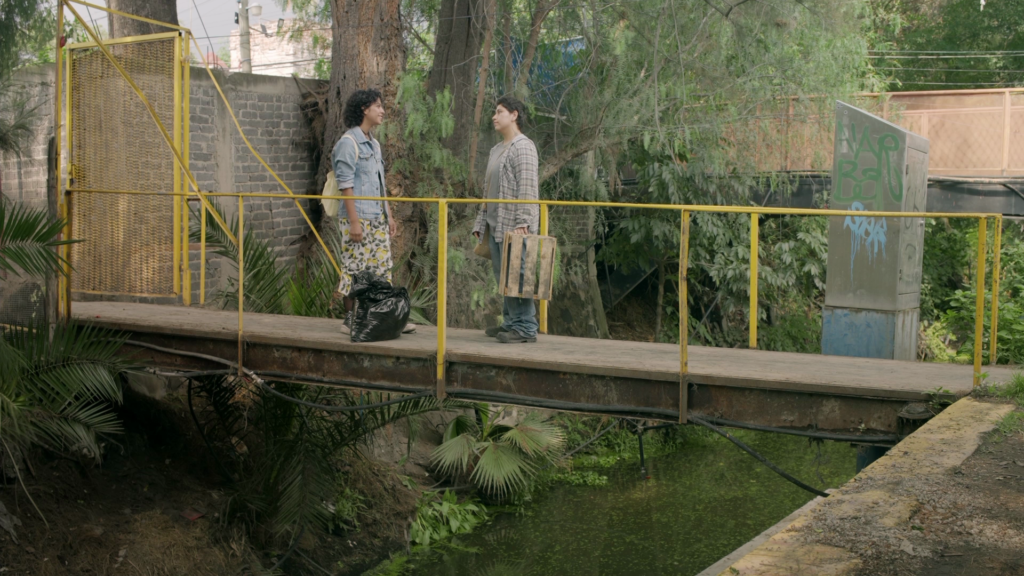
“When I was imagining and writing the script for Lolo, I was clear about only one thing: I wanted to talk about a non-binary person. I placed them in a context of resistance, just like the chinampas where they work. I was interested in the comparison between a non-binary identity in a world that claims to be binary, and farming in an environment that resists a capitalist model. But it was when I met Ro, who plays Lolo, that the story took on a new depth. We decided that the story should include elements of their own experience as a transmasculine person; otherwise, it couldn't be told.”
– Lolo focuses not only on a non-binary and transmasculine identity, but also speaks to trans youth. What value does that have for you in a global context that seeks to deny their existence?
– I think the representation of transmasculine people, and of non-binary people and trans children in general, is something that is built on invisibility. They aren't represented in a broad or complex way; instead, we're put in a box, and from there, we're almost always imagined, as I said, through pain and violence, or within the binary. And we deserve other stories, we deserve spaces for experimentation, for freedom, to explore who we are, how we want to be seen in kind, hate-free environments. (…) For me, the visibility of trans youth and children is crucial because what's happening today is that there's a push to deny them any support. It seems the world is preparing them for a future of rejection, stigma, and discrimination. And we also have a responsibility, through fiction and documentary film, to create opportunities where being who they are is possible.
– In Lolo's case, how did you decide to handle that representation?
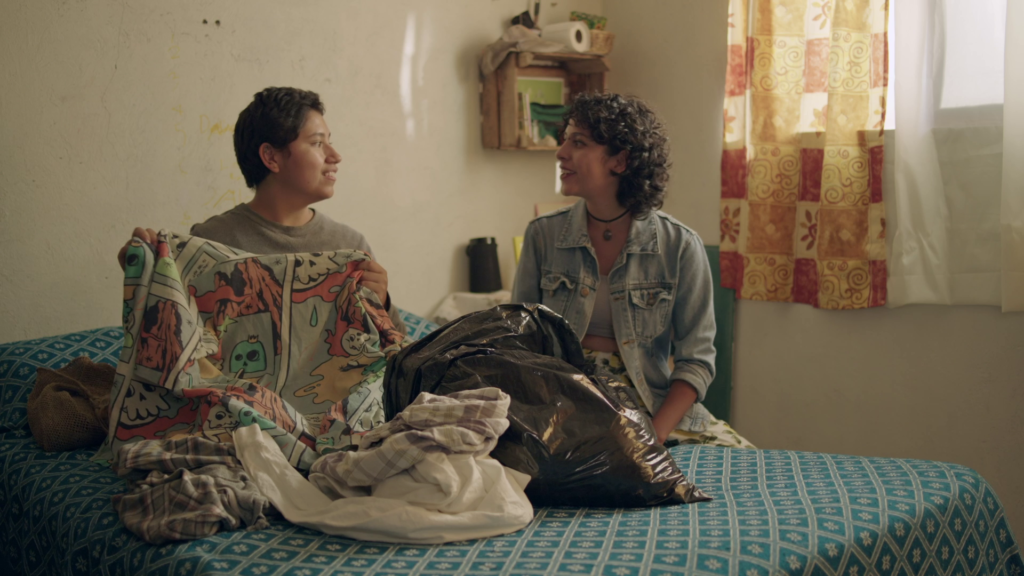
“Often, when we see queer characters in film, they’re played by cis people, and that changes how they’re perceived. With Lolo , we paid attention to every detail: from the fact that he was played by a transmasculine person, to the wardrobe, the way he moves, what he says. Nothing is idealized. What we see is everyday life, not a story built on tragedy or unnecessary drama.”
That's one of Ana's strongest convictions: that queer cinema should broaden its narratives and not limit itself solely to stories of suffering. "It's important to talk about violence, but we also need narratives that offer other possibilities. Many trans stories are told from the perspective of tragedy, discrimination, and suffering. But there are other experiences. Lolo isn't focused on violence, but on friendship. On everyday life, on small joys and daily struggles. That's also part of our reality and deserves to be told. I think that continuing to fuel the narrative of violence is problematic and leaves little room for hope, for imagining other possibilities."
Lolo as a mirror: the personal impact of telling this story
The process of creating Lolo not only allowed Ana to build an authentic story about non-binary and transmasculine identity, but it also became a space for personal reflection on her own gender identity.
“I think that, as I was making Lolo , I began to understand things about my own identity. It was a process of self-discovery because before I hadn't allowed myself to think about my identity in such an open and fluid way. When I started working with Ro, who plays Lolo, I began to understand myself better, especially with the idea of the possibilities that film gave me to explore my identity from a different perspective. It was very liberating, like shooting a laser at a mirror and it coming back straight into my eyes.”
Ana explains that, although her gender expression had always been neutral, she had never before put that part of her identity into words. "More than a conscious decision to explore my identity through film, I think it was film that led me to explore myself."
Seeing the story materialized on screen led her to question herself and allow herself new ways of naming herself. This process made her think about how important it is that stories about non-binary and transmasculine people exist in film.
Lolo when I was 20 , perhaps I would have understood many things about myself sooner. I think it is essential that new generations have access to these stories, that they see themselves reflected in them and that they don't have to wait until adulthood to put into words what they are and what they feel.”
The value of friendship in Lolo and in Ana's life
One of the central elements in Lolo is friendship, and that's no coincidence. "For me, friendship has been a fundamental pillar in my life, and I wanted to reflect that in the story. Many times, within the LGBT+ community, friendships become our true family. People who take care of you, who support you, and who validate you when the world seems to want to deny you."
Lolo 's story , friendship is the refuge and strength that allows the protagonist to move forward. "I didn't want the story to revolve around family rejection, which is a very common narrative. I wanted to show that there are other forms of support, that bonds of friendship can be just as, or even more, powerful than blood ties."
Ana also emphasizes that, in her own life, her friendships have been key to her journey as a filmmaker and her process of self-discovery. “My friends have been a mirror and a support. People who have encouraged me to tell these stories and who have been there every step of the way. Filmmaking is also a collective effort, and when it’s built with love and trust, the results are palpable on screen.”
-What would you like to happen with Lolo ?
– I would like Lolo to reach many people, especially those who haven't seen representations like this in film. I think there's a huge lack of trans stories, stories about trans youth and children, and the tenderness in their journeys. If the film can open a conversation, generate empathy, or make someone feel seen, I think it will have already fulfilled an important purpose.
Following the exercise in imagination that led you to write and direct Lolo , how do you imagine it grows?
– I like to imagine him growing up in a kinder world, with less fear and more love around him. I hope we can build that world so that trans youth and children can live without so many obstacles.
We are present
We are committed to journalism that delves into the territories and conducts thorough investigations, combined with new technologies and narrative formats. We want the protagonists, their stories, and their struggles to be present.
SUPPORT US

FOLLOW US
Related notes

We are present
This and other stories are not usually on the media agenda. Together we can bring them to light.