

March 8: Thousands of women and diverse people marched against cruelty and austerity.
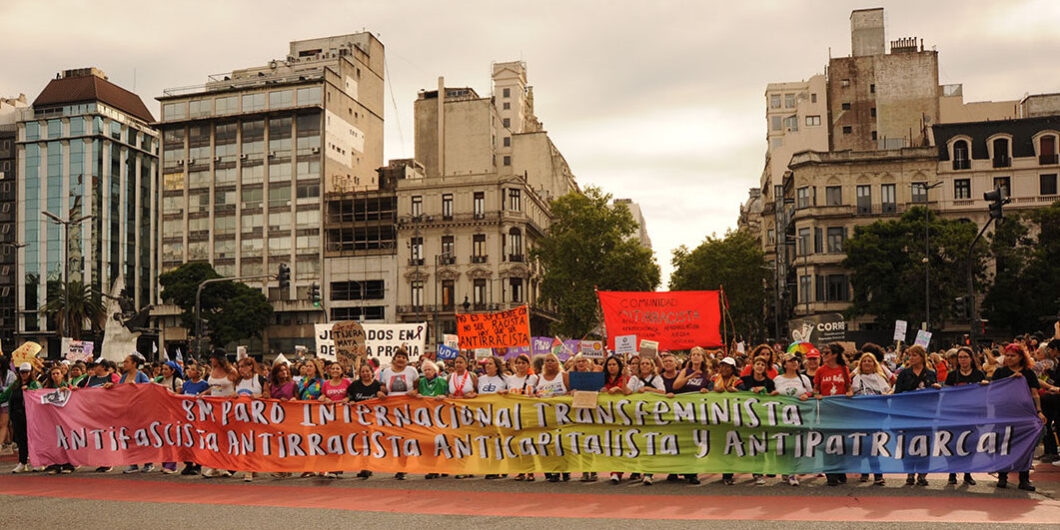
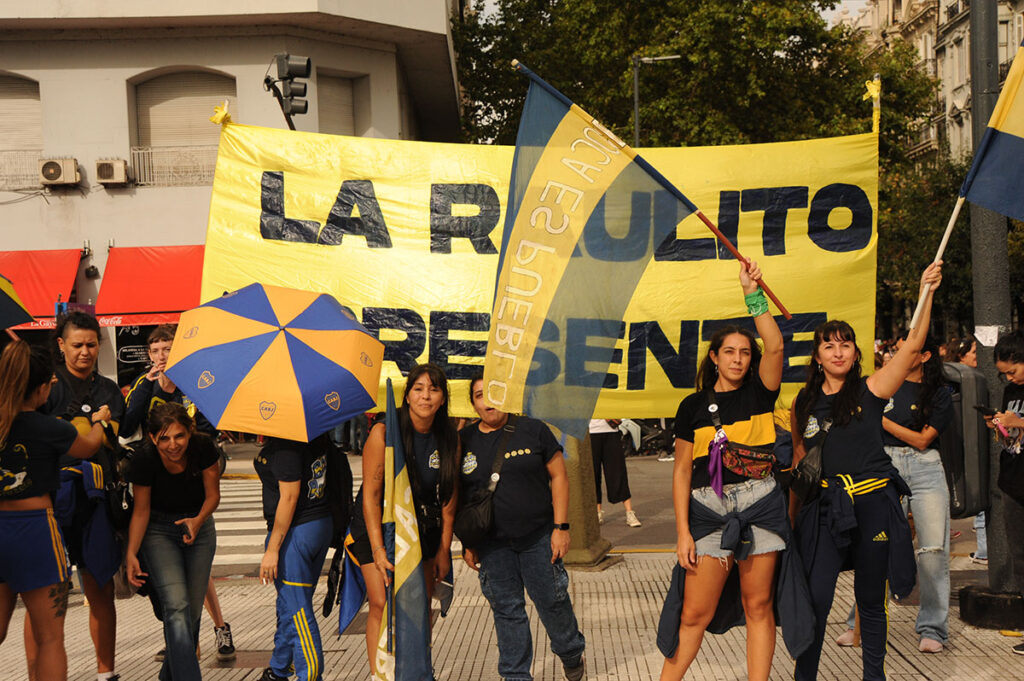
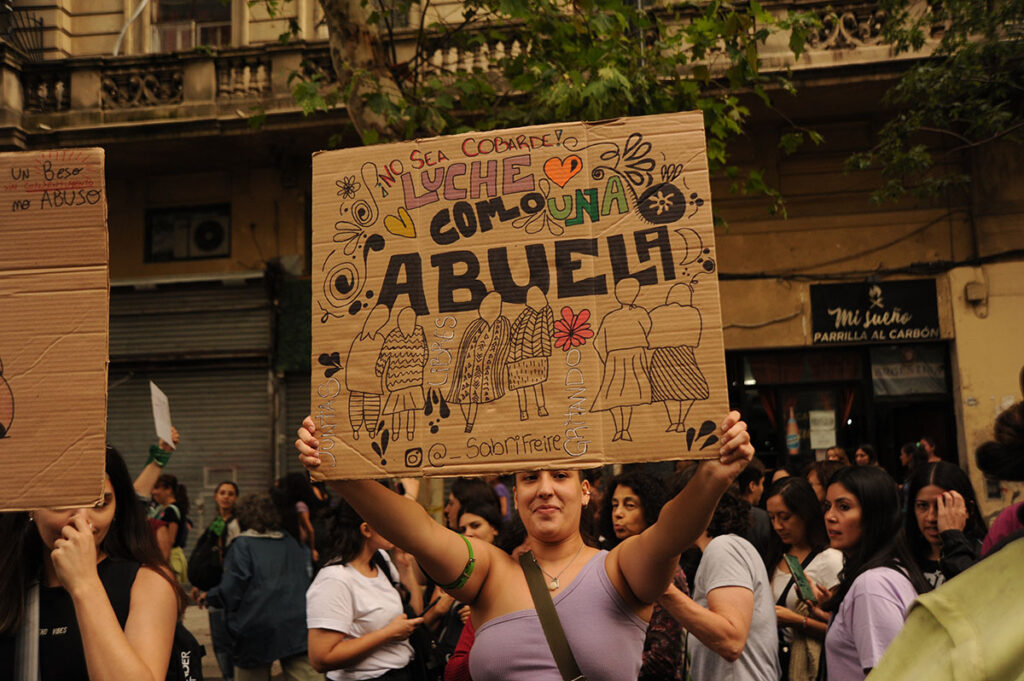
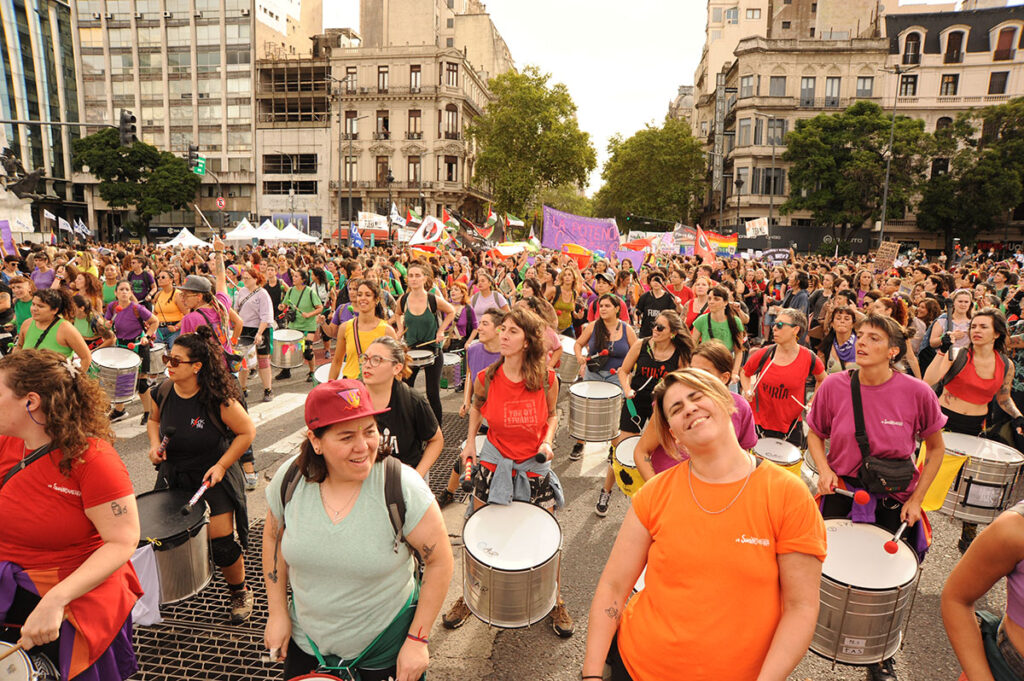
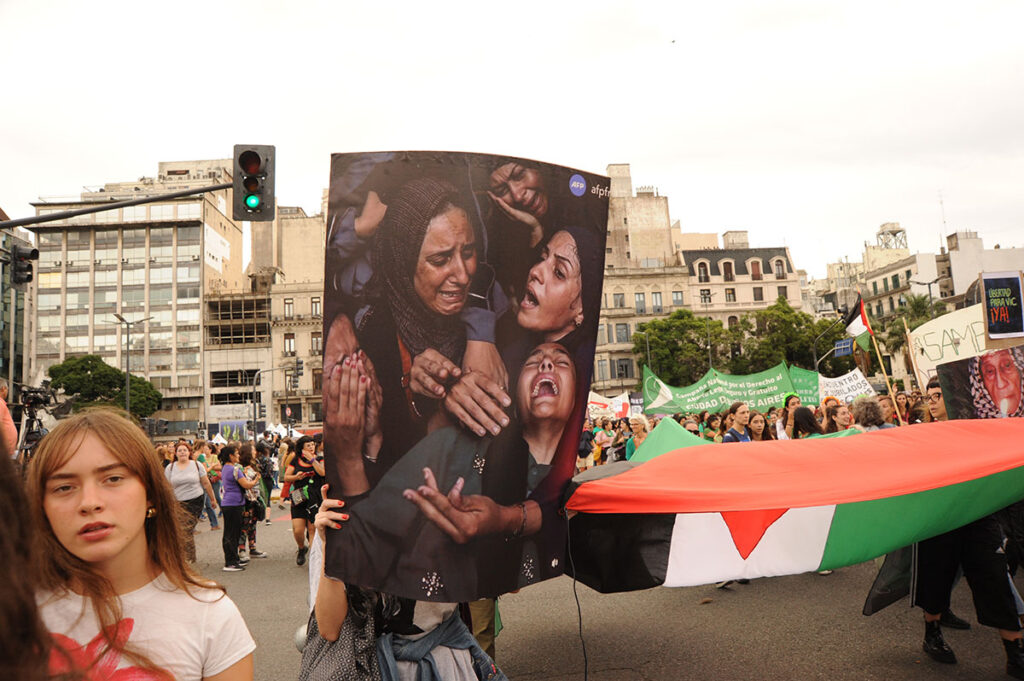
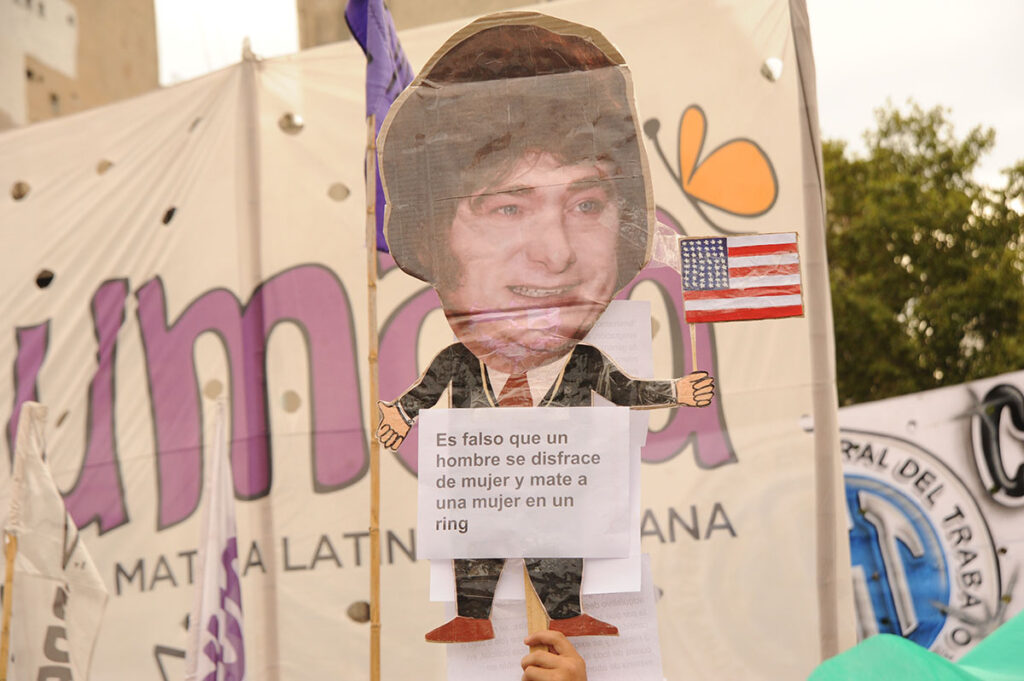
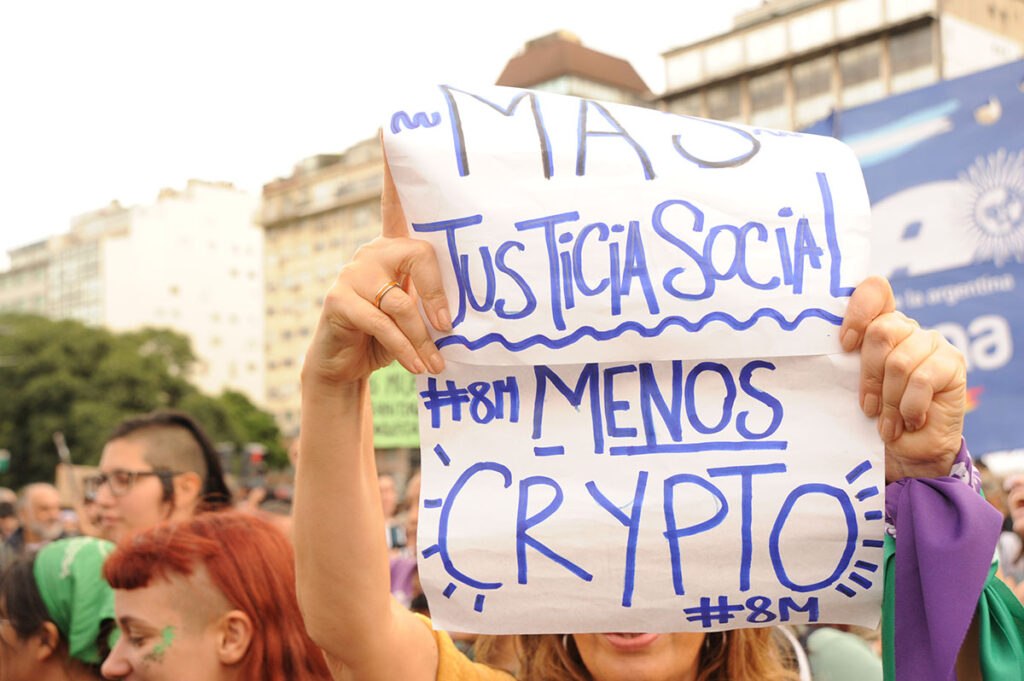
Thousands of women and LGBTQ+ people participated in the march in the Autonomous City of Buenos Aires this Saturday for International Women's Day. Rights and a protest against cruelty were the central themes of the demonstration, which was replicated throughout the country. The government's provocation.


Share

A year has passed since the first International Women's Day (March 8th) under Javier Milei's government. Things have worsened for women and LGBTQ+ people, who have endured a fierce attack on their rights, both in rhetoric and in practice. There were numerous demonstrations, this time without a final document. Attendance was massive in the City of Buenos Aires and in the provinces that were not affected by rain and flooding.
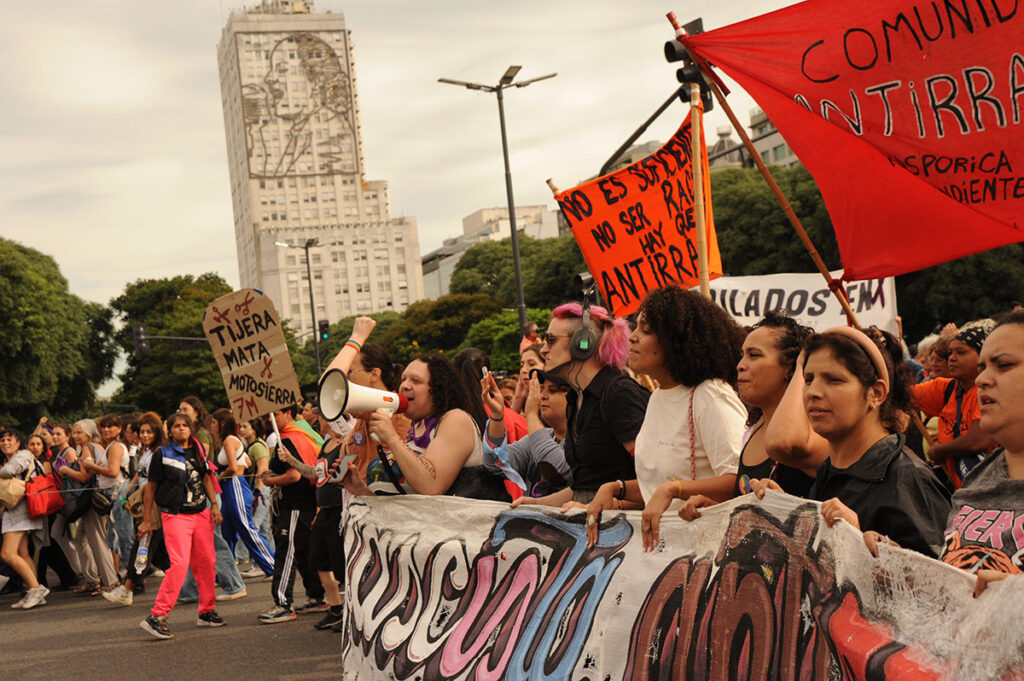
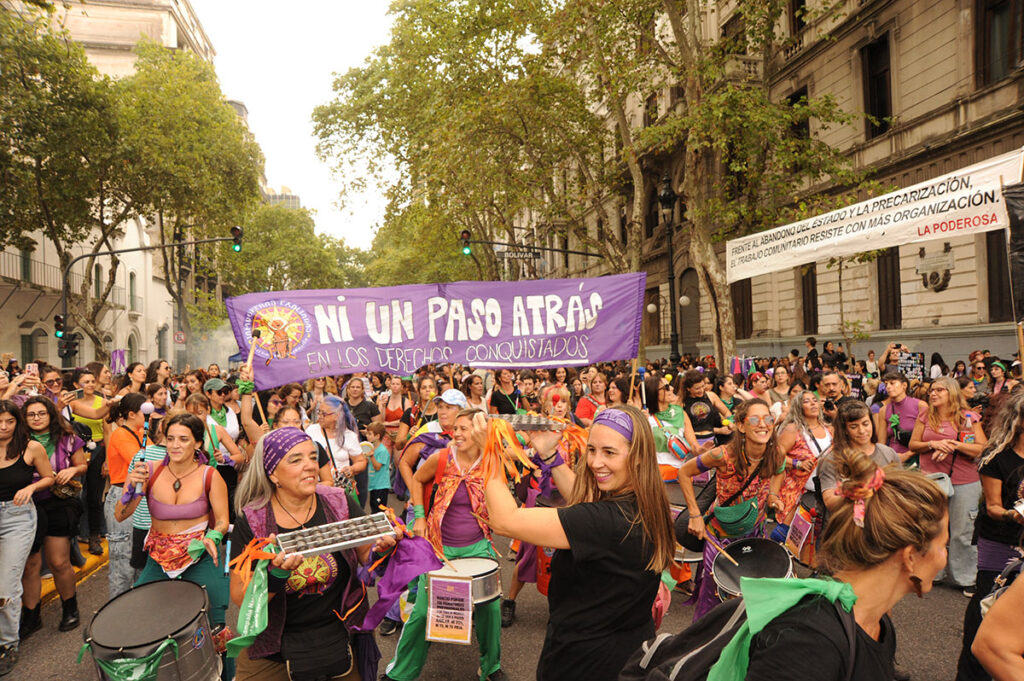
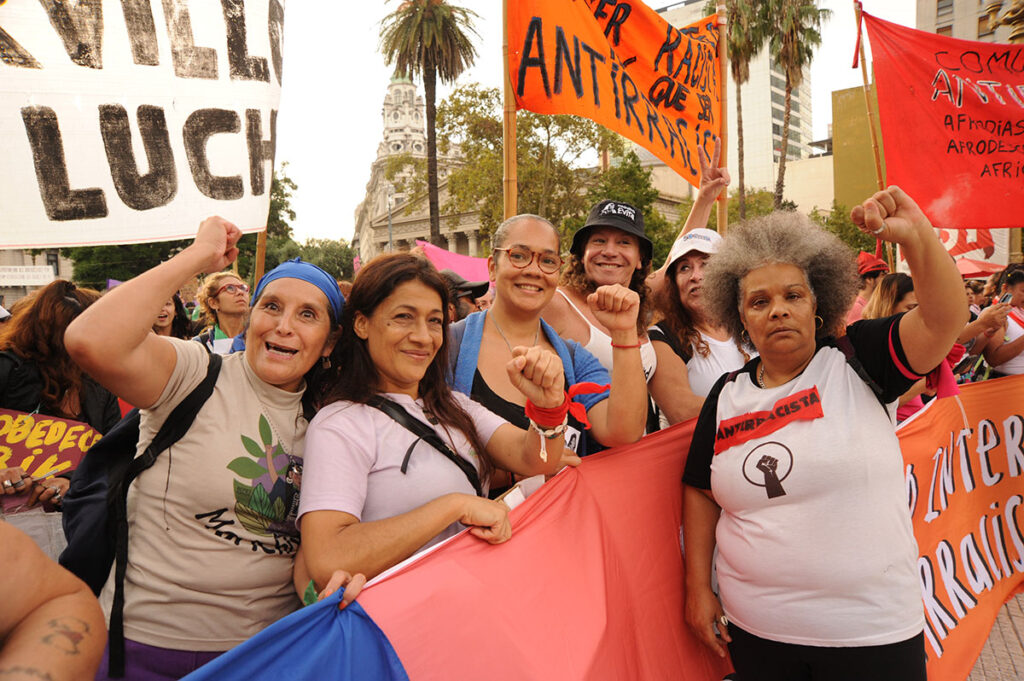
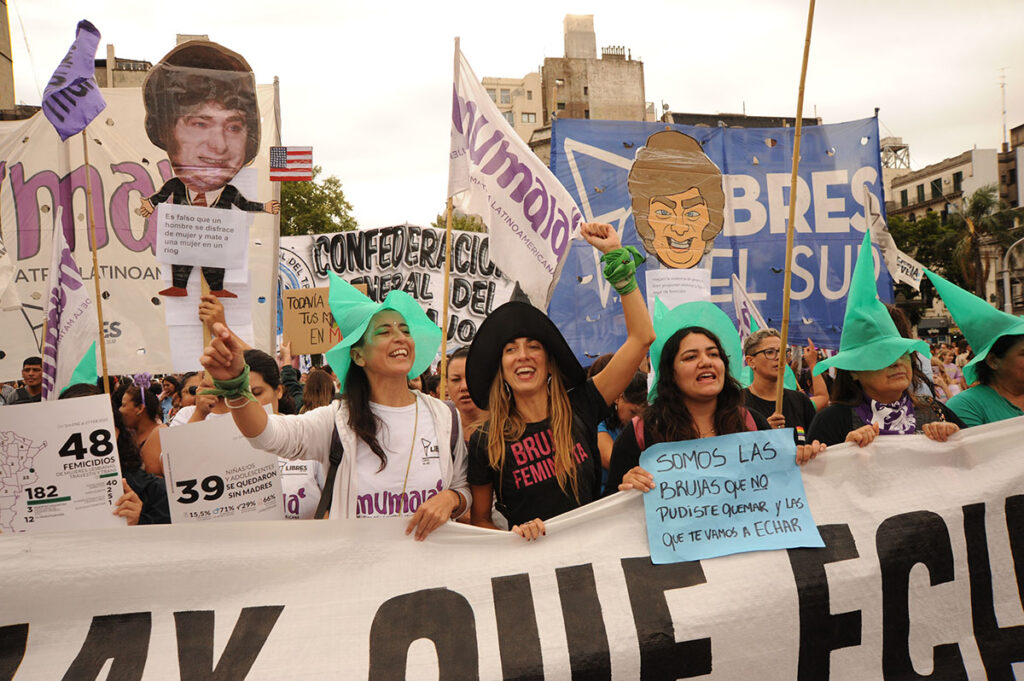
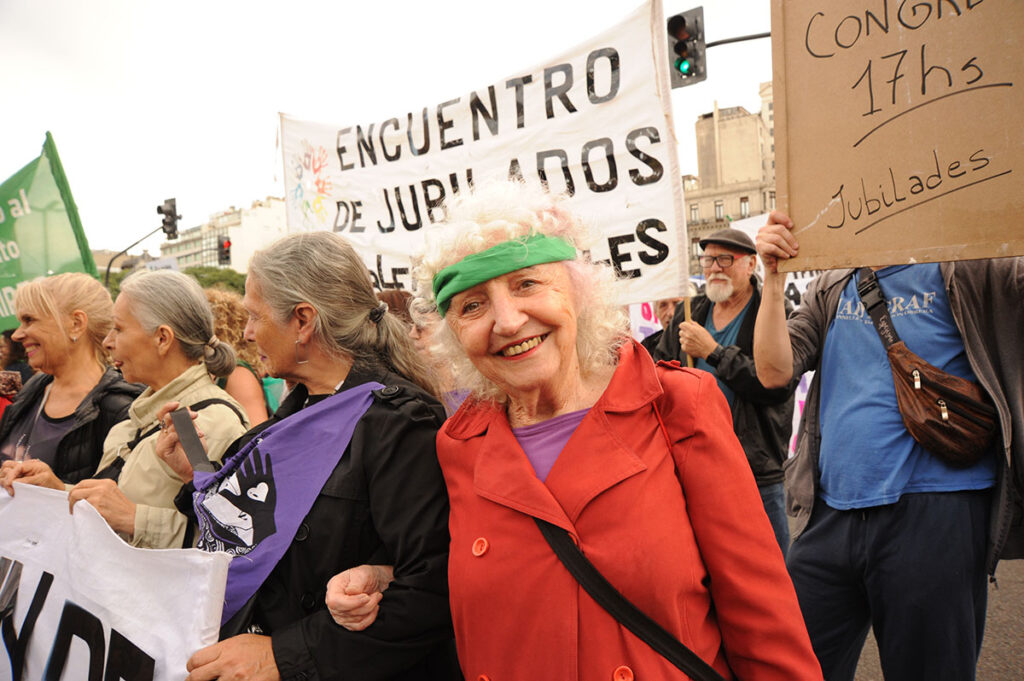
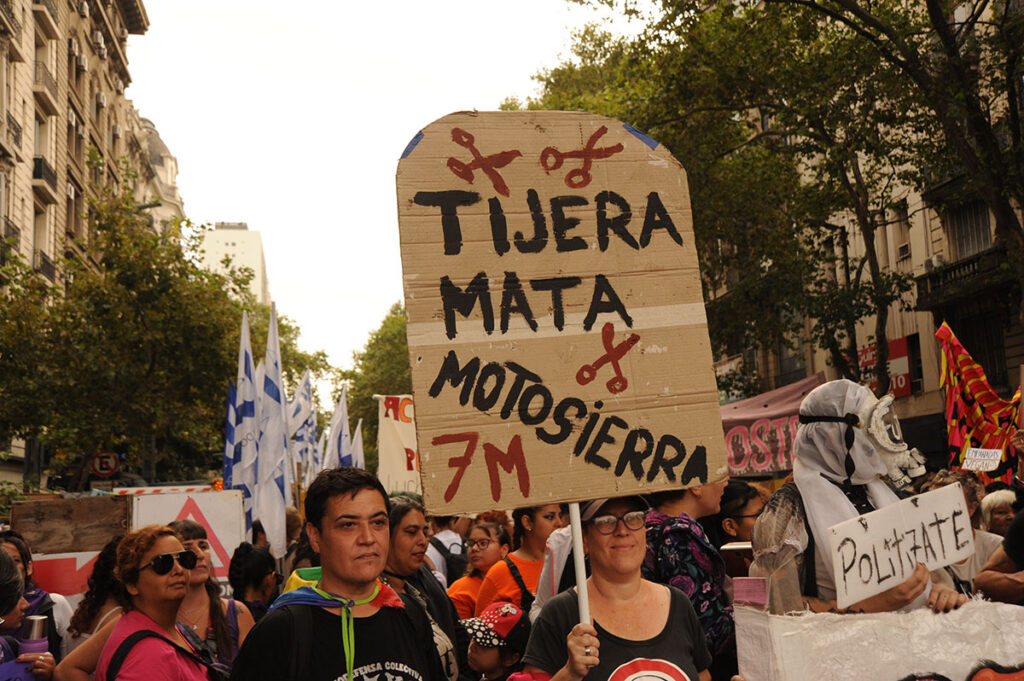
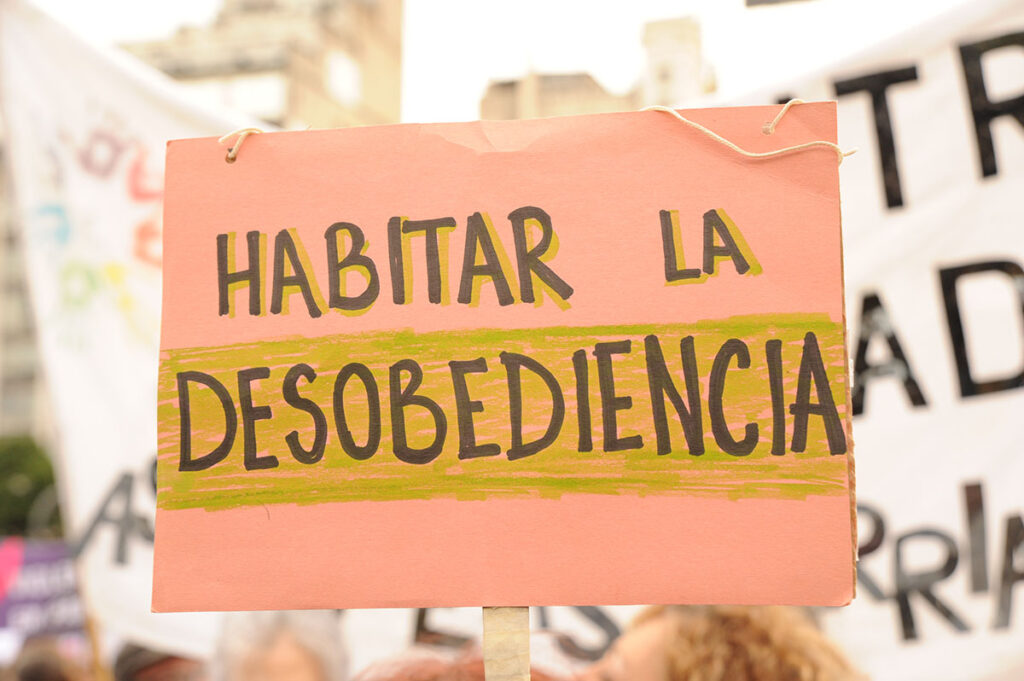
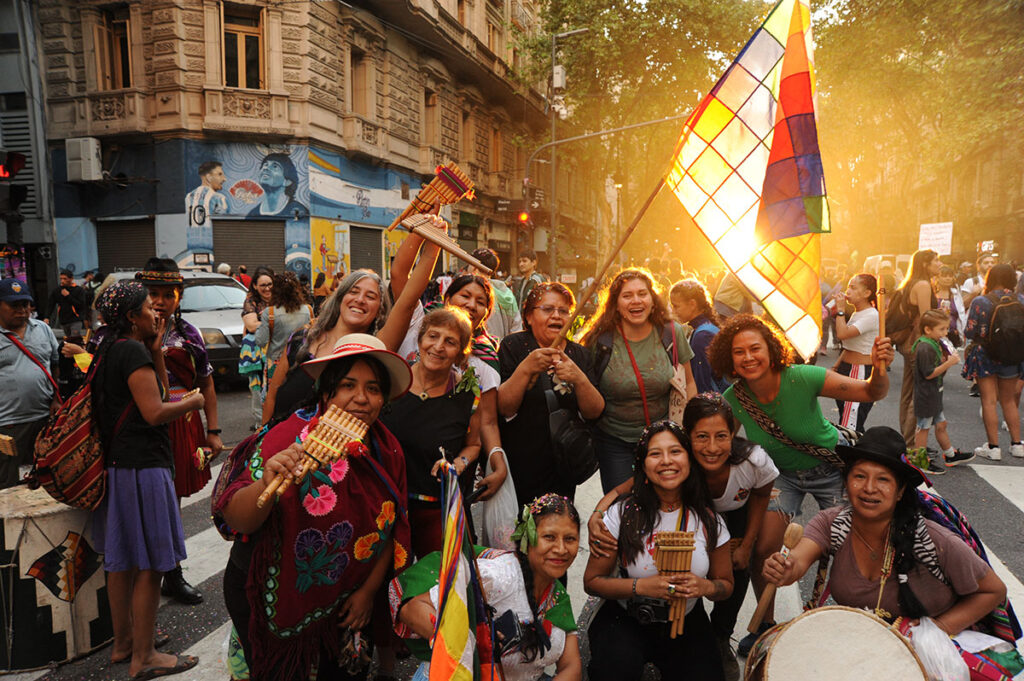
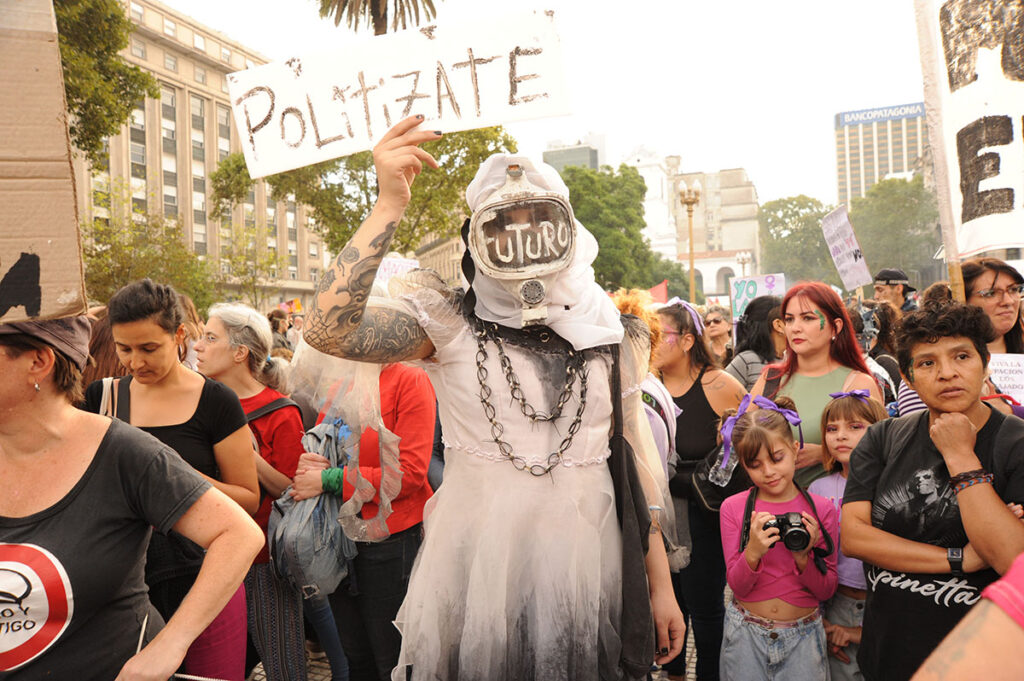
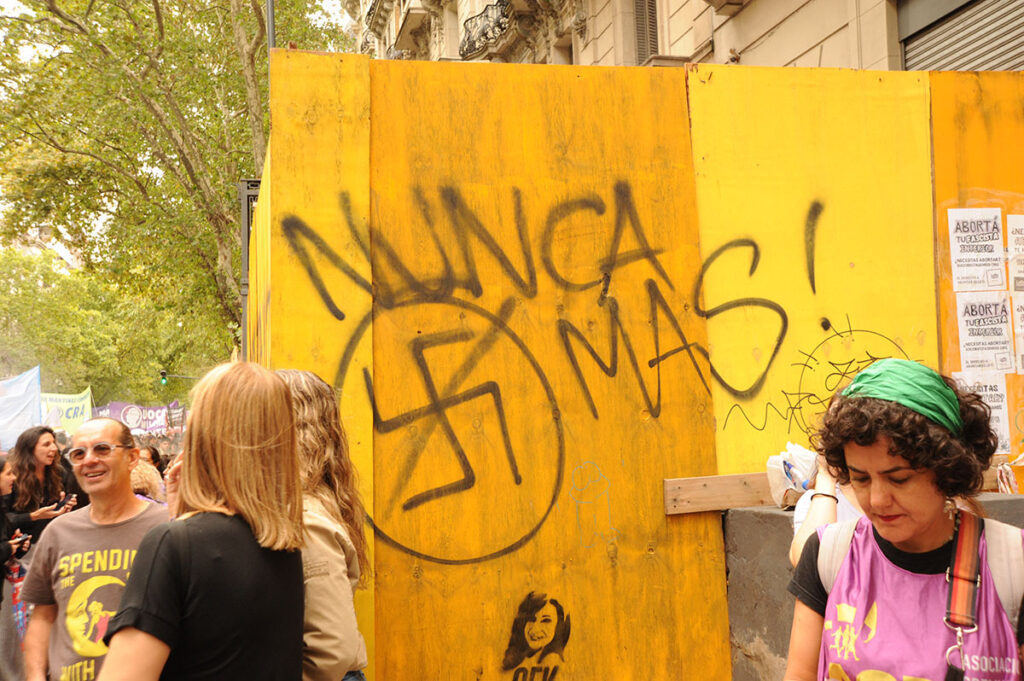
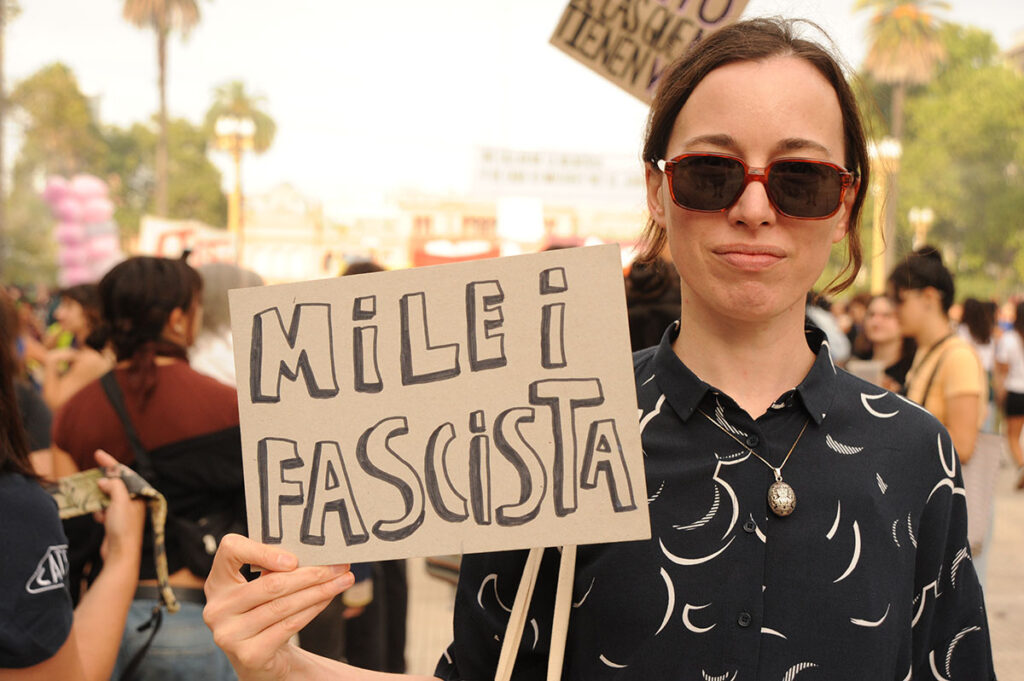
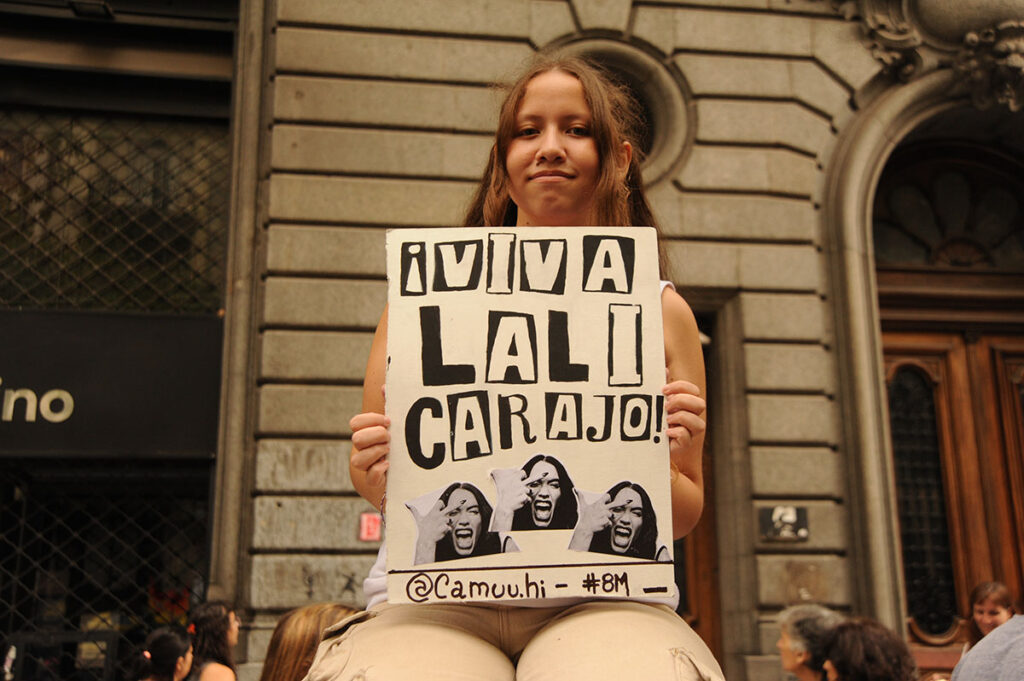
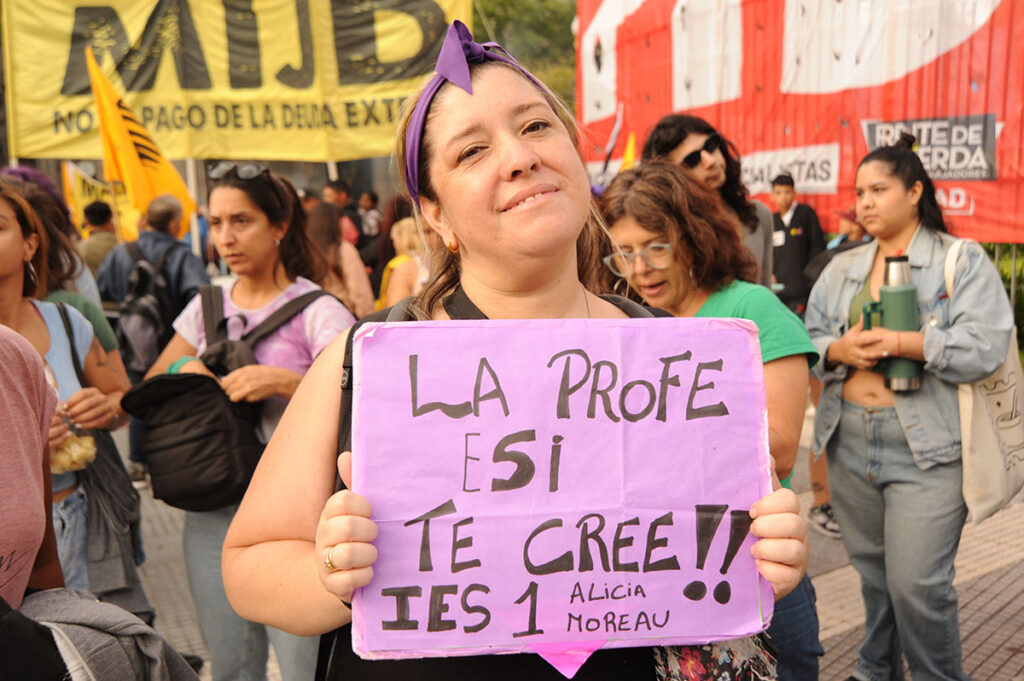
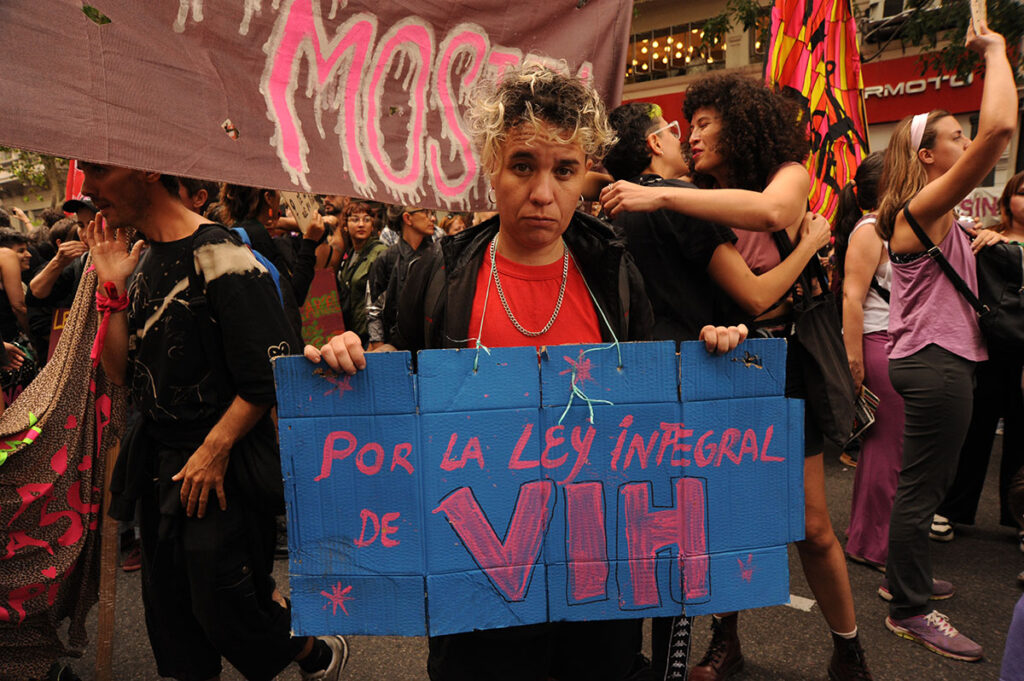
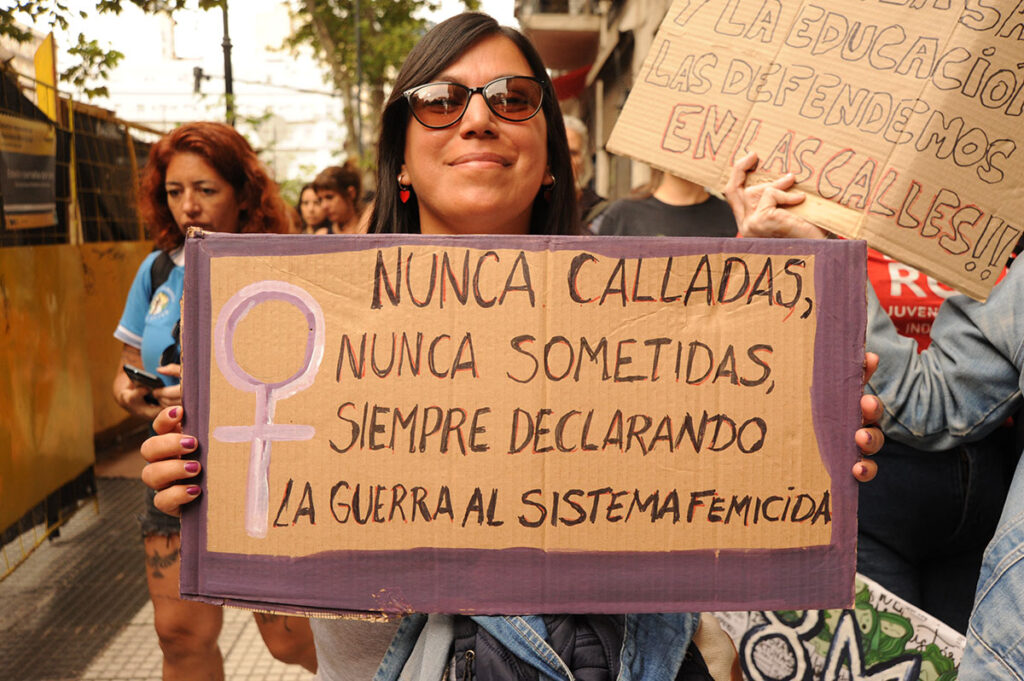
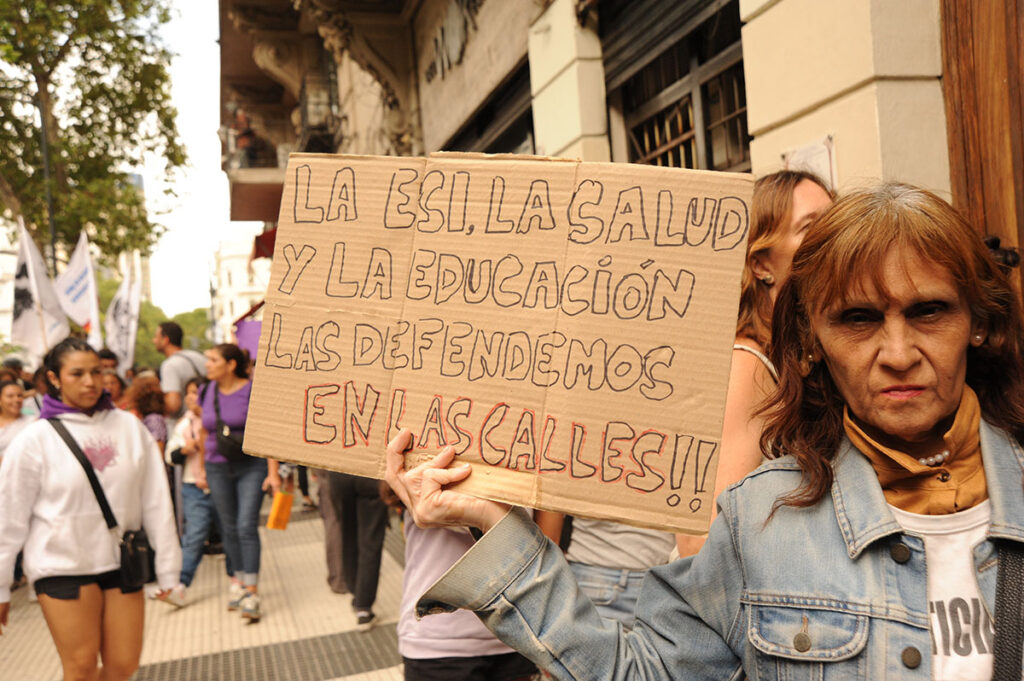
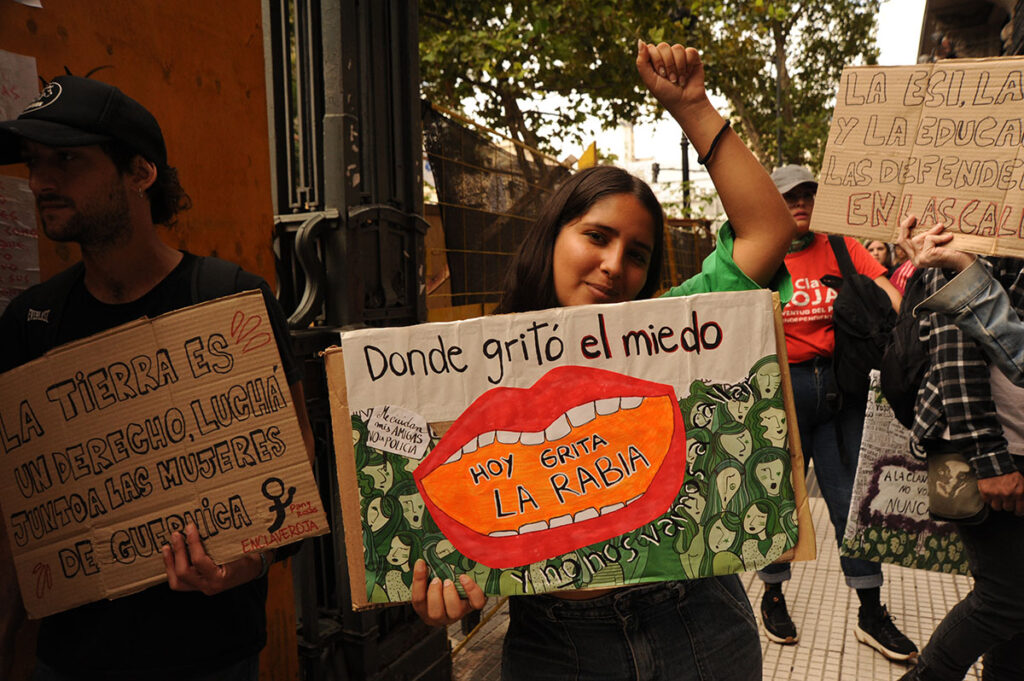
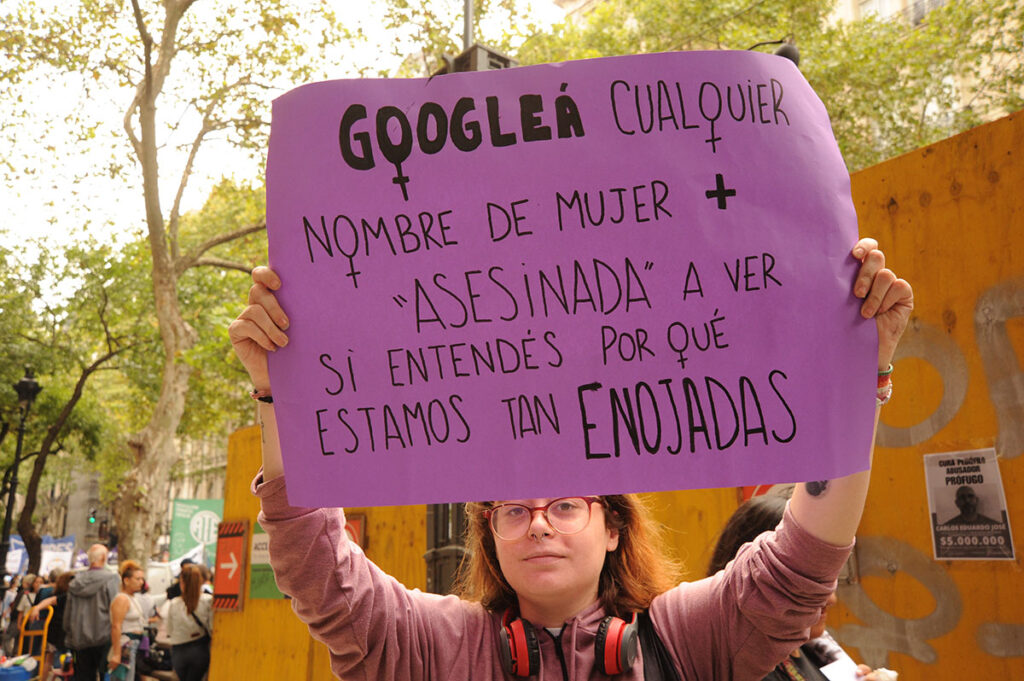
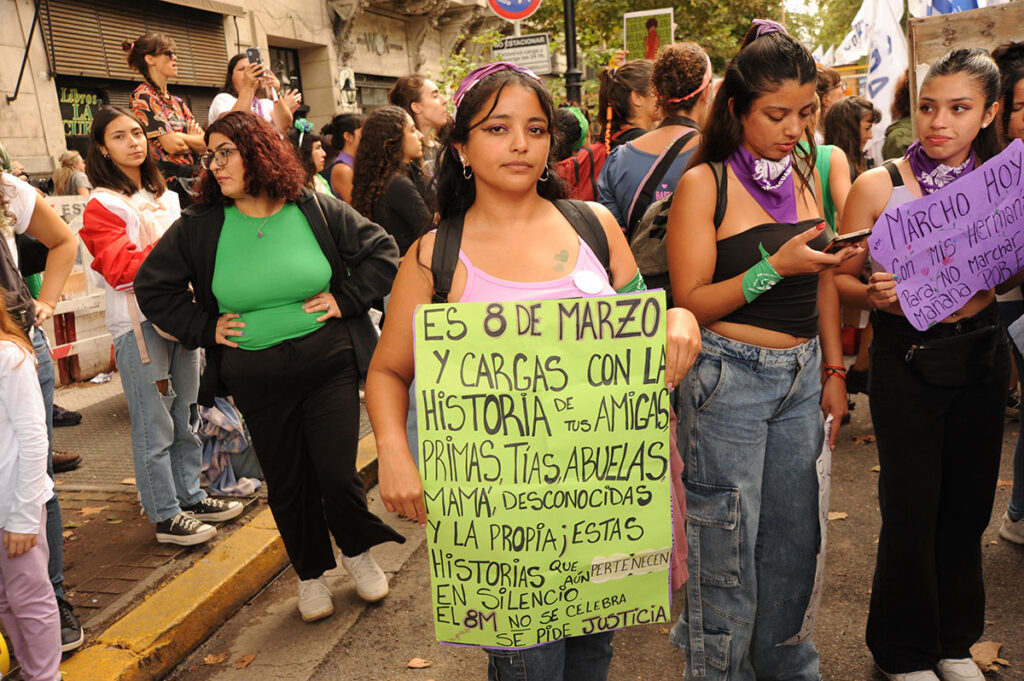
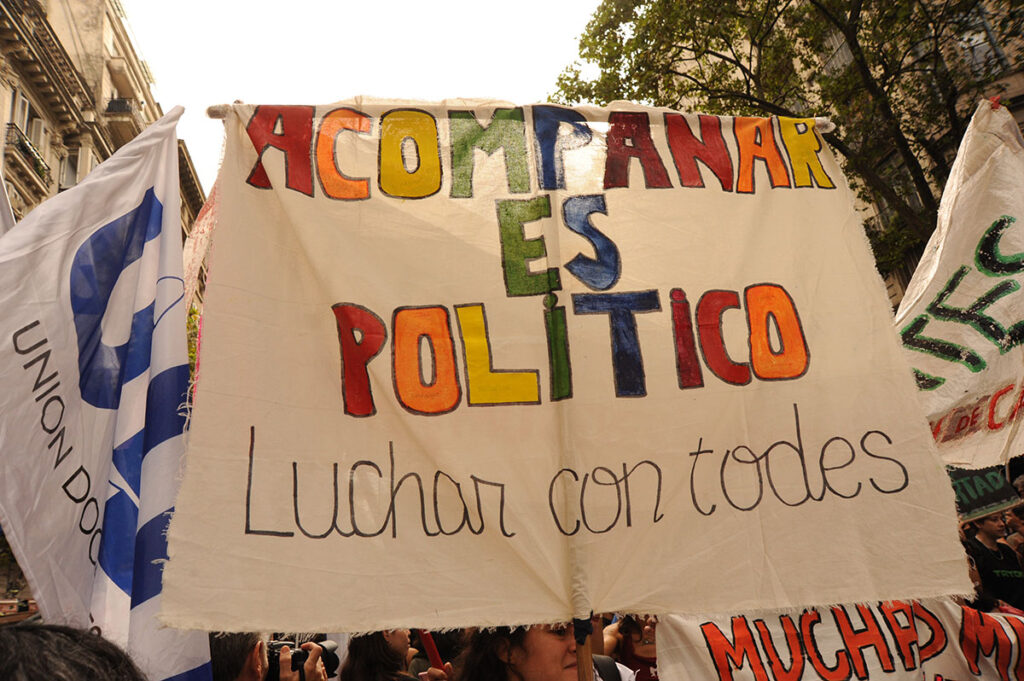
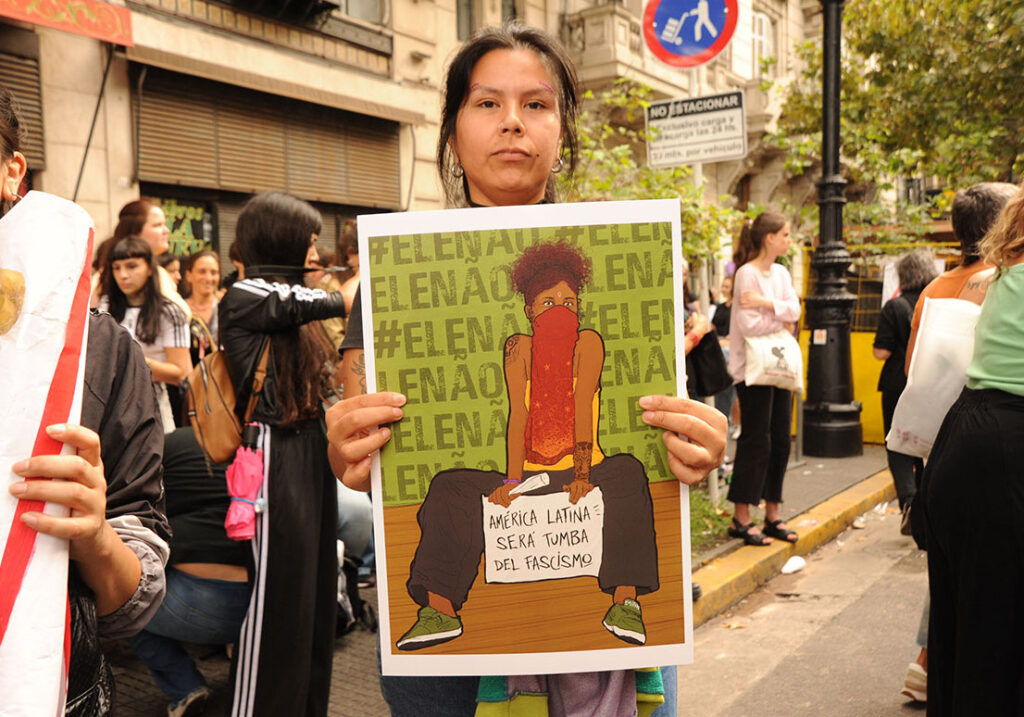
The hundreds of thousands of women and LGBTQ+ people who marched on Saturday from the National Congress to Plaza de Mayo did so in an organized fashion, through unions and social groups. Retirees, young people, and teenagers also marched independently, filling the streets with signs. The fighting spirit that connects very diverse generations is one of the defining characteristics of this March 8th.
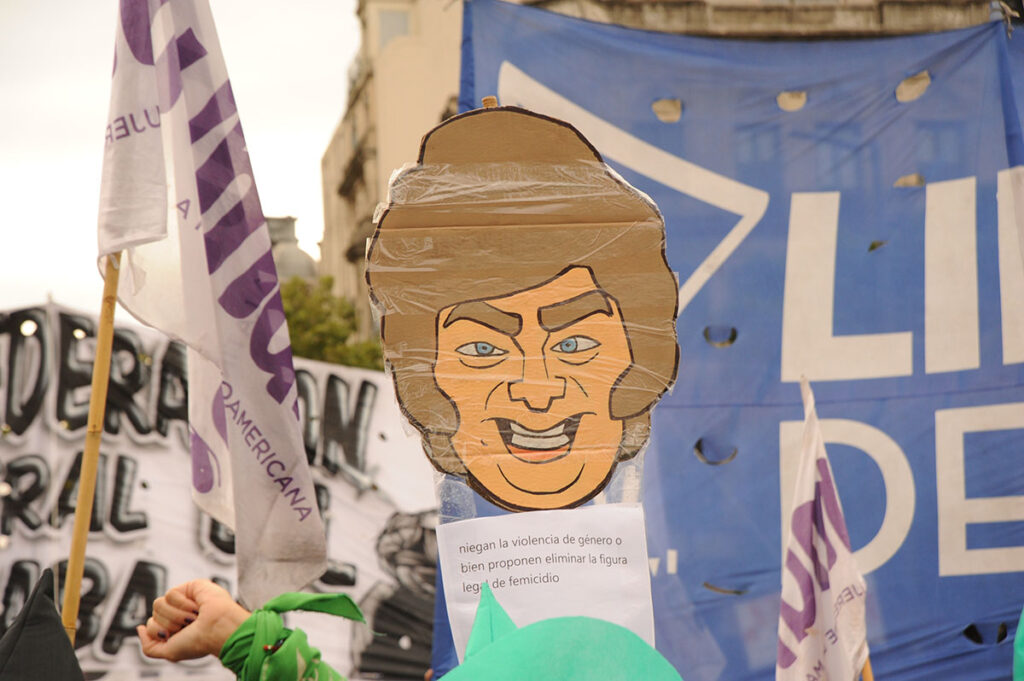
Milei came to power with the support of anti-rights corporations, with a discourse based on denialism that seeks to erase difference and stigmatizes diversity. Within this rhetorical mix, fueled by economic pretensions (of an economy that is neither improving nor likely to improve), a violence is also brewing that targets those closest to them: the woman who, in recent years, has gained some rights, and the diverse groups who, belatedly, were finally able to achieve their own democracy, their own freedom.

"Femicide does exist."
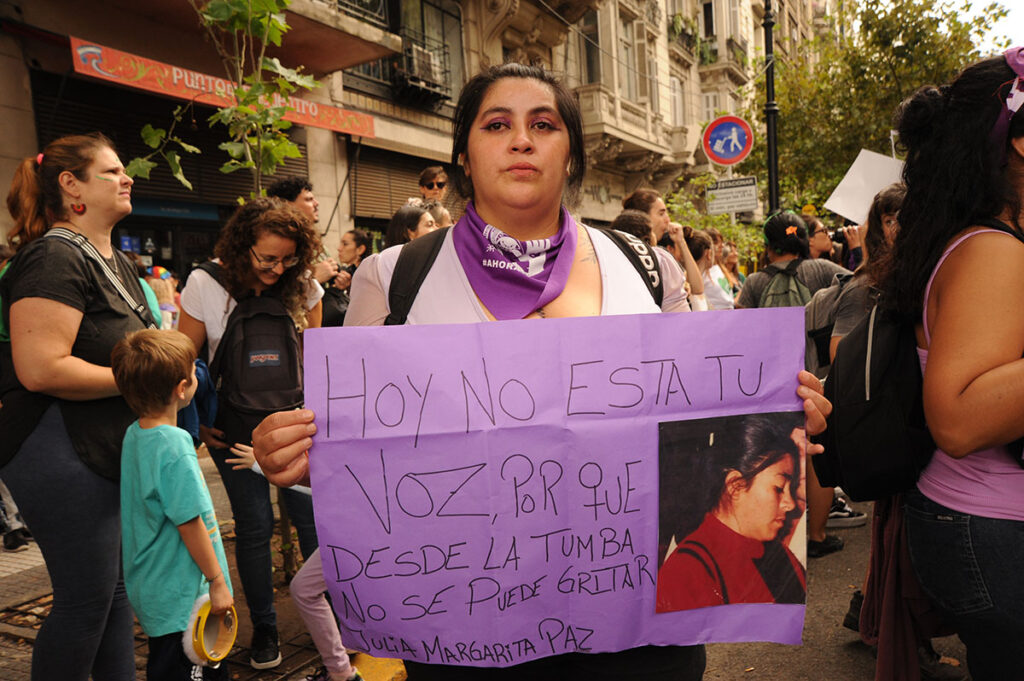
In front of Congress, starting at 10 a.m., family members of the group "Atravesados por el femicidio" (Marked by Femicide) set up a display of purple shoes in memory of their murdered daughters and, in some cases, their grandchildren. "It's a day to speak for the voices of our daughters, our sisters, for those who were silenced, both them and, in many cases, their children. It's a very important day," said Marcela Moreira of "Atravesados por el femicidio."
“We belong to the group of families affected by femicide because this happened in every one of our families. We are here, and we formed this group so that everyone knows we are not just a number. Those women who aren't here had life stories. It was sexist and patriarchal violence that killed them. The State is complicit, and we will not be complicit with the State,” said Eva Domínguez, sister-in-law of Vanesa Celma, a victim of femicide. She traveled from Rosario to participate in the March 8th demonstrations: “We want the president to see that femicide does exist,” they said.
The installation began a few years ago with 18 shoes and today there are 170 that represent the number of victims of gender violence.
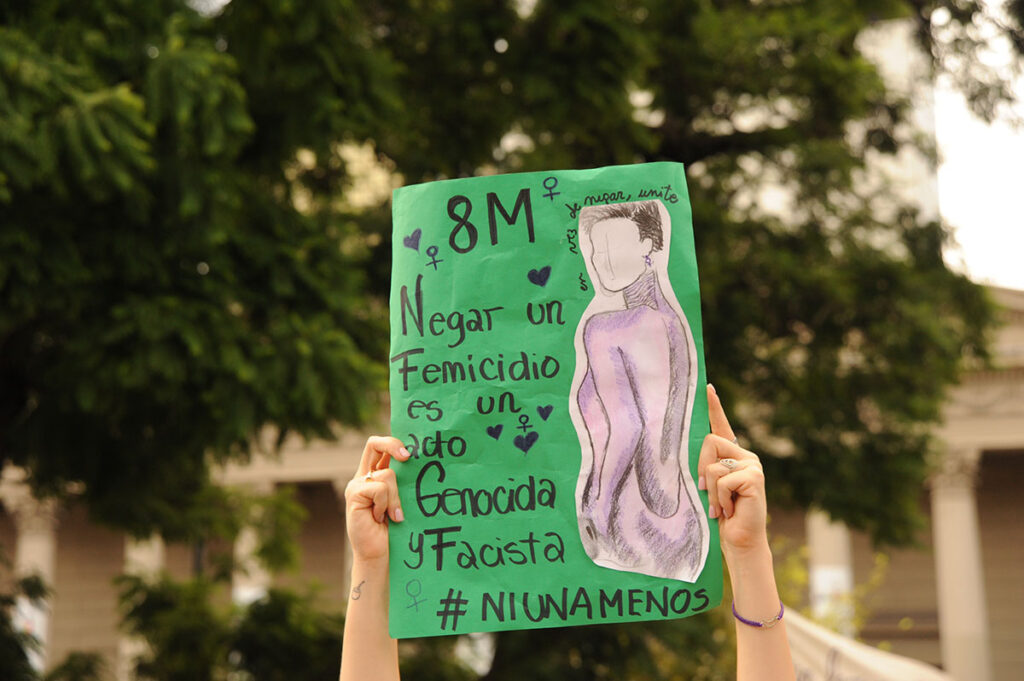
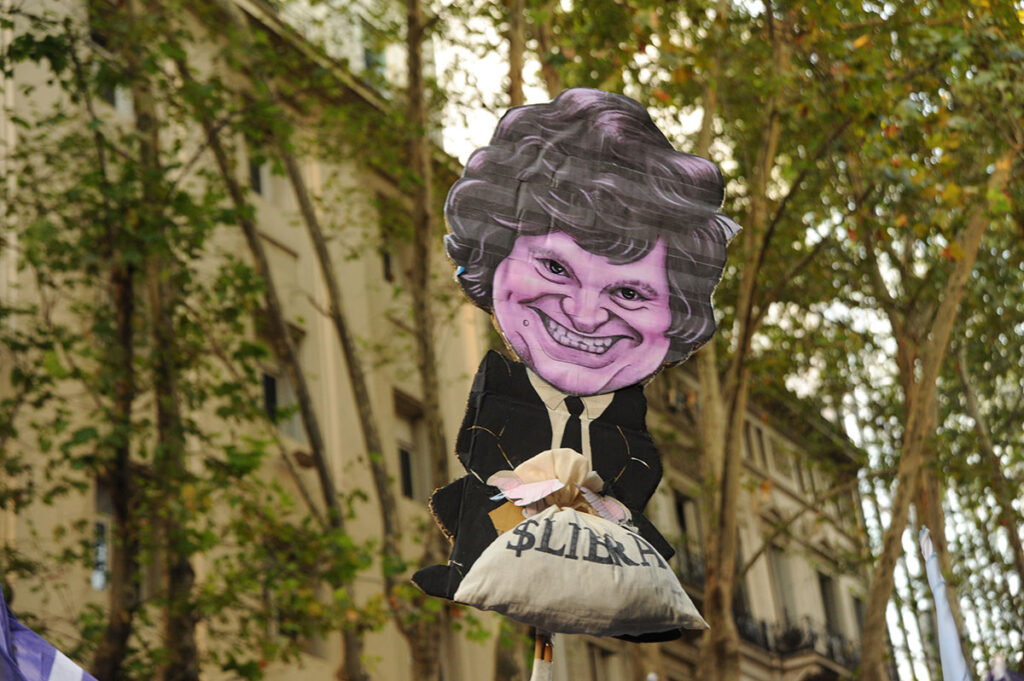
“They lie in all the reports where they claim to respect international laws; they aren't respecting anything. Everything they say about the former Ministry of Women, Gender and Diversity stealing money—as a former employee of the 144 hotline—I can say is a fallacy, a lie. We implemented public policies with commitment and responsibility. Now programs have been closed and there are defunded programs where victims have been abandoned,” stated Fernanda Fuentealba, from the ATE internal committee and a former employee of the former Ministry of Women, Gender and Diversity.
Workers
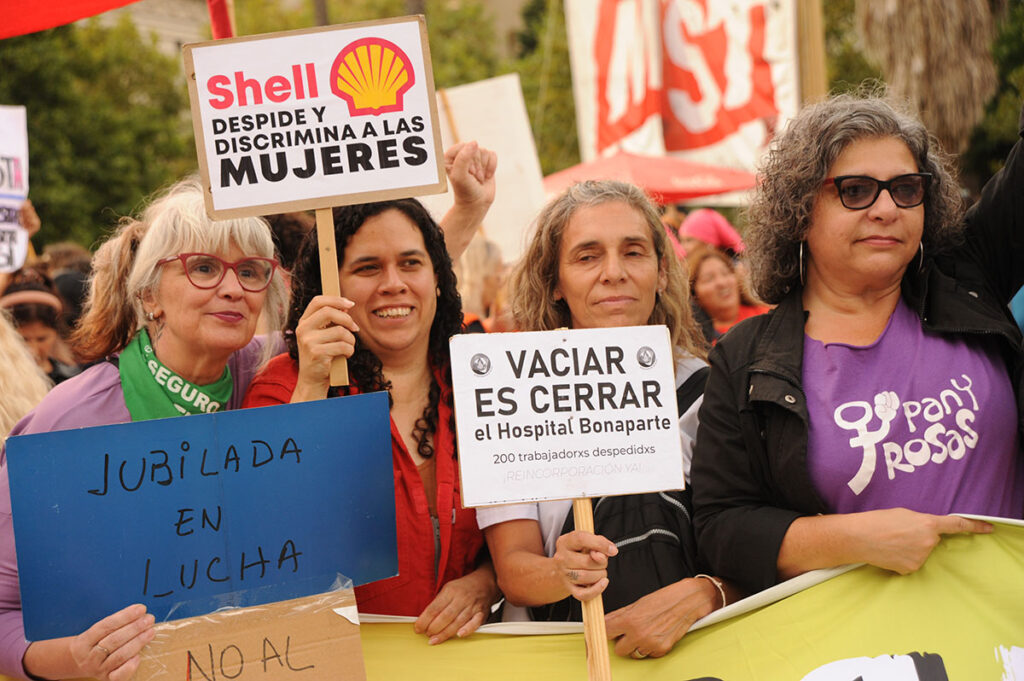
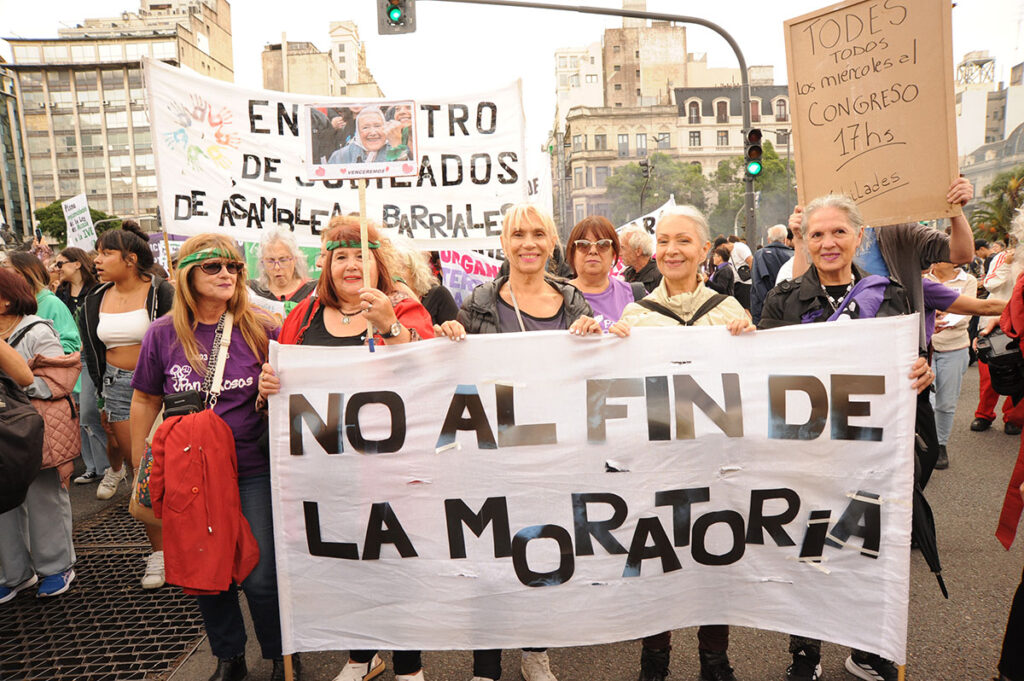
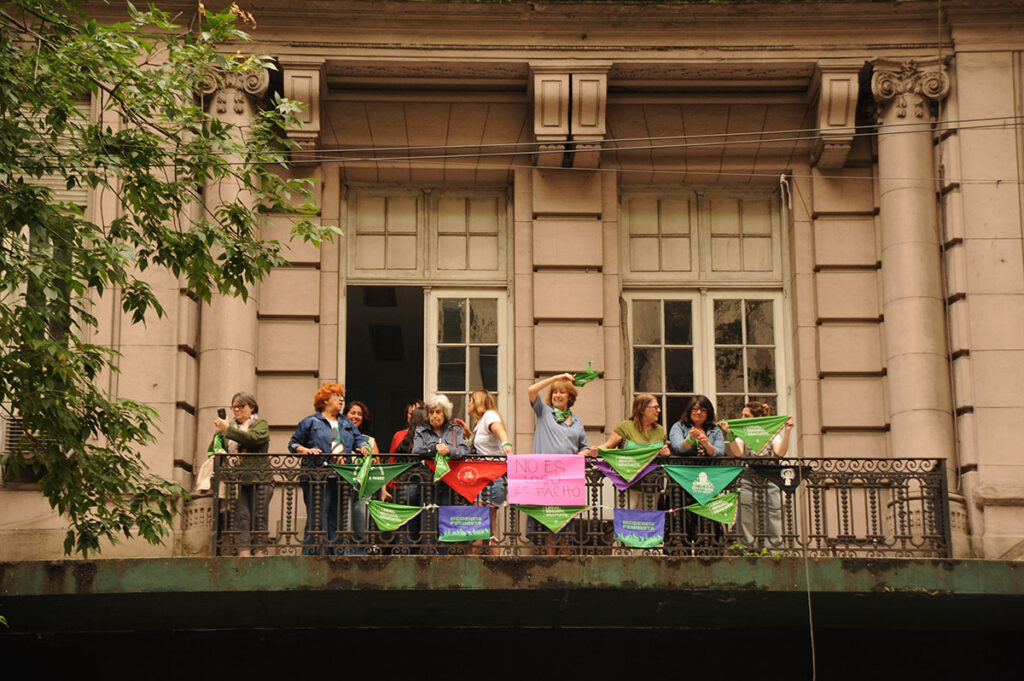
On International Women's Day, activists and ordinary citizens highlighted the difficult situation facing working people in Argentina and how this situation disproportionately affects women and LGBTQ+ individuals. While the national government boasts of deregulating the labor system, nearly four out of ten wage earners lack labor rights. And during the third quarter of 2024, unemployment increased by 1.2 percentage points compared to the previous year.
In this context, the activity rate for women was 52.1%, while that of men was 70.5%: a gap of 18.4 percentage points, according to the report “8M in economic perspective” of the Gender Observatory of the Center for Political Economy of Argentina (CEPA).
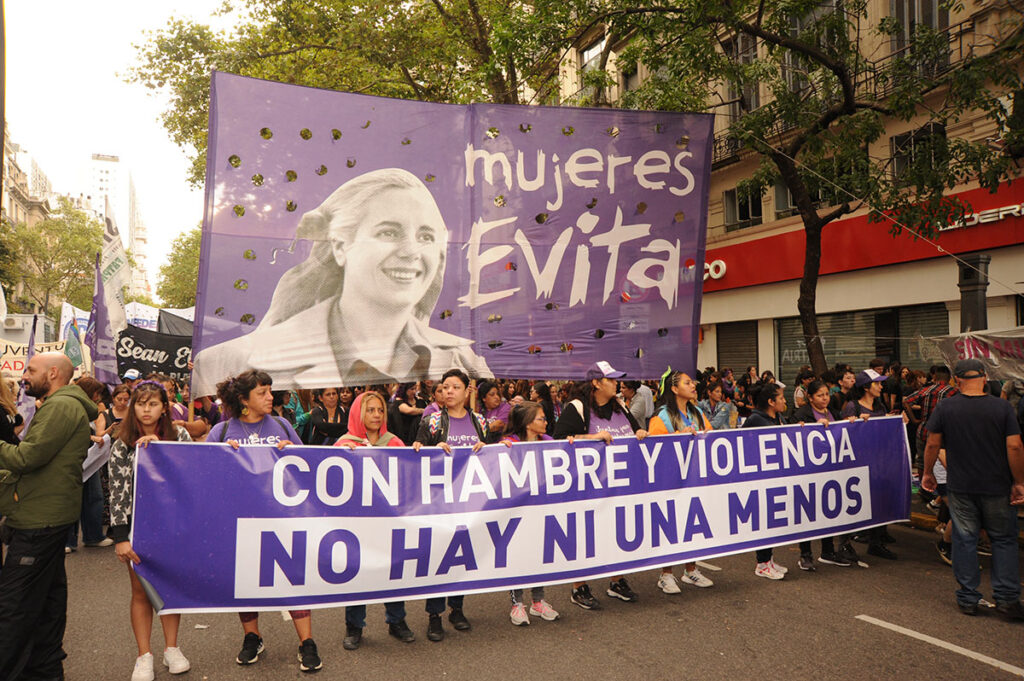
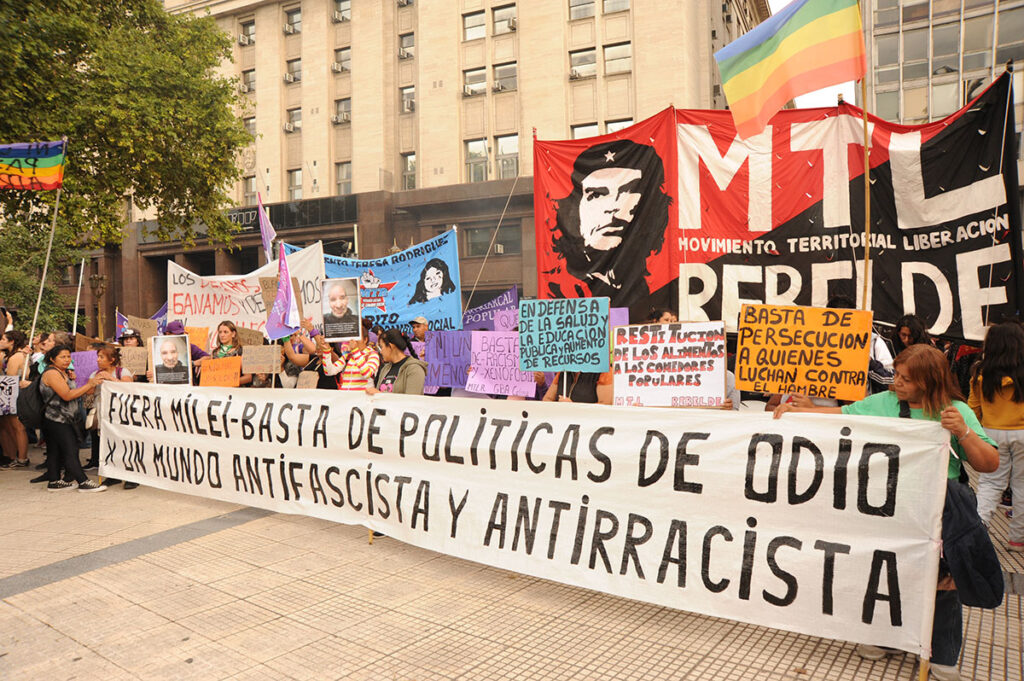
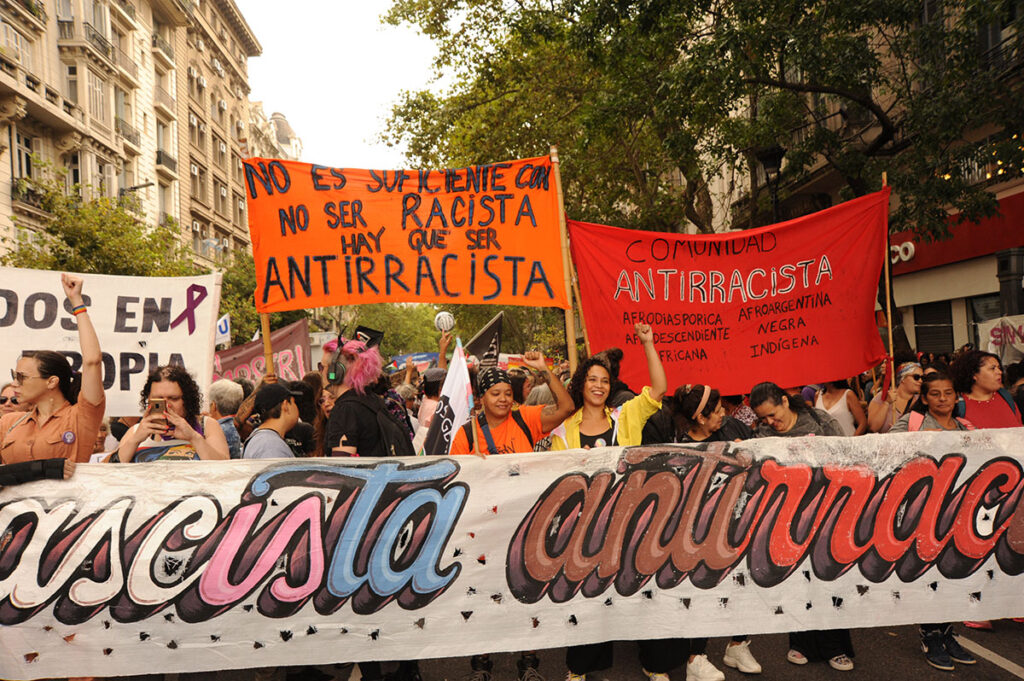
Meanwhile, the persecution of workers in the informal economy is intensifying. “We are marching so that our rights are recognized as such. We are here because we are tired of the institutional violence that operates in our neighborhoods and work areas, of the precariousness and cruelty with which both the national and city governments operate. This violence is not only directed against sex workers, but also against people experiencing homelessness, street vendors, informal workers, migrant communities, and the trans community,” stated Georgina Orellano, general secretary of AMMAR, who was at the head of the march. “March 8th International Transfeminist Antifascist Antiracist and Antipatriarchal Strike,” read the banner behind which thousands marched.
Diversities
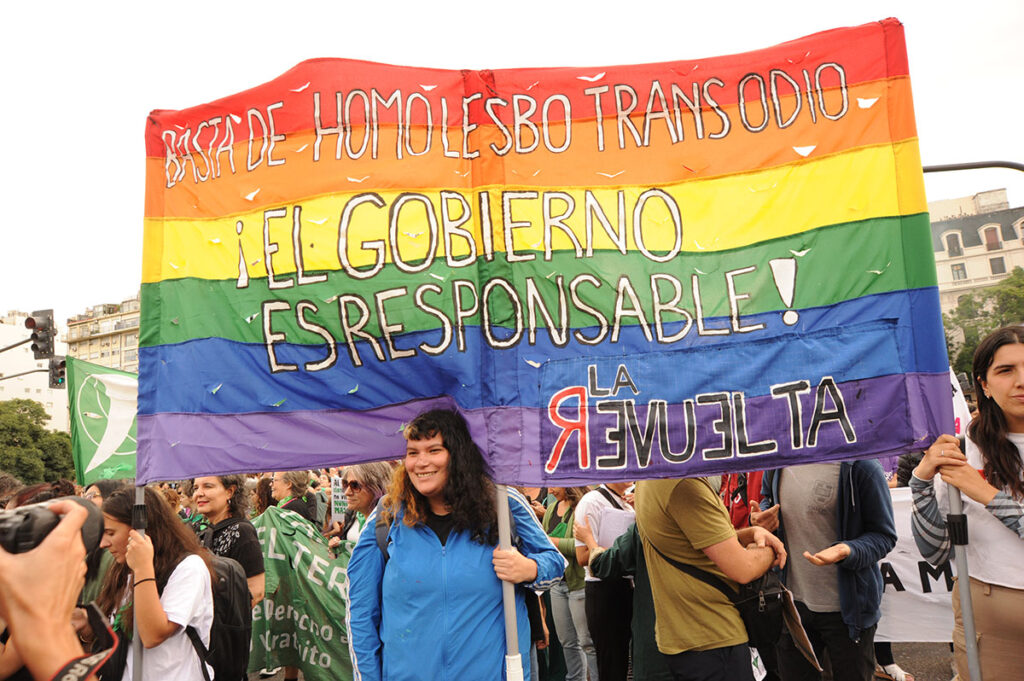
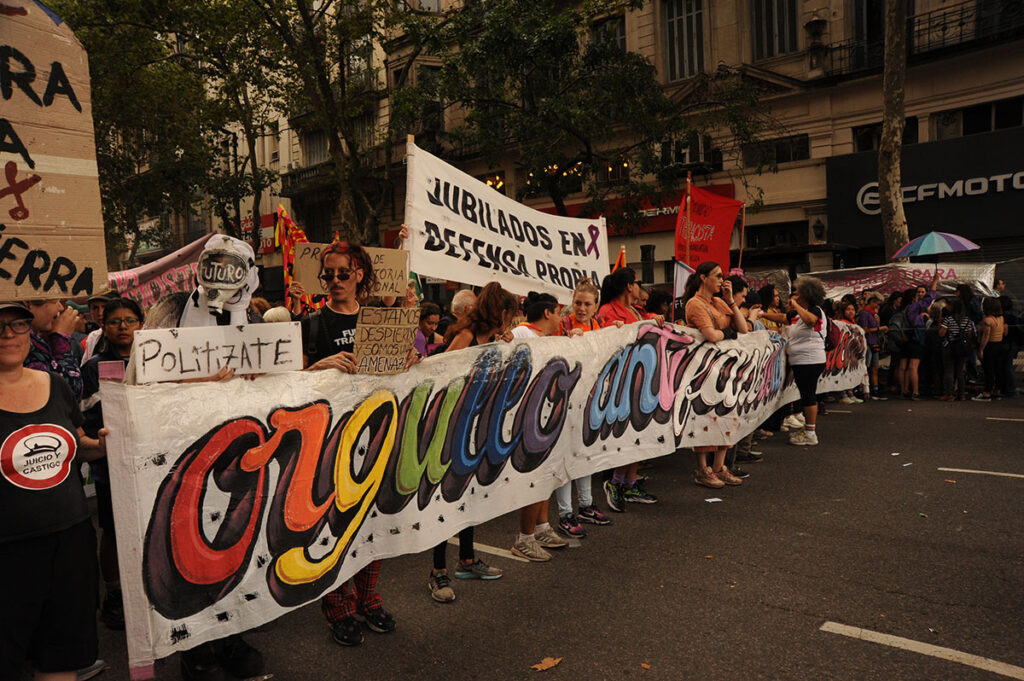
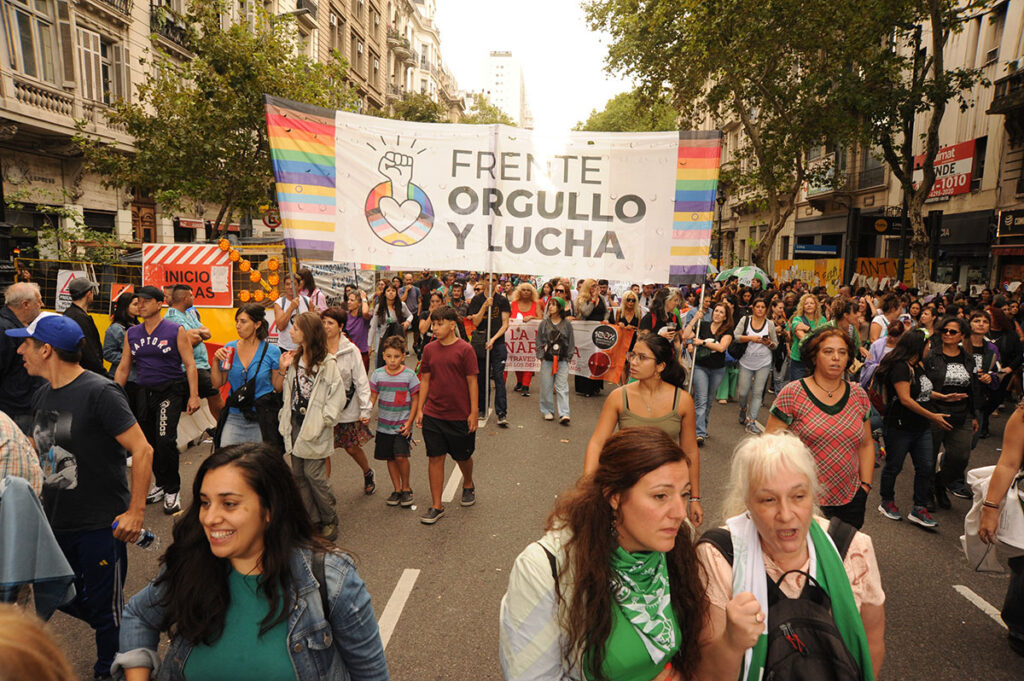
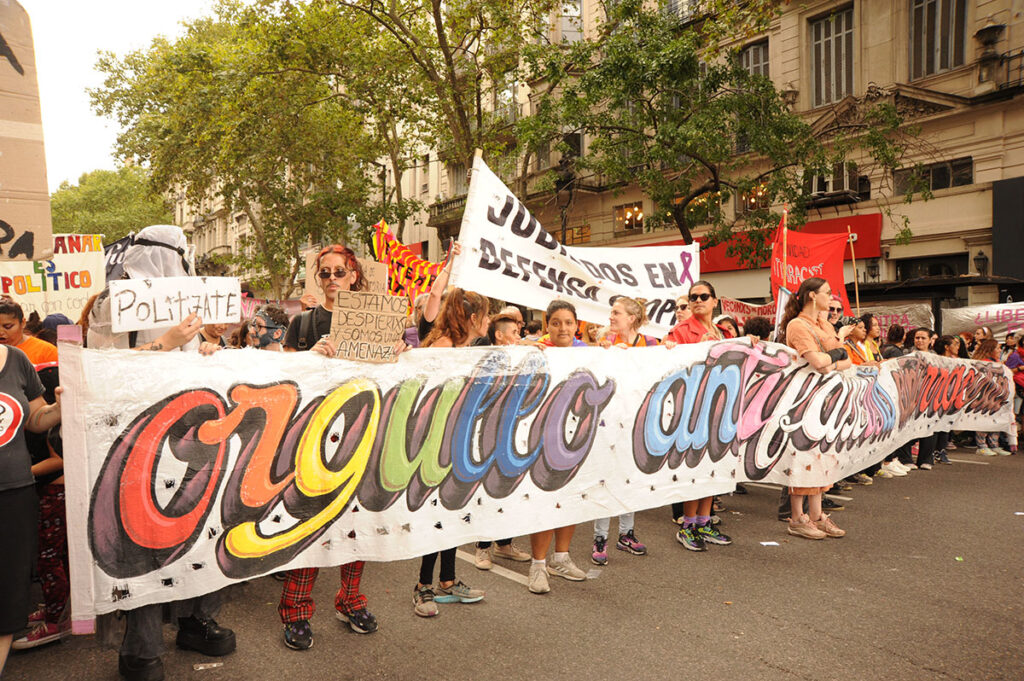
“We are here as always on March 8th, but in this context even more so, with our banners of social justice, from a feminist perspective, proudly proclaiming who we are in the face of the trampling of rights and the idea of severing ties, of ceasing to be a community, of ceasing to be a collective. This is a moment where solidarity cannot be just a slogan; it must be practiced by putting ourselves in the shoes of others, and showing more than ever that change is always collective and transformation is never achieved in isolation. We have nothing to do with the laws of the market; we are the people, a soul that walks, and we care deeply about what happens to others,” said Mónica Santino, a lesbian and feminist activist from the organization La Nuestra Fútbol Feminista, in Villa 31.
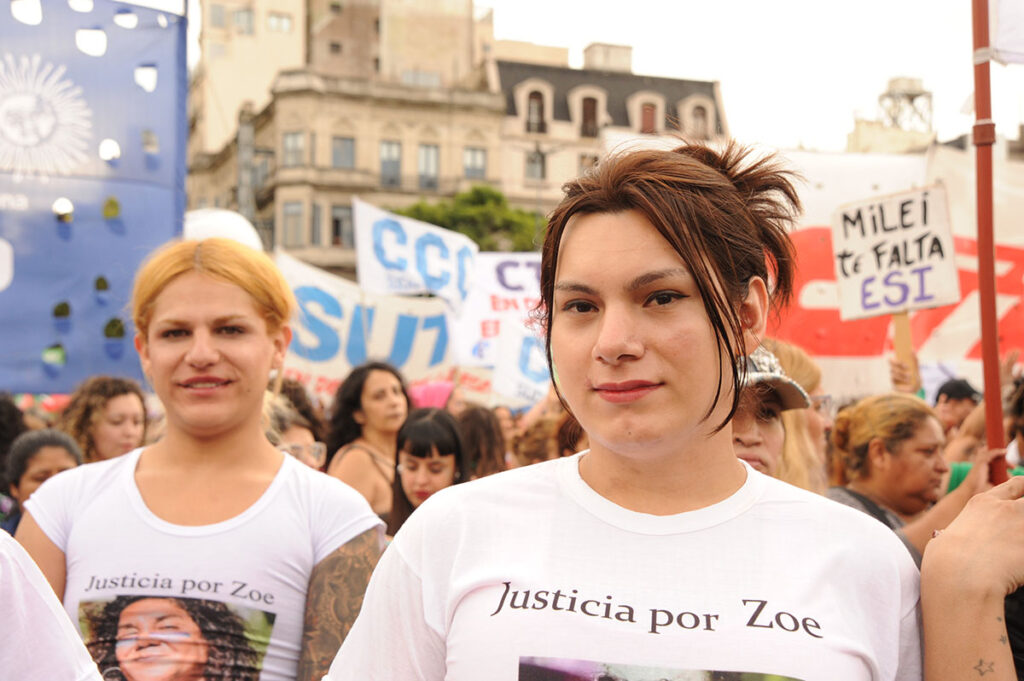
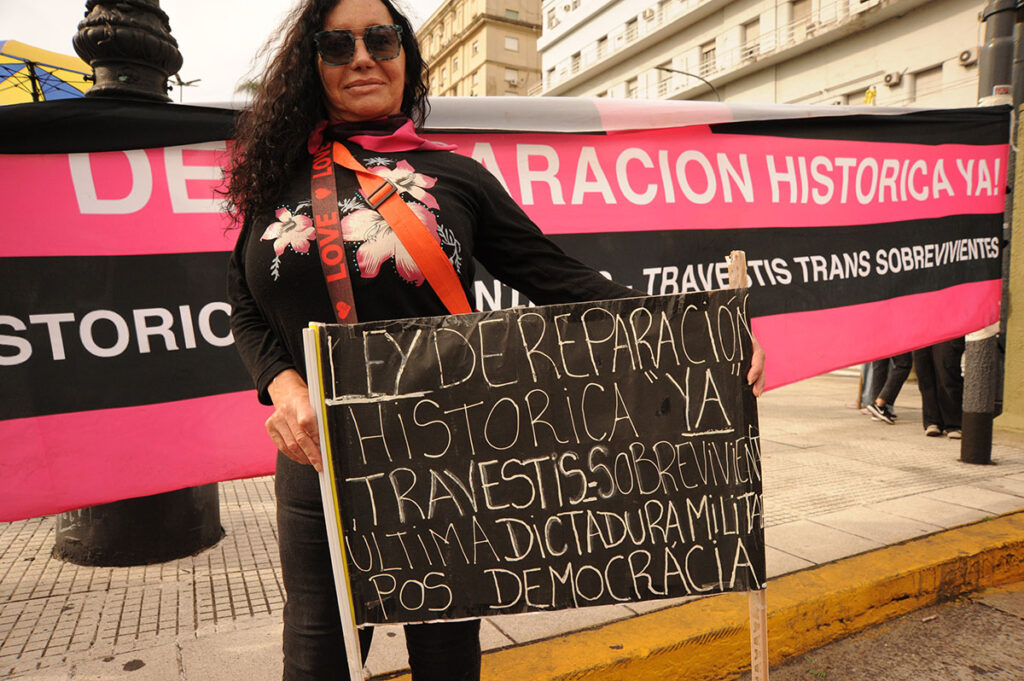
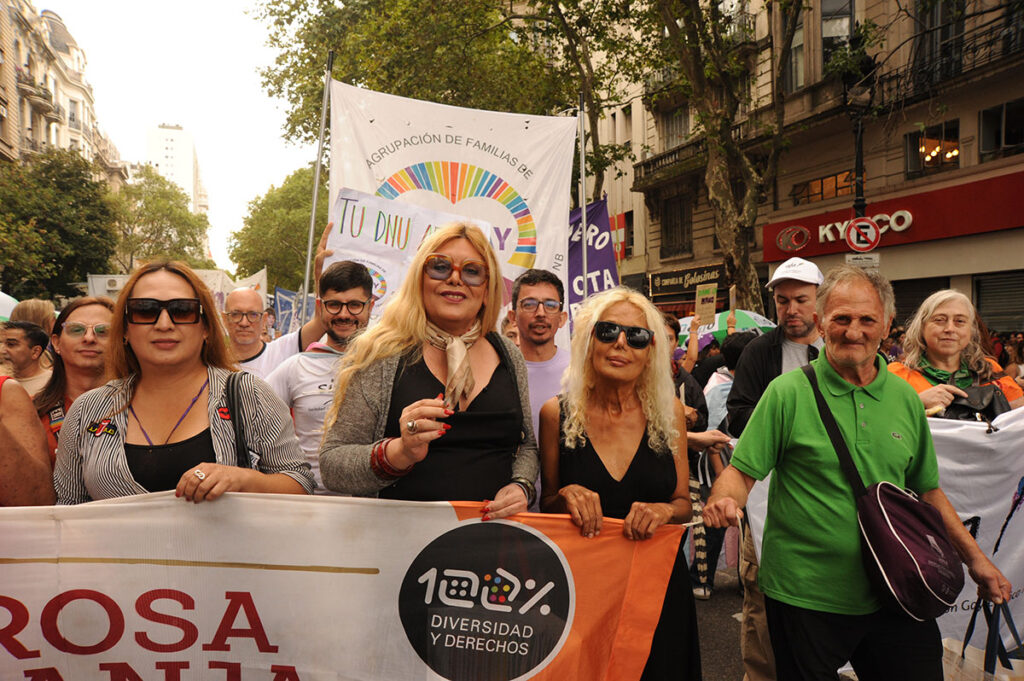
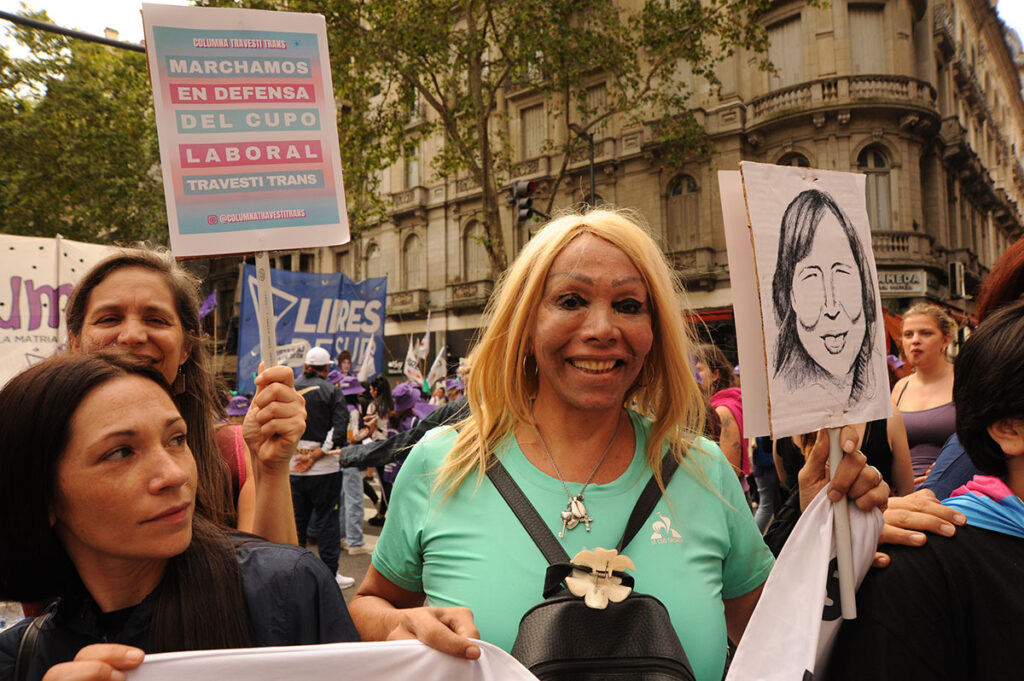
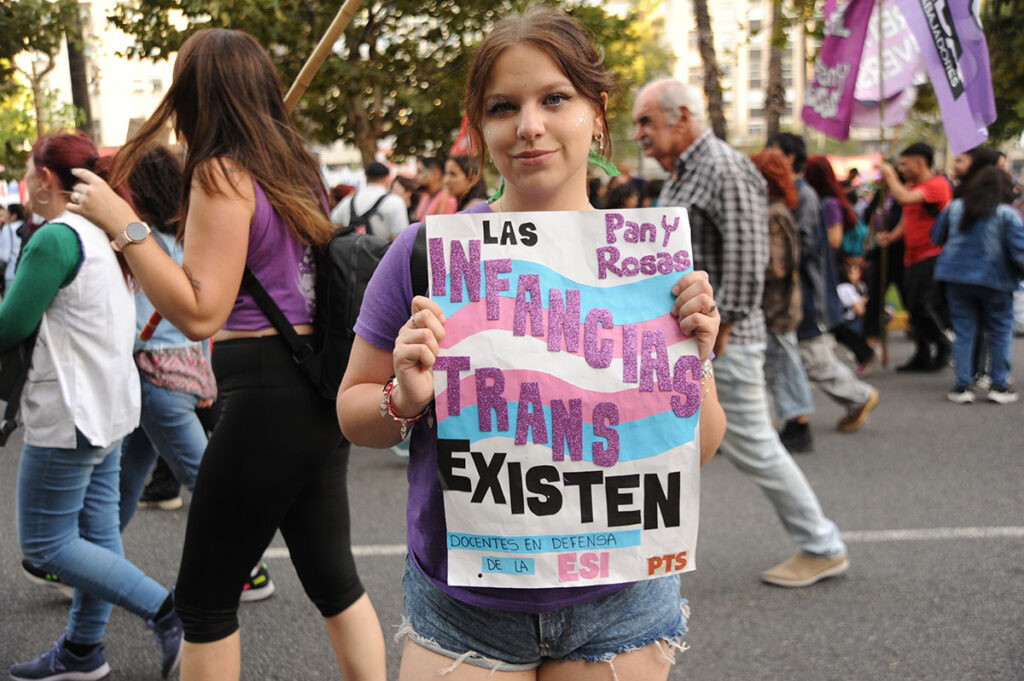
This year, the trans community organized itself into several groups. It is one of the populations that suffered the most direct attacks, both in rhetoric and actions, from the libertarian government. In its misnamed “cultural battle,” it ignored the Transgender Employment Quota Law, firing more than 150 trans, gender, and non-binary workers. It eliminated government agencies responsible for implementing public policies aimed at women and sexual diversity, such as the Ministry of Women, Gender, and Diversity.
Alongside activists from the Pride and Struggle Front, Marcela Tobaldi stated: “From La Rosa Naranja, as an organization that defends the rights of transvestites and trans people, we see this March 8th not only as a reflection of political dissolution but also social dissolution. This society has reached the very depths of hell with its divisions, hatred, and discrimination.”
“We are here demanding that this fascist government stop the repression of trans people,” said trans activist Alba Rueda from the transvestite and trans column, a new political space of and for transvestite and trans people, which joined the CTA (Argentine Workers' Central Union). “Racists will not pass.” “Pride and fight against fascism.” “We march for the right to transvestite and trans political participation,” their banners read, alongside portraits of Diana Sacayán and Lohana Berkins. The Mocha Celis Transvestite and Trans Popular High School also marched in that column.
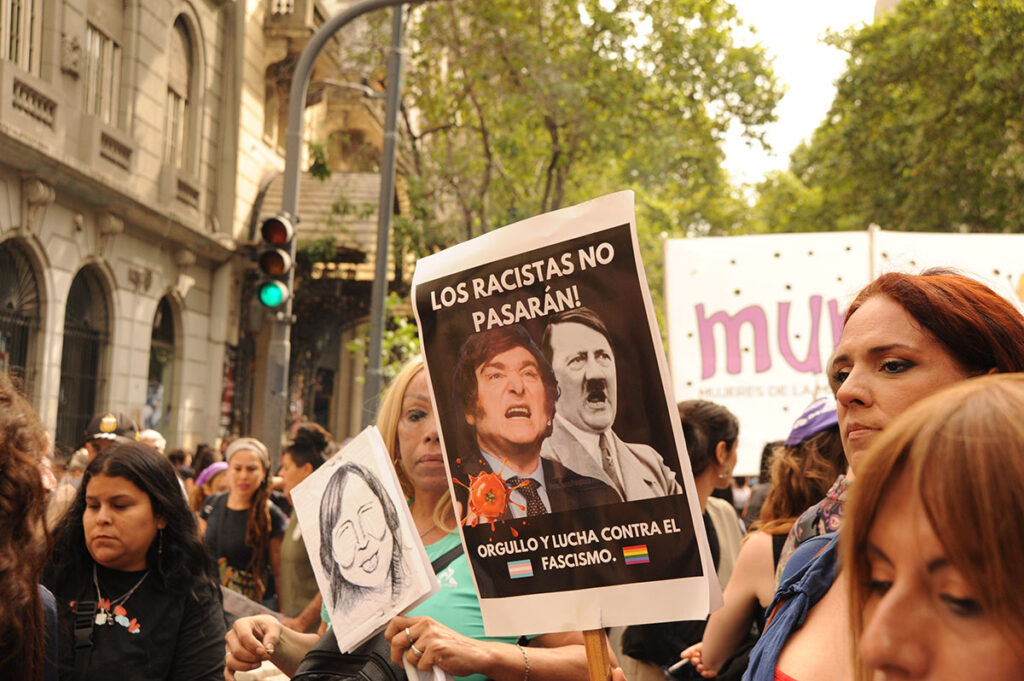
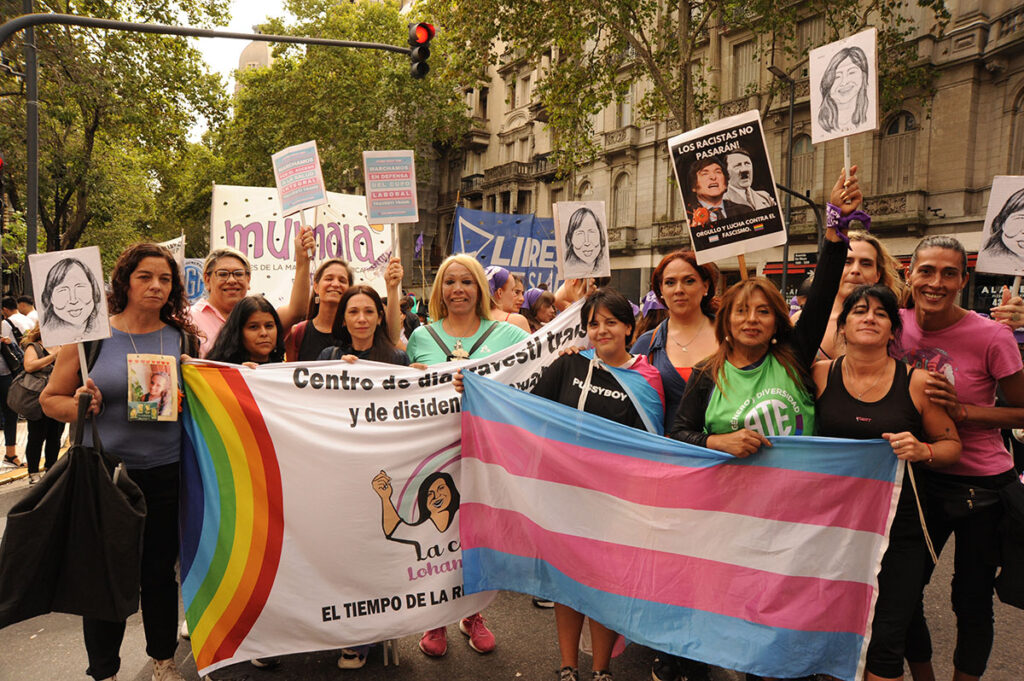
From the Afros LGBT organization, Jes Lamadrid stated: “Historically, Black women have always been workers, we have always been fighters. We assert our presence to build a future outside of right-wing, fascist governments, which above all are racist and leave us out of the system.”
🇦🇷🏳️⚧️📢 "Here's the trans resistance!"
— @presenteslatam.bsky.social (@PresentesLatam) March 8, 2025
✊🏾 Transvestite and trans people are among those most affected by this government's hatred.
✊🏾📢 This #8M they took to the streets to continue responding: pic.twitter.com/YIN7MBY5e3
Of mothers and daughters
Gabriela Mansilla, the mother of Luana—the first child to obtain an ID card reflecting her gender identity, now a teenager—told Presentes: “It is essential to be here today, after the direct attack on children and adolescents,” she said, referring to the decree that modified the Gender Identity Law. “It is a reality, they exist, they won't be able to stop it, they will continue to be born. I think society needs to realize this and become aware. All of society has to protect children,” expressed the founder of the Civil Association Free Childhoods.
“I’m marching with my daughter so I don’t have to march for her tomorrow,” Silvia, a domestic worker who came from Pilar, wrote in blue letters on a pink sign. She walked down Avenida de Mayo holding hands with 10-year-old Valentina. Valentina smiled as she walked, wearing purple cardboard wings that read, “They sowed fear in us, and wings grew.” “This is the only march I’ve come to with my daughter. I suffered gender violence. I grew up subjected to what they told me. This fight is important to me. I don’t want it to happen to her tomorrow. I’m also the mother of five boys,” she told us from the Libres del Sur column.
🗓️💚 "I march with my daughter so I don't have to march for her tomorrow."
— @presenteslatam.bsky.social (@PresentesLatam) March 8, 2025
✊🏾📢 Every #8M leaves us with urgent messages in posters and essential voices.
📲 Don't miss the collaborative coverage we did with @tiempoarg on our social media: pic.twitter.com/ve0mGZpqvw
Arriving at Plaza de Mayo, Ana Maria Careaga—a psychoanalyst and survivor of state terrorism, daughter of Esther Ballestrino, one of the founders of the Mothers of Plaza de Mayo—recalled that this was the first March 8th without Nora Cortiñas, a constant presence at each of these marches. “If Norita were alive, she would have been here,” Ana Maria said, moved to tears. “I’m very touched. I see so many girls and young women, the forms that struggles take in these historical times, the transmission from generation to generation—it’s the bond they want to sever. This mobilization is very important, raising the banners and continuing to fight for rights in these dark times. We mustn’t lose our capacity to be moved by injustice. And in all of this, the Mothers are also a guiding light.”

The government's provocation
In the early hours of March 8th, the national government shared a video on its social networks filled with misinformation.
The publication claims that in 2024, a long-standing trend of declining femicides was broken, thanks to the "whoever commits the crime will pay" policy, according to data from the National Ombudsman's Office. However, it only compares this figure with 2023. It does not consider the figures for 2021 and 2022, which are, in fact, lower than those recorded in 2024.
Furthermore, other records do not coincide with those of the Ombudsman's Office. The one compiled by the Supreme Court indicates that femicides decreased between 2020 and 2023.
The video claims that 4 trillion pesos were spent on gender policies in 2023 alone. However, this figure includes pension moratoriums and pensions. If government departments are considered, the budget for the Ministry of Women and Diversity that year was 77.171 billion pesos, one of the lowest compared to other ministries.
The 8M coverage in collaboration with Tiempo Argentino was also carried out by Aldana Somoza, Clara Pardi, Lucas Gutiérrez, Milena Pafundi, Eugenia Siman and Noelia Torres
We are present
We are committed to journalism that delves into the territories and conducts thorough investigations, combined with new technologies and narrative formats. We want the protagonists, their stories, and their struggles to be present.
SUPPORT US

FOLLOW US
Related notes
We are present
This and other stories are not usually on the media agenda. Together we can bring them to light.