

March 8th in Argentina: The transvestite and trans collective will march in defense of children, employment quotas, and historical reparations.
For the March 8th march in Buenos Aires, there are two calls to action and several groups participating, including transvestite and trans people. How are they organizing?


Share

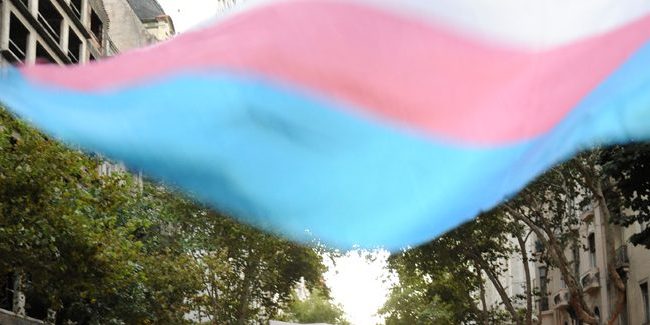
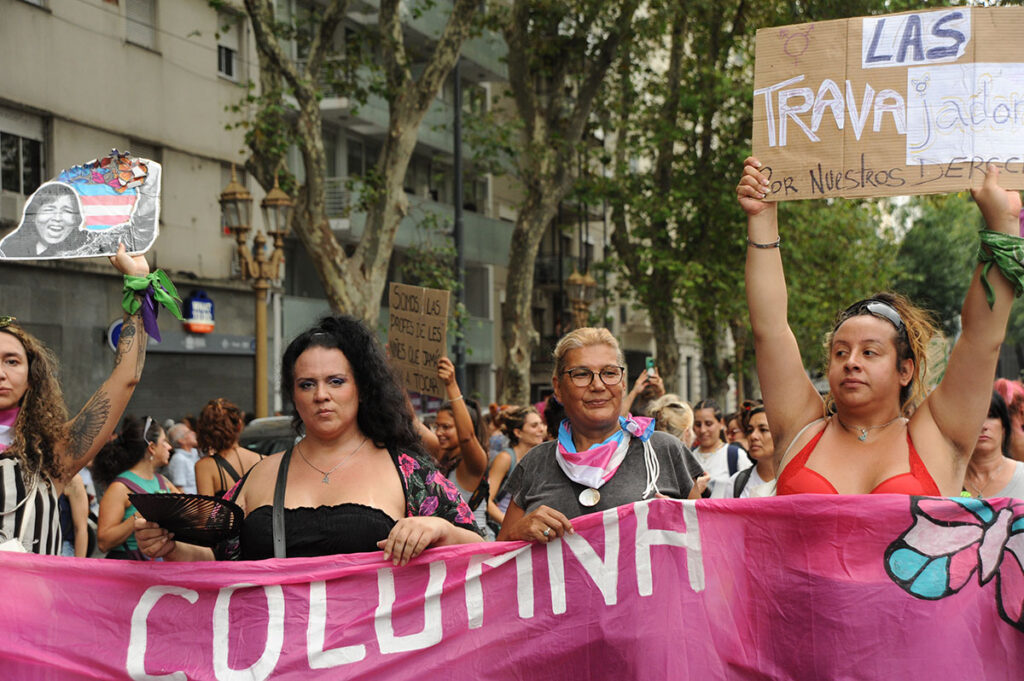
The trans and travesti community is preparing for a massive turnout in the march this Saturday, March 8th, International Women's Day, which will depart from the National Congress in Buenos Aires and proceed to Plaza de Mayo. With calls to action in various parts of Argentina and Latin America, they will mobilize to defend their rights and protest against fascism.
In November 2023, trans and gender-diverse people were the first to march against the then-future government of Javier Milei, who had just been elected, on Trans and Gender Identity Day. A year and three months after he took office, they took to the streets again en masse after their warnings were confirmed: the attack on their rights would be fierce.
This is the group that suffered the most direct attack, both in rhetoric and actions, from the libertarian government. In its misnamed “cultural battle,” it ignored the Transgender Employment Quota Law, firing more than 150 transgender, transvestite, and non-binary workers. It eliminated government agencies responsible for implementing public policies aimed at women and sexual diversity, such as the Ministry of Women, Gender, and Diversity. The President himself delivered a speech before the international community in which he spread misinformation about the LGBTIQ community, and especially about the transgender community, demonstrating that his attack is frontal and targeted. And finally, he attacked the national legislation that is an emblem worldwide, the Gender Identity Law, won in the streets in 2012.
The calls for applications
The collective will hold two demonstrations, both at 4 PM, in Buenos Aires, with similar events taking place throughout the country. One will be a rally at the intersection of 9 de Julio and Avenida de Mayo a Travesti Trans contingent will participate in a larger march organized by the Central de Trabajadoras y Trabajadores de la Argentina (CTA), which will bring together various groups, including Infancias Libres.
On the other hand, the Antifascist and Antiracist Column - which promoted the march of February 1st - will gather from 4pm at Av. de Mayo and Lima and the Trans Memory Archive will leave from its headquarters at Av. de Mayo 1300 at 3pm.
“It is time for us to come together, to call for unity and to become stronger,” said activist Florencia Guimaraes, in dialogue with Presentes .
This aligns with the shared view of much of the community, which considers this year to have been marked by "a deepening and dismantling of public policies concerning trans and gender-diverse people." It is "a denialist government that has launched a reactionary onslaught, with rhetoric and actions that affect our human rights," she analyzed. Furthermore, she warned about "its alliance with ultraconservative sectors," as it "generates a huge setback in terms of rights and, of course, jeopardizes the public policies and laws that we have fought so hard to achieve."
“This offensive is not an isolated incident; it is in line with the United States and European countries. It is a setback orchestrated through hate speech and actions,” he emphasized.
Guimaraes will participate in the Transvestite and Trans Column. “It’s not the first time we’ve organized columns or blocks; it’s something we’ve been doing historically. Comrades like Lohana Berkins and Diana Sacayán have done it, and there are others of us who continue their legacy. We call on everyone to join us, to embrace and support each other,” she shared .
“This column was born out of necessity, the immediate urgency to defend our rights, especially those of our transvestite, transsexual, and transgender community. It was born out of the need to make ourselves visible, to be able to think about what strategy we will have against fascism and in the face of violence against our identities. It also stems from the desire to come together, organize ourselves, and create a space where we can support each other and at the same time work across different sectors,” explained Daniela Ruiz, a transvestite activist who is also part of the column.
The demands focus on defending the rights of trans children and adolescents, the Gender Identity Law, the trans employment quota, and inclusive public policies.
“For us, marching and taking a political stance in defense of our rights is essential. And of course, it’s crucial to show that this movement is still active and fighting today more than ever. We face the same problems we’ve historically denounced, and the added gravity of living under a fascist government that is destroying democracy,” emphasized trans activist Alba Rueda, a member of Mujeres Trans Argentina and one of the driving forces behind the Transvestite and Trans Column.
Crimes 2024
Javier Milei's first year in office was marked by the rise of hate speech against sexual diversity, legitimized by the ruling party. "Hate rhetoric is promoted from within the government and fuels not only hate speech, but also beatings, murders, and contempt, with fatal consequences for the lives of many transvestites and trans people," Guimaraes analyzed.
In this regard, 140 hate crimes occurred in 2024 in which the sexual orientation, gender identity, and/or gender expression of all the victims were used as a discriminatory pretext for violating their rights and perpetrating violence against them. This data comes from the latest report prepared by the ombudsman's offices of the city and province of Buenos Aires and the Argentine LGBT Federation . It is not an exact figure, as it only includes cases reported by the media and complaints received by the participating organizations.
Of the total number of LGBT+ people who were victims of hate crimes
Of the cases registered in 2024, 64% (90) involved transgender women. Following that, 23% were cisgender gay men; 8%, lesbians; 4%, transgender men; and finally, 1%, non-binary individuals. Among the crimes that violated the victims' right to life, 87% (58 people) were transgender women.
Childhoods under attack
On February 6, the government published Decree 62/2025 in the Official Gazette, amending Article 11 of Law 26.743 and prohibiting hormone treatments for minors . Health specialists and activists emphasized that suspending these treatments has serious consequences for physical health. Furthermore, the inability to access them directly affects the mental health of transgender adolescents.
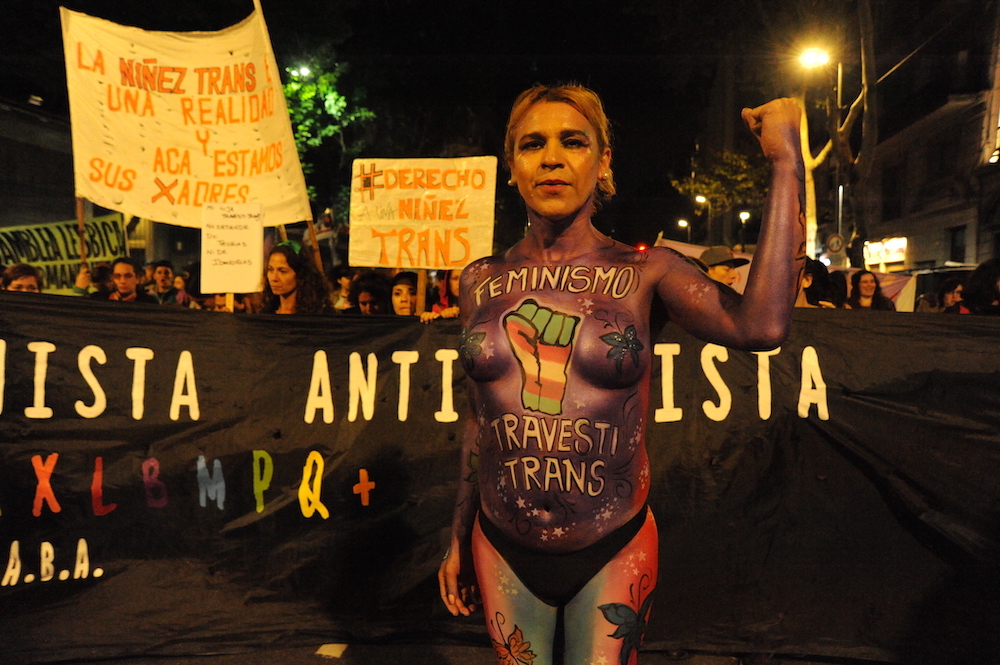
“The current situation is very worrying. Imagine children who were born into a context that supported and protected their existence. Lunita—the first trans girl to obtain a corrected ID—will turn 18 this year. She received her ID when she was 6. There are children who were born knowing they could find a role model, like Luana. Taking that context away from them now destabilizes them and puts their existence in grave danger. It's not just denying them; it goes much further: it's prohibiting their very existence,” shared Gabriela Mansilla, activist, founder of the Civil Association Infancias Libres (Free Childhoods) and Luana's mother.
“Children don’t have to resist; they have to enjoy their rights, which is not the same thing,” she emphasized. In this regard, she considered that adults “owe themselves to reflect on what we are going to do about these attacks, not only from a place of defense and resistance, but also from a position of taking a stand.”
More than 150 layoffs
Another demand on International Women's Day is the enforcement of the Transgender Employment Quota Law and the rejection of the dismissal of transgender and transvestite people who worked in public administration.
During the past year, 150 trans, gender-diverse, and non-binary workers were dismissed from the national public sector, according to data collected up to October. This represents 1.3% of the 11,840 registered dismissals, even though trans, gender-diverse, and non-binary people only make up 0.17% of the workforce. In this regard, “this group has been disproportionately affected by dismissals,” states the report “ Implementation and Dismissals of the Trans, Gender, and Non-Binary Employment Quota,” prepared by the State Workers Association (ATE). Of that total, 50 were reinstated following union action.
“It is essential to uphold the Diana Sacayán Lohana Berkins transvestite employment quota today because it is a tool for transforming inequality, which Milei failed to uphold by firing hundreds of trans women, including last week's dismissals of other trans people,” Rueda stated.
A reparation for older trans people
“We want to live out our remaining time in peace,” says Patricia Rivas, a trans activist, senior citizen, and member of Las Históricas Argentina. For years, this collective has been demanding historical reparations—that is, legislation that would provide a monthly pension and reparations to trans and travesti people over 40 who have been victims of institutional violence based on their gender identity. “It’s recognition for all the harm they caused us: the persecution, the rapes, the torture, the imprisonments, the murders of so many comrades and friends. For institutional persecution by the State, society as a whole, and even our own families,” Patricia explained.
This Saturday, she will be at the march at 9 de Julio and Avenida de Mayo, along with various organizations largely made up of older trans and travesti women. For this reason, they will only hold a rally, since “we’re too old to march.” “We invite people to come, other older women who don't belong to any organization. We are a self-organized group of adult women fighting for our rights, especially for historical reparations, because most of us are over 50, and there are some younger women who fight to help us because they are grateful that thanks to us they can have an education and a job. I believe that whatever time I have left, whether it's a lot or a little, I have to live with dignity, both economically and in terms of health,” she concluded.
We are present
We are committed to journalism that delves into the territories and conducts thorough investigations, combined with new technologies and narrative formats. We want the protagonists, their stories, and their struggles to be present.
SUPPORT US

FOLLOW US
Related notes


We are present
This and other stories are not usually on the media agenda. Together we can bring them to light.