

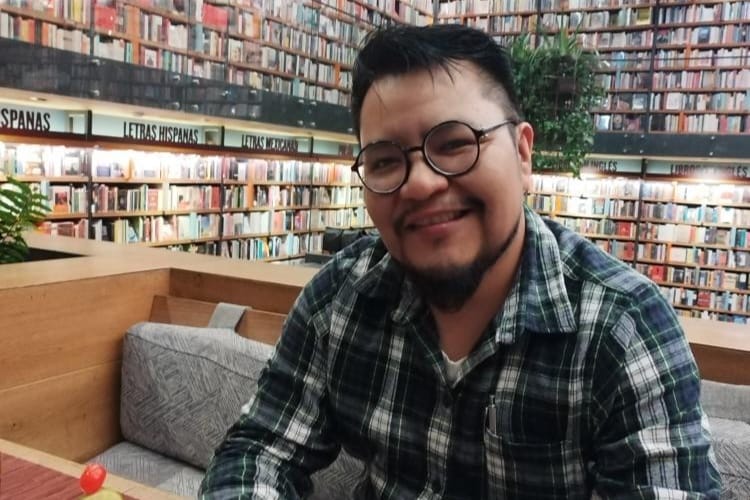
David Gudiño: “The indigenous face continues to be excluded from the media and from sexual and emotional relationships”
He gained international recognition in 2022 with his short film "Argentina is not white," which screened at the Cannes Film Festival, but he has been involved in art since a young age. Discovering the work of "Identidad Marrón" (Brown Identity) changed his life and his political and artistic perspective.


Share

When David Gudiño was six years old, his family was in crisis. His father had been laid off from Gas del Estado in 1992, when the government privatized the state-owned company. They went from being middle class to not having enough to eat. His father traveled to Buenos Aires to find another job, and David stayed with his mother in Tartagal, Salta. Amid their hardship, David decided to find a way to entertain his family.
“Even as a young boy, I started creating routines (choreographies for school fairs). I would gather the neighborhood kids from my block at my house and we would dance. I did it out of a desire to have people over because I saw my mom crying. I remember she would buy the Tang juice I asked for, a package of cookies, and some canned food, and that's what we used to invite people over. From that moment on, I never let go of the idea of performing, of entertaining,” he shared, deeply moved, during a conversation with Presentes .
Shortly after, he moved with his family to Río Grande, in Tierra del Fuego, on the other side of the country. He began doing theater, exploring political art, and touring with the group he was part of. He acted in and directed plays. 25 Winters and The Women of the South were selected to represent Tierra del Fuego at the National Theater Festival in 2019 and 2021. He studied acting and art therapy at the National University of the Arts. But he is also a biology teacher. “My dad confessed to me that they did everything they could to keep me from pursuing art. He made me sign a paper saying I was going to technical school, half-jokingly. They never forbade it, but they also never said, ‘How wonderful, son!’” he shared.

He forged his artistic path without any role models like himself. His "Indian" features embarrassed him from a very young age.
“Once I was putting sugar in my tea and my dad’s boss told me, ‘Don’t put so much sugar in it because you’ll never be white.’ I was 7 years old. From a young age I was very ashamed: of being poor, not being pretty, being gay, my hair… I prayed to God to let me go bald. I grew up without role models. That makes it impossible to dream: if there’s no one who looks like you, it’s very difficult,” he explained.
The arrival at brown identity
This self-perception persisted until 2020, when he encountered Identidad Marrón (Brown Identity ), a collective that addresses structural racism in Latin America and seeks answers. “I thought I was Black, mixed-race, dark-skinned, light-skinned. When I discovered Identidad Marrón, the word 'brown' gave structure to my life, my identity, and my work ,” he said.
From this perspective, she positioned herself to reflect on art. In 2020, she wrote the monologue Marrón, which won the Audience Award and Best Monologue NOA at the Vos&Voz Festival. Later, her play Blizzard was selected to be performed and filmed at the Teatro Nacional Cervantes, as part of the Nuestro Teatro competition.
In parallel, David is a prolific creator of political and humorous content on social media platforms. His short film #ArgentinaNoEsBlanca (Argentina Is Not White) participated in the 2022 Cannes Film Festival in the #TikTokShortFilm competition and won the latest edition of the SAGAI Audiovisual Marathon. It garnered over 20 million views.
Showings
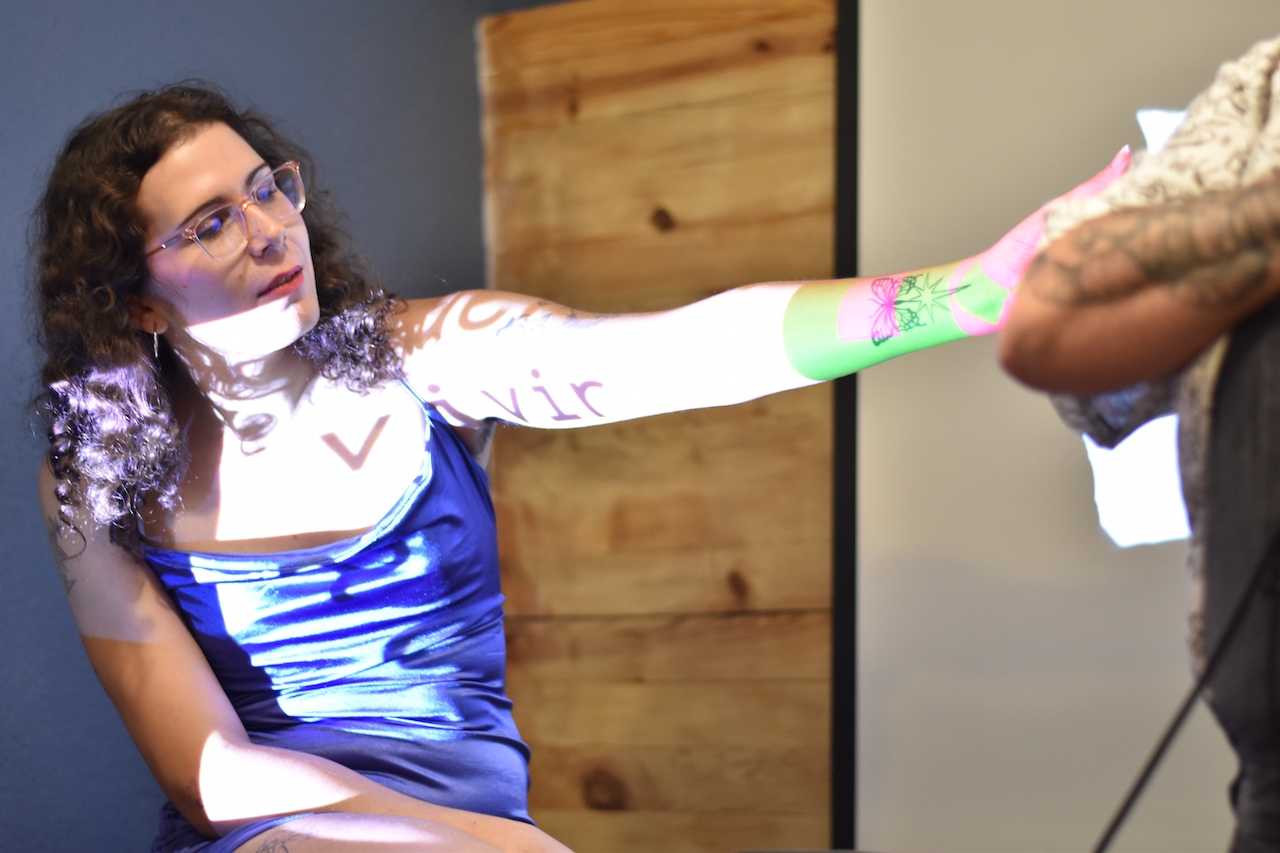
He is currently involved in two plays. He wrote and stars in * The Brown David* , directed by Laura Fernández. For this performance, he won the Trinidad Guevara Award for Best Newcomer. An Argentinian, brown-skinned David speaks to Michelangelo's shattered David about his beloved Juan, a daddy ," while an interracial love triangle unfolds and notions of beauty are humorously questioned. Performances are on Thursdays at 10 p.m. at Dumont 4040.
She also stars alongside María Laura Alemán and Vero Gerez in * Ha muerto un puto* (A Faggot Has Died) , written and directed by Gustavo Tarrío . In it, three voices weave an alliance and an impeccable synergy to invoke the memory of the Argentine writer, philosophy professor, essayist, and translator Carlos Correas. Persecuted and censored, he was driven to an abyss of anguish and self-destruction for writing an “obscene” text. The play justly recovers the memory of a person who had to pay the price for having his own voice. This Saturday and Sunday are the final performances of this series at Arthaus Central.

– In your latest work you talk about love and racism. How does this connection play out?
Many years ago I was with a guy, he broke up with me, and I ran into him recently. He was with his boyfriend, who was a man of color but not Argentinian. It made me think about how people with Andean and Indigenous features are being excluded: it happens on social media, on apps , where it's harder to find a match .
Drawing on the work of Carlos Correas ( A Fucking Guy Has Died ), he spoke of the dark-skinned man as a national erotic symbol. And it's true, he's a forbidden subject of love: I would get laid in the teahouses, in the woods, but then they wouldn't take me to dinner with their families. There's something about the indigenous face still being excluded from the media and perhaps from the most loving, sexual, and emotional relationships.
– How do you see racism expressed in relation to desire, to the erotic?
I lose followers every time I post a picture of myself shirtless, showing my stomach and pecs. I lose around 100 followers every time I get sensual . There's a place I'd really like to explore, which is the sensual, the erotic, and the sexual, from the perspective of Indigenous people's pleasure. I'm on that quest. I don't see people saying "what a beautiful brown" or "what a hot brown."
– The humor in the work and in the content of your social networks gives a certain air to these topics, which are complex.
Yes! Otherwise, it's just propaganda. For me, the Argentine public understands the idea of humor very well, the "reflective" laughter. I don't particularly like the concept of "reflective," but I do like the idea of laughing to understand something about why I'm laughing at it. It doesn't reproduce racism or violence, but rather allows me to approach a concept empathetically.
– What value do you find in humor and art in contexts of attacks on diversity?
As Nietzsche said, violence is dismantled with humor. Everything I do on social media and with El David marrón is an attempt to dismantle government violence.
It's also a job, and I worry that people might not be able to afford tickets, so we do a lot of promotions and send out invitations. Theater has that element of invitation because I want everyone to come, even if they can't afford it. If they can't afford it, they can send me a message, and we'll invite them. It's a very difficult time. Right now, it's a privilege to be able to work and act in two plays.
– How do you see the connection between LGBTIQ+ activism and anti-racism?
I was so happy that the anti-fascist assemblies decided that the February 1st march would be anti-racist . There were people from various groups, including trans, travesti, and suburban women, who were asking for it to be anti-racist to respond to the president's statement that "we are superior in appearance." I think it was a step forward. The diversity movement is heavily influenced by hegemonic beauty standards. Brown and Indigenous people have something to contribute from our diverse perspectives.
-Do you talk to your family about the activism you do?
My dad says he's brown! He's had arguments with people who ask him, "What's this brown thing?" It's really helped him. He's even told me about a lot of racist things that have happened to him in his life. Understanding that we're brown has really helped our whole family. Knowing that a lot of the things that happened to us were because of our skin color.
-At one point you were ashamed of them... what do you think about your features today?
Today is a pleasure, a gift—my face, my Andean nose . I'm so lucky that in the lottery of genes I got this color, this face, and this hair. It moves me deeply. Why didn't anyone tell me before how good it was? I buy a ruana from Purmamarca and it looks divine on me. It's a complete discovery, a literal rebirth. I'm experiencing it with so much joy, and it's all thanks to the Brown Identity collective.
We are present
We are committed to journalism that delves into the territories and conducts thorough investigations, combined with new technologies and narrative formats. We want the protagonists, their stories, and their struggles to be present.
SUPPORT US

FOLLOW US
Related notes

We are present
This and other stories are not usually on the media agenda. Together we can bring them to light.