

"Hate speech is an ideology of inequality."
Austrian academic Judith Görtz, a specialist in hate speech, believes that feminist advances face massive backlash "that are used strategically to exploit social fears.".


Share

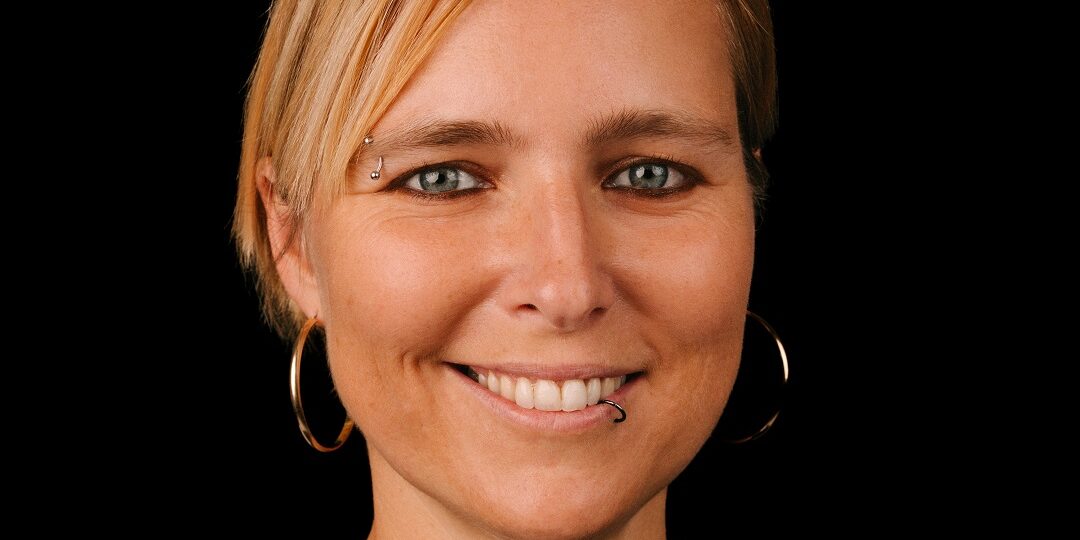
Judith Görtz appears on the other side of the screen. The range of topics this Austrian academic (Vienna, 1983) focuses on provides an initial glimpse into her profile: feminist theory and political pedagogy with a gender perspective, right-wing extremism and antifeminism, and patriarchal violence. She has meticulously prepared for the interview and addresses both the planned and impromptu questions with a broad technical vocabulary in Spanish, the result of her time in Guatemala and Argentina, as well as a curriculum that has taken her to universities such as the University of Vienna and the University of Innsbruck, where she currently works. Although she lives in the Austrian capital, which is about 500 kilometers each way, she travels there at least a couple of times a week.
And her suitcase is packed again because this conversation is taking place as Görtz is about to embark on another change of scenery: a three-month research stay awaits her at the Rovira i Virgili University in Tarragona. It won't be her first time in Spain, as at the end of November she participated alongside colleagues from various countries in the 7th Meetings on Fundamentalisms , organized by Medicus Mundi Gipuzkoa. Specifically, she was part of the panel discussion 'Antifeminism and Racism: Hate Speech as Political Banners'.
Is hate speech universal or does it adapt its messages to different territories?
Hate speech, which I would call ideologies of inequality, exhibits both universal patterns and local adaptations. It often relies on polarization, the stigmatization of minorities, and moral alarmism to create enemies and foster fear. At the same time, it adapts to regional contexts, exploiting local fears and cultural particularities. Local and global dynamics reinforce each other, which is why, to effectively combat ideologies of inequality, it is crucial to consider both their universal structures and their adaptations. The same is true of antifeminism. For example, in many countries, the fight against gender ideology is interpreted as a local struggle against Western imperialism.

Do the ideologies of inequality you're talking about correlate with the left-right axis?
These ideologies can be found both on the far right and in left-wing discourse. A recent example is found in Germany, specifically in the Bündnis Sahra Wagenknecht-Vernunft und Gerechtigkeit [Sahra Wagenknecht Alliance for Reason and Justice], led by Sahra Wagenknecht as a result of a split from Die Linke (The Left Party). This party sometimes supports anti-immigration policies, uses racist rhetoric, and has recently held negotiations to form a government with more conservative parties, while remaining open to talks with the far right.
“The traditional right wing does not want to lose its privileges, such as male and patriarchal hegemony.”
Austria has experience precisely with dialogues and agreements with the far right. The last time parties of that ideology were in a coalition government was between 2017 and 2019, resulting in cuts to gender policies. And this year, for the first time in the country's history, an ultraright-wing party, Herbert Kickl's FPÖ (Freedom Party of Austria), was tasked with forming a government, for which it sat down to talk with the conservatives of the ÖVP (Austrian People's Party). Should the traditional right be open to these negotiations? [When the interview was conducted, both parties were still in talks, but the negotiations ultimately broke down.]
There is a civil society movement that points out that 71 percent of voters did not vote for the FPÖ, and this raises the question of the democratic legitimacy of the negotiations. But it is often overlooked that the ÖVP has previously adopted positions closely aligned with the FPÖ's ideology in key areas such as asylum and migration policy, as well as on antifeminism. It was the conservatives who, through their strategic decisions, enabled the far right's participation in government. But the question of whether the ÖVP should negotiate with the FPÖ is not enough. A much more central question is why conservative parties like the ÖVP are finding it so difficult to make social concessions and are increasingly distancing themselves from the possibility of a coalition with social democratic parties. This reflects a fundamental shift in the political landscape, making cooperation between conservative and progressive forces increasingly difficult.
Returning to the question you yourself pose, why are traditional right-wing parties increasingly finding it difficult to form alliances with social democracy, instead opting to reach out to more extreme options?
Because they don't want to lose their privileges. For them, it's much easier to maintain privileges like male and patriarchal hegemony in a coalition with racist, anti-feminist, and sexist parties.
In that hypothetical collaboration between traditionally dominant forces in Europe, would it be positive for social democracy to also move closer to the conservative right?
No, that always comes at the expense of minorities, of vulnerable people. I don't see anything good in a coalition . In Austria right now, that possibility isn't even being considered because the Social Democrats are so weak.
“Societies are becoming increasingly polarized, allowing authoritarian regimes to gain support by exploiting fears and feelings.”
The rise of the Austrian far right is not an isolated phenomenon: prominent leaders across Europe include Viktor Orbán (Hungary), Marine Le Pen (France), Geert Wilders (Netherlands), Alice Weidel (Germany), and Giorgia Meloni (Italy). Beyond Europe, there are the cases of Donald Trump (United States) and Vladimir Putin (Russia). Every major feminist advance seems to be met with an antifeminist backlash.
Antifeminism is used as a political tool to mobilize conservative voters and deepen social polarization. The successes of these movements demonstrate that feminist advances often face massive backlashes that are not only culturally motivated but also strategically exploited to capitalize on societal fears. They also show that feminist struggles have been highly successful for years and have challenged patriarchy. This is why the counterattack is so fierce: privileged people have seen that society is shifting, that their privileges are not so secure, and that they can lose them. The resistance to these movements demonstrates how central feminist struggles have become to the defense of democratic and liberal values.
In Spain, Vox stands out, having garnered over three million votes in the last general election (12.3 percent of the ballots), second only to the People's Party (PP, 33 percent) and the Spanish Socialist Workers' Party (PSOE, 31.6 percent). How do you analyze the Spanish context from an outsider's perspective?
The Spanish reality is also marked by increasing polarization and the rise of far-right forces like Vox, which has gained influence in recent years and established itself as a central political player. The fact that Vox has gained regional influence and is part of PP-led governments in several autonomous communities contributes to popularizing and normalizing its positions; the situation is very dangerous. One of the distinguishing factors compared to other European countries is Vox's strong opposition to the issue of regional autonomy in Catalonia and the Basque Country.
“Crises for young people are connected to an experience of fear and difficulties in finding their way.”
Le Pen in France, Weidel in Germany, Meloni in Italy, and in Austria, we can mention Heide Schmidt and Susanne Riess-Passer… Reviewing the list of far-right political leaders, several women appear. At the same time, their respective parties are trying to reach the female electorate. As you yourself put it in one of your publications : The female face of right-wing populism and extremism."
This can be understood from several perspectives. First, these women present a traditional view of the female role, according to which they should be protectors of the family and the homeland. Thus, they present themselves as progressive and modern women, but at the same time, they reject feminism and support traditional family and societal values. Second, women who align themselves with the far right also benefit from feminist advances to position themselves in the political arena. Their success is justified by their ability to navigate political complexities and leadership, but they often do so by using anti-feminist rhetoric to appeal to certain segments of the electorate. The acceptance of anti-feminist positions by these women reflects a conservative version of feminism that does not seek to challenge patriarchal structures, but simply to defend certain traditional values.
There is a growing preference for strong leadership, while at the same time multilateral and state institutions are weakening. Is the world heading towards the replacement or transformation of democracies into authoritarian regimes?
The rejection of multilateral organizations like the European Union or the UN is portrayed as a kind of return to national sovereignty, but in practice it leads to isolationism and political instability. Societies are becoming increasingly polarized, allowing authoritarian regimes to gain support by exploiting fears and sentiments. Examples like Hungary, Poland, and Russia show how the democratic framework is gradually being replaced by authoritarian structures. But it must also be said that resistance exists: in many countries, movements are forming that defend democratic values and the rule of law, so the question is not so much whether democracies will be completely replaced by authoritarian regimes, but whether they can successfully defend themselves against these developments. And that depends on the societies themselves, on whether they manage to actively protect the principles of freedom, equality, and participation.
“It is very important not to let ourselves be divided, to put what unites us above what separates us.”
Why do some of these societies and young people opt for authoritarian options over more democratic ones?
backlash has been observed for some years now, largely due to various crises: the economic, the ecological, the energy, the wars… crises that, for young people, are linked to an experience of fear and difficulty in finding their bearings. It is much easier to externalize all these issues onto a powerful figure, a leader who offers all the answers and who also tells you that you are more valuable than other people, that you should have greater access to the privileges of society.
In that scenario, how can we deal with reactionary groups?
It's crucial to understand that many people vote for the far right not because they're ignorant of its ideology, but precisely because of that ideology. We won't gain much ground in this fight with arguments alone; we need to focus on why these ideologies are so appealing to people. We have to find alternatives or solutions to the needs that the far right addresses. It's also vital not to be divided, to prioritize what unites us over what separates us.
And is feminism united right now? On the table are issues such as trans rights, queer , prostitution…
There are many conflicts, not only within feminist movements. But I see conflicts not only as something negative, but also as an opportunity to develop something new. Unfortunately, in recent years many people have stopped engaging in dialogue, and their only reaction has been to disconnect. On the other hand, at this moment when the backlash is so strong that it threatens all the rights we have achieved, it is crucial that we unite to defend what we stand to lose.
You were talking earlier about the importance of understanding why far-right discourse is appealing; to find out, do we have to sit down and talk with the far right? Do we have to debate with anti-feminist and fascist movements?
It depends a lot on who you're talking to. If you're confronting someone who's very convinced of their beliefs, it would be very difficult. But with people who are simply sympathetic, it's worthwhile to engage in debate and discussion. That's why I said earlier that it's very important to recognize that it's often not about having the best arguments; education isn't always effective against these ideologies. People sympathize not in spite of the content, but because of it, and therefore it's important to focus on what benefits people gain from thinking this way, perhaps analyzing the situations they're experiencing in their lives.
“Feminisms should not adopt a defensive strategy, but rather maintain the initiative.”
These reactionary discourses have found in social media the tool for dissemination and the field of discussion that best suits their interests. Should feminist movements stop fighting in spaces like Twitter, or would that be abandoning a space where part of the public agenda and narrative is at stake?
It's a very, very difficult question to answer. Many people have already left Twitter—my university has—but at the same time, it's very dangerous to leave those spaces solely for anti-progressive people. The best approach would be to carry out targeted interventions, rather than each person fighting in a disorganized and individualized way. Feminist movements shouldn't consider the entire platform a battleground, but rather concentrate on specific issues and groups where they can have an effective impact. In other words, the focus should be on supporting organizations, projects, and initiatives that are working effectively to change the social media agenda.
From a feminist perspective, and given the current situation, is it time to move to a defensive strategy, or is it precisely about not relinquishing the initiative?
Feminist actors must put their own issues front and center and actively promote them. Instead of constantly engaging in reactive confrontations, it's about creating spaces where progressive ideas and solutions can be presented. We shouldn't adopt a defensive strategy, but rather maintain the initiative. While we may not achieve new progressive laws or greater institutional support in this era, our work must focus on changing mindsets and challenging discriminatory ideologies. The fight against patriarchy and other forms of oppression always requires an active response centered on visibility and denunciation. We cannot cede ground to those who seek to roll back progress; we must continue building support networks and alliances with other social movements. Defending feminist rights is an ongoing task that cannot be relegated to a secondary position. We will always have new issues because the political situation is constantly changing. The feminist initiative must remain proactive and provocative.
Share
We are present
We are committed to journalism that delves into the territories and conducts thorough investigations, combined with new technologies and narrative formats. We want the protagonists, their stories, and their struggles to be present.
SUPPORT US

FOLLOW US
Related notes


We are present
This and other stories are not usually on the media agenda. Together we can bring them to light.