

How the cuts in healthcare impact HIV, hepatitis, and tuberculosis treatments
The cuts made by Javier Milei's government to healthcare affected 40% of the management staff working with HIV, STIs, Hepatitis, and Tuberculosis. Voices from professionals and activists.


Share

BUENOS AIRES, Argentina. People living with HIV, activists, and former healthcare workers in Argentina condemned the 40% staff reduction at the Directorate of Response to HIV, STIs, Hepatitis, and Tuberculosis , following 360 layoffs on January 31. This is part of a broader dismantling of the public health system, in which the Minister of Health, Mario Lugones, announced a total of 1,400 job cuts. In a related move, President Javier Milei decided to withdraw Argentina from the World Health Organization (WHO) .
How do these changes affect the provision of services for people living with HIV? Presentes spoke with activists, former staff, and officials from the Directorate to learn about the impact.
“Today there is no one to ask if there are technical problems related to tuberculosis and hepatitis.”
“It’s very difficult to know the implications of laying off almost half the staff. There’s no way the department can maintain all its functions. Not to mention the disaster it represents for the people who lose their jobs,” Sergio Maulen, former head of the HIV, STI, Hepatitis and Tuberculosis Response Directorate (2017-2020) and current independent consultant, told this agency.
Of the 71 employees who made up the management team, Lugones' administration laid off 29 on January 31st: a reduction of 40.8%. Many of these departments were left without technical professionals.
“In the national tuberculosis program, only one social worker remains, with a contract until the end of the year, and a sociologist whose contract is guaranteed for only two more months. The HIV program, except for the pharmacy department, is largely leaderless. The structure is comprised of different departments, and they've fired practically all of its coordinators, who are generally the ones with the technical expertise. Finally, in the hepatitis program, they fired the hepatologist. Two people with extensive experience remain, but they aren't professionals; they have administrative roles,” Maulen explained.
In this regard, he emphasized that “the national level not only purchases and distributes medication, but is also the expert technical institution to assist the provinces, since most of them have only one or two people, not necessarily specialists. Today there is no one to ask if there are technical problems related to tuberculosis and hepatitis.”.
“The idea is to transform the Directorate into a mere dispensary—at best—for handing out medication and resources, nothing more. There are no reagents, they don't provide condoms. They expect the health insurance companies to solve everything,” warned one of the Directorate's former employees, who preferred to remain anonymous for his own protection. He had started working at the ministry 15 years ago and is now among those laid off.
Total helplessness
The National Front for the Health of People with HIV, Hepatitis, and Tuberculosis warned that this measure leaves the Ministry of Health without the capacity to respond to these diseases. Furthermore, they explained that the intention to delegate to the provinces the responsibility of guaranteeing the provision of medications and supplies to the entire population "undermines the optimal use of public resources."
“If that were the goal, it would complicate things immensely because, on the one hand, it would increase the cost of everything. Making a large purchase for the entire country is not the same as making purchases for each province. Furthermore, we have to see if the provinces have the capacity to contribute all the necessary funds. On the other hand, many of them have teams with only one person. To begin addressing all the issues, you need equipment, expertise, and to learn new functions. Depending on where you live, you have more or less access to quality healthcare, and at the national level, this was somewhat compensated for. This would increase inequalities,” Maulen warned.
Hache Barreda, an activist and member of the Argentine Network of Young People Living with HIV (RAJAP) , explained: “There are cases like Corrientes where follow-up tests and screenings haven't been available for months. There's been an excessive increase in 'administrative problems' when trying to get medication. Now, some provinces are probably investing in prevention supplies while others aren't. The virus's spread is deeply rooted in social inequality. For example, there are places in the north of our country that lack investment in prevention and care services. This leads to a much worse situation regarding mortality rates from these infections.”
WHO withdrawal
“We will not allow an international organization to interfere in our sovereignty, much less in our health,” said presidential spokesperson Manuel Adorni when announcing Milei's decision to withdraw Argentina from the WHO. In response, the Huésped Foundation explained that this organization has no power to impose health policies. It is an advisory body made up of experts from around the world that, among other functions, has the capacity to coordinate the global response to health emergencies. In this sense, it has funding and support mechanisms for such situations, which Argentina will now be unable to access should it need them.
On the other hand, consultant Maulen considered that, while the outlook following the withdrawal “is not clear,” the provision of services will most likely be affected. “The WHO is the one that approves the manufacturers and the medications, negotiates the very low prices, and carries out the quality controls. The same applies to all vaccines purchased through the same mechanism,” he explained.
A year of libertarian management
Before Javier Milei took office, the Directorate's Communications team regularly updated social media with the latest information, conducted courses, and organized training sessions at universities, community participation centers, CeSACS (Community Health and Action Centers), and for local health promoters. All of these activities were key to ensuring the prevention of HIV, hepatitis, and tuberculosis—work that is now being ignored. “Many people contacted us via private message. We promoted the Health Hotline 0800-333-3444, a tool that this administration has been eliminating. That connection no longer exists, and there is no updated information,” explained the former Directorate employee who was part of the team.
Since Augusto Almada took over as head of Institutional Communication and Press at the ministry, he decided to reassign the people in charge of communications. “He put many of them in charge of media monitoring and press clippings, even though we know the ministry hasn't said a word publicly for a year,” she shared.
Last year, under the libertarian administration, the Directorate's operations were far from what they used to be. “There were shortages of medications. Purchases were made, but they took a very long time to arrive. There were many months without medication. Prevention activities are practically paralyzed,” Maulen explained.
One problem highlighted by all those interviewed is the lack of reagents for people with HIV to undergo follow-up tests. “Viral load tests are suspended in many places. These tests tell us about our health, whether the medication we're taking is effective, whether we need to change it, whether we need to start treatment, or how those who have stopped treatment are doing. There were no resistance tests, which indicate which medications are effective. There was also no bone density scan, which studies bone health because medication causes bone loss,” Mariana Iacono, coordinator of the International Community of Women Living with HIV/AIDS .
The government's response
Faced with accusations of the dismantling of the public health system, the health ministry defended the measures taken under the guise of a “restructuring.” Following cuts to the HIV and Vaccines departments, public outcry intensified, and Deputy Minister Cecilia Loccisano had to defend the decision . “We set out to reorganize the health system, efficiently managing resources, which are scarce. Because, as Mario Lugones says, the money is there, but it's mismanaged,” she shared on her social media account. She listed a series of alleged overspending between 2021 and 2023 and spoke of a disproportionate structure and oversized departments. She also maintained that reducing the staff by almost half would not affect “the functioning or the fulfillment of this ministry's responsibilities.”
“They have to specify what the irregularities are. Everything can be improved, there’s no doubt about that. But our experience so far is that this excuse has been used to cut back areas until they disappear altogether. The programs have ongoing audits; it’s always been that way,” Maulen responded.
Overview of the country
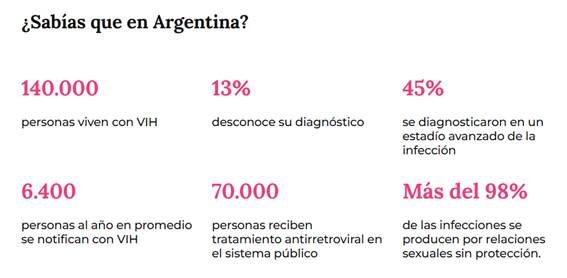
In Argentina, 140,000 people are living with HIV, according to the latest official data from the Ministry of Health. On average, there are 6,400 new diagnoses each year. Of these, approximately 70,000 receive antiretroviral treatment through the public health system. However, this trend has increased since the start of the Covid-19 pandemic.
“While the number of cases in Argentina remains stable, we knew that after Covid there would be a surge in cases because prevention, diagnosis, and treatment activities were halted. We are currently experiencing a peak in all infections. Furthermore, this is happening in a context of many people losing their jobs. Tuberculosis is closely linked to poverty, so the social situation also plays a role,” explained the former head of the Directorate.
The role of the Directorate of HIV, STIs, Hepatitis and Tuberculosis
“It’s important to highlight the many things the Directorate does that go unseen until they stop being done. When health insurance providers fail to supply medications, the State, as the ultimate guarantor, steps in and delivers the medication. It provides it to people without coverage and also fills the gaps left by the health insurance providers. Furthermore, in the case of the national tuberculosis program, medication is delivered to 100% of the people in the country,” Maulen shared.
“Updated, improved treatment regimens are being designed. The treatment of three or four pills has been reduced to two. A first-line regimen has been achieved, compared to countries that have long since changed their regimen in order to improve people's quality of life,” reported the former employee of the Directorate, who was recently dismissed.
In addition, the Directorate carried out activities to disseminate reliable information, prevention and training on the subject.
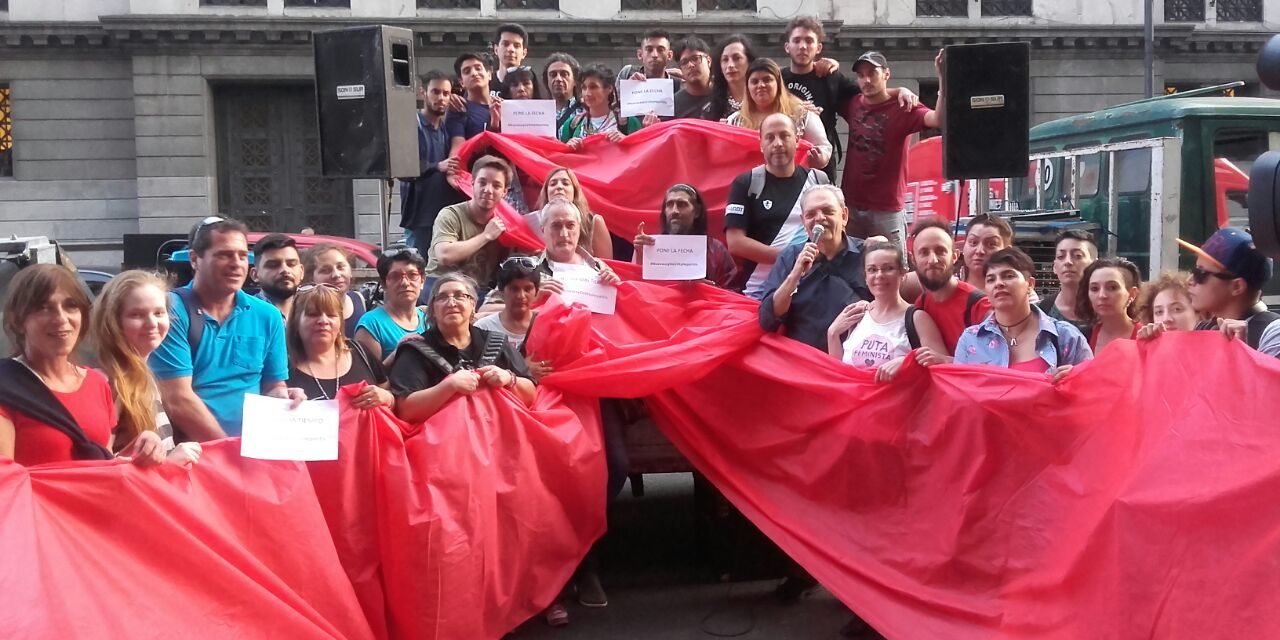
The Self-Convened Assembly of Health Workers in Struggle reported that those laid off are losing their children's places in the ministry's preschools. They also denounced that ministry employees, and even those from other departments, are being pressured to fill the positions of those laid off. They are calling for a protest on Tuesday, February 11th at 11:00 AM in front of the National Ministry of Health.
We are present
We are committed to journalism that delves into the territories and conducts thorough investigations, combined with new technologies and narrative formats. We want the protagonists, their stories, and their struggles to be present.
SUPPORT US

FOLLOW US
Related notes


We are present
This and other stories are not usually on the media agenda. Together we can bring them to light.