

Migrants and LGBT people at risk due to the anti-rights trend in funding
Anti-rights governments gain momentum in response to the United States' defunding of organizations that protect migrants and LGBT people.


Share

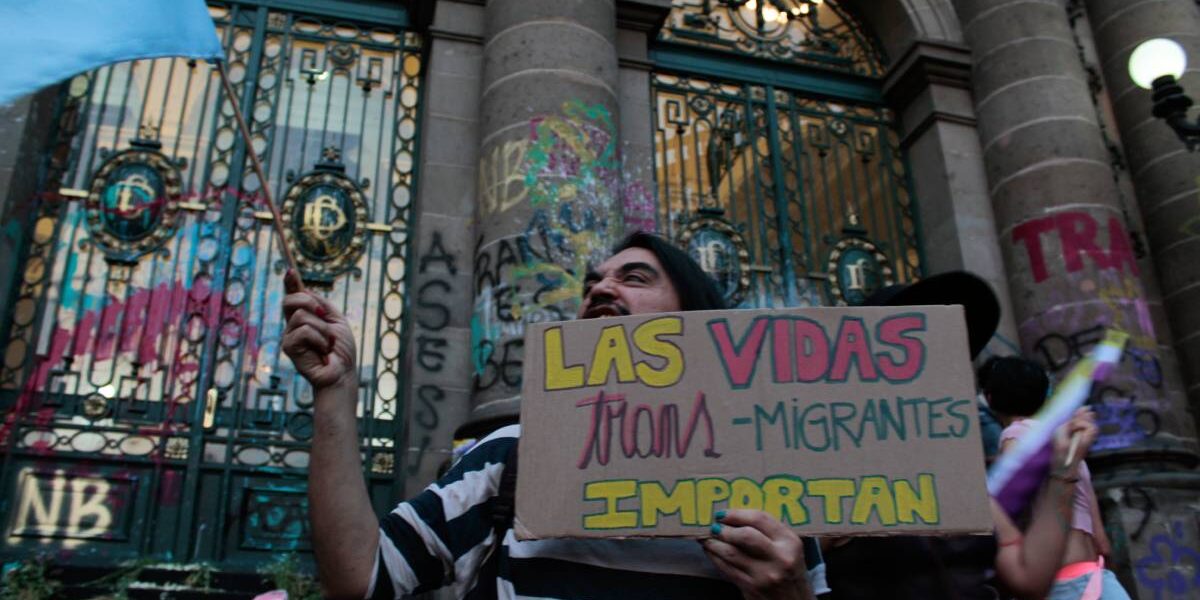
MEXICO CITY, Mexico. The United States government is directly attacking the human rights of migrants and LGBT people. Organizations in Mexico and Guatemala are beginning to feel the impact of Donald Trump's measure to cut funding for foreign aid programs.
The Trans-Formation Collective lost the funding that supported the only clinic in the country focused on providing medical care to transgender people. In Mexico, the Casa Frida lost more than 60% of its funding. Humanitarian assistance to LGBT migrants , asylum seekers, and refugees was already compromised and is now at even greater risk. Furthermore, the organization Impulso Trans lost funding for its project dedicated to political advocacy for the recognition of transgender people's right to identity in Jalisco.
These are some examples of LGBT organizations in the region affected by the executive order Donald Trump signed on January 24. It suspends US programs for foreign aid for 90 days. All of them are being reviewed to determine if they align with his political vision.
A campaign promise
The measure was announced during the presidential campaign through Agenda 47 , a document prepared by Trump. It outlines the executive orders implementing his anti-rights policies. These orders are also part of Project 2025 , a far-right policy plan drafted by former officials from his previous administration in partnership with The Heritage Foundation, a conservative group that opposes abortion, racial equality, and the rights of LGBTQ+ people and immigrants.
Within the more than 900-page document of Project 2025, there is a specific section on the limitations of international support from the United States Agency for International Development (USAID) , and other measures that directly impact human rights and the protection of vulnerable populations.
In 2023, total U.S. international aid distributed worldwide amounted to $68 billion. USAID alone provided over $42 billion in funding to various sectors, including civil society organizations, according to official data .
For the Latin American region, USAID focused its support primarily on organizations that provide humanitarian assistance, work on issues of economic development and democracy, human rights and governance .

“The only trans clinic in Guatemala ran out of resources”
The Trans-Formation Collective was founded in 2013 in Guatemala. It is the first Central American organization dedicated to serving and supporting trans men and non-binary people assigned female at birth. The United States' policy of suspending funding through USAID disproportionately affected this organization, which had secured a three-year grant specifically to address the healthcare needs of trans people in that country.
Tristán López is a member of the board of directors of this organization. He explains that the funding provided exponential growth in addressing the right to health, which the Guatemalan state still fails to guarantee. The funds were used to rent space for the opening of a medical clinic, administrative offices, equipment, and to hire multidisciplinary staff and service providers for its operation. In other words, the right to health was being provided to transgender people in a country where even the right to recognition of gender identity for transgender people is not guaranteed.

“ The only trans clinic in Guatemala has run out of resources, and the outlook is very worrying and disheartening. Nobody cares about the health of trans people in this country . There is a process underway at the Ministry of Health, but it's not progressing or operational. Even under the new government, there hasn't been significant progress on the health strategy. What's more, there are currently three proposed laws against the LGBT population and women, and this is happening in a climate where civil society organizations are weakened by this lack of funding. We are facing a domino effect,” explains Tristán López.
The complete suspension of funding for the only trans clinic in Guatemala jeopardizes the suspension of healthcare services for transgender people. It also threatens other essential services such as legal assistance for name changes, personal hygiene kits, transportation for transgender people from rural areas to the capital for treatment at the clinic, and meetings with various government entities to advocate for the right to health and employment, and to oppose anti-rights policies in Congress.
From September 2024 to January 2025 alone, this clinic provided care to 167 transgender people (132 trans men and 35 trans women) with medical consultations and follow-up, access to free medications, laboratory tests, psychological support, and comprehensive transgender healthcare services. These services were offered to individuals from 19 municipalities across the country. The clinic also provided virtual appointments to transgender people from El Salvador, Honduras, and Nicaragua, as well as migrants from Venezuela and Colombia.
Trump's anti-rights rhetoric strengthens conservative politicians in Guatemala
Conservative members of parliament in Guatemala are taking advantage of this situation to discuss a package of three laws that criminalize trans people, violate sexual and reproductive rights, and restrict comprehensive sex education.
One of these is Bill 6473, "For the Comprehensive Preservation of Society." This bill seeks to create a new crime of "promoting abortion" and increase existing penalties, as well as prohibit same-sex marriage. Bill 6475, "Reforms to the Penal Code Regarding Sexual Integrity," aims to limit freedom of expression regarding trans identities and prohibit and criminalize those who provide gender-affirming care to transgender minors. Finally, Bill 6453, "Sex Education Law for the Protection of Children and Adolescents," prohibits any discussion of comprehensive sex education.
“These initiatives should be seen not only as anti-rights, but also as anti-democratic because they are designed to put President Bernardo Arévalo in check. I believe he has a pro-human rights conviction, but these initiatives are clearly unconstitutional and openly discriminatory. That's why it's so important to understand that these are anti-democratic efforts to undermine the rule of law. And although human rights are an unpopular topic, it's crucial to understand that they are at the heart of democracy,” explains Tristán López.
Casa Frida: “We are going through an unprecedented crisis”
Casa Frida was founded in 2020 as a shelter and organization dedicated to providing comprehensive humanitarian aid. Today it has three locations: Tapachula, Mexico City, and Monterrey. Following the suspension of international aid, the protection and safety of at least 300 LGBT migrants, asylum seekers, and refugees is at risk.
In addition, legal, psychosocial, and humanitarian food services, as well as projects dedicated to reducing inequalities and improving access to healthcare, are also at risk. The suspension jeopardizes the ability to serve more than 1,500 LGBTI individuals who are assisted annually on average at its three locations.
“Just over 60% of Casa Frida’s budget for 2025-2026 is currently suspended. This doesn’t mean our agreement renewal has been suspended, but the funds already allocated to Casa Frida cannot be used. We have to wait for instructions, which is causing a sustainability crisis. We don’t know how to cover operating expenses, rent for the three shelters, our humanitarian assistance in Tapachula is limited, food security is at risk, and legal and psychosocial support is also compromised. We are going through an unprecedented crisis that has hit us at a tragic time ,” Raúl Caporal, director of Casa Frida, explained with concern in an interview.
Casa Frida's particular situation comes at a time when its services are in higher demand due to the worsening migration crisis and, consequently, Donald Trump's initial actions regarding his anti-immigrant policies. These policies led to the suspension of the CBP-One program, which provided asylum appointments, forcing LGBT migrants to remain in Mexico and seek international protection in the United States .
Impulso Trans lost funding to promote the gender identity law in Jalisco
In Jalisco, the right to gender identity is not legislated. Although by decree transgender people (including children) can process their gender identity recognition , the Congress refused to guarantee this right in law.
Impulso Trans had a fund to strengthen this process through political advocacy and training for public officials on Advisory Opinion 24/2017 of the Inter-American Court of Human Rights . Due to the suspension of funding, this resource was canceled.
Izack Zacarías, president of this organization, told Presentes that they will strive to achieve that goal. “With or without resources, we are going to carry out this project because it is work we were already doing before. It's just that now hiring is limited, and that will increase our workload.”
Organizations are seeking alternative financing options
“It seems that all the partners are aligning themselves, or trying to align themselves, with Trump’s policies to ensure their continuity, but they are leaving us out. We are assessing whether it will be necessary to close operations at any of our locations. We have developed some contingency plans, including relocating staff to areas with higher demand. We are appealing to the private sector, other governments, and agencies to see if we can access emergency funds to recover from this significant loss ,” added Raúl Caporal.
If you would like to support Casa Frida, you can contact them by email at: casafrida@refugiolgbt.org
“Now we are very worried because the cancellation will mean a loss of healthcare for trans people. It also resulted in the dismissal of eleven members of the multidisciplinary team, and a scholarship and entrepreneurship program that was about to begin and would have benefited 130 trans men and women will likely be suspended. We are looking at ways to make the clinic sustainable. For now, we are considering crowdfunding and other emergency funding,” explains Tristán López of the Trans-Formation Collective in Guatemala.
We are present
We are committed to journalism that delves into the territories and conducts thorough investigations, combined with new technologies and narrative formats. We want the protagonists, their stories, and their struggles to be present.
SUPPORT US

FOLLOW US
Related notes



We are present
This and other stories are not usually on the media agenda. Together we can bring them to light.