

This is what the Federal March of Antifascist and Antiracist LGBTQI+ Pride will be like
Everyone is invited to join the Federal Antifascist and Antiracist Pride March. "You don't have to be LGBTQ+." Mothers of Plaza de Mayo, the CGT, and the two CTA unions will also participate.



Share

The Federal March of Antifascist and Antiracist LGBTQI+ Pride, to be held on Saturday, February 1st, has already generated calls to action in more than 100 locations across Argentina and several cities around the world. It was one of the immediate and forceful responses to President Javier Milei's speech in Davos on Thursday, January 23rd, disinformation, prejudice, lies, and attacks on sexual diversity.
The following day, LGBTQ+ groups called for an Antifascist LGBTQ+ Assembly in Parque Lezama (Buenos Aires) for Saturday. The turnout of hundreds of people exceeded expectations, and that same day, the date, time, and location were set for the Federal Antifascist and Antiracist LGBTQI+ Pride March in Buenos Aires: Saturday, 4 PM, from Congress to Plaza de Mayo. Within days, invitations to mobilize across the country and around the world were being shared with the same message: “You don’t have to be LGBTQ+ to march. It’s crucial that we all unite .” The Mothers of Plaza de Mayo, the CGT (General Confederation of Labor), and the two CTA (Argentine Workers' Central Union) unions also announced their participation in the march.
Why do we march?
“We march because the human rights violations in Argentina are evident, because we know the link between hate speech and violence, because this is the society that gave rise to us and today it returns with the organized fury of the State,” Alba Rueda, a trans activist, tells Presentes. She adds: “ We march to make ourselves visible, to stop the symbolic violence, to reclaim our humanity, to put a face to the dehumanizing words Milei uttered. And because we also overcome fear, individualism, and indifference when we are all together.”
“The march seeks to make visible a problem that, although it may seem disruptive that we, the people of the LGBTNBQ+ collective, are the ones bringing it up, is structural and transversal: the fascism that the Executive Branch in Argentina embodies at this moment when it proposes a plan of extermination,” Ese Montenegro, a trans male activist and state worker, tells Presentes.
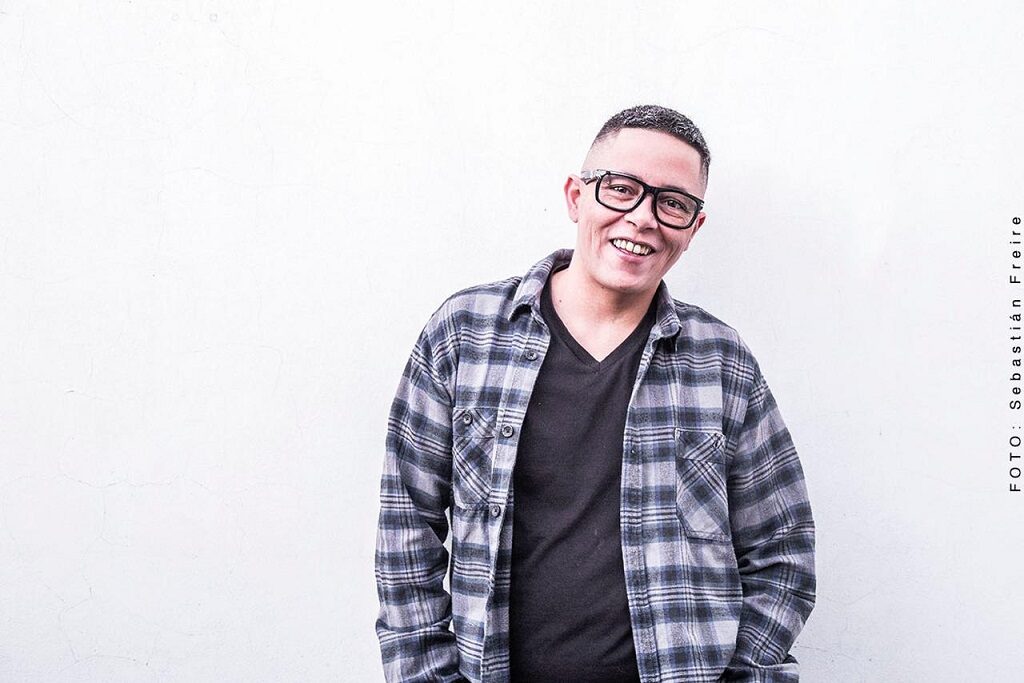
At Saturday's assembly, Montenegro and Alejandra Rodríguez, an anti-punitive transfeminist activist and member of the Mostri Column, the YoNoFui organization, and the LGTBIQNB+ Antifascist Assembly, moderated the four-hour meeting held in Lezama Park.
“What happened on Saturday overwhelmed us. It was massive: we went from 80 people to thousands in the park. It was a very gratifying surprise. Assemblies are always sounding boards for the things that happen to us, that hurt us, that worry us,” Rodríguez shared with Presentes.
Montenegro speaks of a plan that is a direct policy against “certain misnamed minorities—namely, the LGBTQ+ community, migrants, and people with disabilities—but in reality, what this does is enable the dehumanization of people. Just as today they attack LGBTQ+ people, tomorrow they will attack migrants; in fact, they are already doing so with the intensification of certain policies.” She gives examples: they attack people with disabilities by cutting their benefits, they attack people living with HIV by denying them the medications guaranteed to them by law, they attack public education by defunding it, and they attack public hospitals by defunding them.
“They create an enemy and reduce it to a clear minority when what they are really doing is making people's lives more precarious and enabling what we call a slow, gradual genocide. They are letting a certain number of elderly retirees, people with disabilities, and people living with HIV die, and enabling hate speech against LGBT people. And there are indirect policies imposed by this narrative that enable hatred and the dehumanization of LGBTQ+ people, and that exacerbate the violence against us,” says Montenegro.
The march also seeks to express “that we all share a common life,” the activist adds. “They are enabling hatred among ourselves and creating the possibility of killing targeted groups. That is fascism, a phenomenon that currently has a global impact.”
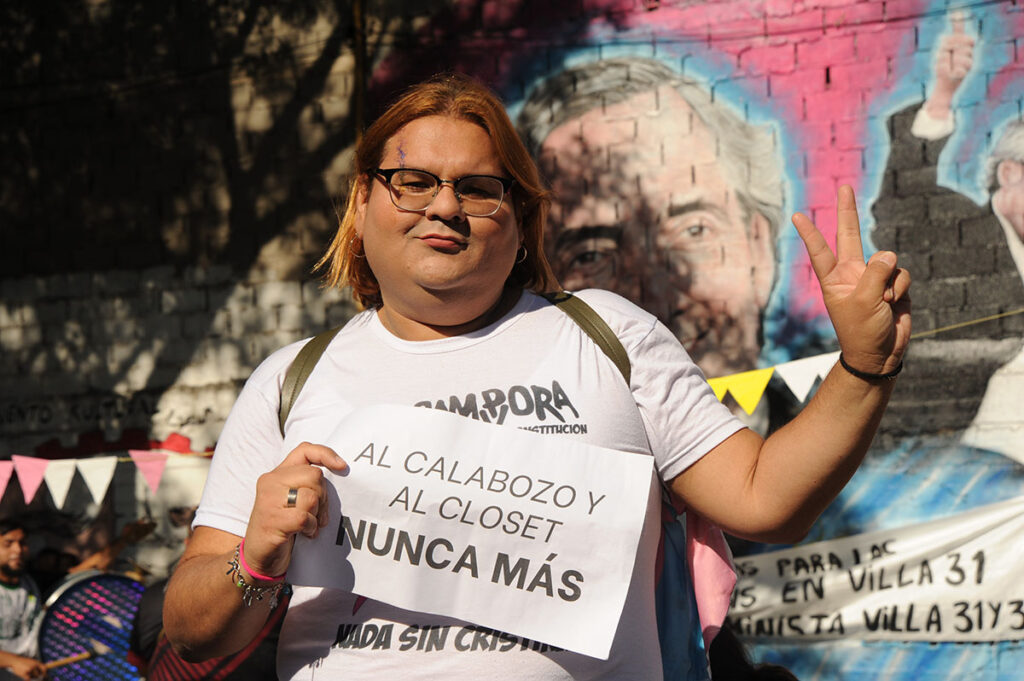
You don't have to be LGBTQ+ to march
“In response to what the president proposed in Davos, in 48 hours the group organized itself in a huge assembly and gave birth to a march that will be very large in Buenos Aires and in at least 20 other cities in the country,” Esteban Paulón, national deputy and Secretary General of the Socialist Party in Argentina, tells Presentes.
The congressman also filed one of the criminal complaints against Milei's statements. The Argentine Federation of Lesbians, Gays, Bisexuals and Trans (FALGBT) also filed a complaint.
“Milei made the wrong choice; we queers are organized. The culture war is in the president's head and is once again clashing with reality. As happened with the universities, this is a society that doesn't want to go back. It may think that there are certain institutional or economic reforms to be made, but it doesn't believe that means going backwards in rights. After the end of the dictatorship, Argentine society always demanded that rights continue to be expanded, ” the congressman stated.
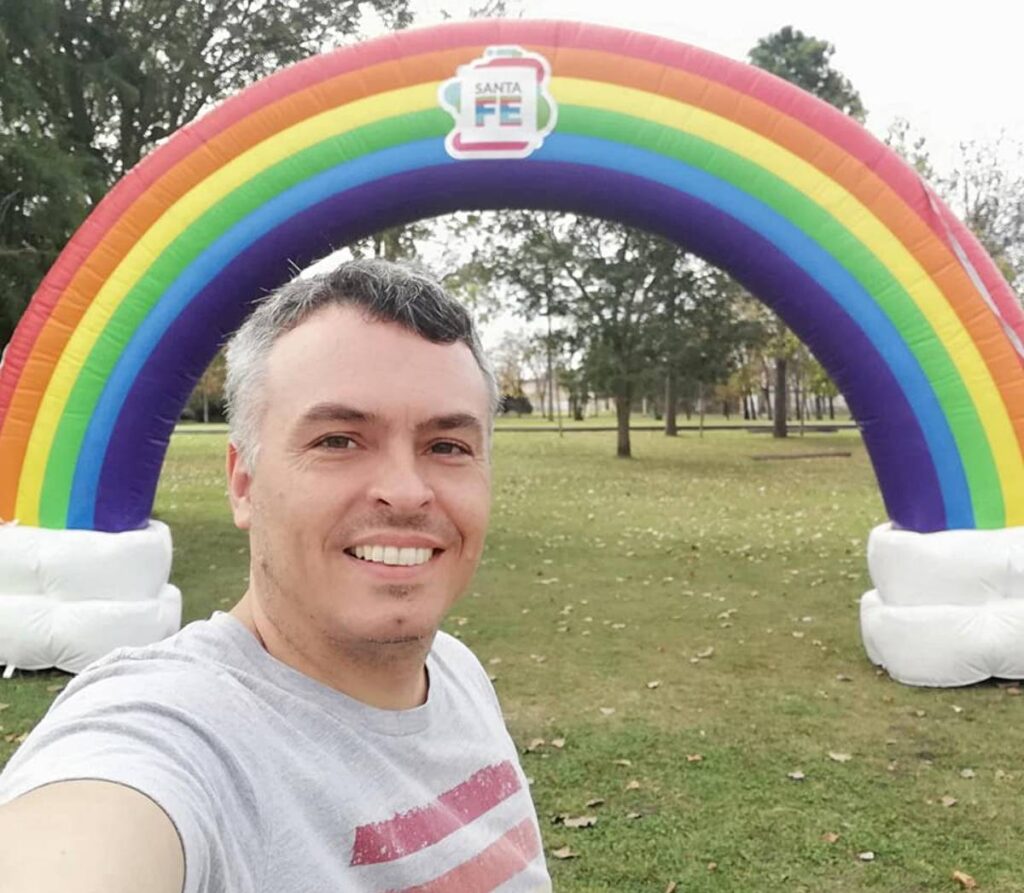
“It’s important that everyone joins in.”
“ This time, Milei is attacking a specific population group, but we already saw during his first year in office that if he's bothered by retirees, he attacks retirees. If he's bothered by students, he attacks students, women, and now it's us. Milei opposes anyone whose rights don't align with the brutality of his vision. This is how he paves the way for demagoguery: by silencing and marginalizing sectors of the population, attacking us, and treating us as the enemy,” says Alba Rueda.
Along the same lines, Congressman Paulón clarifies that “it will not be a march of LGBT people, but a march of democratic society that had not found a way to channel this feeling of a constant attempt to trample on rights. And it found in the community that catalyst to come together and go out and say that this democratic consensus is not negotiable .”
“The call is for everyone. It’s important that everyone joins in. The call isn’t limited to LGBTIQ+ rights or the social movements that Milei attacks,” emphasizes activist Alba Rueda. “Society didn’t vote for demagoguery; it voted for a government that respects the rules of democracy. Respecting the legal framework means not promoting more hate, not allowing dehumanization in a country that endured the last civic-military dictatorship. It’s a broad rights agenda that includes comprehensive sex education, the Micaela Law, and a gender perspective. It’s important that we add our voices to say that this isn’t the society we want.”

“ It’s an invitation to imagine a different world together, a world where fascism has its limits,” Montenegro emphasizes. “We will not return to those dark, despotic places. We will not return to the dungeons. We will never return. So the invitation is open for everyone to march together this Saturday.”
They are asking Congress to take a stand

Paulón (Federal Encounter) and a group of legislators from different parties, including Mónica Macha (UP) and Maximiliano Ferraro (CC), yesterday signed a draft resolution asking the Chamber of Deputies to categorically condemn Milei's statements in Davos "whose terms are totally opposed to the regulations that govern in our country, regarding Women and Diversity, as a consequence of the laws in force in domestic law and the International Human Rights Treaties, of a supralegal nature, which bind the National State and form part of the constitutional text itself, in accordance with article 75° of our Magna Carta.".
From the assembly to the streets of the country and the world
“The response to the economic violence, political persecution, and sexual repression of Javier Milei’s government bears the colors of our community. Together and in alliance across the country, articulating all our differences. We need each other now. Spread the word, organize, participate!” declared the LGBTIQNB+ Antifascist Assembly.
That Thursday, when Milei spoke in Davos, the first WhatsApp messages began, culminating in an emergency meeting at Parque Lezama at 8 p.m. There were about 80 people, mostly members of Columna Mostri, a group created last year to collectively inhabit public space. They decided to extend the gathering to Saturday.
On Saturday, Lezama Park was renamed “Néstor Perlongher” in honor of the renowned writer, journalist, and activist for LGBTQ+ rights. This park has been the site of historic struggles for the LGBTQ+ community. It was also the location chosen by Milei last year to launch his party, La Libertad Avanza (Freedom Advances), at the national level. There, a diverse crowd—comprising students, healthcare professionals, memorial workers, political organizations, retirees, and other individuals—voted to hold a nationwide march on February 1st.
“ We have a power that goes beyond social media , beyond the number of followers, beyond what they have to tweet. Go back to the streets, stop being bourgeois. The LGBT community has to go back to the streets. It has to embrace the broken. There are a lot of gay men, lesbians, bisexuals, sex workers, and trans people sleeping in a plaza. We have to go and embrace them, ask for their forgiveness. We have to rebuild popular unity. Not to get rid of Milei, but so that the next government puts our demands on its agenda,” said Georgina Orellano , general secretary of the Argentine Sex Workers Union ( AMMAR ), in a speech that was met with applause from those present.
The response and outrage were so overwhelming that Milei himself had to come out and "clarify" what he said in Davos, without resorting to metaphors. "Everyone jumped on the bandwagon of outrage over supposed things we never said, with the sole aim of causing harm and scoring a political point in the petty Argentine electoral dispute," the president said on his Twitter account.
“The march is going to be massive. While it originated within our community, it is by no means limited to sexual identities,” says Rodríguez. The demands and the need to be together in the streets and to say enough is enough go beyond us. “We are part of society: education workers, healthcare workers, researchers, artists, precarious workers, those in the informal economy. The precariousness of life and the impoverishment to which this government is leading us also affects us, and we believe that all those sectors that feel affected must come to the streets, join us, and make this a widespread collective cry and expression.”.
We are present
We are committed to journalism that delves into the territories and conducts thorough investigations, combined with new technologies and narrative formats. We want the protagonists, their stories, and their struggles to be present.
SUPPORT US

FOLLOW US
Related notes


We are present
This and other stories are not usually on the media agenda. Together we can bring them to light.
1 Comment