

Interview with Anohni: “We are experiencing a total rejection of the feminine, of creativity and of the natural world”
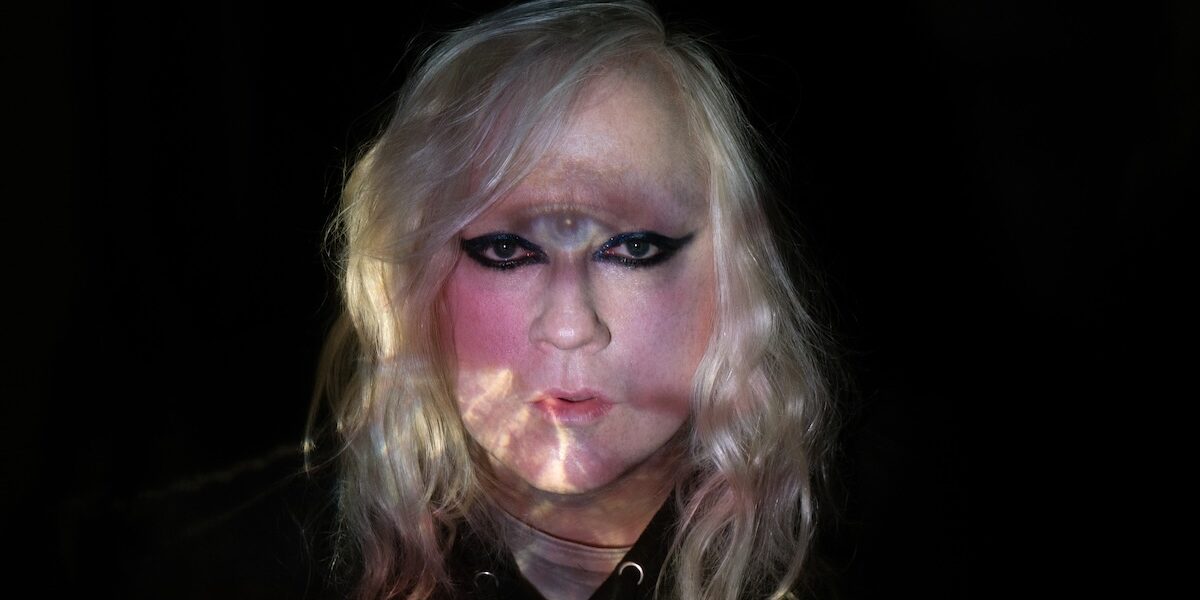
British artist Anohni is known for her transcendent energy, where emotional fragility and political force coexist. In this interview, she reflects on her career, discusses her influences, British pop and rock, and comments on current events with the lucidity and sensitivity of someone deeply affected by her surroundings.


Share

Anohni embodies transformation like no other. An artist, activist, and poet of profound resonance, her songs are mirrors of a world crying out to be saved.
Born in England but raised between Amsterdam and New York—where she has lived since her teens—she is one of the most unique and avant-garde figures in music. Known for her distinctive contralto voice, one of the most powerful and emotive in the music scene, Anohni has transcended genres and labels, defying the norms of the music industry.
First came Antony in Antony and the Johnsons , a band she founded in 1995 that immediately garnered a loyal following and critical acclaim for its introspective atmosphere and fusion of classical, cabaret, and experimental elements. Her second album, "I Am a Bird Now," catapulted her to global recognition with its deeply poetic and moving lyrics exploring themes such as identity, vulnerability, death, and beauty. On this album, she is joined by, among others, Lou Reed, Devendra Banhart, Boy George, and Rufus Wainwright.
Antony's transition to Anohni marked a significant turning point in their life, reflecting a process of self-discovery and reaffirmation of their non-binary identity. Adopting the name Anohni was part of a commitment to their own sense of self, and thus they offered their unique vision, connecting the personal and the universal in their music. Music that is a prayer, an open and luminous wound where beauty and pain meet and blossom.
In 2024, she went on tour after a long time: “ Yes, almost ten years. At first, I was nervous; I didn't know if I would have enough confidence to perform, but everything went very well. I started the tour in Greece with Marina Abramovich. We wanted her to open it, and she simply introduced it with a meditation, and it was wonderful. She is a very close friend,” she tells Presentes.
Times have changed. Music no longer lives off record sales; the tech industry has, in a way, usurped revenue streams: “It’s a huge blow for independent artists. Touring costs have also become very high, so it’s difficult to make money. This past year I didn’t make any money; in fact, I lost money, but I did it because I really wanted to participate culturally, to be useful to my community and to society. I think these are very challenging times, and that was really my intention in going on tour; it wasn’t about the money.”
South America? Unthinkable? “ I would love to. And see those landscapes I’ve dreamed about for so long. I want to go, sing in small clubs, things like that. I’d like to go with my friend Nomi Ruiz, a trans singer, she’s incredible. She works with me and maybe we’ll go so people can see her.”
― There's a lot of poetry in your work, what do you read?
— The truth is, I read the newspaper, tons of news sources. I find reading difficult; I mean, there are books that have influenced me, but I no longer have the habit of reading. I used to read a lot when I was younger: E.E. Cummings, Jean Genet, Sylvia Plath, Toni Morrison… I read essays; I just finished reading Doppelganger by Naomi Klein, and also Adrienne Maree Brown recently, an older book of hers, Emergent Strategy .
Anohni's powerful and nuanced voice remains at the heart of her music, capable of conveying a range of emotions from fragility to fury. It stands out for its transcendent energy, where emotional vulnerability and political strength coexist. She has a voice of fire but also of water, a throat that embraces the world's pain like a dark river singing its story. She is the cry of the voiceless, a whisper that challenges, comforts, and stirs the soul.
"Your voice is so unique... Everyone must tell you this, but I'm talking to you here, so I have to say it. Let's talk about singers."
“I always listened to Kate Bush, Elizabeth Fraser, Allison Moyet, Nina Simone… Later I would mention Donny Hathaway, Otis Redding, especially Billie Holiday, Ella Fitzgerald, Ella James, Marvin Gaye… African American singers are the foundation of most contemporary Western pop music. I grew up in a generation of English singers who had been deeply influenced by Black voices, but I didn’t realize it until I grew up and went directly to the source. There I saw the creative language through the content of the lyrics, the songwriting, and also through dance and movement. That’s what gave me life: the voices of other singers gave color to my life and helped me understand the path forward.”
― You didn't mention Siouxsie.
"She's a huge influence, of course; I've listened to her for thousands of hours. There are so many English singers from that generation who had a big impact on me. Siouxsie was definitely one of them, and Diamanda Galas another. But also people like Rozz Williams (the late singer of Christian Death), the underground music scene in Los Angeles from the early '80s was also inspiring for me… There are so many singers I love! Marc Almond, Scott Walker."
― Boy George
― Boy George was a big influence when I was very young.
― My first love
— Yes, beautiful.
― It is true that black music was the great muse.
“Yes, they even sang with an American accent. Annie Lennox, who was Scottish, sang with an American accent, as did Boy George. Bowie, too. They all sang with an American accent. If you watch the Aretha Franklin documentary, at one point she's singing in church, and you see a person behind her, a white man, and it's Mick Jagger, so excited! He's absorbing all the information, he's going to take it home, because, you know, we English are cultural colonizers, cultural appropriators, and we were hungry, we needed information, survival strategies, but American musicians had developed the most beautiful, resilient, static, and brilliant strategies through the technology of music. When that reached Europe, they sought to emulate the voices, everything. That's where all English pop music came from; it was all borrowed and reconstituted from American ideas, Black ideas. The English were more secure than anyone else in Europe because they spoke the same language and weren't afraid to steal it.” Other cultures in Europe could hear the music, but there was a kind of cultural firewall that made it difficult for them to access that expression, whereas the English could simply try it out to see if it suited them and then do it exactly. They became expert imitators, and it began to come alive. They breathed life into it. And it became something else, it changed shape. But it's a very real transfer and a very real appropriation of a very deep lived experience that came from the US. It was a response to English colonialism. And with the English enslavement of Black people, that music took a turn and became a point of reference for white people all over the world , as well as for people of all colors. I mean Africa, South America, Australia—everyone was listening to American music in the mid-to-late 20th century. We were obsessed; it transformed our lives. It gave us hope, joy, an emotion we didn't always have access to; it gave us permission to feel differently, to experience our nervous systems in a different way. When we heard those voices, sweet voices, voices that cried out, it gave us permission to feel in repressed cultures where feelings weren't expressed. That's why everyone went so crazy in the '60s, because they were taking their breath away from those girls at concerts who were screaming for the right to express their feelings. For the first time in a totally repressive society where they were second-class citizens who weren't even heard, there they were, screaming. It's a cultural phenomenon that all those girls were standing there at Beatles shows screaming, having their own kind of ecstatic experience. They just wanted access to having a voice. And that's a gift from African American culture.

His activism, his worldview
Beyond her music, Anohni is an active advocate for social justice, with a particular focus on LGBTQ+ rights, combating climate change, and activism on behalf of Indigenous peoples and marginalized minorities. Throughout her career, she has used her platform to address difficult and often overlooked issues, making her a pivotal figure in the cultural and political spheres.
— I have to ask you about Trump. Rights will be lost… In “Breaking” you sing This time, my friends, it’s different / This time, it’s never happened before.
"It's very frightening. There's a certain privileged class in the US that has never had to experience the prospect of having fundamental rights taken away. It's a disaster; they're going to do whatever they want, and they've promised to do some pretty terrible things. Social justice waxes and wanes like the moon or the tide, depending on the conditions. Because they raise archetypes that are so easy to conjure: hatred of the other, the hunger for guilt, this desire to subjugate others in an effort to alleviate one's own suffering, this kind of sociopathy, this willingness to disengage from systems of empathy in order to enrich oneself. And it's also this kind of suicidal aspect of the will of what I see as the masculine archetype in our species. So this terrible alienation that they seem to experience culminates in their hunger to separate themselves from creation and rush toward a kind of apocalyptic solution, the final act of which is always ascending to another spiritual dimension where they reunite with the patriarchal God, with a total rejection of the feminine, of creativity, of the natural world, and of women's bodies." It's a kind of expulsion of creativity, a kind of self-loathing, and a breakdown within us as a species that's impacting the rest of the biosphere. Our malaise is affecting the world in an unprecedented way, and I think in this song you mentioned, it says, "This time it's never happened before, " because as a species we've gone through rounds of brutality, sadism, violence, and harm in relation to one another, and we've even plundered everything. But these last hundred years, there's a kind of acceleration. I'm reading a lot about accelerationism, and I see tipping points that we're reaching today, based on what's in our human memory—environmental cataclysms in previous iterations of life on Earth—but it's not something we've experienced before. We have no reference point. We don't have a global framework to understand it, and we don't because history is written by the victors. When white people came to America, it was the apocalypse for the indigenous population, spreading disease and wiping out large swathes of the population. So there is a precedent for a large-scale exit, yes there is a precedent for a kind of community collapse in terms of HIV, but there is not as much precedent as, apart from Hiroshima and Nagasaki, for this kind of annihilation not only as a mythical standard, but as an empirical physical possibility.
And we're heading into that now, into a kind of great night of biodiversity loss, a boiling of the oceans, the collapse of coral reefs so that they'll be declared functionally extinct by 2030 , the death of the Amazon, that great drought in so many places and the torrential rains in others wreaking havoc. Laurie Anderson made a beautiful statement about this US election: it's not about parties, it's a vote on reality.

I had a teacher who taught us that the three stages of an epidemic were denial, guilt, and finally, fear. Fear is the hardest thing to overcome before you can confront the pain. Denial and guilt are powerful tools for distancing yourself from a prevailing reality. In the US, people voted for denial. Voting for someone who doesn't accept climate change is devastating. It's an atrocity that more than 50% of white women voted for Trump, even though he's a convicted sex offender—an atrocity difficult to comprehend. It's sad. When I arrived in the US in 1980, it was the beginning of a new form of evangelization, and in just a few years, these people found their interests aligned with some of the most malevolent capitalists in the country, and they've gone from being a fringe party to a central national party. It's like the National Front (the far-right party in Britain), or Marine Le Pen; most of their voters don't have a college education. So, people with fewer resources, those facing the greatest hardship, vote for the laws that destroy them. It's a malevolent design, an evil strategy. That disinformation, that dissociation, that kind of disconnection, the discord, the dissonance between what's actually happening and what people believe is happening. And the space between those two things creates an opportunity for blame. We blame women, we blame transgender bodies, immigrants, Black people, we blame education.
It's tragic, though I don't like the concept of tragedy. We've seen many miserable deaths and unusual ends in people's lives, and I always resist the idea of calling a cataclysm a tragedy because it's a kind of moral judgment, and I don't appreciate that . What's happening in the US is a disease, and it's not limited to this area, but the US pioneered this disease, ground zero. It was one of the largest centers of slavery, and now that manifesto continues in the form of extracting individual well-being. Now it's two or three guys in California who are sucking the local economies dry, extracting 30% or 50% of every dollar earned, every euro or peso earned, to give it directly to these super-rich people who are more powerful than countries. Everyone knows it. Everyone can feel it. And people are running for shelter, trying to figure out how to live, how to dream, and then some brave souls are out there on the front lines, shouting into the storm.
We're going to need help. The US is going to need help. Many are going to need help in the coming years, which is crazy to say, but especially in terms of new strategies for dealing with fascism, because it's the first time in the country's history that they've truly faced fascist leadership. We're going to need wisdom and knowledge to understand how, as activists or in opposition, we survive ourselves, we survive these kinds of toxic structures, or we work our way through them, or perhaps we don't survive them at all. As an Argentinian, you know this: the US has facilitated the collapse of many countries in Central and South America over the years, just as it has corrupted the trajectory of many other countries for its own benefit. Now, those people are the survivors of those systems, and they are far ahead of us in terms of knowing how to return to some kind of balance or well-being. We're going to need help, and it's going to be difficult for countries that have been so hurt by the US to offer help to this country, because the US has been nothing but a perpetrator for decades.
― Ages.
— Yes, centuries.
We are present
We are committed to journalism that delves into the territories and conducts thorough investigations, combined with new technologies and narrative formats. We want the protagonists, their stories, and their struggles to be present.
SUPPORT US

FOLLOW US
Related notes
We are present
This and other stories are not usually on the media agenda. Together we can bring them to light.