

Casa Trans: a family and a refuge that extends throughout Bolivia
Casa Trans Pamela Valenzuela is a shelter for trans people that has been operating in Bolivia since 2022 and provides multiple forms of support in addition to accommodation.


Share

“It’s everyone’s home,” says Kimberly, with a broad smile and eyes that sparkle behind thick eyelashes. She arrived at Casa Trans Pamela Valenzuela a year ago, when she left Cobija (Department of Pando, in the west of the country) in search of new opportunities in La Paz.
She arrived with nothing, but there she received shelter, food, and the empathy of her companions who, like her, came out of necessity. “During the time I was here, I was able to save money and buy the things I needed for the room I have now,” she recounts.
Casa Trans is much more than just an office center; it's a support network offering legal, medical, food, housing, and even emotional and familial assistance. It's not just about meeting the needs that the state fails to address, but about creating a safe space to protect the rights of the trans community. It's named after trans activist Pamela Valenzuela, the first trans person to legally change her name on an identity document.
A solution to the need
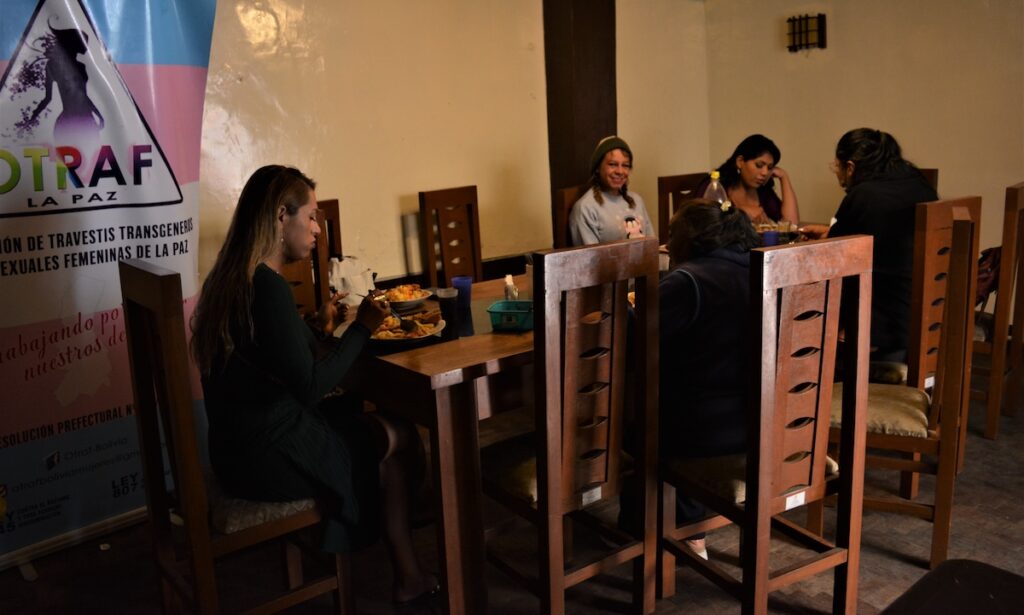
Around midday, the doors of Casa Trans, in the San Pedro neighborhood, are already wide open. The aromas of the day's meal begin to waft from its communal dining room, food prepared by the beneficiaries themselves. And although the primary focus is on transgender women and men, anyone in need of a meal is welcome.
“The Trans House is already two years old. It’s a project that has been implemented with the entire trans population of Bolivia . Initially, it opened in three cities: La Paz, Cochabamba, and Santa Cruz. I manage it in La Paz, and we are the center for the entire trans population of La Paz,” explains Luna Humerez, president of the Organization of Transvestites, Transgender People, and Transsexual Women (OTRAF) of Bolivia.
She is a lawyer, a career she chose due to the legal problems this population faces in the country, problems that require attention. She explains that Casa Trans was born out of the needs of trans women, whose numbers, while always numerous, were exacerbated by the pandemic.
“We saw the greatest need during Covid; the girls had nothing to eat or nowhere to sleep. It was the Global Fund that supported us so we could open a place where they could have free food. After that, we started to grow,” says Luna.
According to data from the Ombudsman's Office, 43.5% of transgender people have an income of less than 1,000 bolivianos (about $140, less than 50% of the national minimum wage). They also represent the population with the highest percentage of incomplete secondary education and the largest number of people without health insurance. Furthermore, 64% experienced discrimination in the past year.
There is no official data on the number of deaths caused by the pandemic, much less how many of these people were transgender, even though they were one of the hardest-hit populations. In addition to the healthcare system's collapse, their access to healthcare was hampered by prejudice against their identity.
The pandemic, due to its restrictions, also caused many trans women, who often work in precarious or sex-related jobs, to lose their jobs, income, and in many cases, their homes.
“Those were the needs we wanted to meet. From the beginning until now, we don't have an exact figure for how many have passed through here, but it's a lot. Some come for food, others looking for shelter,” Luna says.
Much more than a hostel
“For girls from low-income families, 'the house' is a great help; it's a refuge. Here you meet good people and sometimes bad people too, all kinds of people… just like in a family,” says Dulce, one of the beneficiaries.
What began as a kind of shelter is now a "fighting center" offering various services. A multidisciplinary team provides support in different areas.
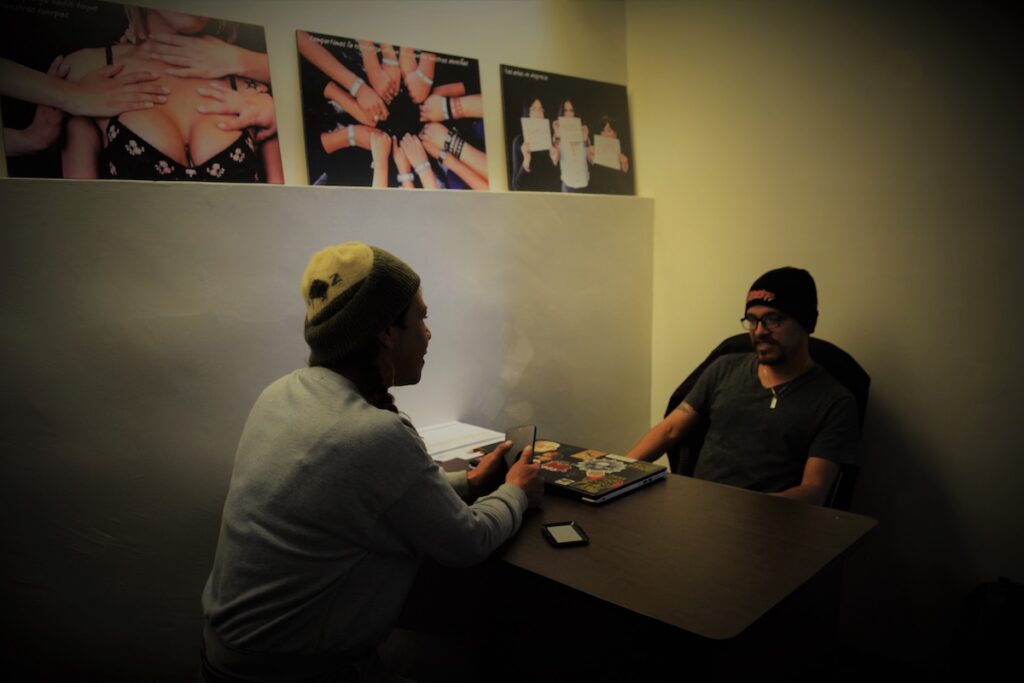
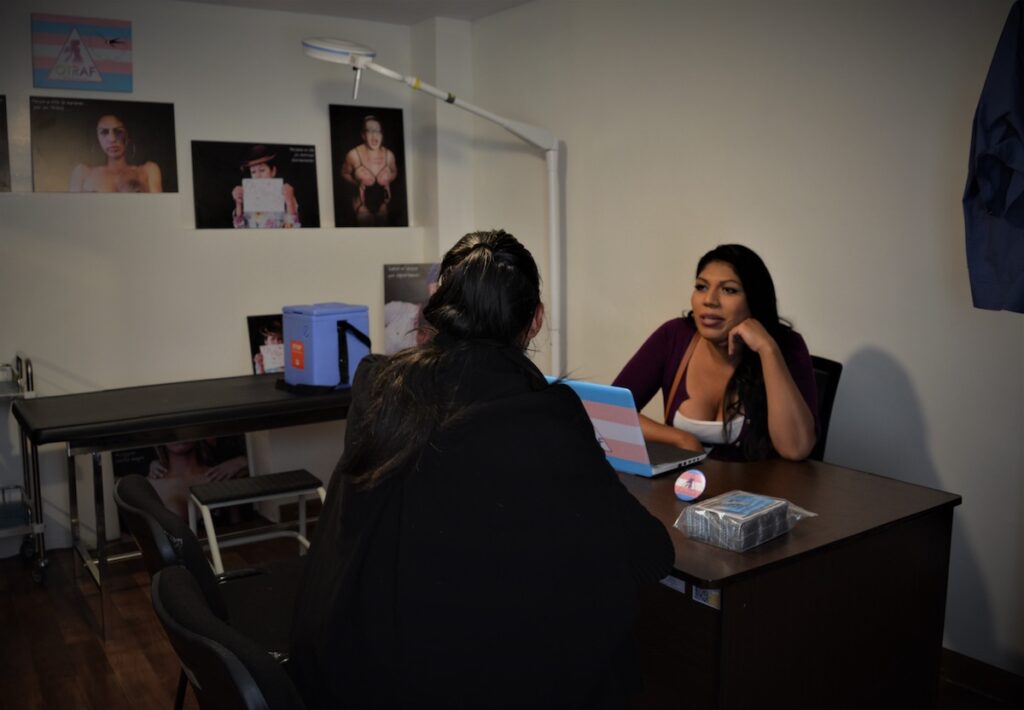
To this end, Casa Trans has set up spaces to provide legal, medical, and psychological consultations, and even vocational training to help them generate their own resources.
“We have a lawyer, a social worker, a psychologist, and an endocrinologist to help our fellow members with their transition process. Many things are managed from this house, such as scholarships for members who want to study at university or college. It's a space for focusing our struggle, but above all, it's a family,” Humerez explains.
To access these services, they even come from other departments. Sometimes they come alone, and other times with their families. There is growing acceptance from their community, which even seeks support to help them navigate the process that every trans woman begins.
But those who lack this support are forced to leave everything behind and arrive in situations of utter destitution and vulnerability. For them, the house has meant a significant improvement in their quality of life.
Along with the increase in services, the number of Trans Houses is also growing. They are no longer just located in the main cities. One has opened in Trinidad and another in Oruro; these do not yet have all the service areas that the main center in La Paz offers, but they will in time.
A hormone bank for a transition that never ends
“Transitioning is a long process that you could say never ends. It requires a lot of family, medical, psychological and even financial support, whether for hormones or to access surgery,” says Vivi, another of the founders of Casa Trans.
She states that the process involves self-acceptance and acceptance of one's body. The process generates changes in one's entire environment, so it should be guided by professionals experienced in transition.
However, this is not an accessible service. In Bolivia, there are not enough specialists in this area, neither in the public nor the private sector. Unlike other countries where it is part of the public healthcare system, in Bolivia the cost is high.
Among themselves they have seen young girls who, unable to access this care, turn to erroneous and unsafe sources of information, starting a process with inappropriate hormones that seriously endangers their health.
“That’s why we saw the need to have an endocrinologist specializing in transition care. The endocrinologist comes twice a week; this care is funded through the Global Fund and the UNDP, which is its recipient in Bolivia. This helps us a lot, because while there are few endocrinologists in the country, even fewer are specialized in caring for the trans population,” Luna explains.
But the problem doesn't end with finding a specialist. The real challenge is having sustainable access to hormones over time. While the cost of these medications is already high, the country's dollar crisis has led to shortages of some drugs and price increases—up to two or three times higher—for others, a situation that affects those who use hormones for their transition.
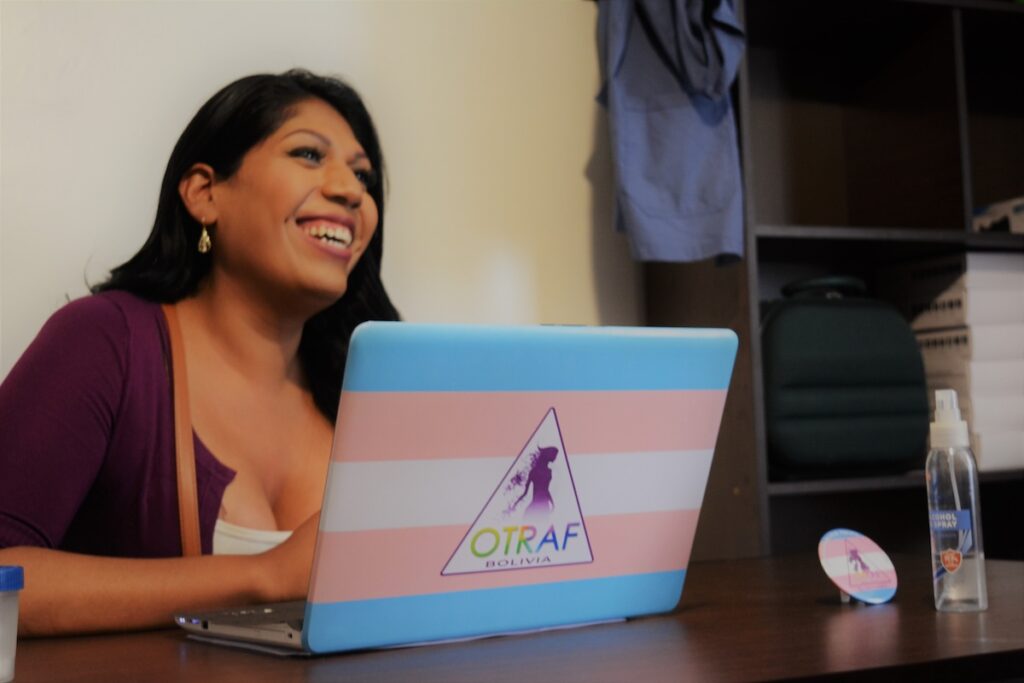
“We, the leaders, are trying to establish a hormone bank within the Casa Trans itself, through the endocrinologist. We don't yet know where to turn or how, but it's a project we have in mind because it's one of the most difficult and costly issues,” Humerez stated.
The lack of access means many women never complete their transition because they can't afford it. Just the initial lab tests can cost over two thousand bolivianos. "And it's not something that happens in a month; it's a long process, taking years."
Although the State does not currently cover these issues within universal insurance, Humerez hopes that it will in the long run, as is the case in Argentina and Chile.
Not only for them but for the community
Getting the Trans House up and running wasn't easy. The main problem was the resistance from the residents of San Pedro. There were plenty of disdainful looks, and one neighbor even threatened to complain to the neighborhood association to prevent the space from opening.
Ana Lucía Flores has known Casa Trans since the beginning. Together with Luna, she chose the furniture, defined the spaces, and set about getting the neighborhood to accept them as an organization that is at the service of the community.
“This space is very important for our community, which is why it also supports inclusion. Here we only show love and affection, because the only goal is to help each other and others,” Flores stated.
And the Trans House isn't just for trans women and men; it also attracts people from outside the community. Women who are victims of violence, alerted by the services, come to receive legal and psychological support. Some bring their children to use the internet.
“We’ve already raised awareness in the neighborhood; they recognize us as good people who only want to help each other. Now the neighbors speak very highly of us,” Luna adds.
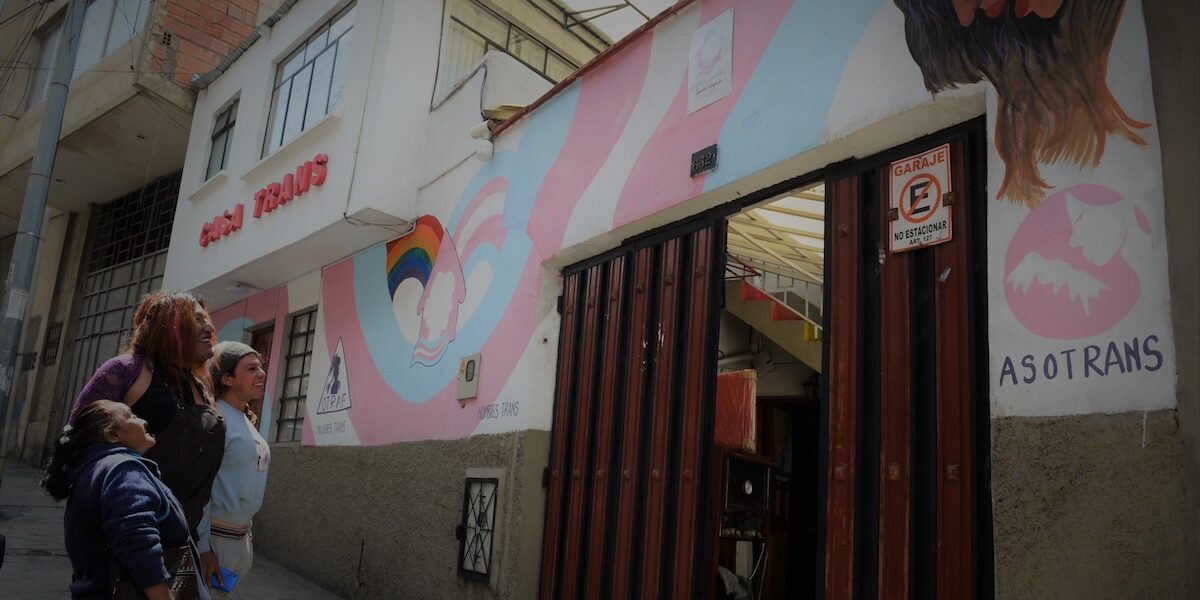
In the heart of San Pedro, one of La Paz's most conservative neighborhoods, Casa Trans stands with its pink, white, and light blue facade. Open and unrestricted, the space has become a beacon of inclusion, providing the support that the state fails to offer.
We are present
We are committed to journalism that delves into the territories and conducts thorough investigations, combined with new technologies and narrative formats. We want the protagonists, their stories, and their struggles to be present.
SUPPORT US

FOLLOW US
Related notes


We are present
This and other stories are not usually on the media agenda. Together we can bring them to light.