

Trans activist, survivor and migrant: she is about to be evicted and although she has a job she cannot find a roof over her head
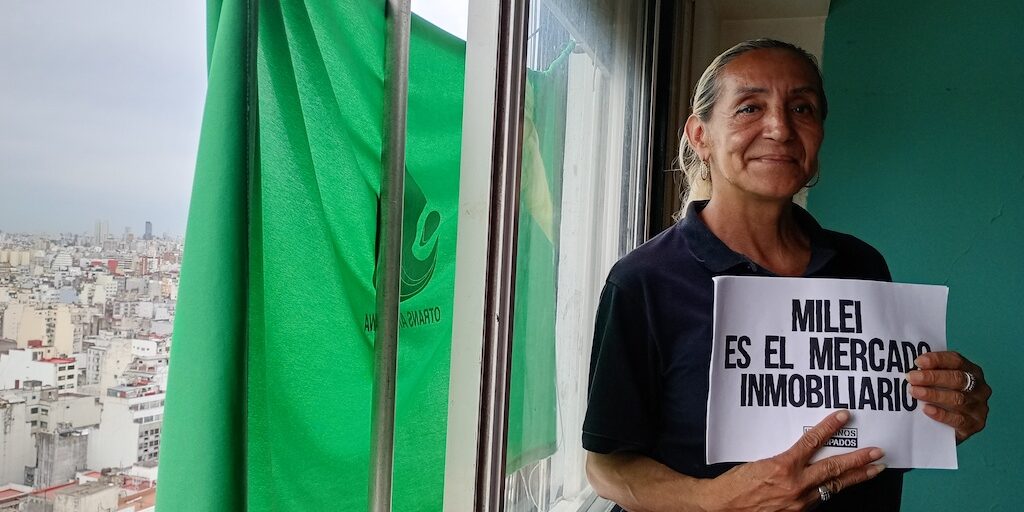
Jem Rodríguez Lozano is a trans activist, migrant, and survivor. At age 12, she left her home in Guayaquil. She is one of the founders of the first trans organization in Ecuador. As a young woman, she was forced into exile in Madrid, Spain. She eventually continued her activism in Buenos Aires. Now facing eviction, she urgently needs help finding a roof over her head and resolving the housing crisis, which has an even more drastic impact on trans and travesti communities.


Share

BUENOS AIRES, Argentina . Jem Rodríguez Lozano is a long-time trans activist, a migrant, and a survivor. At 54, she has surpassed the life expectancy of her community, which is around 40. Born in Guayaquil, Ecuador, she was a strong advocate for trans rights. She was forced into exile in Spain and eventually came to Argentina to live her gender identity freely. For over 10 years, she has lived in a two-room apartment on the 23rd floor of the Once neighborhood in Buenos Aires. At one point, she housed eight other trans and travesti women who were homeless. During the Covid-19 pandemic, she also received supplies from the national government to distribute to acquaintances in the neighborhood. But now, Jem is about to be evicted amidst an economic and housing crisis that is disproportionately impacting LGBTQ+ people.
Like many people, she has a job, but her salary is far from covering rent. And in her case, there's another factor. " They don't want to rent to us because we're trans. At first, while they're still figuring it out, they say yes to everything. Then, when they realize, they start making excuses. I want to be able to rent, and I don't have that option here, not even with enough money," she says.
The apartment is now empty of chairs and furniture. Only a mattress on the floor and a packed suitcase, ready for when the time comes. Jem signed and renewed the lease several times with the landlord, with whom he had a good relationship until his death. The property then passed to his family. Jem signed a two-year extension with them in 2022, but they refused to renew the lease. Since March of this year, the landlords have been pursuing eviction proceedings in the National Civil Court of First Instance No. 40.
"It affects me because it's a place where I spent a large part of my life. Many girls have passed through here. Now the authorities are abandoning me when I'm the one who did their job, the State's job," says Jem.
From activism in Ecuador to exile in Spain
Jem was born on September 23, 1970, in Guayaquil, Ecuador. At age 12, she left home, like many LGBTQ+ people. In 1997, she was one of the founders of Coccinelle , the first transgender organization in the country. Homosexuality was criminalized under the first paragraph of Article 516 of the Penal Code, which punished same-sex sexual relations with four to eight years in prison. The organization was key in achieving decriminalization on November 25 of that year.
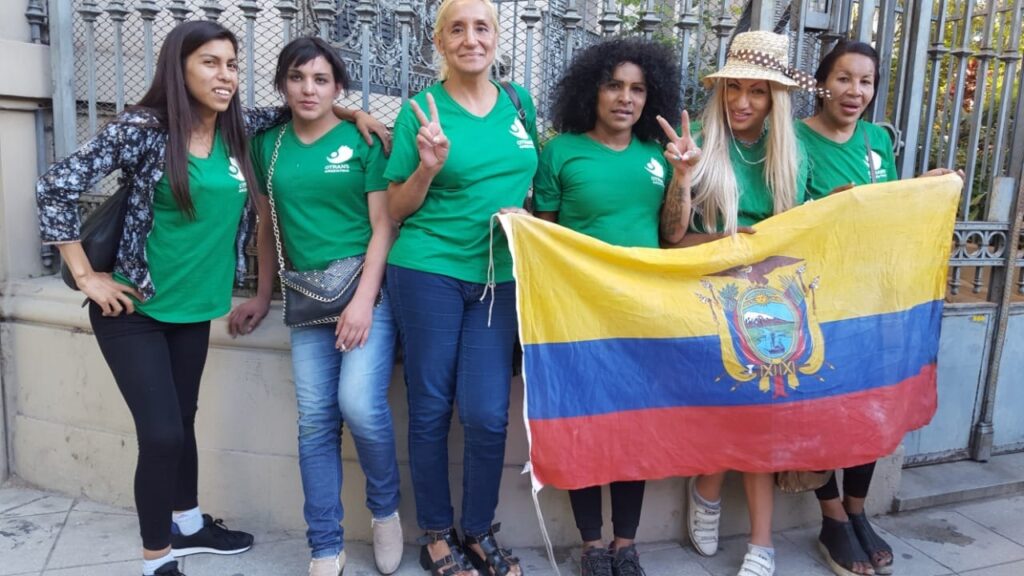
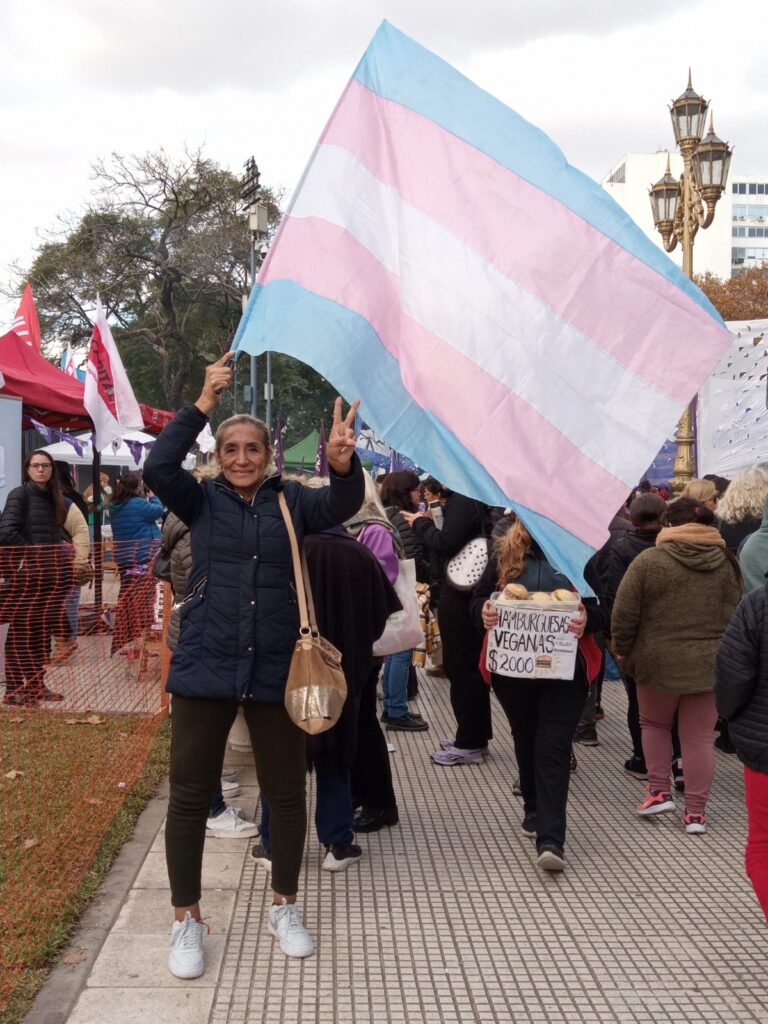
She also led the Ecuadorian Foundation for Sexual Minorities (FEMIS), from where she spearheaded complaints against Ecuadorian police officers in a report on torture and ill-treatment of LGBTIQ+ people and another on impunity for abuses against this community , both published by Amnesty International in 2001 and 2002, respectively. Because of her activism, she says she received death threats from a National Police officer and was forced into exile. She went to Madrid, Spain, where she also did community service and furthered her work as a human rights activist. She eventually migrated to Argentina and continued her activism within the organization OTRANS Argentina and currently with INTI Travesti Trans.
Being trans, working and renting
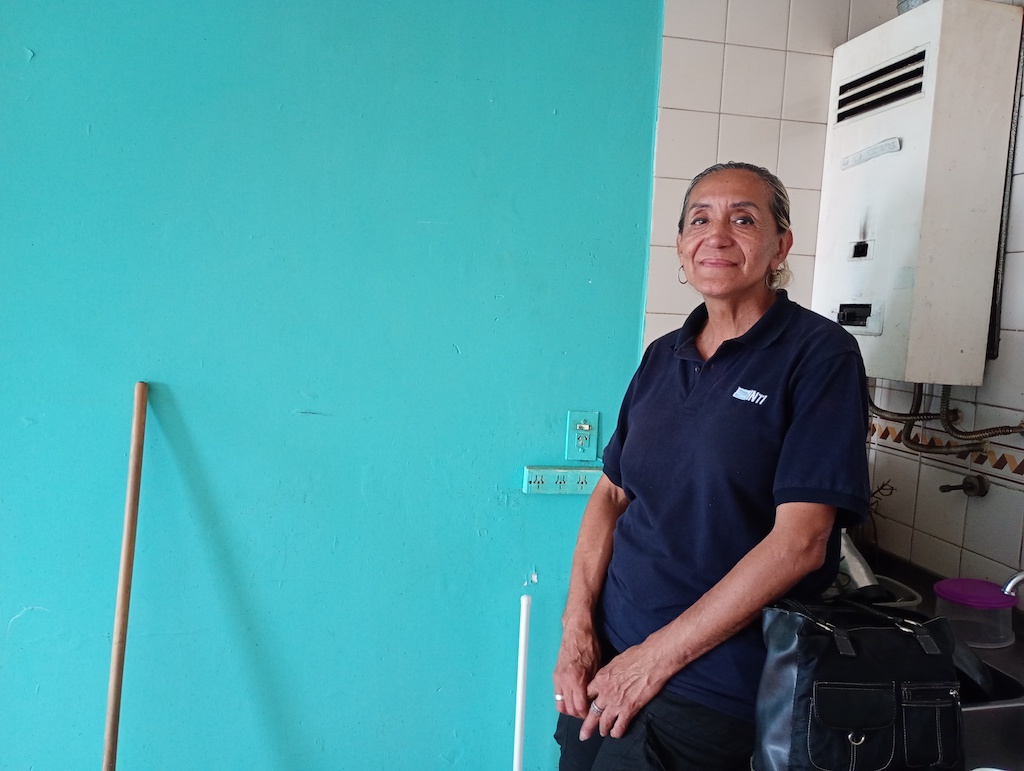
Jem works as an administrative assistant at the National Institute of Industrial Technology (INTI) . She started in June 2023 through the Law for the Promotion of Formal Employment for Transvestite, Transsexual, and Transgender People “Diana Sacayán – Lohana Berkins” – also known as the Trans Employment Quota Law. There, she earns a salary of just over 600,000 pesos. But this isn't enough to cover her transportation, food, electricity and gas bills, and everything else she needs to live, such as housing.
According to November data from the National Institute of Statistics and Census (INDEC ), a single adult needs 324,099 pesos per month to avoid falling into poverty. However, this statistic does not take into account rent or building maintenance fees. In the City of Buenos Aires, the housing crisis for transgender people is so severe that in February the courts ordered the city government to present a program and a survey of the housing situation of the transgender community .
Jem's reality—having a formal job but still unable to afford the expenses necessary for a dignified life—is shared by many people in Argentina, especially those in the trans and travesti community. She experiences firsthand what is described in the report "De-implementation and Layoffs of the Trans and Non-Binary Work Quota" by the Gender and Labor Relations Observatory of the State Workers' Association (ATE). Published in November, the report notes that 57% of public sector employees surveyed live below the poverty line. Furthermore, the average public sector salary fell by 21.3% between December 2020 and April 2024.
Added to this are the precarious employment arrangements, which, in the case of those hired through the trans quota, reached 55%. As a result of this instability and the national government's austerity policies in the public sector, 150 trans, gender-diverse, and non-binary (TGB) state workers were laid off this year. This represents 1.3% of the 11,840 registered layoffs, even though TGB individuals make up only 0.17% of the workforce.
In Balvanera, where Once is located, street vendors, self-employed workers, sex workers, and a wide range of informal economy workers pass through daily. Jem walks those blocks every day on her way home from INTI. Weeks ago, her electricity was cut off, so she goes to different friends' houses in the area who offer her a place to drink mate or watch TV, until it's time to go to bed and she returns home.
During this interview, he takes several cardboard cards out of his wallet. He received them from the hotels he contacted to rent a room. On the back are the prices he wrote down in pen: 400,000 pesos per month, 1,200,000 pesos for the move-in fee, and 65,000 pesos per day. The process of renting a room proceeds normally until suddenly obstacles arise.
The price of rent is a common obstacle for trans and gender-diverse people, as it is often double or even triple what is charged to a cisgender person (whose gender identity matches the one assigned at birth). They are asked for 400,000 pesos for a hotel room, a similar amount to what a one- or two-room apartment costs in the Buenos Aires real estate market.
There is also the impact of Decree 70/2023 from the current government, which repealed the Rental Law. According to a survey conducted in September 2024 by the National Tenants Federation and Ni Una Menos (Not One Less) , rental conditions worsened after the decree . “The results (…) reflect sharp increases in rental prices, with shorter lease terms, monthly or quarterly updates, and adjustment mechanisms that do not take into account salary increases,” the report summarizes.
Good news: ruling on housing and LGBT rights
A very recent ruling by the Court of First Instance for Administrative and Tax Matters No. 23, signed by Judge Francisco Ferrer , recognized the vulnerable housing situation faced by the LGBTIQ+ community. This ruling came in the case of Sofía Castro Riglos, a survivor of the triple lesbian murder in Barracas. She demanded access to decent housing from the Buenos Aires city government, and the judge ruled in her favor, citing a range of international human rights law.
“LGBT people can be victims of discrimination in accessing housing as a result of unfair treatment by public and private landlords. Among other problems, LGBT people and same-sex couples are denied rental housing or suffer evictions from public housing, or are harassed by neighbors and forced to leave their homes,” says UNHCR in the report “Discrimination and Violence Against Persons Based on Sexual Orientation and Gender Identity” (2023), cited in the ruling. It continues with another argument that also affected Jem’s life: “Many adolescents and young adults who identify as LGBT are expelled from their homes due to parental disapproval and end up on the streets, making the number of homeless people in this group disproportionately high.”
She was just 12 years old when she left home. The moment she was able to access the right to decent housing was merely a brief interlude in her life. Today, at 54, she is about to be evicted and once again doesn't know where to go. "I want to take a bath, do my own things, rest, have light, watch the news for a while," says Jem. A basic request for anyone.
Campaign: How to help Jem
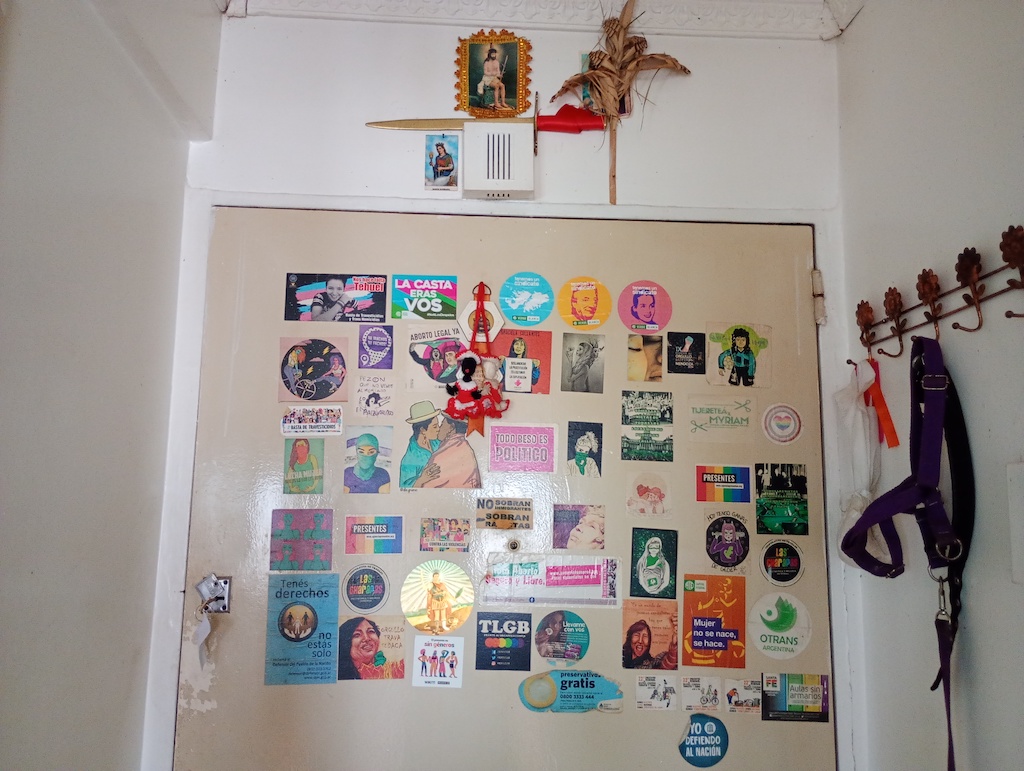
-From the Trans Migrant Community Center around the world and friends of Jem, they are carrying out a network of support and solidarity aid in the face of the imminent eviction.
-While the long-time activist continues to search for a place where she can live with dignity, you can send a financial contribution through the alias JEM2370.
-Anyone who has a place available or knows how to help resolve this situation can write to us at agenciapresentes@gmail.com and we will pass the message on to Jem.
We are present
We are committed to journalism that delves into the territories and conducts thorough investigations, combined with new technologies and narrative formats. We want the protagonists, their stories, and their struggles to be present.
SUPPORT US

FOLLOW US
Related notes

We are present
This and other stories are not usually on the media agenda. Together we can bring them to light.