

Peru 2024: The year the Ministry of Health pathologized trans people and there was little good news for LGBT people
The Supreme Decree that pathologizes trans people remains in force in a year that will be remembered for its setbacks and a few victories, won through sheer LGBT persistence.


Share

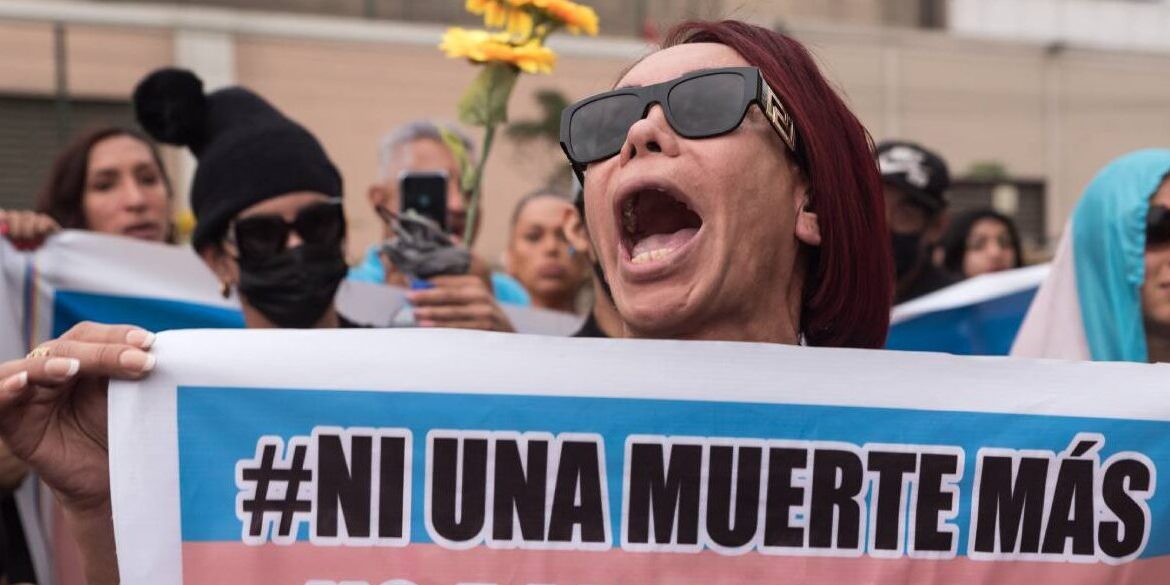
LIMA, Peru. This was a year of setbacks for the rights of the LGBTIQ+ population in Peru. We made international news (and were a source of shame) due to the supreme decree published by the Ministry of Health labeling these individuals, especially trans people, as mentally ill. Although Dina Boluarte's administration was widely criticized for taking us back to the past, to this day there is no intention of repealing it.
Meanwhile, many in the LGBTQ+ community feel like we're traveling back in time with the civil union bill for same-sex couples that was approved by the Justice and Human Rights Committee of Congress. This is a bill that was already presented to Parliament in 2013 and 2016. It's a bill that's no longer debated in almost any other Latin American country. It's an outdated bill. But it must be approved by the full Congress to guarantee, at least, some basic rights. And yet, many of our authorities spew homophobia, organize marches, and create counterproposals to prevent this law from passing, because they think we don't deserve it either and that it would be a threat to the existence of "real families."
2024 has been a year of impunity for the victims and their families, whom Dina Boluarte, her ministers, congressmen, and high-ranking police and military officials have repeatedly blamed for the deaths of 2022 and 2023, labeling them terrorists and criminalizing their protests. In 2024, it was also revealed that more than 500 girls in the Amazon were sexually abused by their teachers since 2010, with most perpetrators going unpunished. And a Minister of Education stated that these abuses “are cultural practices.” 2024 will also be remembered as the year in which the remains of dictator Alberto Fujimori were given a state funeral.
One of the best pieces of news this year for the LGBTQ+ community and its allies: Fer, a courageous lesbian woman, won her trial against her attacker. The rapist has been sentenced to 13 years in prison. The sentence is final.
With their story we begin this assessment that Presentes has been making since 2017, with the count of rights and violence towards sexual diversity in Peru.
The judiciary condemned the sexual assailant of a lesbian woman.
Fer was sexually assaulted as punishment for her sexual orientation. Eight years later, her attacker was convicted. “For the first time, sexual violence against a lesbian woman was criminally prosecuted. This sentence sends a symbolic message that hate crimes against lesbian women will not go unpunished and will be punished in Peru,” the NGO Promsex, which handled Fer's legal defense, told Presentes .
In 2017, Fer was at a nightclub with her friends and Julio Martín Vigo Cipriano. They started drinking beers. When they were alone, despite Fer's obvious intoxication and knowing she was a lesbian, he tried to kiss her, but she rejected him. Later, he took Fer to her apartment and raped her.
Together with Promsex, she filed a complaint. During the process, Fer learned that this man had attempted to sexually assault other lesbian women while intoxicated. After many years of trials, acquittals, and appeals, in August 2024, the court sentenced the criminal to 13 years in prison. The sentence is final.
“This message (of no impunity in Fer’s case) is extremely important. In our country, gender violence is structural and systematic against women. This violence increases when women have greater vulnerabilities, such as educational level, economic status, or non-conventional sexual orientation, as is the case with lesbian women,” Promsex explained to Presentes .
The media must respect trans identities
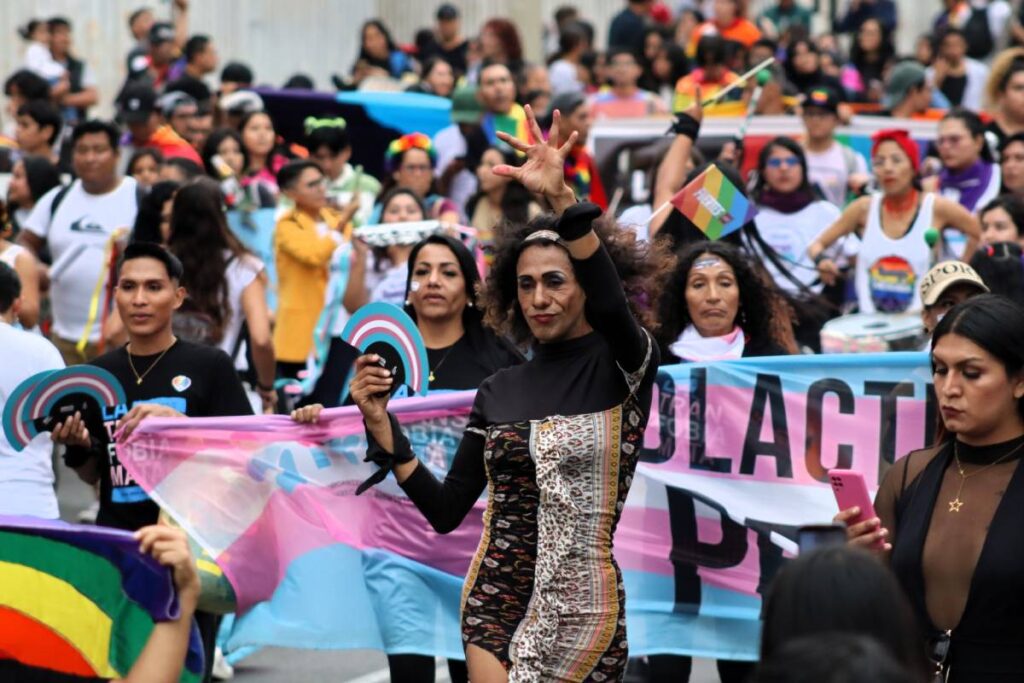
In January 2024, the community celebrated the historic sanction against the television channel ATV and the program Magaly TV for transphobic discrimination against Etza Wong and her character "La Uchulú ." During her appearance on an episode of the reality show "La Casa de Magaly ," Etza Wong's legal name was broadcast on air by makeup artist Carlos Cacho. Television presenter Andrés Hurtado—currently in pretrial detention for alleged influence peddling and money laundering—also humiliated her because of her gender identity.
“Setting a precedent to protect the dignity of trans people in the media at the national level. Trans women are fed up with being objects of ridicule,” stated the trans women's organization Féminas Perú on its social media.
The fine imposed by the National Society of Radio and Television was 25,750 soles. The sanction included an order for the program's host, Magaly Medina, and her team to undergo training on gender issues and trans rights, with the aim of preventing future acts of discrimination.
For the first time, an intersex person demanded justice before the Constitutional Court
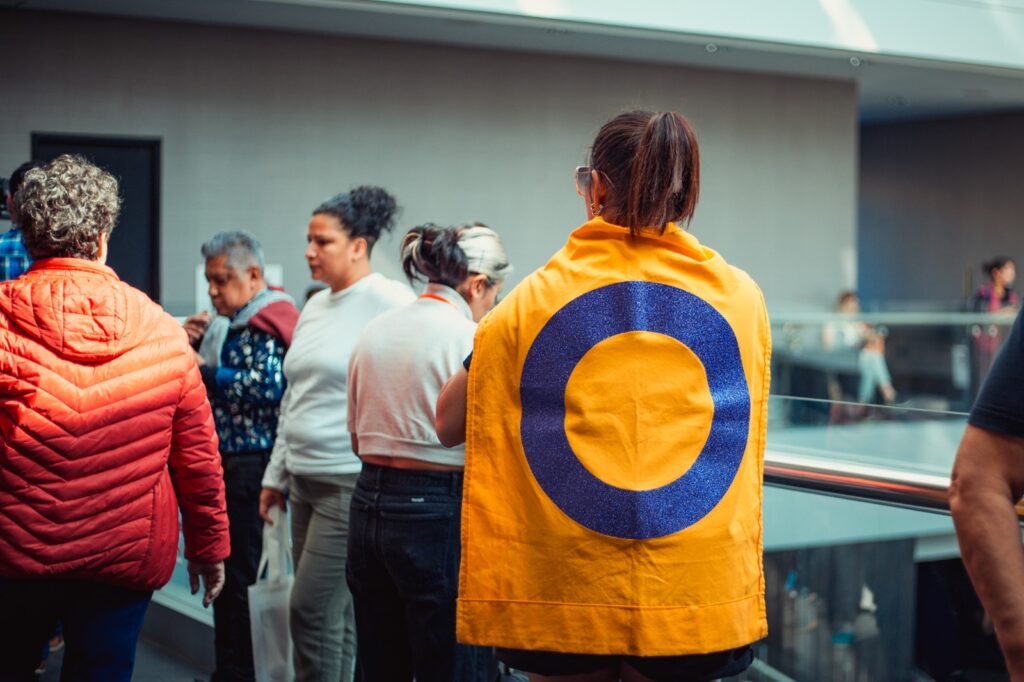
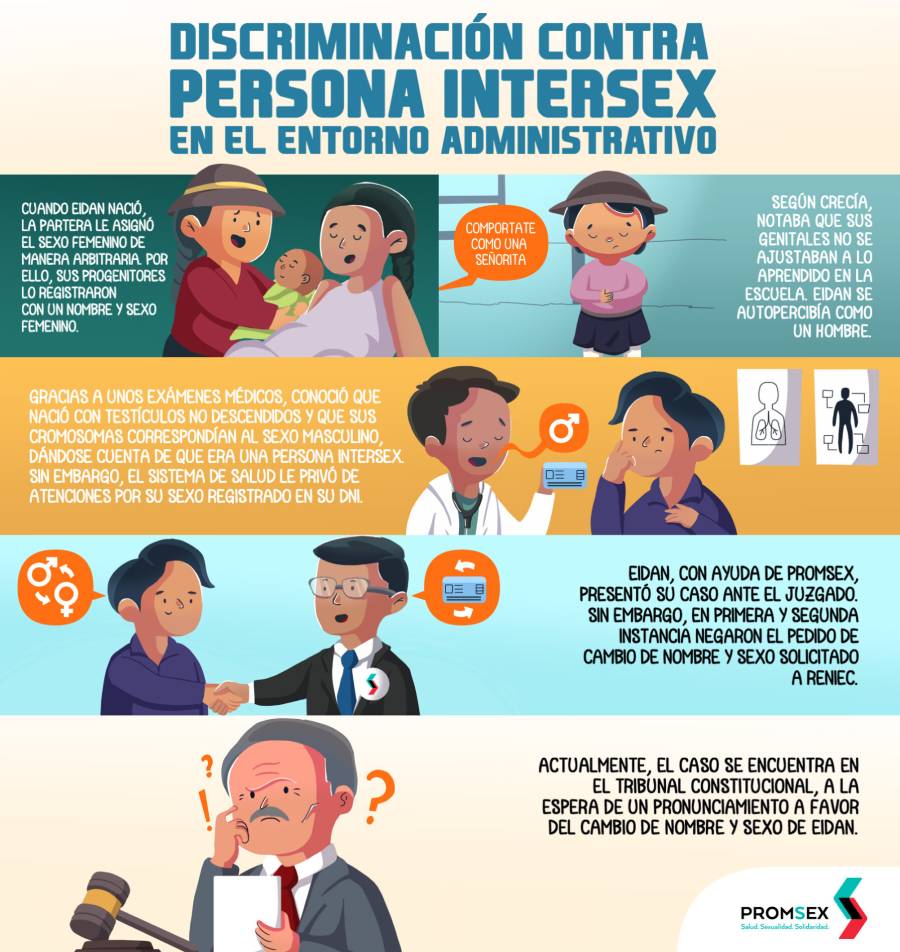
Eidan, with the support of the NGO Promsex, filed a lawsuit this year before the Constitutional Court (TC) seeking a change of sex and name on his identity documents. He also requested that the Social Health Insurance (EsSalud) stop endangering his life and the lives of other intersex people.
Born 43 years ago in his parents' home in the Peruvian Andes, Eidan was identified by the midwife as a girl and registered as such. He chose his name later, because he identified as male. Years later, he learned that he had been born with undescended testicles, other intersex physical characteristics, and XY chromosomes, which are considered male sex chromosomes. He was an intersex person.
More than six years ago, Eidan came to Promsex because his life was in danger. As an EsSalud policyholder, he faced barriers to accessing medical care because he was registered as female in the system. According to Promsex, his karyotype test (a test to examine chromosomes in a cell sample) was not recorded because it did not correspond to his registered sex. Consequently, he was unable to access the necessary complementary tests and specialized care, despite experiencing severe pain and a risk of testicular cancer.
One of the main objectives of this litigation is for the Constitutional Court to declare the current system of limiting healthcare services based on the sex assigned in national identity documents, rather than on actual health needs, to be “unconstitutional.” The lack of an administrative procedure for intersex and transgender people in Peru to change their names and genders is also being challenged as “unconstitutional.” This would spare them from a lengthy and expensive legal process. The Constitutional Court will issue a crucial ruling that will either guarantee or deny the basic rights of many intersex people in Peru.
Constitutional Court discriminates against homoparental families
Since 2016, Darling Delfín and Jenny Trujillo have been battling the National Registry of Identification and Civil Status (Reniec) to be officially recognized as the mothers of Dakarai, a 10-year-old boy . Reniec has persisted in denying this family their right, appealing a court ruling that required them to grant this recognition.
In October 2022, the Delfín Trujillo family filed an appeal with the Constitutional Court. Only two years later, on November 18, 2024, did the highest interpreter of the Constitution convene a public hearing to hear the lesbian mothers' case. During the long-awaited hearing, the collective " I Have Two Moms" reported that some justices asked questions and made statements laden with stereotypes and prejudices. "On what grounds is the best interest of the child better protected by having two mothers?" asked Gustavo Gutiérrez Ticse. Meanwhile, Francisco Morales argued that recognizing them would later allow for the registration of "two, three, four mothers."

“The Constitutional Court is waking up from its lethargy, apathy, and stagnation to convene a hearing where three out of seven (judges) have comments and questions based on discrimination and hate speech,” lawyer for the NGO Demus head of the strategic litigation team for the case, Presentes
Cedano also reported that the Delfín Trujillo family had repeatedly informed the Constitutional Court of the urgent need to schedule the hearing, given that Dakarai's best interests were at stake. "Since he was old enough to understand, the child has had to cope with the uncertainty of living in a family not recognized by the Peruvian state, the anxiety of an indefinitely prolonged legal process, and the instability of having been forced to migrate due to the dangers his family faces in Peru," the lawyer explained.
Because of this delay by the Peruvian justice system, a petition has been filed with the Inter-American Commission on Human Rights (IACHR). It is currently in the admissibility stage and a decision is expected very soon. “We hope that the IACHR will admit the petition and issue a substantive report with recommendations to the Peruvian State that will allow Dakarai to obtain his national identity document (DNI) with both his mothers before he turns 11,” said Cedano.
The government does not want to eliminate the supreme decree that pathologizes trans people.
On May 10, the Ministry of Health No. 009-2024, approving an update to the Essential Health Insurance Plan (PEAS). This update was based on the ICD-10, an international classification of diseases created in 1992 that contains outdated and pathologizing diagnostic categories for LGBTIQ+ people, especially the trans population. The classification currently in use is the ICD-11, published in 2018. The unusual aspect is that the government claimed the intention was to expand mental health coverage for trans people.
In response, hundreds of mental health professionals and representatives of LGBTIQ+ and human rights organizations demanded the repeal of the supreme decree and the updating and implementation of the ICD-11. Faced with pressure from the community and national and international allies, the Ministry of Health (MINSA) was forced to issue Ministerial Resolution No. 447-2024/MINSA, updating the ICD-10 to stop classifying trans identities as mental illnesses. However, to date, they refuse to annul the supreme decree.
Gianna Camacho, a trans woman, LGBTI human rights defender, and journalist, emphasized to Presentes that issuing a ministerial resolution is insufficient, because a supreme decree carries much higher legal weight. “Since that decree was issued, some people have come out saying, ‘See, they were sick after all.’ As long as this decree remains in place, it will only reinforce the same prejudices about our existence.” Camacho has been participating in meetings with Ministry of Health officials on this issue for the past five months and believes that “we are being given the runaround at the institutional level.” “If a supreme decree repealing the previous one has not yet been issued, it is due to this government’s blatant discrimination against the community. We will resume our street protests,” she affirms.
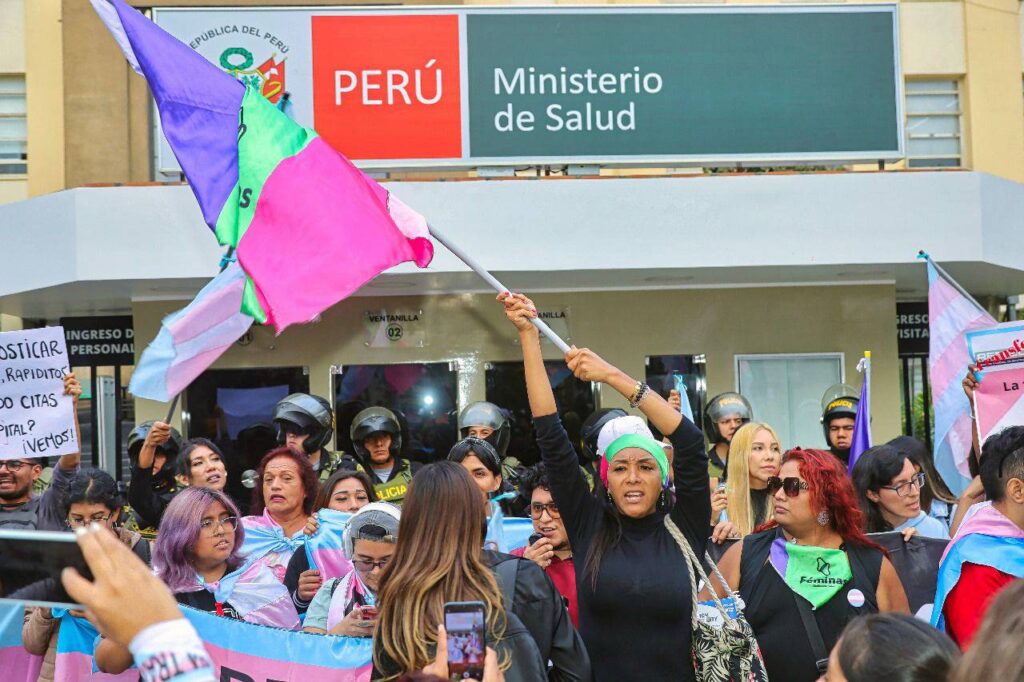
For Dani Silva, a lawyer and executive director of the NGO Diversidades Trans Masculinas (DTM) , the continued validity of this decree “shows the public agenda of this conservative, right-wing regime.” The measure, he explained, legitimizes hate speech in society and increases discrimination, primarily in the mental health sector. “It clearly reinforces the perception that trans identities are an illness, that we are like freaks, like monsters,” he told Presentes .
In response to this pathologizing decree, the NGO Outright International has filed an amicus curiae brief with the Superior Court of Justice of Lima, supporting Fara Zamudio Santos, a trans woman and human rights defender, in her efforts to overturn the decree. “Outright seeks to ensure that the Peruvian justice system takes into account the Peruvian State’s international human rights obligations. The challenged regulation does not comply with the standards established by the Inter-American Human Rights System, as it constitutes discriminatory treatment of trans people and violates their rights to personal liberty, privacy, and health,” Alberto de Belaunde, Co-Director of Outright International’s Queer Legal Futures Program,
Presentes Torture of children in the Amazon

A video went viral in Peru in 2024 due to its graphic depiction of two children being tortured for exhibiting "feminine behavior" in the native community of Chigkan, an annex of the Kigkis community, in the Condorcanqui province of the Amazonas department. Euner Kajekui, an Awajún activist from the LGBTQ+ community, denounced the acts of violence, which he claims are intended to "correct" supposed homosexuality in children. The video shows the children crying and screaming after being rolled in nettles. Kajekui warned that these punishments are fueled by hate speech from some evangelical churches in the area and are becoming normalized in Indigenous communities.
The Ministry of Women and Vulnerable Populations (MIMP) stated on its social media that "we are taking measures to identify the location of the events and the possible victims, in order to intervene and contribute to their protection."
If the Ministry of Women and Vulnerable Populations (MIMP), and other authorities in the Executive and Congress, were to read the mental health study by the NGO Más Igualdad , they would understand the gravity of the measure. That report indicates an association between having undergone “conversion therapies” and a higher rate of suicidal thoughts and ideation, as well as problematic substance use. As long as the prohibition and punishment of “conversion therapies” is not included in the Mental Health Law, it will be more difficult for those who promote and commit these crimes to fear the consequences of their actions.
Shortage of medications for the treatment of HIV
On August 1, the Ministry of Health (Minsa) informed health services of a change in HIV treatment regimens due to a shortage of antiretroviral drugs. More than 100 LGBTIQNB+, PLWH, and human rights organizations issued a joint statement warning that this measure affects 101,000 people living with HIV in Peru. According to the HIV Expert Committee, changes in therapy often generate adverse effects and a risk of treatment resistance.
Through a sit-in, HIV patients and organizations demanded that the Ministry of Health guarantee the availability of antiretroviral drugs without changes to their treatment regimens, as well as respect for the rights of citizens living with HIV. Following the protest, the Ministry of Health announced dates for the arrival of millions of doses of medication needed to guarantee the supply of antiretrovirals throughout 2024. But this has not happened.
Several NGOs, including Givar (Group for Monitoring the Supply of Antiretroviral Medicines), continue to denounce the shortage of medicines in health facilities nationwide on their social media platforms. The newspaper La República reported 304 complaints related to the lack of antiretroviral medications, representing a 59% increase compared to 2023.
On December 2, the NGOs Promsex, Givar and AIS (International Action for Health) filed a lawsuit for compliance before the Specialized Constitutional Court of Lima, demanding that the Ministry of Health guarantee the purchase and distribution of vital medicines to care for people with HIV, especially those living in extreme poverty.
Civil union project tastes like leftovers
In November, the Justice Committee of Congress approved the bill proposing civil unions for same-sex couples. The initiative—presented by Congressman Alejandro Cavero of the far-right, conservative Avanza País party—will now be debated in the full Congress, and if it obtains a majority vote, it will become law. This bill does not change the couples' civil status because, like any other contract, it is registered with the National Superintendency of Public Registries (Sunarp) and not with the National Registry of Identification and Civil Status (Reniec).
While it protects rights between the couple such as property and inheritance rights, medical decision-making, and enrollment in health insurance – important in a country where there is no legal recognition for same-sex couples – it does not protect the family.
“Unfortunately, this bill removed all mention of adoption of the couple's child, or issues of parentage, or issues of recognition of children already existing within the couple. This is a critical issue for all same-sex couples who raise children and have families, and there are many of them in Peru,” Gabriela Zavaleta, an activist with the NGO Más Igualdad Sí, acepto (Yes, I Do ) campaign for marriage equality, Presentes .
For Luisa Morcos and Mabel Aguilar, representatives of the Association of Homoparental Families of Peru , this is very worrying. They married in Chile and have a young son named Noam. On the child's ID card, only Mabel is listed as a single mother, because in Peru there is no law stating that two mothers or two fathers can have children.
“There’s a conservative faction in Congress that claims to be the defenders of the family. But with these measures, they’re discriminating against families like mine, because civil unions don’t grant inheritance rights. That is, if I die, my mother inherits the property, not my son. And civil unions don’t allow me to add my son to my insurance either. What kind of equality are we talking about? They continue to treat us like second-class citizens,” Luisa Morcos told Presentes .
“Political discourse tends to be confusing. I listened to Alejandro Cavero's speech when he explained his bill, and it sounds like he's explaining marriage. He talks about equality. But there is no equality until we have the same rights as everyone else,” Mabel Aguilar told Presentes .
The three women interviewed hope that the civil union project is just one step towards civil marriage for all couples in Peru .
Meanwhile, several members of Congress declared that this bill is a “marriage in disguise” and that they will vote against it in the plenary session because “marriage is only between a man and a woman.” Furthermore, Congressman Alejandro Muñante—from the Popular Renewal party (far-right and conservative)—presented a counterproposal, the “Solidarity Patrimonial Agreement” bill, which only recognizes pension and inheritance rights between two people, and whose main purpose is to prevent the approval of civil unions. The bill is openly homophobic.
The homophobic march in Lima
The mayor of Lima, Rafael López Aliaga, used the municipality's social media accounts for a "For Life and Family" march, which took place on December 7th . The objective: to mobilize people to Congress and demand that the civil union bill not be debated in plenary session. Documents leaked on social media showed that the mayor intended to spend almost 10,000 soles of municipal funds on promotional items for the march, but when he was discovered, he canceled the purchase.
Hate crimes and violence 2024
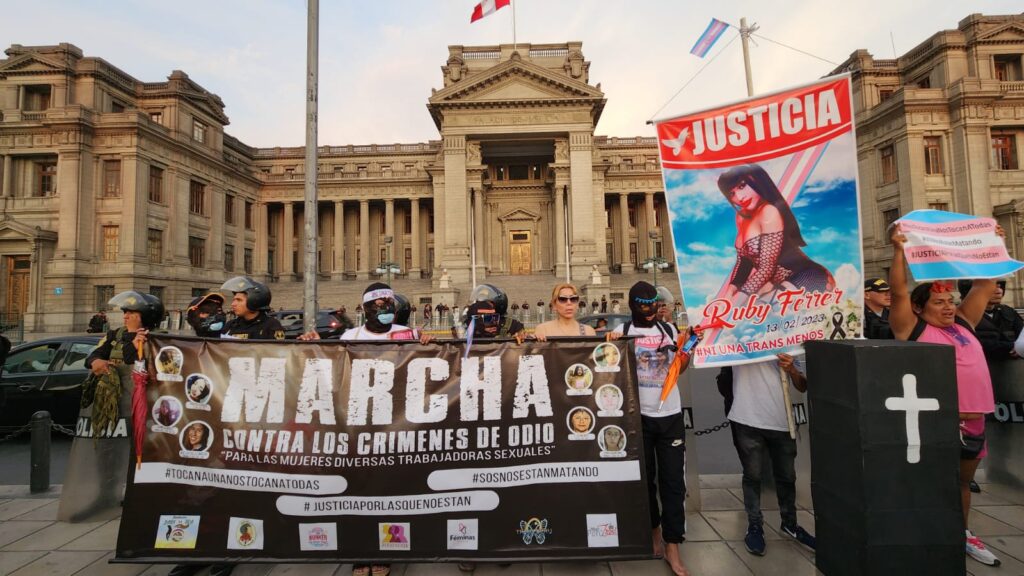
In February 2023, openly lesbian congresswoman Susel Paredes introduced a bill against hate crimes. Its aim is to impose harsher penalties for crimes motivated by LGBTQ+phobia. However, in 2024, the state still fails to recognize hate crimes in the country, despite the fact that in 2023 at least 12 trans women were brutally murdered , seven of them for refusing to pay protection money to prostitution rings.
As expected, the initiative has not been debated in the Justice and Human Rights Committee of Congress, much less in the Plenary.
Some of the violence reported in 2024:
Jazmín, a 32-year-old transgender woman and sex worker, was murdered on February 15th with firearms in the Independencia district of Lima. She was killed by an extortion ring because she refused to pay them 100 soles a week to work on the Independencia Boulevard. The killers are suspected of belonging to the criminal gang known as "Los cafichos de Mega Plaza" (The Pimps of Mega Plaza). The First Provincial Corporate Criminal Prosecutor's Office of Lima North obtained a one-year preventive detention order against Miguel A. De la Cruz S., alias "Azul" or "Padre," for the alleged crimes of criminal gang membership and aggravated homicide in Jazmín's death.
Cris, a 54-year-old trans woman, was found dead on October 16, 2024, with a deep cut to her neck and injuries to her body, in her own business, a beauty salon, in the Ate Vitarte district of Lima. Her family and neighbors were worried because she had been missing for several days. When they entered the premises, they found her body under the bed, wrapped in a blanket. The perpetrator was her partner, Christopher Mancilla Medina. He told the police he was enraged because the victim had threatened him.
In the San Juan Bautista district of Iquitos (Peruvian jungle), a lesbian couple has been assaulted, harassed, and threatened with death since 2021 by their neighbor, Jesús Alexander Palacios Rodríguez, despite numerous complaints filed by the authorities. The media outlet La Indómita brought the case to light . Luz and Almendra married in Argentina five years ago and have a one-year-old son. The aggressor, who manages a bar located in his parents' house, began harassing and stalking them with lesbophobic remarks. Over time, their family, friends, and customers also began mocking them. The lesbian couple fears for their lives and that of their young son.
A high-profile case that saw developments this year is that of Anthony Camizán, who disappeared in the department of Piura (northern Peru) on August 21, 2022. On December 4, the Judiciary rejected the request for pretrial detention against police officer Edixon Rone Córdova, the main suspect in the disappearance. Anthony had a romantic relationship with the officer during which he was subjected to violence and death threats. Despite the compelling evidence (chats and video from the day of his disappearance), the Peruvian justice system failed Anthony and his family, who have been searching for him for more than two years. Furthermore, the prosecution's handling of the investigation "lacks a comprehensive strategy and has not made significant progress. Anthony's sexual orientation and the homophobic context continue to be ignored, leaving his family and the entire LGBTIQ+ community without justice," Alex Núñez, president of Generación Orgullo Presentes . The accused continues to work for the Peruvian National Police.
We are present
We are committed to journalism that delves into the territories and conducts thorough investigations, combined with new technologies and narrative formats. We want the protagonists, their stories, and their struggles to be present.
SUPPORT US

FOLLOW US
Related notes

We are present
This and other stories are not usually on the media agenda. Together we can bring them to light.