

Digital gender violence exists: helplines in Bolivia, Ecuador and Brazil
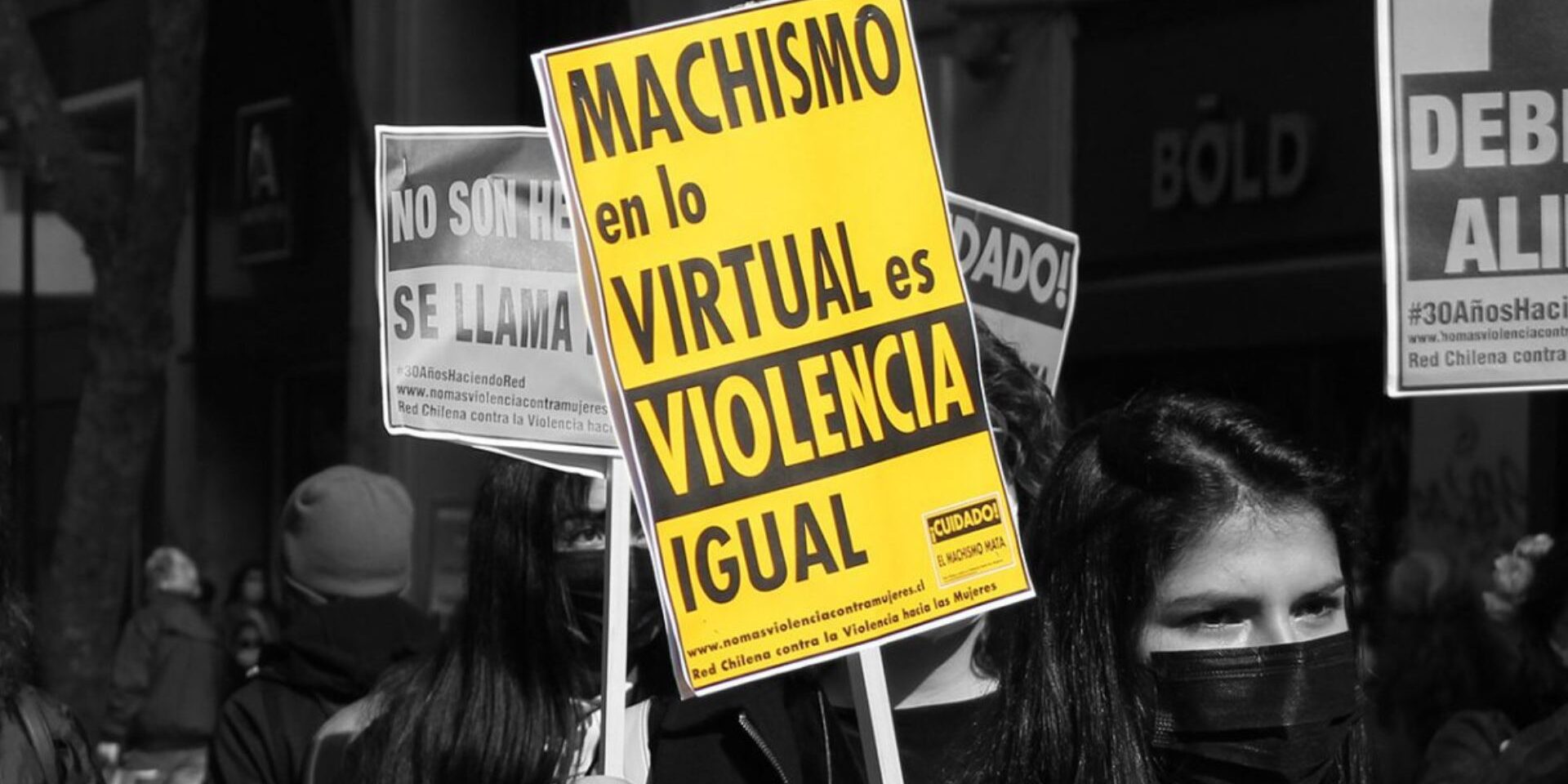
Digital gender-based violence is real. It has an impact on the physical environment and vice versa, and recognizing this is crucial for our human rights.


Share

Digital gender violence exists and seriously affects women and LGBTI+ people.
Faced with limited effective responses from governments and technology platforms, civil society organizations in Bolivia, Ecuador, and Brazil are developing strategies to combat this type of digital gender-based violence. They are doing so through helplines that provide support and seek non-punitive alternatives for reporting such violence.
The organization Derechos Digitales coordinated the report “Helplines for cases of digital gender violence ” It focuses on the work carried out in Bolivia, Ecuador, and Brazil by the organizations Fundación Internet, Taller de Comunicación Mujer, and Marialab, respectively.
“Digital gender-based violence is real. It has an impact on the physical environment and vice versa, and recognizing this is very important because it has many effects on our human rights in general. There are repercussions on our right to freedom of expression, our access to information, our right to privacy, and even our sexual and reproductive rights. For this reason, a comprehensive approach is necessary. Digital violence is no different from the violence we experience in non-digital spaces. It also creates much more unequal environments in the exercise of human rights for communities that have been historically vulnerable,” commented Mayra Osorio, coordinator of methodologies and project evaluation at the organization Derechos Digitales (Digital Rights), in an interview.
Two regional trends: lack of official records and weak legal frameworks
This report focuses on how gender-based violence in digital environments affects women and gender non-conforming individuals. Mayra explains that “it is thanks to helplines that we can learn how this violence is affecting these populations.”
She adds: “We are concerned that public institutions not only fail to collect information on who is affected, but they also fail to collect information on the problem itself. This baseline information for diagnosing, addressing, and preventing these forms of gender-based violence simply doesn't exist. Furthermore, there is a gap in the legal framework. This contributes to the lack of information about forms of gender-based violence in digital environments, as well as the mechanisms for reporting and protecting oneself. But it is important to remember that collecting this data must be done without revictimizing anyone.”
The Internet Foundation Bolivia emphasizes in its report that “there is a lack of official statistical records representing the number of cases, the types of violence experienced, and the profiles of victims and perpetrators. As a result, there is an incomplete understanding of gender-based violence facilitated by digital technologies in Latin American countries, which limits the creation of programs, projects, and public policies aimed at combating this problem.”
Another trend that worries organizations is the punitive and even criminalizing view of digital use proposed by states. "Far from protecting historically vulnerable population groups, it puts them in a precarious position."
In the case of Bolivia, a particular situation arises where the government uses the argument of “protecting public morality” to justify its punitive approach against women and LGBTI+ people who express their sexuality. “These laws limit the enjoyment of sexuality. Some ignore factors such as consent and criminalize acts that, according to morality, are considered inappropriate or indecent,” the report explains.
Another important point that organizations in these countries detected is the lack of effective reporting mechanisms with a gender perspective.
The value of helplines and the challenges
Helplines not only support people experiencing gender-based violence in digital environments, but also educate people on how to identify such violence. They provide digital safety tools, emotional support, and legal advice to access justice and redress.
“Helplines don’t just provide support once violence has occurred. They also offer support before and after, focusing on digital safety. The risks of experiencing this type of violence will always be there, but what helps us is being as prepared as possible to know how to minimize its impact,” says Mayra Osorio.
The report highlights that one of the challenges of helplines is that they lack the necessary institutional support and recognition to develop comprehensive support.
Some digital protection and self-care tools
- No one can force you to send personal information, videos, or intimate photos.
- No one can force you to reveal your social media passwords.
- Back up the information stored on your cell phone
- Generates long passwords with uppercase letters, lowercase letters, and numbers
- Apply two-step verification to all your accounts
- Review your social media privacy settings
- Do not make personal information such as cell phone number, home address, school or work address public.
- If you have suffered any type of digital gender violence, try to document everything by taking screenshots, including links, and save it in a safe place.
Helpline contacts
Bolivia, SOS Digital Center : To receive assistance, call +591 62342430. Women, adolescents, and LGBTI+ people can request guidance and support.
Brazil, Maria d'Ajuda: Applications are received via email at sos@mariadajuda.org and are answered within 2 days.
It is a free service that offers emergency assistance in cases of digital and non-digital threats with priority attention to women, gender dissidents and human rights organizations.
Ecuador, Navigating Freely on the Net : There are several ways to contact them, they mainly serve women, LGBTI+ people, children and adolescents, and human rights and territory defenders.
Contact form on the website navegandolibres.org
Signal: +593 98 920 0476
Telegram: @NavegandoLibres +593 98 920 0476
WhatsApp: +593 98 920 0476
E-mail: reportviolencia @navegandolibres.org
We are present
We are committed to journalism that delves into the territories and conducts thorough investigations, combined with new technologies and narrative formats. We want the protagonists, their stories, and their struggles to be present.
SUPPORT US

FOLLOW US
Related notes



We are present
This and other stories are not usually on the media agenda. Together we can bring them to light.