

How the Milei government's measures affect freedom of expression, which is in decline
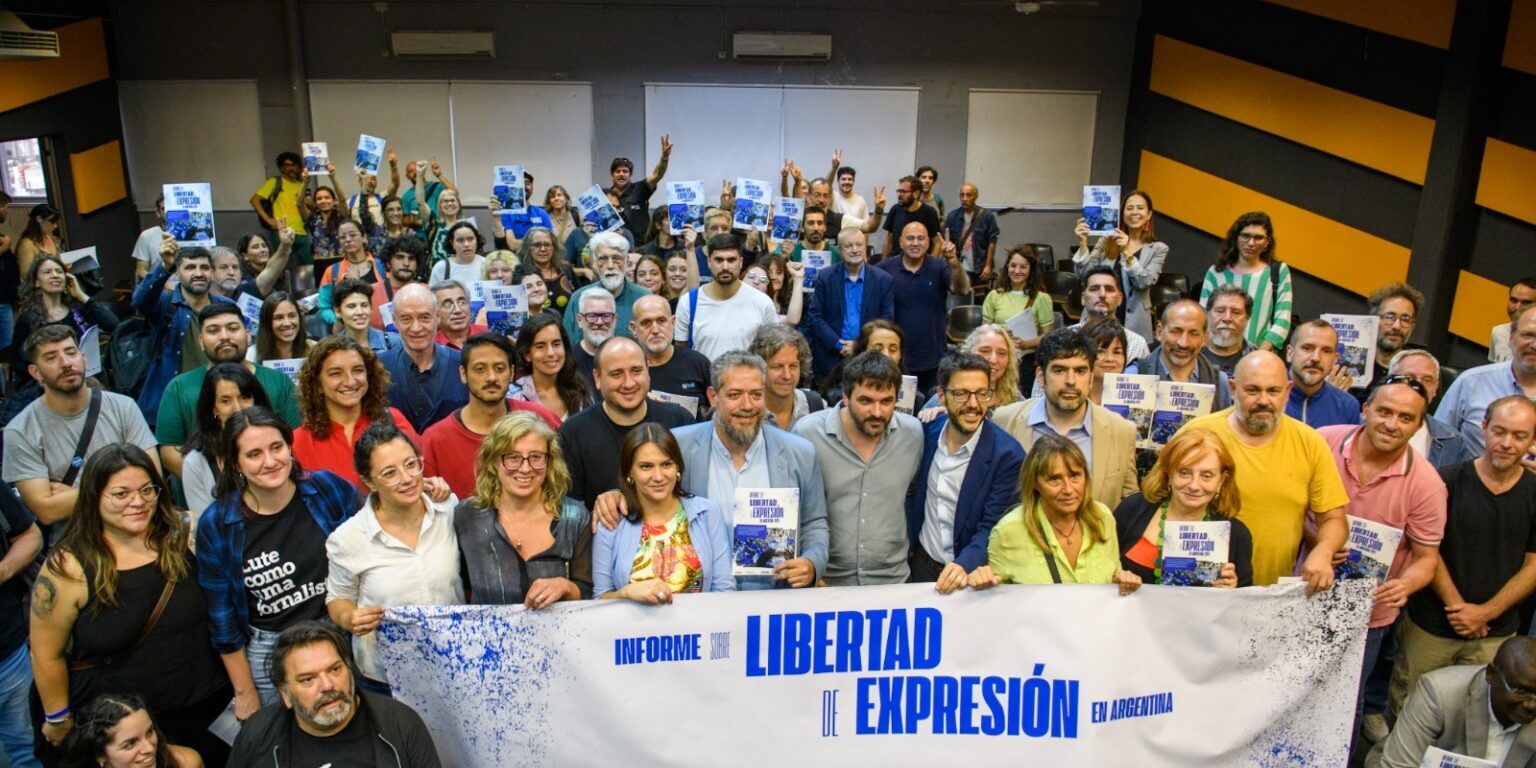
A report by the Federation of Press Workers (FATPREN), the Buenos Aires Press Union (SiPreBA) and the Communication Sciences Department of the UBA records and analyzes the attacks on freedom of expression in the Milei government.


Share

From day one, Javier Milei's government decided that communication would be a key battleground in a "cultural war." The struggle over the meaning of the concepts of freedom and the state is a crucial part of this battle. The government's attempts to dismantle public media and communication and cultural policies and organizations, as well as its persecution and attacks on journalists and anyone who expresses a viewpoint different from the official one, have been constant tactics. This is according to the report "Freedom of Expression in Argentina 2024 ," prepared by the Federation of Press Workers (FATPREN), the Buenos Aires Press Union (SiPreBA), and the Communication Sciences Department of the University of Buenos Aires. Freedom of expression is being widely affected and attacked, with measures aimed at restricting it from various quarters, such as those announced this week.
On the first anniversary of the libertarian government—December 10, International Human Rights Day two decrees in the Official Gazette . A third measure, which workers denounce, aims to dismantle the Ombudsman for the Public , a crucial body for defending and protecting audiences and the exercise of the right to communication . All of this is happening within the context of a year marked by attacks on journalists, the reduced presence of women and LGBTQ+ people in the media, and the elimination of policies supporting community and Indigenous media.
Why is the decree against educational “indoctrination” worrying?
Javier Milei amended the Comprehensive Protection of the Rights of Children and Adolescents Act to prohibit what he considers indoctrination in education. “The imposition of a partisan political way of thinking and/or acting, especially in the educational sphere, violates the right to dignity and personal integrity of children and adolescents, constituting treatment that affects their personal integrity,” states Decree 1086/2024 .
The measure implies, among many other things, a risk to the teaching of Comprehensive Sexuality Education (CSE) and could become a way to criminalize those who think differently, warned teachers and activists.
“ The government is using moral panic and the supposed protection of children as an excuse to leave avenues open for persecuting groups that are not aligned with it,” analyzes Ricardo Vallarino, president of 100% Diversity and Rights . This approach could also be used to attack Comprehensive Sexuality Education (CSE), in line with the systematic attack on the false “gender ideology” promoted by the radical right, activists and teachers warned.
Mau Vila is an actor, teacher, and puppeteer. He was born in 1993 in Corrientes, Argentina, into a context where the content he saw on television, in film, in literature, and at school “was purely and exclusively heterosexual.” In his words, this didn't “heterosexualize” him, but it did cause him to develop negative feelings about himself. Therefore, for Mau, images, discourses, and representations that depict diversity, far from being “indoctrination,” are vital for the development of LGBTQ+ children.
“The fact that there is diverse content means that people who identify with it can find a refuge. And those who don't identify with it can know that others exist and develop a simple sense of empathy,” she commented.
Another measure published the same day points in the same direction of restricting the right to free expression, albeit with different pretexts. Decree 1084/2024 prohibits displaying, placing, or disseminating partisan messages and messages promoting the cult of political figures in spaces belonging to the national government.
Freedom of expression and the deterioration of public debate
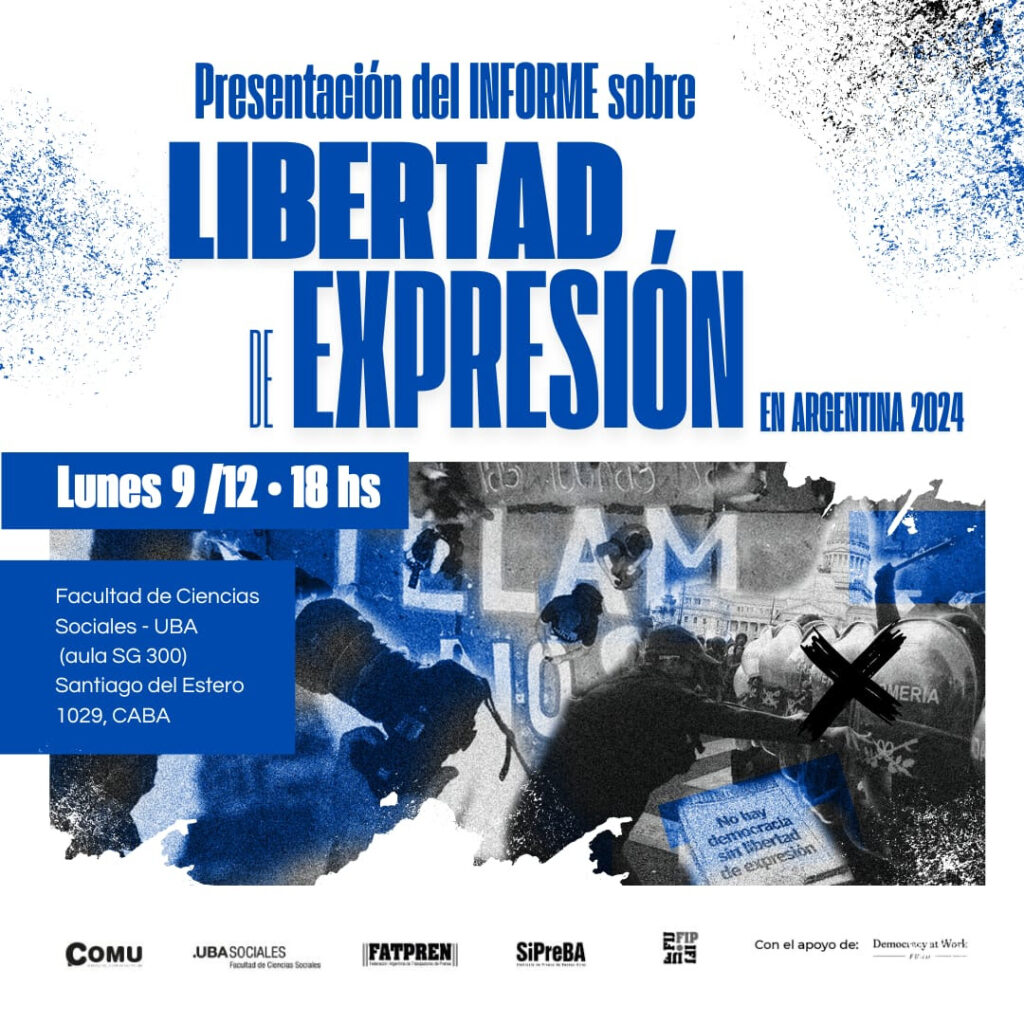
The aforementioned Report on Freedom of Expression was presented on December 9th at the Faculty of Social Sciences (FSOC), one day before the Milei government announced its new measures against indoctrination. When consulted for this article, the Vice Dean of FSOC, Diego de Charras , stated: “Decree 1086/24 constitutes a new attempt by the government to homogenize public discourse, generating an effect of silencing and self-censorship.”
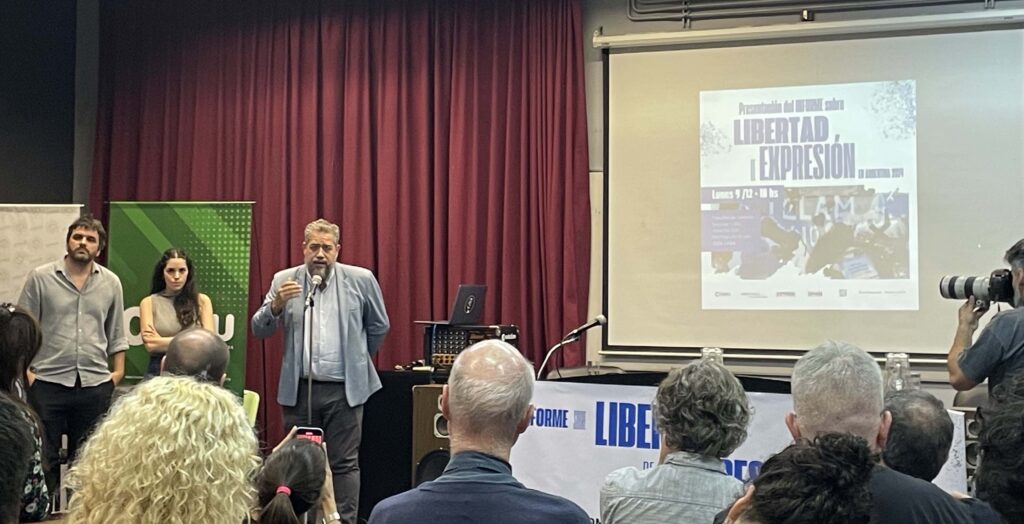
For him, it is “a message that has more symbolic weight than practical application. However, these types of measures, along with the repression of social protest, judicial persecution, and online harassment of anyone who expresses a viewpoint different from that of the ruling party, have generated a growing deterioration of public debate in our country over the past year .”
“The attack on freedom of expression under Milei’s government is one of the worst since the return to democracy. The ruling party wants to silence voices that question its narrative with aggression, repression, and troll patrols, while bombarding public opinion with disinformation, fake news, and hate speech,” Carla Gaudensi, general secretary of FATPREN, told Presentes.
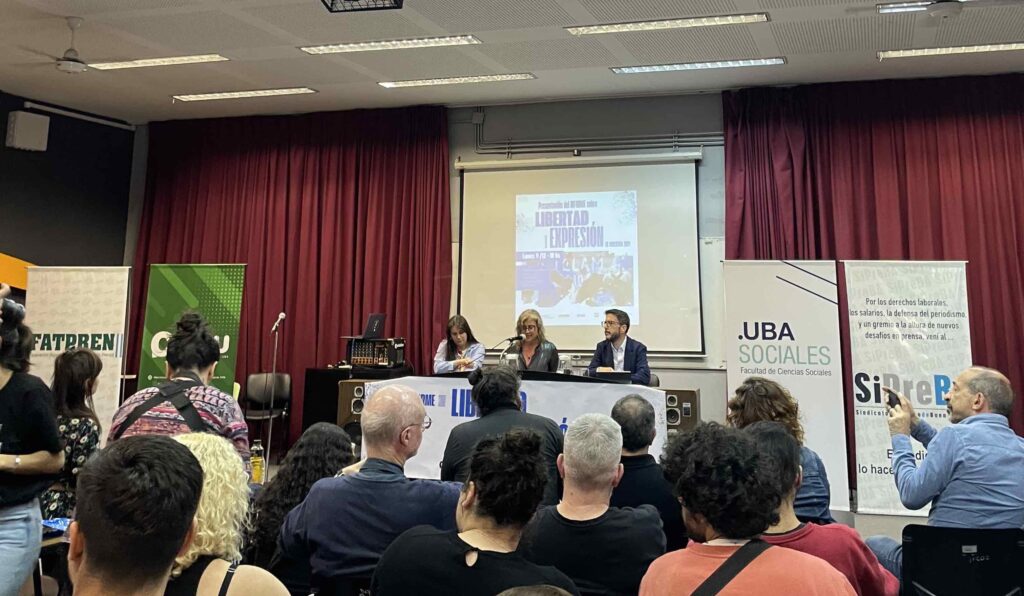
From left to right: Carla Gaudensi (FATPREN), Larisa Kejval (Director of the Communication Program) and Luis Lozano (Report Production and Writing)
The report, endorsed by the International Federation of Journalists (IFJ), meticulously documents the restrictions on freedom of expression in 2024. It details cases of journalists and individuals attacked by government officials, the president himself, or government supporters, not only on social media but also in public spaces. It also records the assaults and arrests suffered by photojournalists during protest demonstrations.
The investigation draws on the report “ Cyberbullying of Women Journalists: Technocensorship ,” presented by Argentinian Women Journalists in September. The report found that 80% of the women journalists surveyed feel inhibited from speaking out on social media for fear of harassment and attacks, and feared or still fear for their physical safety.
The observed tactics against them were cyberbullying and doxing. This is a coercive strategy that involves the dissemination of personal information or private documents with the aim of harming an individual or group.
Fewer voices of women and diverse people
The report on Freedom of Expression also noted a “notable weakening of the voices of women and gender and sexual minorities in the media, with particular emphasis on streaming media.” This was exacerbated by obstacles to the implementation of the Law on Gender Equity in Media Services in Argentina , as well as by the national government's ban on the use of various forms of non-sexist language.
In its report on Milei's first year in office, Amnesty International also highlighted freedom of expression as one of the areas affected. “Hostility toward journalists, the use of confrontational rhetoric, and disinformation have created a climate of intimidation and censorship, seriously impacting democratic debate. A special section addresses the impact of digital violence on women journalists .”
The same report highlights the setbacks in the rights of women and LGBTQ+ people, among other areas affected by the measures implemented during Milei's first year in office. "A setback has been reported in policies on gender equality, reproductive rights, and protection against violence towards women and LGBTQ+ people," Amnesty International stated.
Communication policies also had a significant impact on community, cooperative, and Indigenous media. The government moved forward with the intervention of the National Communications Agency (ENACOM) and ordered the closure of all its provincial offices. Furthermore, it deactivated the Competitive Fund for Audiovisual Media (FOMECA), the only existing funding program for the sector.
In turn, the Executive Branch suspended official advertising spending. This measure impacts the sustainability of many media outlets, as well as affecting the Argentine population's right to communication. Meanwhile, Decree of Necessity and Urgency (DNU) 70/23 eliminated, among other things, the limits on the concentration of audiovisual media ownership at the national level that were established by Law 26522.
It also reports on the defunding of the National Institute of Cinema and Audiovisual Arts (INCAA), which suffered a 40% reduction in its staff, and the reduction of the right to strike by considering telecommunications services "essential".
The Ombudsman's Office on alert
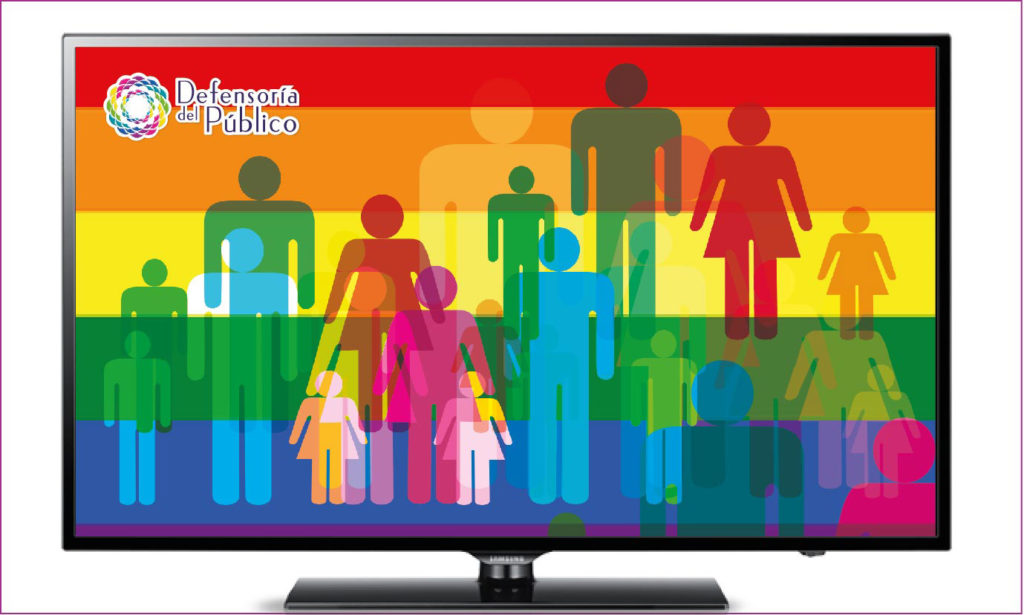
The report on Freedom of Expression mentions the intervention in and dismantling of the national public media system, and the threat of dissolution of the Ombudsman's Office. On December 10, the staff were placed on leave for one year , as published in the Official Gazette.
The Ombudsman's Office is overseen by a bicameral, multi-party commission. It is not under the direct control of the legislative chambers. However, a reform process to its statutes has been initiated without following proper procedures. “There is an appointed administrator who lacks the authority to do so. These measures are regressive for the agency and disregard collective bargaining agreements. The transfer to inactive status is a prelude to dismissal without cause, because, being under the Executive branch, employees cannot be transferred to another agency. They want to dismantle the Ombudsman's Office,” union sources from ATE told Presentes.
“The organization is paralyzed. We have no work to do today. They tried to fire union representatives. After much effort, we managed to get them to accept the validity of the disability quotas, the trans quota, and union protection. We are in permanent assembly. Villarruel and Menem appointed the administrator, and they have no authority to do so,” they explained.
Unity of communication, culture and education workers
“Workers in the press, communication, culture, and education must unite and organize ourselves, as we did at the recent Federal Congress of Communication and Culture, to denounce this situation and build a program with proposed solutions,” Gaudensi emphasized.
Policies of prohibition , censorship, and silencing by the national government don't always have the intended effects. “With books like Cometierra (by Dolores Reyes), the prohibitive intent had the opposite effect, and sales skyrocketed. Similarly, the Buenos Aires City government's ban on the use of inclusive language in schools couldn't be effectively implemented in all institutions. Beyond the regulations, organized communities exist,” shared Quimey Ramos, a trans activist and teacher.
As a result of the criticism received by the province of Buenos Aires for its reading plan for secondary school students , which includes books such as Cometierra or Las aventuras de la China Iron , the reading of these texts became massive.
“One way to respond to these attacks is by strengthening community and solidarity,” says Ramos. “We must practice the ability to disagree and recognize ourselves in our differing perspectives, without that hindering our capacity to act together. There is no way to overcome this situation by staying in our homes, resigned to protecting ourselves individually.”
We are present
We are committed to journalism that delves into the territories and conducts thorough investigations, combined with new technologies and narrative formats. We want the protagonists, their stories, and their struggles to be present.
SUPPORT US

FOLLOW US
Related notes



We are present
This and other stories are not usually on the media agenda. Together we can bring them to light.