

Sofía Fernández: a plea for justice 20 months after her transphobic murder in a police station
With a demonstration in front of the Buenos Aires Province House, activists denounce irregularities in the investigation of the transfemicide of Sofía Fernández in a police station in Derqui (Pilar).


Share

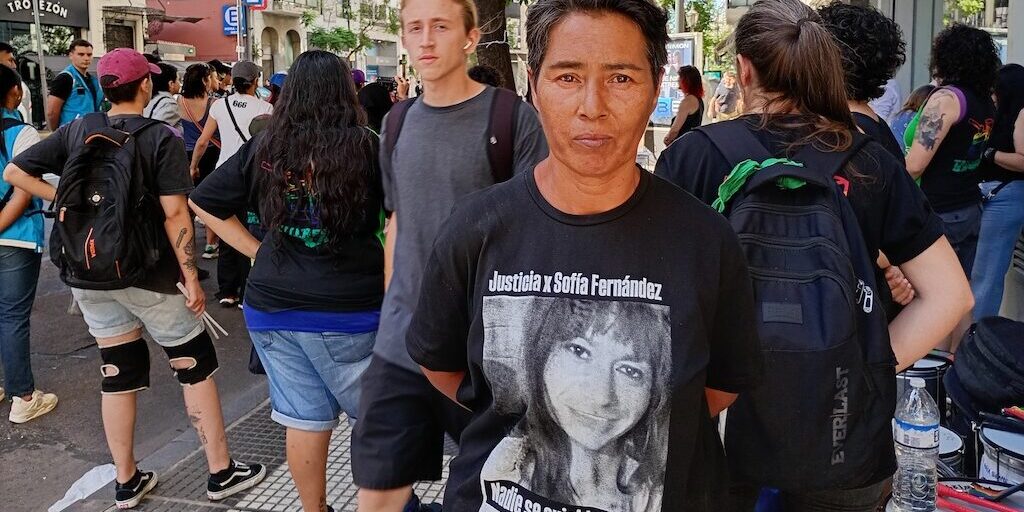
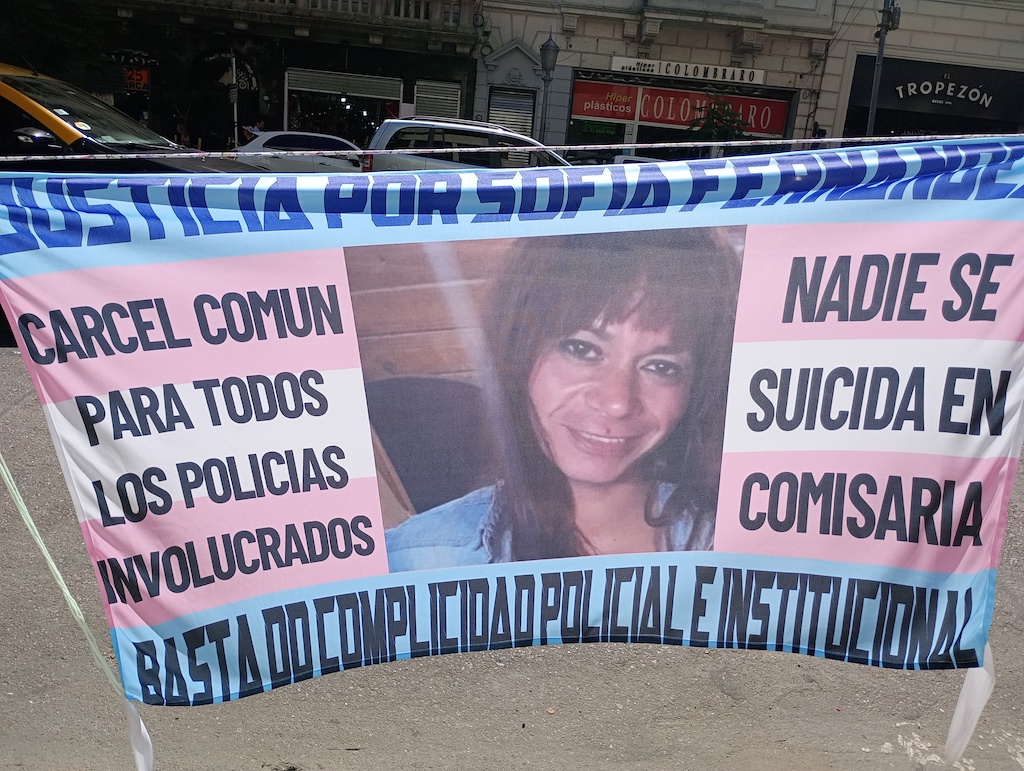
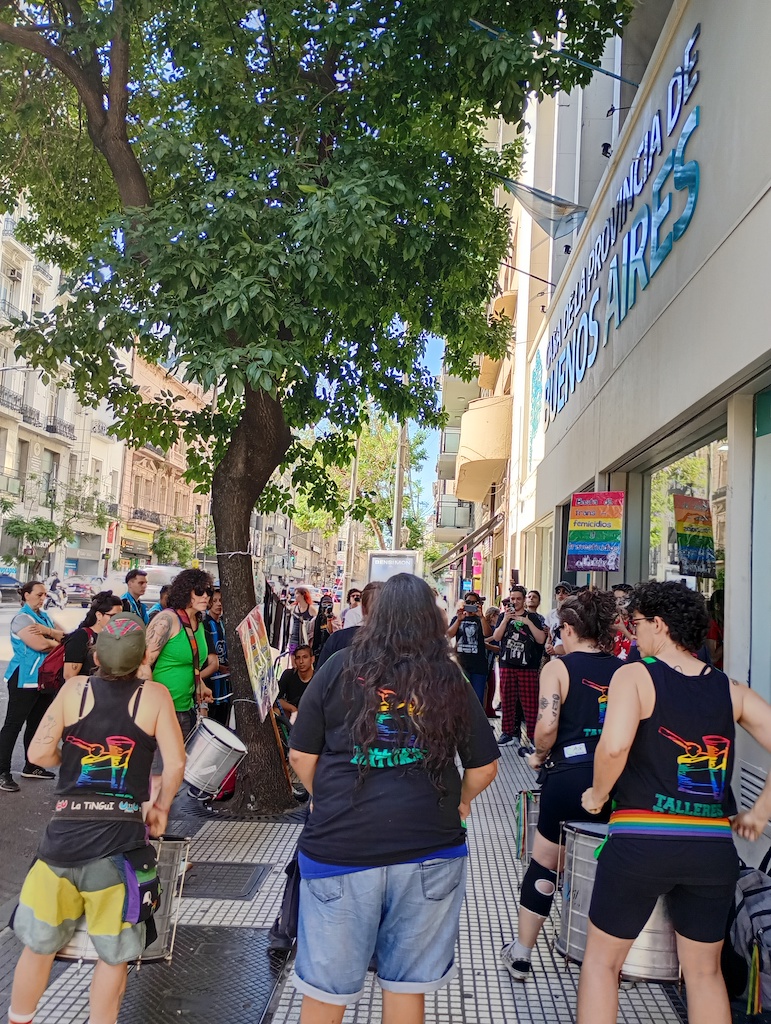
BUENOS AIRES, Argentina. “No one commits suicide in a police station,” reads a sign in front of the Buenos Aires Province House in the City of Buenos Aires. It was posted on Tuesday, December 10, Human Rights Day, at a demonstration organized to demand justice for the death of Sofía Fernández. The trans woman died in the Derqui police station in Pilar (Buenos Aires Province) between April 8 and 10, 2023. Twenty months have passed, and her family continues to demand justice to find out what happened.
Mabel Valdez is Sofía's sister and the main driving force behind the request for an investigation, supported by trans-feminist activists and human rights organizations. " We've come to submit a petition to the provincial government asking them to exclude the expert witnesses from both the Federal Police and the Buenos Aires Provincial Police ," she explained. She also detailed that there are other experts familiar with the case, but so far Judge Walter Saettone, in charge of the case, has not summoned them. This Thursday, the only person detained, Assistant Officer Carlos Rodríguez, will testify, and the plaintiffs will not be allowed to be present.
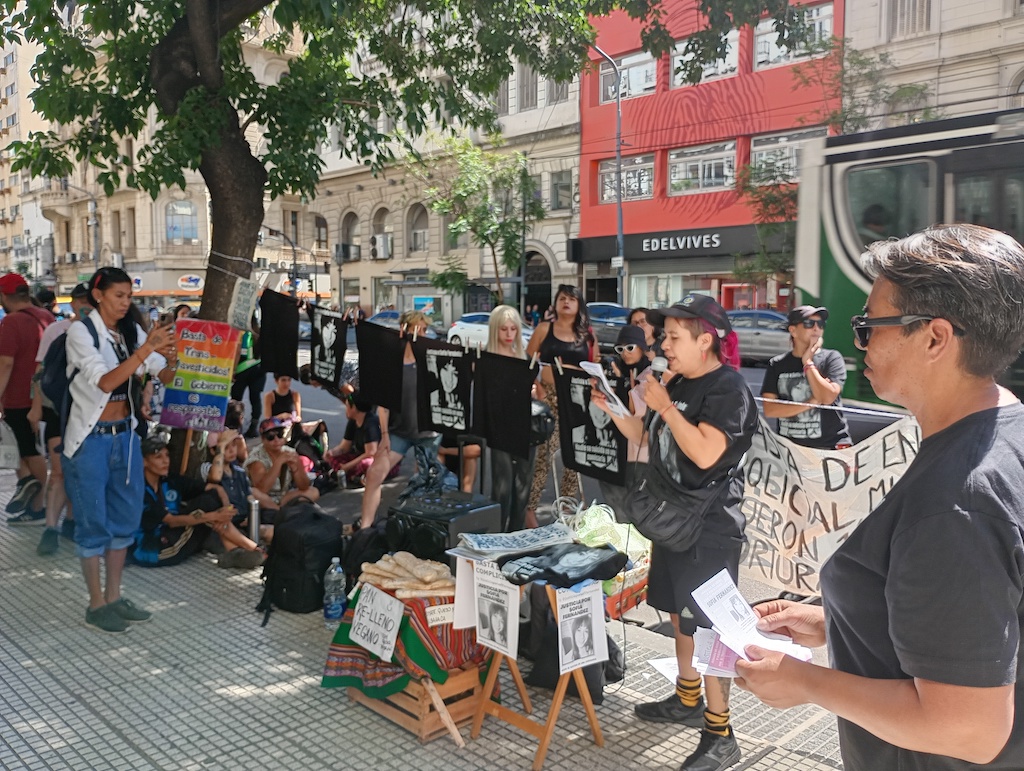
The demonstration took place Tuesday afternoon in front of the Buenos Aires Province House in the San Nicolás neighborhood of Buenos Aires. There was an open mic, and LGBT activists and urban musicians, such as Karen Pastrana, participated . Officers from the Buenos Aires City Police were present and filmed the entire event.
Sofía Fernández was a 39-year-old trans woman living in Pilar, a town in Buenos Aires province. She was a Language and Literature teacher, but was only able to work for a short time due to discrimination. She had begun her gender transition a year earlier and was in the process of legally changing her documents. She had been unable to access the trans job quota, a public policy the national government is trying to dismantle. She wanted to be a nurse.
“She liked to go out with her friends, work, read, listen to music and dance, play with the dogs,” described the Justice for Sofi Fernández in a pamphlet that Mabel offered to every passerby who went along Callao Avenue.
What happened to Sofia?
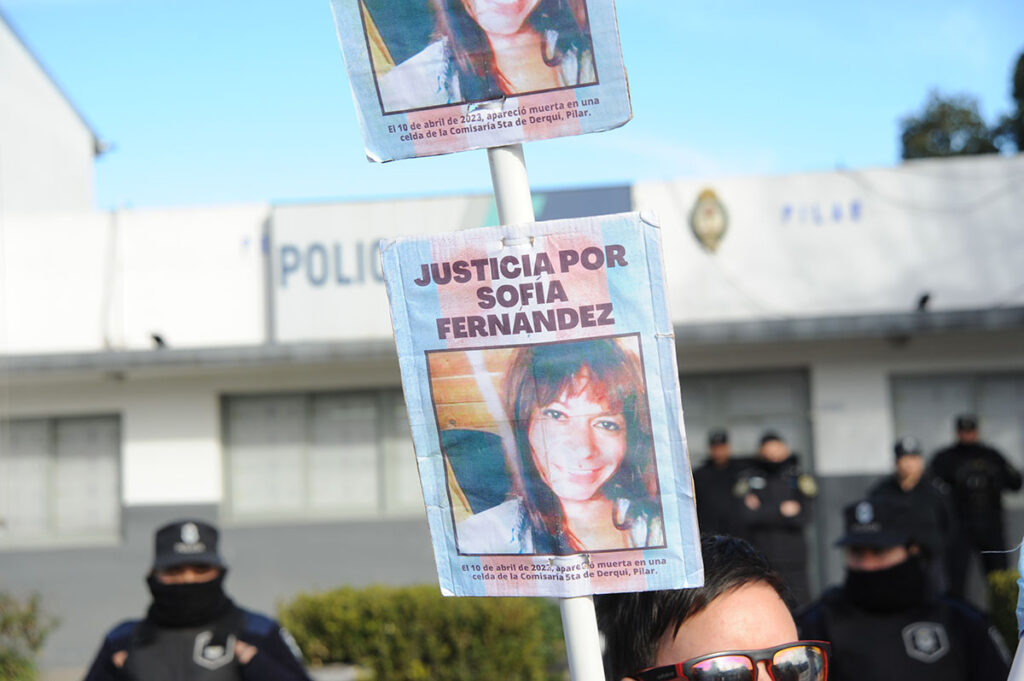
On April 8, 2023, Sofía was detained by municipal personnel for reasons that remain unknown and taken to the 5th Police Station in Derqui, Pilar district. According to a municipal officer who witnessed the incident, she begged them not to take her because “they were going to kill her.” Two days later, her family was notified of Sofía's death. Initially, it was reported as a suicide, then that she had suffered a medical emergency. However, the autopsy revealed clear signs of torture and a violent death inflicted by at least three people.
“Sofía’s case is yet another example of abuses and institutional violence. While there are those directly responsible, such as the police officers, the provincial government also covers up and helps the police get away with it,” said Laura Carboni, Secretary of Gender and Sexual Diversity for the University of Buenos Aires Teachers' Union, who was present at the demonstration. Also present were the organizations Las Rojas and the 1969 Collective of the Workers' Party, as well as independent activists.
Raquel Disenfeld, a psychologist, feminist leader, and long-time anarchist, joined the protest. “ It’s necessary to denounce, but also to build . Justice begins from the ground up. As we build and stop all these abuses, we also stop the lack of humanity. This is a moment for us to create and unite,” she said as she took the microphone.
The protesters highlighted the situation the country is facing regarding human rights violations. A reality marked by “the hostility of a government that is attacking all the rights won over the years by the LGBTQ+ community. With increasingly hateful rhetoric and provocation from governing institutions, the closure of INADI (National Institute Against Discrimination, Xenophobia and Racism), the Ministry of Women and Gender, and its refusal to allocate resources to reduce gender-based violence in the country,” described the group demanding justice for Sofía.
What is the status of the case today?
The plaintiffs, represented by Ignacio Fernández Camillo, requested the recusal of Judge Walter Saettone for conducting an investigation without a gender perspective and for removing the aggravating circumstance of hate based on gender identity. It was also the judge's decision to release nine of the ten police officers who allegedly participated in the crime, either directly or by covering it up.
The objection to the experts proposed by the defense is also pending resolution. According to the plaintiffs, they are all officials of the Buenos Aires Province Ministry of Security. “Just as their participation as official experts is prohibited, their participation as expert witnesses for the defense should also be restricted. The province itself is paying for their services,” Mabel told Presentes.
In October, a visual inspection and perimeter survey were conducted at the 5th police station in Derqui, and numerous traces were found that had not been recorded at the beginning of the investigation. This is one of the irregularities denounced by Sofía's family. Another is the defense's request to add psychiatrist Ana Spinetti as an expert witness to investigate Sofía. "They want to judge Sofi's mental health to claim she committed suicide," Mabel explained to Presentes. This expert was also called upon in the Daiana Abregú case and in the case of the attack against Cristina Fernández de Kirchner.
The investigation was led by a team of prosecutors consisting of Esteban Álvarez, prosecutor for illicit drug investigations in San Isidro; Manuel Cayuela, from the gender area; and the assistant prosecutor also specialized in the subject, Victoria Santamaría.
So far, all the requests made by the plaintiffs have been rejected: protective measures for Mabel and her family, a change in the charges to include the motivation of hatred based on gender identity, a request to recuse the judge, and the exclusion of official police experts. Furthermore, Sofía's close circle is not receiving psychological support provided by the state, her family reported. “It was a hate crime. It was the police,” was the resounding demand throughout the day.
We are present
We are committed to journalism that delves into the territories and conducts thorough investigations, combined with new technologies and narrative formats. We want the protagonists, their stories, and their struggles to be present.
SUPPORT US

FOLLOW US
Related notes


We are present
This and other stories are not usually on the media agenda. Together we can bring them to light.