

Triple lesbian murder: why they are asking to remove the judge investigating the case
The sole survivor of the triple lesbian murder in Barracas is requesting the recusal of the judge in the case. She alleges revictimization and irregularities in the investigation.


Share

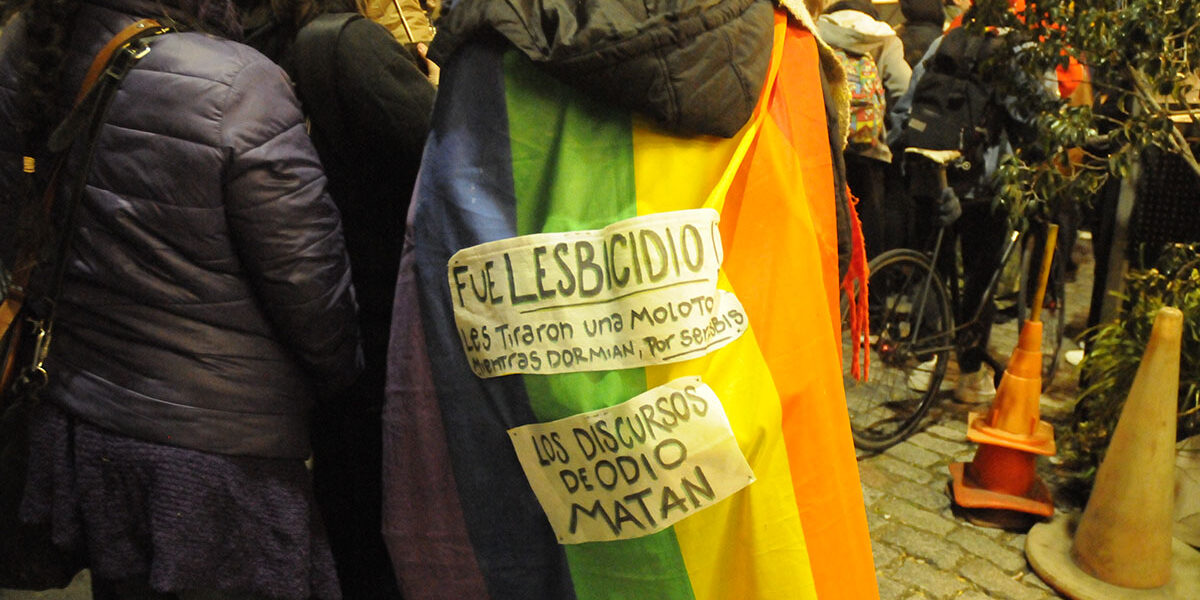
BUENOS AIRES, Argentina. The legal team representing Sofía Riglos Castro, a survivor of the triple lesbian murder in Barracas , has requested the recusal of Judge Edmundo Rabbione, who is presiding over the case. The request was made public a week before the seven-month anniversary of the brutal attack against Pamela Cobbas, Roxana Figueroa, Andrea Amarante, and Riglos Castro.
The lawsuit is based on the constant revictimization of Sofía during the legal process and the failure to exercise due diligence. The statement released by the legal team representing her—signed by Luli Sánchez and the Yo no fui collective—also highlights that, despite recommendations from the National Criminal and Correctional Appeals Court No. 7, the judge failed to apply a gender perspective and dismissed the claim of violence against lesbians. He also failed to carry out the investigative measures requested by Sofía and other plaintiffs.
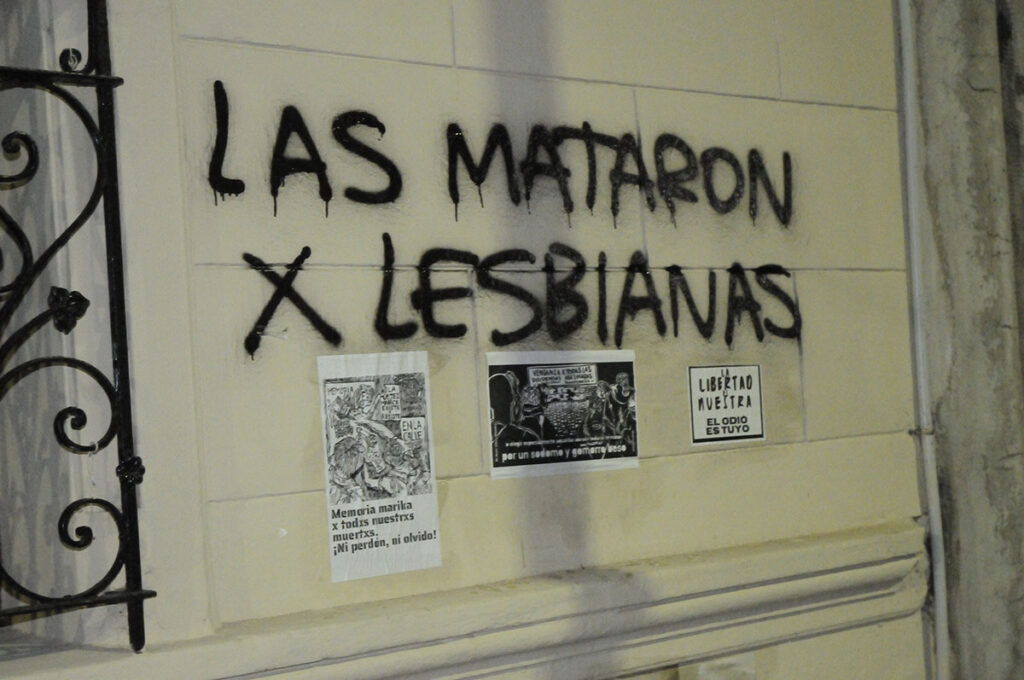
Photo: Ariel Gutraich.
The request from the same justice system to the judge
Two judges from Chamber 7 of the National Court of Appeals asked Judge Rabbione to address the case with a gender perspective, but their request was ignored. One of them is Judge Esteban Cicciaro, who emphasized the State's obligation to exercise due diligence in cases such as the one before the Court. Judge Ricardo Matías Pinto, for his part, recalled that in Argentina, "the State is bound by the obligation of due diligence assumed under the Convention on the Elimination of All Forms of Discrimination against Women (CEDAW), the Inter-American Convention on the Prevention, Punishment, and Eradication of Violence against Women (Belém do Pará Convention), and the Comprehensive Protection Law for Women (No. 26,485)."
Pinto states that the investigation should be examined "with a gender perspective, in accordance with the commitments made by our country to prevent, punish, and eradicate violence against women." In her request, she argues that "effective legal procedures" must be guaranteed. This implies "the application of due diligence by state bodies to investigate and prosecute these incidents with the utmost effort." However, these guidelines were not taken into account by the judge.
How to revictimize
Among the irregularities alleged in the lawsuit, they state that the judge "facilitated the dispossession of Sofía's belongings." While the victims were hospitalized, he handed over their belongings to the hotel's neighbors .
“As a result, the documents, phones, and mementos that had been salvaged from the fire and water were thrown away, and the victims’ cell phones were stolen,” the complaint states. This added to the suffering and deepened the traumatic situation Sofía had experienced.
Furthermore, they emphasize that despite the evidence presented of the romantic relationship and cohabitation with Andrea, the judge disregarded Sofía's rights as her partner. In doing so, he prevented her from acting as a plaintiff and representing Amarante as well. In this regard, the recusal motion highlights the absence of Andrea's family members in the criminal proceedings. By not recognizing her as her partner, the judge prevents Sofía from representing the interests of both of them in the trial.
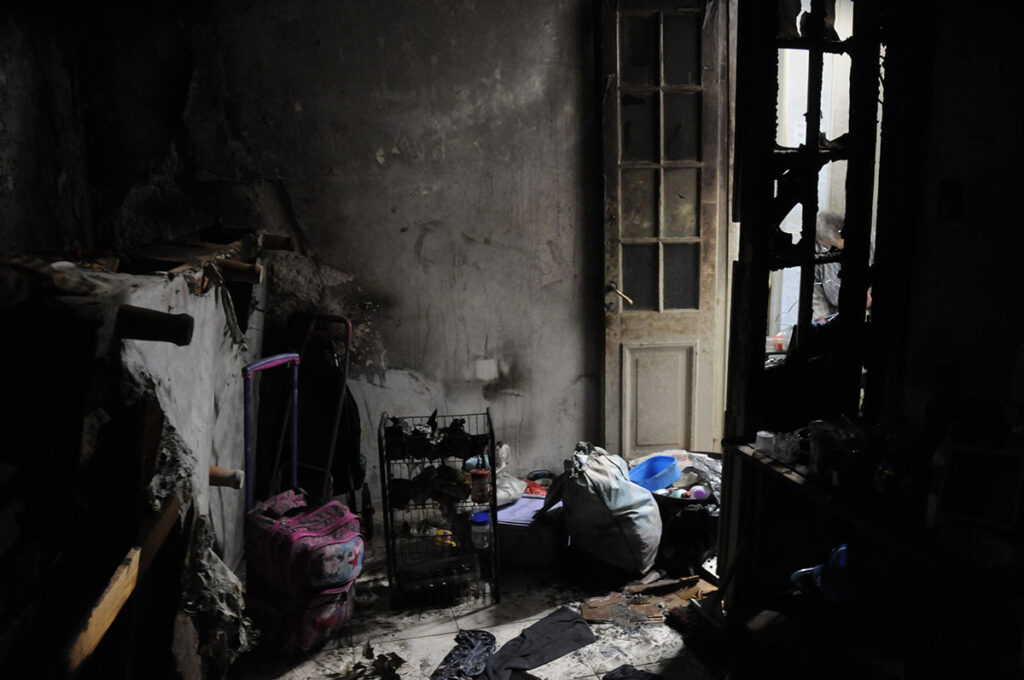
Photo: Ariel Gutraich.
Violence for being lesbians
During the legal proceedings, Sofía Riglos Castro also provided evidence of having suffered verbal, physical, and sexual violence because she is a lesbian. She proved that the various complaints and claims regarding these attacks were dismissed. She detailed that these attacks stemmed from her lesbian cohabitation when they used common spaces.
“The judge is ignoring the interests and rights of Sofía Castro Riglos as a survivor, violating the victims' rights law 27.372. He wants to deprive her of the right to fully participate in the process and to be assisted by specialized teams, and he did not summon the Prosecutor's Unit for the Investigation of Femicides (UFEM) or the Directorate of Guidance to Victims (DOVIC),” the presentation reads.
Without protocols on gender-based violence
The “lack of due diligence,” which is crucial in investigations of gender-based violence cases, is another reason for the recusal. “The judge did not implement the appropriate protocols for investigating femicides. He did not preserve the crime scene for subsequent investigations and failed to take basic precautions for any homicide,” the statement alleges.
The plaintiffs explain that this decision affected the possibility of carrying out subsequent investigative measures. “There are no videos of the scene, the sketches are incomplete and not to scale. The victims' cell phones and clothing were not preserved for forensic analysis,” the plaintiffs state. They further point out that Barrientos's clothing was not seized at the time of the attack, nor was a sample taken from his hands to determine the presence of fuel. There was no search of the room to determine the presence of fuel, cell phones, or other items of interest. Currently, another person lives there, and the whereabouts of the assailant's belongings are unknown.
Seven months after the attack, the judge refused to take statements from the neighbors who said the attack on the women was because they were lesbians. “This is prejudging the case, because it dismisses the possibility that it was a lesbian murder before taking any investigative steps, and when there is evidence, it ignores it,” the statement reads.
Irregularities in the investigation
Among other irregularities, they detail that although the police identified potentially useful security cameras in the hotel, the judge did not seize them. When Sofía requested the footage, he claimed it had been lost over time. Furthermore, the 911 calls from that day, as well as those from previous attacks months earlier, were not analyzed.
Adding to this situation, the statement alleges, the judge did not compare the blood found in the hotel bathrooms with that of the assailant or the victims. Nor did he conduct DNA testing on the bodies of the deceased victims.
“From the beginning of the case and during the 6 months of investigation, the omissions in due process express Judge Rabbione's tendency not to apply the constitutional and conventional criteria regarding judging with a gender perspective and a differentiated approach based on the perceived sexual orientation of the victims, to the detriment of a thorough criminal investigation as a dimension of Sofia's right to judicial protection and access to justice.”.
It was a hate crime
Sofía Castro Riglos is the sole survivor of the attack perpetrated by Justo Fernando Barrientos. She was attacked in the same room where her partner, Andrea Amarante, and Roxana and Pamela were staying. During the early morning hours of May 6, the perpetrator set fire to the room, and three of the women died in the attack. Sofía survived, but suffered severe injuries.
According to their complaint, throughout the six months of the investigation, there was “constant suspicion, dispossession, and a lack of recognition from the judge regarding her, her identity, and her connection to Andrea and the lesbian community she formed with Pamela and Roxana,” they state. “The process, which should be restorative for the sole survivor of this atrocious lesbicide, is causing her even more harm,” they add. Furthermore, the victim and plaintiff fears that Barrientos will be released due to the lack of investigation.
On Wednesday, November 6, six months after the attack, a plaque was installed and a festival was held to honor Pamela, Roxana, and Andrea.
We are present
We are committed to journalism that delves into the territories and conducts thorough investigations, combined with new technologies and narrative formats. We want the protagonists, their stories, and their struggles to be present.
SUPPORT US

FOLLOW US
Related notes


We are present
This and other stories are not usually on the media agenda. Together we can bring them to light.