

Bolivia: First online survey reveals significant exclusion of LGBTI+ people
The survey, conducted by the Ombudsman's Office, shows that access to health, education, employment, and housing is not guaranteed.


Share

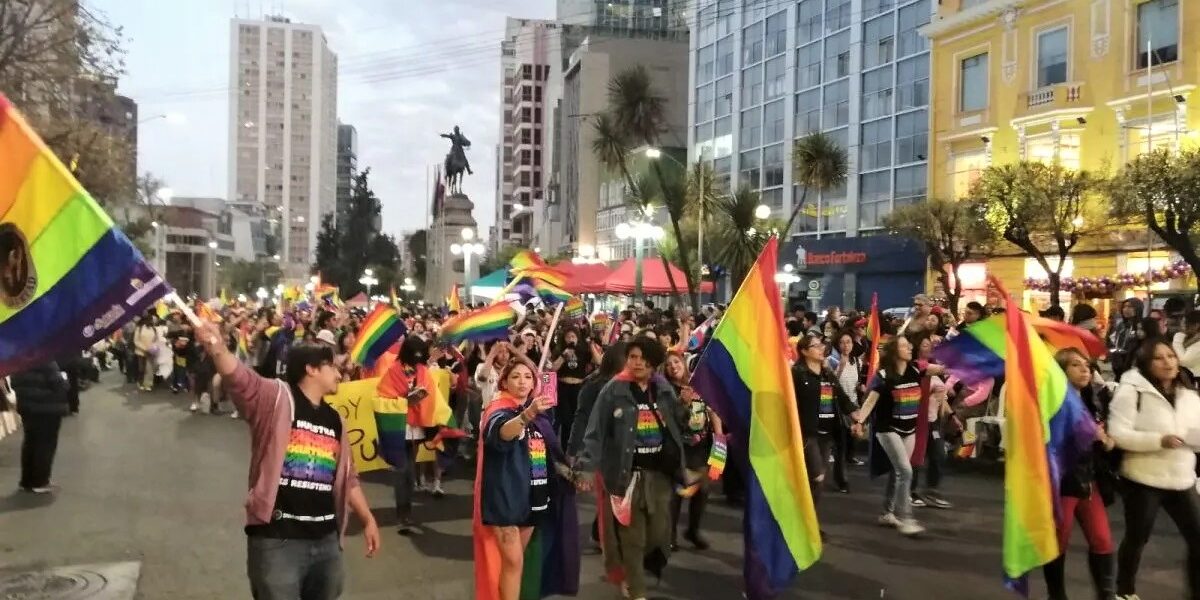
Equality before the law is a fundamental pillar of any democratic and just society. However, for many people with diverse sexual orientations and gender identities in Bolivia, this ideal remains a distant promise. Despite some legal and social progress, inequalities persist in key areas. Access to health, education, employment, and housing is not guaranteed, perpetuating conditions of vulnerability and exclusion.
This is shown by the results of the First Virtual Survey for the LGBTQ+ population of Bolivia. The report's data is compelling. More than 60% of those surveyed indicated having faced discrimination at some point in their lives. This ranges from verbal and physical aggression to exclusion from employment, education, and society.
The findings also highlight the limited access to decent housing. Many LGBTQ+ people face prejudice both when trying to rent and when trying to buy property.
Pedro Francisco Callisaya, the Ombudsman of Bolivia, emphasized that inequality is not only a legal problem, but also a cultural and structural one.
“The principle of equality before the law should have no exceptions or exclusions,” he stated.
How many LGBTQ+ people registered?
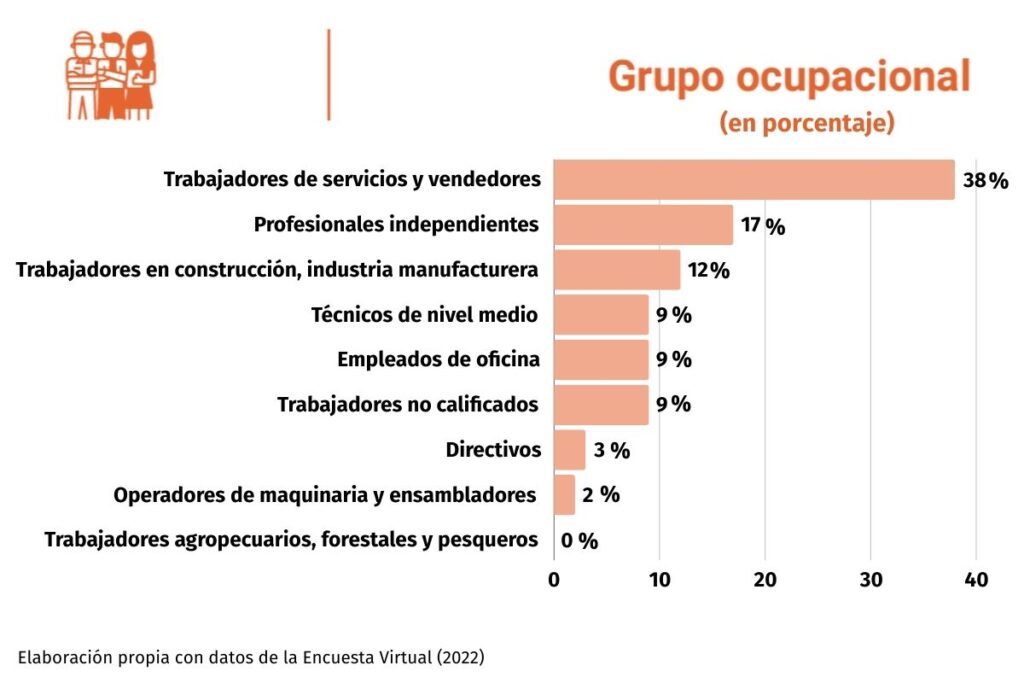
The survey, conducted by the Ombudsman's Office and the National Institute of Statistics (INE), was applied in 2022 and the results were presented in 2023. The participants reached 4,054 in the nine departments of Bolivia.
Approximately 77% of respondents were concentrated in the country's central region. The department of Santa Cruz had the largest number of respondents, with 1,255 (31%). It was followed by La Paz with 1,201 (29.6%) and Cochabamba with 672 (16.6%).
In the rest of the departments the distribution was as follows: Tarija with 239 records (5.9%), Oruro with 169 records (4.2%), Chuquisaca with 166 records (4.1%), Beni with 155 records (3.8%), Potosí with 113 records (2.8%) and Pando with 84 records (2.1%).
Without access to health care and victims of discrimination
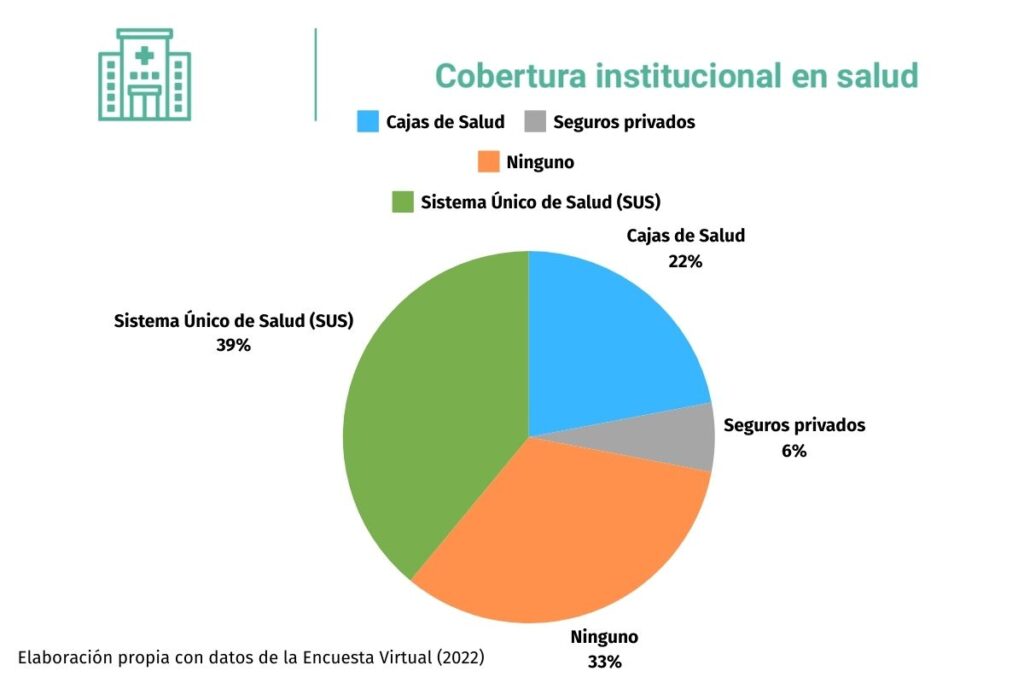
According to this survey, 33% of the participating population lacks any type of health insurance coverage. In this case, the most vulnerable groups are gender non-conforming individuals, trans women, and transfeminine people.
Likewise, 65% of those surveyed indicated they were unaware of how to access the Universal Health System (SUS), as well as the requirements and procedures for enrollment. “This data is very important. It demonstrates the need to take action on the health issue, primarily because 65% of those surveyed lack information about the requirements (for enrolling in the SUS). This is without even considering whether the health service actually provides the necessary services,” Callisaya stated.
Furthermore, 53% of participants reported having been victims of discrimination in the past year, but only 4% filed a complaint. The Bolivian Police (41%) and the Ombudsman's Office (19%) were the most frequently contacted agencies. Other sources of complaint included the Public Prosecutor's Office (15%) and the National Committee against Racism and all forms of discrimination (14%).
Of the total number of people who reported the discrimination incident, 73% indicated that their complaint is still pending or has not yet been resolved. 23% of these complaints resulted in sanctions for the accused, while 4% indicated that the complaint concluded with an agreement, and 1% reported no outcome.
Only 25% have a formal job
Gabriela Blas, representative of the Wiñay Wara collective, reflected on the results of the online survey. “I found it extremely important because it reflects everything that is currently happening,” she noted.
For Gabriela, one of the critical issues is the lack of emphasis on formal employment conditions for LGBTQ+ people. She states that although many turn to entrepreneurship as a means of subsistence, few have access to jobs with benefits such as social security and retirement. This not only affects their present situation but also condemns older LGBTQ+ individuals to precarious circumstances.
“Older adults from the LGBTQ+ community are in a much more vulnerable situation than even heterosexual people. They often lack a support network, such as children or family members, due to the rejection they have faced throughout their lives,” she explained.
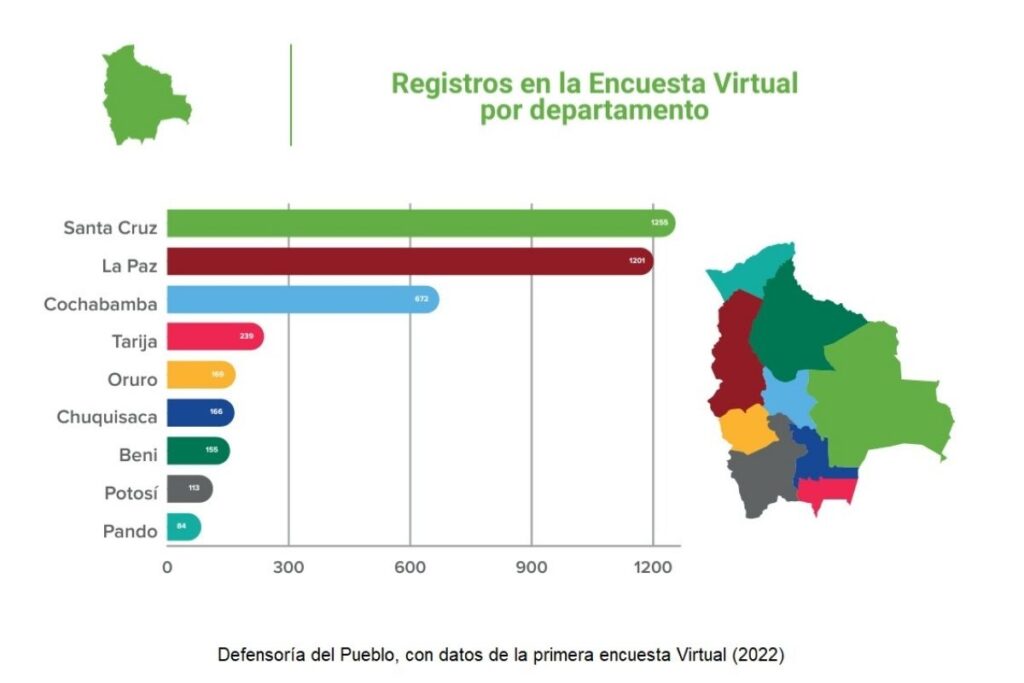
The information gathered by the online survey indicates that 72% of the participating population was engaged in some activity that provided them with income. 35%, or one-third, live on less than half the national minimum wage, while 24% reported earning between 1,000 and 2,000 bolivianos.
While the percentage of those employed or engaged in some form of income-generating activity is high, this can lead to a false positive. According to the Ombudsman's report, the income level of the LGBTQ+ population makes it difficult for them or their families to afford education, healthcare, housing, and food.
According to the report, only 25% of LGBTI people surveyed have access to formal employment with social security. Informal employment prevails, perpetuating cycles of exclusion.
Likewise, París Galán, Secretary of Political Affairs for the TLGB collective in Bolivia, adds that this precarious situation particularly affects trans women, who face higher rates of job exclusion and stigmatization. Discrimination in the workplace, combined with a lack of inclusive policies, severely limits their opportunities for personal development.
An incomplete survey
“Access to housing, the impact of substance use on LGBTI youth, and mental health are problems that seriously affect our population and deserve greater attention,” Paris stressed.
He lamented that the results and the Ombudsman's report are just one more among several that have already been produced. “In other words, this is a report from a very serious institution, like the Ombudsman's Office, but it reveals the same data from studies, surveys, and polls that the same organizations have conducted. The LGBTI collective in Bolivia, for example, carried out a very similar survey at the beginning of the 2020 pandemic.”
Furthermore, he questioned the study's limited sample size, which included only 4,000 people. He argued that a larger survey would have yielded more accurate and revealing data.
Blas finds it interesting that La Paz, the country's political capital, reached 1,200 registrations, and he also notes that this number should be increased in the future with greater outreach. He indicated that the various organizations played an important role by distributing the surveys to their members.
“It must be considered that the percentage of people who are part of these organizations is very small, a minimal amount compared to the number of people of diverse sexual orientations who are not part of them and who often do not even publicly express their sexual orientation or gender identity,” she concluded.
We are present
We are committed to journalism that delves into the territories and conducts thorough investigations, combined with new technologies and narrative formats. We want the protagonists, their stories, and their struggles to be present.
SUPPORT US

FOLLOW US
Related notes



We are present
This and other stories are not usually on the media agenda. Together we can bring them to light.