

Trinidad González, star of The Secret of the River: “We deserve to tell our stories”
Interview with Trinidad González, the first Mexican trans actress to star in a Netflix series.


Share

Trinidad González is the first Mexican trans actress to star in a Netflix series in Mexico and Latin America, playing Sicarú , a trans woman from the Isthmus of Tehuantepec in Oaxaca. The series , The Secret of the River, focuses on trans children, muxe , and the power of friendship. We spoke with Trinidad about the importance of representation and the value of the support networks for gender and sexual minorities.
Trinidad is a model and actress. She was born in Macultepec, Tabasco, a state in southeastern Mexico where the right to identity for transgender people is still pending recognition.
In Trinidad's words, the place where she grew up is "closed off and deeply rooted in Catholic traditions, and although Tabasco has its charm, the people were always very harsh with me." Despite this, she says, "Fortunately, I had a circle of friends where I could be myself: my friend, my cousins, my siblings. That was the circle that protected me, but with the adults, it was very complicated."

Like most trans people in Mexico, Trinidad, although she could not put her gender identity into words, was certain of who she was from childhood.
As a fact, in Mexico, 62.4% of trans people realized before the age of 7 that their gender identity is different from the one assigned to them at birth, according to the National Survey on Sexual and Gender Diversity ( ENDISEG, 2021 ).
The violence and barriers of the environment in which she grew up were the reason Trinidad migrated. During the conversation, she reflects, reminisces, and recounts that migrating wasn't easy, but there were reasons, dreams, to do it. “I didn't run away from my reality because that was never my reality. I ran toward a freedom I longed for, and it has been one of the best decisions I've ever made.”
At 18, she migrated to Ciudad Victoria, the capital of Tabasco. Six years later, she arrived in Mexico City and then in London, where "Trinidad's adventure began," she says.

The representation
Trinidad never thought about acting. In fact, she says she preferred to avoid hearing and seeing herself on camera. But when the script for The Secret of the River came into her life, she fell in love with the story and with Manuel, Sicarú, and Solange, three characters who put trans children, muxe people, and the value of friendship at the center, highlighting the fundamental space where being who we are is possible.
“I never would have expected to play a trans woman in a production like this, I mean, so big and so well-received. And I think it’s a shared achievement of trans women who have worked throughout their lives to make this moment happen. Today I applaud them and celebrate with those who have passed away, those who are here, and those who are yet to come. We all continue working so that there are many more trans women starring in projects.”
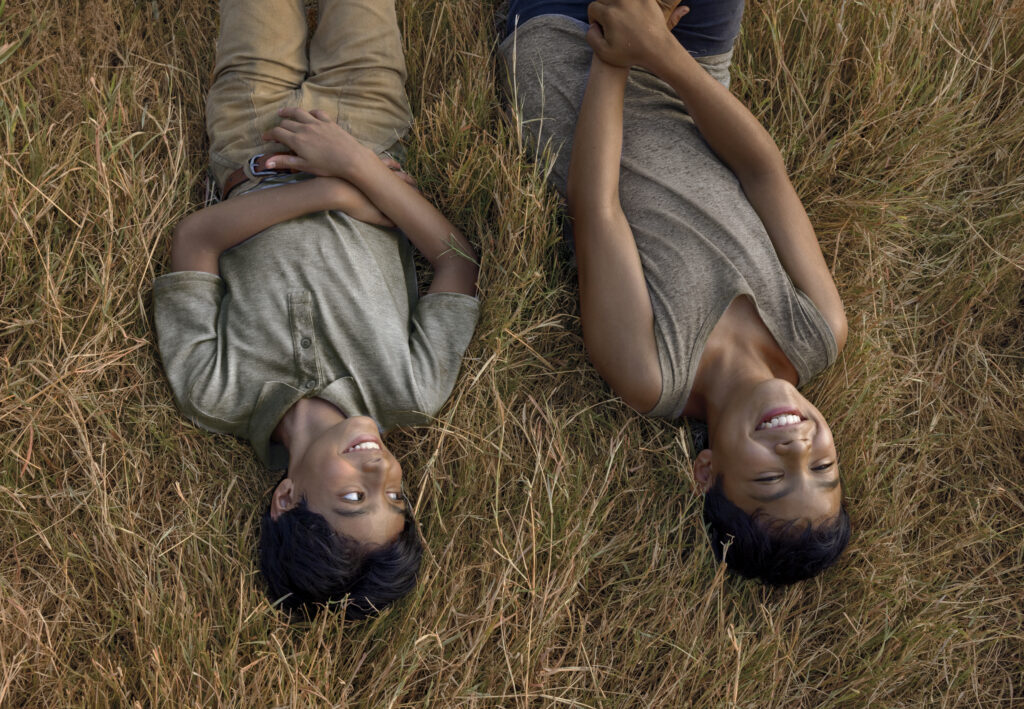
—How did the characters of Manuel, Sicarú, and Solange impact your life?
– For me, Manuel was like embracing a cycle to heal my own history. It was remembering what I went through in my childhood, bringing that violence to the table, healing it, and saying: it's over. Solange is also the part that helped me say 'it's over.' It's true what people say on social media: that everyone wants a Solange in their lives, and my Solange was my uncle. And Sicarú, what can I say… she arrived at a time in my life when I was very lost, and she came to save me from that moment and show me that we deserve these spaces, that we deserve to tell our own stories, and that we deserve to dream.”
The value of friendship
Trinidad recently joined the team at The Trevor Project Mexico, an organization that works in crisis intervention and suicide prevention for LGBTQ+ youth. Their 2024 survey highlights that “trans and non-binary youth who receive support for their gender identity from their friends and who have many people in their lives who respect their pronouns reported lower rates of suicide attempts during the past year.”
For Trinidad, like many Mexican LGBTI+ youth, her friends and chosen family made all the difference.
– If I hadn't had that support network, I honestly don't know what would have happened to me. I believe that just one person who listens to you, who sees you for who you are, can literally save your life. Violence often comes from home, whether due to ignorance or conservative ideas, but that can't continue to happen these days. Today we face a really serious mental health crisis in the community, especially among young people, and it's largely due to this violence.
– Who was that person to you?
– I'm so grateful to my cousin, who's also my friend. We grew up together, and she was that guiding light, that role model who helped me understand myself. I knew I was a girl because I wanted to be like her. And I also had my own Solange (one of the characters in the series) in my life; it was an uncle of mine who has passed away. He was gay, and he would always tell me things without me even knowing at the time what was going on with me. He always told me to cherish my freedom, and he was always there for me. That's why I say that even if you don't have a whole circle of friends, if just one person sees you without prejudice, that can make all the difference. And we have to take care of those people.
Other narratives
The series also depicts violence, but trans women, trans children, and muxes are not portrayed as dangerous. Nor are they caricatures, and their identities are not narrated with morbid curiosity or pain.
—Why does it matter to create other narratives where childhoods exist and trans adulthood is marked by life and not death?
– We definitely need stories that aren't about violence and death, or even mockery. It's important that this isn't the case because I think that by not changing it, we leave the viewer with the idea that we only deserve that, and I think that impacts the violence and hate crimes that occur. By not changing this, we will continue to be seen as people who don't deserve life or love. I think this project is inspiring for that reason, because although it portrays the complexities, it also leaves the message that we deserve to live, we deserve dignified spaces, rights, and respect. There's no other way.
“I learned that the muxe identity is much more than fulfilling certain roles”
In the series, the cultural identity of the muxe people coexists with the gender identity of a trans woman, which is the role played by Trinidad.
The series is set in the Isthmus of Tehuantepec (where the muxe people who are part of the Zapotec culture in Oaxaca originate) but this series does not portray this territory as an oasis free of violence, nor does it exoticize or romanticize the muxe population as "the third gender" of indigenous cultures in Mexico.
– I wouldn't dare speak about a topic that isn't my own because I don't experience it firsthand, but I had the opportunity to live with Muxe people and I learned that being Muxe is much more than being a woman or fulfilling certain roles; it's more of a whole range of possibilities, and for me, that was the beautiful part of that learning process—applying it to my own experience, knowing that just because I'm a trans woman doesn't mean I have to look 'feminine' in the way 'femininity' is understood by most of the world or cultures; nor does it mean I should only like men or perform certain tasks. I think the series also manages to portray Muxe people with dignity.
– What story would you tell your daughter Trinidad about everything you are experiencing today?
– I've always been a dreamer, and one of my dreams was to live in freedom and happiness. Something I would say to Trinidad is thank you. Because she was always a very strong person despite her young age, and I appreciate her patience because we are now reaping the rewards. I owe a great deal of who I am to her.
We are present
We are committed to journalism that delves into the territories and conducts thorough investigations, combined with new technologies and narrative formats. We want the protagonists, their stories, and their struggles to be present.
SUPPORT US

FOLLOW US
Related notes
We are present
This and other stories are not usually on the media agenda. Together we can bring them to light.
1 Comment