

The ILGA World Conference began with panels, guided tours of the Trans Memory Archive and a drag show
1,200 LGBTI+ activists arrived in Cape Town, South Africa, for this meeting. The first day consisted of thematic pre-conferences, in which Agencia Presentes participated.


Share

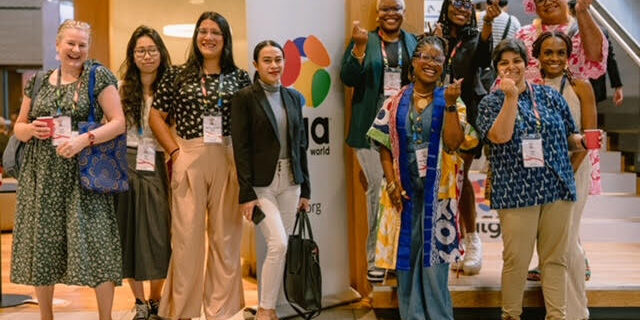
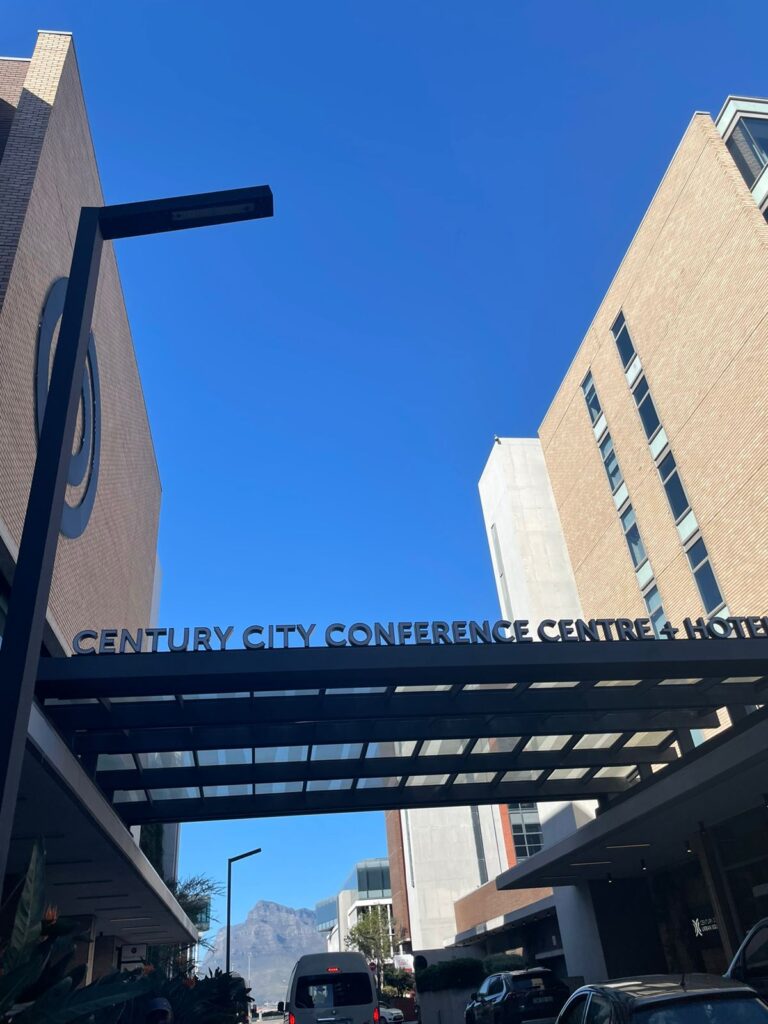
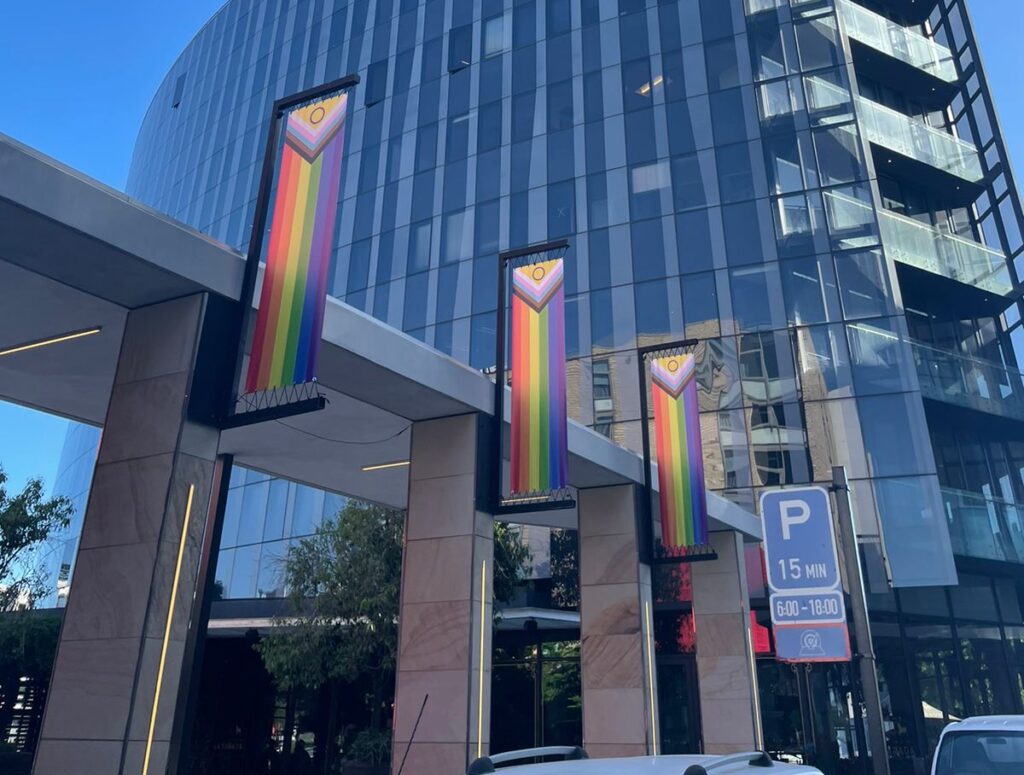
CAPE TOWN, South Africa (Special Correspondents). The ILGA World , the most important gathering of LGBT activists globally, began this Monday with more than 1,200 people from around the world meeting in Cape Town, South Africa. The day started early and extended into the evening, with a packed agenda of activities. The Century City Conference Centre was transformed into a celebration of diversity without borders, with Africa hosting the event after 25 years, thanks to the support of local organizations Iranti and Gender Dynami . There was room for debates, reunions, intercultural dialogues, a party, and a drag show. And also for the unfolding of connections, identities, and gender expressions from all five continents—a festival in itself.
The first day of the ILGA World Conferences is usually dedicated to thematic talks or pre-conferences: women's, trade union, interfaith, media, among others. We at Agencia Presentes participated in the media panel with colleagues and activists . We are also one of the event's media partners .
Solange Ayala, a member of the Human Rights, Equality and Gender Foundation (FunDHEG), arrived from Corrientes, Argentina, after taking several flights. “This is my first time participating in the ILGA World Conferences. I am very excited and happy to be able to meet with my trans colleagues from different parts of the world, sharing our experiences so that together we can seek policies that support us and embrace diversity ,” she told Presentes.
The day began with guided breathing and meditation for those who wished to share a moment of self-care and community well-being. This was followed by talks, workshops, and opportunities to meet for coffee or lunch.
Among the innovative spaces at this event are two crucial services. One is a mental health support area for anyone who needs it. Appointments with specialized professionals can be booked daily until 5:30 p.m. The other is a digital safety clinic, which provides guidance on safe technology use.
Guided tours of the Trans Memory Archive
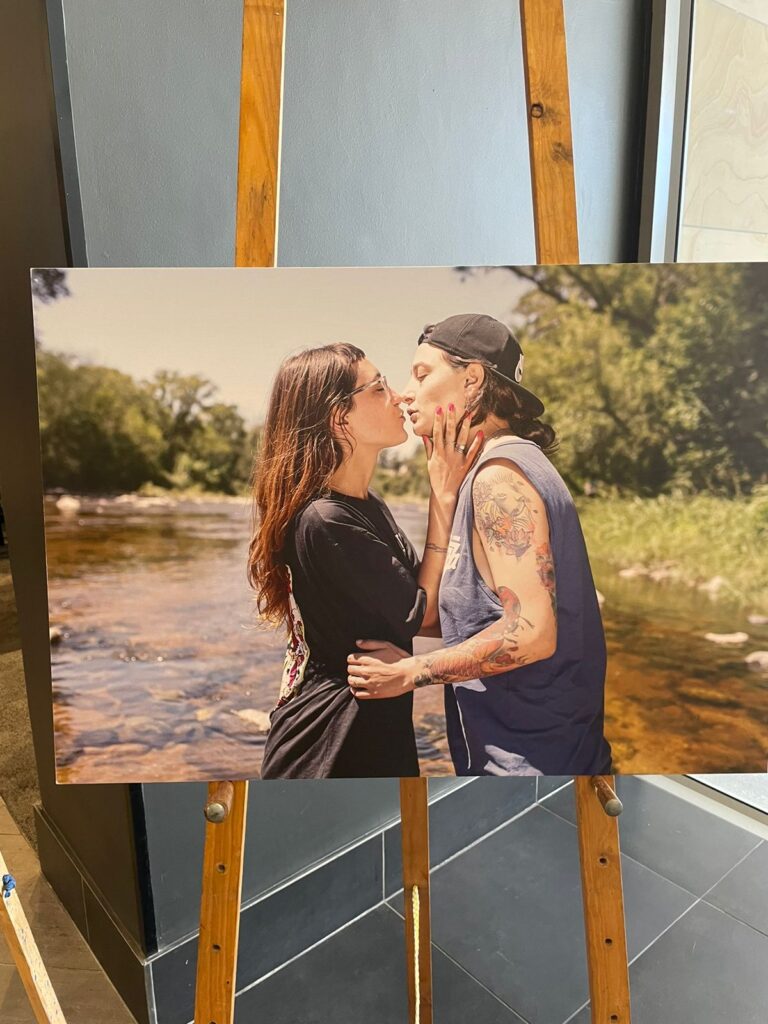
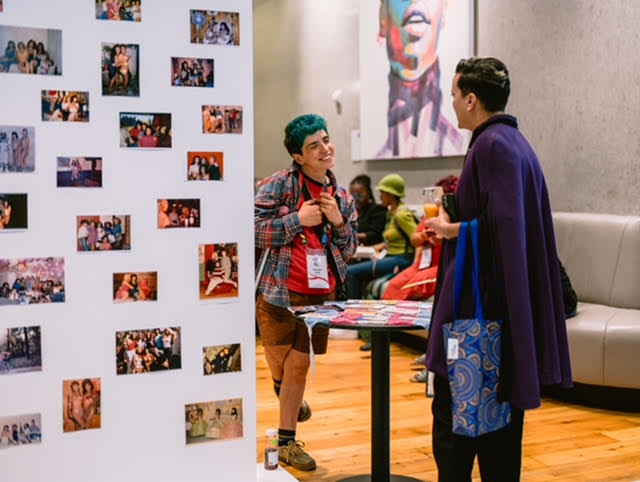
On a long table overflowing with books, stickers, pins, t-shirts, and photographs, located in the center of the ground floor of the Conference Center, lies the website of the Argentine Trans Memory Archive. To one side, two columns display photographs capturing moments in the lives of transvestites and trans women over decades. Every day at 3 p.m., Carolina Figueredo and Luciana Leiras, members of the Archive, lead a guided tour.
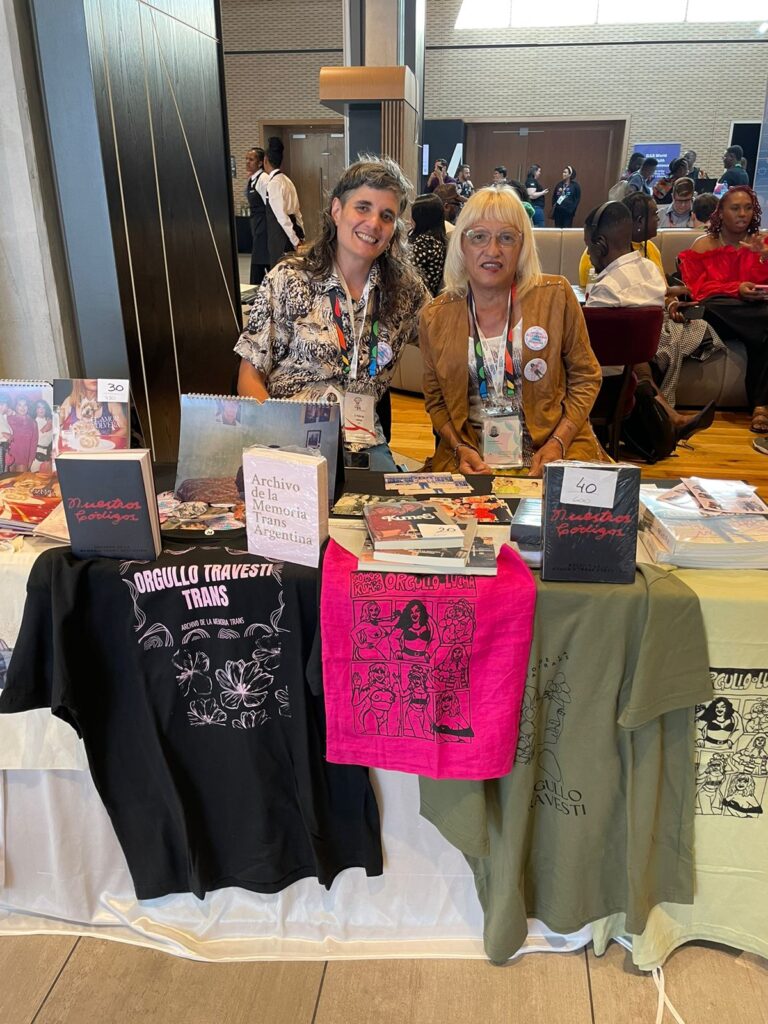
“I am very grateful for the invitation we received. I am representing the Archive. We will be presenting two panels from a photographic collection with the stories of our colleagues. I include myself because I am also a survivor of the post-military dictatorship,” shared Figueredo, “Carola,” a member of the Trans Memory Archive.
Media, digital divide and challenges
The Communications Pre-Conference focused on the presentation of ILGA World's publication, Accessing Connection: Closing the Digital Divide for LGBTI Communities Worldwide . Through a compilation of data and testimonies, the research shows how disparities in digital access impact LGBTI people around the world. It was moderated by Danielle Paletta, communications manager for ILGA World, and the document was introduced by Olivia Johnson of The Engine Room .
“We learned that the internet is still very expensive and a major barrier. Fifteen percent of the world’s population (one billion people) cannot afford it, and many of them belong to the LGBTQ+ community,” Johnson shared in her presentation. Olivia is a co-author of the research and shared that they interviewed six people from different countries, including Sandra Kwikiriza from HER Internet and Renae Green from TransWave Jamaica.
Sandra lives in Uganda, a country with very restrictive laws for the LGBTQ+ community, “where what happens in the digital world is a reflection of what happens in offline life,” she said. She also acknowledged that the digital divide particularly affects rural communities and disproportionately impacts queer communities. This limits their access to essential services such as healthcare, education, and legal or financial support.
Tools needed
, data protection and the formation of communities to create safe spaces become necessary , the panel analyzed.
“In Jamaica, we’ve been told we’re the most homophobic country in the world. But we’re not, thanks to the work of many activists. We have a great track record of creating safe spaces for queer people,” Renae Green emphasized.
Digital literacy training, investment in secure communication, and the use of digital security tools were among the practices the activists identified as necessary. “Data protection isn’t just something we have to talk about; we have to put it into practice. It can be used as a weapon and create a more hostile environment; some people have even had to leave the country. That’s why we need to invest in this technology,” Green emphasized.
Journalism and media
They also acknowledged that internet access can boost activism. “Many queer youth are seeing very positive results from going online. We want to create an internet that is safe for everyone,” Johnson said.
The discussion also included journalists María Eugenia Ludueña, from Agencia Presentes, and Lucy Middleton, the LGBTI correspondent for the Thomson Reuters Foundation . Together with the participants, they discussed the dialogue between activism and the media, how inequality is embedded in the media system, and other related topics.
“At Presentes, we observed that violence isn’t just digital. It also manifests in physical actions. In our country (Argentina), three lesbians were murdered in a context of widespread hate speech from social media users, but also from officials in the current government,” Ludueña stated. She added, “Argentina was a pioneer in LGBTQ+ rights and today is on alert due to the rise of a far-right government.”
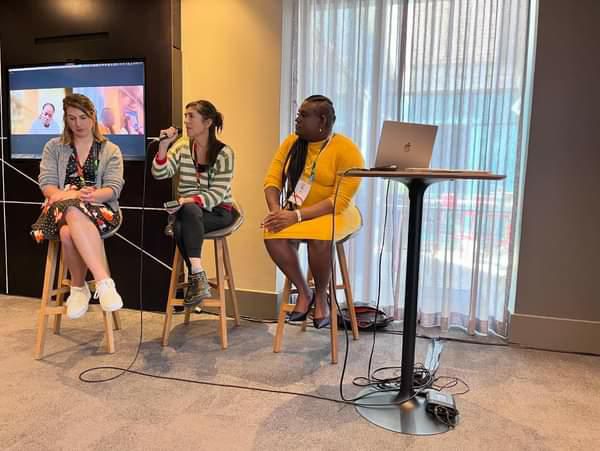
Both Middleton and Ludueña acknowledged that there are several challenges when reporting on the LGBTQ+ agenda. "It's very difficult to cover stories in places where there's no digital service," shared the LGBTQ+ correspondent. She also recognized the difficulties of reporting in remote areas or speaking with people who are persecuted in their countries.
“One of the challenges is the repression by the security forces. For the first time, we had to hold a workshop to cover protests. Furthermore, the LGBT community—and not only them, but also feminist movements and Indigenous people—are being criminalized. Milei has made them his enemies. Every day we ask ourselves whether to respond to statements that spread misinformation, or to continue with our agenda, trying to build positive narratives and references about our community,” she added.
In this regard, he acknowledged that “many journalists work based on metrics or other interests. The goal isn't always to ensure certain voices are heard.” This is why funding and sustainability for independent media are fundamental. “One of our main challenges is financial. We strive to be sustainable; we're always looking for resources to do journalism,” he shared.
Drag divas and LGB memory
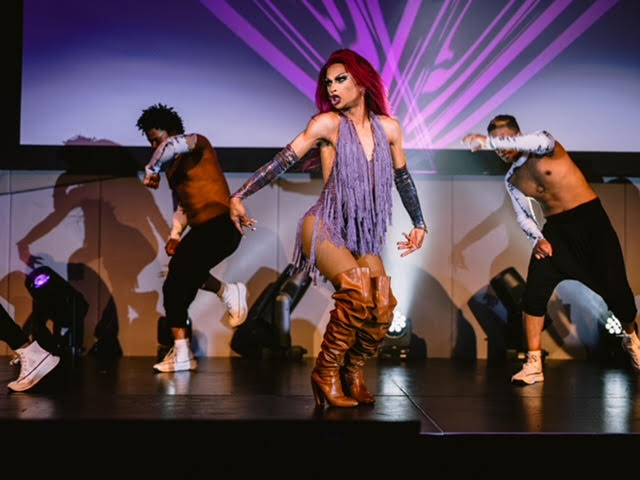
The Conference always dedicates some evenings to a social program. And in this city, where a strong drag tradition has existed since 1930, the first day closed with a tailor-made show: the Absolutely Fabulous Drag Show (ABFAB DRAG), a show with years of history paying tribute to LGBT people.
The drag divas gave it their all on stage. Vida Fantabisher (runner-up on SA's Got Talent 2016), Manila von Teez, Kat Gilardi, Jayde Kay Johnson, Angel Lalamore, and Mitchell Darling, directed by choreographer Nkosinathi Sangweni Waka Mtshali, received thunderous applause from the participants on opening night. Basil Appollis served as master of ceremonies for the closing of the first day, celebrating the spirit of legendary drag queens in District Six—a neighborhood ravaged by apartheid and iconic in the fight for equality—and highlighting the vitality of Pride, the unfinished business, the memory, and the power of the LGBT movement today across the globe.
We are present
We are committed to journalism that delves into the territories and conducts thorough investigations, combined with new technologies and narrative formats. We want the protagonists, their stories, and their struggles to be present.
SUPPORT US

FOLLOW US
Related notes


We are present
This and other stories are not usually on the media agenda. Together we can bring them to light.