

A network demands action to protect the rights of LGBT migrants from Latin America
More than 30 organizations discussed the violation of the rights of LGBT migrants. Why it is necessary to make cisgender-nonheterosexual migration visible.


Share

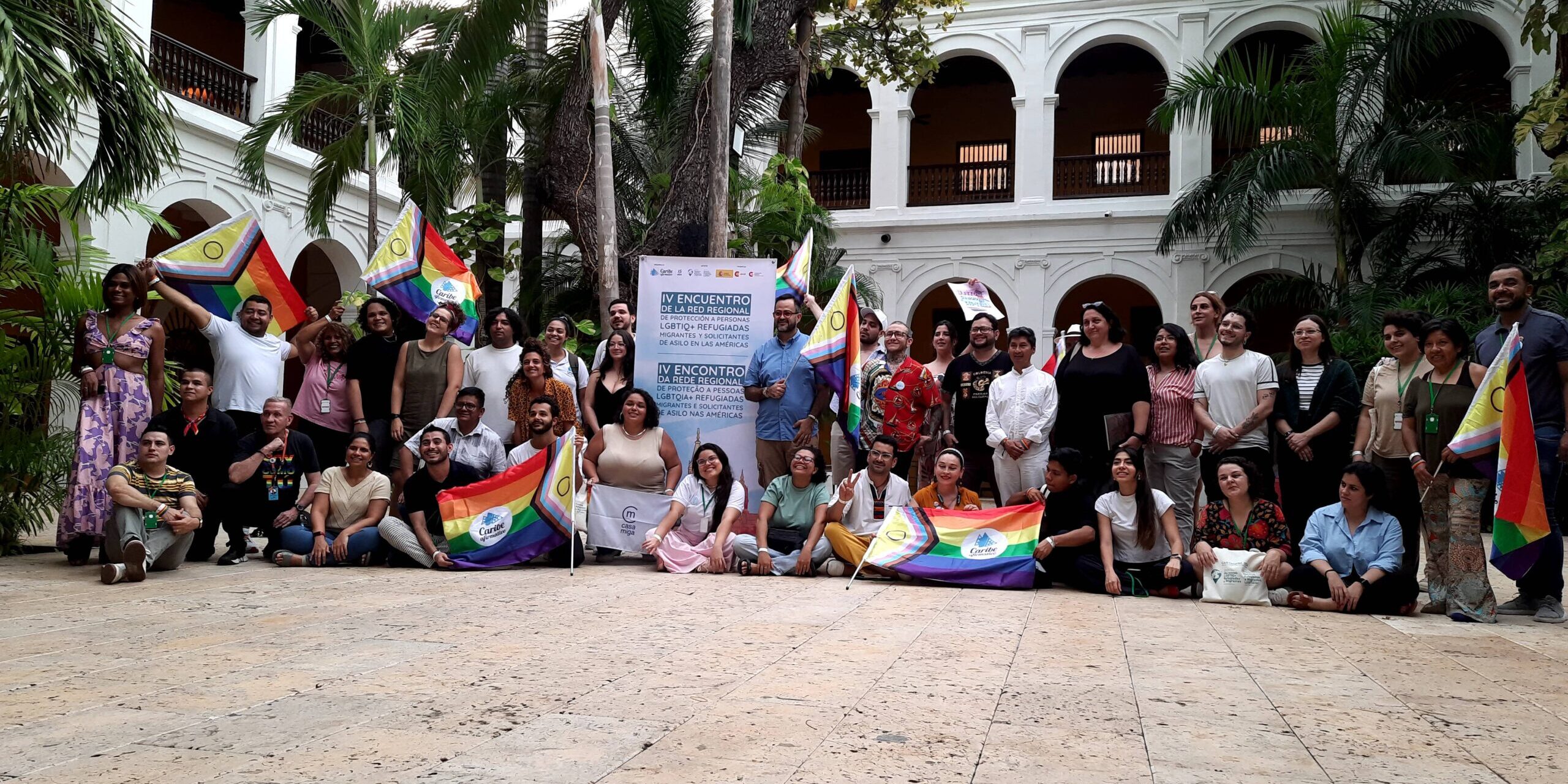
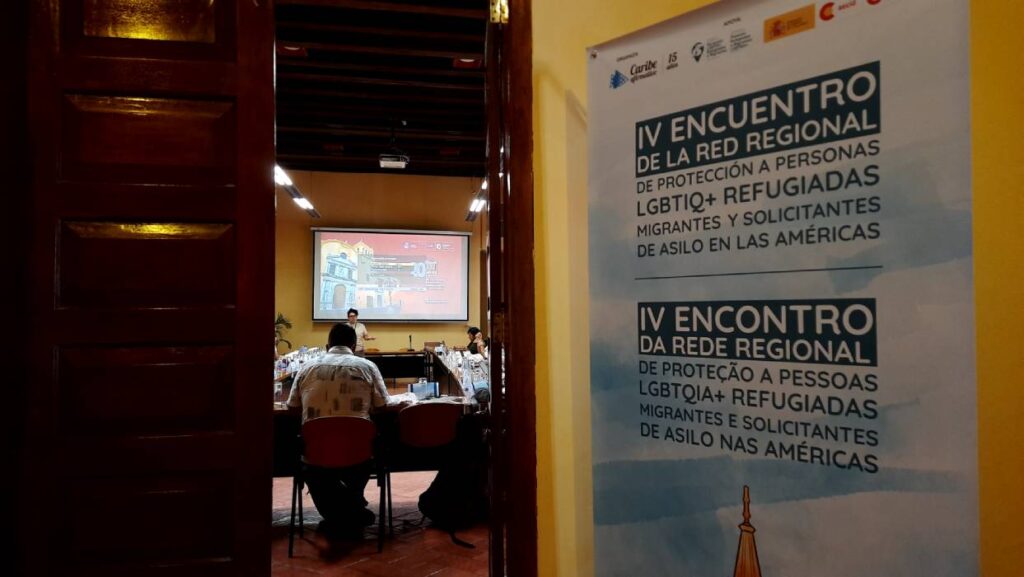
The increase in xenophobia, violations of the rights of LGBTIQ+ people and the urgency for States to intervene with clear actions, are some of the points that were discussed at the IV meeting of the Regional Network for the Protection of LGBTIQ+ Migrant, Refugee and Asylum Seeker Persons in the Americas.
More than 30 organizations in Cartagena de Indias exchanged knowledge, best practices, the human rights violations situation for these populations in their territories, the debts of the States and the opportunities that the Network builds so that LGBTIQ+ people on the move are informed and receive community, institutional support and international protection with a differentiated approach.
The Regional Network for the Protection of LGBTIQ+ Migrants, Refugees, and Asylum Seekers in the Americas was established in 2019. Its origins lie in the challenges faced by LGBTIQ+ migrants, refugees, and asylum seekers in the region. This stems primarily from discrimination, widespread violence, and a lack of focus and perspective among key stakeholders regarding the specific needs of LGBTIQ+ individuals in their right to asylum due to violence and persecution based on their sexual orientation, gender expression, and gender identity.
Wilson Castañeda, director of Caribe Afirmativo , explained to Presentes . The Colombian organization provides legal and psychosocial support to LGBT people in situations of human mobility.
“Humanitarian crises in the region have increased the number of LGBTIQ+ people on the move, seeking a better quality of life. Social organizations must transform their strategies to respond. The rise in xenophobia, coupled with prejudice based on sexual orientation, gender identity, and gender expression, is exacerbating the lives of LGBTIQ+ people, and we must demand decisive action from states to ensure that humanitarian and migration assistance incorporates differentiated approaches that guarantee adequate support for LGBTIQ+ people in processes of human mobility.”
The challenges faced by LGBTI+ people in situations of mobility
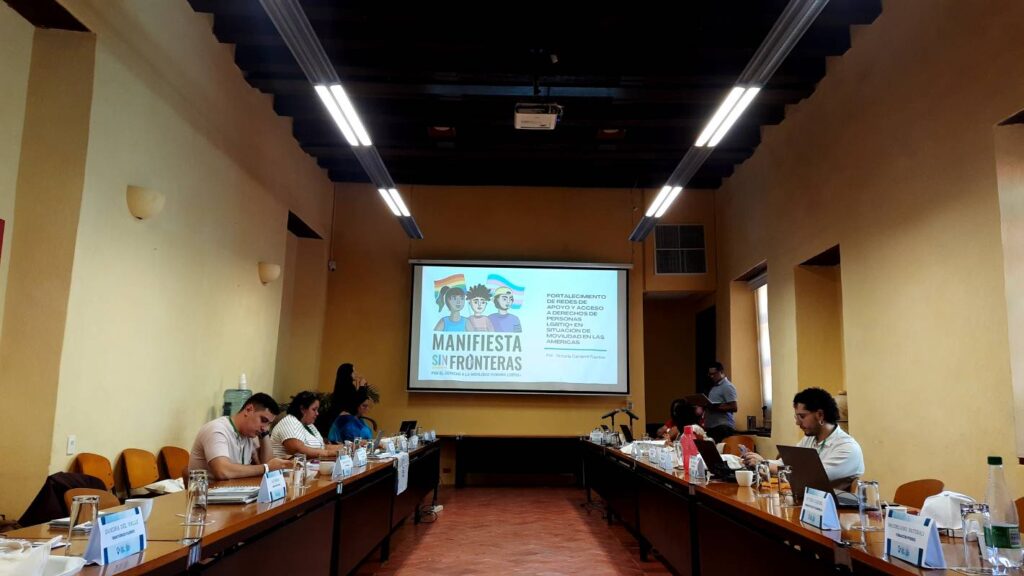
During the three-day meeting (October 23-25), the various organizations shared the situation faced by LGBTI+ migrants and refugees in different parts of the region. They discussed the routes they take, how they obtain information about migrating and seeking asylum, and the human rights violations they face in their home countries and in transit.
Throughout the discussions, several common elements emerged among the organizations. These included a lack of access to healthcare services, including care for people living with HIV; a lack of public policies and affirmative action programs that validate educational credentials and thus guarantee the right to education, employment, and social integration; and the difficulty in obtaining documentation during the regularization process, particularly for transgender individuals, in ensuring that their chosen name, gender expression, and identity are respected.
Another factor is that some countries in the region still do not recognize the rights and violations suffered by LGBTI+ people. This leads to persecution and forced emigration, and there is no protection against discrimination, as in Guatemala, El Salvador, and Honduras.
“The violation of their sexual orientation or gender identity is not recognized, which is grounds for persecution. They are, therefore, victims of discrimination, trafficking networks, and structural violence from their state institutions. There is no follow-up on their access to justice, health, and other human rights guarantees. In Guatemala, these violations along their route or within the country itself are also not recognized as violations. And there is abuse by the authorities who impose unauthorized fees, thus limiting their access or transit,” Ale Morales, a member of the Lambda Association .
Lack of differentiated approaches
This same lack of recognition of these vulnerabilities is perpetuated by immigration authorities. The lack of training and awareness limits the guarantee of the right to asylum and refuge for LGBTI+ people.
“Widespread violence, hate crimes, and more localized discrimination within families and communities are other factors that could increase the risks and need to migrate to other countries in search of international protection. Hence the importance of providing differentiated support during transit, in shelters, and also during asylum processes, identifying these needs and the contexts in which these populations might be affected. At the same time, it's crucial to recognize that this is not a homogeneous group, and that, for example, transgender people might be at greater risk,” Cristina Sousa commented in an interview. She works as a community protection associate at the regional office of the United Nations Refugee Agency ( UNHCR ).
Migration policies with racist and xenophobic biases, militarization, and border control by organized crime are other obstacles that the organizations shared. Even the distribution of humanitarian aid and the availability of shelters, which for the most part do not operate with a focus on sexual and gender diversity, have been documented as spaces where the risk of LGBTI+ people experiencing discrimination and violence increases.
“The limited support available lacks a diversity perspective. People are housed in places where there are perpetrators of discrimination based on sexual orientation and gender identity. The aid provided by UNHCR is in religious settings where they are revictimized, and in Argentina in particular, given the current political context, we know that there are already setbacks, and there will be more, in the recognition of the rights of migrants and refugees. So we are on high alert,” María Rachid, a member of the Argentine LGBT Federation Presentes .
“Making visible a non-cis-heterosexual migration”
Organizations dedicated to supporting LGBTI+ migrants and refugees emphasized that networking also helps them strengthen internally. This includes improving and adopting best practices, creating and maintaining shelters for LGBTI+ migrants and refugees, and developing local and regional initiatives to address the needs of these populations, as well as engaging in political advocacy with humanitarian organizations and governments.
“It is very important to recognize the importance of this network in making visible the fact that there is non-cis-heterosexual migration. We are building actions little by little, and in that sense, we are gaining ground that guarantees rights and allows LGBTIQ+ people who leave their countries to have safe spaces in the countries where they arrive. And mainly, to recognize the political participation and agency that LGBTIQ+ migrants and refugees have. We carry out political action, we have life trajectories, and an agency that we must continue to strengthen within the community in terms of rights,” María Botero, a member of the Milbi Network and its technical secretariat, Presentes
At the end of the meeting, the value of these spaces for generating knowledge, information, data, and producing reports that help to understand these realities was highlighted. Consequently, they can influence the migration institutions of states that are responsible for providing support and ensuring the protection of the rights of LGBTI+ people on the move.
The participating organizations are from Mexico, Guatemala, Honduras, Costa Rica, Venezuela, Colombia, Brazil, Ecuador, Peru, Chile, Argentina, and Paraguay. They also came together with a common goal: to implement community-based actions that incorporate sexual and gender diversity perspectives for the protection of the human rights of LGBTI+ migrants and refugees in preparation for the upcoming review of the 1984 Cartagena Declaration , which will take place this December in Santiago, Chile.
The Cartagena Declaration of 1984 is a broad document of cooperation and responsibility between countries of the region that covers the protection and treatment to be given to migrants and refugees.
We are present
We are committed to journalism that delves into the territories and conducts thorough investigations, combined with new technologies and narrative formats. We want the protagonists, their stories, and their struggles to be present.
SUPPORT US

FOLLOW US
Related notes


We are present
This and other stories are not usually on the media agenda. Together we can bring them to light.