

Rosario Sansone, a trans activist from Salta and a Pride pioneer, died in a fire in Bahía Blanca: authorities are investigating whether it was a transfemicide.
Rosario Sansone was 47 years old and had settled in Bahía Blanca to escape police violence in Salta, where she was one of the mentors of the first Pride marches.



Share

SALTA, Argentina. A part of Salta mourns in these rainy days the loss of Rosario Sansone , who died at the age of 47 almost two thousand kilometers from her homeland, in Bahía Blanca, where she had arrived fleeing from the police of this province.
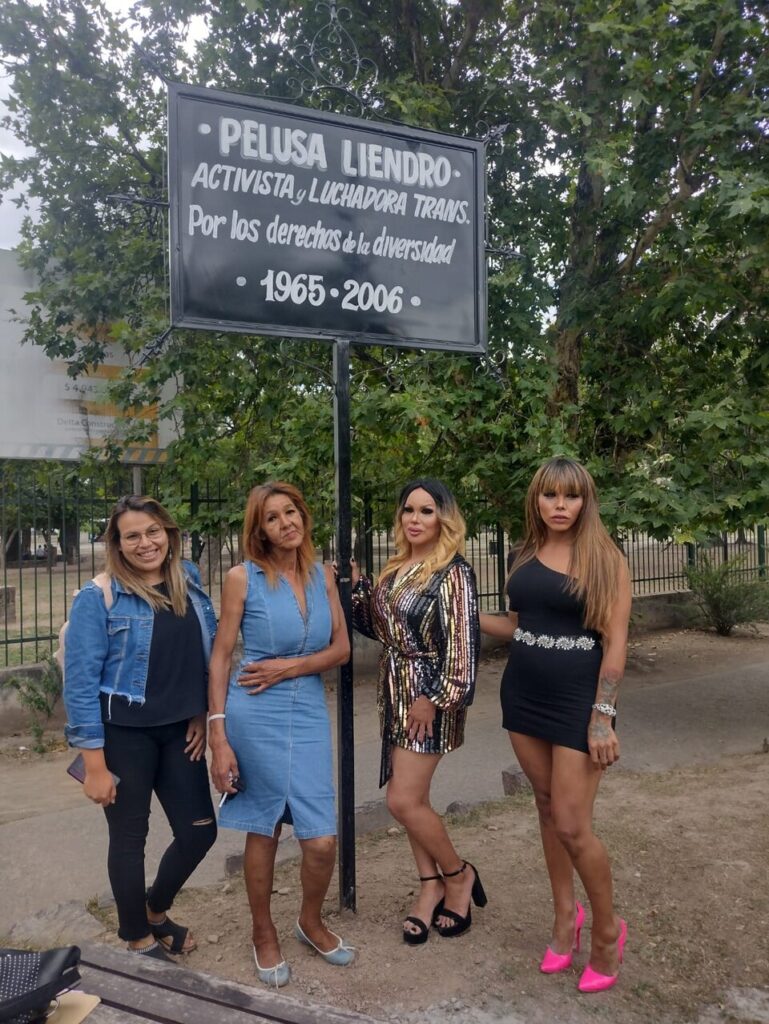
Rosario is—or rather, was—one of Salta's leading figures in the fight for the recognition of LGBTIQ+ rights. Along with her close friend Pelusa Liendro, who was murdered in 2006, she was one of the mentors of the Pride Marches, a form of resistance against police persecution, violence, and discrimination .
The house Rosario was renting in Bahía Blanca was engulfed in flames at 8:30 a.m. on Sunday, November 3. When the fire was finally extinguished, firefighters and Civil Defense personnel found her dead. Her body was lying on the bed. Although it was officially reported that the house's entrances were locked from the inside, and that one of the rooms was in disarray, the exact circumstances of the death of the renowned trans activist from Salta remain unknown.
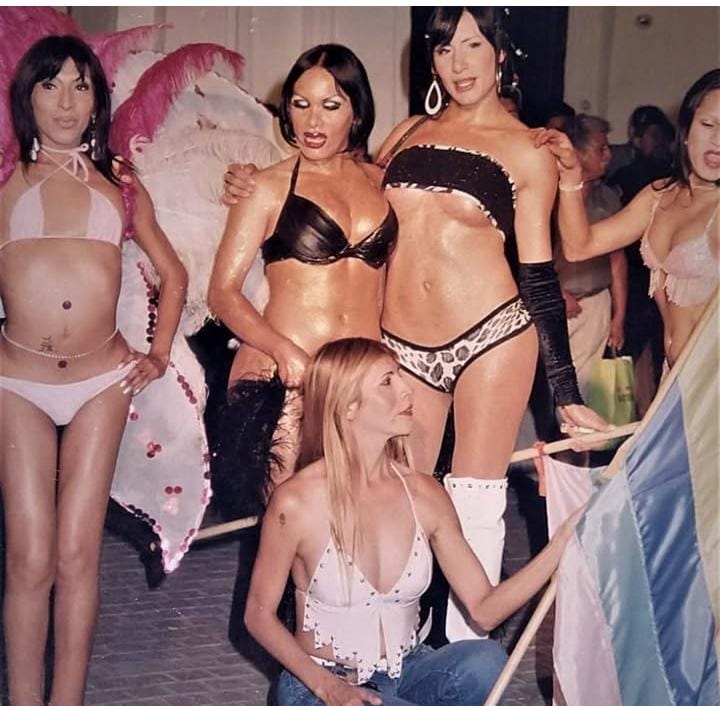
Forensic experts from the Scientific Police and the local DDI (Departmental Investigation Directorate) are working on the investigation, which is being led preventively by UFIJ (Functional Unit of Instruction and Trial) No. 5, the unit that handles homicide cases. Its head is Prosecutor Jorge Viego. The autopsy, conducted by the Attorney General's Office, will help determine whether or not it was a violent death. "We are in the midst of the investigation; we cannot confirm or rule out that it was a homicide," official sources told colleagues from local media outlets.
Deeply grieving, Rosario's family prefers not to speak at this time. Her sister Angy only wanted to say one thing: "My sister didn't deserve what they did to her."
Life and struggle of a role model from Salta
Born in Colonia Santa Rosa, a town in the Orán department, in the lush Yungas region, Rosario arrived in the city of Salta as a teenager. At that young age, she experienced the harsh reality of surviving by working as a prostitute. Shortly after, she moved to Bahía Blanca. Later, she returned to Salta to make history in the organization of the trans community.
Fed up with police harassment, constant arrests, and beatings, in 2004 they organized the first Gay Pride March in Salta with Pelusa Liendro. They were able to hold a second, and a third. It was a strategy to denounce this constant violence, rooted in Salta's conservatism, and to expose the hypocrisy, expressed not only in the consumption of sex work but also in the police accepting bribes.
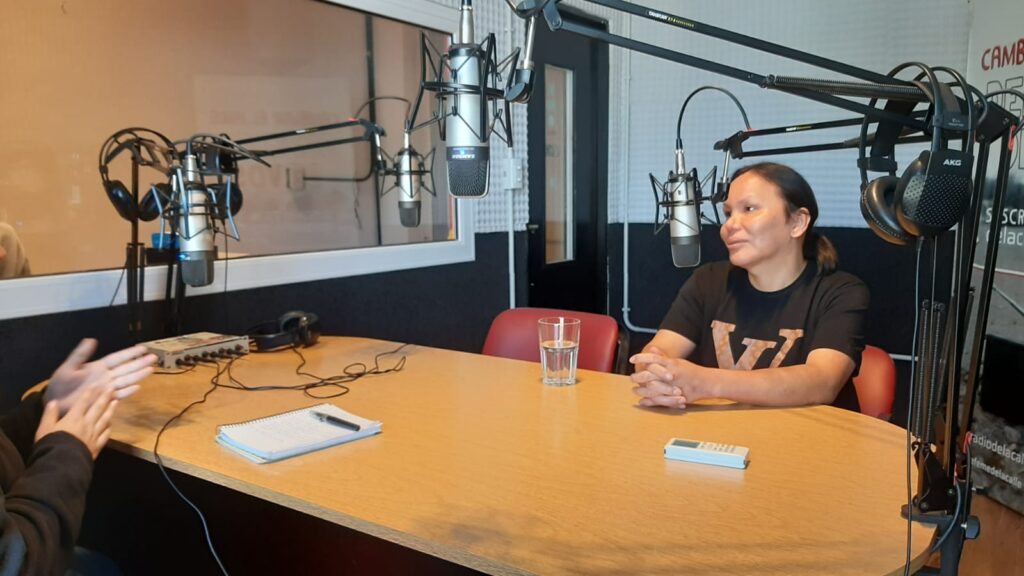
The marches started on Corrientes Street, in the San Martín Park area. That starting point was chosen with the idea of passing by the Second Police Station, the place where Pelusa, Rosario, and other trans women often ended up, where they were “detained, beaten, and extorted by the police,” feminist journalist Marta César, one of the few cisgender people who accompanied those first demonstrations, told Presentes.
Marta knew Pelusa, but she only saw Rosario from afar. However, she remembers her clearly: “I saw her as beautiful, petite, with porcelain skin, very well cared for. I saw her pass by many times, with all that beauty, all that audacity, and all that moral authority that quite a few women had at that time to say, 'Here I am,' and she wasn't even that tall. But you saw her all dolled up from afar, and she was like an unattainable star.”

Sexile to Bahía Blanca
Pelusa and Rosario were unable to organize the fourth march. On a rainy night like these past few days, November 29, 2006, seven stab wounds ended Pelusa's life. The violence was so atrocious that transvestites and trans people had to flee the province. Rosario was one of those who had to go into exile.
In 2007, another trans woman, Mary Robles, took up the mantle and restarted the marches. Rosario was there again, and she returned every year for Pride. “I knew her, she was a friend of Pelusa. She was at the first marches.” Later she accompanied them, “going back and forth from Bahía Blanca,” recalled Mary Robles, who organized the Association of Transvestites, Transsexuals, and Transgender People of Argentina (ATTTA).
Mary recalled the diaspora that followed Pelusa's murder. "When Pelusa died, the persecution began, and everyone started migrating." Rosario went to Bahía Blanca, "fleeing from Salta." She stayed there. Mary resumed the marches in 2007. At that march, the fourth in Salta, Rosario lent her the flags they had used in the first demonstrations with Pelusa.

“Salta has no progress.”
Nancy Luna had known Rosario for fourteen years, “through activism” in Mujeres Trans Autoconvocadas (Self-Organized Trans Women), the informal organization they formed that later dissolved. Her activity had decreased, but she continued with assistance programs that Nancy and Rosario shared.
She also emphasized in her conversation with Presentes that Rosario had moved to Bahía Blanca because "it was impossible to work here in Salta" due to persecution by the provincial police. That situation persists to this day, Nancy noted.
“ Trans people in Salta are still waiting for the trans job quota .” That discrimination, and its manifestation in physical violence, existed twenty years ago and continues to be suffered now, Nancy emphasized. They endure a “terrible” prejudice daily.
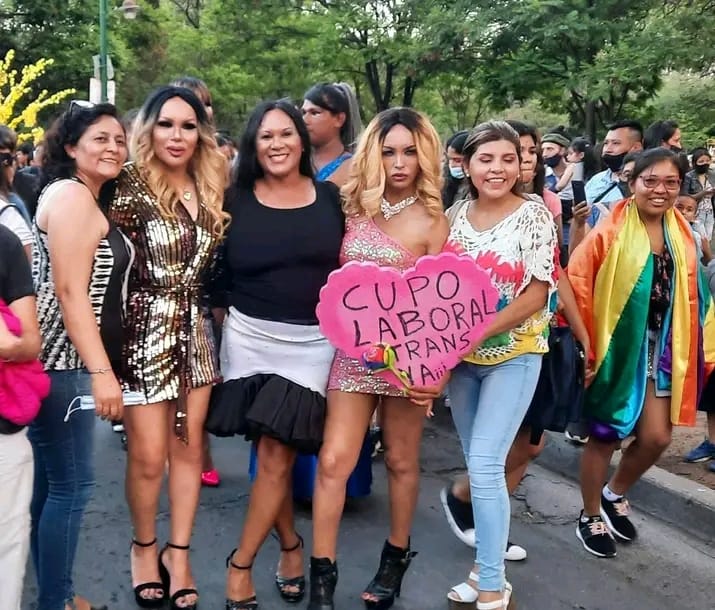
The vast majority of trans women have prepared themselves, she emphasized. They have submitted their resumes to various agencies and are still “waiting for an opportunity” to have a stable job. But when a window opens for someone from the LGBTQ+ community to enter the workforce, it's not for “trans people, (who) aren't in any sector.” Nancy herself was forced onto the streets. “When I was older, I had to start going out,” she said. “I studied for nothing. I ended up on the street. Like everyone else. Like Rosario,” she lamented.
Mary Robles agreed with the current assessment of human rights violations in the province. “Salta has made no progress; the job quota program has stalled,” she stated.
Furthermore, there are increasing deficiencies in healthcare; condoms are lacking, and they don't have the ELISA test for HIV testing. "There's a huge shortage of everything. The national government hasn't bought anything, and the provincial government doesn't plan to." Organizations are just now starting to organize to draft a petition, she said.
Nancy emphasized that Rosario had an “excellent” relationship with her family. The violence she suffered didn't stem from them. “She was run over by the police, by society.” “The stories of all women,” she insisted.
In the province of Salta, Article 114 of the Contravention Code, which enables police abuses, is still in force.
Nancy also remembered Rosario as a radiant person. “She was a quiet girl,” “a wonderful person,” who “didn’t have problems with anyone.” She loved getting together with her friends for mate, spending time with her family, and going out dancing. She loved colors and made them a symbol of Pride marches. She enjoyed lip-syncing to songs by Isabel Pantoja and Rocío Dúrcal, and she often put on shows for LGBTQ+ events.
Rosario was “a major activist,” she never gave up, she sought to change things for younger trans girls. But, “there’s no progress in Salta. It’s sad,” Nancy confirmed.
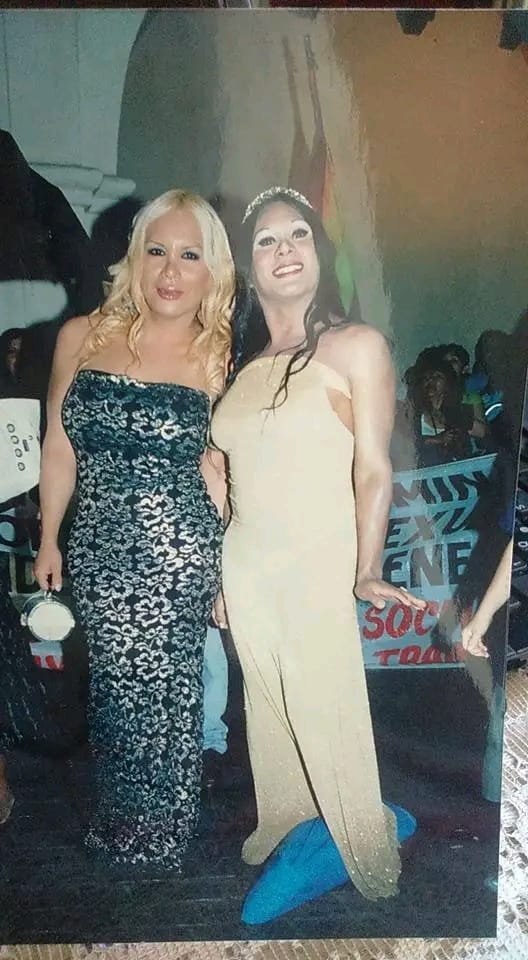
Trans activist Pía Ceballos, from the Trans Movement of Argentina (MTA), also remembered Rosario: “I knew her and many of us from the diversity community are in mourning, she was a great activist and comrade.”
Due to those coincidences that can only occur in lives marked by the violence exerted upon them, Rosario Sansone was overtaken by death while preparing for the Pride March on November 29, a very special date for trans and travesti people in Salta, and especially for Rosario as it marks 18 years since the murder of Pelusa Liendro.
Meanwhile, the NGO Furias is calling on anyone who can contribute to support the family and facilitate their transfer from Salta to Bahía Blanca.
We are present
We are committed to journalism that delves into the territories and conducts thorough investigations, combined with new technologies and narrative formats. We want the protagonists, their stories, and their struggles to be present.
SUPPORT US

FOLLOW US
Related notes


We are present
This and other stories are not usually on the media agenda. Together we can bring them to light.