

The 2024 LGBT+ World Cup will be played in Buenos Aires
The 2024 LGBT+ World Cup will be held in Buenos Aires from November 4th to 9th, with free admission.


Share

Argentina is, without a doubt, the land of football. Anything that rolls here is bound to become a ball. And the recent triumphs of the Men's National Football Team, World Champions in 2022 and two-time Copa América champions in 2024, demonstrate the national fervor for the sport. Argentina is also a land with a large and active LGBT+ community. Its legislation regarding the rights of sexual diversity is pioneering in the region and the world. The 1.5 million people who attended the last Pride March in Buenos Aires attest to this.
However, homophobic chants fill the air in almost every stadium in the country. At first glance, football and the LGBTQ+ community might not seem to have much in common in Argentina. Many initiatives are dedicated to fostering this connection. One of them is the social and sports organization Los Dogos, which, together with the IGLFA (Gay and Lesbian Football Association), promoted Buenos Aires as the host city for the 25th LGBT+ World Cup, held from November 4th to 9th .
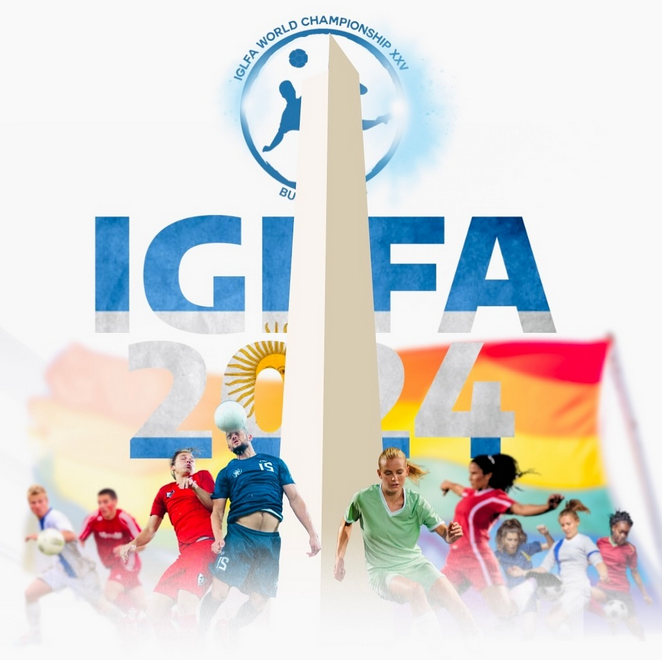
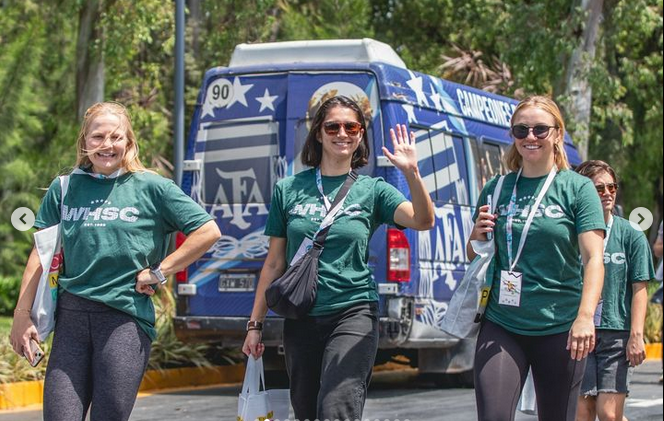
The tournament is amateur and features 11-a-side and 7-a-side football categories. Participating teams represent Argentina, England, Mexico, the United States, Uruguay, Brazil, Chile, and Australia.
The Dogos: the rainbow enters the field in Argentina
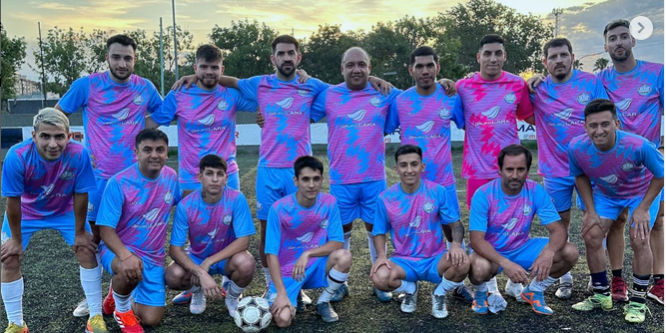
In 1997, a group of gay friends decided they wanted to get together and play soccer. They recruited potential players through a newspaper ad. After many training sessions and matches, they began traveling to compete against other teams that were similarly organized. In 2007, Argentina not only hosted the 16th LGBT+ World Cup organized by IGLFA, but also won the championship.
Thus was born Los Dogos, the first amateur football team to represent Argentina in international competitions . Los Dogos is a broader social, cultural, and sporting institution. It encompasses various disciplines and its objective is to advocate for diversity, equality, and respect for human rights.

“Years ago, the scene was much more closed off,” Claudio Blanco, coordinator of Los Dogos and organizer of the LGBT+ World Cup, told Presentes. “There were kids who didn’t want to appear in the media out of fear. Today, while discrimination still exists, the context and the mindset of many people are different.”
The most concrete sign of this change came in 2018 when, after Los Dogos' participation in the Gay Games in Paris, the Argentine Football Association allowed the team to train at its Ezeiza training complex. They were also provided with sports equipment, some uniforms, and hydration. “ Being there, where the world champions train today, is very significant symbolically ,” Blanco explained. “This isn't just about getting together to play, but about sending a message to society .”
Several Argentine athletes have come out in recent years. Among the most recent cases is that of field hockey player Nicolás Keenan. He spoke publicly about his partner during the Paris Olympics. Only one soccer player, goalkeeper Nicolás Fernández, has followed suit. “ Soccer is very sexist; it’s a historical, almost ancestral fact ,” Blanco told Presentes. “Whenever a player is insulted, it’s usually along the lines of ‘you play like a girl’ or ‘don’t be a faggot.’ This social conditioning from the stands and also from management makes players less willing to express themselves freely. Not coming out affects their performance on the field. These are burdens that one carries .”
How does visibility impact football?
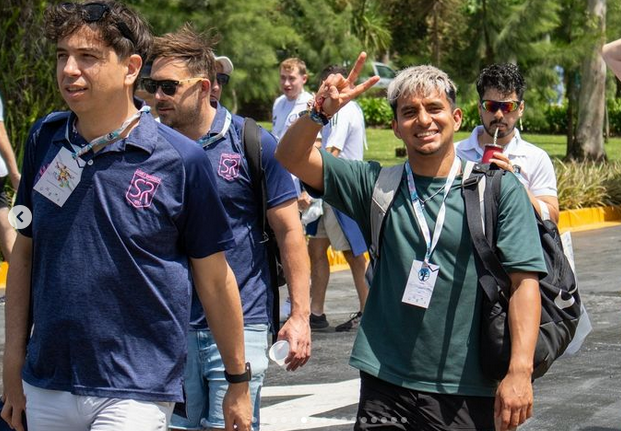
Blanco highlighted the social impact that a player can have when they speak publicly about their sexuality. “ The impact of an active player coming out is always positive. The message is different because it reaches more people ,” he said.
John Natale, founder and current president of the IGLFA, emphasized the importance of these public figures, considered heroes by millions, being able to speak about the issue. “As an athlete, I want people to be aware that we play all sports ,” he told Presentes.
Blanco highlights the cases of Canadian players who came out and received support from their clubs. But his view of the local situation is more complex. “It’s difficult for that to happen here. Someone with the personality to dare to say it has to come forward,” he commented.
““Making it easier for the next group”: IGLFA’s work
The story of Los Dogos is similar to that of the IGLFA, founded in 1992 with the same purpose that brought the Argentinian team together. “It was about establishing rules and creating an organization to put on tournaments,” Natale explained to Presentes. As president, his goal is to move away from relying solely on team participation fees, as currently each team must pay to be part of the tournament. Natale seeks to professionalize the competition with corporate sponsors that would allow any team that wants to join to do so.
Natale, a Boston native, explained that the sexist dynamics that persist in soccer in other parts of the world, such as Latin America and Africa, are not prevalent in his country, he says, where the women's national team has the most wins and medals. However, he is very aware of the discriminatory barriers that remain in the sport. The tournaments he is currently working on are designed to encourage the participation of trans and non-binary individuals. " We try to reach different communities that are looking for a safe space ," he emphasized. "That's why our organization exists: to smooth out those rough edges wherever we go. To make it easier for the next group, community, town, or city."
The match schedule is available on the tournament's Instagram page . Admission is free.
We are present
We are committed to journalism that delves into the territories and conducts thorough investigations, combined with new technologies and narrative formats. We want the protagonists, their stories, and their struggles to be present.
SUPPORT US

FOLLOW US
Related notes

We are present
This and other stories are not usually on the media agenda. Together we can bring them to light.