

Salta: Two indigenous communities resist the attempted eviction of a businesswoman
Two communities of the Weenhayek people, in Salta, face a lawsuit from a businesswoman who is demanding their eviction.


Share

The indigenous communities of Kyelhuk (Quebracho) and Oka Puckie (Mi Troja), belonging to the Weenhayek people, are facing a lawsuit from businesswoman María Monserrat who seeks to evict them. The territory in question comprises 95 hectares in the rural area of the municipality of Tartagal, in the north of the province of Salta.
The communities stated that this legal filing “is the prelude to a possible eviction.” The court had scheduled a hearing for Wednesday, October 23, as part of this legal process. The hearing was suspended at the last minute at the request of the plaintiff. She cited health problems, as reported to Presentes by lawyer Fernanda Barón, the communities' legal representative.
Dates
The new hearing date is set for February 2025, a timeframe the communities' lawyer considers far too long. She indicated she will request an earlier date. The timing is a crucial factor. The presidential decree extending Law 26160, which declares a state of emergency regarding Indigenous land rights and suspends evictions, expires this November.
The national government has already announced that it will not extend the effects of this law, and jurists and indigenous rights defenders have been warning about the possibility of an advance by registered landowners who dispute land with indigenous peoples.
The communities
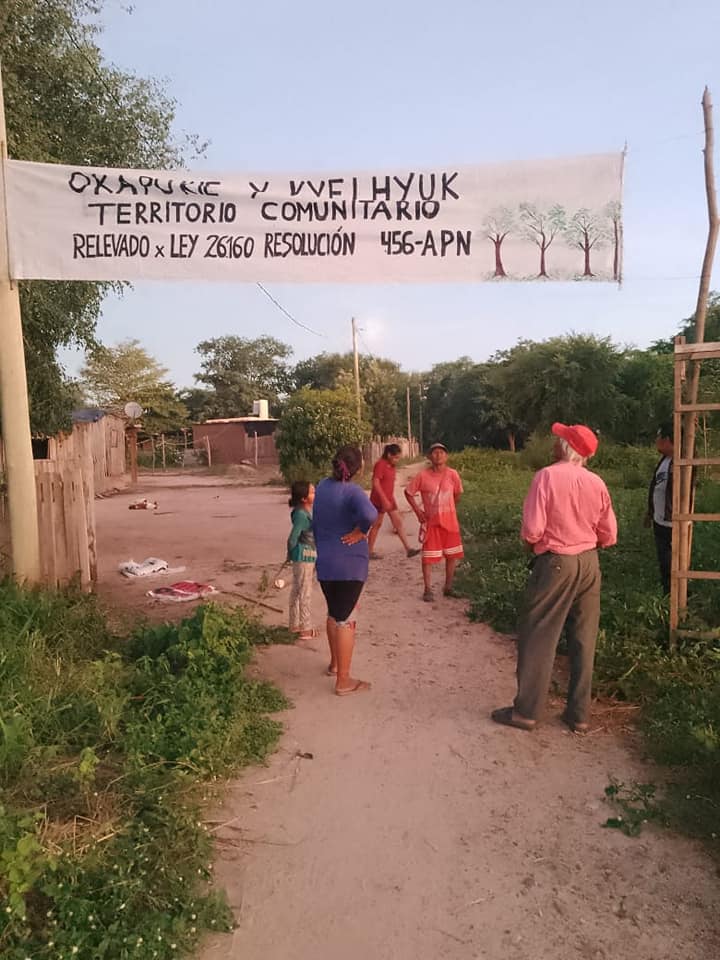
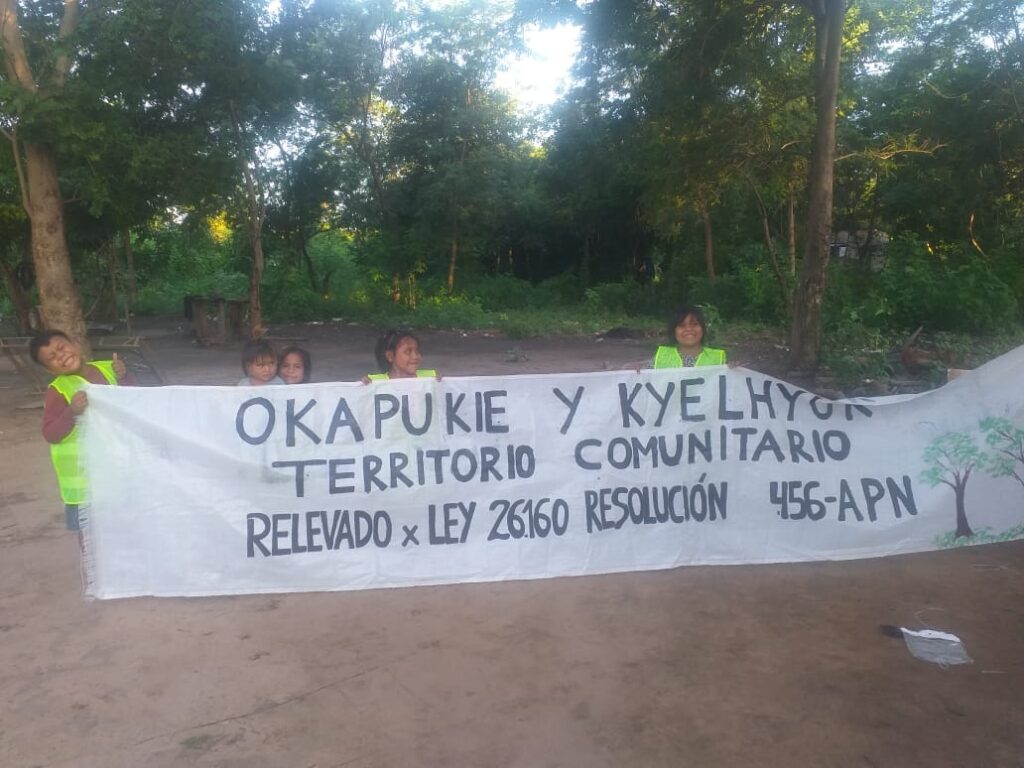
The Oka Puckie and Kyelhuk communities are located at kilometer 5 of National Route 86, in the Salta Chaco region. They consist of approximately 25 families who have a long-standing conflict with María Monserrat. She claims ownership of the 95 hectares of ancestral land shared by Oka Puckie and Kyelhuk.
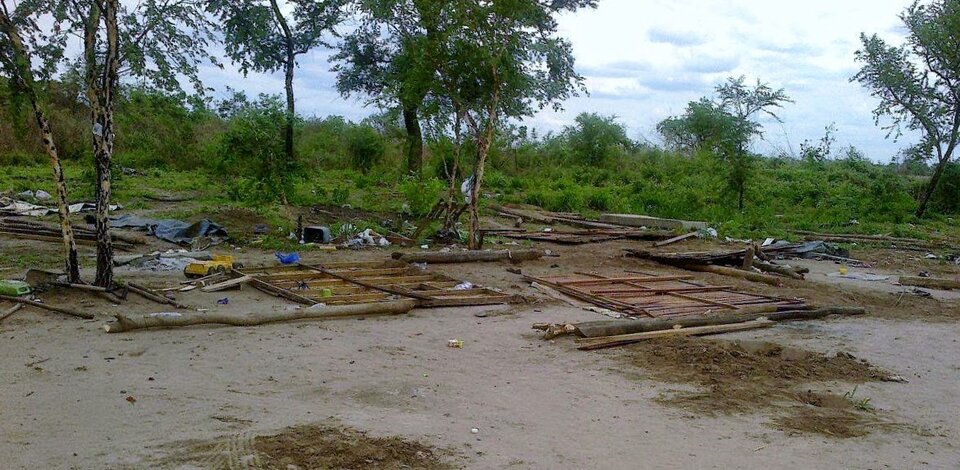
Back in November 2014, these communities were violently evicted following a complaint from the same landowner. In December 2022, the chief of Kyelhuk, Isaías Fernández, survived an attempted murder. He was shot at while protesting against the fencing being erected on community land.
In their statement, the communities reiterated that they are the “legitimate ancestral, current, and peaceful possessors of the territories they inhabit.” Their possession “is protected by international and national legal frameworks that recognize the ethnic pre-existence of Indigenous peoples prior to the formation of nation-states.”.
The communities also emphasized that they are living in a “context of threats, intimidation, and violence” against their leaders and members. “Paradoxically, the businesswoman systematically denounces the local leaders, accusing them of violence, thus promoting punitive criminalization,” they stated.
“We are calm”
The canceled hearing scheduled for October 23rd is the second one set in the lawsuit being processed in the Civil and Commercial Court of First Instance of Tartagal. López recalled that the first hearing was scheduled a month ago. It was a Wednesday, but they were notified on Sunday night, without giving them any time to prepare. "The notification arrived just like that, so suddenly, so urgently." The communities' lawyer managed to get that hearing postponed, and a new date was set for October 23rd.
The niyat, who also sits on the board of La Voz Indígena, the country's first Indigenous community radio station, recalled that Oka Puckie and Kyelhuk have always claimed the land they occupy. "We are always trying to resolve our problems with patience," she insisted.
In addition to condemning the businesswoman's actions, they denounced that "the purpose of all these maneuvers is to continue expanding the agricultural frontier onto Indigenous territories." They expressed their concern "about the use of judicial force to trample on the rights and lives of communities in vulnerable and unprotected conditions in the face of the power of large corporations with economic resources.".
Return the mountain
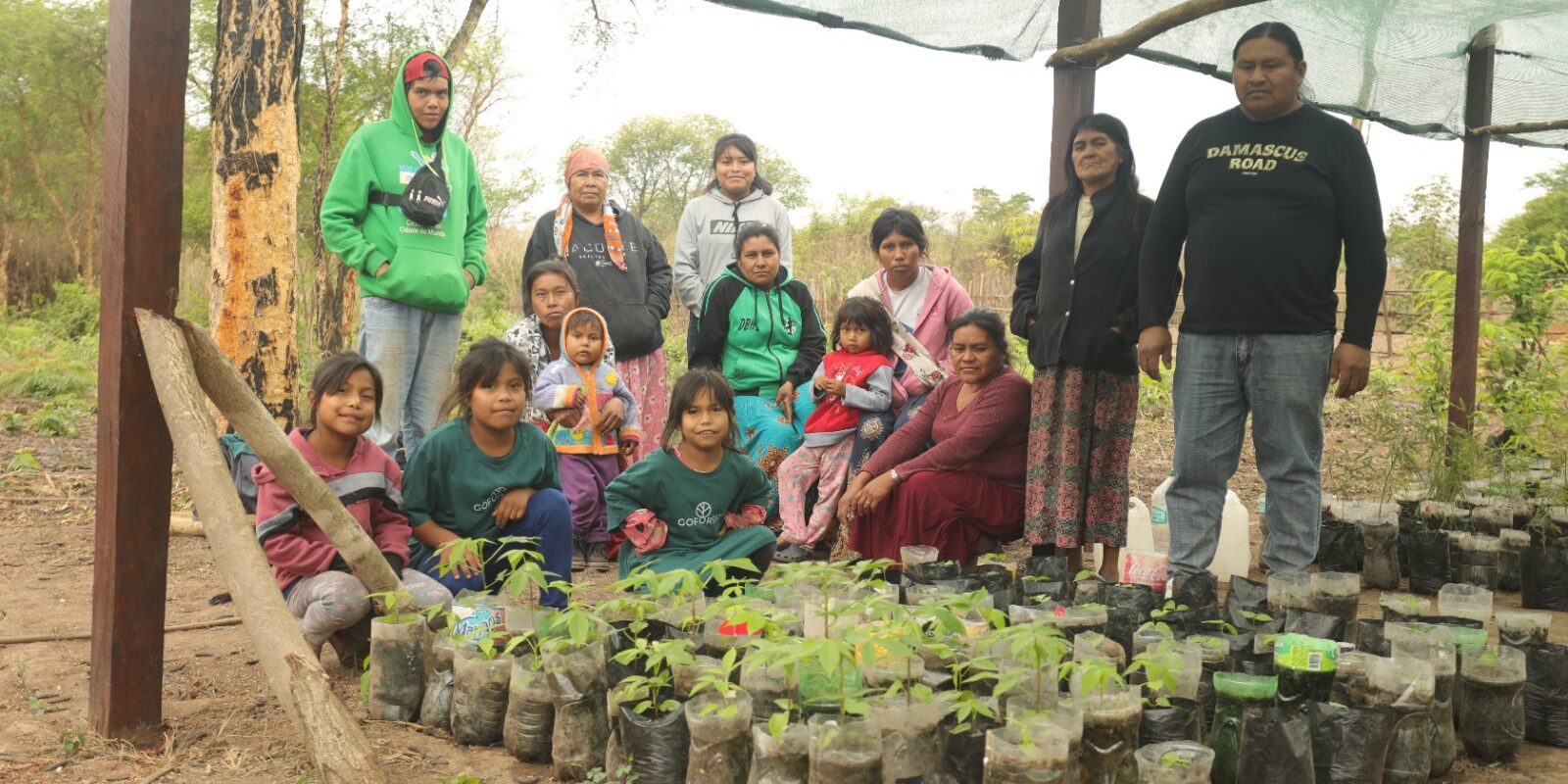
Nancy López also highlighted that the communities have been working on the recovery of native flora. They continue, she said, “looking for ways to rebuild, to see how we can recover this territory that we once had and then gradually disappeared.”.
The niyat explained that since there were no native trees left, they wondered how to bring them back and secured funding for a reforestation project. "We have a very thorough plan. We have designated areas where people can plant trees," she emphasized.
In that same effort to rebuild as a community, López notes the goal these families have set for themselves: to ensure that orphaned children from these communities grow up in their own environment.
Winning back the new generations
“We also did a great job recovering the children from the nursery,” who were “taken from their mother, their home, their culture, they were taken, they were transferred” to homes “where they don’t understand, they realize they are between four walls, they encounter another culture, another world and another teaching.”.
Nancy López lamented that foremen from the company, some of whom are members of indigenous communities in the area, are testifying against us. “They are accusing us of murder, of being violent, and many other things. They are the laborers that she (Monserrat) sends to patrol the territory, and we often run into them and they threaten us as women, because they are all men,” López stated.
In this sense, one of the milestones of these communities is the restitution, in October 2023, of a 14-year-old girl who was in a state home for nine years.
This was another consequence of the violent eviction on November 7, 2014. The police arrived at 6 a.m., destroyed everything, and beat those who tried to protect the site. The communities' resistance lasted until nightfall, until the police forced them to the side of the road.
The now-teenager, who was five years old in 2014, was being cared for by her paternal great-aunt, Ana Pérez, because her mother was an addict. At the end of the day of the eviction, marked by violence and high temperatures, Ana Pérez suffered a stroke and died the following day. Her husband then decided that the girl should go live with her mother, who was not in the community.
Isaías Fernández, son of Ana Pérez, recounted that years later they learned the girl was in a state-run children's home. A long process then began, culminating in the teenager's return to her community under the guardianship of her paternal uncles.
In the chief's family there are two other children, his nephews, who were orphaned and are now in his care.
The stigma of identity
The communicator Nancy López, niyat of Oka Puckie, Nancy López said that the farmer María Monserrat claims that the members of Oka Puckie and Kyelhuk are not indigenous but migrants from the Plurinational State of Bolivia.
“The complaint that this Mrs. Monterrat makes against us says that we are selling lots, that we are building houses of material, that we are not people from here, we are foreign people who come from Bolivia.”.
The niyat considered that the businesswoman is confused because both the teenager and the nephews of the niyat of Kyelhuk have state support and he built them "very nice houses made of material".
That “confuses people,” she said, because Monserrat argues that “if, for example, I build a nice little house where my family can be protected, a really pretty little house, then I’m a criolla.” “In other words, as an Indigenous person, I can’t also live with dignity if I have a plastic roof; if I don’t live under a plastic roof and if I have the possibility of building a nicer little house that can withstand the big storms we have, then I’m a criolla.” The farmer maintains, the niyat emphasized, that “we are not from the peoples who live in Argentina, we are foreigners; for example, I am not Argentinian, I am from Bolivia, my father was born in Bolivia, I wasn’t born in Argentina, so in the complaint she makes against us, she also says that I don’t have ancestral rights or ancestral territories
We are present
We are committed to journalism that delves into the territories and conducts thorough investigations, combined with new technologies and narrative formats. We want the protagonists, their stories, and their struggles to be present.
SUPPORT US

FOLLOW US
Related notes



We are present
This and other stories are not usually on the media agenda. Together we can bring them to light.