

Luisa Almaguer, trans singer: “Music taught me to trust”
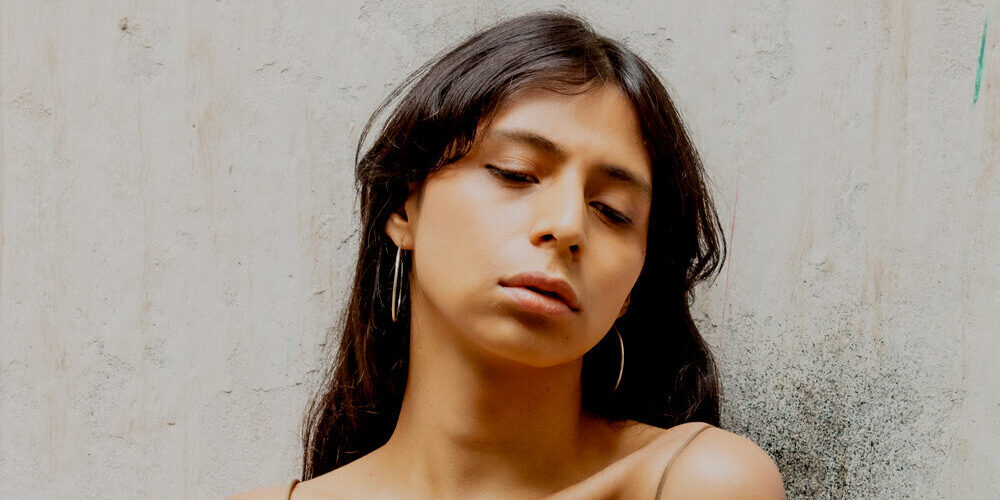
Luisa Almaguer is a multifaceted trans artist from Mexico City. In this interview, she talks about the magical path of music, the trans quota on stage, what it's like to work with an all-female band, and the complexity and contradictions of relationships with men, a theme explored in Weyes, her new album.


Share

Mexico City (Mexico). Luisa Almaguer is a trans singer originally from Azcapotzalco, a borough in northern Mexico City. She is also a songwriter, actress, and communicator. She has worked in film, hosted a podcast called La Hora Trans (The Trans Hour) , and this year released her second solo album. Her new album is called Weyes. In Mexico, the expression "wey" is a way we use to refer to someone regardless of gender. The plural, " weyes ," does indicate gender and is used to refer to men.
Weyes speaks of love, her childhood, identity, and also of men. “Of the men who have taught me about tenderness. Of those I have been in love with, but also of those who have not known how to take care of me,” she says.
When Luisa introduces herself, she calls herself “a trans singer.” For her, saying so is a political act, because being a trans woman in Mexico, a dangerous and violent country for them, is. “I’m proud to say I’m a trans singer. I’ve never heard anyone else say it. There are few of us, or historically, I’ve never heard anyone say it. It’s important to name it, even though there are people who tell me, ‘Don’t say that anymore, you’re a singer and you’re valued for that, not for the other thing.’ And yes, but that other thing is also who I am, and I’m proud of it. It means a lot because that word alone can resonate with so many people.”
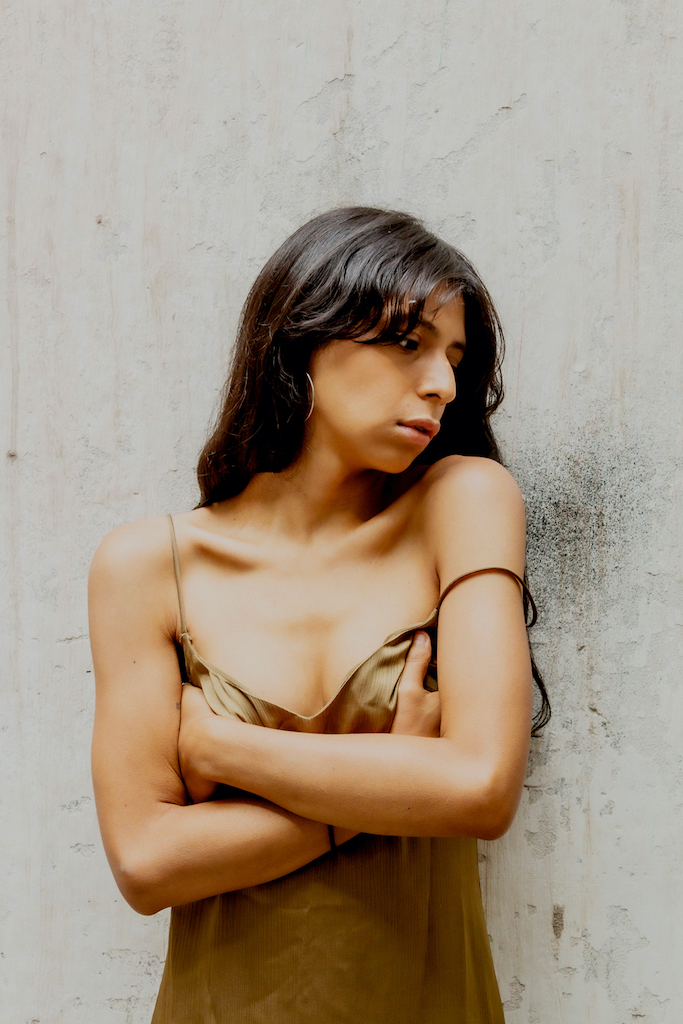
Presentes spoke with Luisa about her art, and also about being trans in the music industry. She discussed what it means to have women around her as part of her team. She says that this year music has taught her about intuition and trust, and she's open to that mystique.
Part of that confidence, she says, comes from not going it alone. Today, she's accompanied by a team of other women who help her sustain this commitment: to make music an increasingly viable way to make a living. They work to achieve that dream and support themselves, with its joys and worries, like the current health of their dog.
How class and gender impact music festivals
In Latin America, there isn't a single festival made up entirely of female musicians, says Luisa. But there are festivals where the stage is all men and there isn't a single woman. For her, the main problem isn't just gender, but class.
“It’s not because they set out to do it. That’s just how things are. It speaks to how difficult it is to make a name for yourself in music. I think it has more to do with class and being white than with gender. In general, when it comes to making art, class matters a lot more, and that’s the number one problem regarding whether or not we as a band (as individuals) can make a living from our projects .
The trans quota
Luisa is also critical of how some music festivals create platforms for inclusion and diversity. She knows that sometimes it's a kind of "quota" or token that disguises a false inclusion of historically marginalized groups by companies or organizations. But she also recognizes that being part of it helps her music gain recognition and even allows her to challenge expectations and speak her mind.
“Many times I’ve been the token in the panel discussion, at the festival, in the women’s special. I’m aware of that, but I also try to take advantage of it and be honest with myself. Always be genuine, even if I know I’m there to fill a certain quota or provide some peace of mind for the organizers,” she says . She knows that “ music is a place that trans people have earned through our work and talent. Although there’s also hatred and ignorance in music and these spaces. Sometimes I see a kind of fascination, as if we were celestial beings. That throws me off.”
Tenderness and desire, care and risks
Luisa has made three albums. The first, an EP, Miljillo (2016). Then Mataronomatar (2019) and her most recent production, Weyes (2024). Since 2020, when she started putting it together, she wanted Santiago Mijares to produce it. “With him, the music soared and grew a lot. It was a really cool exercise that gave the sound a certain evolution, intimacy, and depth.”

In all her albums, trans identity is present in the lyrics, exploring love and heartbreak, being desired, pleasure, anxieties, and everyday life. But in Weyes , the duality of speaking about men also coexists, from tenderness and care, desire and danger, as in the song "Tío Hugo" (Uncle Hugo ).
—What did you want to explore by talking about men from these dualities?
“ I wanted to talk about men and what I feel. Love, desire, attraction, and tenderness, but also about the fear, rejection, and danger that we can feel when we interact with men. This involves more nuances than we sometimes portray in our discourse about men and how we relate to them. I think that in music, it is necessary to talk about tenderness, about the male figures who were constructive, who knew how to understand us, who were better at intuiting what we needed in our childhood , for example.”
“Music will never leave you on read”
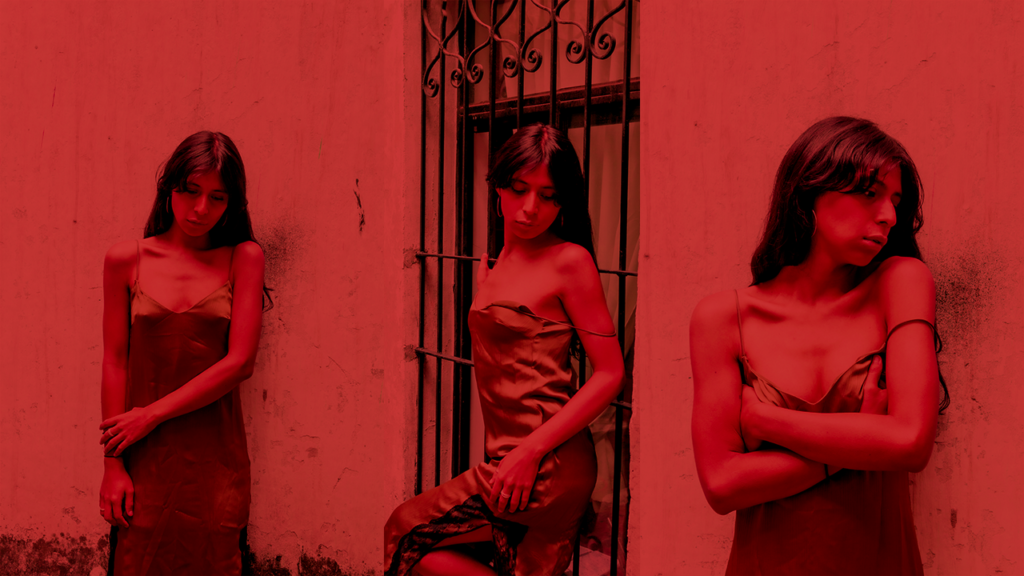
Where has music taken her? Luisa speaks of “magical paths.” Beyond collaborations, like participating in the African Express ensemble at the Bahidorá festival, alongside Mare Advertencia, Damon Albarn, Nick Zinner, Bonobo, Fatoumata Diawara, and others. Singing with musicians who are now also her friends, like Jessy Bulbo , the Witch of Texcoco . And how music has taught her to be more connected to her intuition and to trust.
— Trusting is hard for me, but music has taught me about that this year. That it will never leave you on read, it will never hurt you. You can trust music. And for that magic to happen, you have to be open to it, eat well, and be more or less clear-headed.
This year Luisa learned what it means to be at the service of music. “I’m sensing what the song needs, and it’s going to tell me in different ways. And I have to be attentive and present to grasp what I need to do, so that the song comes out the way it should. Music has helped me to be more in an almost spiritual role, more in touch with myself. It has helped me to trust my intuition. And not to confuse my intuition with stubbornness .”
“An all-girl team makes all the difference”
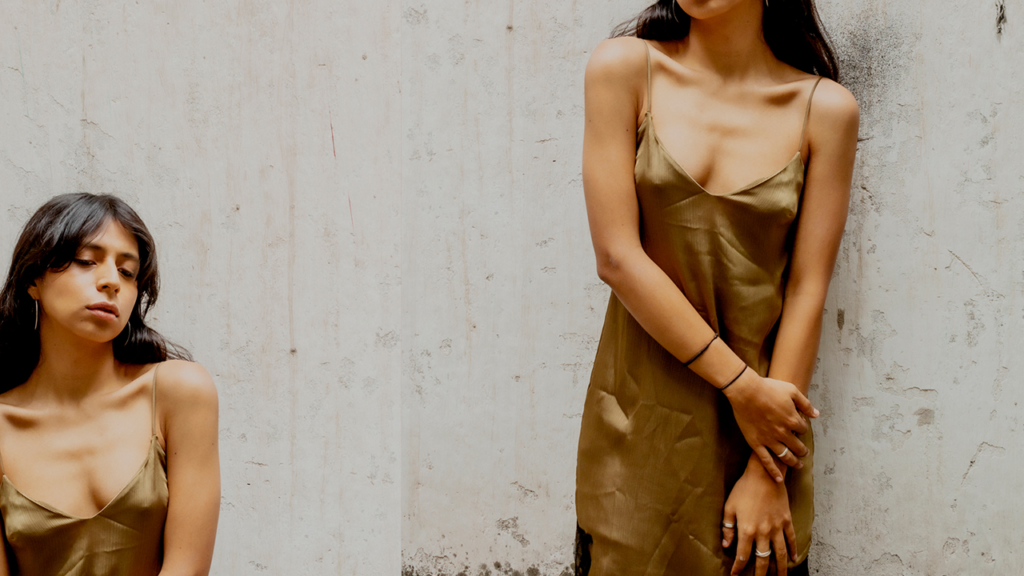
Luisa has performed at many venues in Mexico City and other parts of the country, in both intimate shows and full band . On October 8th, she will be at Foro Indie Rocks in Mexico City with her full band, backup singers, and a saxophonist. She considers this the most important show she has had so far.
She's been working on it for a while now, with a team of women. When asked what it's like to work this way, Luisa replies that it's been the best thing that's ever happened to her.
“ I had a manager, a cisgender heterosexual man, the worst thing that could have happened to me. Now I've fallen into the wonderful hands of a team that's basically all women. My two managers are lesbian women, and that's made all the difference. There's more clarity, less bullshit, no egos, the accounts are doing well, the work gets done. Having a team of only women who know what they're doing has also influenced my sense of trusting other people, but not just anyone, them. I can allow myself to feel bad about my dog, knowing that the work keeps moving forward. I'm a total scatterbrain (disorganized, forgetful), and I'm grateful. Having them has been the best thing that's ever happened to me.”
As Frida said: Long live life
—Where do you find joy or hope right now?
— In music, in dogs, in a michelada with salt, lime, and sesame seeds. In seeing trans people. When I see young trans people, I'm overwhelmed with tenderness; it moves me deeply. In plants, trees, movies, the flowers I try to get every week. I really love lilies, alstroemerias, and bougainvillea, watching them grow and bloom. Singing, singing, singing. Seeing the musicians I like, seeing Julian, the guys who hang out with me. My team of badass women. Las Perdidas, trans humor, my friends, laughing our heads off, dark humor. Yes, there are many things that make life worth living. Despite everything, I still hold onto that Frida Kahlo mantra and the watermelon, which was the last thing she painted, where she said, "Long live life." I think that's where it comes in, despite the damn life that we also suffer.
We are present
We are committed to journalism that delves into the territories and conducts thorough investigations, combined with new technologies and narrative formats. We want the protagonists, their stories, and their struggles to be present.
SUPPORT US

FOLLOW US
Related notes

We are present
This and other stories are not usually on the media agenda. Together we can bring them to light.