

How did they come to condemn seven members of Lof Winkul Mapu for "usurping" the territory they claim?
Following the withdrawal of agreements between the State and the Mapuche community of Winkul Mapu, the courts convicted seven members for "usurping" territory they claim as their own. The machi (Mapuche spiritual leader) was 17 years old at the time of the events but was only acquitted on the first day of the trial.


Share

BARILOCHE (Río Negro). On Monday, September 30, Federal Judge Hugo Greca sentenced seven people for the illegal occupation of a property in Nahuel Huapi National Park, which was claimed by the Mapuche community Lof Lafken Winkul Mapu in 2017. Only some members of the community attended the trial.
Luciana Jaramillo, Romina Rosas, Yessica Bonnefoi, Aylén Tapia, and María Nahuel were arrested at the site (40 km from Bariloche) during the operation on November 23, 2017. Yesterday, they were given two-year suspended sentences for trespassing. Johana Colhuán and Gonzalo Coña were sentenced to two years and six months for trespassing and resisting arrest for being present two days later when a Coast Guard patrol encountered members of the community. The only one acquitted was the machi (Mapuche spiritual leader) Betiana Colhuán Nahuel, because she was a minor at the time of the events, and therefore the charges against her were dropped at the start of the trial on September 26.
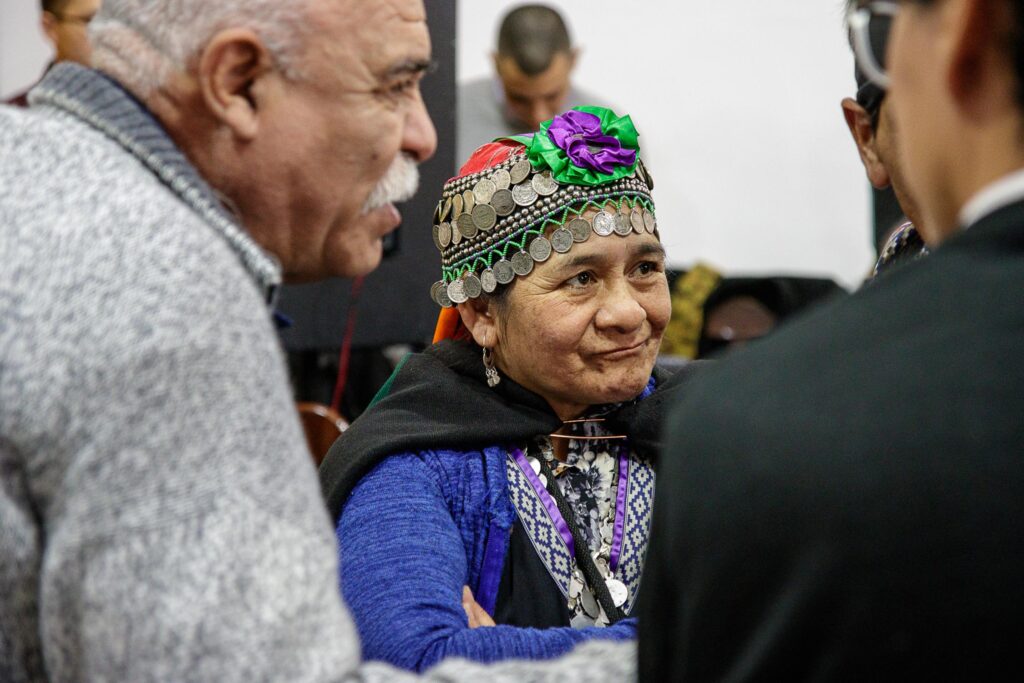
Eduardo Soares, the defendants' lawyer and a member of the Lawyers' Association, was not surprised. "The verdict was expected. They fought as hard as they could. Neither the prosecution nor the plaintiffs could prove anything, but they had everything in their favor from a political standpoint," he said after the trial, which lasted three hearings.
Before the final hearing, the Lawyers' Guild warned: “We can no longer continue speaking as if this were merely a case of usurpation against a Mapuche community's territorial recovery. The fate of Winkul largely depends on what happens to the Mapuche people who decide not to surrender or compromise their history and worldview ,” the guild stated in a press release. This worldview was explained in her testimony by Machi Betiana Colhuán Nahuel. After being acquitted initially, she was admitted as amicus curiae to present her arguments to the judge.
“We seek a connection with the territory, not to own it”
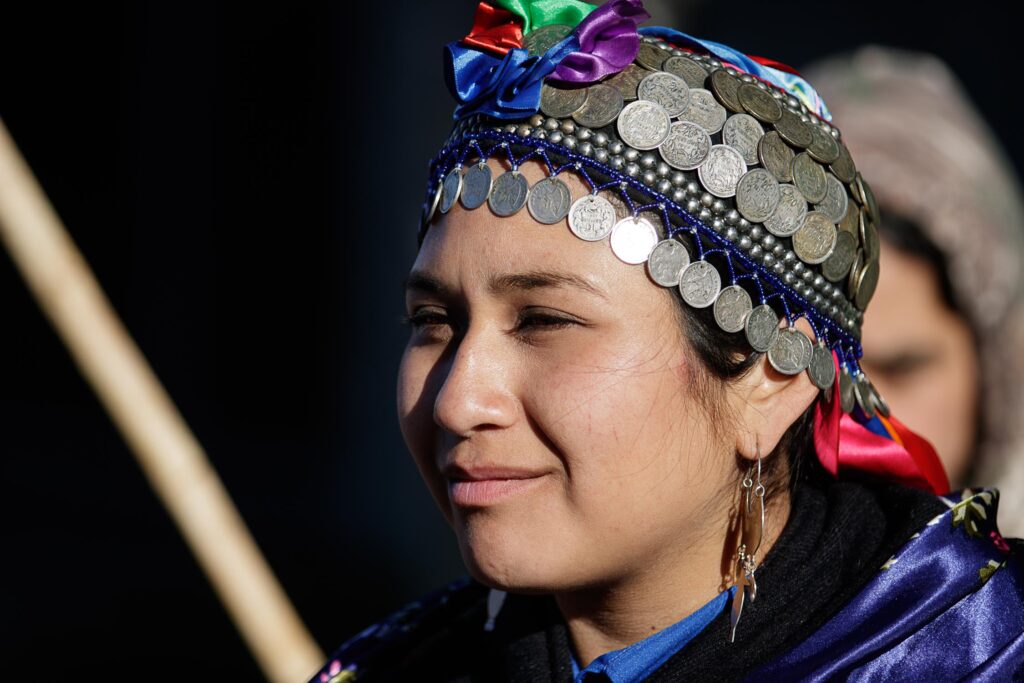
“ We are not seeking to own the land . The State cares about having a title, but we are not seeking a title or to make a financial gain. We seek to have a connection with the land, to be a part of it, to care for it, and to live well . I have a connection with a rewe, and that connection is unique to me. And it is for life. In that place lies health. It is not a whim for us, nor a desire for power; we are not going to seize land to sell. It is a lifelong connection.”
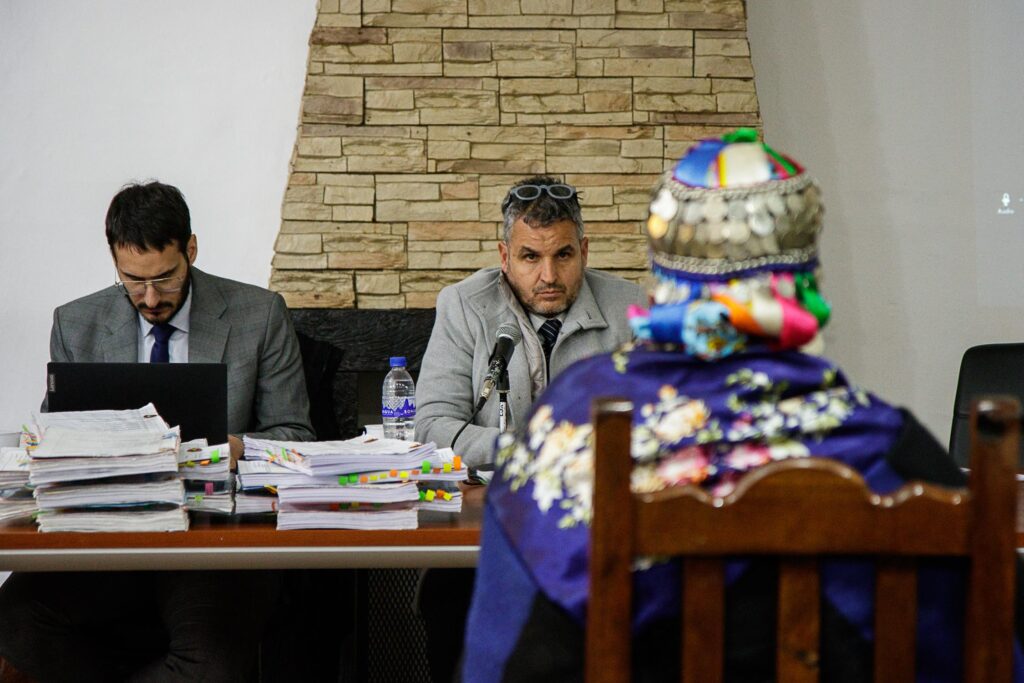
In her twenty-minute presentation (without interruptions or questions), the machi tearfully recounted: “For me, this is losing my life. If I abandon this role as a machi, I will die. I was born with two tumors and I always fought to cling to life, to the land. The foundation of this spirituality isn't something you develop overnight. It took years.”
During his testimony, absolute silence reigned in the courtroom. It was broken only by the whispers of the self-proclaimed "residents of Villa Mascardi"—although several live in Buenos Aires—and the National Parks authorities.
Security operation to “make an example”
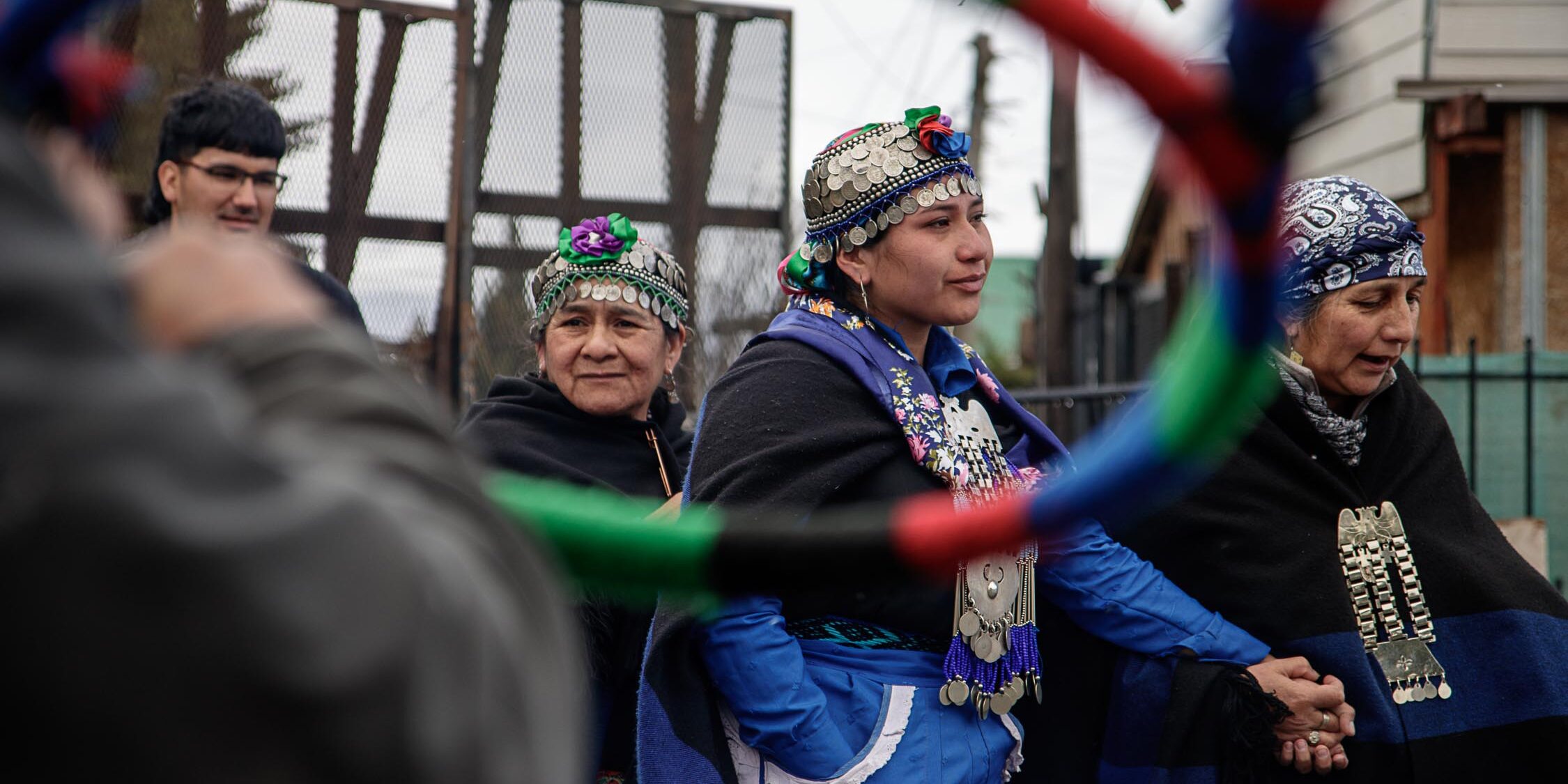
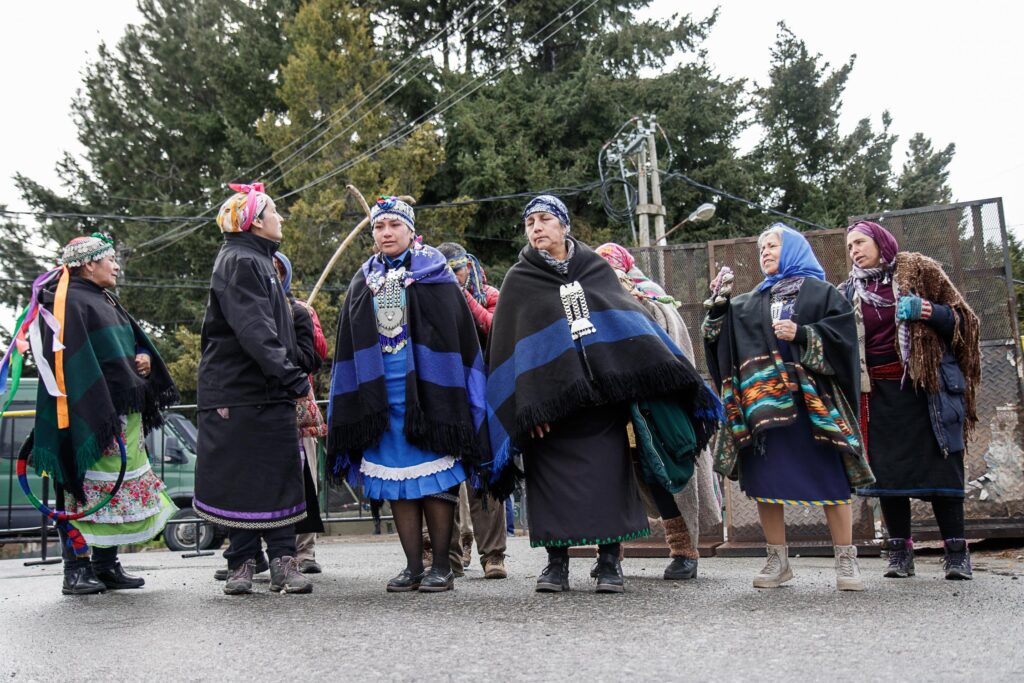
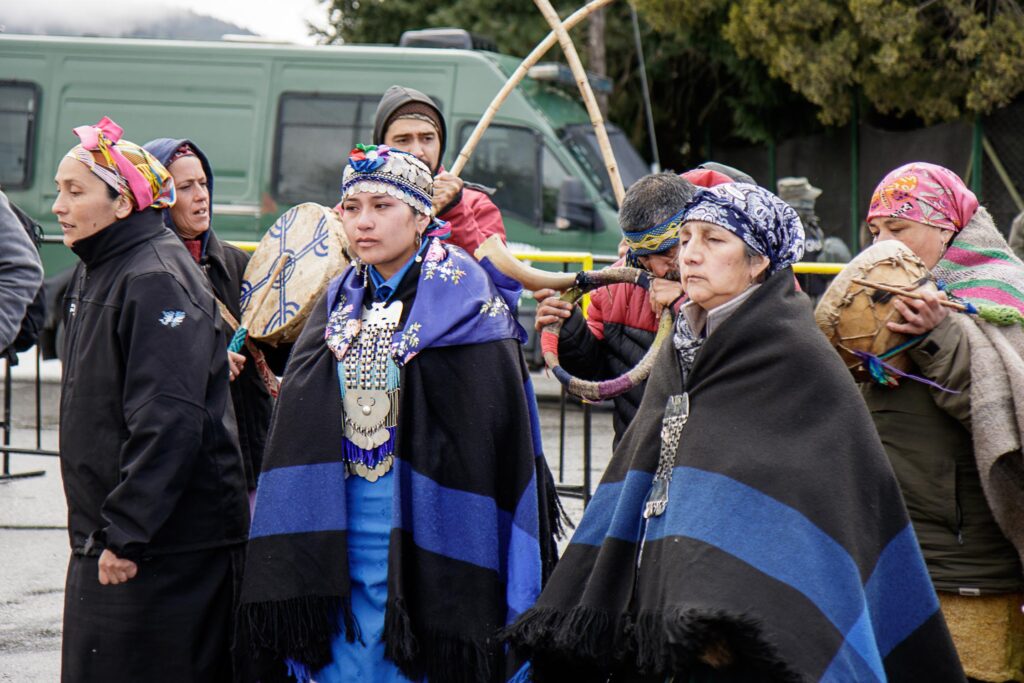
During the first days of the trial, about twenty people peacefully accompanied the defendants from the street. They gathered on a street corner to listen to the broadcast, holding banners and a communal pot.
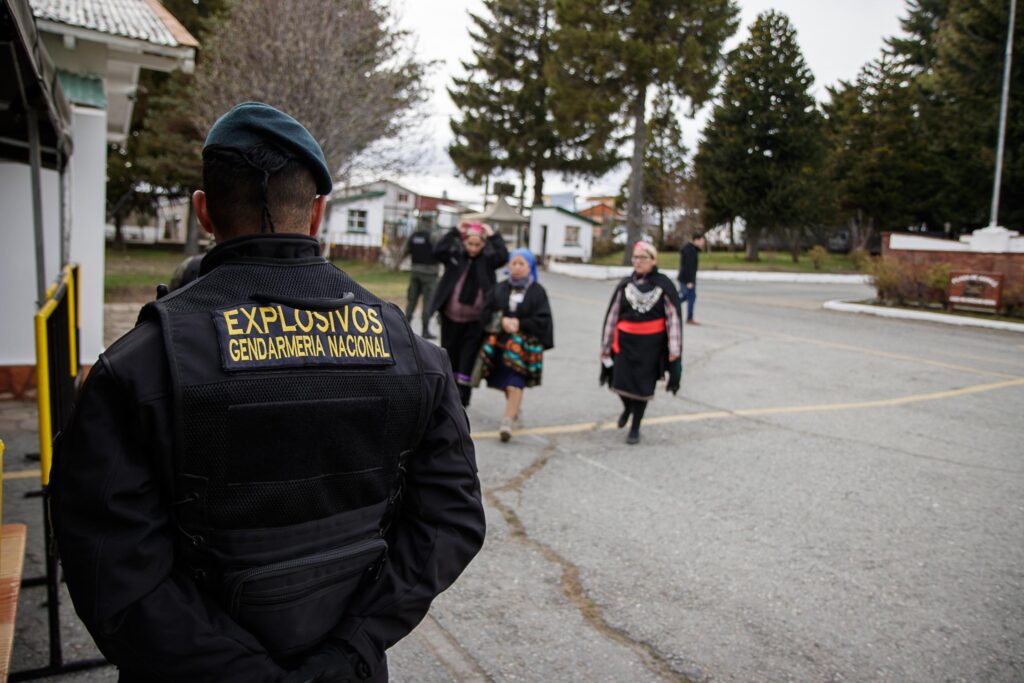
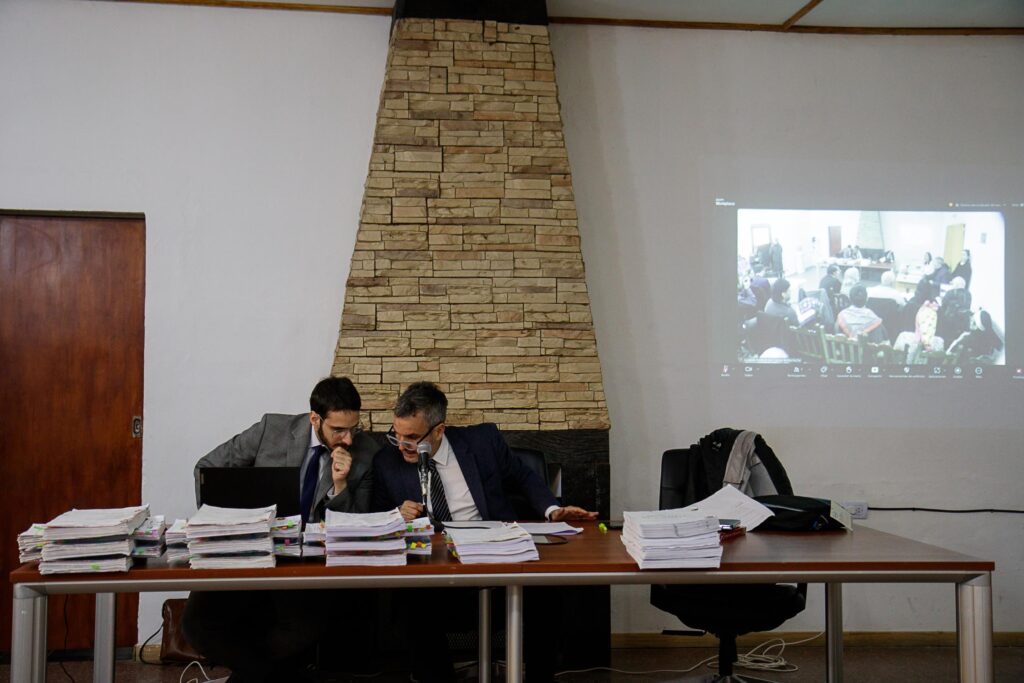
The fate the lawyers' association spoke of wasn't limited to the outcome of the trial, but also encompassed the process itself. The hearing was held at the Gendarmerie Squadron, citing the lack of another venue. The area was fenced off with dozens of officers armed to the teeth at every corner. According to the squadron commander, more than 200 gendarmes were involved in the security operation . Upon arrival, everyone was searched several times before entering, including the lawyers. They remarked indignantly, "Not even in Comodoro Py do they do this. It's a disgrace."
Furthermore, during the three days of the trial, classes were suspended at four schools near the Gendarmerie headquarters, some several blocks away, “for security reasons.” It is unclear what the authorities fear. What is evident, however, is that the military presence demonstrates how the government seeks to make an example of this community.
Last week, the trial against another community, Lof Quemquemtrew, took place twenty blocks away without any special security operation or national media attention. The proceedings were conducted peacefully. The verdict is expected on October 2nd.
Violence and dialogue
Throughout the debate, there was much discussion about violence and dialogue. The prosecution focused its argument on the fact that the community entered violently and never wanted to engage in dialogue. But the witnesses consistently referred to “verbal violence,” shouting, insults, and “threatening behavior” such as covering their faces or having their hands in their bulging pockets.
“It was all very violent,” said Nicolás Vinuesa, the plaintiff's lawyer representing National Parks, during his closing argument. “Park ranger Urminatti was intimidated; she had to open her jacket to show she had nothing. It was all very violent; they yelled 'genocidal white man' at her. All the Federal Police witnesses testified that when they entered the property, they encountered resistance, were pelted with stones, and there were barricades.” According to the accounts, the verbal and intimidating violence escalated to stone-throwing when hundreds of armed officers entered the territory.
The defendants' statements were compelling. Luciana Jaramillo said that on November 23, while it was still dark, she woke up to the sound of “screams and gunshots. It was like a war movie.” She stayed with her three-year-old son until “I felt someone hit me in the back. I fell face down, lost my glasses, and saw them lift my son by his clothes and spray something in his eyes; I don't know if it was pepper spray or what.” She clarified: “No one ever spoke to us.”
On the second day of hearings, several officers who participated in the patrol on November 25, 2017, testified. The effect was that the community heard, over and over again, the account of that fatal day from the perspective of those responsible for the death of Rafael Nahuel.
From the outset, the Coast Guard has maintained that they were attacked with firearms by the Mapuche community. This is despite the fact that they were not shot at during the operation two days prior, and no such weapons were ever found, not even a single shell casing that wasn't from the Coast Guard.
Prosecutor Rafael Vehils Ruiz even requested a harsher sentence, arguing that the crime was committed with a firearm. He argued that "the use of spears from a height, and the use of atypical weapons, increases the intimidating power." Hard to believe, considering the Albatros Group was carrying MP5 submachine guns.
The plaintiff's lawyer, Vinhuesa, sought to establish that "Colhuán and Coña dispossessed the National Parks Service of the land, dispossessed the Albatros Group of the land." However, it had already been proven in the trial for the death of Rafael Nahuel that among the 130 bullets fired by the prefects, one killed the young Mapuche man from behind, another pierced Johana Colhuán's shoulder, and yet another perforated Gonzalo Coña's forearm. With this as the sole evidence, Johana and Gonzalo were convicted not only of trespassing but also of assaulting an authority figure.
Defense attorney Gustavo Franquet stated in his closing argument that “the fact that someone was present at the scene is not sufficient to prove the commission of a crime.” The fact that the only evidence of Johana and Gonzalo's presence is the gunshot wounds they sustained is doubly painful.
“Every time we tried to have a dialogue, there was a lie.”
Defense attorney Eduardo Soares began his argument by questioning the very framework of the conflict: "If we intend to resolve a territorial conflict through the penal code, we're screwed, because the basis of the penal code is violence."
The State is choosing a procedure of this nature instead of respecting an agreement already signed by all parties. This week marks two years since the violent operation by a Unified Command that evicted the community, after which four women spent eight months under house arrest with their children.
They only achieved freedom after lengthy negotiations with the national government (during Alberto Fernández's administration) that culminated in the signing of an agreement that dropped the charges, relocated the community, and allowed the machi to return to the rewe. The outgoing government refused to implement the agreement, and the new administration completely reversed it. When María Nahuel spoke, she emphasized: “ They say we don't want to talk, but every time we tried, there was a lie. ”
Despite the existence of such an agreement, prosecutor Vehils Ruiz stated in his argument: “There was no recovery of the rights they may have, but not in this way, rather through a dialogue.” In contrast, the lawyer for National Parks, demonstrating a lack of understanding of the legal frameworks protecting territorial rights, said: “They claimed to have rights they do not possess.”
Before the judge retired to deliver his verdict, Romina Rosas stated: “We are not violent, we are not terrorists, we are Mapuche. We want the State to recognize us. We don't feel we have equal rights, not even in a trial. We only receive violence.”
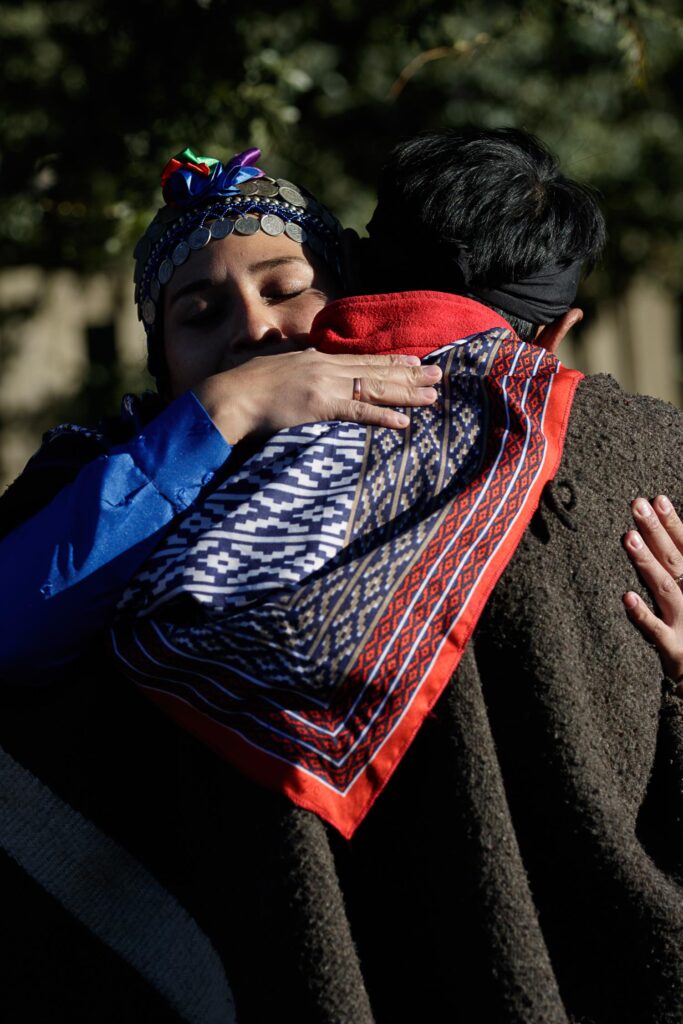
The rewe, ceremonial place
The main conflict is over the rewe, the machi's ceremonial site, unique in the world for her because it is the place where she "rose" (was established as a machi). And the prosecution requested, as a condition of the suspended sentence, a ban on attending the rewe.
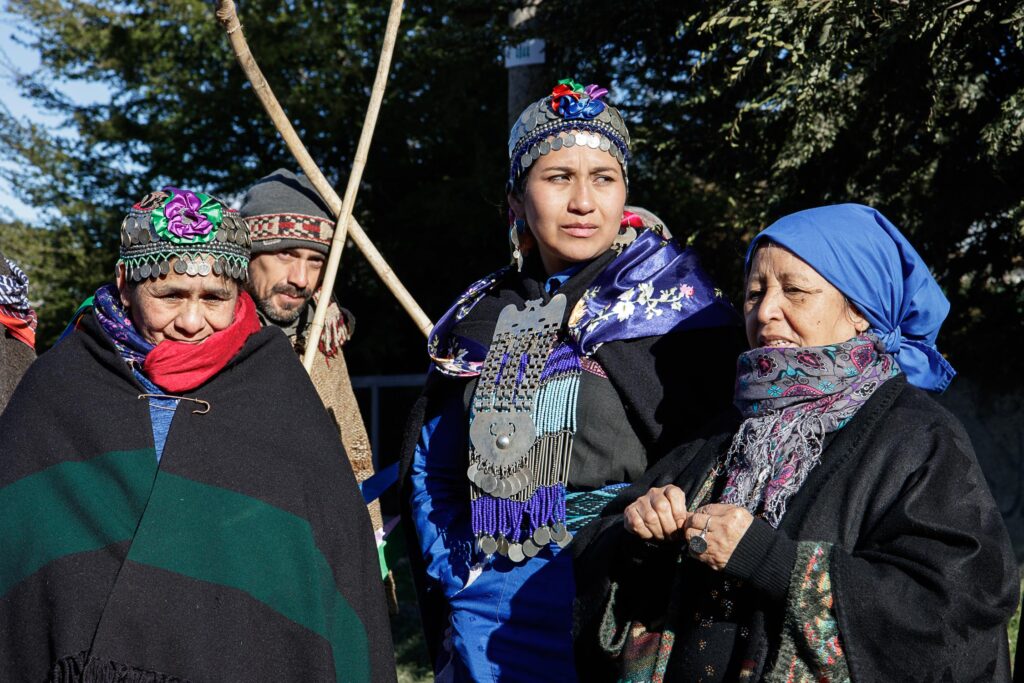
Laura Taffetani, the defense attorney, argued: “We can cite so many rulings, so many laws, but if after all that they ask for no approach to the rewe, it shows a total lack of understanding. This conflict marks the history of our country. We cannot continue debating the 'Conquest of the Desert,' or whether they came from Chile. It is clear that those who arrived last were my own ancestors.”
Outside the Squadron, after hearing the sentence and meeting with the people who waited outside in support, Machi Betiana stated: “We will not surrender. We will remain steadfast until the day we leave this land. We were born with this strength because we have this firm conviction to keep fighting. This is who we are and who we will continue to be.”
We are present
We are committed to journalism that delves into the territories and conducts thorough investigations, combined with new technologies and narrative formats. We want the protagonists, their stories, and their struggles to be present.
SUPPORT US

FOLLOW US
Related notes



We are present
This and other stories are not usually on the media agenda. Together we can bring them to light.