

A forestry company took them to court to evict them, but witnesses claim that Cuesta del Ternero has always been Mapuche territory
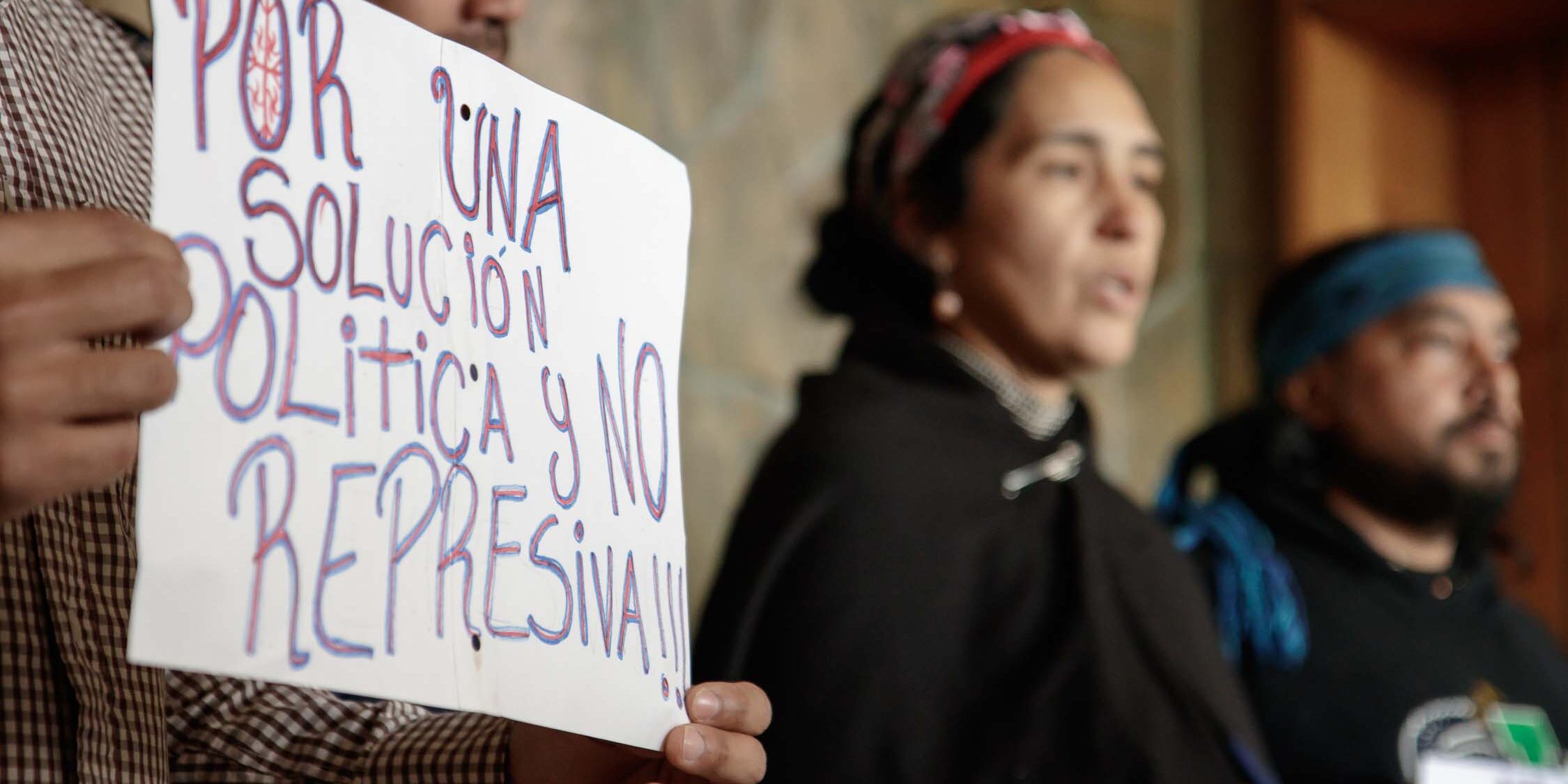
Despite their unclear land claim, a forestry businessman sued six Mapuche people to evict them from the territory claimed by the Lof Quemquetrew community in Cuesta del Ternero. It was there that Elías Garay, a member of the community, was murdered in 2021.


Share

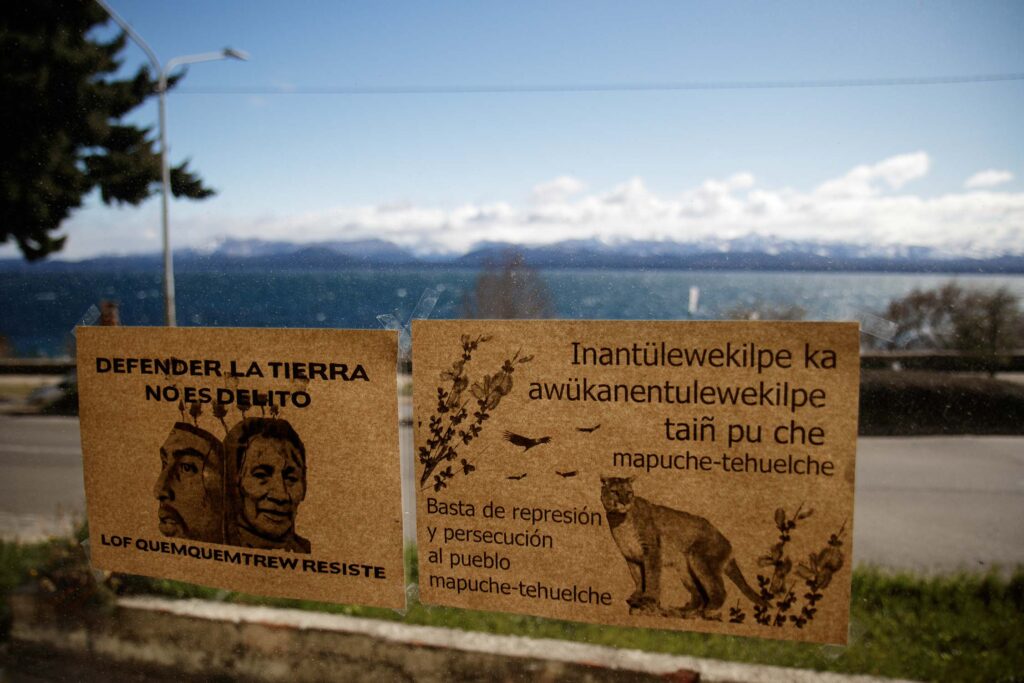
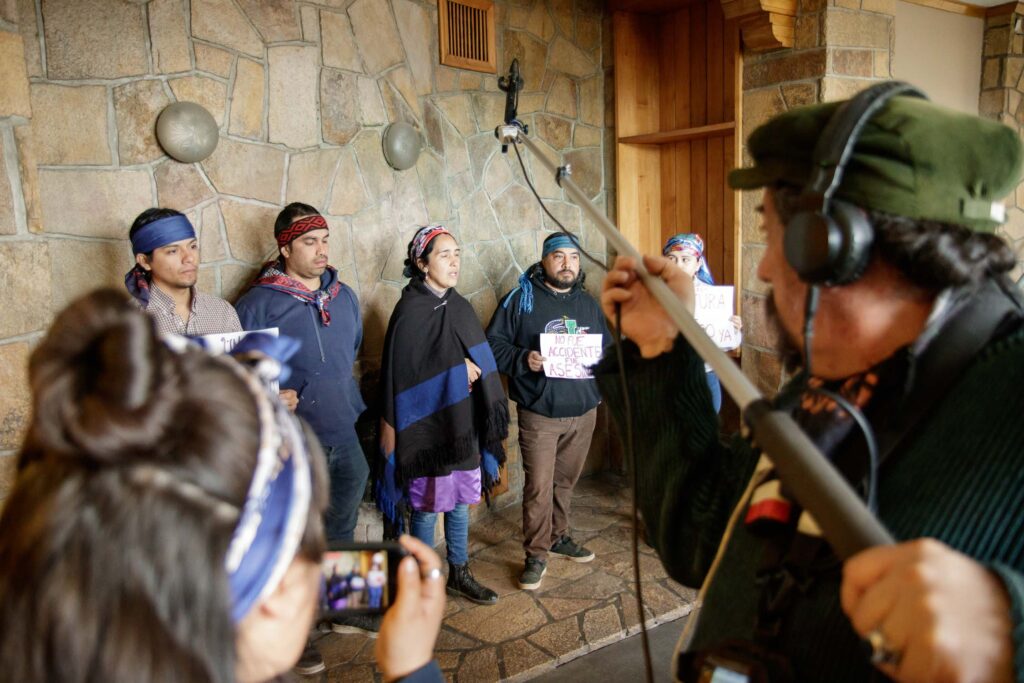
BARILOCHE, Río Negro . On Thursday, September 26, the trial against the Lof Quemquemtrew community concluded in Bariloche for the "usurpation" of land in Cuesta del Ternero, a rural area 30 km from El Bolsón. The community claimed the territory on September 18, 2021, and was sued by Rolando Rocco, a local businessman with forestry concessions in the area who is seeking their eviction.
On October 2, the sentence
Over four days of hearings, the debate centered on two main themes. On the one hand, a more technical discussion to define Rocco's role in the plantations, the extent of the community's settlement, the rights related to the forest plantations, and issues related to clandestine activity and violence.
On the other hand, the discussion covered Indigenous rights and the global situation of Indigenous peoples. As Orlando Carriqueo, werkén (spokesperson) of the Mapuche Parliament Coordinating Committee of Río Negro, stated in his testimony: “In the province (of Río Negro), in Argentina, and in most of Latin America, the states have not been able to resolve the territorial situation.” Judge Romina Martini will have to consider both lines of argument when issuing her ruling next Wednesday, October 2.
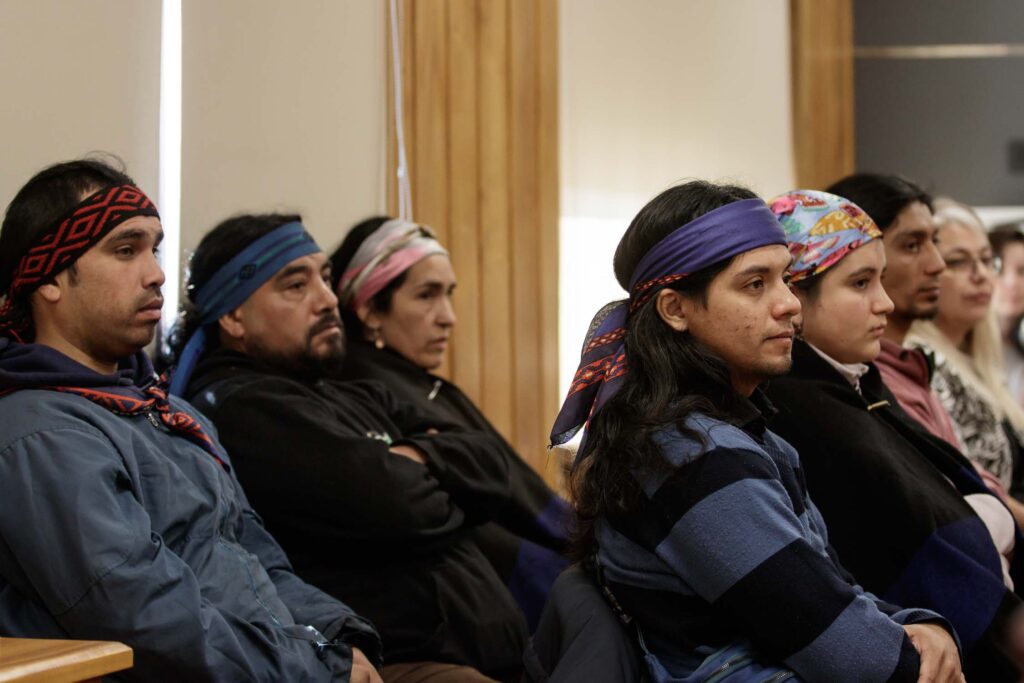
On the first day, testimonies were heard from the plaintiff, Rocco, and his contractor, as well as from some police officers . On the second day, only police officers testified, and all the testimonies related to the eviction operation of September 24, 2021. The police officers recounted how they entered the territory and were met with insults and stones. It seemed the intention was to portray the Mapuche community as violent, but the excessive force of the operation became evident.
According to witness Osvaldo Tellería, Chief of Police of Río Negro at the time, there were approximately one hundred officers involved, including the Río Negro police, the COER special operations group, and the Mounted Brigade. With this large deployment, they arrested three men, two women, and a child. The men were detained, while the women were allowed to leave with the child. When Ariadna Mansilla, one of the accused, testified, she stated: “They threw us to the ground, held the two women down, and Romina’s son as well.”
The diffuse ownership of the forestry company
Part of the discussion centers on Rocco's claims of possession, as he asserts ownership of 2,550 hectares in Cuesta del Ternero . However, his employee, Martín Feilberg, spoke of no more than 600 hectares of forested land that needed clearing. Furthermore, the police officers who participated in the attempted eviction indicated that the Lof Quemquemtrew settlement was "50 by 50 meters," "about 500 meters," or "a large area, big enough for several tents ." Therefore, the defense argued that although Rocco has plantations in nearby areas, he cannot claim ownership of 2,550 hectares , and the community's land could not be included because it is entirely native forest.
This was corroborated by several defense witnesses who are very familiar with Cuesta del Ternero. Among them were Nehuén Loncomán, president of CODECI (Council for the Development of Indigenous Communities of Río Negro); Pablo Nieto, who was the principal of the primary school in the area less than two kilometers from the community; and Daniel Tornero, who has known the area for over 60 years and helped establish a community radio station at the school that served the communities of Cuesta. He also collaborated with the Lof Quintupuray's claim to their ancestral lands in 2008. All of them affirmed that the area is entirely native forest.
Since Rocco neither owns the land nor has ever lived there , his claim to possession is based on the pine plantations. Therefore, if the community is located within a native forest, that area would not be considered part of it. However, in her argument, prosecutor Betiana Cendón stated: “Everyone knows that the community has full control over the entire property.” It remains to be seen whether the judge will accept a “everyone knows” claim without further supporting evidence.
Cuesta del Ternero has always been Mapuche territory
Mirta Ñancunao lives in the Lof Las Huaytekas, about 25 km from the Lof Quemquemtrew. She has been in conflict for many years with businessmen who planted pine trees and then tried to seize the land . In her statement, she explained the process in detail. “The Forestry Law grants many rights to those who plant pine trees. The foresters arrived, and the plantations were subsidized by the State. Those who planted the pine trees generally never lived there. The land was guarded by the pine trees, contrary to what they demand of us, that we live there.”
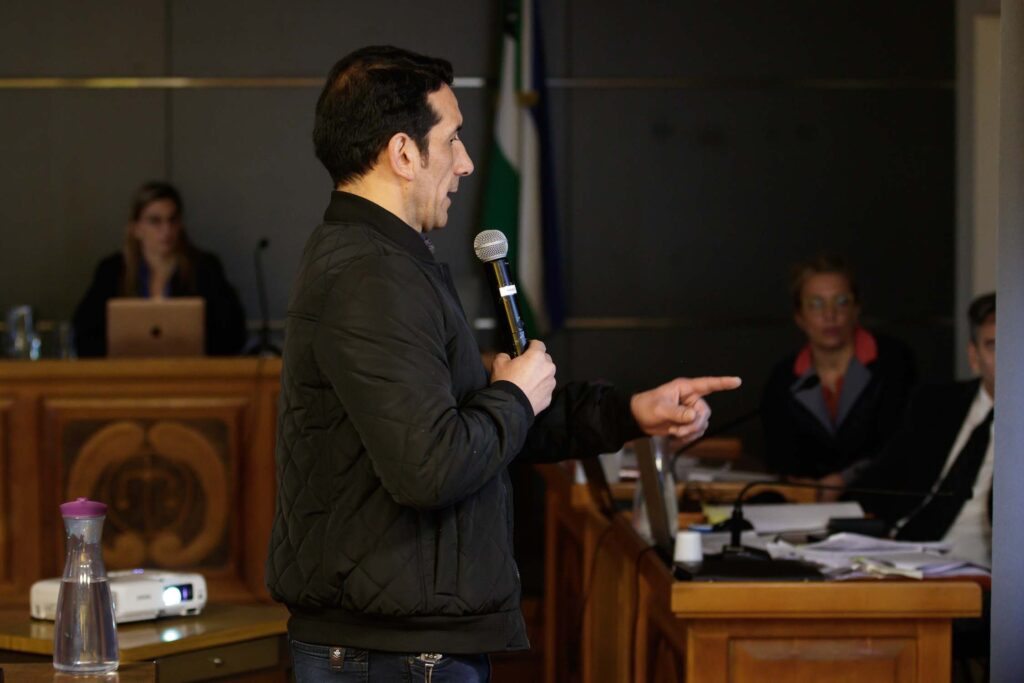
Another point emphasized by the defense witnesses was demonstrating that Cuesta del Ternero has always been Mapuche territory . Daniel Otal, with decades of experience in land and Indigenous affairs, was particularly forceful on this point. His work includes the Indigenous Advisory Council, the committee that developed the province's Indigenous Law 2287, and years of rural journalism on two radio stations in El Bolsón. He also served as the provincial land officer for the National Ministry of Agriculture.
In that role, he mapped the subsidized forestry plantations in the province. He unfolded a map of the valley to explain the locations. And when asked if Mapuche communities lived in La Cuesta, he replied: “ non- population grew , but I knew it primarily as an indigenous community. 'lof' wasn't used , but they formed and grouped together.”
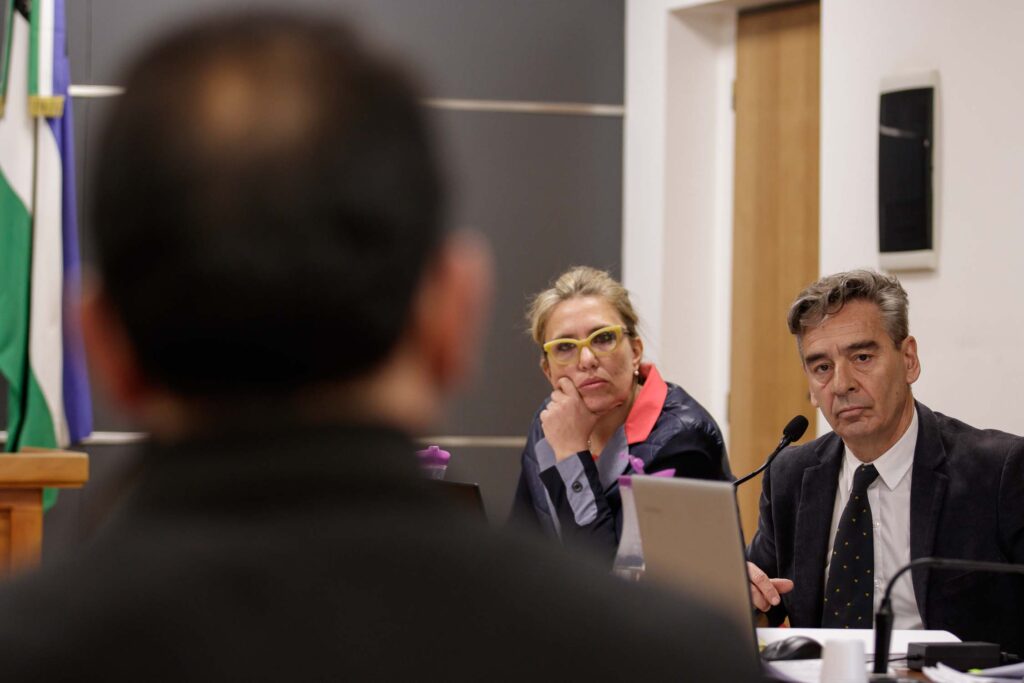
The Indigenous Law guarantees the regrouping of communities
The regrouping of the communities is key. The prosecution insisted on asking all the witnesses if they knew the Lof Quemquemtrew before 2021. The answer was always no, and the prosecution implied that this delegitimizes it, that not having existed before means not having the right to claim territory.
However, witness Carriqueo was emphatic: “ Indigenous Law 2287 guarantees the regrouping of communities , because with the border there were always processes of dispersal and that forced the communities to live separately; they couldn't form communities. That's why the right to regroup and form new communities is important.”
Prosecutor Cendón's closing argument stated that the six defendants entered the property knowing it belonged to someone else, clandestinely, "taking advantage of the absence of residents or those who might resist entry," and through violence. All three elements are necessary to prove the crime of trespassing. Defense attorney Andrea Reile responded, "Violence upon entry? The complaint was based on them passing by and seeing the flags. They can't prove any violence upon entry. The only violence occurred during the operation. They arrived in the early morning, threw the women and the child to the ground. The only violence was that perpetrated by the security forces. And then the other instance of violence was the murder of Elías Garay ."
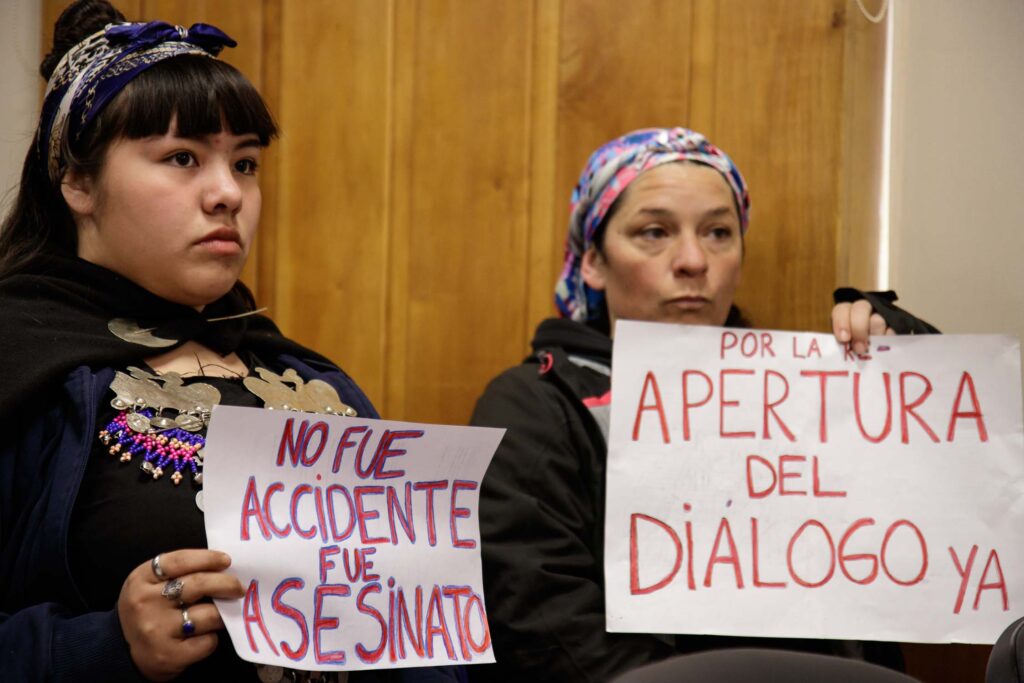
In his closing argument, Reile went further. “We have to start thinking about how the Argentine state is going to fulfill these rights that it is obligated to respect. I heard the prosecutor say that they could have pursued legal channels, and I ask myself, what are the legal channels available in the Argentine legal system regarding the territorial claims of indigenous peoples? What are they?”
He cited the case of Millalonco Ranquehue, a community in Bariloche. “They say, ‘Well, yes, we have to give them the property—ah, but we don’t have legislation on communal property, so it can’t be done.’ When they say that the Mapuche people have to claim through the appropriate legal channels, what are those appropriate legal channels?”
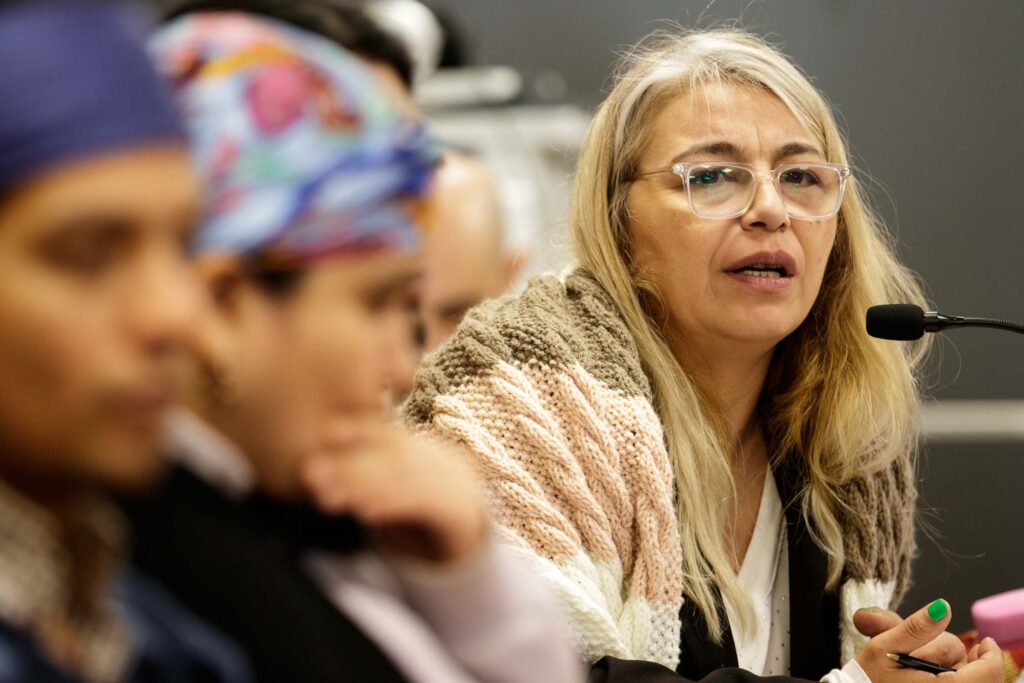
“Always in the dock”
Soraya Maicoño, who also testified as a witness, observed after the debate ended: “ There are a lot of articles and codes enshrined in the National and Provincial Constitutions that protect us. However, when we go through these legal proceedings, neither the codes, nor the articles, nor the national and international agreements are taken into account . We are always the ones sitting in the dock , and they never take responsibility, even when we tell them, rub it in their faces, remind them, they never take responsibility for the fact that they are defending a territory that they themselves took from us . So, they can talk about how Roco's territory was invaded. But they never take responsibility for the invasion of our territories by the Argentine State.”
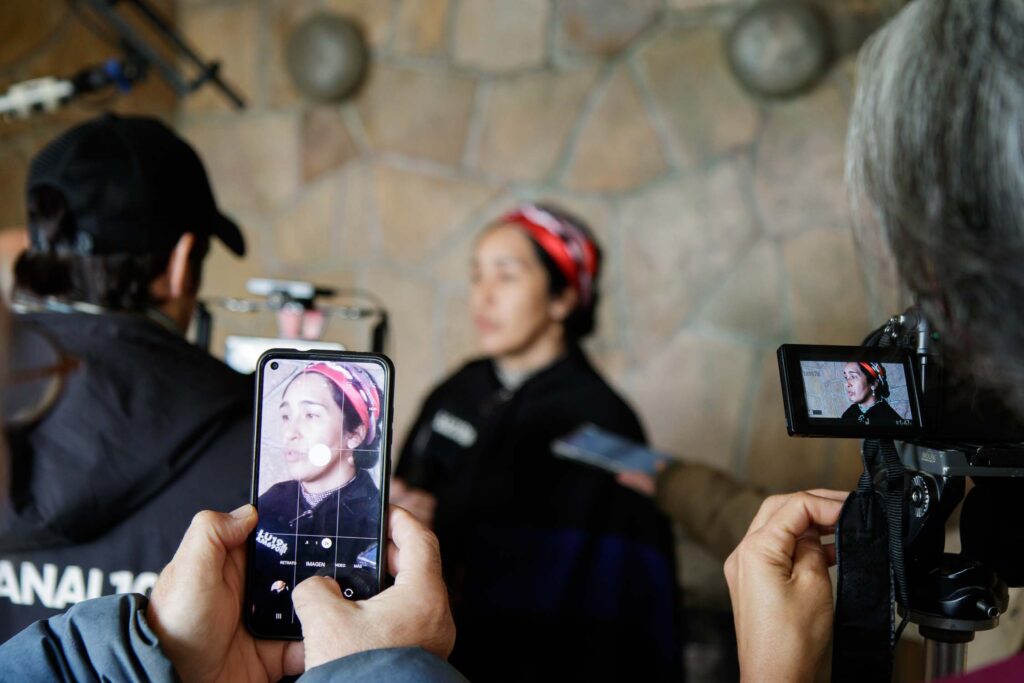
Romina Jones, the main leader of the Lof Quemquemtrew, declared emotionally in the final minutes of the trial: “ We don’t want any more violence, we don’t want any more deaths, because we are always the ones who cause the deaths. We don’t wish harm on anyone, but we need to be left alone to live in peace .”
We are present
We are committed to journalism that delves into the territories and conducts thorough investigations, combined with new technologies and narrative formats. We want the protagonists, their stories, and their struggles to be present.
SUPPORT US

FOLLOW US
Related notes


We are present
This and other stories are not usually on the media agenda. Together we can bring them to light.