

The trial has begun in which six Mapuche people are accused of "usurping" a territory that is communal property in Cuesta del Ternero
The trial began in Bariloche against six members of the Lof Quemquemtrew community accused of "usurping" communal land. The land is being claimed by a forestry businessman whose employees murdered Elías Garay, a member of the community.


Share

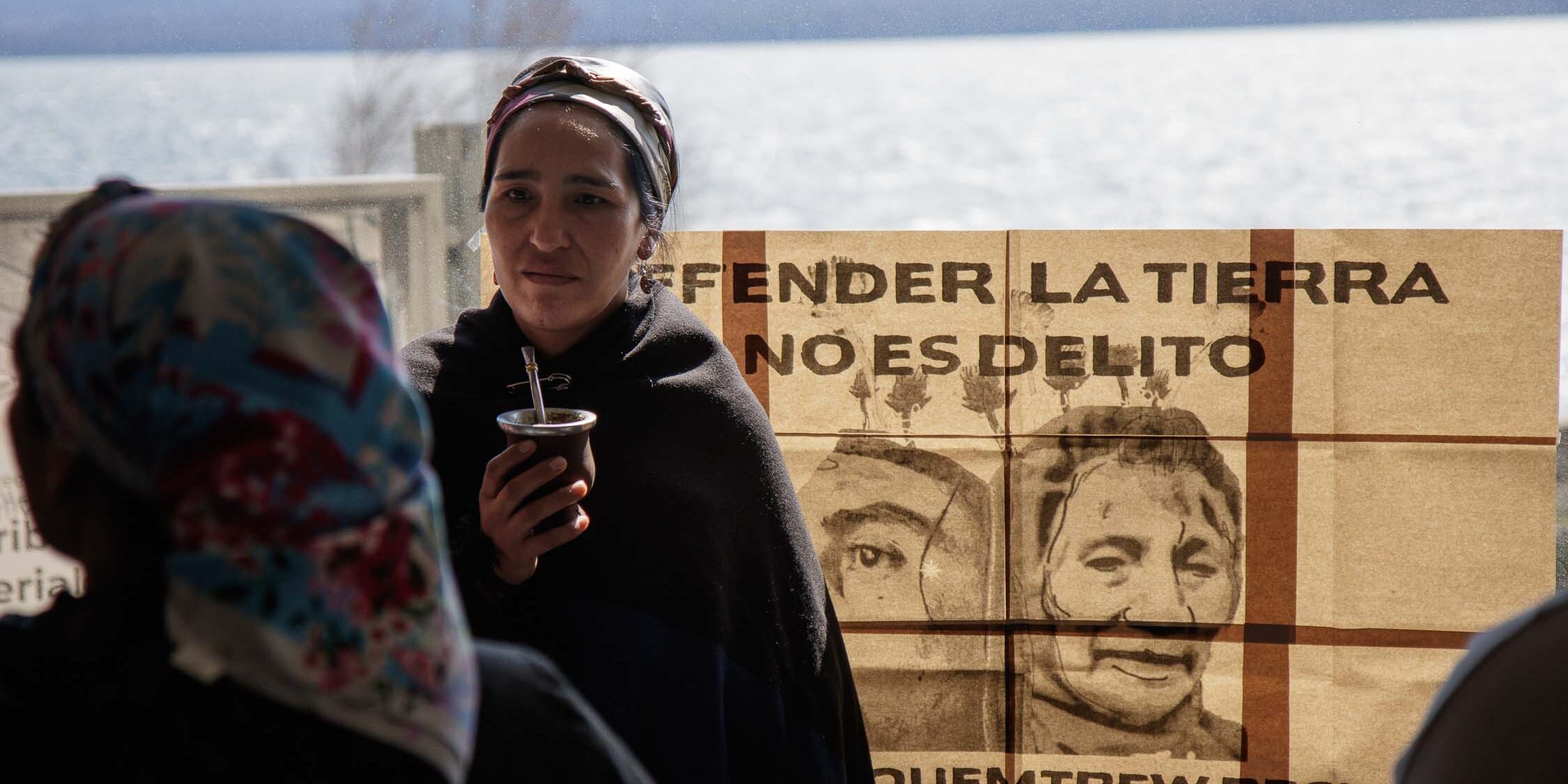
BARILOCHE, Río Negro. Today, the trial against the Mapuche community Lof Quemquemtrew began in the provincial court of Bariloche. Six people are accused of "usurping" land in Cuesta del Ternero , a rural area 30 km from El Bolsón, Río Negro. The case once again highlights the chasm between different concepts of land use and ownership. The community maintains the traditional and communal use of the land by the Mapuche people who inhabit the area. The prosecution emphasizes the individual and commercial possession of the land for profit.
What is the legal recourse for claiming a community right?
The defendants are Romina Jones, Alejandro Morales, Lautaro Cárdenas Despou, Mauro Vargas, Ariadna Mansilla, and Juan Cruz Baeza. Their defense attorney is Andrea Reile, who explained to the court on the first day of the trial: “ Cuesta del Ternero is a place that has always been occupied by the Mapuche people. It was used for various activities, including transhumance, grazing, and cultural and spiritual practices.”
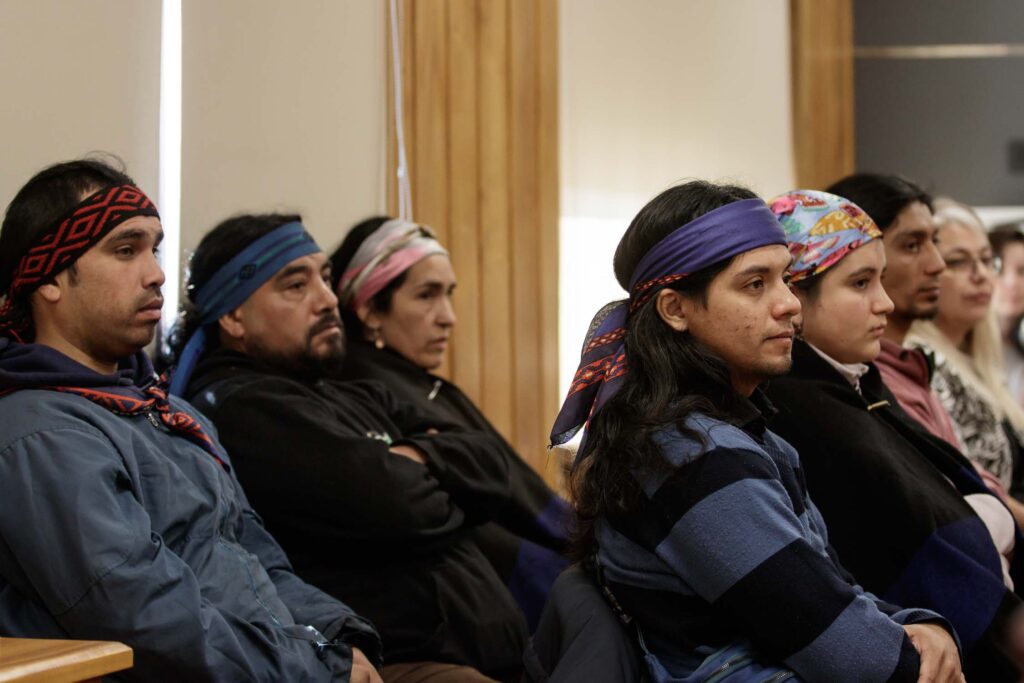
To put the situation in context, he asked, “ What is the legal avenue for claiming a community right? It's not civil law, because that deals with individual property. This is about a community claiming communal territory. It's not the fault of the communities that the province of Río Negro hasn't asserted their rights, or that the national government has never completed the survey of the communities .”
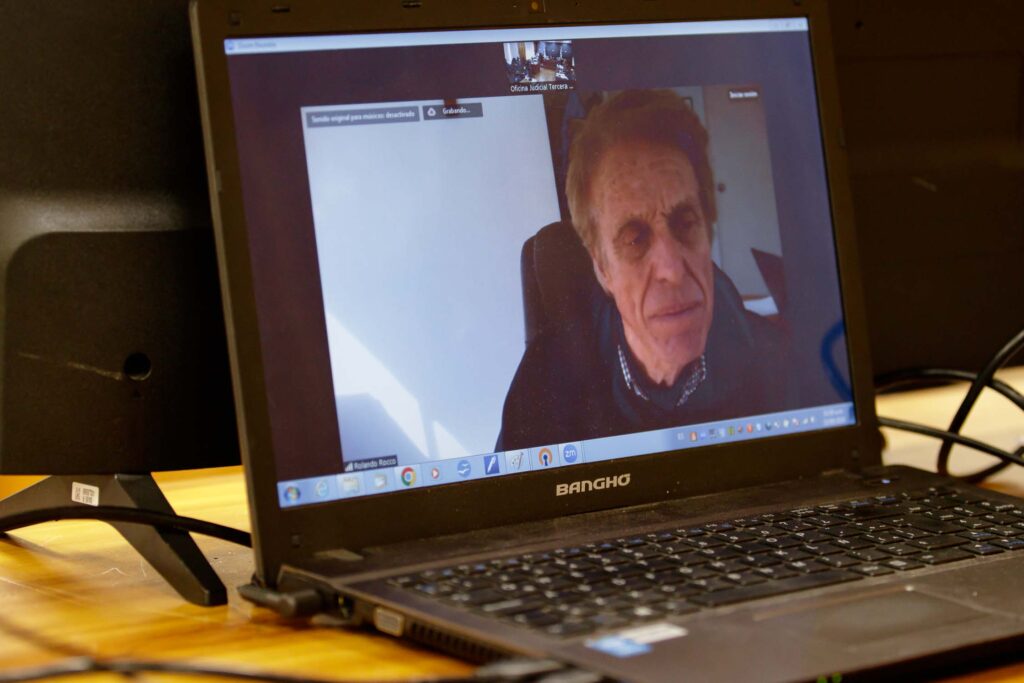
The plaintiff, Rolando Rocco, is a businessman who has held a forestry concession in the area for forty years. He is represented by lawyer Ernesto Saavedra, known for representing anti-Mapuche groups in Bariloche. The judge is Romina Martini.
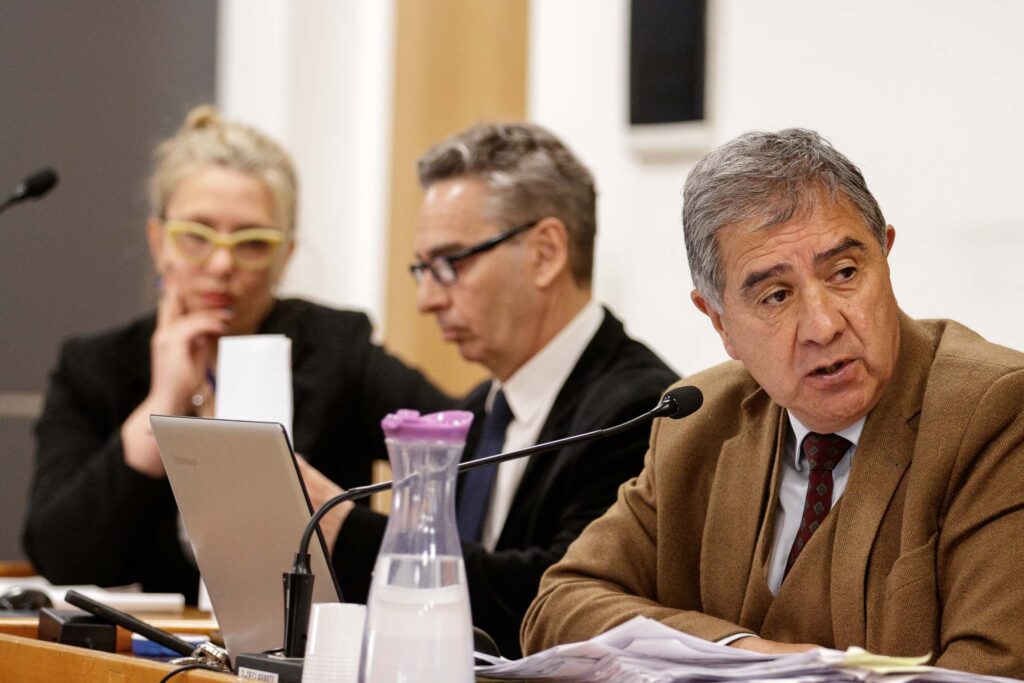
The prosecution's case, also being handled by prosecutors Betiana Cendón and Francisco Arrien, centers on the fact that Rocco, without being the owner, exercised possession of the property through his logging businesses . Rocco was the first witness in the trial (virtually, from El Bolsón). He never lived in Cuesta del Ternero. He now lives in El Bolsón, and a previous contract listed his address as Lago Puelo, Chubut. His children did not attend school in Cuesta del Ternero, and he never resided there.
These details were confirmed when the second witness testified (also virtually), Martín Cruz Feilberg, an employee of Rocco. He was hired in mid-2021 to clear a section of pine plantation affected by a fire in January of that year. “The field was uninhabited; the owner lived in El Bolsón. We were the only ones who went onto the property,” Feilberg said.
Rocco himself stated that Feilberg, along with Diego Alejandro Ravasio, was the first to notice the presence of the Mapuche community, as both worked there. It was also these two who entered armed two months later, when the police were blocking access to the Lof Quemquemtrew (preventing food from entering) and fired on members of the community.
“There was no violent usurpation, there was violence.”
On November 21, 2021, 29-year-old Elías Garay was killed instantly, and Gonzalo Cabrera survived two gunshot wounds to the abdomen. They were convicted in the first instance , but Feilberg managed to overturn the sentence and secure their release because the actual shooter was Ravasio, who remains in prison. Therefore, in her opening remarks, defense attorney Andrea Reile stated, “It is not true that there was a violent takeover. There was indeed a great deal of violence, but who suffered it? The community.”
One of the most striking aspects of this trial relates to this. After an employee of the plaintiff, Rocco, murdered a member of the accused community, Rocco himself declared: “The contractors couldn't continue working; they couldn't get through. They were threatened, or they were throwing stones, or later they set up camp. They couldn't get through except in a few places. To avoid creating a danger, causing friction, or getting into trouble, we waited as a precaution until they were evicted or moved to another location so we could work there. Since the eviction had been agreed upon a long time ago, we preferred to wait to avoid causing any problems, any discord, or an accident like the one that occurred.”
“We feel a lot of anger, pain, and helplessness.”
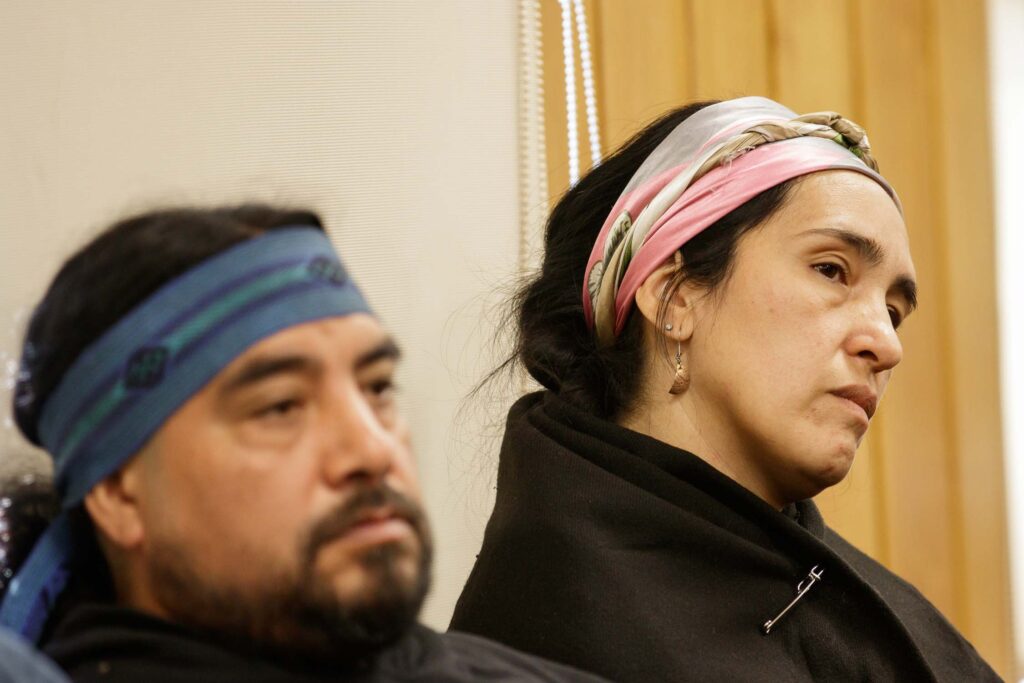
Regarding that, Romina Jones, the community's main leader and spokesperson, later said: “I can't even begin to describe what it feels like to listen to Rocco. It's a feeling of powerlessness, especially when he calls Elías's murder an 'accident.' How he minimizes it, and from his supposed position of power, speaks so casually about an 'accident' when his employees killed a person, a member of the Lof. It made my stomach churn. They think that because they're white, because of this power they've been given, or whatever, they have the right to rub salt in the wound. They think nothing will ever happen to them. Today we feel so much anger, pain, and powerlessness. We can't get used to them lying so casually.”
Today, the agreement reached between the parties in February 2022 was also mentioned. Regarding the lawsuit, lawyer Saavedra offered it as a sign of goodwill on Rocco's part, saying that "he offered ten hectares, the subject of an agreement, but the agreement was rejected."
However, the agreement was not rejected but signed by both parties. And this was emphatically stated by the defense attorney, Reile: “It is not true that there was no compliance on the part of the community. It was the plaintiffs who said, ‘I don’t want any more dialogue, I want to go to court, I want eviction.’”
How is the trial against Quemquemtrew progressing?
Today, other witnesses for the prosecution also testified, including two police officers and two local residents. More police officers and the Director of Lands for the province of Río Negro will testify at the next hearing.
On Wednesday the 25th, defense witnesses will testify. And on Thursday the 26th, closing arguments will be presented, the same day the trial against the Lof Lafken Winkul Mapu begins in the federal court of Bariloche.
We are present
We are committed to journalism that delves into the territories and conducts thorough investigations, combined with new technologies and narrative formats. We want the protagonists, their stories, and their struggles to be present.
SUPPORT US

FOLLOW US
Related notes

We are present
This and other stories are not usually on the media agenda. Together we can bring them to light.