

We are all students: infinite learning in equal and transformative experiences
Infinite Learning is a collective exhibition that explores the intersections between art and education. It highlights experimental initiatives such as the Trans Popular High School and NB Mocha Celis. The artists Marina De Caro, Kekena Corvalán, and Flor Capella—who are part of the exhibition—reflect on ways of learning in times of challenged knowledge.


Share

BUENOS AIRES. “Learning is not just about increasing our stock of knowledge; it is also—and perhaps primarily— about transforming the ways we conceive of the world. We know that our moments of discovery are often those that allow us to see things differently, without needing to know more .” This quote from the French educator Jean Pierre Asfolti is a favorite of illustrator and teacher Flor Capella. It conveys the essence of a proposal that suggests learning has no limits. It is infinite.
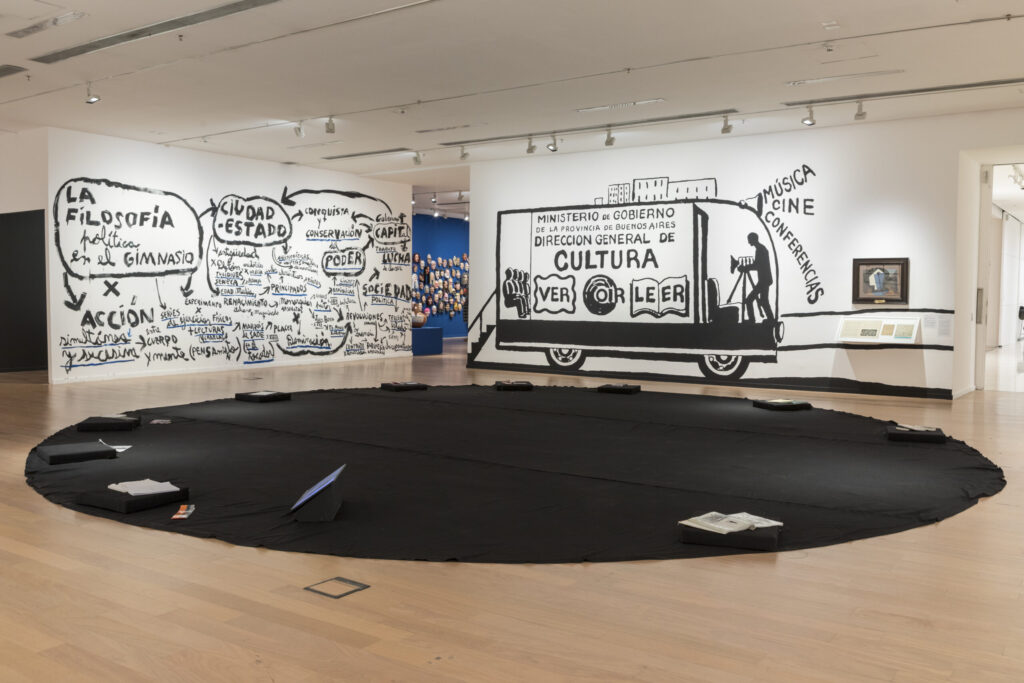
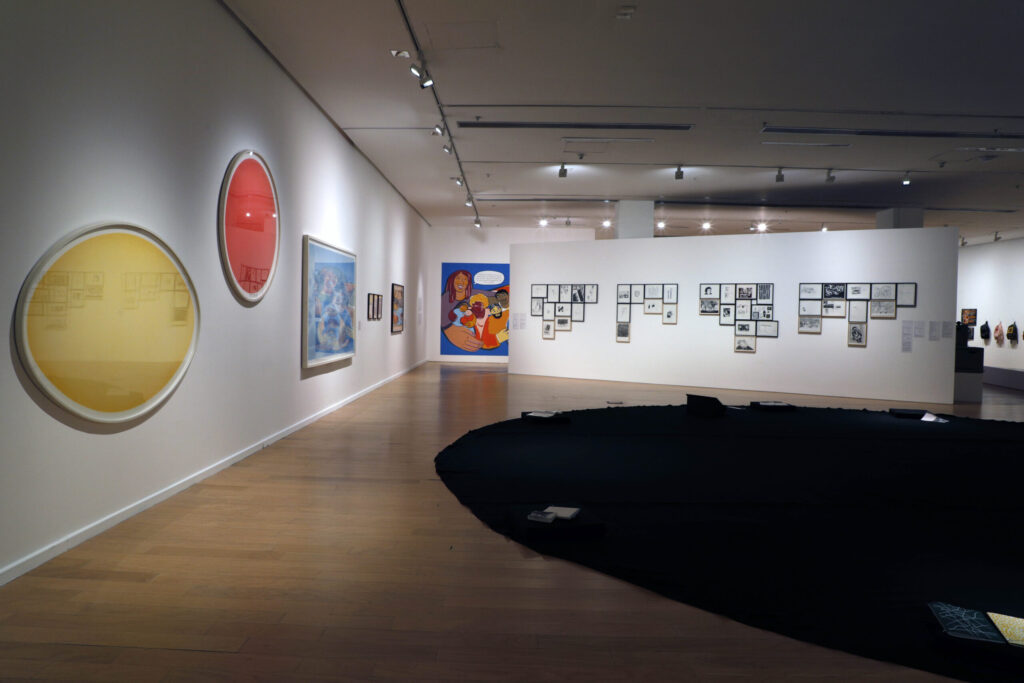
In the midst of a political context that defunds and belittles knowledge and education, the Museum of Modern Art of Buenos Aires has chosen the premise "Art is Education" . Within this framework is "Infinite Learning ," an exhibition about experiences developed in Argentina between the 20th and 21st centuries, "driven by artists, educators, pioneering pedagogues, and projects for the democratization of knowledge, organized from within institutions and their margins, with the same egalitarian, experimental, and transformative roots .
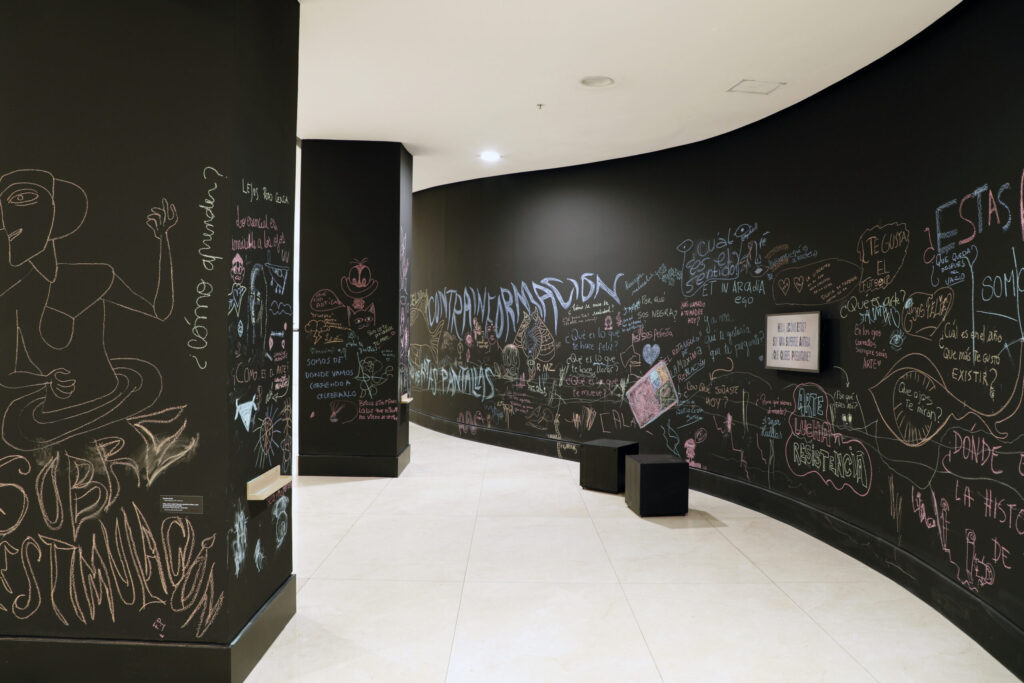
Can we change the routine methods of formal education through artistic practices? This is one of the questions around which the exhibition revolves. It is curated by Jimena Ferreiro—with the collaboration of Alfredo Aracil. Is it possible to teach how to be an artist? Is it feasible to place the body and emotions at the center of teaching? “Starting from thought-provoking questions like these, the exhibition affirms that learning and imagination are essential for experimenting with a new way of living together .” And together. And together.
Plurality of knowledge
“If we think of education as the nourishment we receive to expand our horizons and develop autonomy and critical thinking, it’s important to value all possible experiences. This allows the collective to be nourished by the experiences of everyone who is part of that small micropolitical space—like a classroom. We need to make visible all possible forms of knowledge that respond to all possible diversities: gender, social, and those related to countries of origin. There is a pluriversality of diversities. I believe in the multiplicity of knowledge, in the pluriversality of knowledge,” says Marina de Caro, a graduate in Art History (UBA), activist, and teacher.
Picnic of pedagogies
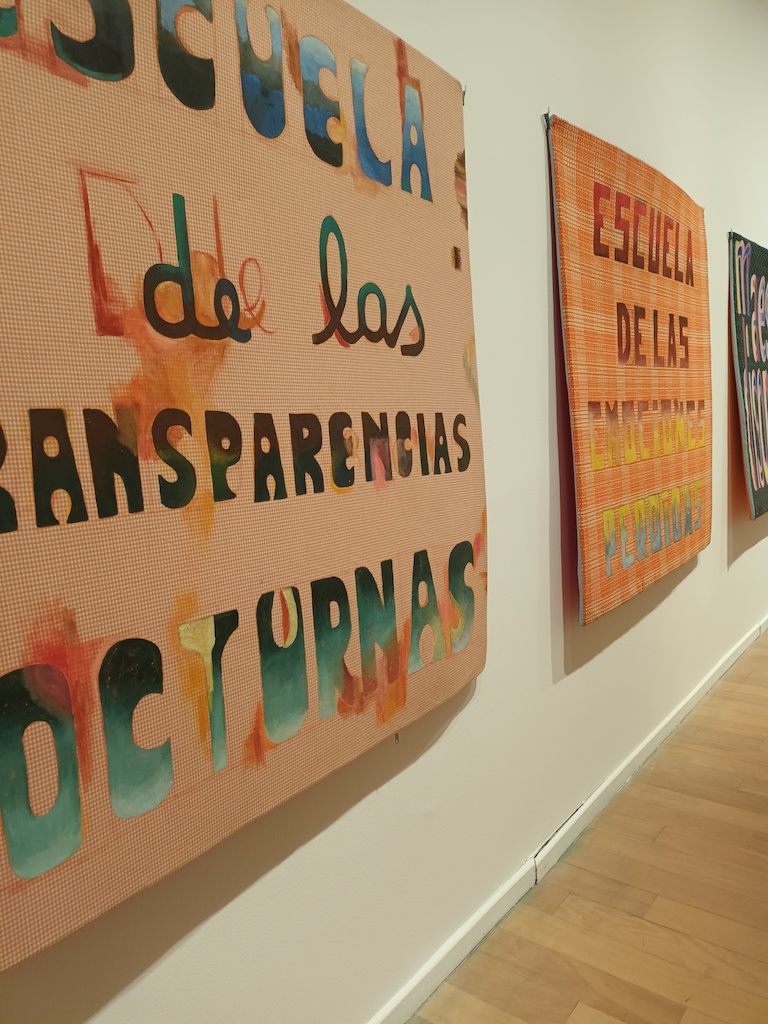
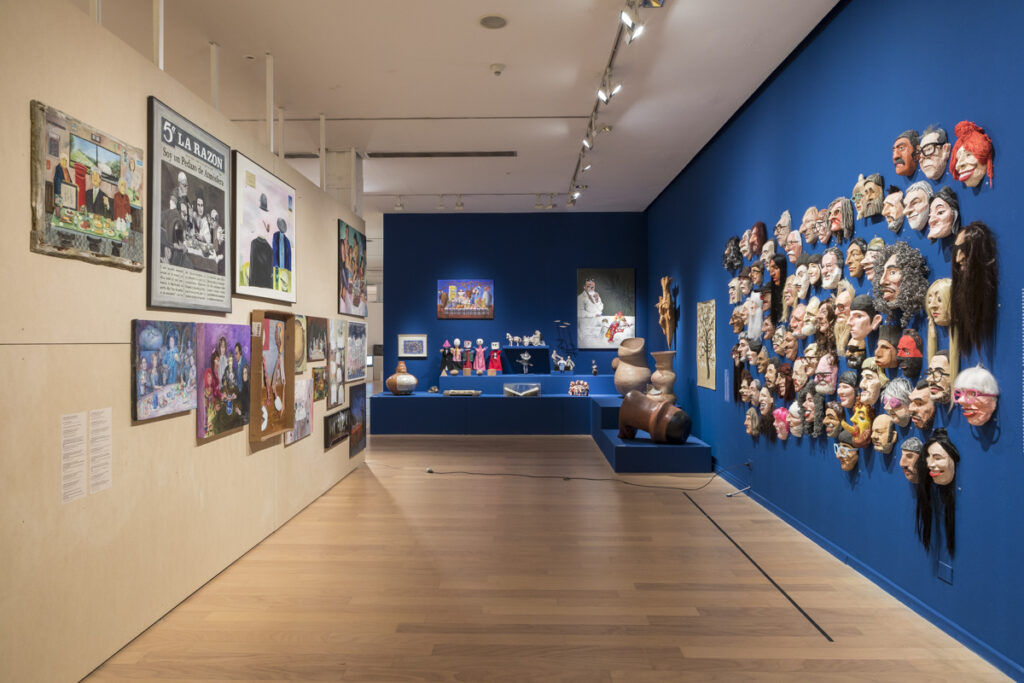
Among her works in Infinite Learning are four pieces from the Picnic that reference anarchist picnics of the mid-19th and early 20th centuries to explore alternative pedagogies. “School of Lost Emotions,” reads one of the oil paintings on canvas, foam, and a zipper.
“Picnics are small physical spaces without walls. Where everyone can come and go, for as long as they like. School is a place of learning, of nourishment. I can learn from a chance encounter, from millions of places and people. That is the richness of learning. These schools are open to everyone to learn in diverse ways. The possible pedagogies are also infinite . How can I put that into words? I love to think of these picnics as open and portable schools that can be set up anywhere. And so economical, without any building. I decided to create all the schools I would like to see exist: with dissenting teachers, schools of leisure, of listening, of not exercising reason. Millions of schools that I need to describe, and I don't think I'll have enough time in my life to do it,” she reflects.
The collective identity of a color
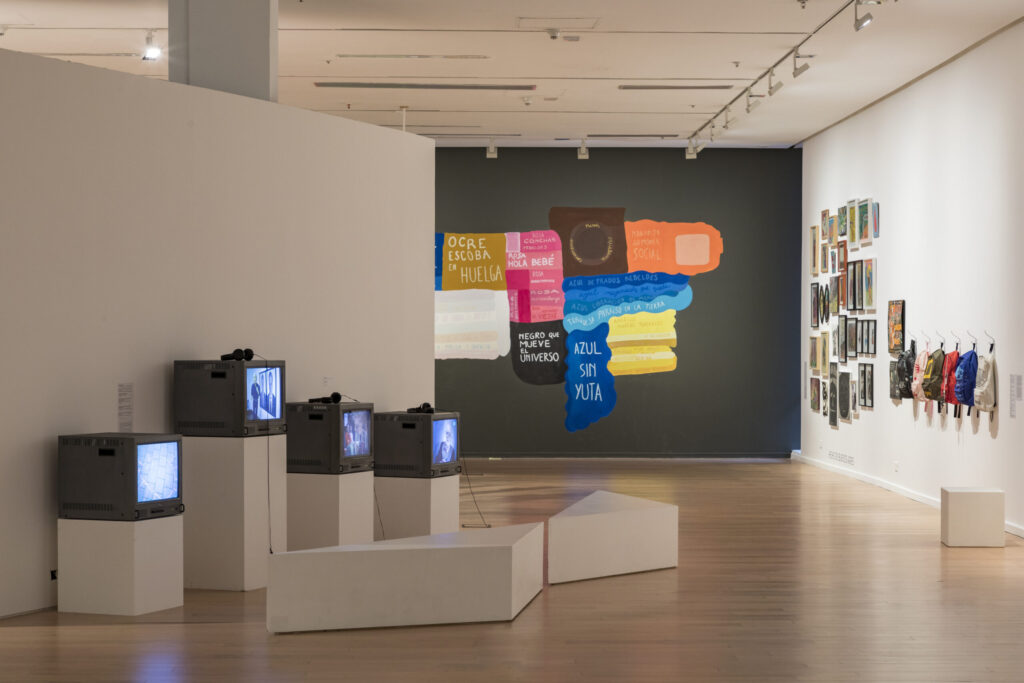
Her perspective on the multiple ways of learning is also present in the work *Color Is Not Innocent* – a Chromoactivism mural created in collaboration with Guille Mongan, Vic Mussoto, and Daiana Rose. Abortion green. Norita green. Blue without cops. Brown from every Argentine province. Violet that loves brown. Transvestite fury red. Public and free white. Lead gray never again. A multicolored mural that can be read from here to there and from there to here, with as many combinations and intersections of colors as there are viewers to observe it.
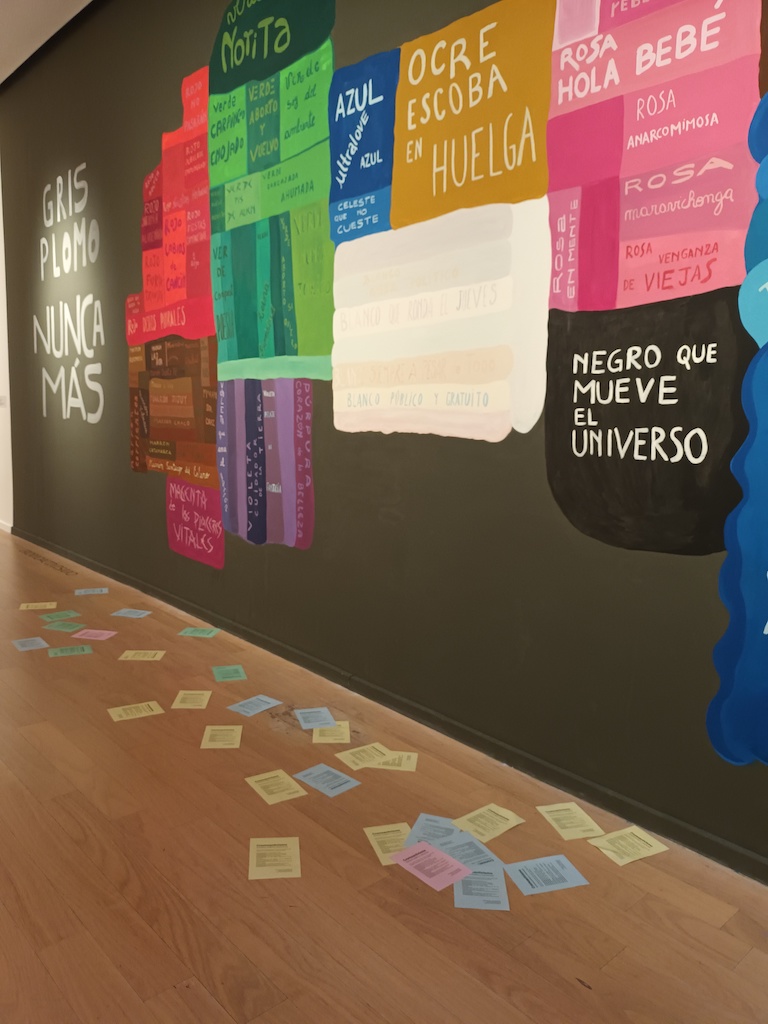
“Color has always been a cultural element that reflects the cultural imaginaries of different communities. For the East, white signifies death, while for us it is black. It is laden with symbolic meaning and values that represent a community. The market and industry appropriated it. Chromoactivism seeks to reclaim the symbolic realm of color for people, society, collectives, and individuals, ” explains De Caro. She adds that “ the identity of each color is only constructed collectively . Color does not exist in isolation. Red next to blue is not the same as next to black or green. It is a different red. It is constantly in dialogue with others. This way in which color behaves seems to me to be a wonderful reflection of those societies and those micropolitics that can be a classroom.”
Camps and epistemologies of sharing
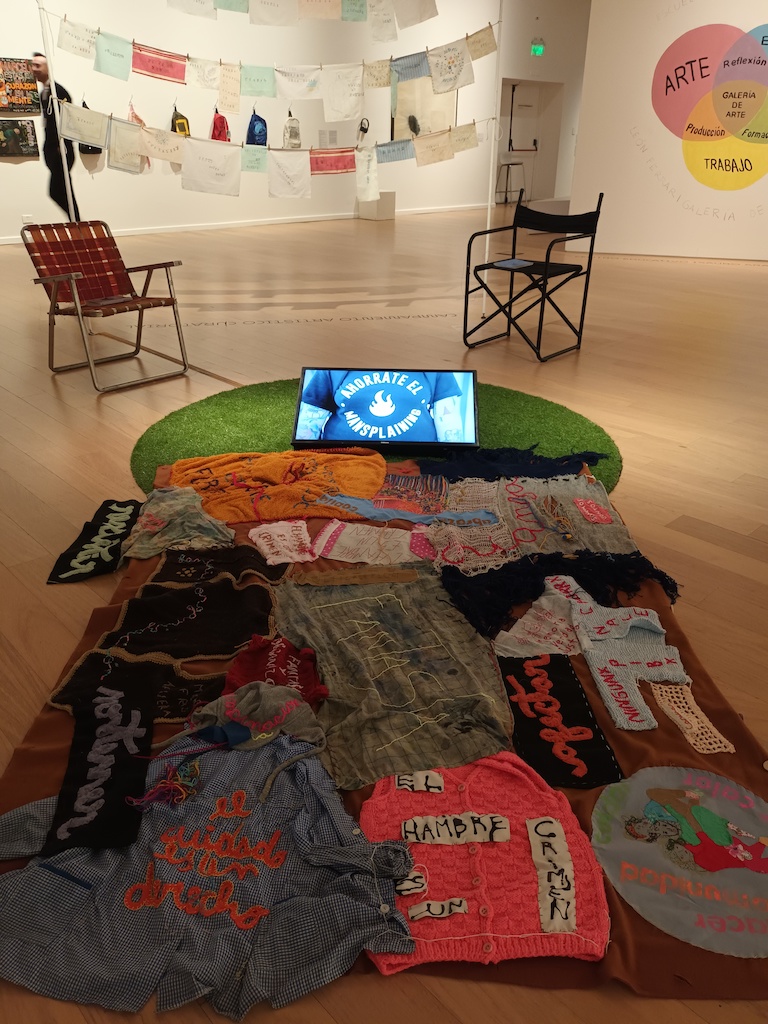
Like 19th-century picnics, there are 21st-century camps. Kekena Corvalán, a professor, curator, and feminist writer, recreated a small portion of the Curatorial Art Camp at the Museum. This experience has already had several editions since 2019 in different locations. Embroidered fabrics, altered smocks, knitted pieces, patches, and scarves form the canvas or floor of this camp transformed into a museum installation, with a television that continuously broadcasts fragments of these encounters between people interested in art from different perspectives, with different backgrounds and experiences, where there are no teaching/learning roles but rather the shared purpose.
“ The camps propose collaborative, co-designed forms of learning. Where there is no a priori truth. Truth emerges from interaction with others. There is an epistemology of sharing, of contact. We are going to build knowledge for ourselves, and learning is a social good that is built collectively. For us, the camps are collective actions. They are political. Politics is the highest form of collective love ,” Corvalán argues. “The camps don't adhere to any quotas. We don't have a quota for diversity, for dissenting voices, for young people, for older people. We are diversity,” she emphasizes.
We are all students
“With that little piece of the encampments in the Museum, we’re trying to show the state of celebration . As our transvestite and trans sisters taught us, we fight by fighting in the streets, dancing, cooking . In the encampments, we cook, we share, we hug, we take care of each other, we dance, we sing. What we wanted was to form a circle,” she says.
“We truly believe that we need to broaden the scope of participation, expand the circle. That those who have, must share. That those who know, must teach. In this process, learning is always co-designed. In this gathering, there are retired teachers, there are PhDs from CONICET, there are people who haven't finished high school. We are all students. We emphasize this a lot: valuing being a student ,” the artist and educator explains in the context of Student Day and at a time when studying, as a continuous process, is devalued and only tied to the notion of results and success.
Imagining other realities and communities
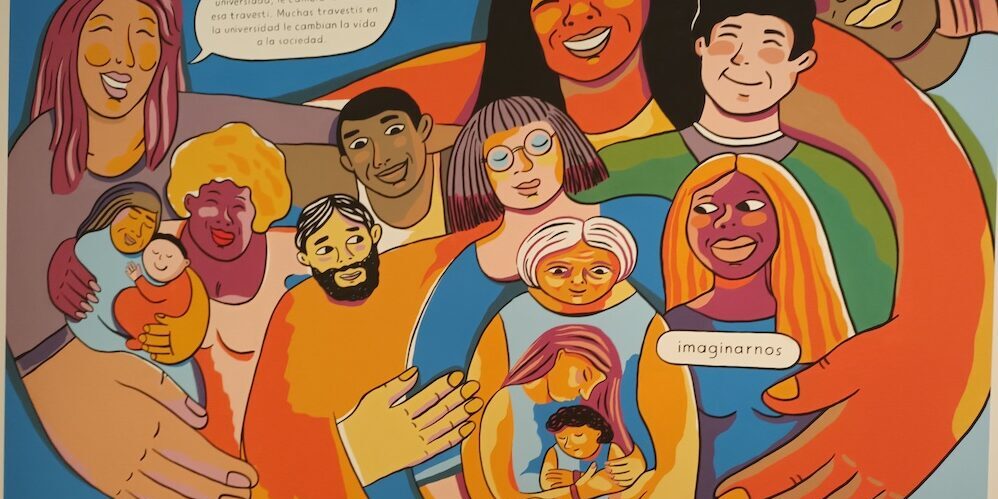
“When a trans woman enters university, it changes that trans woman’s life. Many trans women at university change the lives of society,” says a smiling Lohana Berkins in the collective embrace that went from a comic strip to a mural to recount, among the experiences of endless learning, that of the Mocha Celis Popular High School . The mural was created by Fátima Baroni based on illustrations by Flor Capella published in the project’s fanzine.
Originally, the comic was a collaborative project between the world's first Trans and Non-Binary Popular High School and Agencia Presentes, with support from the Goethe Institute. Later, students and teachers painted and recreated the mural in a plaza near La Mocha, located at Avenida Jujuy 748, to welcome the school to the neighborhood—a school founded to promote equal rights and inclusion in formal education.
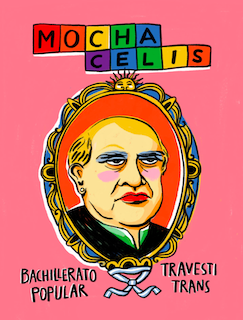
The part of the exhibition that tells the story of La Mocha is included among other educational experiences in contexts of social vulnerability, such as the Isauro Arancibia educational center –for people experiencing homelessness– or the Borda Artists' Front.
“Infinite learning is about the educational community itself. What is learned most is what is built within the group. It's not so much about what the teacher brings, but rather the interaction between people shapes the educational process,” says Capella. An illustrator, she teaches at the Faculty of Architecture, Design and Urbanism at the University of Buenos Aires and is a member of the Hay Futura collective, as well as a contributor to Presentes.
“The image is representation. It has to do with representing realities, people, ourselves. For me, it’s key that the image is not a mirror of reality. It is a representation and as such it creates meaning. It creates realities. It is also imagining other realities.”
“We are in an extremely fragile moment, where it is important to build struggle and resistance. While the focus (of the struggle) used to be on the inclusion of diversity in education, now it's about ensuring the survival of education itself. It has shifted to a more basic level. There is almost no room to delve deeper into other things. It's overwhelming,” she reflects. “One can think about cutting-edge pedagogy, but sometimes in our context we have to fight for the basics.” Defending the right to teach and learn, despite everything.
Capella shares another of his favorite quotes as a teacher, this time from the pedagogue Philip Wesley Jackson: “Teaching consists of continuing to generate the desire for knowledge.”
We are present
We are committed to journalism that delves into the territories and conducts thorough investigations, combined with new technologies and narrative formats. We want the protagonists, their stories, and their struggles to be present.
SUPPORT US

FOLLOW US
Related notes

We are present
This and other stories are not usually on the media agenda. Together we can bring them to light.