

Judicial reform in Mexico: How might it impact LGBT people and women?
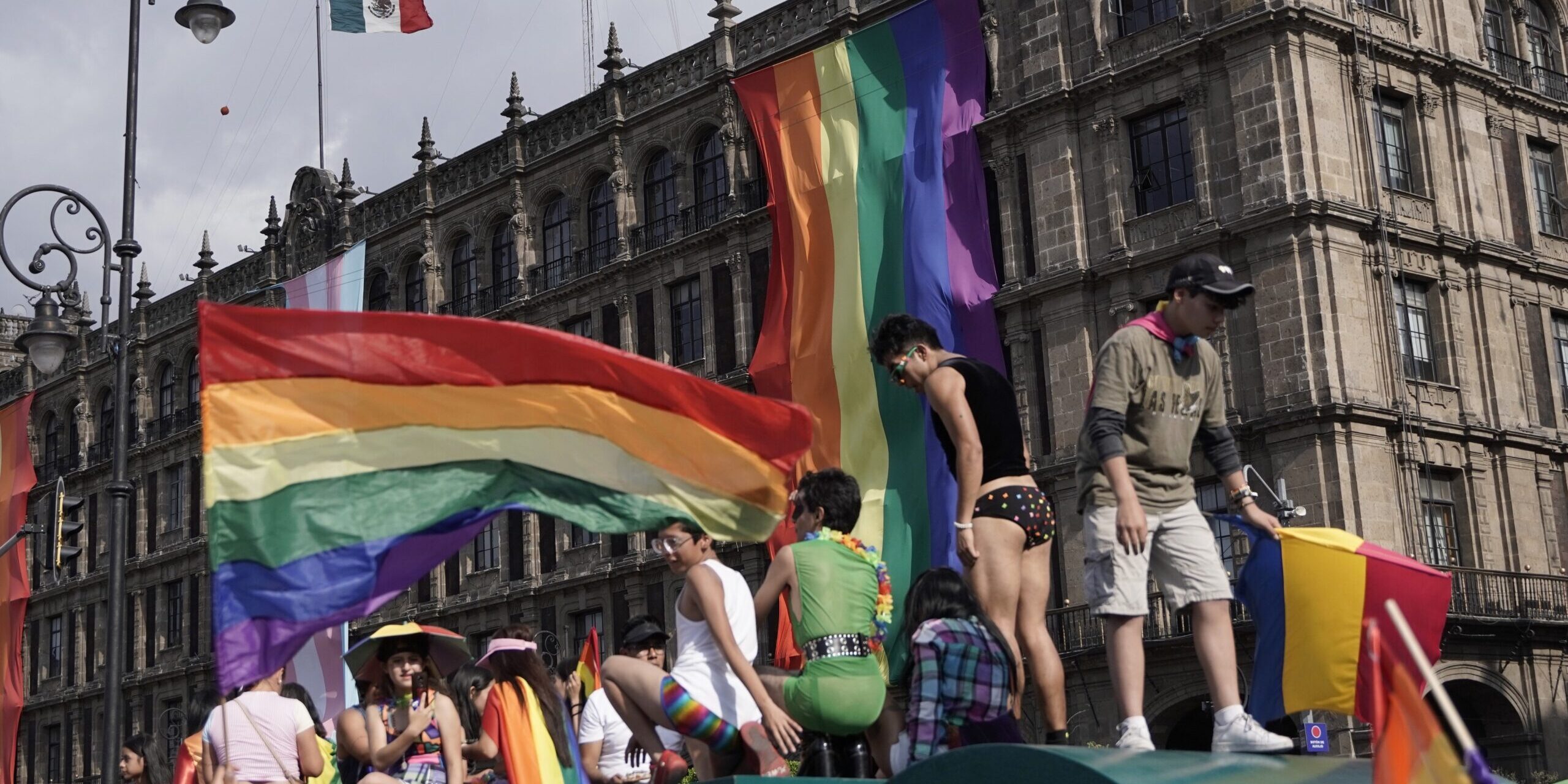
In Mexico, the human rights of LGBT+ populations and women have often been obtained through the judicial system.


Share

The Mexican Senate approved a reform to the Judiciary that proposes the popular election of judges, magistrates, and ministers of the Supreme Court of Justice of the Nation (SCJN), creating the figure of “faceless judges.” How could this impact the rights of LGBT+ populations and women?
The judicial reform approved on September 11 is just one of 20 reforms presented by President Andrés Manuel López Obrador in February of this year that seek to modify the Mexican Constitution.
The United Nations Human Rights Committee , Human Rights Watch , and the Inter-American Commission on Human Rights have all stated that the judicial reform "seriously undermines judicial independence and contravenes international human rights standards designed to ensure that everyone receives a fair hearing in court."
“In Mexico, most of the rights that the LGBT population has obtained have been addressed and guaranteed through the Federal Judiciary with actions of unconstitutionality. Through strategic litigation and amparo proceedings promoted by organizations. The State has failed us in access to justice, and now what we will have to do is take a more defensive position to organize ourselves in the face of what is coming, to try to protect our rights as much as possible from civil society and not allow setbacks,” warns Ninde Molre, lawyer and director of México Igualitario , an organization that has been working for thirteen years on and supporting constitutional matters related to marriage equality, widow's pensions for LGBT+ couples, trans and non-binary gender identity, recognition of children of lesbian mothers, abortion, etc.
What is the Judicial Branch?
In Mexico, power is divided into three branches: the executive, the legislative, and the judicial. The judicial branch is primarily responsible for interpreting the laws and ensuring that authorities do not violate people's human rights. It also intervenes in disputes between individuals and public authorities when a law or an act of an authority violates individual rights enshrined in the Constitution, which is the supreme law of the land.
To that end, it uses various strategies such as amparo proceedings, constitutional controversies, actions of unconstitutionality, and even has the power of investigation. “All these means include, among their ends, the well-being of the human person,” the Supreme Court of Justice of the Nation points out
The Judicial Branch is responsible for resolving issues at the federal and local levels (there are 32, one for each state) where there are also specialized jurisdictions in matters at the family, civil, electoral, commercial, constitutional, tax, criminal, etc. level.
What does the judicial reform say?
- Judges, magistrates, and ministers will be elected by popular vote. This includes more than 1,600 positions in the Supreme Court of Justice of the Nation (SCJN), the Superior Chamber, and the Electoral Tribunal of the Federal Judiciary (TEPJF).
- Applicants must hold a law degree with a minimum GPA of 8 or 9 in subjects related to the position they are applying for, and at least five years of professional experience. They must also submit an essay and letters of recommendation.
- The National Electoral Institute (INE) will be the institution in charge of carrying out this popular election process, publishing the results, and issuing certificates to the candidates who receive the most votes. Afterward, they will be entered into a lottery.
Previously, judges, magistrates, and ministers earned their positions through competitive examinations, experience, and open and transparent evaluations by the Federal School of Judicial Training. The ministers of the Supreme Court of Justice of the Nation (SCJN) were nominated by the president and then submitted for Senate approval.
- The elimination of lifetime pensions for current and future ministers and an adjustment to their salaries are being considered. No minister, judge, or magistrate will be allowed to earn a higher salary than the president of the country.
- To monitor the actions of judges, the Judicial Disciplinary Tribunal and the Judicial Administration Body will be created.
The judicial reform was presented by President Obrador with the aim of “ending impunity and corruption among judges.” On the day it was approved, he stated during his morning press conference that “judges are largely responsible for the decline of our country, and we are fighting to transform Mexico, to purify public life.”
The voting process was marked by protests and tensions between the dominant political parties (Morena, Green Party, Labor Party) and the opposition (PRI, PAN, PRD). The deciding vote for the reform came from a senator of the National Action Party (PAN) with a history of corruption offenses .
In the following hours, without analysis or debate, and with great speed, more than 20 state legislatures approved the judicial reform. In eight months, citizens will be called upon to vote for more than 1,600 judicial positions.
How might this reform impact the rights of LGBT+ populations and women?
In Mexico, the human rights of LGBT+ people and women have often been obtained through the judicial system. These rights range from the recognition of sexual and reproductive rights, such as abortion, to marriage equality, the recognition of gender identity for transgender people, access to pensions and widowhood benefits for same-sex couples, and the legal recognition of children by lesbian mothers and couples, among others.
Through actions of unconstitutionality but also under the tools of amparo trials and strategic litigation, two strategies used by activists and civil society organizations when an authority is violating human rights.
In that sense, Ninde MolRe sees a risk in the judicial reform regarding how judges are selected, who can finance them, and whether they have an anti-rights stance. She explains it as follows:
“The process of electing ministers, magistrates, and judges will be flawed because it will no longer be based so much on their expertise and experience, but rather on their ability to convince the population to vote for them. We run the risk of anti-rights rhetoric gaining ground, which could lead to a highly conservative Court and a rollback of the progress we have made in sexual and reproductive rights, as we have seen in the United States (with the Roe v. Wade on access to abortion rights ).”
He adds, “But I also see, for example, Eduardo Verastegui taking advantage of this situation to influence the candidates for ministerial positions and ensure they are right-wing. Furthermore, people like him could easily finance those seats.”
The reform proposes the creation of “faceless judges”, which is contrary to human rights.
- The figure of "faceless judges" is created, proposed with the aim of protecting the identity, security and privacy of judges in processes involving "organized crime".
This practice is declared contrary to human rights by the Inter-American system and the UN, as they point out that it violates the right to a fair trial, the principle of equality and impartiality, since it could be unknown whether the judge is qualified to conduct a trial with due process and there could be conflicts of interest.
Faceless judges had already been proposed by former President Felipe Calderón, who instituted a militarized security strategy by declaring the “war on drugs” to prosecute drug traffickers. In Latin America, this practice has been used in Peru, El Salvador, and Colombia not only in cases of organized crime but also to punish people who oppose the government on trumped-up charges.
In this sense, this reform to the Mexican judiciary could jeopardize criminal justice and the practice of mandatory pretrial detention, which is when a person is detained without proof of guilt for a series of crimes. And in fact, part of Obrador's constitutional reforms is to expand this list of crimes .
“Criminal law is the most violent way the State has to violate people’s rights, and those most affected are women, people of color, impoverished people, and LGBT people. If, with this reform, a judge without experience in criminal matters, without a gender perspective or intersectional approach, is assigned to a case of this type, these populations are at even greater risk,” explains lawyer Ninde MolRe.
official figures as of 2022 , there are more than 88,000 people deprived of their liberty who do not have a sentence and are detained without proof that they have committed a crime.
Furthermore, in this country, 80% of legal proceedings take place at the local level and are resolved by local prosecutors' offices. While some crimes fall under federal jurisdiction, these are less common, and it is in these cases that federal judges intervene to ensure that sentences are in accordance with the law.
Are the Public Prosecutor's Offices and the police part of this reform?
No. Specialists and human rights organizations have criticized the fact that a comprehensive approach is necessary for judicial reform.
“One might think that the reform of the judicial branch has to do with justice, and when citizens think of justice they think of the police and the prosecutors, but it is precisely the police, the local prosecutors, the Attorney General's Office and entities such as the National Human Rights Commission and the National Council to Prevent and Eliminate Discrimination that are the links that are not touched in this reform and that allow impunity,” MolRe explains.
In Mexico, 9 out of 10 crimes go unpunished, and various organizations have studied that this is a consequence of a lack of training, independence, and professionalism of prosecutors in the investigation of crimes.
We are present
We are committed to journalism that delves into the territories and conducts thorough investigations, combined with new technologies and narrative formats. We want the protagonists, their stories, and their struggles to be present.
SUPPORT US

FOLLOW US
Related notes


We are present
This and other stories are not usually on the media agenda. Together we can bring them to light.