

Two Mapuche communities accused of "usurping" territories they claim will be tried the same week in Bariloche
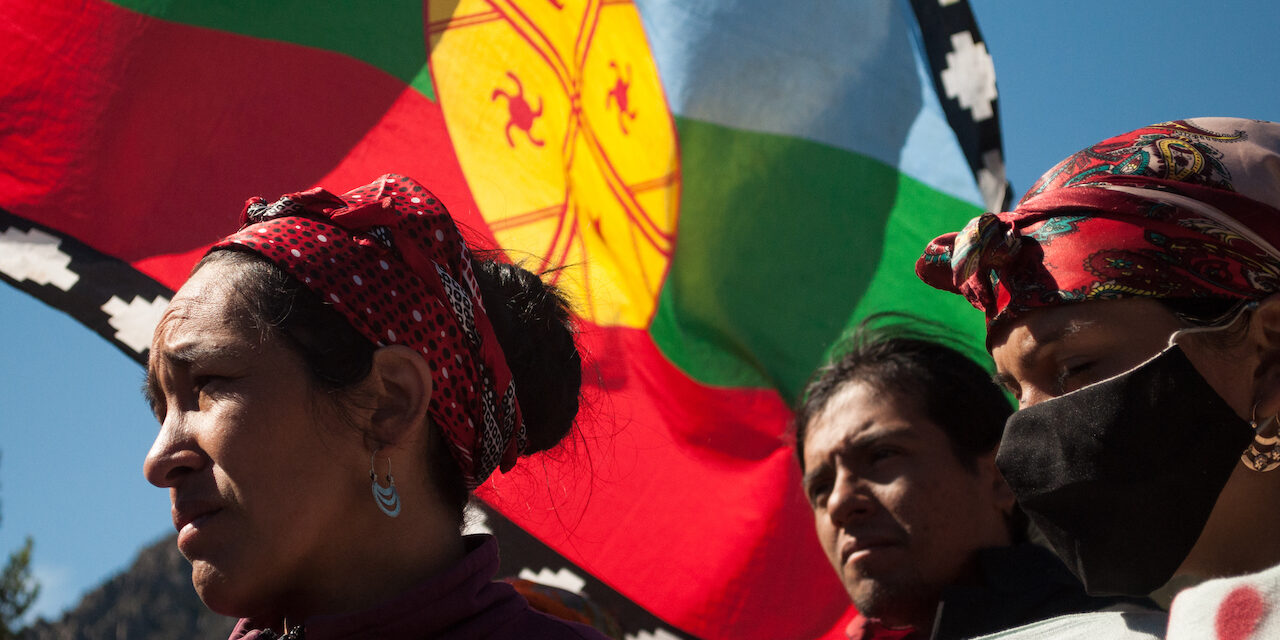
Bariloche will host two trials that reflect the current climate: two Mapuche communities that suffered evictions, violence, and the death of two young people will be tried for the territories they have been claiming for years in the province of Río Negro.


Share

EL BOLSÓN (Río Negro). These days, Bariloche will host two trials that reflect the current climate: two Mapuche communities, who suffered evictions, violence, and the deaths of two young people, will be tried for the territories they have been claiming for years in the province of Río Negro. The writer Eduardo Galeano would add this to the evidence of why the world is upside down. The State, which seized Patagonia from the Mapuche people in a genocide , will judge these two Mapuche communities for land usurpation.
From the 23rd to the 26th, six members of the Lof Quemquemtrew community will be tried . They are accused of "usurping" public lands since 2021 in the Cuesta del Ternero area, 30 km from El Bolsón. During the same week, from the 26th to the 30th, eight members of the Lof Lafken Winkul Mapu community will be tried in the federal court of the same city. They are accused of "usurping" a National Parks property in the Villa Mascardi area, 40 km from Bariloche, in 2017.
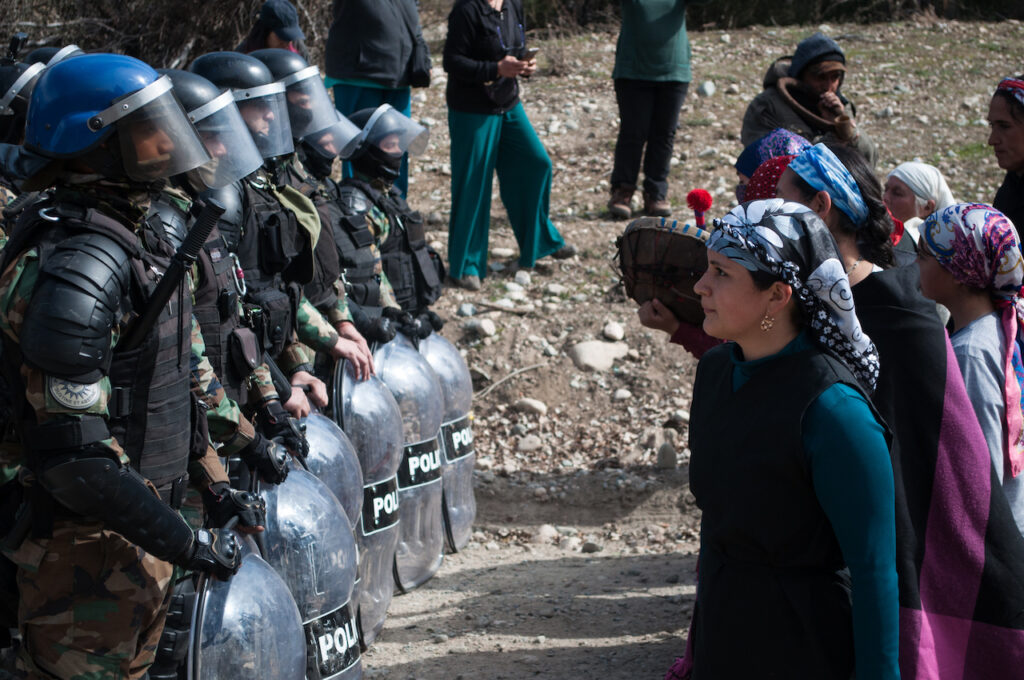
Andrea Reile, the lawyer representing the Lof Quemquemtrew community, says: “This demonstrates that the national and provincial governments are persecuting the Mapuche people. There’s no other way to see it.” The two cases share many similarities but also clear differences. The government attempted to evict both communities just days after they announced their respective territorial claims.
What happened in Lafken Winkul Mapu (Villa Mascardi)
In Villa Mascardi, the operation on November 23, 2017, ended with children handcuffed in a cell, and two days later a bullet fired by the Coast Guard killed young Rafael Nahuel from behind. But the community remained in the territory for five more years.
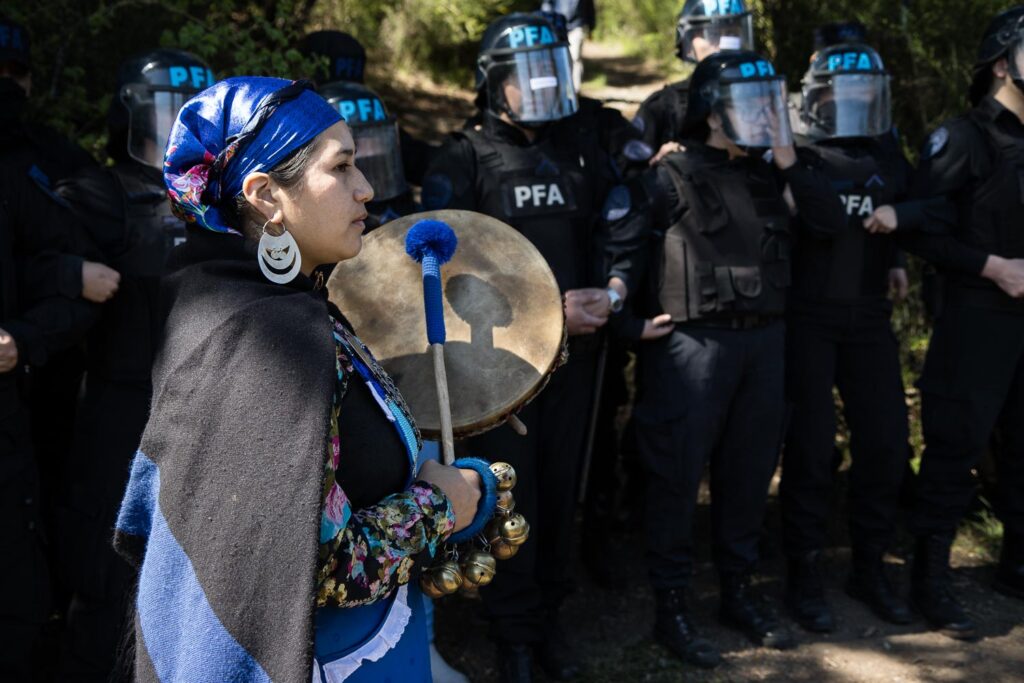
On October 4, 2022, there was another massive operation that finally evicted her . Betiana Colhuán Nahuel, who was arrested both times (she was still a minor in 2017), recounts: “In the first eviction in 2017, they came in hooded, threw tear gas in the faces of the children. Calfulicán [her nephew] was handcuffed when he was three years old. Then, in 2022, they kicked Celeste [Ardaiz Guenumil]'s baby, who was only a month old, two meters. I was with my four-month-old baby, and they threw a stun grenade next to him.” Her mother, María Nahuel, charged with trespassing along with her daughter, adds that the baby grew up and “doesn't speak well because of the explosive. Now he's two years old and has hearing problems.”
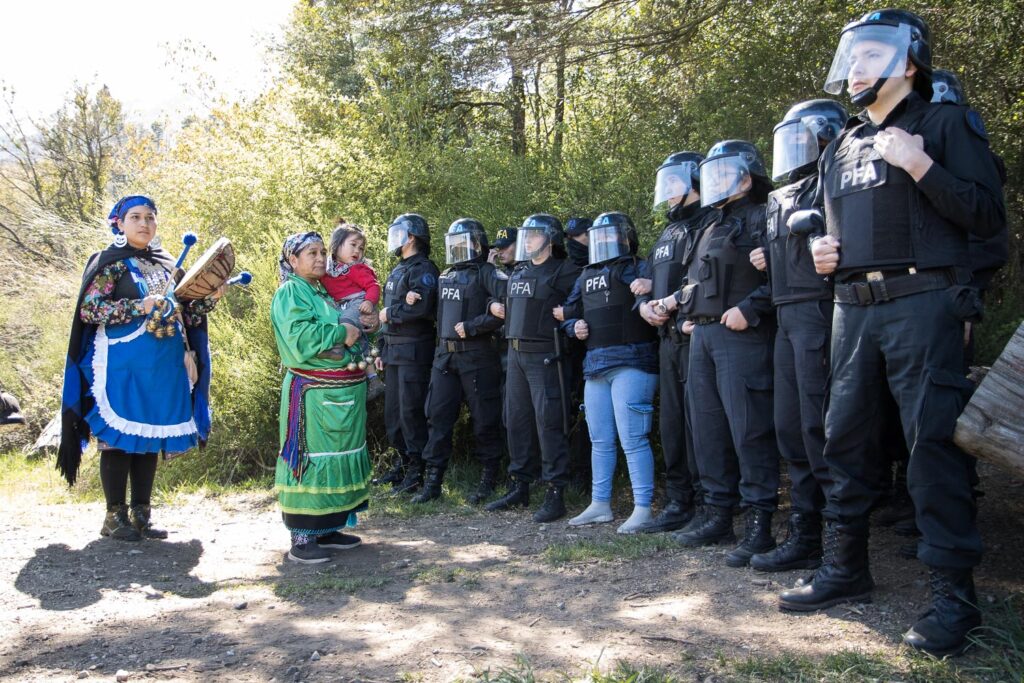
Following that eviction—which prompted the resignation of the Minister of Women, Gender and Diversity, Elizabeth Gómez Alcorta —Betiana and Celeste were imprisoned along with their babies and older children. Two other women were also detained: Luciana Jaramillo (with her two children) and Romina Rosas, nine months pregnant and with a daughter. Romina gave birth in captivity and suffered obstetric violence. All four were under house arrest for eight months.
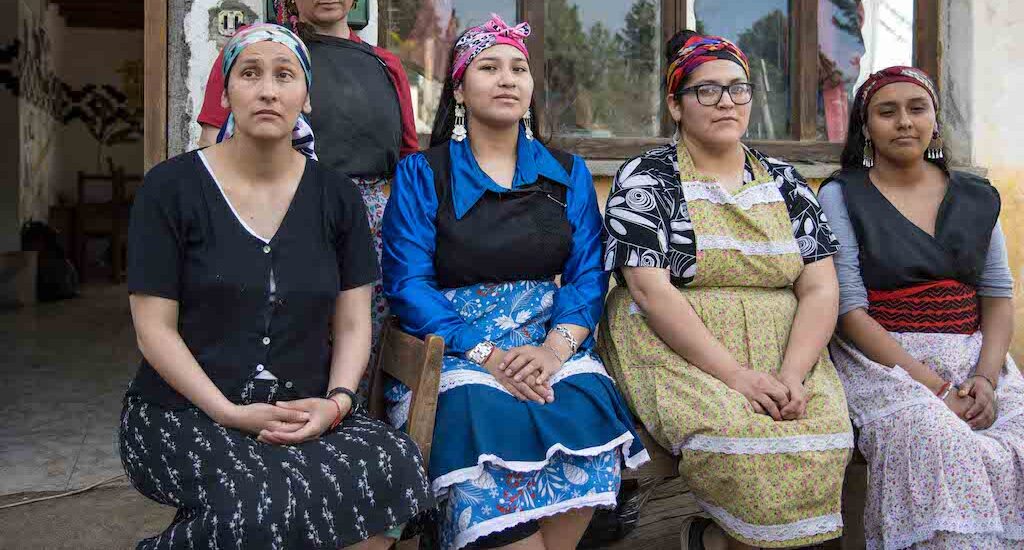
Why is Lof Quemquentrew (Cuesta del Ternero) going to trial?
In Cuesta del Ternero , the operation of September 24, 2021, resulted in the arrest of the individuals now facing trial. However, the entire community could not be evicted there either. The Río Negro police then sealed off the entrance; for five months, they prevented any food, clothing, or supplies of any kind from entering Quemquemtrew. Nevertheless, on November 21, 2021, they allowed two armed men to pass through, who killed Elías Garay and seriously wounded Gonzalo Cabrera.
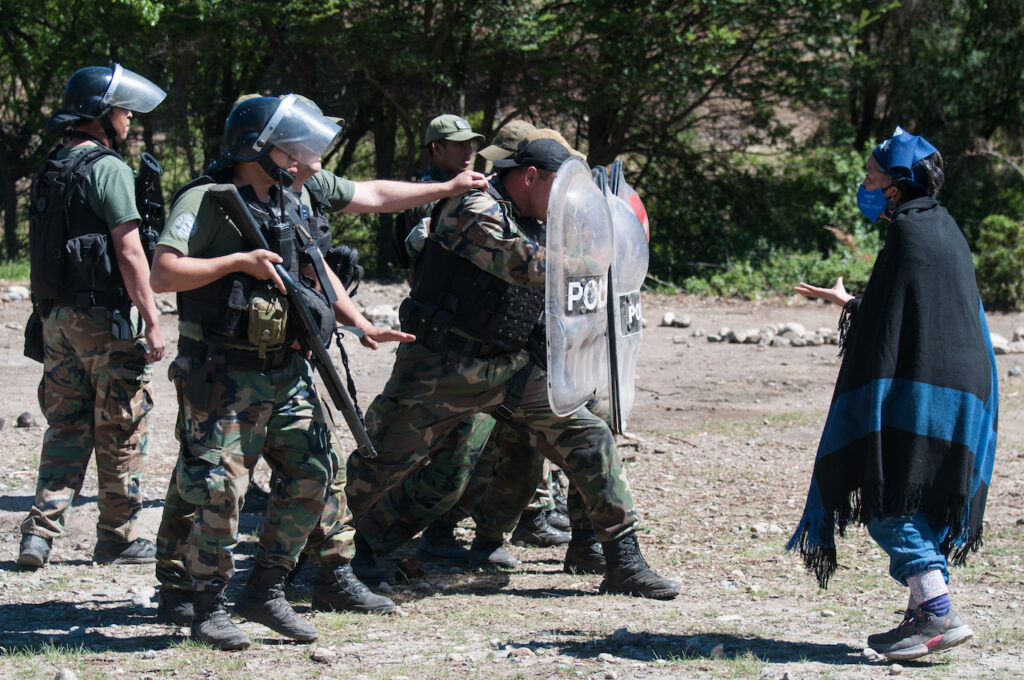
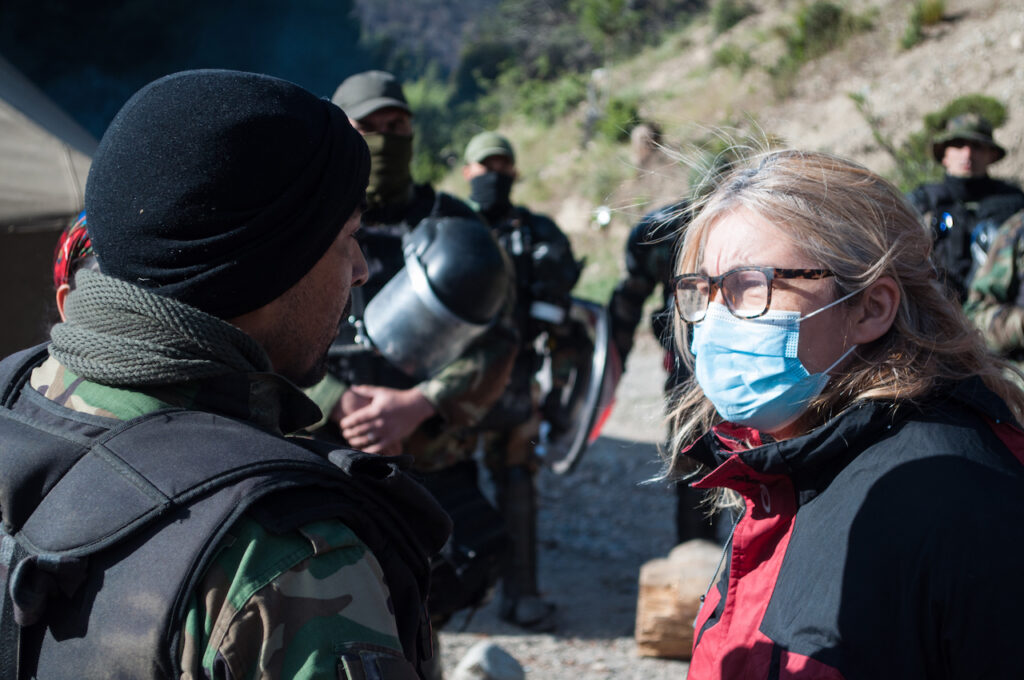
Moira Millán, a Mapuche warrior, confronts the police after they opened fire with rubber bullets on the assembled people. Photo: Denali DeGraf
Both territories have a history of violent deaths, but while in Mascardi the perpetrators were state security forces, in Cuesta del Ternero they were employees of Rolando Rocco, the timber businessman who claims the land based on a forestry concession and pine plantations in the area. The disputed territory is classified as provincial public land; Rocco is not the owner, and the community settled in an area of native forest where there are no plantations. Nevertheless, Rocco is the plaintiff in the case that is going to trial.
Romina Jones, from the Lof Quemquemtrew community, says: “We are working the land, something Rocco never did because he never lived here. He only planted pine trees, which are now encroaching on the native forest. Our job is to protect the native forest.”
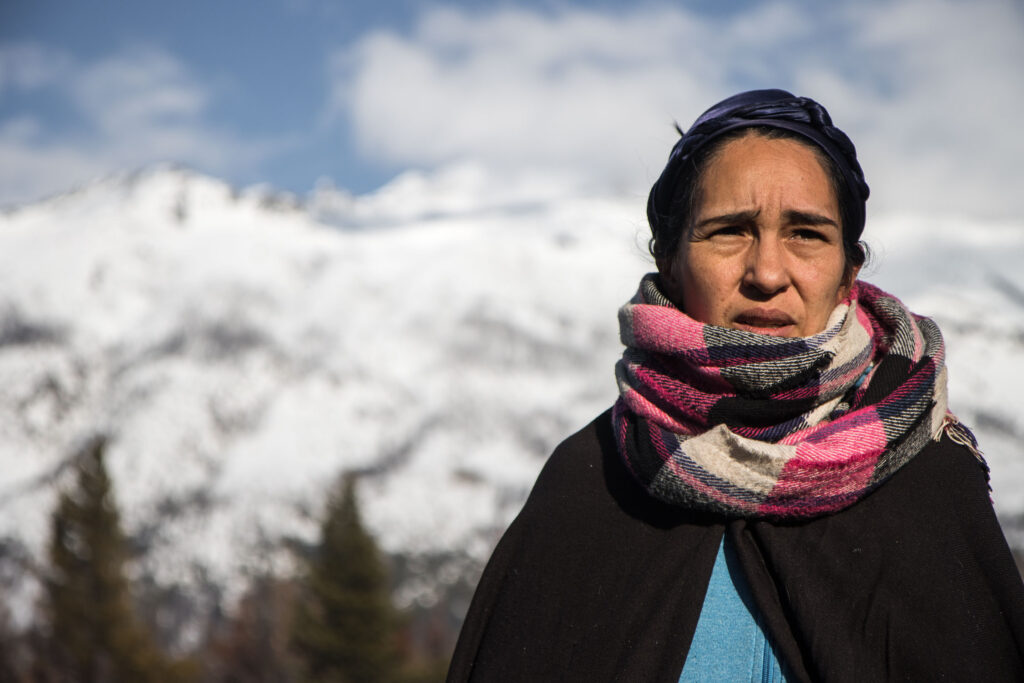
Lawyer Reile explains: “The Lof Quemquemtrew sought dialogue with both the state and the private sector. From the first notification, the response was to propose a peaceful and political solution to the prosecutor. However, they entered by force. On the other side, there is state violence, with armed checkpoints to deprive them of food and the entry of armed Rocco employees. Even so, after Elías's murder, the community always sought dialogue. There is not a single act of violence attributed to the community.” Or in the words of Romina Jones: “Unfortunately, we are always the ones who suffer the consequences.”
In February 2022, an agreement was reached between the Lof Quemquemtrew and Rolando Rocco. The community would remain in a section of native forest, and Rocco could continue working the pine plantations, with guidelines for coexistence to avoid conflicts.
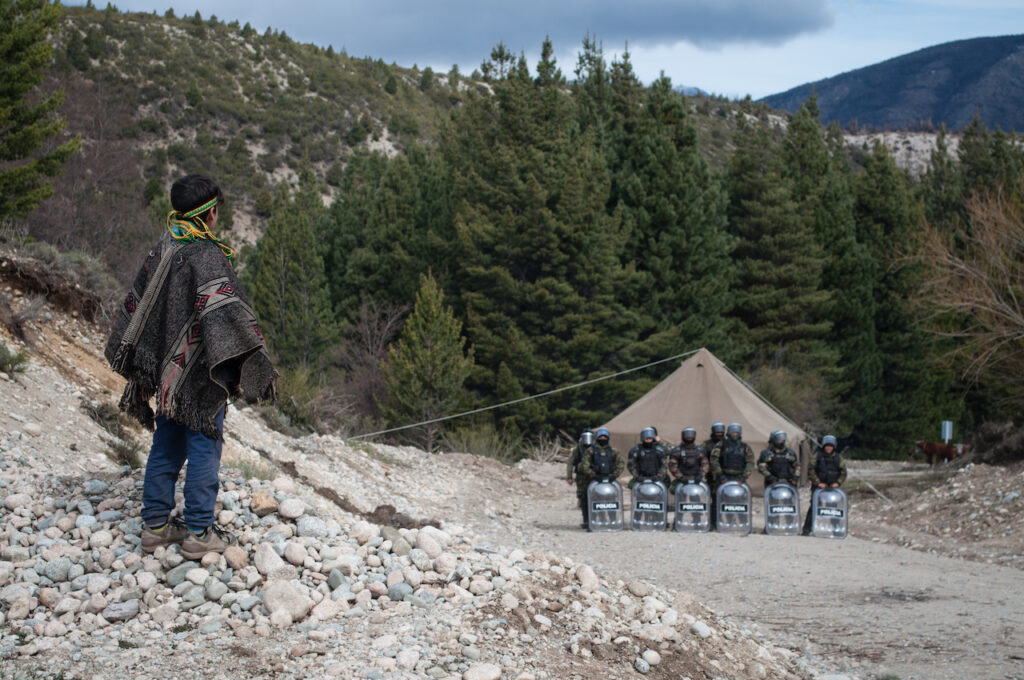
However, while the community always abided by the agreement, “Rocco violated it all the time,” says Reile. “He constantly intimidates the children and women of the community, never the men. They had to report him for following and intimidating a student from the community with his truck on his way to school.”
A few months ago, Rocco decided to withdraw the agreement and request the eviction of the Lof Quemquemtrew again. This led to the trial.
Unfulfilled dialogues and agreements

The Lof Lafken Winkul Mapu community also underwent an extensive dialogue process, in their case with the national government. Following the eviction in October 2022, and with four women under house arrest, a large delegation was formed to negotiate with the national government. This delegation encompassed many communities, as Betiana Colhuán Nahuel is the only machi (Mapuche spiritual leader) in Argentina, and her rewe, the ceremonial site, is also unique and of paramount importance for traditional spiritual practice. Therefore, it is a matter that concerns the entire Mapuche people. A group traveled to Buenos Aires in December 2022 and met with President Alberto Fernández; from then on, there were several instances of dialogue, both in Buenos Aires and in Bariloche.
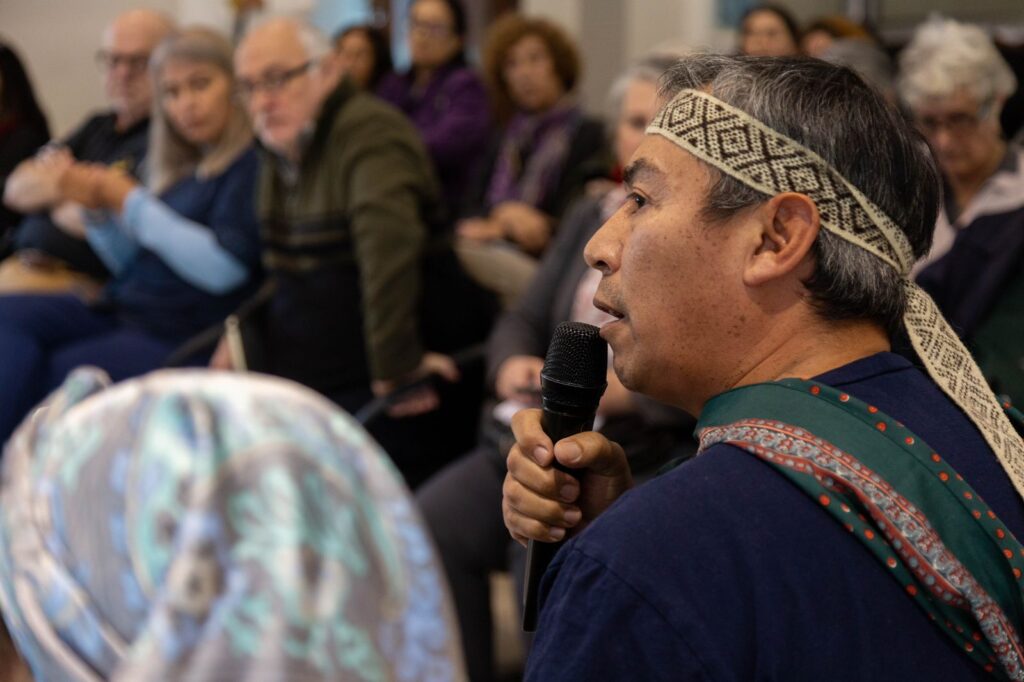
The process culminated in the signing of an agreement on June 1, 2023, between Mapuche authorities and the National Secretariat for Human Rights, the National Parks Agency, and the Ministries of Environment, Security, and Women, Gender and Diversity. Under this agreement, the Mapuche prisoners were released, the State committed to recognizing the rewe as a sacred site and allowing the machi (shaman) to live there and use it for ceremonial and medicinal purposes. The rest of the community agreed to be relocated to another territory. The agreement was ratified by Judge Hugo Greca, thus dismissing the case for land usurpation.
However, the outgoing government did not fully implement the agreement. In April of this year, in line with the policy promoted by Javier Milei's government, the National Parks Administration announced that it was nullifying what it had signed ten months earlier. And in August, the Federal Court of Cassation overturned Judge Greca's approval of the agreement. In its ruling, the Court of Cassation stated that the other residents of Villa Mascardi, even though they are not parties to the dispute, had not been consulted. This is why the case went to trial.
Arbitrary arrests: they were not fugitives
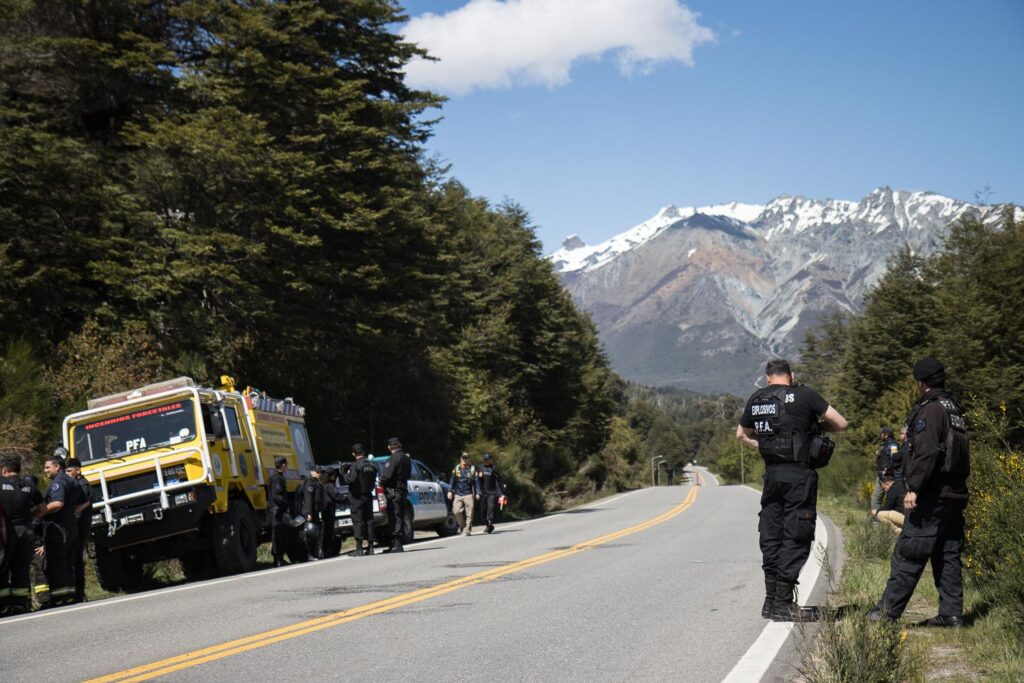
In that context, on September 11, Judge Greca issued arrest warrants for Luciana Jaramillo and Romina Rosas, “in order to guarantee the holding of the hearing.” While the prosecution warned of the risk of flight and most of the press referred to them as “fugitives,” both appeared every month to sign in with the police.
A few days ago, Luciana was stopped by the Federal Police in Cushamen without being told she was under arrest. Her children were left alone at home while she was taken to Bariloche.
Upon learning of the order, Romina Rosas voluntarily turned herself in at the Gendarmerie station in El Bolsón. Presentes accompanied her during the three hours she waited for the court's decision. Ultimately, it was decided not to arrest her solely because she is seven months pregnant. The following day, Presentes was able to visit Luciana Jaramillo in the Airport Police holding cell.
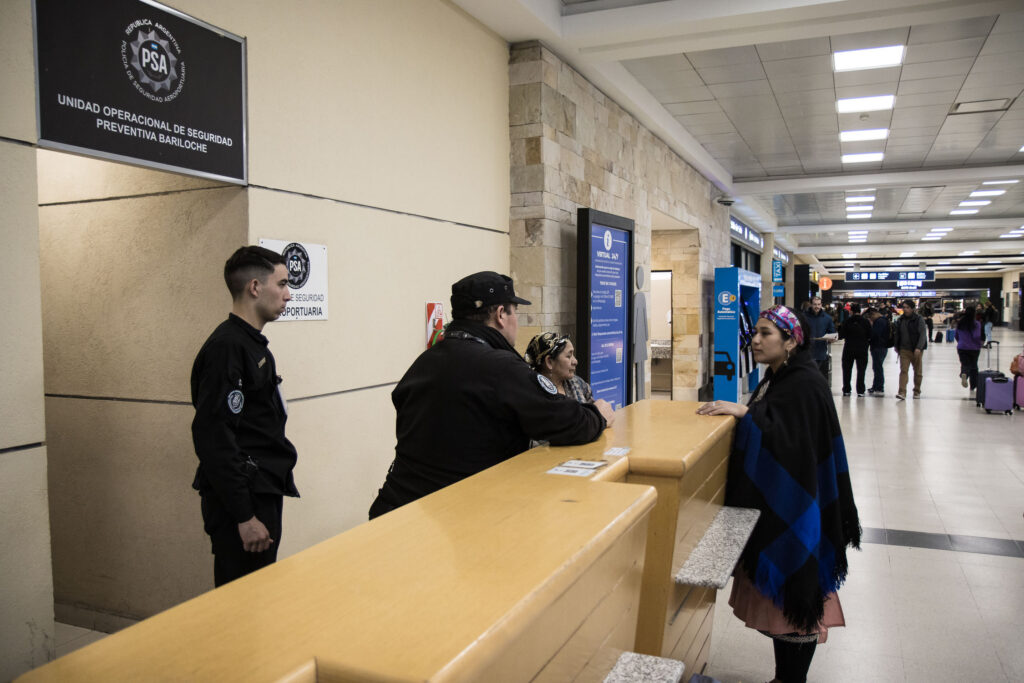
“We never trusted the State,” she said during the ten-minute visit, referring to the broken agreement. She is now in Cushamen under house arrest to “guarantee” her attendance at the trial. She insists: “I won’t accept this as normal, but the focus shouldn’t shift away from the rewe . My detention is nothing compared to that struggle. We will not back down.”
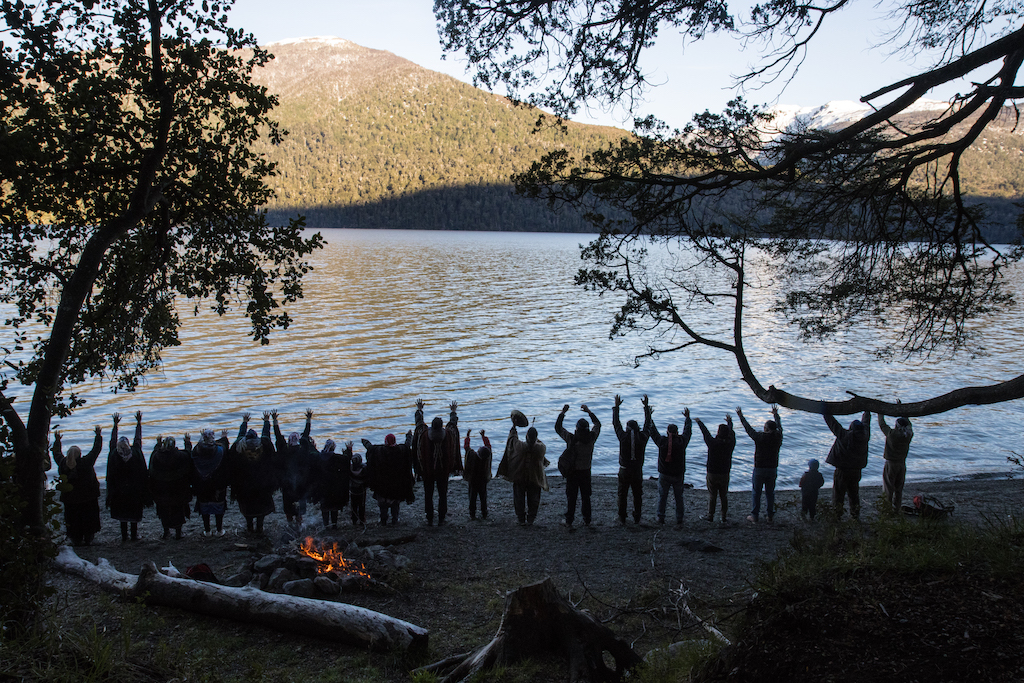
As if the context weren't enough, this trial, on the grounds that the Bariloche court is too small, will be held in the Gendarmerie.
We are present
We are committed to journalism that delves into the territories and conducts thorough investigations, combined with new technologies and narrative formats. We want the protagonists, their stories, and their struggles to be present.
SUPPORT US

FOLLOW US
Related notes



We are present
This and other stories are not usually on the media agenda. Together we can bring them to light.