

It is FALSE that gender affirmation processes increase suicidal ideation
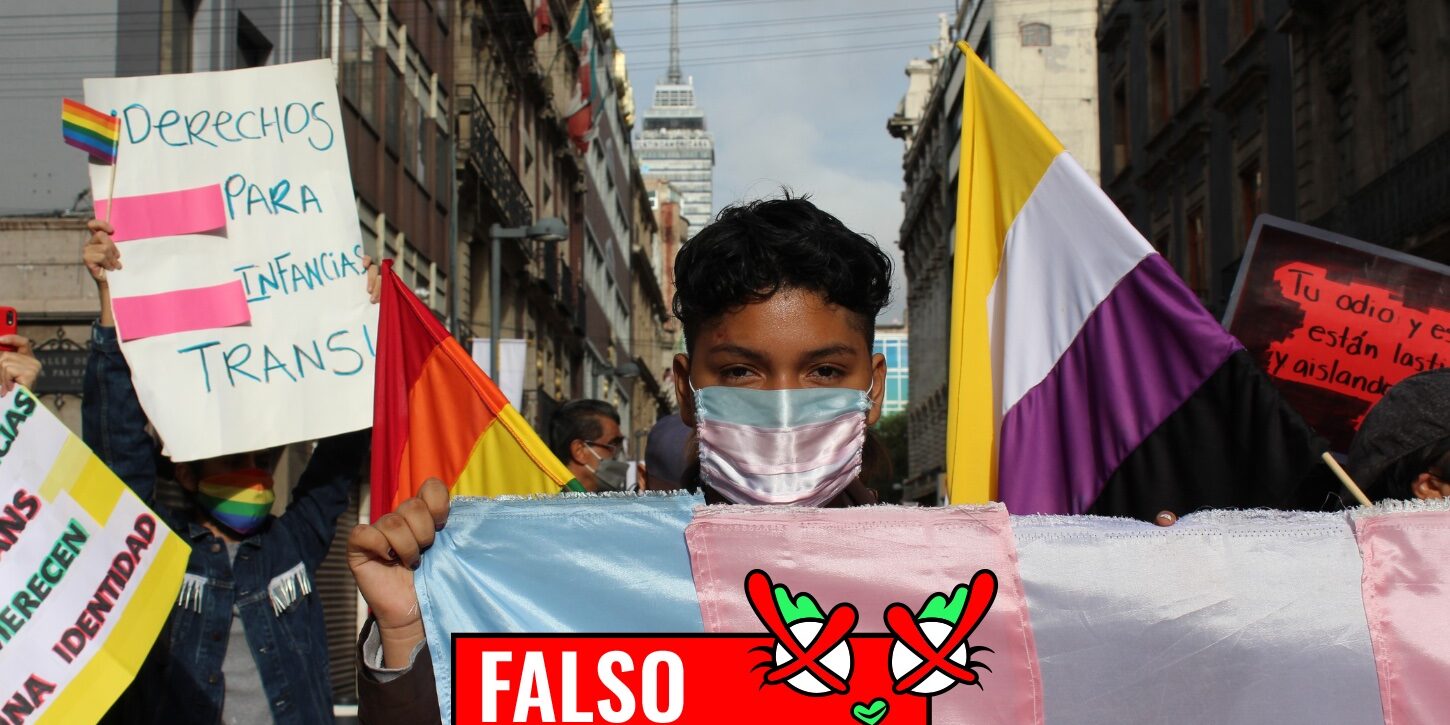
Misinformation surrounding the identities of transgender children is having a global impact, and one of the false claims is that they have higher rates of suicidal ideation.


Share

Transgender children and their caregivers face constant social scrutiny that forces them to justify their gender identities. This situation is exacerbated by misinformation and myths spread by anti-rights groups. These groups have attempted to manipulate public perception against legal reforms that support transgender rights, specifically those that benefit transgender minors. These include the recognition of their gender identity and access to healthcare, including gender-affirming healthcare.
Misinformation surrounding the identities of transgender children is having a global impact. And in countries like the United States and the United Kingdom , policies and legal reforms already exist that limit and deny their human rights. This includes everything from access to healthcare to the recognition of their identity, as well as the use of restrooms and participation in sports that align with their gender identity.
In Latin America, these disinformation narratives are disseminated and promoted by far-right politicians and anti-rights groups. They use social media and traditional media to spread false ideas, hoaxes, and moral panics about what it means to guarantee the human rights of transgender children.
The legislation
Globally, no gender identity law that guarantees this right to trans children seeks to "mutilate", "hormone" or "operate" on trans girls, boys and children.
According to the ILGA World database , at the regional level, Mexico, Colombia, Ecuador, Argentina, Uruguay, and Chile have guidelines, laws, or precedents that guarantee the recognition of gender identity for minors. In some cases, this is guaranteed administratively, in others through the courts. And in no case is medical or surgical accreditation or hormonal treatment required.
Advisory Opinion 24/17 of the Inter-American Court of Human Rights ( IACHR ) maintains that the recognition of gender identity of trans people, minors and adults, must be guaranteed without them having to prove medical or surgical interventions, hormonal treatments or other procedures.
In Mexico, three states recognize the gender identity of transgender children without age restrictions. Five states recognize it starting at age 12. Whenever such reforms reach state legislatures, politicians and anti-rights groups use legislative platforms, social media, and traditional media outlets to spread misinformation about them.
False arguments
The members of parliament who are pushing for anti-rights laws are using false arguments to try to support the claim that transgender children are at risk of suicide. This is false.
When we talk about gender affirmation, we're not just talking about medical interventions. We're also talking about social and legal aspects that help transgender people, both minors and adults, to live in accordance with their gender identity, reducing stress, crises, and suicidal thoughts.
In January 2020, The Trevor Project, an organization that works to prevent crises and suicides in the United States and other countries around the world, conducted research on the social, medical, and legal impacts on transgender children and adolescents regarding gender affirmation through various studies.
In general terms, the analysis is decisive in pointing out that “gender-affirming care has been shown to reduce suicidal ideation and attempts in transgender people, along with social support, family support and the reduction of discrimination” ( Bauer et al., 2015 , The Trevor Project, 2019 ).
Other data suggests that:
- Trans children who have socially transitioned show comparable levels of self-esteem and depression to non-trans children. “The fact that the self-esteem and depression outcomes are the same is powerful because of the significantly worse mental health outcomes experienced by unsupported trans youth” ( Durwood, et al., 2016 ; Olson et al., 2016 ).
- The use of the chosen name resulted in a 29% decrease in suicidal ideation and a 56% decrease in suicidal behavior in each social context where trans children and youth live ( Russell, et al., 2018 ).
- Trans people who desired and received puberty suppression in adolescence have significantly lower lifetime suicidal ideation compared to those who desired but did not receive it ( Turban et al., 2014 ).
What is gender affirmation?
At a social level, gender affirmation involves respecting the gender identity of transgender people by calling them by their chosen name, using the pronoun with which they identify, and not denying them participation in and access to sports or restrooms in relation to their gender identity.
From a medical perspective, there are gender-affirming treatments that postpone physical changes. These may include:
- Puberty suppression, commonly known as "puberty blockers," is used to delay the development of secondary sexual characteristics associated with puberty.
- Hormone therapy, which helps promote physical changes to affirm a person's gender identity.
Both puberty suppression and hormone therapy are two components of medical care supported by evidence from the Endocrine Society , the World Partnership for Transgender Health (WPATH), and the Inter-American Commission on Human Rights ( IACHR ).
At the regional level, the IACHR states : “When we talk about medical interventions for gender affirmation, we should not only think of surgeries, which in fact are not performed on people whose bodies are still growing, but we also refer to hormone blocking and replacement therapies. Hormone blockers are administered at the time of puberty, and that is why it is essential to guarantee trans children's access to adequate medical care to look after their transitional health .”
The Endocrinology Association recommends that a multidisciplinary team in endocrinology, physical and mental health accompany peripubertal youth and adolescents to determine if they can access hormone blockers.
In Mexico, trans people still face obstacles in accessing gender affirmation processes at the social, medical, and legal levels.
Lack of scientific data focused on trans people
The research and analysis states that "the available data strongly highlight the psychosocial benefits of gender-affirming care for trans youth and children."
However, they warn of the need for large-scale data focused on trans people in order to have more and better information on the risks and benefits of treatment options so that trans children and adolescents and their families can make better decisions.
Although The Trevor Project's research is contextualized in the United States, it can shed light on our territories in Latin America on how access to gender affirmation processes (social, legal, and medical) for trans children and youth can improve their mental health and prevent suicidal ideation.
We are present
We are committed to journalism that delves into the territories and conducts thorough investigations, combined with new technologies and narrative formats. We want the protagonists, their stories, and their struggles to be present.
SUPPORT US

FOLLOW US
Related notes


We are present
This and other stories are not usually on the media agenda. Together we can bring them to light.