

How sexual diversity lives in Argentina: what the first census of LGBTQNB+ living conditions reveals
The First National Survey of Living Conditions of Sexual and Gender Diversity in Argentina compiles data from more than 15,000 people. What does it reveal about how LGBTQNB people live today? This analysis comes from one of the coordinators, Maximiliano Marentes, PhD in Social Sciences specializing in gender and diversity.


Share

Buenos Aires, Argentina . Is it possible to measure how much (and how) sexual and gender diversity impacts our living conditions? The reality of the LGBTIQ+ population has always been statistically an enigma. In recent years, no research had been conducted that combined a large volume of information at the national level with academic rigor. Until a few days ago, the data collected in 2023 by the First National Survey of Living Conditions of Sexual and Gender Diversity in Argentina was compiled a very detailed account of the living conditions of more than 15,000 people from the LGBTQ+ community , providing precise and comparable data on different dimensions of their lives.
How it was done
The first comprehensive census has created the largest database on the living conditions of LGBT+ people in Argentina. It gathers information from across the country, organized into six regions. It was coordinated by a team of 50 professionals from national institutes and universities . Between May and August 2023, 15,211 people responded to the self-administered survey. The database will be available to everyone in the first quarter of 2025.
Today, this census offers a detailed overview for understanding the current state of sexual and gender diversity in Argentina, essential for planning for the future. Among the most relevant data regarding the different identity groups encompassed by the acronym, a large number of bisexual (22.5%) and non-binary (13.2%) people stand out. Also noteworthy is the number of trans masculinities (5.3%), which surpasses the number of trans femininities (4.1%), comprised of transvestites, trans women, and transfeminine individuals.
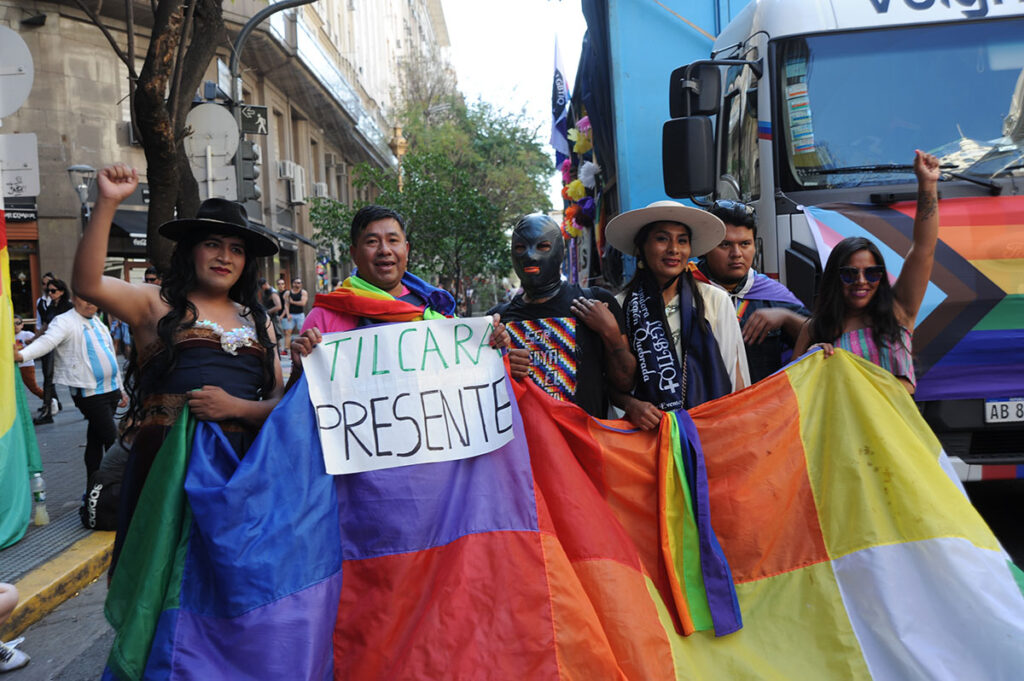
A group of national universities from across Argentina, with support from the now-defunct Ministry of Women, Gender and Diversity, surveyed more than 15,000 cases of LGBTQ+ individuals and compiled data on various aspects of their lives. The institutions participating in this project are: the Center for Population Studies (CENEP), the National University of Comahue (UNComa), the National University of Córdoba (UNC), the Institute of Geohistorical Research (IIGHI – CONICET/UNNE), the National University of Salta (UNSa), the National University of San Martín (UNSAM), and the National Scientific and Technical Research Council (CONICET). The project was funded by the National Agency for Scientific and Technological Promotion (ANPCyT) through an agreement with the Ministry of Women, Gender and Diversity. The working group is comprised of six nodes, each corresponding to a different region: the City of Buenos Aires (CABA), Central Region, Patagonia, the Buenos Aires Metropolitan Region (RMBA), Northeast/Litoral, and Northwest (NOA).
Census data confirms that the trans population is the most affected by discrimination, both in education and employment. This restricts their access to higher levels of education and creates precarious working conditions.
Maximiliano Marentes , a sociologist trained at the National University of San Martín, is part of the large team that carried out the census. As coordinator of the Buenos Aires Metropolitan Region node, he reflects on the data collected: from the commitment of a publicly assertive bisexual majority to how strategies are being developed to improve the living conditions of the trans population.
“ Trans women, trans men, and, to a lesser extent, non-binary people , show worse indicators, so to speak, compared to the general population, in terms of educational attainment , income level, and access to and retention of employment. In the case of gay men and lesbians, it is close to the average of the general population,” he says.
Why a census on living conditions
Marentes, who also holds a doctorate in Social Sciences and specializes in gender and diversity, believes that it is still necessary to delve deeper, conduct control studies, and mediate some variables to understand how being an LGBTIQ+ person affects living conditions.
— Why is this Census about “living conditions”?
—Because it was an area of gaps. Those of us who work with diversity issues from different angles and approaches saw that there was a certain gap in relation to Oriana (Junco )'s question: "How do they make a living?" Because there had been a lot of progress in systematizing and understanding gay men and trans feminism, in terms of discrimination, aggression, and violence. But there was a lack of knowledge about their material conditions of existence . And how these conditions influence their identities when it comes to participating in the labor market, developing professionally, and so on. There are some previous studies; we're not here to reinvent the wheel: we're looking to generate data that can be compared with the general population, that is, statistical data.
In his doctoral research on “ Love between gay men . An analysis of cultural production based on equal marriage (2010) in Argentina”, he compared the lives of two brothers to try to measure how sexual orientation had influenced them.
A census, like any research project, can be viewed as an inert instrument or as a living entity, Marentes reflects. And she proudly presents a data ecosystem to be read and compared with other variables, a body with political potential.
How is the LGBTINB+ acronym configured in Argentina?
Among those surveyed, the number of people who identified as bisexual was surprising: 18.2% within bisexual women, and 4.3% as bisexual or pansexual men, totaling 22.5% bisexual. 35% of people defined themselves as gay, queer, or homosexual, and 15% as lesbian/lesbian. 13.2% of respondents identified as non-binary.
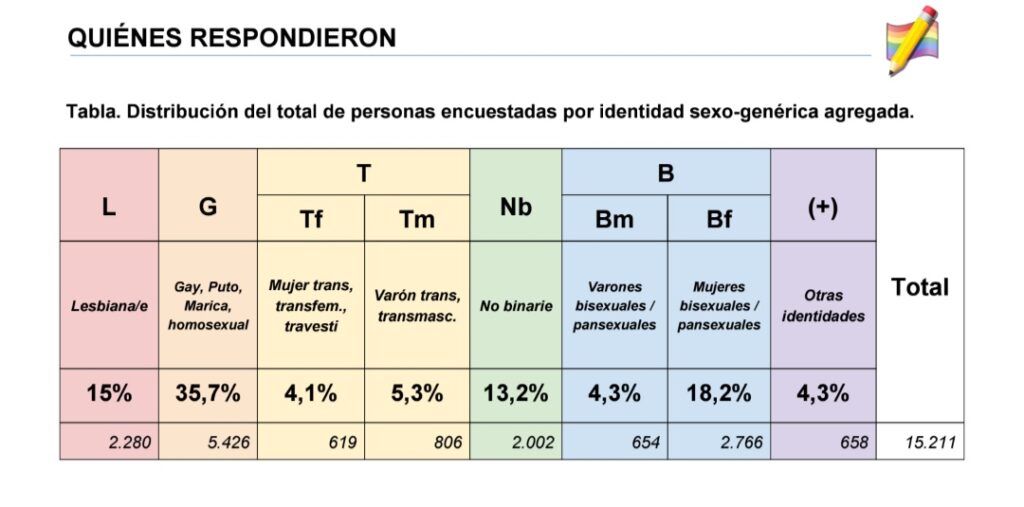
— As researchers, were you surprised by the number of non-binary and bisexual people, or that the number of trans masculinities is higher than the number of trans femininities?
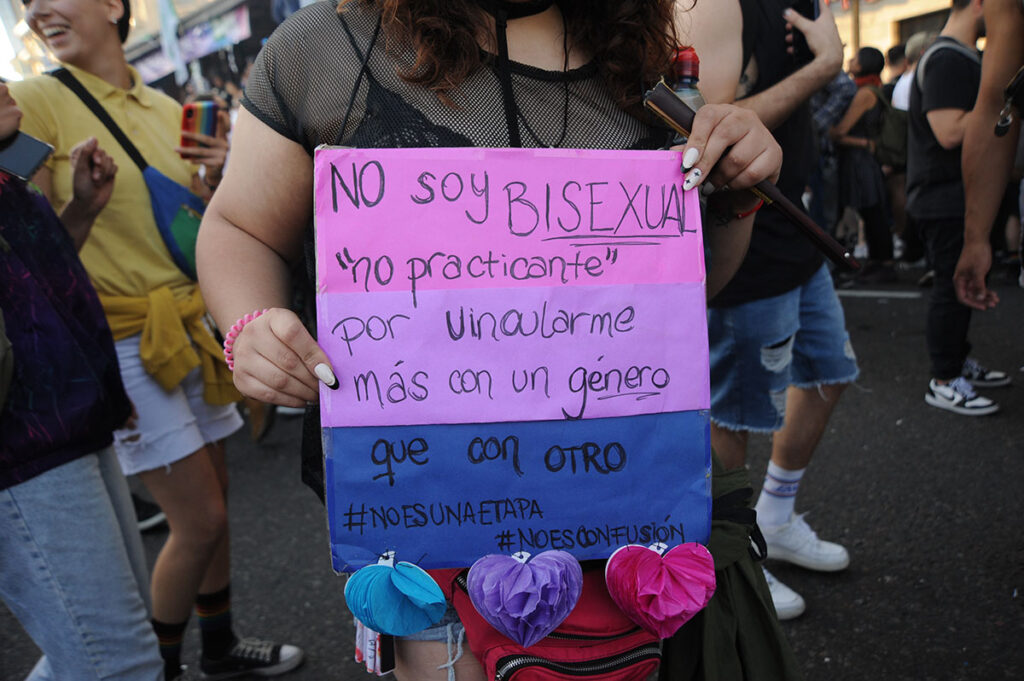
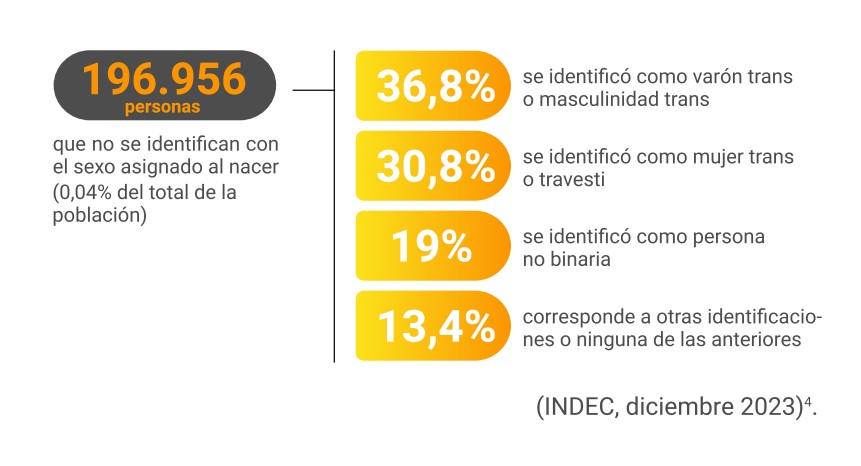
—If that's surprising, it's because we had come to believe there would be more trans women. But it also coincides with the Indec general census (36.8% males, compared to 30.8% trans women and transvestites). We were also surprised by something that's a global trend: the number of bisexual women. There's increasingly more self-identification. That's why it's valuable to see the survey as a political strategy, or a way of politicizing identities ; there's a greater commitment to embracing them. You see the survey as something insignificant, and suddenly it becomes a political battleground. Before, there was invisibility; nobody talked about being bisexual. Or there were the difficulties organizations faced in being respected by other organizations within the movement, and in not being seen as a transient identity. Here we see this greater presence, a greater tendency to identify.
— Any other news to highlight?
—Something we noticed is that when we asked about gender identity, some people wrote “gay” or “faggot,” when for us that would be part of sexual orientation. We saw this in the process of regrouping identities, and we were discussing the same thing with some Chilean colleagues who are conducting a similar survey. There appears to be greater flexibility in defining sexual orientation and gender identity.
Families and territorial organization
The results of the Diverse Census were presented at the University of San Martín on August 30, as part of a "federal tour" of presentations, details of which can be found on the official website . Presentations will continue on September 5 at the National University of Comahue in the province of Neuquén, on Tuesday, September 10 at the Evita Museum in the province of Córdoba, in October in Salta, and in November at the National University of the Northeast in Chaco.
In San Martín, Dr. Ernesto Meccia was part of the panel that discussed the results. The director of the Sociology program at the National University of the Littoral emphasized the study's contribution to "understanding the realities of identities linked to the territory where they are woven, and whether proudly or not, assumed." He highlighted the relevance of the data produced on the relationship of these identities with local organizations, social and/or political organizations, most of which are not linked to feminism or the LGBTQ+ movement (45.9%). He also greatly appreciated that the chapter on health focuses on access to healthcare and mental health from a holistic perspective. In both sections, one can see how alliances are being forged with unions, social organizations, and so on.
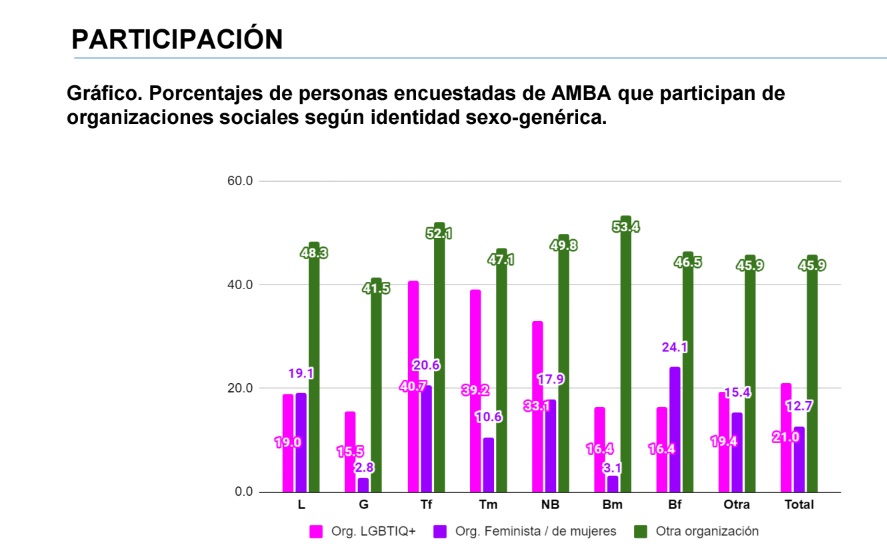
In turn, María Luisa Peralta, a biologist and lesbian activist, reflected on the data produced regarding family and caregiving. She focused on the 50% of LGBTIQNB+ people who are not in a relationship, and the need to socially legitimize, through labor legislation, the caregiving relationships that occur between friends .
“It’s interesting to think about what kind of strategies can be developed, and what alliances can be formed, because we’re not in Sweden where work is as formal as it gets,” reflects Maxi Marentes. The idea of family in our part of the world, he explains, continues to be a space where, for some things, one can rely.
Specifically, one question that was not included in the booklet was: Who can you count on? a) when you need money, b) when you need someone to take care of you because of health problems, c) when you need support because you are sad.
In conversation with Marentes, he explains that, according to the survey data, in our Argentine latitudes, the family, the partner, and friends appeared in that order in those categories. Our Argentine families, which blend elements of Italian immigrants with those of the indigenous peoples and their communal experience, are not as exclusionary as the Anglo-Saxon family.
Given these particularities, Marentes believes that many people resort to disguising their relationships. For example, if I have to take care of a girlfriend, and she's a few years older, some people say she's their uncle or aunt . But this can also happen to a cis woman who needs to care for or be cared for by a friend, and she experiences the same system of (il)legitimacy.
From this dataset emerge the links and relationships that are articulated with various organizations such as business chambers, companies, unions: other actors with whom diversity is already interacting, weaving their daily lives.
Through this data, the researchers observe "that the possibility of forging potential alliances with different stakeholders can be a strategy to cope with this moment and to build better conditions," Marentes enthuses.
Discrimination and working conditions
This survey was conducted in 2023, before Javier Milei took office and his officials, including Justice Minister Cúneo Libarona, began attacking gender and sexual diversity. Therefore, it is suspected that the numbers documenting discrimination may have increased.
-Over the 12 months prior to December 2023, around 60% of trans people surveyed had been discriminated against because of their gender identity, followed by 40% of non-binary people.
-30.4% of those surveyed felt discriminated against for a reason unrelated to their gender identity or sexual orientation, with political identity being the most prevalent. This is hardly surprising in "a society as polarized as ours," as María Luisa Peralta stated at the University of San Martín.
-Regarding work relationships, an overwhelming majority of the sample is active: 77.4% live off their work.
-Unemployment and inactivity mainly affect trans masculinities (14.3%), trans women/travestis (12.3) and non-binary people (10.3).
This segment also reported experiencing more discrimination in educational settings, both from authorities and other students (around 30% of individuals were discriminated against, compared to an average of 20% for the LGBT community as a whole) . And it is the group that makes the least progress in obtaining degrees.
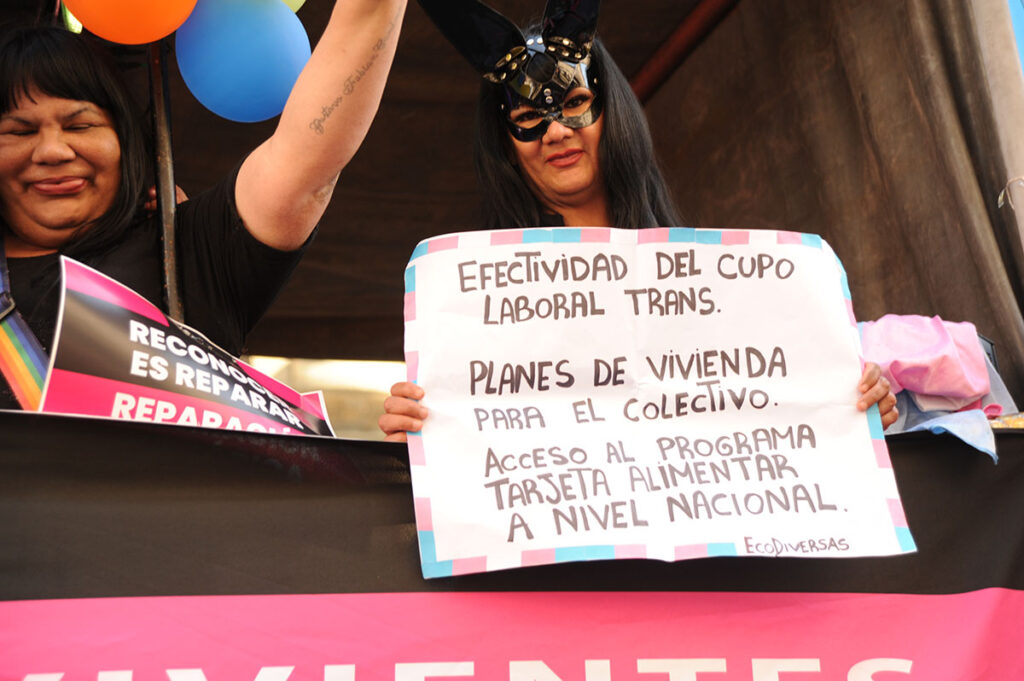
When identity has a positive influence
-When analyzing work activities, it is notable that 43.6% work as professionals, scientists and intellectuals.
— Could this data regarding professional, scientific, or intellectual work be a bias in the sample, since it was collected by universities?
— That's a great question, and there could be several hypotheses. There might be bias because it's being conducted by universities, or because it's a complex survey, designed to be comparable with the Permanent Household Survey (EPH), which isn't self-administered. But at the same time, all the studies along these lines, using both primary and secondary sources, show that this is a population with higher levels of educational attainment . One of the hypotheses we're using is over-adaptation. To the extent that one feels inadequate because they don't fit into hegemonic masculinity, or because they aren't as feminine as others, or because of those issues related to identities and orientations that push us out of the norm, some of us take refuge in studying , and we try, in quotes and quite bluntly, to "counterbalance that" by studying more and so on.
Marentes recounts that in the case of his doctoral research, which followed two brothers, both had grown up in the same shantytown. One was heterosexual and worked as a supermarket stocker, the other was gay, and through political activism and social engagement, he came to work as a secretary at INADI (National Institute Against Discrimination, Xenophobia and Racism) and was studying to become a fine arts teacher. “There’s something about that class background—that capitalism would say if everyone is poor, they’ll die poor—and that gender identity positively influenced his trajectory .”
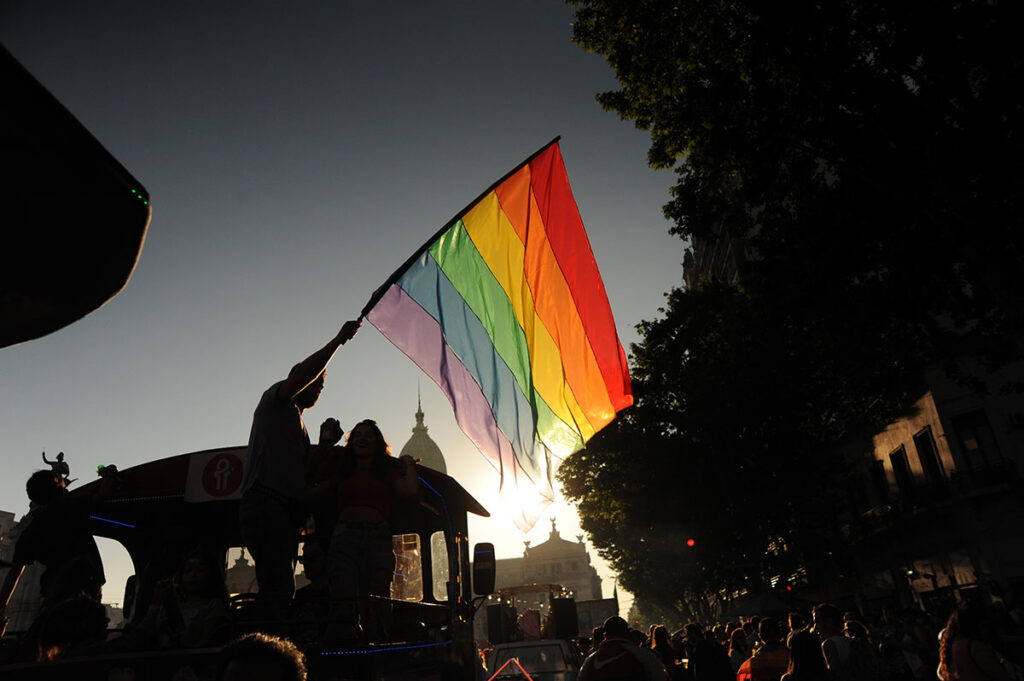
Data that speaks to sexual diversity
-In Argentina's last official census, the results of which were released in December 2023, respondents were asked for the first time whether they identified with the sex assigned at birth. 196,952 people answered no. This represents 0.04% of the population, although sexual orientation and intersex identity continue to be ignored.
-The first national survey is part of a research line that is not new and has crucial precedents. The first to pave the way was the “Preliminary Report on the Situation of Transvestites in the City of Buenos Aires” (1999), with a sample of 147 trans women.
-In 2005 Lohana Berkins and Josefina Fernandez carried out the survey in the City of Buenos Aires, La Matanza and Mar del Plata, which gave rise to the book "The feat of the proper name" (Editorial Madres de Plaza de Mayo).
Image source: https://censodiversidad.ar/#que
We are present
We are committed to journalism that delves into the territories and conducts thorough investigations, combined with new technologies and narrative formats. We want the protagonists, their stories, and their struggles to be present.
SUPPORT US

FOLLOW US
Related notes


We are present
This and other stories are not usually on the media agenda. Together we can bring them to light.