

Tehuel de la Torre: Echoes of a Sentence That Is a Triumph for Activism
For the first time, we have a court ruling that recognizes a trans homicide. And it's a political victory for activists in a context where diverse communities are resisting attacks of all kinds.


Share

Tehuel's name echoed dozens of times in the courtroom during the reading of the verdict in the La Plata courthouse. Many people are surprised to learn that Tehuel continued to embrace, from his transmasculine identity, the name he was given at birth, of Mapuche origin, just like his mother Norma Nahuelcura's surname, as if it contained the seed of an ancestral diversity. That name resonated against the walls of the courtroom during each hearing of the trial. Sometimes in testimonies that recalled his good humor and joyful laughter, and other times in the evidence that pieced together the puzzle of cruelty, where no one is safe but some people are more vulnerable than others. Sometimes so much so that it's not even possible to connect the name to the bones.
We don't know where Tehuel is; we know the search was unsuccessful and that the search must continue (there is another case related to this). But for the first time, we have a ruling that recognizes a trans homicide , applying the aggravating circumstance of hatred based on gender identity. And it is a political victory for activists in a context where diverse communities resist all kinds of attacks from Javier Milei's government, from the dismantling of institutions and public policies to the now-commonplace hate speech. Days before the ruling, the Minister of Justice (!) Mariano Cúneo Libarona had rejected sexual identities "that do not align with biology," calling them "subjective inventions" and disregarding numerous national laws and human rights frameworks.
Covering a trial
Covering a trial as a journalist is an experience full of challenging aspects to communicate, and this has been one of the most difficult. Reporting on it is akin to translation, a bridge between worlds that are often distant. How can we rejoice in a verdict when Tehuel hasn't been found and we don't know where he is? Are we idiots? Virginia Woolf already said it in one of her beautiful stories about the "brilliance of the incongruity of ideas," a sentiment that remains relevant today.
Perhaps part of the challenge—forgive us if we keep going over this—involves explaining that very few media outlets covered the trial and gave it any coverage. Media coverage of the Tehuel case, from the moment of her disappearance, was minimal. It was generally handled by cooperative or self-managed media outlets, and was more the exception than the rule. Neither the mainstream media nor television, except for the 2021 searches in Alejandro Korn, dedicated much time to it. There were no TV news crews waiting for the landmark verdict, as thankfully happened when the transphobic murder of Diana Sacayán was tried and issues of feminism and diversity occupied a different place on the public agenda.
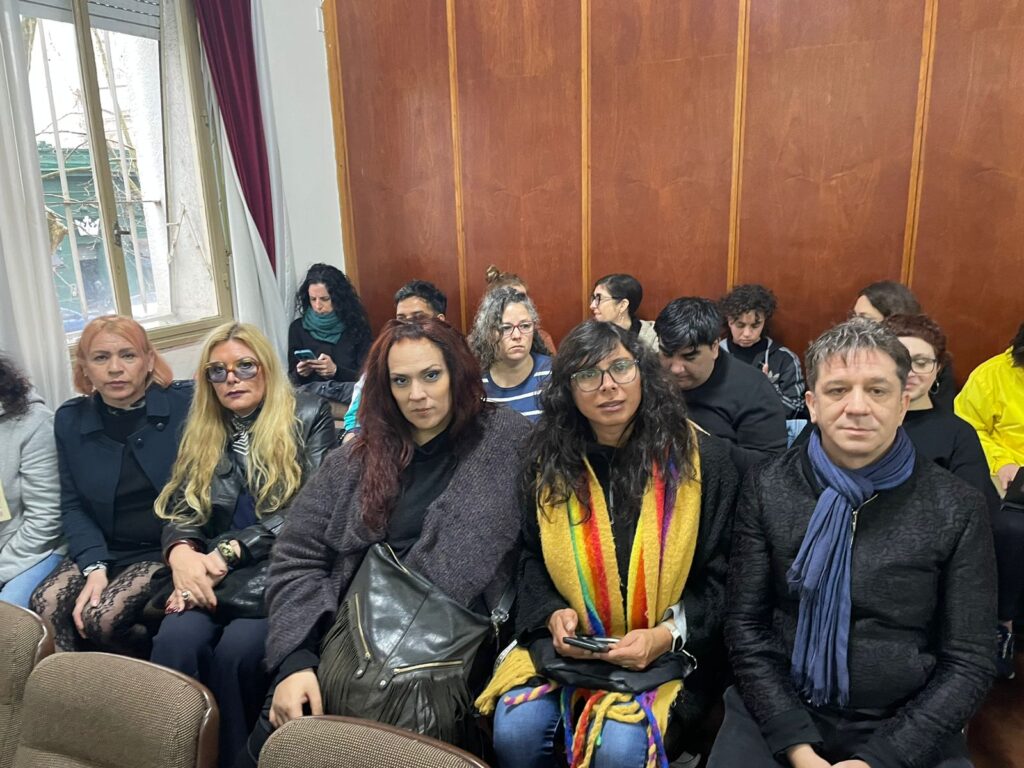
Furthermore, Tehuel is the kind of victim that the media—and perhaps not only them—consider distant, even though we live in a country with a poverty rate of 54.6%. A young trans man from the deep suburbs, who lived with his girlfriend and her son, whom he cared for and called "dad.".
The tests
A trial has the rituals of theater and the dialogic structure of Greek tragedy. Main characters, antagonists, choruses of witnesses, dramatic texts, micro-narratives of inequality that the world of television series could quickly turn into entertainment . Covering a trial also has something of a series about it. In each hearing, clues, characters, and relationships are revealed. If anything was clear in each hearing, it was that Ramos did know and still knows where Tehuel is. There was testimony, a photograph, videos, that placed Ramos with Tehuel on the evening of March 11, 2021, and a wealth of expert evidence that implicated him.
“No explanation, other than the victim’s violent death, is plausible to justify the existence of such bloodstains, which were visible to the naked eye, in the form of drops and approximately one and a half meters high, on the interior wall of the house where Luis Ramos lived ,” the ruling states. Furthermore, Ramos claimed to be his friend and never cooperated with the search. He embarked on a saga to evade justice, changing his appearance and neighborhood, visiting relatives he hadn’t seen in years, and ended up hiding in a neighbor’s bathtub.
Underlying currents
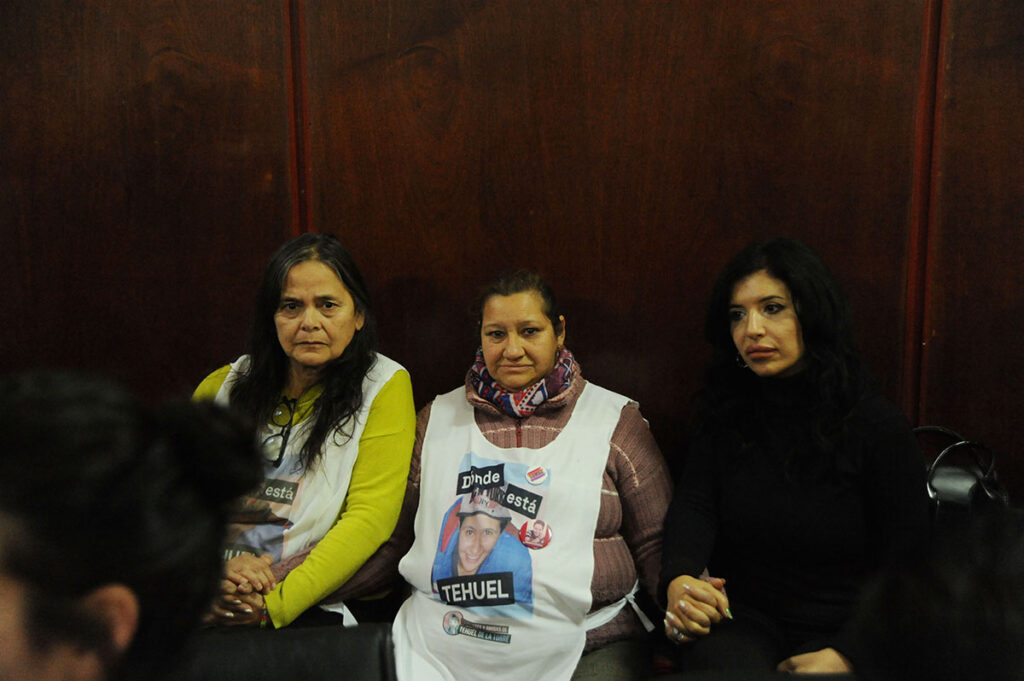
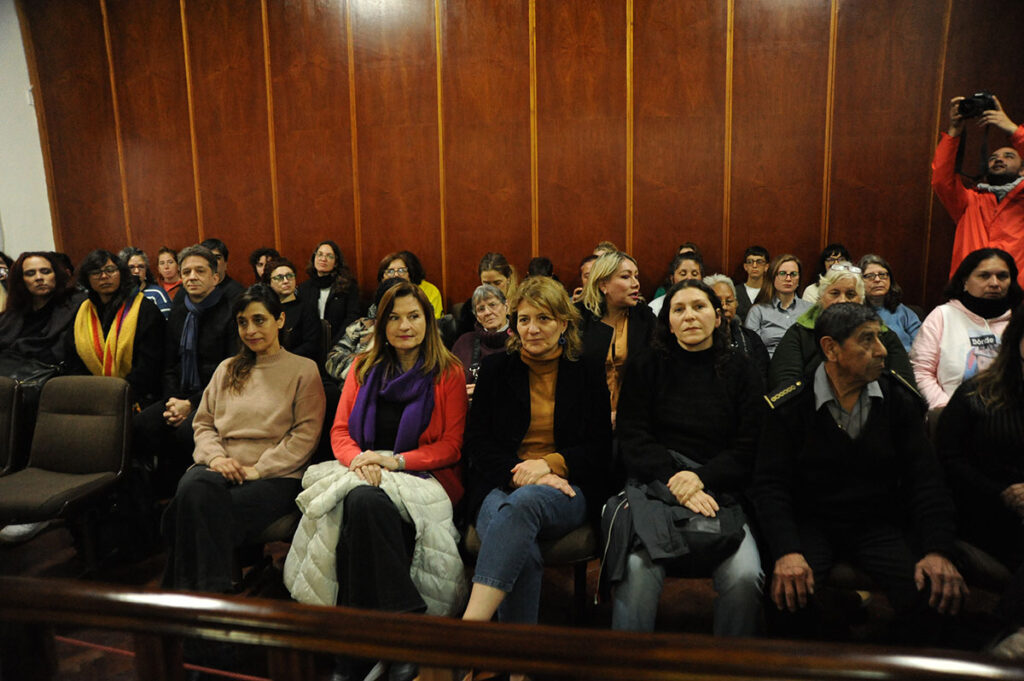
A trial is a space filled with emotion, though this is rarely discussed. During the hearings, care is taken to keep tempers from running high. On the day of the verdict, no one was allowed to enter with signs or banners. Rosa Bru couldn't bring in the picture of Miguel, her missing son, which she always carries with her. The exception this time was Norma, Tehuel's mother, who entered wearing a vest with her son's face and the question, "Where is he?" The lawyers for the prosecution also placed a picture of Tehuel's smiling face on the desk.
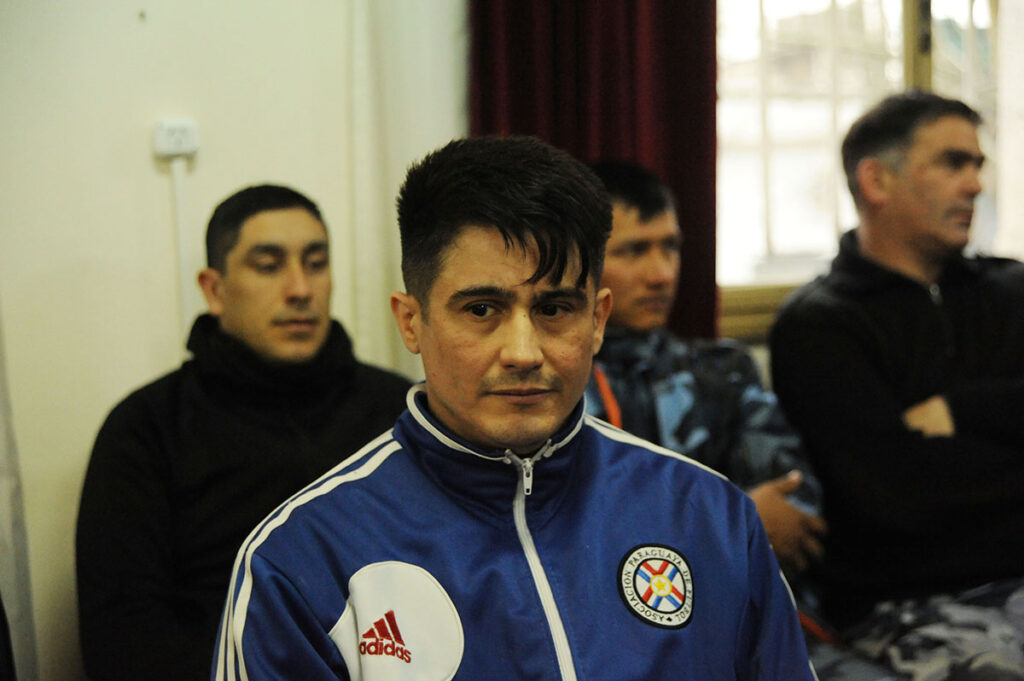
Seated across the room, Luis Alberto Ramos listened to the sentence without taking his eyes off the two court clerks reading it. For 40 minutes he remained attentive, impassive, his hands in his lap, wearing a blue Paraguayan national team tracksuit. This is his second conviction; he already had one for homicide in 2009. “Tehuel was a victim of cisnormativity. He was fighting for recognition. He was exposed to the wolves, where his life was lost,” an expert witness had stated. Ramos doesn't look like a wolf, but there he remains, without revealing Tehuel's whereabouts, in another film that is also part of this story.
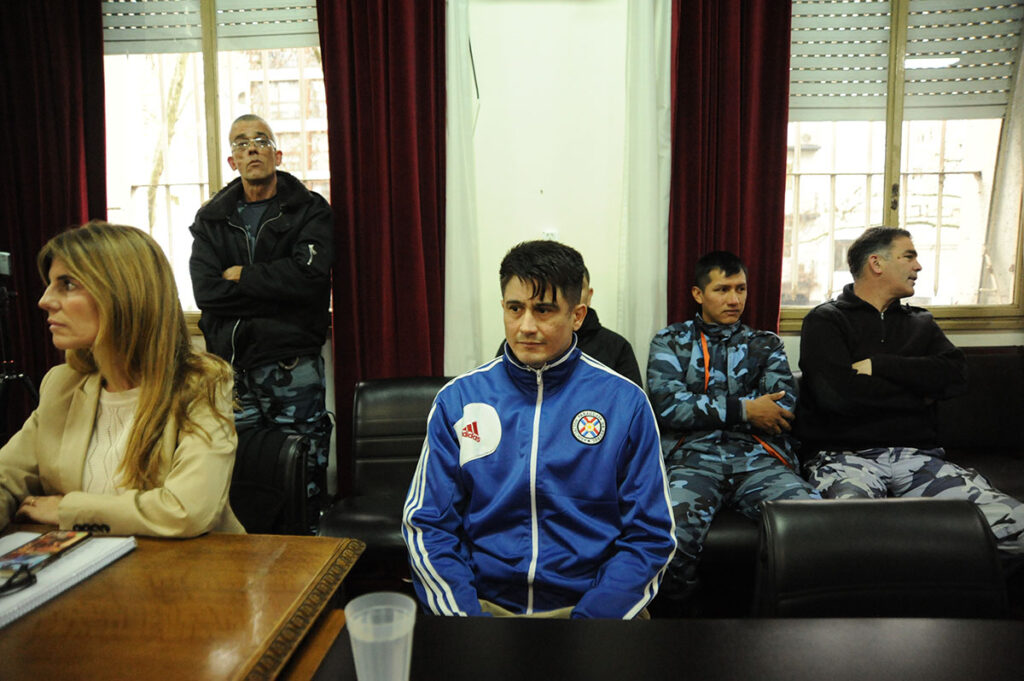
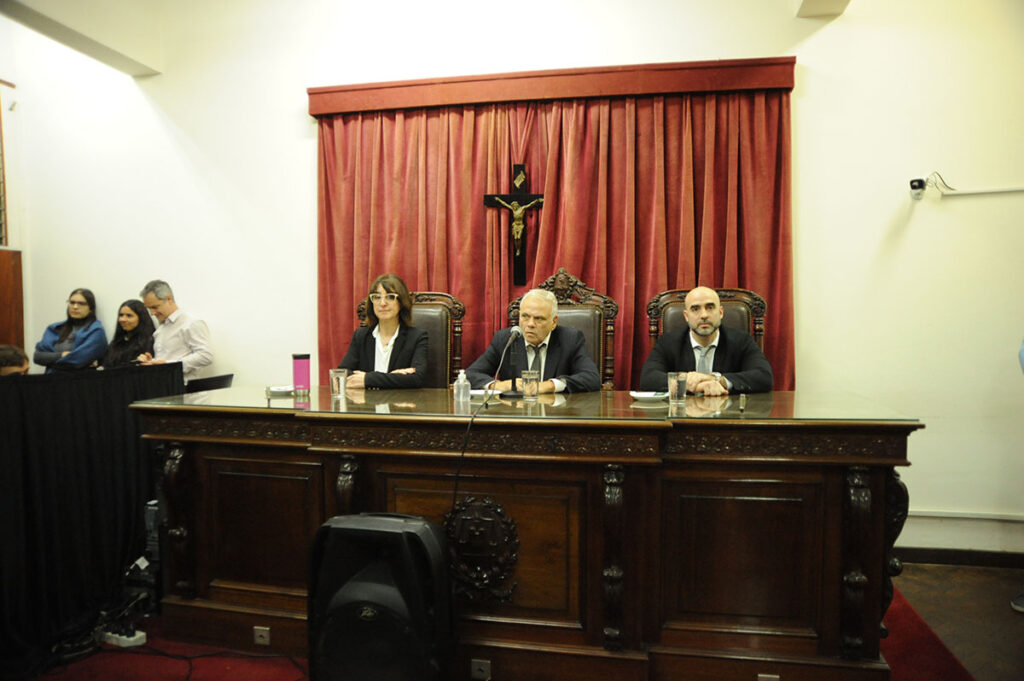
As in other cases where remains have still not been found—Miguel Bru or so many other victims of State Terrorism—the ruling establishes the homicide as proven. “To this day, Tehuel De la Torre’s body has not been found, but there is precise and compelling evidence that allows us to consider it proven not only that he was killed between the late hours of March 11 and the early hours of March 12, 2021,” says the ruling signed by Judges Claudio Bernard (President of the Court) and Ramiro Fernández Lorenz, and Judge Silvia Hoerr.
Why do we say historical
The sentence is not historic for convicting Ramos. It is the first in the court records to address the murder of a trans man, that is, a trans homicide. “During the trial, several witnesses testified, establishing the friendship between the victim and the perpetrator, which the latter exploited to unleash his hatred and kill Tehuel. The bloodstains found on the wall of Ramos's house demonstrate the extreme violence used to kill the victim, but even more significant and decisive in justifying the application of the aggravating circumstance contemplated in section 4 of article 80 of the Penal Code is that the defendant took steps to dispose of Tehuel's body.”
The ruling acknowledges that Ramos not only denied the possibility of existence to a “disobedient body” but also acted with cruelty—and cruelty is characteristic of hate crimes—by concealing the lifeless body. It concludes that Ramos not only took Tehuel's life “motivated by hatred of her gender identity, but also made disappear the only tangible thing that remains of a human being when they die, thus preventing their loved ones from having their body to dress it one last time, hold a wake, and say goodbye (...). Furthermore, the family's inability to verify with their own senses that Tehuel was indeed murdered creates the illusion that he may still be alive somewhere.”
Arguments and activism
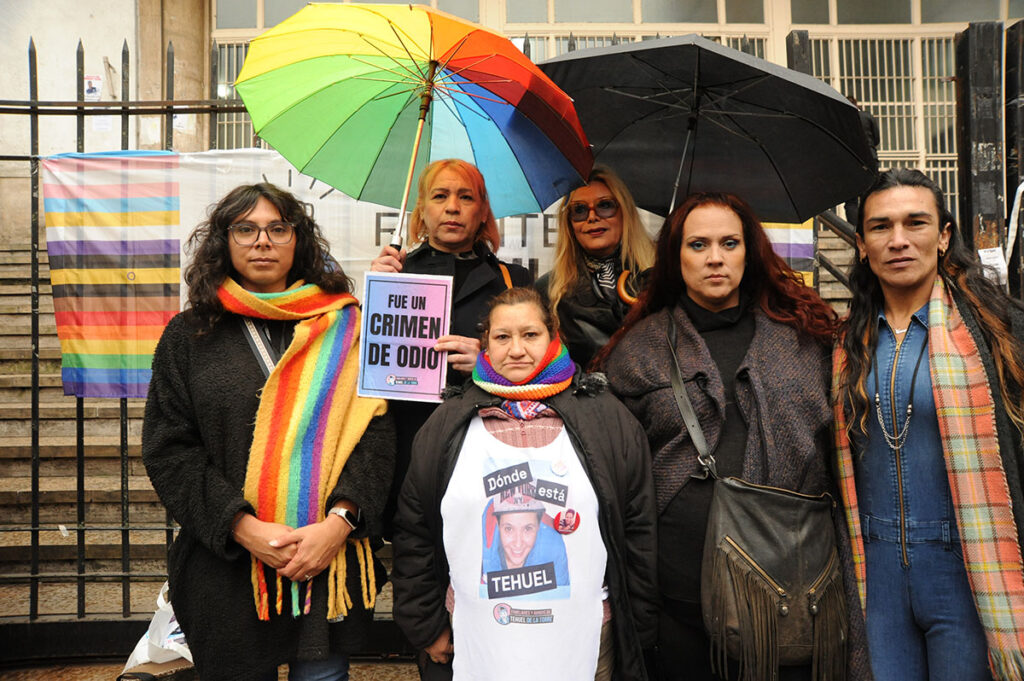
The activists from Pride and Struggle, who, along with the Friends and Family Commission of Tehuel, provided strategic support throughout the trial, had their eyes shining when the court cited the Yogyakarta Principles, jurisprudence of the Inter-American Court of Human Rights, Tehuel's right to form a family, and the recognition of " structural patterns of inequality by a large part of Argentine society and institutions, which expose differences in terms of rights and opportunities ." They had to make an effort not to applaud when they heard that the ruling included the request from the prosecution and the plaintiffs to ask the Buenos Aires Ministry of Women and Diversity to create a specific protocol for searching for missing LGBTIQ+ people (on which work is already underway), with a focus on sexual and gender diversity; and to declare a social emergency regarding violence motivated by prejudice against transvestite and trans people.
A little relief, but the fight continues
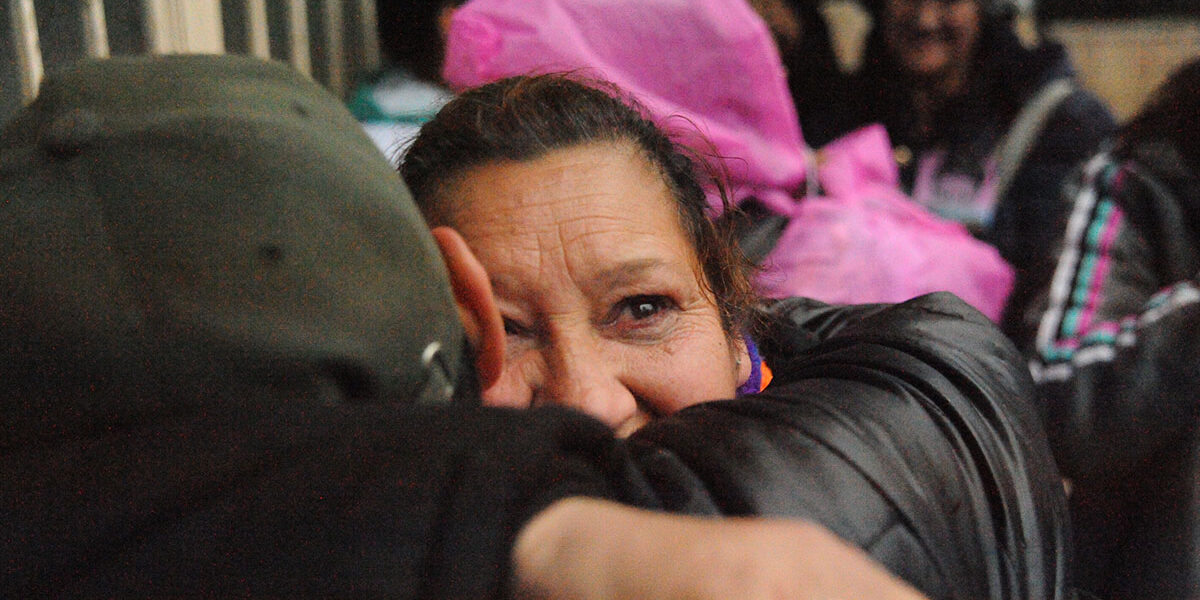
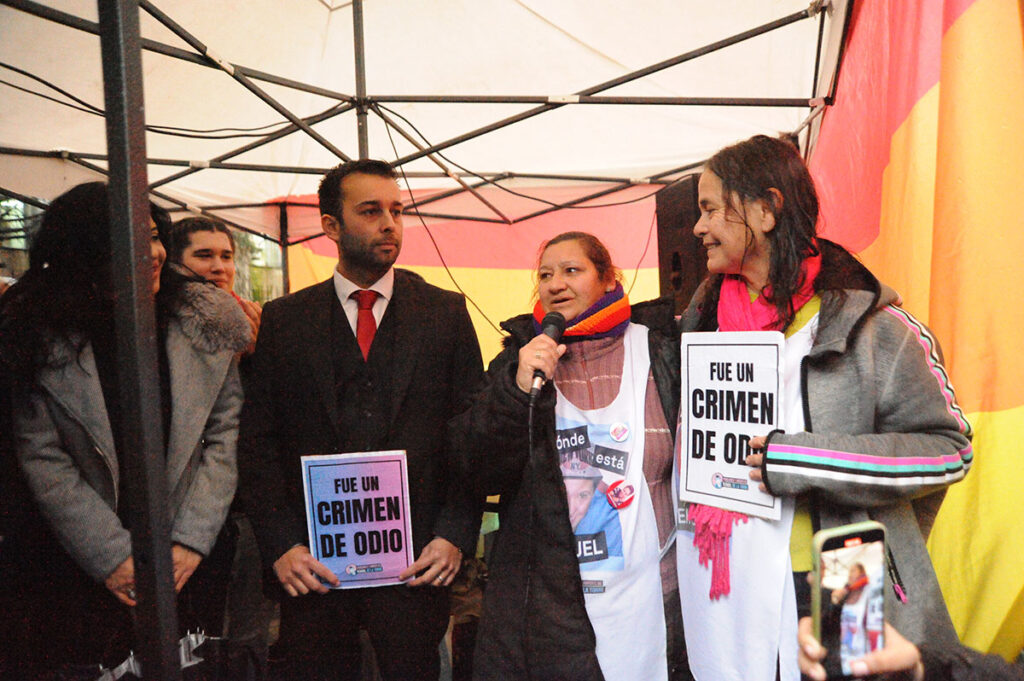
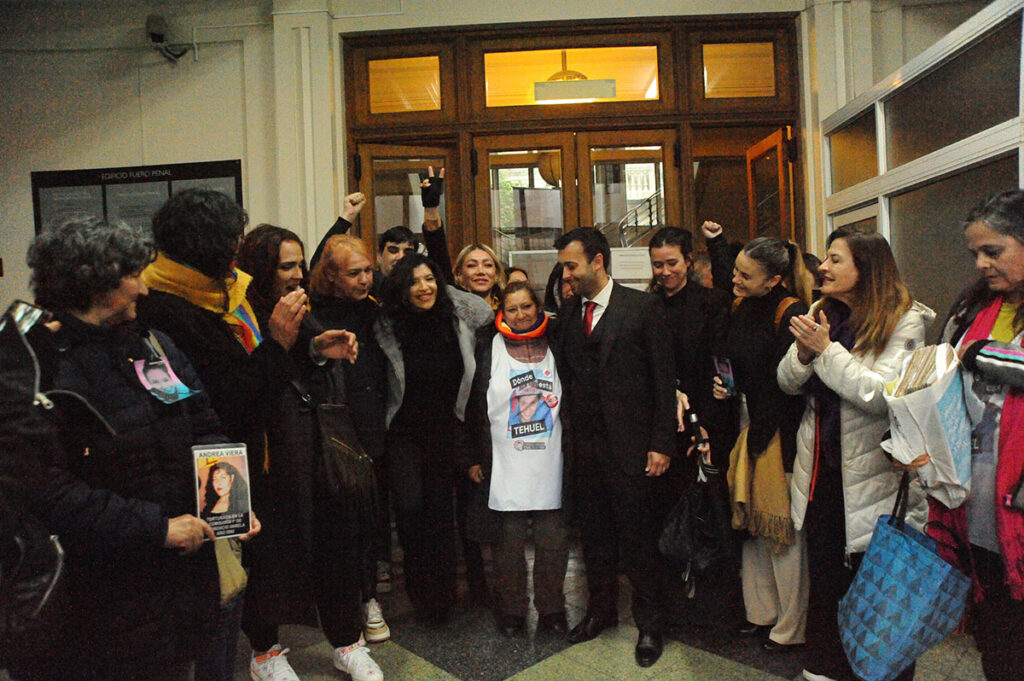
As soon as the reading ended, Ramos was quickly escorted from the room, and the audience was able to stand, hug each other, and celebrate. “I feel relieved,” said Tehuel’s mother, with tears in her eyes. Wherever Tehuel is, he must feel a little more peace. “Now we’re going for the other trial ,” she repeated, while hugging Flavia Centurión, the plaintiff’s lawyer, and Mónica Galván, from the Tehuel Family and Friends Association. The LGBT+ activists, overcome with emotion, recited excerpts from the ruling. “ It’s historic!” they shouted, as if they still couldn’t quite grasp the magnitude of the victory in a case that began in the worst possible way. The sentence reflects the collaborative work of the organizations, the plaintiffs, and the prosecution, who listened to, processed, and conveyed the demands of this entire network. Because it’s not just about Tehuel. “Our Mothers and Grandmothers taught us this; we will continue searching,” said one activist, making it clear that the journey continues. This day is also interwoven with that legacy of struggles for human rights and sexual diversity, which in Argentina have always walked hand in hand.
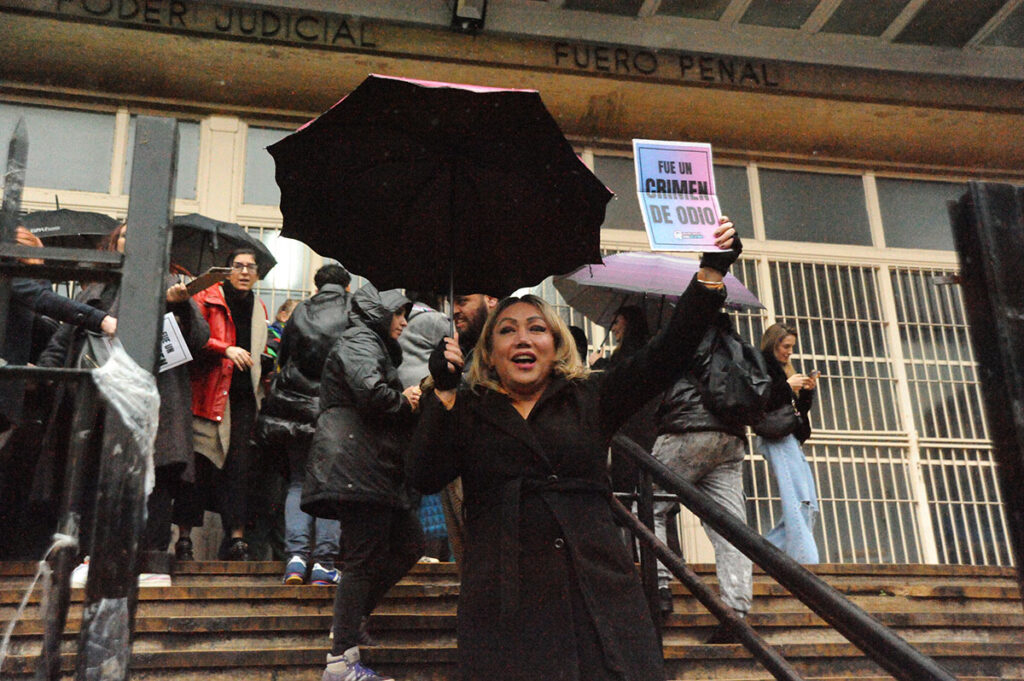
I often wondered throughout the trial what would have happened if LGBT+ activism hadn't been present at every hearing, neither them nor all the people waiting outside in the street—from student, political, union, and cultural groups—with an open-air radio broadcast and completely soaked. Meanwhile, in a scene from the end of the first season, Norma left the courthouse with her hand raised in triumph, surrounded by lawyers and activists. Outside the courthouse, a batucada band greeted her and celebrated the verdict in the torrential rain, to the rhythm of the drums, chanting over and over: Where is Tehuel?.
We are present
We are committed to journalism that delves into the territories and conducts thorough investigations, combined with new technologies and narrative formats. We want the protagonists, their stories, and their struggles to be present.
SUPPORT US

FOLLOW US
Related notes

We are present
This and other stories are not usually on the media agenda. Together we can bring them to light.