

A police officer has been charged with the murder of a man in El Bolsón.
Police raided a family's home with a search warrant, resulting in the death of a man and his son being hospitalized in serious condition. Witnesses allege it was an execution; a police officer has been charged, and the Río Negro provincial government is justifying the police action.


Share

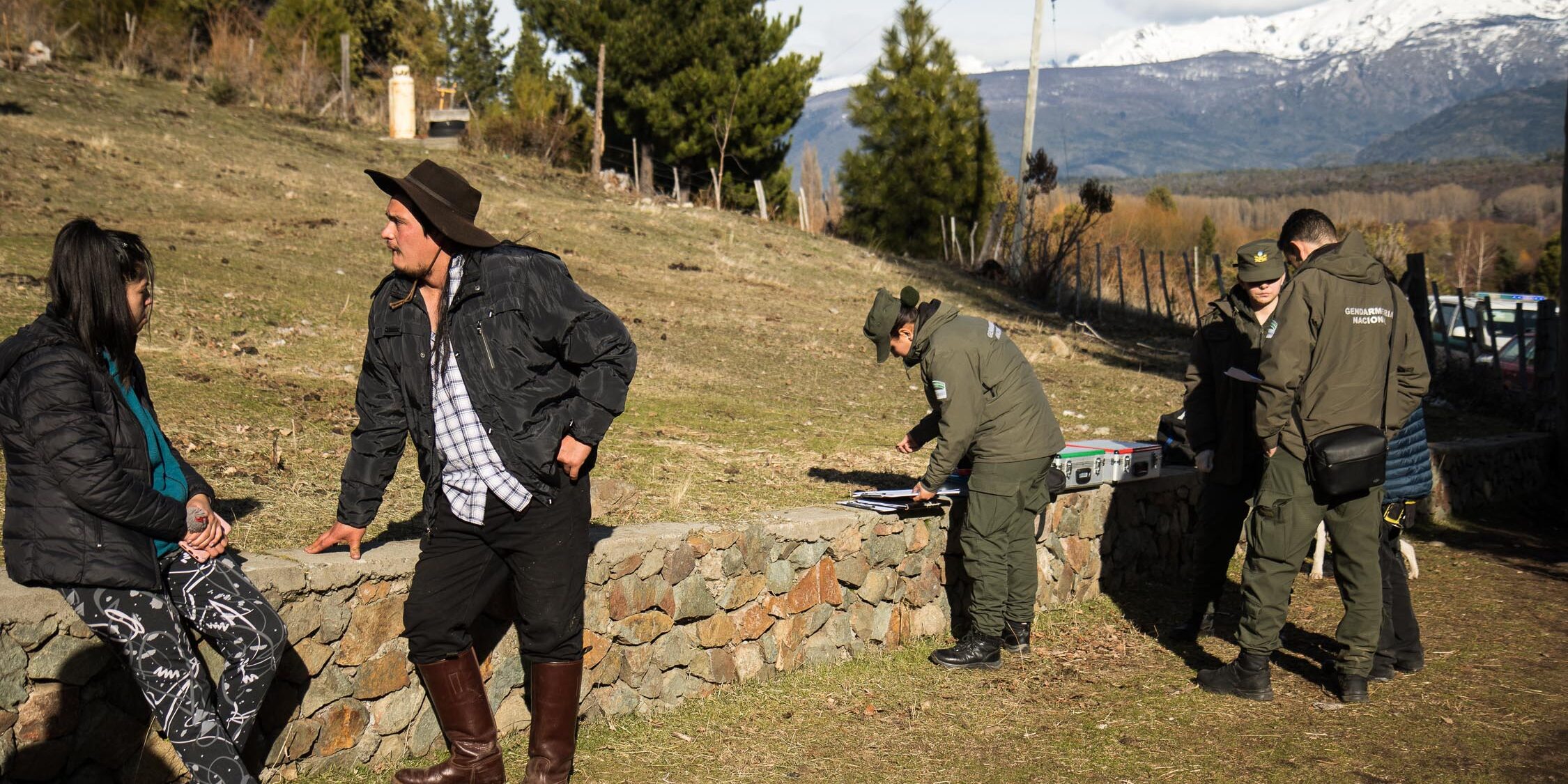
“My father and my brother were shot,” Juan Carlos Villa (son) told Presentes about what happened on August 11 in Mallín Ahogado, a rural area of El Bolsón (Río Negro), which ended with one dead and one seriously injured in intensive care.
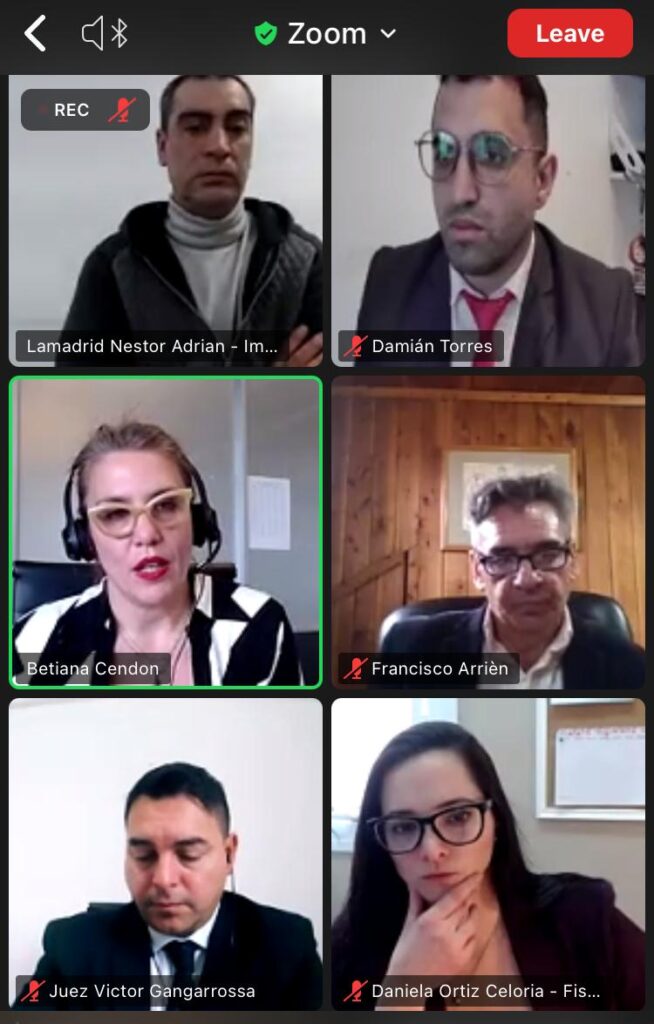
On the morning of Tuesday the 13th, the Río Negro prosecutor's office charged police officer Néstor Adrián Lamadrid with homicide and aggravated assault. Both crimes are doubly aggravated due to the use of a firearm and his status as a member of a security force. The accused was released with the obligation to return to the city of General Roca, his hometown, and wear an electronic ankle monitor. He is prohibited from leaving that municipality.
From the scene of the crime, a mountainside overlooking the snow-capped Andes above the farms, the 22-year-old tells Presentes that on Sunday, in the mid-afternoon, he was about to have a barbecue with his brother, Emanuel Mol Villa, and their father, also named Juan Carlos Villa, when the Río Negro police arrived. “There were two pickup trucks with a few cops. They came in shooting. We ran uphill, we got to where the pine tree is—he points up the slope where the clearing behind the cabin ends and the forest begins—. My dad was stopping them and saying, 'Just stay put, you can't do that,' and the cop got angry and killed him.” With his hand, the son mimes the gesture of placing the gun under his jaw and firing. “Then, when he fell, the cop shot him again here in the chest.”
Versions found
Carlitos's account—as he is known—differs greatly from the versions circulating in various media outlets, which claim that the police intervened in a fight between neighbors or that he was caught in a shootout. “My father died instantly. The soldier shot him. And my brother was shot twice. They handcuffed him, threw him to the ground, and he was on the floor when they shot him.”
“I told him, ‘You killed my old man!’ and he said, ‘Stay there or we’ll get you too,’ and I escaped,” Carlitos adds.
His brother Emanuel is in the Intensive Care Unit at the El Bolsón Area Hospital, out of imminent danger but with very serious injuries from the bullets that went through his torso.
Meanwhile, the defense's theory of the case at the arraignment hearing was that when police officers subdued Emanuel to arrest him, his father attacked them with a long knife and Mr. Lamadrid shot him in self-defense, shooting Emanuel moments later when he got up and also tried to attack the police.
Search warrant and the prosecutor's investigation
The police presence was due to a search warrant issued in response to a complaint filed by neighbors. The warrant authorized the search and seizure of firearms at the residence, as well as the arrest of Emanuel Mol Villa.
The victim's sister, Norma, recounts: “Of course, they wanted to get Emanuel, but they can't just show up shooting; they have to show a warrant. And when he tried to escape, they grabbed him and shot him on the ground. Only after it was all over, with the dead man on the ground, did they pull out a piece of paper and say, 'We're here with this warrant .'” So far, no firearms have been found on the victims or in the house.
Family members and neighbors who arrived moments after the shooting recounted that the police officers wanted to take the body away . “They had to go up to protect the body” (from the police), said Ayelén Villa Inalef, the victim's niece. Only thanks to the actions of the neighborhood was it possible to prevent the same force that killed a person from taking the body and, with it, the evidence it contained.
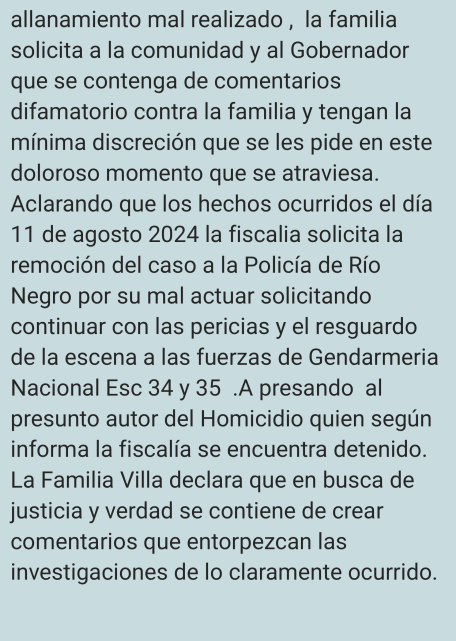
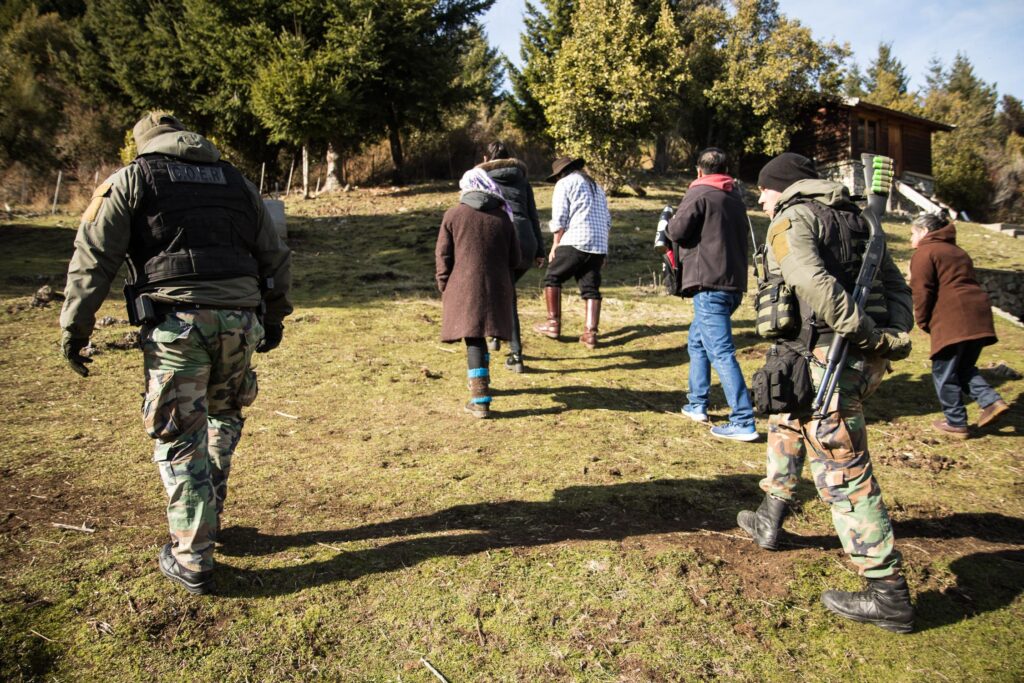
As night fell, personnel from the Prosecutor's Office and the Gendarmerie, the force in charge of the investigation (to avoid police involvement), arrived. They returned around 11:30 a.m. on Monday, August 12, to continue the search during the day and take plans and photographs of the site.
According to neighbors, the Gendarmerie had said they would guard the place all night, but ultimately no officers stayed. In fact, when Presentes at 9:30, there was nobody there.
Deputy Prosecutor Daniela Ortiz Celoria arrived at the scene and interviewed Carlitos to begin reconstructing the events and launching the investigation. Before leaving, she spoke briefly with the family, explaining that although the police had a warrant, “clearly everything went wrong because someone died. The evidence is quite clear,” she added. “Their actions were clearly not in accordance with regulations.”
The official version of the governor of Río Negro
Meanwhile, the governor of Río Negro, Alberto Weretilneck, released a statement saying, “I want to be categorical: during a raid authorized by the Justice system, a police officer from Río Negro faced extreme danger to his life and acted in legitimate self-defense.”
SELF-DEFENSE AND FIRM SUPPORT
— Alberto Weretilneck (@Weretilneck) August 12, 2024
Regarding the events in Mallín Ahogado, I want to be categorical: during a court-authorized raid, a police officer from Río Negro faced extreme danger to his life and acted in legitimate self-defense. The result was the death of a man and…
Carlitos says: “We didn't have any weapons. We did have a knife, though, because you always carry a knife in the countryside, and also because we were about to have a barbecue. Anyone can have a knife for that.” According to initial reports, no police officers were injured in any way.
“An extrajudicial execution”
Diana Cifuente, from the Human Rights Collective and AGARRE (Anti-Repression Group), accompanied the family during this morning's search. “It has all the characteristics of an extrajudicial execution. The numerical superiority over the person they were looking for, the intensity with which they entered the place to search for her, the fact that the person was unarmed, and that the shot was to the head at very close range, with the weapon pressed against the body.”
Regarding the reports circulating that the victim had a criminal record, he clarifies that beyond that, “the operation is disproportionate to the case they were investigating, based on a complaint that was filed.” He adds, “The current political climate is conducive to the security forces acting outside of any constitutional guarantees. The governor's public support for the police officer who turned himself in in this case suggests that it is highly likely that the security forces will begin to act without respecting any kind of guarantee. This case not only harms the people who are victims today, but if these crimes go unpunished, it will create a social context that will encourage the police to use any excuse to draw their weapons and shoot anyone.”
We are present
We are committed to journalism that delves into the territories and conducts thorough investigations, combined with new technologies and narrative formats. We want the protagonists, their stories, and their struggles to be present.
SUPPORT US

FOLLOW US
Related notes


We are present
This and other stories are not usually on the media agenda. Together we can bring them to light.