

What about the participation of trans and non-binary athletes in the Paris Olympic Games?
Who are the trans and non-binary athletes participating in the Paris 2024 Olympic Games? Why aren't trans women participating? Key points to understand the power of representation and the stricter regulations.


Share

(News updated 13.30)
No transgender women will participate in the 2024 Paris Olympic Games. However, for the first time, a transgender man will compete in boxing, and at least two visibly non-binary individuals will compete in athletics and football. The participation of openly transgender and non-binary elite athletes remains minimal. Nevertheless, misinformation and narratives perpetuated by anti-rights groups regarding an alleged "unfair advantage" have led to stricter regulations being implemented by sports federations .
Tokyo 2020, the previous edition of these Olympic Games, made history because it was the first time a transgender woman, Laurel Hubbard . The weightlifter was eliminated in the final of her category. Four years ago, this sparked misinformation and discussions arguing for an alleged "unfair advantage" over cisgender women. Since 2021, the International Olympic Committee (IOC) has considered this argument to lack conclusive scientific basis .
From Tokyo 2020 to Paris 2024, things changed. World federations across various sports disciplines maintain stricter rules within their own "Regulations for the Eligibility of Female Athletes with Differences of Sex Development" (DSD Regulations). These regulations are primarily aimed at transgender women, intersex women, and those who naturally develop high levels of testosterone.
Misinformation about boxer Imane Khelif
Although no transgender women are participating in the Paris 2024 Olympics, media outlets, social media, and even Italy's Minister of Family, Birth Rate, and Equal Opportunities, Eugenia Roccella, have spread misinformation about the gender identities of boxers Imane Khelif from Algeria and Lin Yu-Ting from Taiwan. This misinformation has fueled transphobic narratives on social media.
Both boxers were subject to "eligibility" regulations and in 2023 were disqualified from the women's world championship for failing to meet the standards set by the International Boxing Association (IBA) regarding their naturally occurring testosterone levels. For these Olympic Games, the IBA is not the regulatory body, and it was the International Olympic Committee that guaranteed both boxers' participation in the Paris Olympics.
Denying women who don't conform to a hegemonic notion of femininity the right to participate in sports is not a recent phenomenon. Records show that, since 1940, at least the world athletics federation has violated the human rights of elite athletes through "sex tests" for "eligibility" purposes. This is according to the Human Rights Watch (HRW) , "They're Driving Us Out of Sport: Human Rights Violations in Sex Tests of Elite Female Athletes."
Furthermore, these practices are not only sexist but also racist. In 2020, the UN determined in its report, " They're Pushing Us Out of Sport," that these regulations primarily affect women and girls of color and those from countries in the Global South. A prime example is the South African sprinter Caster Semenya .
Who are the trans and non-binary athletes participating in Paris 2024?
According to the website Outsports, at least 193 openly LGBT+ athletes are participating in these Olympic Games
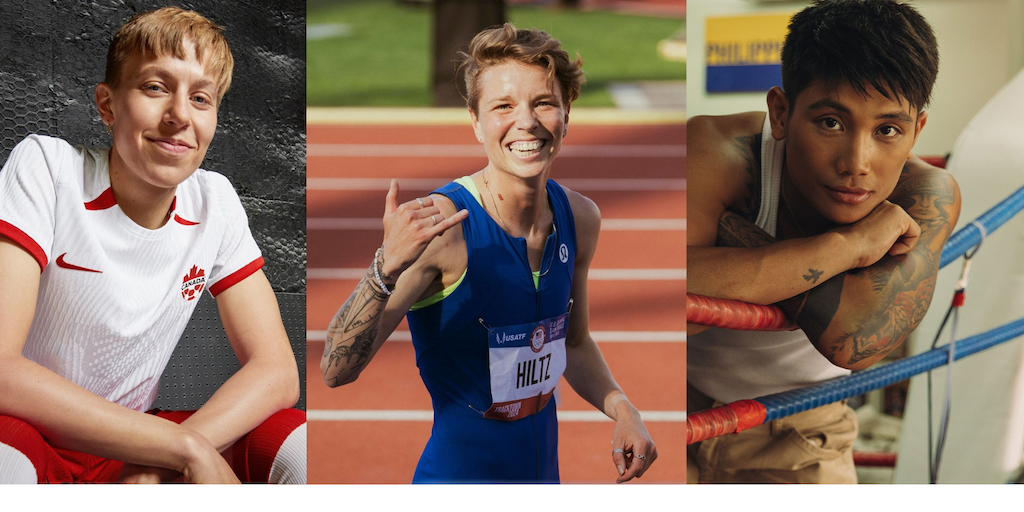
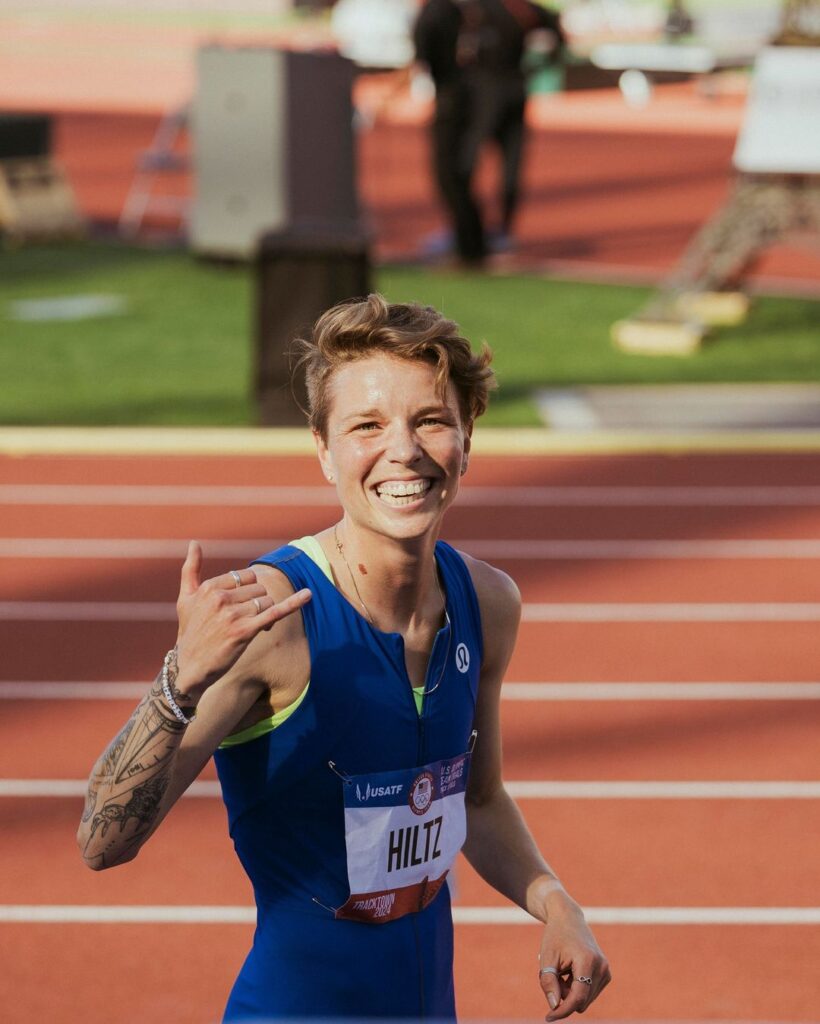
Those who are competing are Quinn, midfielder for the Canadian women's national soccer team; Nikki Hiltz, a middle-distance running specialist in US track and field; and the Filipino trans boxer, Hergie Bacyadan.
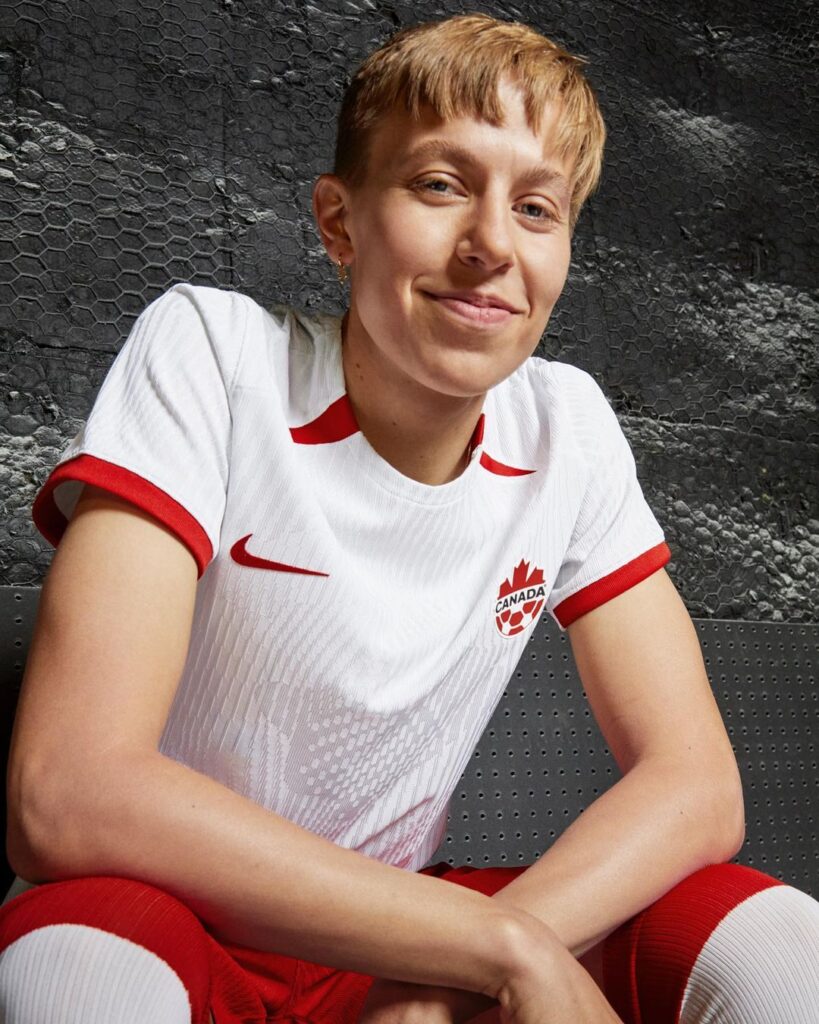
Quinn is a key player in the midfield for the Canadian women's national soccer team. These are her third Olympic Games. In Tokyo 2020, Quinn made history by becoming the first non-binary trans person to win an Olympic medal—a gold.
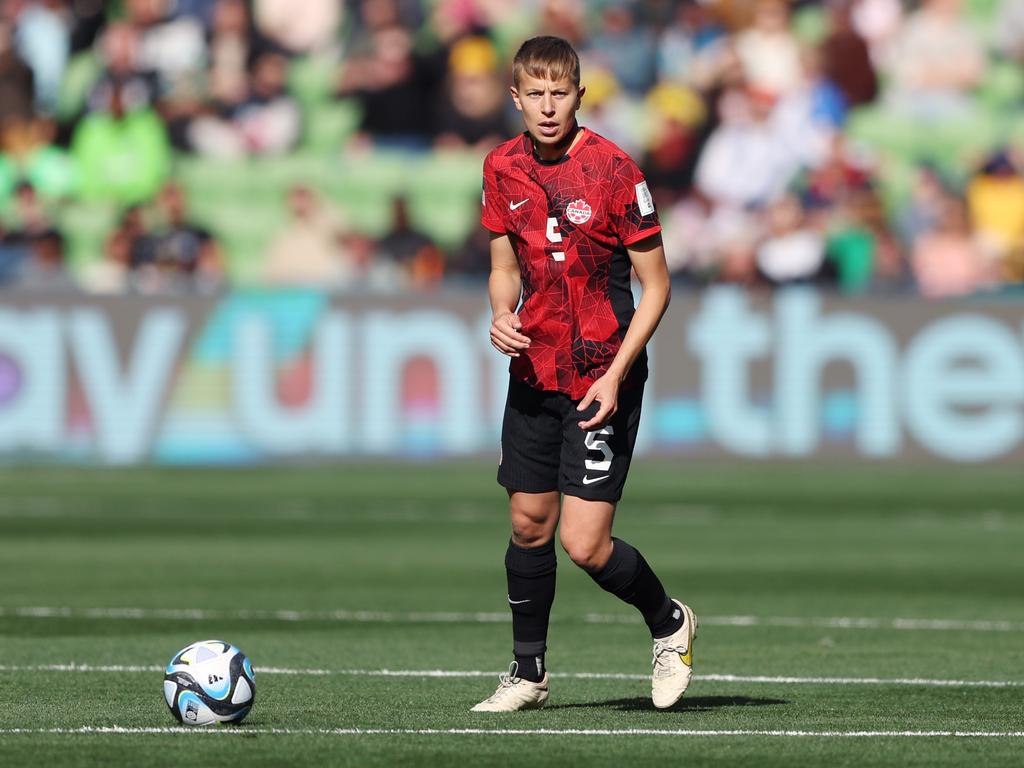
“ I’m the first openly trans person to compete in the Olympics. I don’t know how to feel. I feel proud to see ‘Quinn’ in the lineup and on my accreditation. And sad to know that there were athletes before me who couldn’t live their truth because of the world ,” Quinn shared on her Instagram.
Nikki Hiltz is a non-binary person who will make their Olympic debut as part of the United States athletics team in the 1500 meters event.
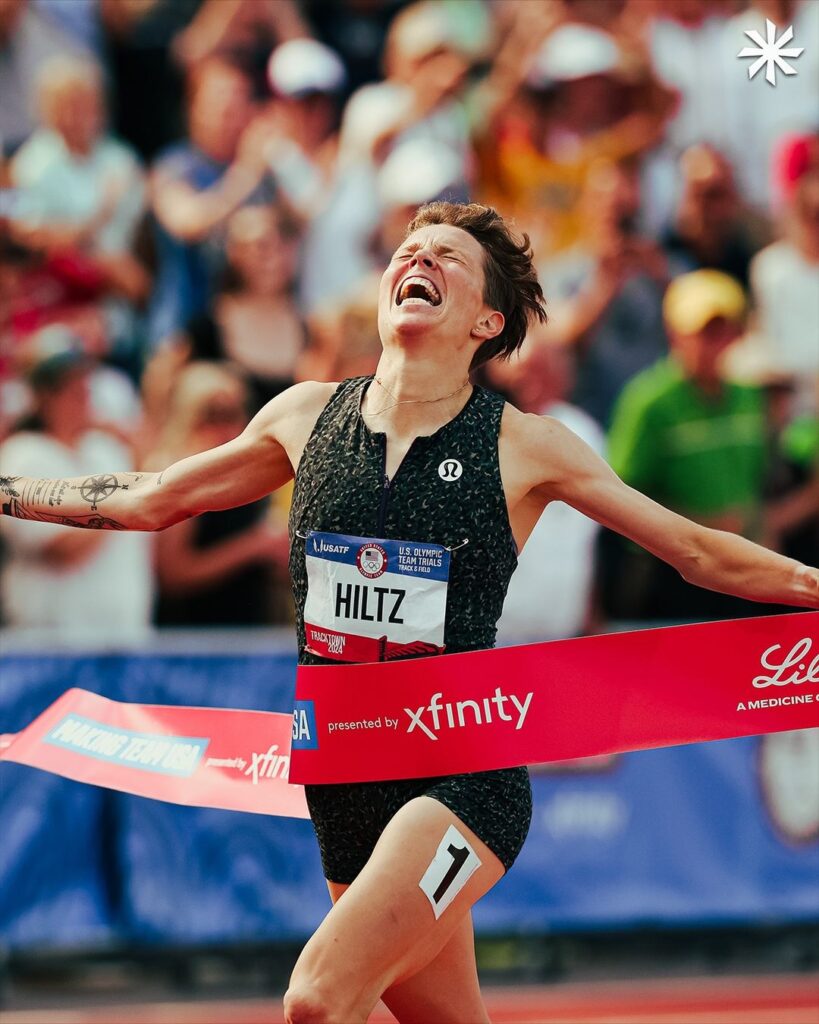
“Talking about this is both exciting and terrifying. I am and always will be a firm believer that vulnerability and visibility are essential for social change and acceptance. My dream is that trans people will be welcomed and celebrated in sports ,” Hiltz wrote on her Instagram .
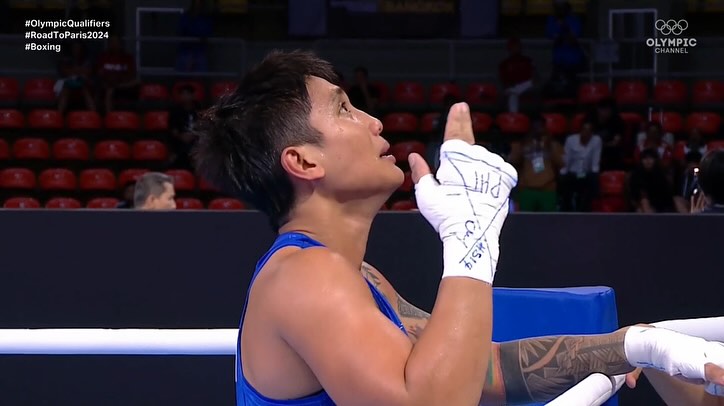
Another debut: that of Olympic boxer Hergie Bacyadan from the Philippines. He competed in the women's 75-kilogram category at these Olympic Games, but lost his first match and was eliminated from the competition. Hergie is a trans man who does not use testosterone as part of his gender affirmation process. On his Instagram account, he clarified, "I will never take 'T' (testosterone), but I am still a trans man because my heart says so .
What are the regulations that restrict trans athletes?
Following the participation of transgender weightlifter Laura Hubbert in Tokyo 2020, the International Olympic Committee (IOC) published a new “framework on equity, inclusion and non-discrimination on the grounds of gender identity and sex variations” , with an emphasis on eligibility criteria in women's categories. “ There is no scientific consensus on how testosterone affects athletic performance. Its role in measuring an unfair advantage is unclear, because performance is measured differently in each sport .”
Thus, the most recent IOC regulations stipulate that each sports federation must establish its own eligibility criteria. However, it specifies that these criteria must be " commensurate with human rights, supported by sound scientific evidence that considers the contexts and ensures the well-being of the athletes ."
As a result, the federations of athletics , cycling , swimming and other water sports , chess , rowing , rugby , shooting , archery , tennis , triathlon and recently the US boxing federation have generated their own policies that prohibit the participation of trans women in the female categories of their disciplines .
The regulations range from requiring athletes to be on hormone therapy from the age of 12, to not exceeding a certain level of testosterone in their blood, and even to having undergone sex reassignment surgery. None of these regulations are based on scientific evidence or follow the guiding principles of equality and non-discrimination established by the IOC.
The impact of these regulations is evident not only in the 2024 Paris Olympics, which will exclude transgender women. These guidelines are also used to legislate, monitor, and prohibit the participation of transgender girls and young women competing at the school level . Examples include the case of college swimmer Lia Thomas and the 22 proposed laws that have advanced on this issue in the United States as part of the wave of anti-trans legislation promoted by the Republican Party , with the support of anti-rights groups.
We are present
We are committed to journalism that delves into the territories and conducts thorough investigations, combined with new technologies and narrative formats. We want the protagonists, their stories, and their struggles to be present.
SUPPORT US

FOLLOW US
Related notes


We are present
This and other stories are not usually on the media agenda. Together we can bring them to light.
1 comment