

Tehuel trial: prosecution requested life imprisonment, hate crime aggravating circumstance, and reparations for the trans population
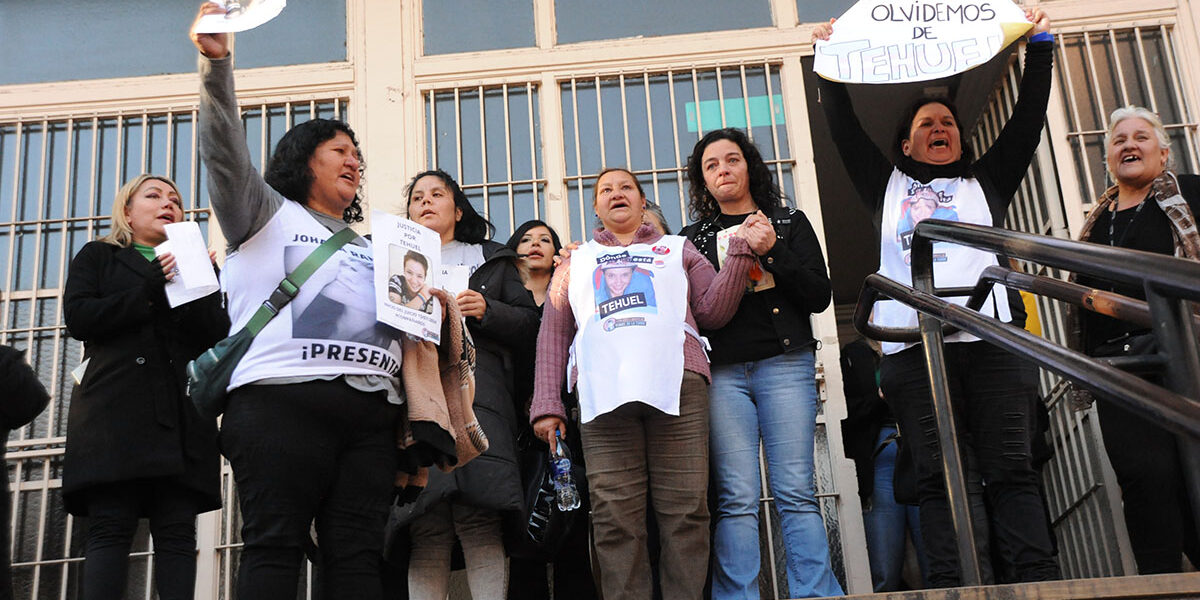
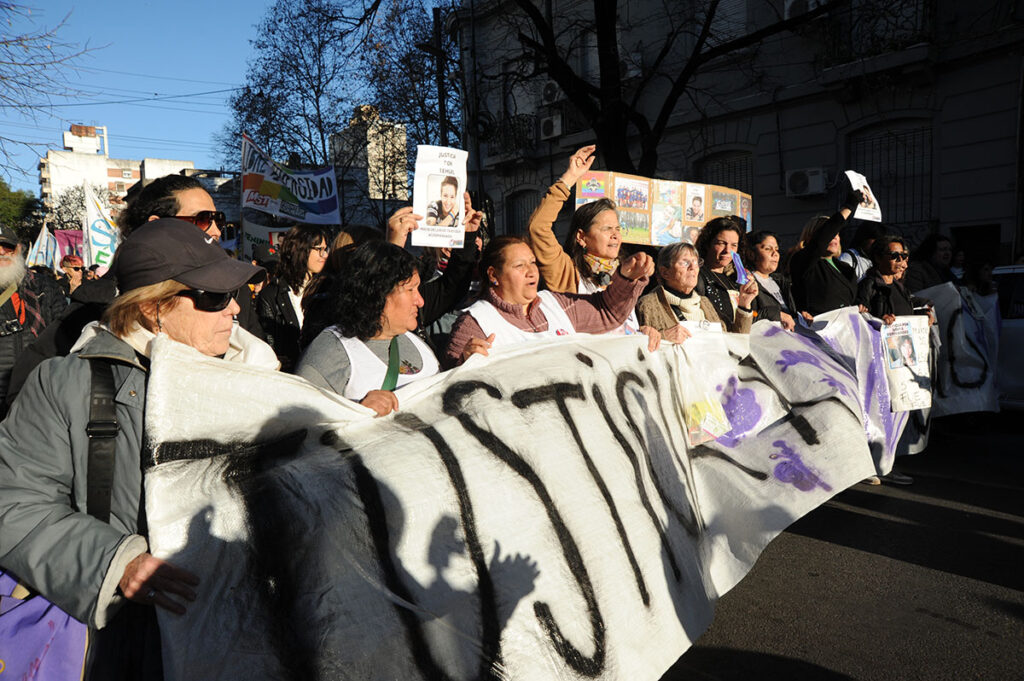
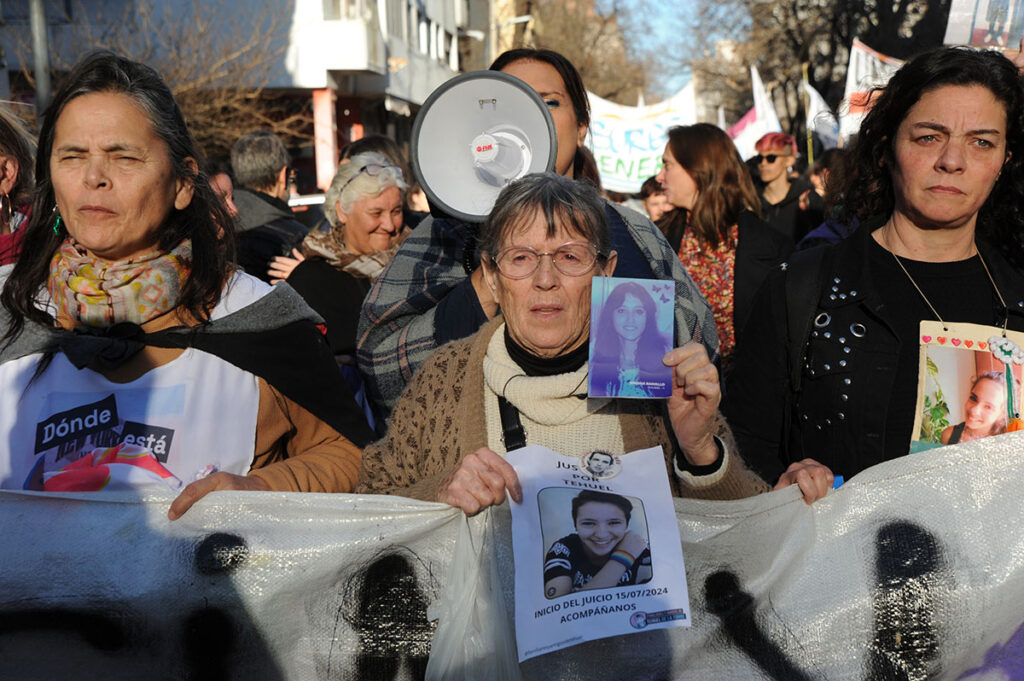
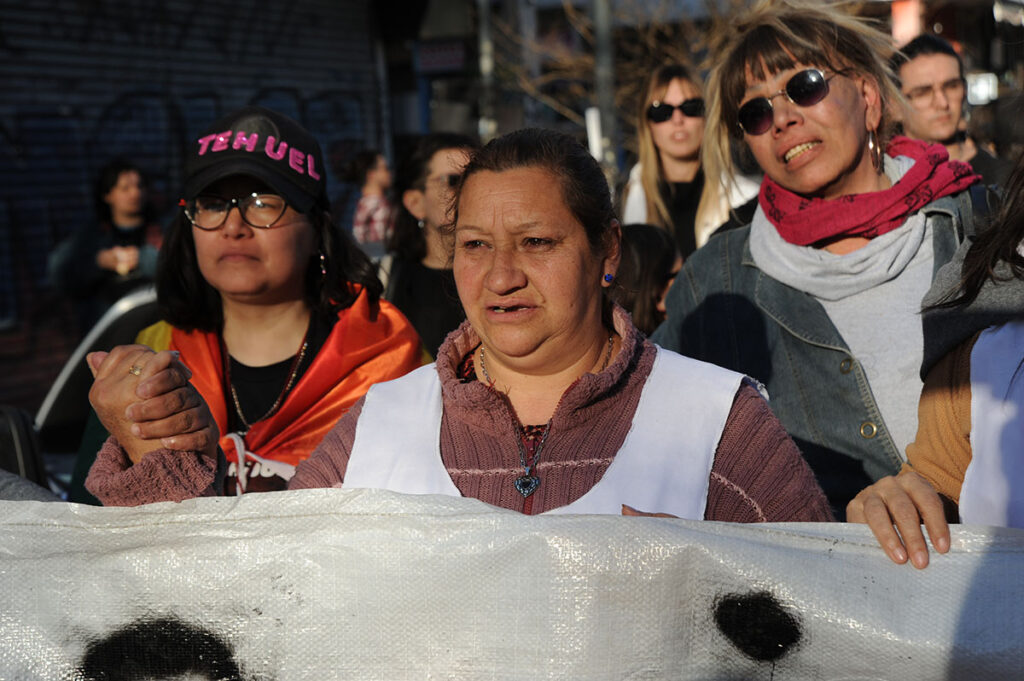
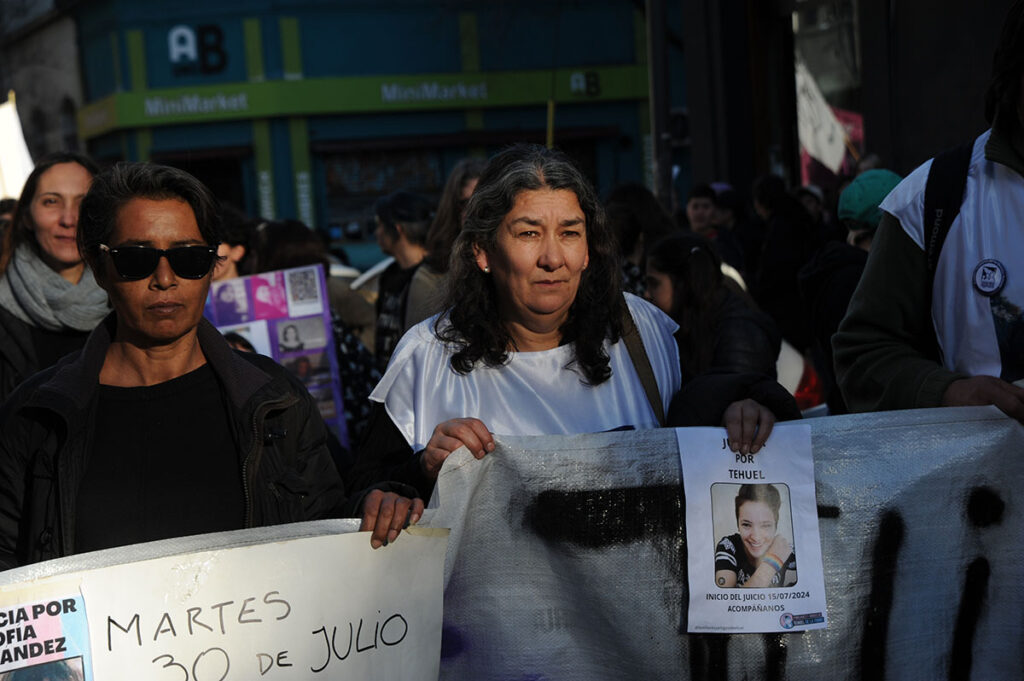
An intense day of arguments amidst a festival with activists and relatives of victims of femicides, institutional violence and hate crimes accompanying Norma, Tehuel's mother.


Share

The final day of the trial for the trans homicide of Tehuel de la Torre was filled with mixed emotions. On one hand, the closing arguments of the prosecution, the plaintiff, and the defense before the Oral Criminal Court No. 2 of La Plata reconstructed the circumstances surrounding Tehuel's disappearance. They reviewed evidence, facts, expert reports, testimonies, timelines, images, and videos. Several of these elements recalled the difficulties Tehuel faced as a young, poor, trans man in the Greater Buenos Aires area, and how, although his body has not been found, the evidence suggests that it was a homicide motivated by hatred of his gender identity.
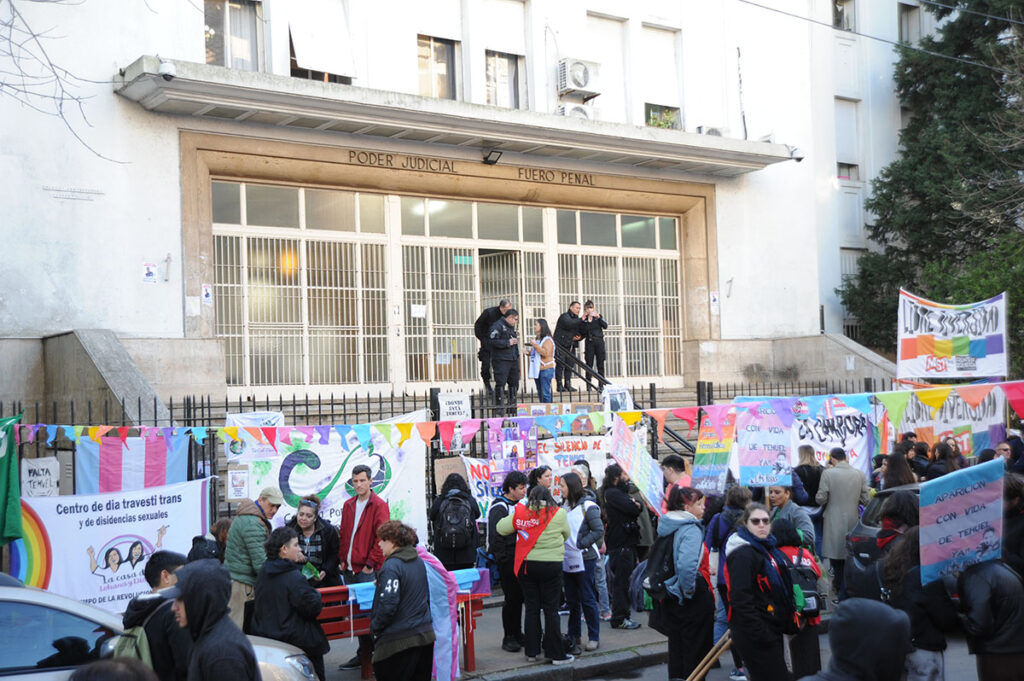
Both the prosecution and the plaintiffs requested a life sentence for Luis Alberto Ramos, accused of being an accomplice in a homicide aggravated by hatred based on gender identity. They also requested community-based reparations for trans and gender-diverse groups. Ramos's public defender, Natalia Argenti, requested acquittal, arguing a lack of conclusive evidence.
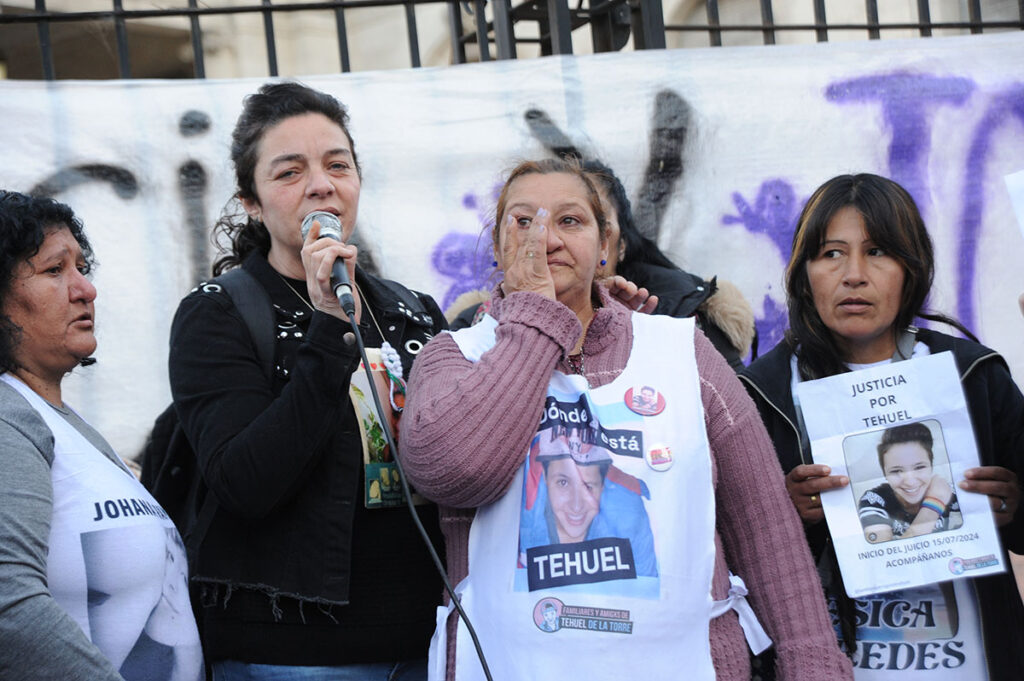
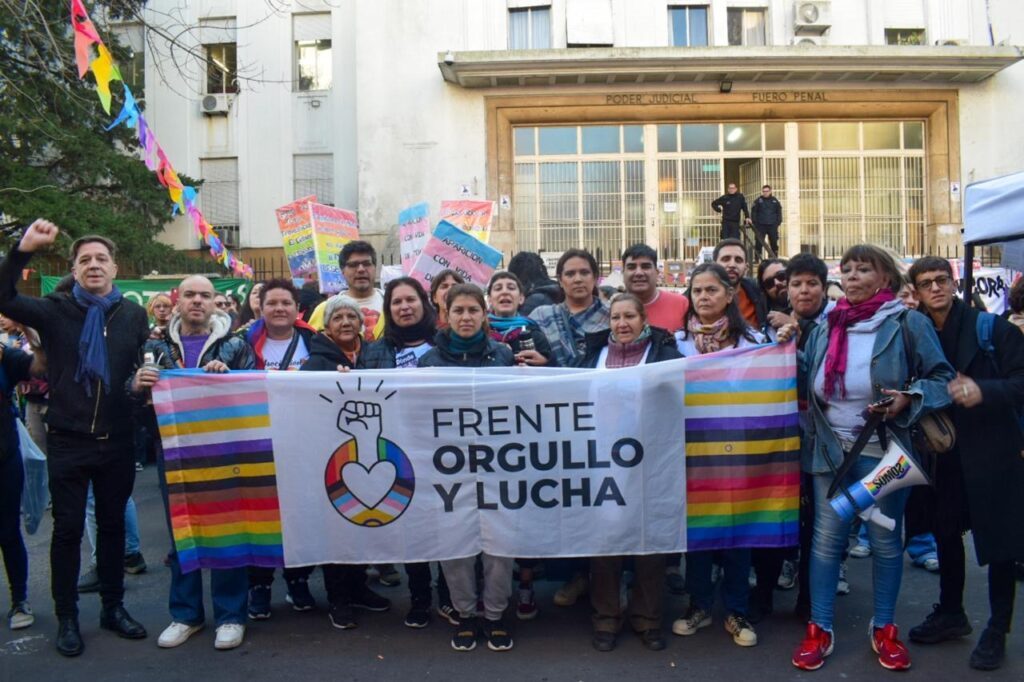
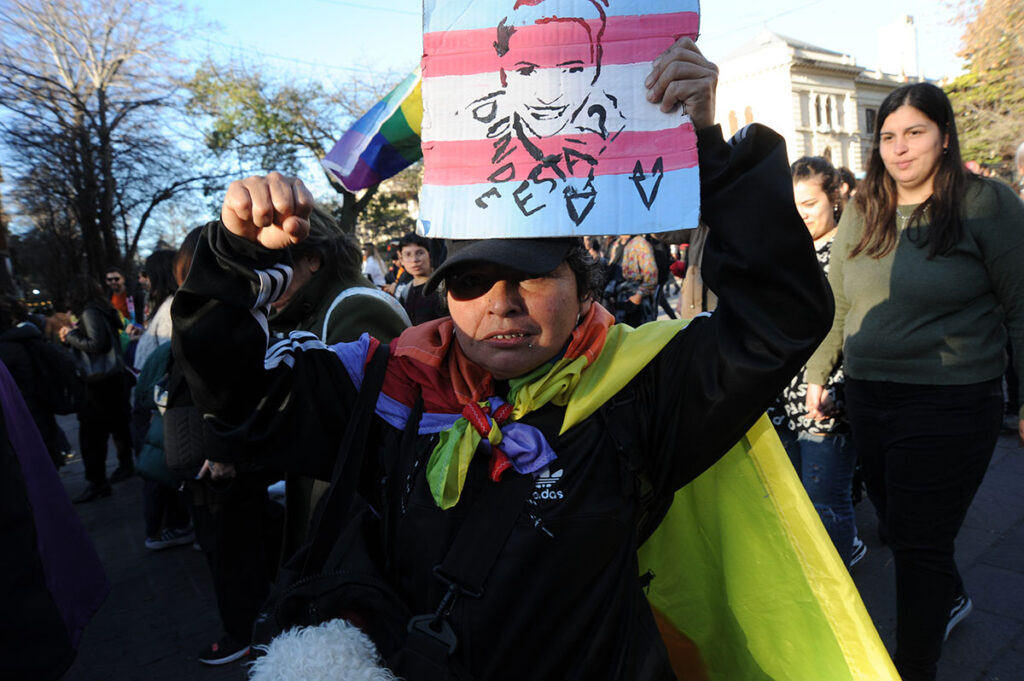
Today, many more people and organizations, as well as mothers of victims who traveled from afar, came to the courthouse to support the trial. The support and organization of LGBTQ+ activists, human rights activists, and victims of other forms of institutional and/or patriarchal violence gave each other strength. The LGBTQ+ rights movement, Pride and Struggle, was key in demanding justice and providing support.
🇦🇷🏳️⚧️⚖️Mothers of victims are outside the La Plata Courthouse joining the call for justice for #Tehuel
— Presentes Agency (@PresentesLatam) July 26, 2024
✊🏾📢“We know what it feels like to lose a child, to die. We demand that justice be served,” said Marta Montero, Lucía's mother… pic.twitter.com/PKIkfHjzHl
Today marked the anniversary of the disappearance of another young woman, Johana Ramallo, a victim of human trafficking, seven years ago. Her mother was present, accompanying Tehuel's mother. Also present were Rosa Bru, mother of Miguel Bru, a student who disappeared in 1990 in La Plata; Marta Montero, mother of Lucía Pérez, murdered in 2016 in Mar del Plata; Victoria, mother of Melody, a young trans woman murdered in Mendoza; and Mabel, sister of Sofía Fernández, a trans teacher murdered in a police station in Derqui, where the main suspects are police officers. These and other family members of victims imbued this day with an atmosphere where the emotion of being together mingled with unspeakable pain. Absences, injustices, inequalities, demands, and one certainty: unity as a power, a strength, a support. The articulation of resistance to transform a profoundly unequal world in different spheres, including access to justice.
🇦🇷⚖️ Mothers and relatives of victims gathered in front of the La Plata Courthouse, accompanying Tehuel's mother and demanding justice for all these crimes.
— Presentes Agency (@PresentesLatam) July 26, 2024
📢 “I am Mabel, sister of Sofía Fernández, the trans woman murdered on April 9, 2023. Murdered, tortured… pic.twitter.com/kBMnU63Mvs
Festival and delayed audience
The arguments scheduled for 10:30 a.m. were moved to 1:00 p.m. The morning was filled with activities, including an open radio broadcast and a space to hear the voices of trans and travesti men. Among them was Say Sacayan, Diana's brother. They claimed they had not been heard during the trial. Mothers of victims also made their voices heard on stage.
In the afternoon, while the arguments were taking place inside, art, music, a community kitchen, a parade, ballroom dancing, and a batucada band unfolded in the street. A stand from the Ministry of Women and Diversity of the Province of Buenos Aires offered information and the possibility of taking rapid HIV tests.
Prosecutor's Office: "We understand that Tehuel was murdered by Luis Ramos"
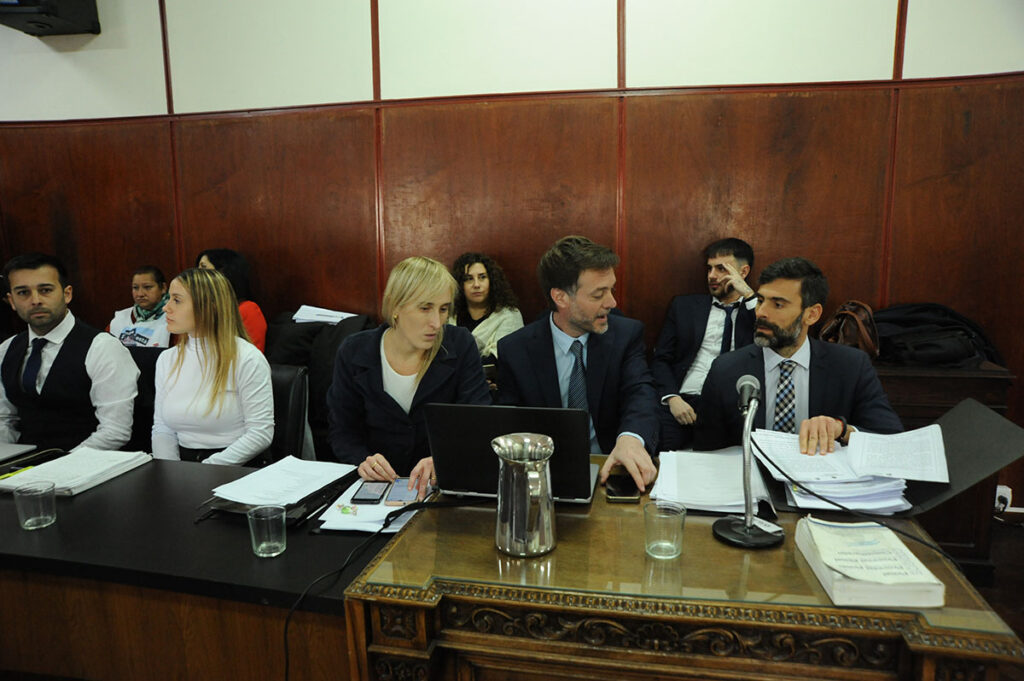
The prosecution team, led by Juan Pablo Caniggia, presented a detailed reconstruction of the events that occurred between the night of March 11 and the early morning of March 12, 2021. "We have established that between 9:00 p.m. on March 11 and 4:33 a.m. on March 12, inside the residence at 1203 Mansilla Street, two adult males, identified as Luis Alberto Ramos and Oscar Montes, intentionally caused the death of Tehuel, who identified as male, out of hatred for his gender identity," Caniggia stated.
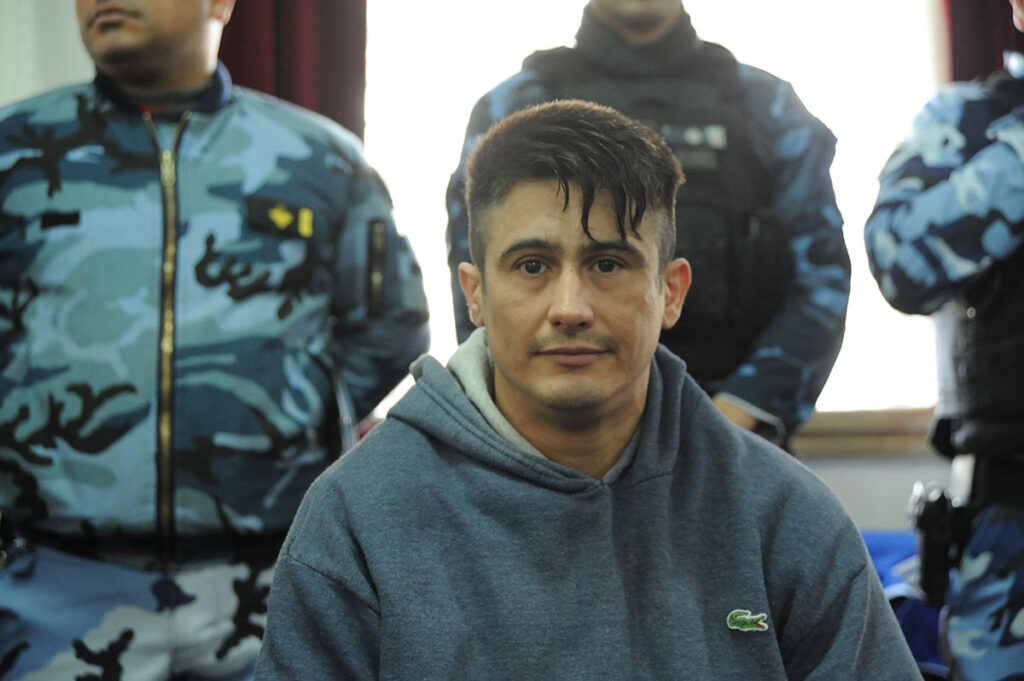
The prosecution warned that although the homicide was perpetrated using methods yet to be determined, “ Tehuel was murdered by Luis Ramos .” Among the incriminating evidence, Caniggia mentioned testimonies placing Tehuel with Ramos on the night of his disappearance, the analysis of Tehuel's phone which places his last location at Ramos's residence, and the findings at the accused's home: bloodstains with traces of Tehuel's DNA, remnants of his jacket, and his cell phone case, both burned. Furthermore, Caniggia emphasized Ramos's flight after the investigation began as an indication of his guilt.
“While it is true that we have no way of determining how this atrocious crime against Tehuel was committed, we have no doubt that the accused was one of the perpetrators ,” the prosecutor emphasized. Caniggia also stressed Ramos’s violent personality, mentioned by various witnesses and by the experts who interviewed him. He highlighted his transphobic remarks, citing testimonies from his ex-partner and other witnesses.
“I know he didn’t like men being with men, and women with women. That made him angry,” Ramos’s ex-partner testified at the trial. She also recounted the beatings she received from him, to the point of losing a pregnancy, and accused him of sexually abusing her son.
"Ramos referred to him as a boy or a girl ."
Another witness, a fellow activist in the MST—the group where Ramos and Tehuel met—described how Ramos used to say that Tehuel “ was a waste of a woman for having become a man.” “When Tehuel wasn’t around, Ramos referred to him as a boy-girl . He denied him his identity,” the prosecution emphasized.
For Caniggia and his team, there was an asymmetrical power dynamic between the perpetrator and Tehuel's vulnerable state. Ramos was his friend and role model; Tehuel lived in dire financial straits and couldn't find work. “Tehuel had looked up to Ramos as a role model. The accused took advantage of that. As an expert witness stated yesterday, Tehuel was a victim of cisnormativity. He was struggling to be recognized, and he was exposed to predators who ultimately took his life .
What happens in a trial if there is no body or autopsy: background
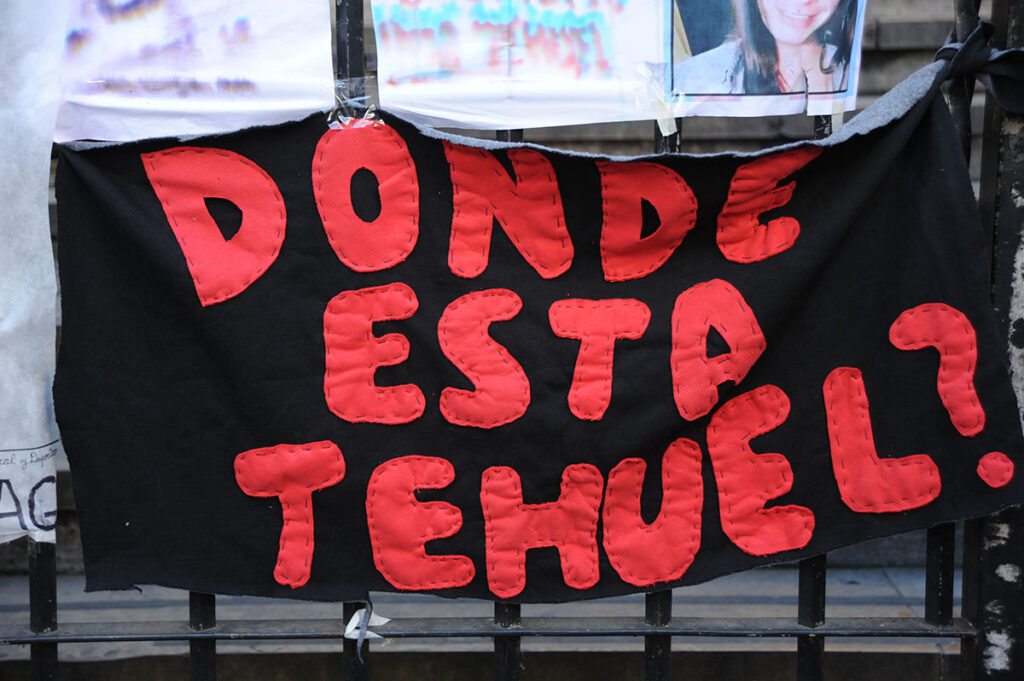
One of the biggest challenges in the case is the absence of the victim, explained Prosecutor Caniggia. “But that doesn't absolve the accused of responsibility. A body and an autopsy are not essential for a homicide conviction,” he said, given the amount of factual evidence. In this regard, he cited other convictions for the murder of disappeared persons. One of them was the conviction of the perpetrators of the murder of Miguel Bru, a journalism student who disappeared, was tortured, and was killed at the 9th Police Station in La Plata on August 17, 1990. His mother, Rosa Bru, and his classmates continue to ask, “Where is Miguel?” Rosa was present yesterday and today, accompanying Tehuel's mother at this trial.
The prosecutor also cited the crimes against humanity committed during the State Terrorism regime. He quoted a passage from the ruling in the transphobic hate crime case concerning the murder of Marcela Chocobar on June 13, 2019, to highlight the harm caused by enforced disappearance.
There were other references to other cases of transvestites and trans people, such as the ruling for the transvesticide of Diana Sacayán and that of the Inter-American Court of Human Rights for Vicki Hernandez in Honduras.
The prosecutor concluded his argument: “I request that Ramos be sentenced to life imprisonment, given the methodology used and the concealment of the body, as a co-perpetrator of the crime of aggravated homicide motivated by hatred of gender identity.” He also requested the implementation of a specific protocol for searching for missing LGBTI+ people, with a focus on sexual and gender diversity. And he asked the provincial government to declare a state of social emergency regarding bias-motivated violence against transgender and transvestite people.
“I hope this sentence not only brings justice to Tehuel and his family but also sends a clear message to society that violence against transvestites and transgender people will not be tolerated,” the prosecutor concluded. He finished by asking, “Where is Tehuel?” The entire courtroom applauded.
Lawsuit: "Ramos kills Tehuel and finds a confluence of all the hatred he had"
The legal team representing Tehuel's mother, Norma Nahuelcurá, comprised of lawyers Flavia Centurión and Cristian González, Pilar Rodríguez Genin, and María Dolores Amaya, endorsed the prosecution's position and emphasized the aggravating factor of hate based on gender identity. "Ramos never recognized Tehuel as a man ," stated González, also highlighting the asymmetrical relationship between Ramos, 37, and Tehuel, 21. One was a leader in a social movement, a figure who showed compassion and offered help. The other was an activist.
The lawyers for the plaintiffs emphasized the cruelty of the crime, linking it to hatred toward the LGBTI+ community. "Violence against the LGBTI+ community has a particular characteristic: cruelty and viciousness aimed at leaving an indelible mark. It's as if the victim's body were a second hostage to their hatred," argued González. She explained that in this case, Ramos not only denied the possibility of the victim's existence but also denied the release of her remains, preventing the family from grieving.
“This is being done to the family and to society,” he said. And looking at the court, he added: “You have the opportunity to set a legal precedent and make this society feel that the institutions that seek to regulate interpersonal relationships can be updated to reflect current times.”.
The plaintiffs were emphatic in their request: "We do not hesitate to say that Luis Alberto Ramos is guilty of homicide aggravated by hatred of gender identity, and therefore we request that he be sentenced to life imprisonment.".
She joined the call for the implementation of a protocol for searching for transgender people. The lawsuit also requested "that the three branches of provincial government be urged to comply with the law known as the Diana Sacayán Law, which establishes a transgender employment quota ." "If Tehuel had had a formal job, he surely wouldn't have exposed himself to a wolf like that ," González said. She also concluded her statement with a question that resonates throughout the community: "Where is Tehuel?"
Defense: "We don't know exactly what happened"
Ramos's lawyer, Natalia Argenti, questioned the strength of the evidence presented by the prosecution and the plaintiffs. "When I read the case file, I say: I don't know what happened here. Well, I'm going to the trial, and I still don't have the answer," Argenti stated. "Today we're not going to know what happened," she added, raising the possibility of multiple alternative scenarios.
The lawyer raised several hypotheses about what might have happened to Tehuel, including a fight with Montes, an accident, or even the possibility that Tehuel is still alive. Argenti harshly criticized the quality of the investigation and questioned the preservation of the crime scene.
“Is Ramos such a genius that he gets rid of a body and the weapon but leaves all the evidence in the house for them to come and find? I can’t understand it ,” the defense attorney argued. “If I’m burning something, I burn everything. If I’m hiding a body, I hide it with the jacket and the phone,” she added, questioning the logic of the evidence presented.
Regarding the aggravating circumstance of hate based on gender identity, Argenti categorically rejected it: "We truly cannot believe that Ramos, if he killed him, did so out of hatred for his gender identity, because he had known him since 2018, and from 2018 to 2021 they were friends." The defense argued that Ramos and Tehuel maintained a friendly relationship and that Ramos had accepted him in his gender identity. However, all the testimonies heard throughout the trial indicated exactly the opposite.
“I believe they loved each other; there was no hatred here,” Argenti insisted. He said he strongly agreed with and applauded all the achievements of LGBT activism: marriage equality, the gender identity law, and the trans quota. “Did he spend three years preparing the ground and then want to kill him out of hatred for what Tehuel had chosen and what Ramos had supported? That’s a line of reasoning that cannot be validated,” he concluded, requesting his client’s acquittal.
The defense reiterated its request for Ramos' acquittal, arguing that his guilt could not be proven beyond a reasonable doubt.
At the end of the hearing, Ramos was given the opportunity to say a few last words, but the accused decided not to exercise that right.
The court set the date for the verdict: August 30 at 1 p.m. Although it should generally be read within five business days, the judges will take more than a month to do so, arguing that they have a heavy workload. It is striking that this is a case with both a victim and an accused person.
March for Johana, Tehuel and victims
At the end of the hearing, a large march proceeded from the courthouse to the federal courts in La Plata to demand justice for Tehuel and Johana Ramallo, among other victims of violence. Johana's mother, Marta, accompanied Norma, Tehuel's mother, throughout the hearings. Today marks the seventh anniversary of this young woman's disappearance.
Johana was last seen on July 26, 2017. Her mother alleges that, in addition to being a victim of human trafficking, Johana was also the victim of a drug-related femicide at the hands of criminal networks. The young woman's remains were found on the coast of Berisso in 2018. She has still not been able to have her case heard, and a trial date has only recently been set.
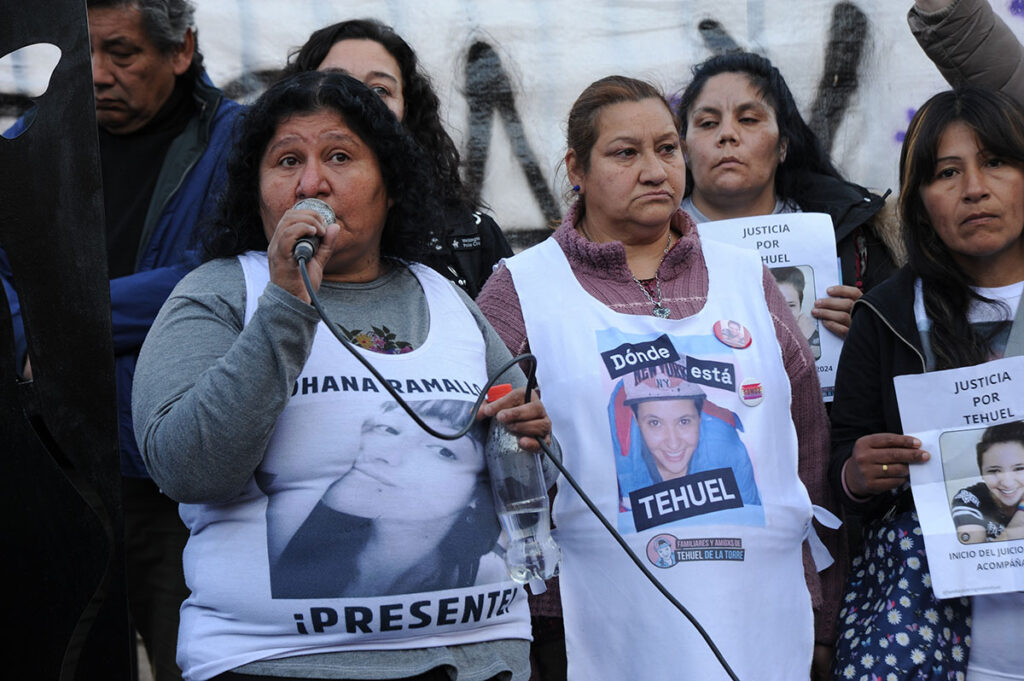
At the corner of the federal courthouse, a sculpture commemorates Johana and the date of her disappearance. There, Norma acknowledged that today's hearing was one where she felt very supported but also hurt by what she heard in the defense's argument. "It's been a very difficult two weeks," she told Presentes. "All the evidence is there. I have faith in the verdict.".
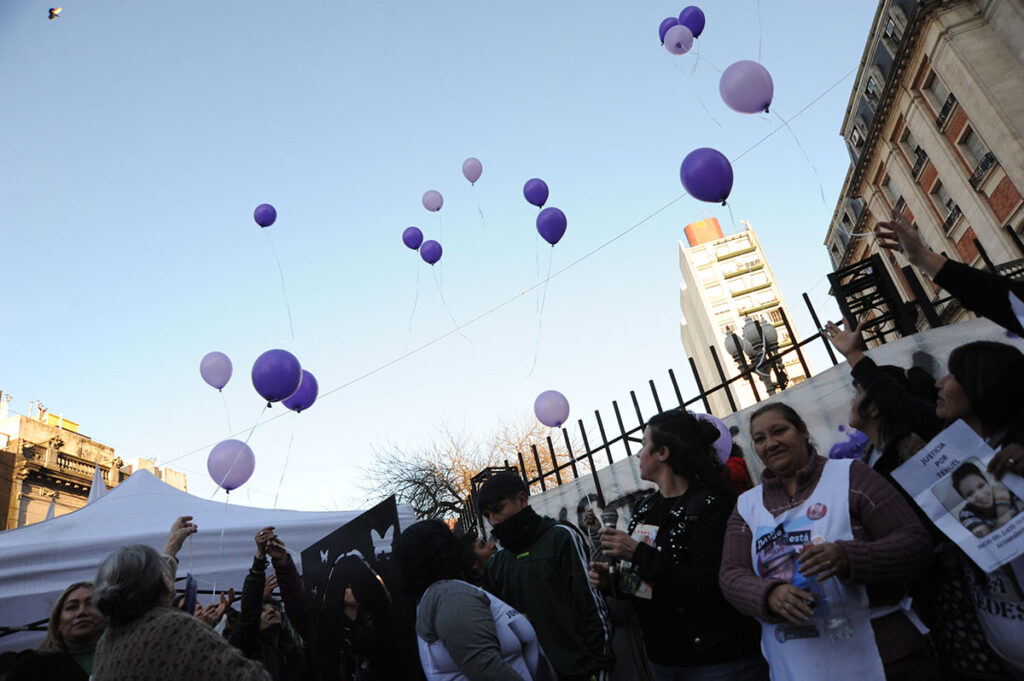
The day ended with a release of purple balloons, in which the mothers and relatives of victims of violence participated.
We are present
We are committed to journalism that delves into the territories and conducts thorough investigations, combined with new technologies and narrative formats. We want the protagonists, their stories, and their struggles to be present.
SUPPORT US

FOLLOW US
Related notes


We are present
This and other stories are not usually on the media agenda. Together we can bring them to light.