

Guardians of Paraguay's seeds resist climate change
Rural women from Paraguay say they gathered at the 13th Heñói Fair to exchange seeds and weave nets.


Share

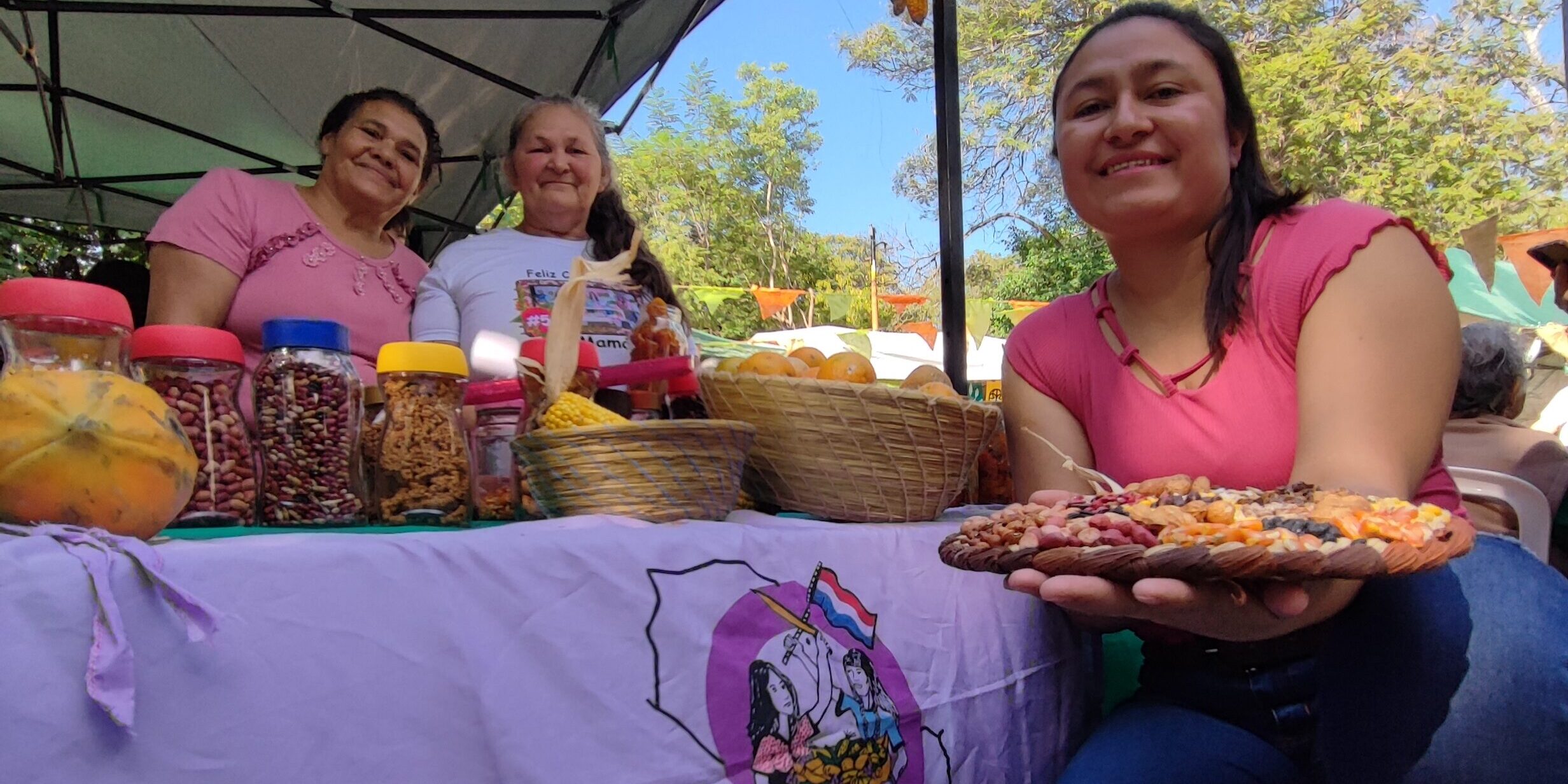
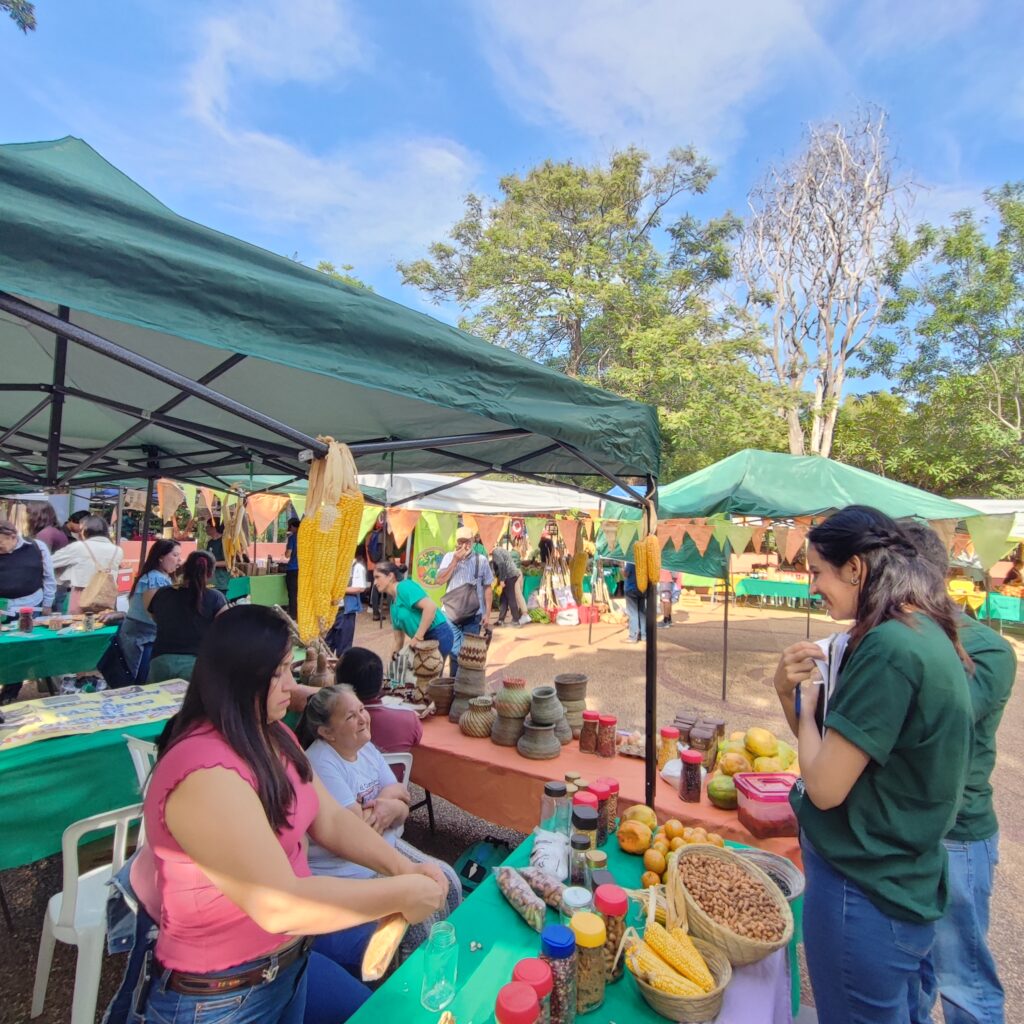
ASUNCIÓN, Paraguay. A morning with bright sunshine, and after several weeks of polar cold in the country, the conditions were right to experience a true celebration of seeds at the thirteenth edition of the Heñóien Fair in Asunción.
Once a year, farmers arrive in the capital with their seeds and produce to proudly display them and exchange them with others that they may not have in their territory due to climate losses.
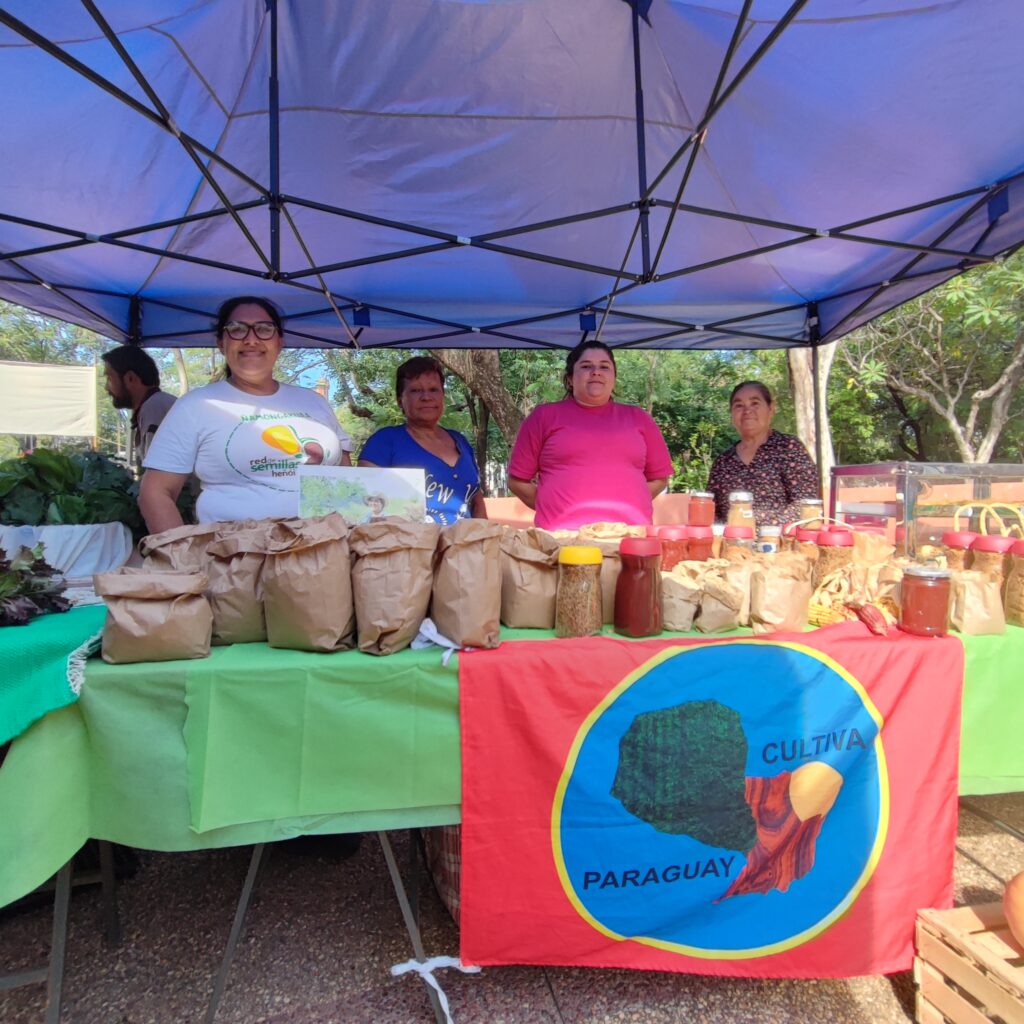
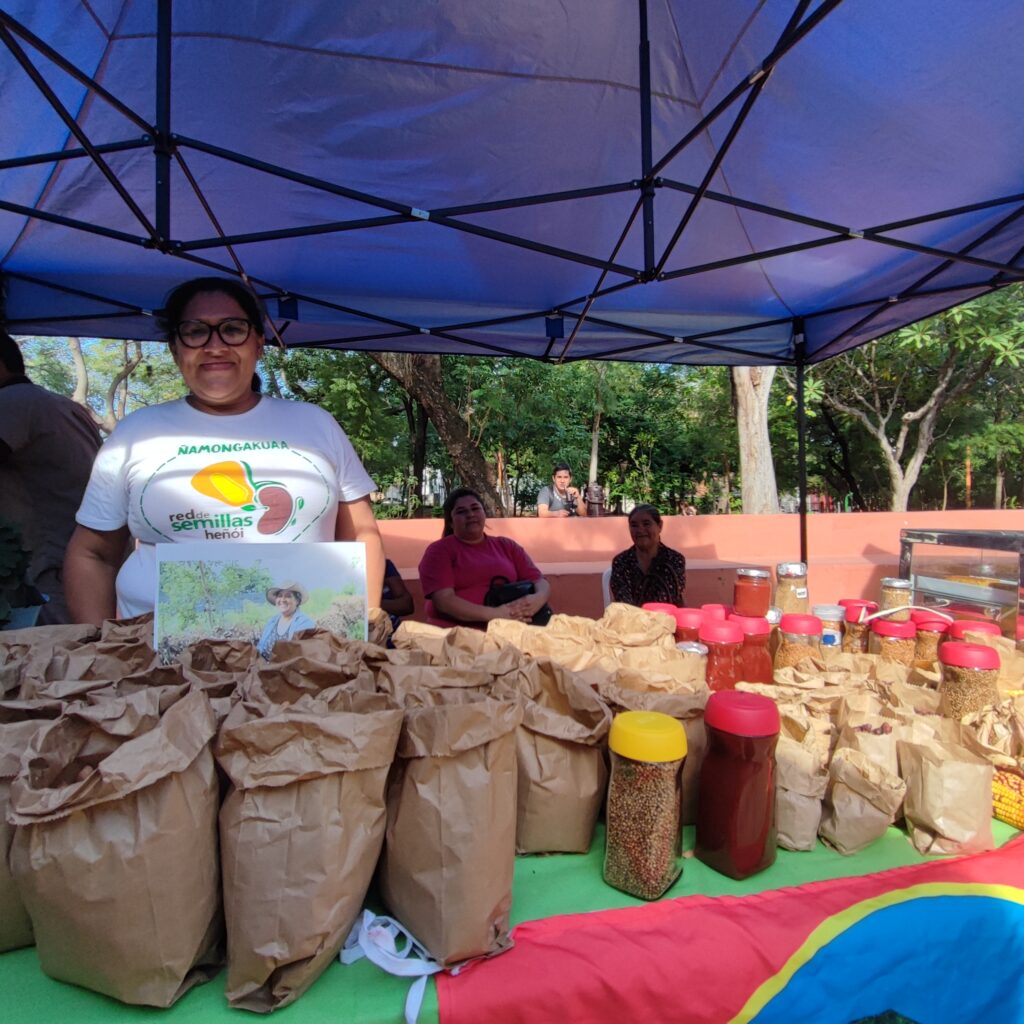
Early this morning, stands were set up collaboratively in Plaza Italia. Various types of seeds were prepared, including corn, peanuts, beans, and cassava. Foods such as cheese, corn flour, starch, medicinal plants, and yerba mate were also available. The effects of climate change are impacting production, but the farmers are not giving up. They continue to find ways to produce healthy food for their own consumption and for sale, feeding both rural and urban communities.
Resisting climate change
While the last few years have been difficult due to drought, the infrequent but intense rains, frosts, and hailstorms have not been kind to small-scale farming, adaptation and the daily struggle to produce food have been constant challenges.
Seferina Insfran de Toledo is a 57-year-old peasant woman, mother of 11 children, and a member of Conamuri . She lives in the department of San Pedro, about 200 km from Asunción. Norma Bogado, also a peasant woman and mother, is a member of the Cultiva organization and is originally from the department of Paraguarí.
Both organizations are members of the Latin American Rural Coordinator (CLOC) – La Vía Campesina.
They have dedicated their lives not only to food production, but also to being guardians of native and creole seeds.
Norma recounts that last year none of the corn and peanuts they planted in Paraguarí yielded a harvest. “Incredibly, from four peanut plots, we only got one bag of seeds for planting. If those seeds don't grow again this year, we're at risk. We're in danger of losing our seeds. Faced with this, large corporations take advantage of the situation to introduce their seeds, which contain chemicals and are prohibitively expensive. Our response is resistance in the fields. We know that the food we produce is essential to our survival.”
The lack of public policies is another reality faced by farming communities and families. They must find the resources for production themselves.
Ña Sefe is one of those women who possesses the wisdom of arandu ka'aty , the traditional knowledge, and expresses it in her words. During the Heñói Jey fair, she spoke about her work as a farmer to everyone who approached her. With a proud smile, she showed the variety of seeds she brought for the exchange, the fruit of her labor.

Sefe told Presentes about the situation facing farming families in his department. “Farm crops like peanuts, corn, and beans aren’t growing because of the drought. For example, we planted almost two hectares of corn, and the seeds came out shriveled. Just as the plants are about to flower, the drought comes and destroys everything.”
This year in Liberación, they've planted corn three times, and each time they haven't had a harvest. Ña Sefe, with concern, points out that this is leading many families to give up. “ Young people say it's all for nothing, and that's why they don't want to work in the fields anymore. They look for work outside the countryside. Climate change isn't helping us. We adults keep working and trying tirelessly until we get a harvest. These days we harvest less, but the advantage of working hard to produce food in the fields is that we won't go hungry,” she says.
Guarantee food
“All the native trees around us have been cut down and eucalyptus trees are being planted, so now when drought comes or it rains a lot it affects us too much in the countryside,” says Norma.
Norma explains that they also cultivate native plants and encourage their neighbors to do the same in their fields. The consequences of deforestation are that many people abandon their land because they can no longer grow food. Debt leads to hunger, and hunger leads to migration to the cities. There, in urban environments, poverty takes on a different dimension; if they find work, it's not related to agriculture.
“That’s why we promote agriculture and having at least one garden to survive,” Norma adds.
The lack of public policies is another reality faced by rural communities and families, who must find ways, individually or perhaps in an organized manner, to obtain resources for what it means to produce food.
Safeguarding life
Peasant women have rescued and recovered native and creole seeds from generation to generation. They are their guardians. They know that producing healthy food is essential to guaranteeing a healthy life. CLOC – La Vía Campesina is running a campaign with the slogan: “Seeds, Heritage of Humanity, at the Service of the People.” In this way, it promotes Food Sovereignty and Agroecology as a way of life and a mode of production, and this is what its member organizations, such as Conamuri and Cultiva in Paraguay, are replicating.
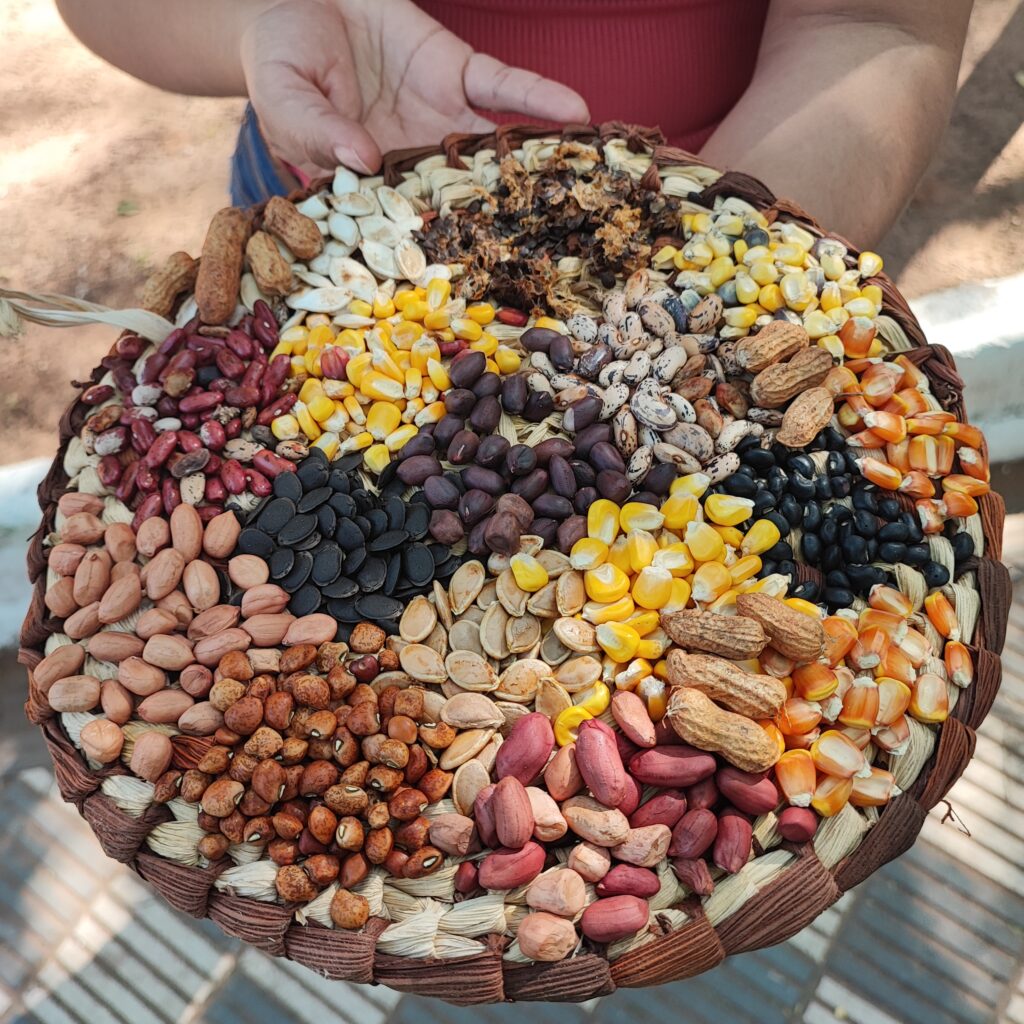
“For the past two years, it’s been more difficult to produce. This year, starting in San Juan, we tried to plant in June, but nothing grew. This year we decided to plant later, but only the seeds sown early sprouted. Farming is a lottery, and we have to be patient. As long as we have our health, we strive to produce in the garden and the fields because that’s what feeds us . We can’t complain because we don’t lack our daily bread in the countryside; if we plant, something always grows,” says Ña Sefe.
“ For women, rescuing and preserving seeds is life, because we women are the true caretakers of native and creole seeds . It is women who care for and sow the seeds, who sell the produce, who cook the food in the countryside,” says Norma.
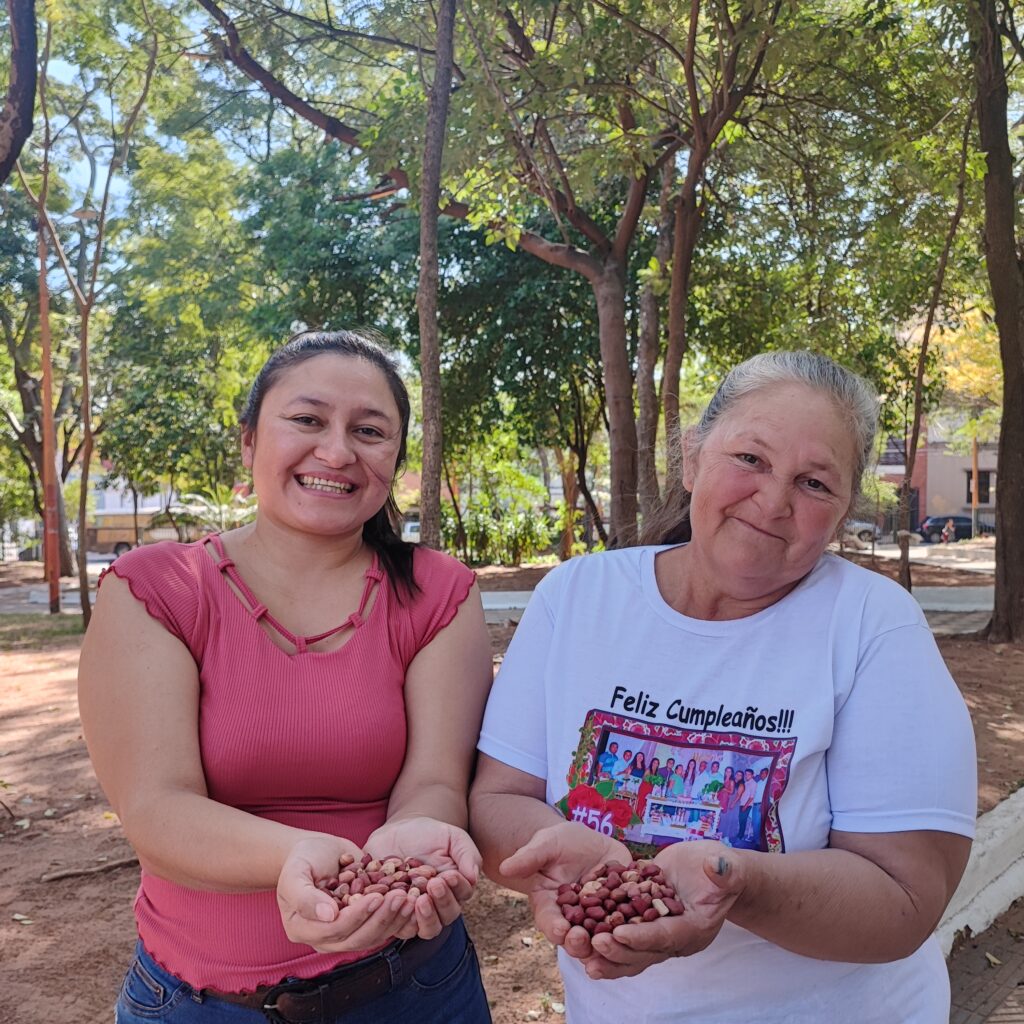
Meanwhile, Ña Sefe offers a final reflection: “We see that there are many more illnesses in the countryside than there were about 40 years ago. We think it's due to a lack of food. We don't eat well. We don't produce our own food anymore, so we go to the supermarket. People eat more chicken, and the meat they consume is often not natural. If we don't prepare our own food, how can we be healthy and strong? Nowadays, people prefer to eat rice or noodles and no longer want to eat locro or vori, and that's what we should be eating. Before, people lived to 100 or 105 years old; now, who's going to reach that age?”
In addition to being a space for exchange and reflection, the Heñoi Jey Fair is an annual event for organizing collectively to address the consequences of climate change and the expansion of genetically modified soy plantations. It also fosters solidarity networks.
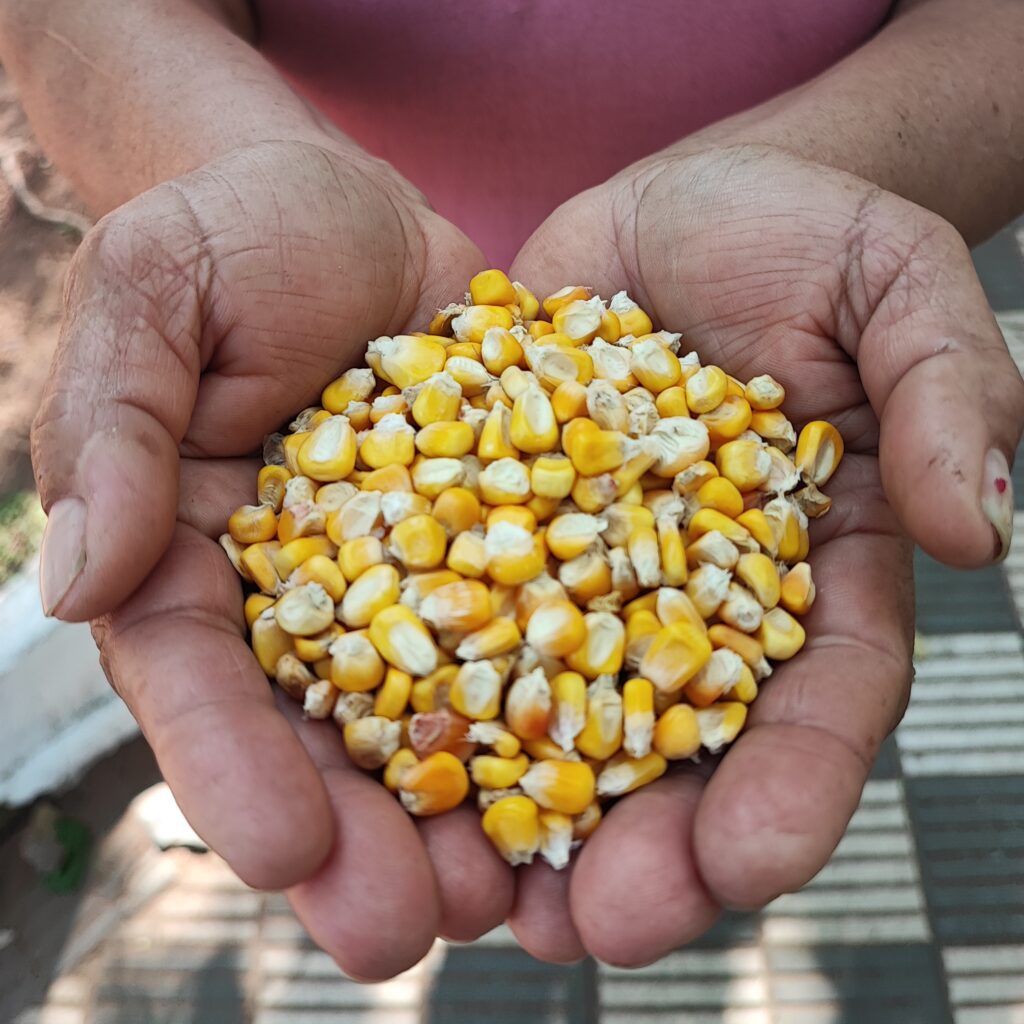
The Heñoi Jey Fair is an annual event where rural organizations collectively reflect on the situation regarding the consequences of climate change and the continued expansion of genetically modified soy plantations, primarily. It also fosters networks of solidarity and commitment to ancestral knowledge.
“The fair is life for us; it gives us life and peace of mind. It motivates us to see that we are not alone, that there are many people in the countryside persevering, and that makes me happy to keep going,” Norma concludes.
We are present
We are committed to journalism that delves into the territories and conducts thorough investigations, combined with new technologies and narrative formats. We want the protagonists, their stories, and their struggles to be present.
SUPPORT US

FOLLOW US
Related notes



We are present
This and other stories are not usually on the media agenda. Together we can bring them to light.