

The Factory: a space to combat gender misinformation in Latin America
La Factoría is Presentes' new fact-checking unit dedicated to combating gender misinformation in Latin America. We opened a conversation with journalists and activists to understand the current situation and exchange resources. Featuring Alba Rueda, Danielle Cruz, Ana Prieto, Silvia Soler, and Melina Barbosa.



Share

La Factoría is the fact-checking unit launched by Agencia Presentes to combat gender disinformation in Latin America. To present the new project—which initially benefited from training provided by Chequeado (Argentina) and support from Verificado (Mexico)—we invited activists and journalists from Mexico and Argentina to a discussion at X Spaces. How do groups that spread false or distorted information operate? What challenges do they pose? What strategies can we implement to address gender disinformation?
Together they outlined a map that is also a working tool for addressing these issues. Participants included trans activist Alba Rueda , Danielle Cruz , non-binary journalist and media critic ; Ana Prieto, from AFP Factual ; Silvia Soler from the Simone de Beauvoir Leadership Institute ; and Melina Barbosa , fact-checker from Verificado México .
Danielle denounced the role of traditional media outlets that legitimize fallacies fueled by viral content. Ana Prieto emphasized these fundamental concepts for building a reliable verification system. Melina Barbosa shared the key elements of the most prevalent pieces of disinformation. And trans activist Alba Rueda Noti Trans Argentina account , dismantled how the ideology reproduced through hate speech operates. “We need new self-managed tools to counteract these waves of disinformation,” noted Silvia Soler, “like La Factoría de Presentes, although the playing field is somewhat uneven.”

We share some of the lessons learned during this virtual session on June 27th.
What do we mean by disinformation?
“Disinformation is false information spread with the intention of achieving something and/or causing harm ,” explained Ana Prieto. “There should be an easy answer, but it gets complicated,” warned the journalist from AFP Fact Check, a department of Agence France-Presse. She then offered some recommendations for discussing the topic with a theoretical basis.
She explained why using the expression “fake news”—an oxymoron—doesn't help communicate the issue . “News, by definition, is true information. When you use the phrase ‘fake news,’ you cast all other news stories with that same taint,” the fact-checking expert emphasized. For her, a good definition should highlight the intent behind the misinformation.
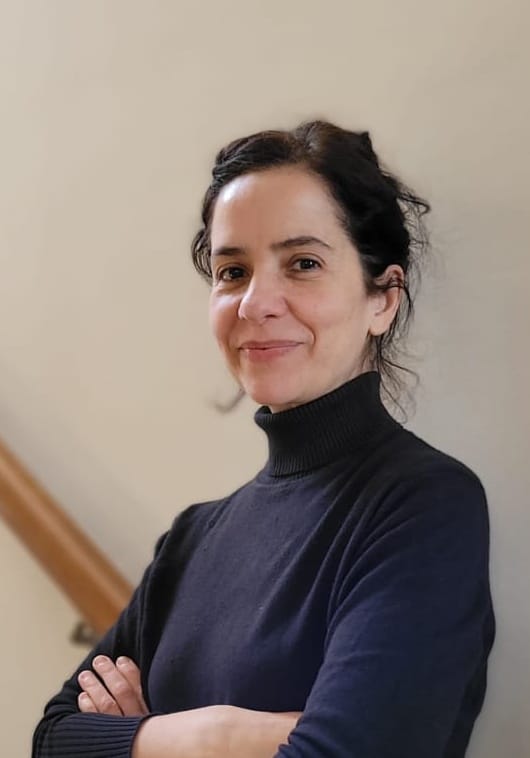
In English, he explained, there are two distinct words to refer to different types of disinformation: Misinformation refers to erroneous information. Disinformation, on the other hand, has the intention of falsifying data: “It is a piece of information that is thrown out on social media (or in the media) with the intention of manipulating, harming, or spreading propaganda.”
While both have always existed, he clarified, with the emergence of social media, misinformation began "to travel at unprecedented speeds," reaching "gigantic, polarized audiences that have little dialogue with each other."
“Furthermore, misinformation is often infused with hate speech ,” she summarized, before delving into the specific topic: gender misinformation.
Danielle Cruz, a non-binary journalist and media critic, said that the waves usually begin with a disinformation , and then trigger a wave of misinformation, from people who reproduce it without bad intentions.
Texts, contexts and algorithm
Framing disinformation as part of a system, Alba Rueda pointed out that "disinformation also feeds on an ideological perspective that constructs a meaning, which joins with other meanings, and creates a reality outside of the parameters."
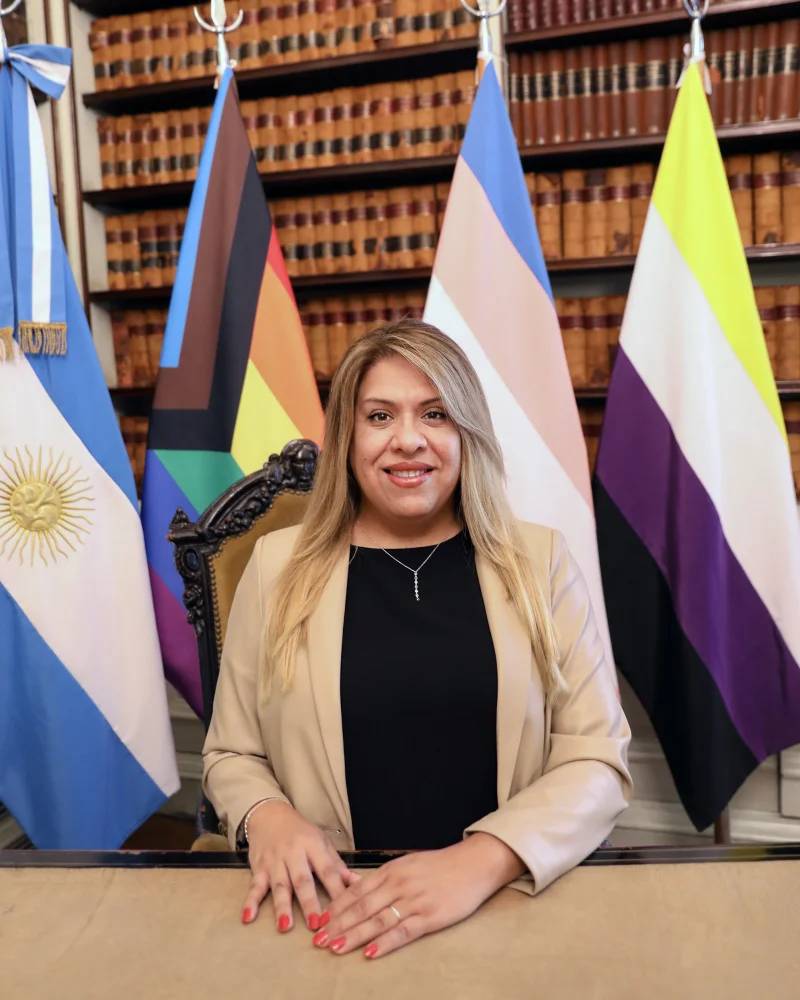
Rueda, who until December 2023 was the Special Representative on Sexual Orientation and Gender Identity at the Argentine Foreign Ministry, recalls that the media “has always spread misinformation about news involving transvestites and trans people .” But she adds that, in recent years, some journalists have invited figures who propagate highly structured disinformation. The host journalists are left looking foolish, unable to expose the falsehoods of the hate messages in these campaigns.
“There is a media operation to invite experts, anti-rights people, and on the other hand people who are not prepared to defend human rights and the rights of LGBT+ people with the same character,” she said, both as a denunciation and as advice.
To bait hatred
“The vast majority of media outlets, especially the large ones with national or international reach, have monitoring systems in their newsrooms, programs, or tools that allow them to know what's going viral on social media,” Danielle emphasized from Mexico. “This information is generated automatically. They take a viral story and write articles for media outlets that are perceived as legitimate and legitimizing. If you see an article in Clarín, or El Espectador, or El Universal, you already assume a certain legitimacy in the article you're reading. Even though that article might be spreading misinformation from another country,” she stressed.
gender misinformation operates
Danielle offered as an example a news story from Ireland. There, laws were passed a few years ago protecting students and prohibiting misgendering. A history teacher was using the wrong pronoun for a student; the conflict escalated, the teacher was reprimanded and banned from the school for 10 days. The teacher violated the restriction, went to the school, was arrested, prosecuted, and spent 60 days in jail.

“By the time that news reached Spain, media outlets like El Español, a far-right publication, picked up the story and turned it into ‘ Irish teacher arrested for not respecting a student’s pronouns .’ That story was then picked up several days later by Infobae in Argentina and Milenio in Mexico. The headline was ‘Teacher goes to jail for refusing to use ‘elle .’ What we’re seeing is an escalation of information manipulation and the fueling of hatred, in a content generation strategy that consists of baiting the flames of hate,” Danielle explained.
“As businesses, the media prioritizes monetization and profits. And because of how social media operates , prioritizing engagement and sensationalism , the type of content they generate is tied to the demands of digital platforms. They have a direct and immediate co-responsibility, because there was a completely voluntary decision by the media to cede their news agenda and ethical standards to digital platforms ,” he denounced.
Alba Rueda added: “The position these companies hold is tied to the interests of conservative sectors within the political structures. Their position is ideological and political .”
All hate is political: some examples
Silvia Soler, from the Simone de Beauvoir Leadership Institute (ILSB), stated that the initiative proposed by Presentes with La Factoría “is a titanic task against titans, actors who are in charge of monetizing that misinformation, and others who, for ideological purposes, dedicate themselves to propagating it.”
The ILSB is based in Mexico, where Claudia Sheinbaum won the elections and will assume the presidency on October 1. In this process, the National Electoral Institute approved affirmative action measures: representation quotas for historically marginalized populations, including Indigenous people, Afro-descendants, and LGBTQ+ individuals.
In response to this progress, a disinformation campaign was launched. It consisted of a series of articles, in various media and formats, all about cisgender/white men who had usurped the electoral quotas of trans/Indigenous people. The most widely circulated article was: Eight candidates present themselves as trans women . According to this “perverse” narrative, the mere existence of historically marginalized political subjects, and their affirmative action quotas, were to blame for “the erasure of women.”
“Disinformation is becoming increasingly sophisticated, deliberately producing ignorance. It controls the narrative of certain news outlets. And that ends up blaming historically marginalized communities ,” summarized Soler, a Master's and Doctoral candidate in Anthropological Sciences.
"They didn't blame the state oversight bodies," Soler lamented, "which were supposed to regulate and ensure that those candidates were truly representative of those sectors."

Most common disinformation narratives
Melina Barbosa, a fact-checker at Verificado México, highlighted that “ one of the most common disinformation narratives is the one that accuses LGBTQ+ people of suffering from physical and psychological disorders, and of representing a general public health problem . Children and adolescents, who are the most vulnerable, are heavily manipulated in communications that claim that LGBTQ+ groups and educational institutions are indoctrinating them with what they call 'gender ideology'.”
“Gender ideology” is a term that doesn’t exist , as we’ve already explained in Verificado along with Presentes, she pointed out. This narrative has been used to spread disinformation since at least 1995, Melina explained, following the strategy the Vatican devised to counter the reforms achieved by the feminist movement at the Fourth United Nations International Conference on Women held in Beijing that year.
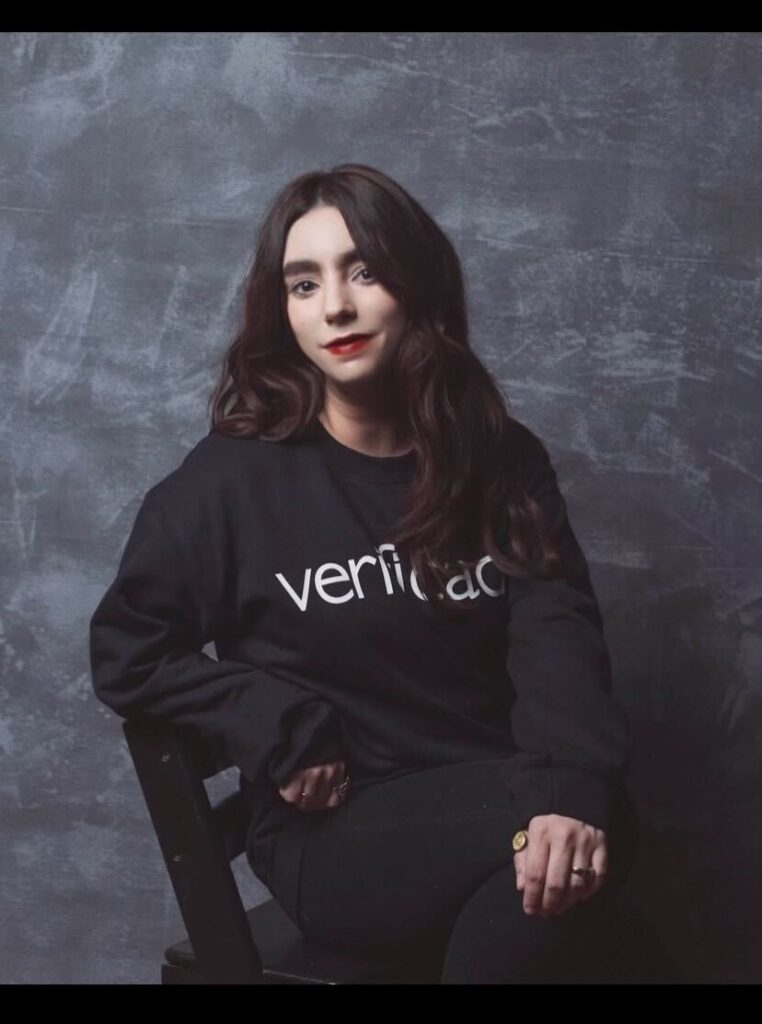
This concept in Mexico was “relentlessly instrumentalized” in the electoral context, and is a term coined with the aim of denigrating the vindication of the rights of women and sexual and gender diversities.
“We’ve also seen posts constantly going viral claiming that transgender children don’t exist. And this is very violent. It’s very important that families have access to verified information. And that with data they can defend themselves against many obstacles, both institutional and social,” Melina said.
The disputed transgression
Using terms like “gender ideology,” anti-rights groups are contesting the notion of truth from a position of transgression. “Before, transgression was always associated with the left, trans feminism, and dissident movements. And now, as one of your countrymen says, the right has read Gramsci and understood him much better, in order to generate hegemonies through transgression,” Silvia analyzed.
“There is a key context for understanding how these common sense notions are now being wielded from a conservative or almost fascist standpoint, from a place of dispute over how truth is produced,” he explained. The urgency of the situation challenges the entire continent. “ Argentina was one of the cases of institutions that had most strongly established rights, and we see how suddenly they disappear in an instant. This stems from a dispute in which institutions are seen as a threat of lies, falsehoods, and deception of the population.”
Examples of narratives to demystify
As host, Maru Ludueña, co-director of Agencia Presentes along with Ana Fornaro, invited colleagues and activists to share their lessons learned regarding disinformation. What evidence can be used to build new frameworks that help counteract the effect of these narratives in our societies?
What can we do?
“We need to innovate by combining fact-checking methodologies with combating hate speech, something Presentes is already doing, using journalistic techniques,” Ana Prieto points out. One difficulty for some is not being able to debunk “hate speech” because, according to a fundamental principle of fact-checking, “opinions cannot be checked.”
“Building counter-narratives,” says Danielle, as Presentes often does, without following someone else’s agenda. Or rather, by refuting what others say.
-The risk of giving more reach to the lie must always be evaluated, they agree.
“The appeal to emotion is an aspect to consider,” Ana and Danielle mention. “These discourses are countered with data, but they reach people through emotion. A story told from an emotional perspective that counters the hatred, fear, or economic anxiety that sometimes accompanies these discourses is the best approach. What Presentes, Las Morras , and media outlets like Altavoz LGBT in Mexico are doing is fundamental to stopping and counteracting this type of disinformation,” they affirm.
– Danielle proposed that the media have a critical observatory, a critical mirror of what they are doing.
“That confirmation of everyone’s prejudices plays a key role. At the ILSB Leadership Institute, we have dedicated ourselves to creating presentations that dismantle some of those myths, stereotypes, and information that produces ignorance and very quickly stirs up emotions,” says Silvia.
-“It is very important to combat disinformation with spaces that make visible the practices of groups that are the target of disinformation to violate or take away their rights, always at risk of being lost,” proposed Melina, from Verificado Mexico.
We invite you to visit La Factoría, our new space here . Graphic design was done by Andamos Flotando .
We are present
We are committed to journalism that delves into the territories and conducts thorough investigations, combined with new technologies and narrative formats. We want the protagonists, their stories, and their struggles to be present.
SUPPORT US

FOLLOW US
Related notes

We are present
This and other stories are not usually on the media agenda. Together we can bring them to light.