

Peru: Hate crimes have increased, and transgender women are the most affected
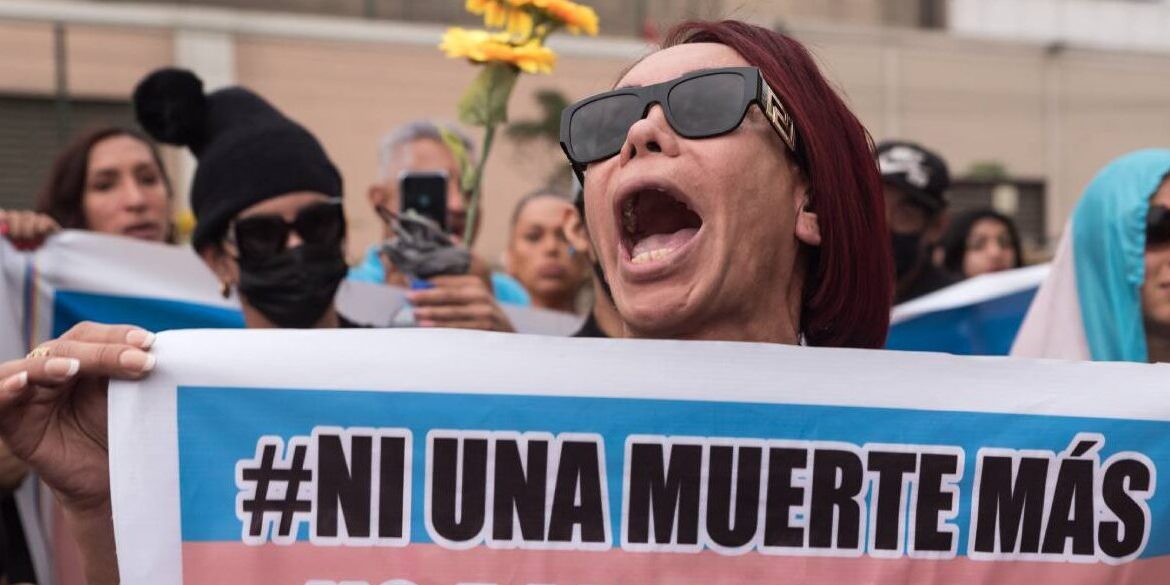
Between 2020 and 2023, 54 murders of LGBTI people were committed, according to the latest Annual Report of the LGBTI Rights Observatory of the Cayetano Heredia Peruvian University.


Share

The Annual Report of the TLGBI Rights Observatory recorded 54 murders of people from the community and 170 cases of violation of their rights between 2020 and 2023.
“They took her from here,” Xiomara*, a Peruvian trans woman and sex worker, tells Presentes , pointing to a sidewalk on Jirón Chancay in downtown Lima. There, in February 2023, extortionists from the criminal gang “Los Gallegos” kidnapped her colleague Rubí Torres Silvano (31 years old) and took her to the Carabayllo district, where they murdered her with approximately 30 gunshot wounds. “They sent us a video on our cell phones; it was Rubí’s body. That’s how they threatened us, forcing us to pay protection money to keep our spot. There’s a lot of anger directed at us,” she says.
Between 2020 and 2023, 54 LGBTQ+ people were murdered in Peru, according to the latest Annual Report from the LGBTQ+ Rights Observatory of Cayetano Heredia University. The report emphasizes that more than half of the victims were trans women (30), followed by gay men (23) and one lesbian woman.
In 2023, the number of homicides increased to 19 cases, of which 12 were trans women and 7 were gay men. The previous year, there were 13 victims: 8 gay men and 5 trans women. In 2021, there were 10 victims: 5 trans women and 5 gay men. And in 2020, there were 12 victims: 8 trans women, 3 gay men, and one lesbian.
Trans women: the most victims of violence
The crimes have been carried out with cruelty, from multiple shootings and stabbings to throat-slitting, indicating extreme hatred for gender identities, gender expressions, and sexual orientations that do not conform to heteronormative rules.
The report also details, in the category of human rights violations—that is, for example, state violence, incitement to discrimination, attempted murder—that the highest number of these abuses occurred during 2020, reaching 61 complaints. This was followed by 2022, with 43; then 2023, with 34; and 2021, with 32. It is observed that in this category, transgender women are, once again, the most affected.
The report's co-author, Gianna Camacho, a trans woman, LGBTI human rights defender, and journalist, explains to Presentes why this group is the most affected in its rights. “Trans women are the most victims of violence because we have dared to leave 'the winning team' to join 'the underdog.' That's why we suffer this violence as a form of social punishment.”
According to Alex Hernández, a psychologist and bisexual activist with the feminist and LGBTQ+ organization Más Igualdad ), trans women are the primary victims of hate crimes “because they challenge the mandates of masculinity. Being assigned male at birth, but having and constructing a feminine identity, challenges the mandates that people assigned male at birth are supposed to have regarding their masculinity. By challenging it, they pose a significant social problem for the patriarchal gaze. This is why they are targeted with such cruelty,” she tells Presentes .
“I don’t want them to kill me,” says Xiomara. She and her companions wish they weren’t involved in prostitution, but they have no other way to survive due to the lack of job opportunities. According to a 2012 study by the Cayetano Heredia Peruvian University, 70% of trans women in Lima and Callao work in the sex industry.
Crimes go unpunished
The report emphasizes that the number of reported hate crimes is a significant undercount. It states that “there are very few measures in place to help reduce violence, such as facilitating the registration of murders of LGBTQ+ people; a virtual system that considers the alleged sexual orientation or gender identity of the victim has not been implemented, and a Gender Identity Law has not been passed.”
Gianna Camacho emphasizes that, given the lack of state statistics, they used reports published in the press and direct records from LGBTIQ+ organizations. “There are many cases we haven't heard about because they aren't reported or because the victims never made their LGBTIQ+ identity public,” she adds.
The Peruvian state doesn't care about documenting violations of the rights of the LGBTI community, despite its responsibility to control violence. Nor does it care about ensuring that hate crimes are punished.
In Presentes , we observed that of the 54 murders recorded in the report between 2020 and 2023, the perpetrators have not been identified in 26 cases. The situation worsened in 2023: of 19 homicides, the perpetrators were not found in 13.
Regarding this, former congressman Alberto de Belaunde comments that the Judiciary, the Public Prosecutor's Office, and the Police have all the legal tools to prosecute these types of crimes. “The fact that these crimes go unpunished is not due to loopholes in the law. It is due to a lack of resolve, the inability of these institutions to understand that they are working with vulnerable populations, a lack of protocols to ensure proper care, and a clear lack of interest,” he tells Presentes .
“They are watching us.”
Xiomara entrusts herself to God when she goes out to work. “Our lives are very hard; if it’s not the extortionists attacking us, it’s our authorities. I remember lying on the floor, the police setting dogs on us. I could feel their claws. It was horrible. They told us that this was happening to us because we were faggots.”
In early 2022, as the report states, members of the bloodthirsty criminal organization “Los Gallegos” began extorting money from transgender women who worked on the streets of downtown Lima. On February 12, 2023, they shot multiple times, killing Rubí Torres Silvano (31) and Priscila Aguado Huatuco (30).
The brutality of both murders led the LGBTI community to hold sit-ins in front of the police station located just a few blocks from where the victims had been kidnapped. In March 2023, the police captured two of the killers. “In the following months, the number of murders decreased, but extortion increased throughout the city (of Lima), according to activists. (…) Gender-based violence has not stopped. Nor has the turf war between criminal gangs,” the report states.
Xiomara says that they haven't paid protection money for several months, at least not on the streets of downtown Lima, but she says that for the last twenty days they've started seeing suspicious motorcycles and cars. “It's like they're marking their territory again, like they're counting us. We all came to the conclusion that they're watching us. Recently they threw grenades on Zepita Street, as if warning us that a new mafia is coming in.”
*Xiomara is the pseudonym chosen by the interviewee for security reasons.
We are present
We are committed to journalism that delves into the territories and conducts thorough investigations, combined with new technologies and narrative formats. We want the protagonists, their stories, and their struggles to be present.
SUPPORT US

FOLLOW US
Related notes

We are present
This and other stories are not usually on the media agenda. Together we can bring them to light.