

Tehuel trial: The court rejected the request for trans witnesses to testify
In the fifth hearing, the psychologist who questioned Ramos testified, as well as a fellow MST member who spoke about the relationship between Tehuel and the accused.


Share

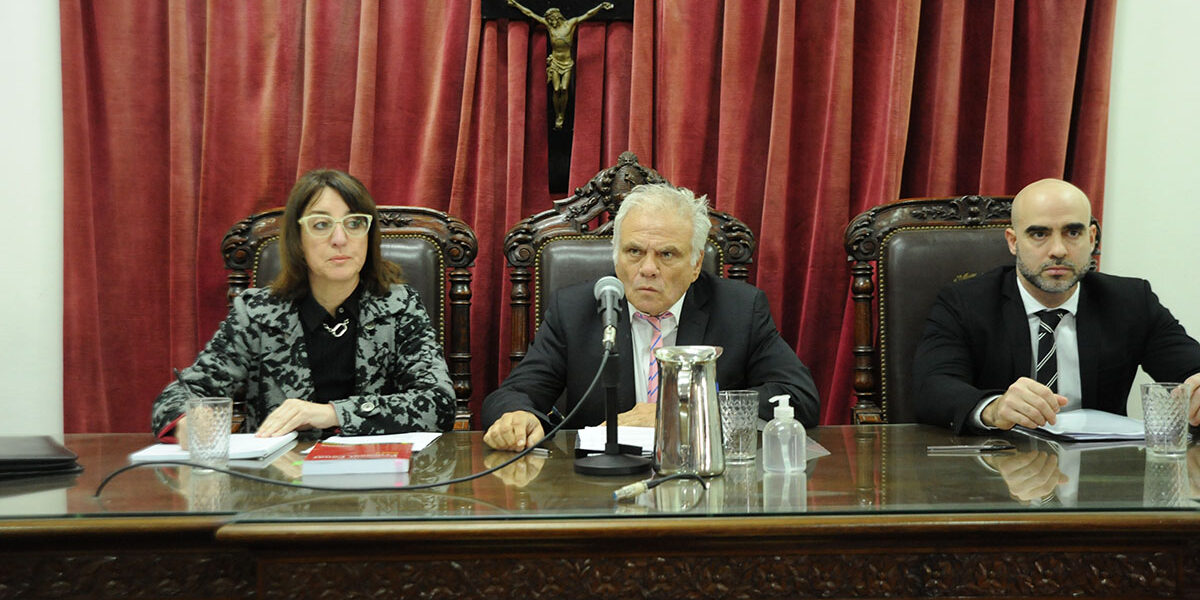
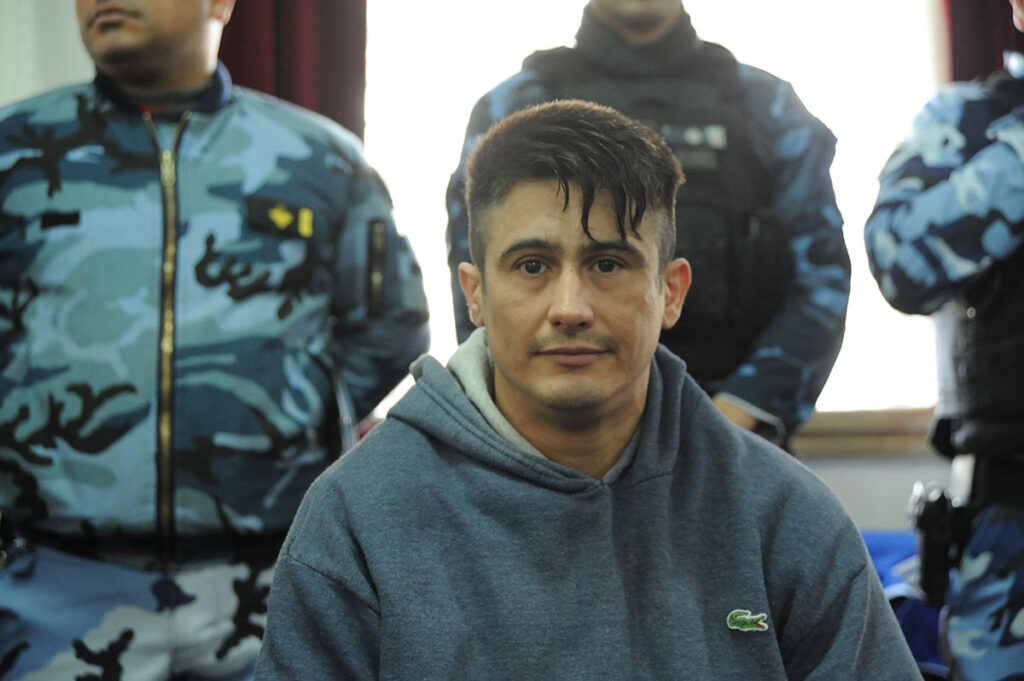
LA PLATA, Argentina. With activists and supporters present, the fifth hearing of the trial in which Luis Alberto Ramos is accused as an accomplice in the murder of the young trans man—who remains missing—took place at the La Plata courthouse. Closing arguments are expected next week.
During the fifth hearing, presided over by the Oral Criminal Court No. 2 of La Plata, psychological experts from the Ministry of Security, a fellow activist from the MST (Socialist Workers' Movement) who shared Ramos's identity, and an eyewitness to the raid carried out by the Buenos Aires Provincial Police testified.
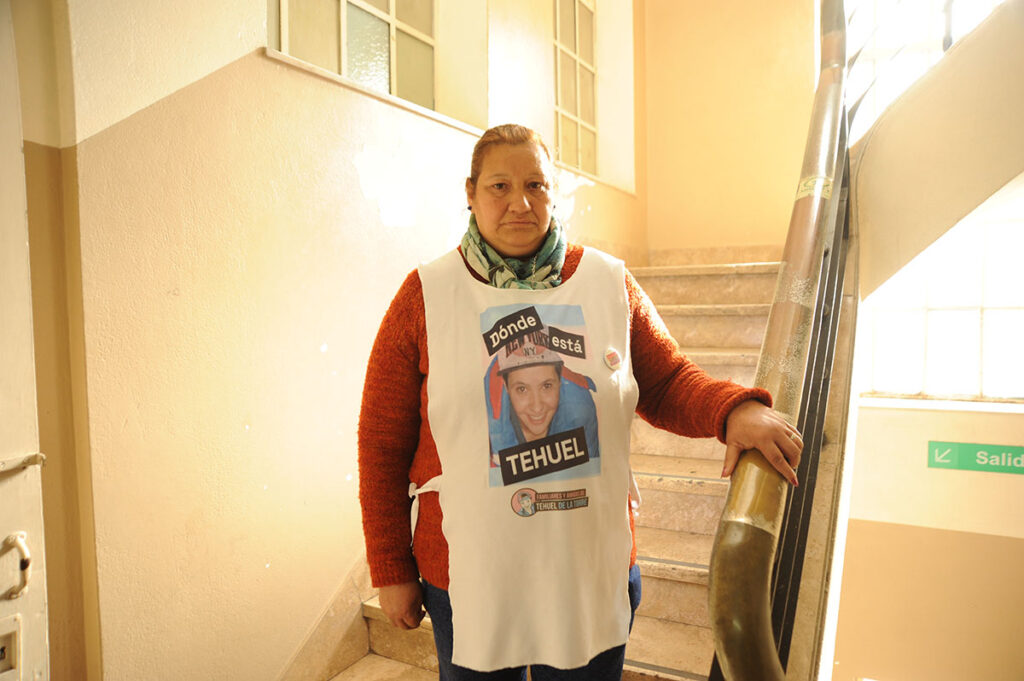
During the hearing, the Court rejected the request from the lawyers representing Norma Nahuelcurá - Tehuel's mother - who asked to include testimony from a representative of the trans community, "useful and indispensable to understand the reality firsthand"; since in the trial all the voices are represented by cisgender people.
The psychological profile
Karina Sorokowki, a psychologist with the Criminal Behavior Analysis and Victimology team of the Provincial Ministry of Security, conducted two interviews with Luis Ramos—the accused—to establish a profile within the framework of the investigation into Tehuel's disappearance.
In this context, Sorokowki stated that they noticed "breaks in Ramos's discourse." "We observed a person who, initially, appeared cooperative, willing, with a loquacious dialogue, wanting to please, verbose in his speech," she said, adding that "however, what we observed is that these characteristics are manipulative."
When questioned by the Court, Sorokowki explained that, in missing persons cases, the goal is for the interviewee to empathize with the victim. "It was logical in his discourse, but the lack of affection, the lack of emotion, the lack of empathy tells us that his discourse is for self-preservation."
According to the reconstruction of events during the hearing, Ramos could describe the experiences he shared with Tehuel, but not the emotions; “it was a defensive and exculpatory discourse.” Furthermore, the witness emphasized: “We were struck by the defendant’s emphasis on supporting his sexual identity.”
“Luis didn’t see her as a man”
Andrea Licolich met Luis Ramos and Tehuel de la Torre while active in the MST (Socialist Workers' Movement) in San Vicente. During her testimony at the trial, she recounted that it was Ramos who introduced Tehuel to the movement and presented him as "a friend." She also stated that they had "a good friendship," but that at one point she suggested to Tehuel: "I asked him to distance himself from that friendship because I had noticed that Luis didn't see her as a man."
The witness further stated that Ramos had said that "it was a waste of a woman to have become a man." She added that, within the Movement, members were consulted about which activities they preferred to attend, and that the accused believed that "women were for men and men for women."
Licolich also described a conversation with Tehuel in which he questioned why she remained connected to Ramos and that he "helped her financially if she needed anything."
Power relationship
The day's proceedings revolved around one central question: Was Ramos in a position of power over Tehuel de la Torre?
This question arose both in the testimony of the psychologist who interviewed the accused and in the testimonies of the psychologists who interviewed Tehuel's family. The court sought to understand and inquired: what do we mean when we talk about power?
It is known that the young man was in a vulnerable social situation, that he was looking for work, and that Ramos was the one who usually provided it, both with informal jobs and with money.
"The family said that their relationship with Luis Ramos was work-related and that, in addition to work, they were friends, because Tehuel considered him an equal... someone who listened to him," stated Juan Pablo Díaz and Belén Gallego, psychologists from the Ministry of Security, who were in charge of interviewing the young man's family.
The hearings will resume next Thursday, July 25, when eight people are expected to testify. Closing arguments are expected to be presented on Friday.
We are present
We are committed to journalism that delves into the territories and conducts thorough investigations, combined with new technologies and narrative formats. We want the protagonists, their stories, and their struggles to be present.
SUPPORT US

FOLLOW US
Related notes



We are present
This and other stories are not usually on the media agenda. Together we can bring them to light.